
- Navigating the Yogurt Aisle for Maximum Protein
- Why Yogurt Protein Matters for Your Goals
- The Great Yogurt Showdown A Protein Comparison
- What Makes Greek Yogurt and Skyr Protein Powerhouses
- Simple Ways to Boost Your Yogurt's Protein Content
- Logging Yogurt Protein with PlateBird in Seconds
- Your Path to Protein-Packed Yogurt
You’re standing in front of the yogurt shelf, trying to make a smart choice, and every tub seems to promise something different. Greek. Skyr. Low-fat. Whole milk. High protein. No added sugar. Maybe you just want a fast breakfast that helps you stay full. Maybe you’re trying to hit macros after the gym. Maybe you’re meal prepping and need foods that are easy to log and repeat.
Yogurt can be surprisingly confusing.
It looks simple, but protein in yogurt can vary a lot depending on the type, the fat level, and how it was made. Two containers that seem almost identical can land very differently in your day if you’re tracking for fat loss, muscle gain, or just a more balanced routine.
The good news is that once you understand one idea, most of the aisle starts to make sense. Yogurt isn’t just “healthy” in a vague way. It can be a light snack, a more serious protein source, or a base you build into a meal. The trick is knowing what you’re buying and why.
Navigating the Yogurt Aisle for Maximum Protein
You pick up one cup that says “traditional.” Then another that says “Greek.” Then one more that says “Skyr” and suddenly it feels less like grocery shopping and more like decoding a test.

A lot of people assume yogurt is yogurt. It isn’t. Some cups are light and modest in protein. Others are thick enough to stand up on a spoon and give you much more. If you’re trying to eat with purpose, that difference matters.
What usually throws people off
The front of the package often highlights one feature and hides the bigger picture. A yogurt might sound appealing because it’s “whole milk” or “low-fat,” but that doesn’t tell you much by itself about protein density.
A few labels tend to create the most confusion:
- Greek yogurt usually means a thicker, strained product.
- Skyr is another thick, strained style that’s often high in protein.
- Regular yogurt is typically looser and less concentrated.
- Flavored yogurt may fit your goals, but it can change the carb picture quickly.
If label reading still feels messy, this guide on how to read nutrition labels helps break down what matters.
A better way to shop the shelf
Don’t start with the branding. Start with your goal.
If you want a snack that helps you stay fuller, a thicker strained yogurt often makes more sense. If you want something mild for smoothies or sauces, regular yogurt may be enough. If you need a breakfast that carries more protein on its own, the high-protein tubs stand out fast once you know what to look for.
Practical rule: Treat yogurt like a protein source first, not just a dairy snack. Then decide whether you want it plain, thicker, leaner, or easier to pair with toppings.
That simple shift saves a lot of guesswork.
Why Yogurt Protein Matters for Your Goals
You grab a yogurt on the way out the door because it feels like a healthy choice. By 10:30, you’re hungry again and looking for a second snack. In many cases, the difference is not yogurt versus no yogurt. It is whether that yogurt gives you enough protein to do a job.

Protein changes the role yogurt plays in your day. A lower-protein yogurt can still fit a balanced diet, but it often acts more like a light add-on. A higher-protein yogurt is closer to a building block. It can carry breakfast, bridge the gap to lunch, or help you hit a macro target without much planning.
If your goal is staying full
Protein tends to slow down the “I need something else” feeling after a snack or meal.
That matters if you are trying to eat fewer calories without feeling deprived. A yogurt with enough protein usually keeps you satisfied longer than a sweet, low-protein cup that digests quickly and leaves you chasing fullness with granola, nut butter, or another snack an hour later.
A simple way to see it is this. Protein gives yogurt more staying power. It turns a quick bite into something that holds up better between meals.
If your goal is muscle support
Yogurt brings two dairy proteins to the table: casein and whey.
They work a bit differently. Whey is absorbed more quickly, like small sticks that catch fire first. Casein breaks down more slowly, like a larger log that keeps the fire going. Together, they make yogurt useful after training and also practical at regular meals.
Researchers in a review published by the National Library of Medicine explain that yogurt contains both casein and whey, and they note that yogurt protein is highly digestible and bioavailable. For someone trying to recover from workouts or spread protein across the day, that mix makes yogurt more than a random dairy snack.
Why this matters for macro tracking
If you track macros, protein grams are only half the story. You also want to know how efficiently a food helps you reach your target.
That is where yogurt can be surprisingly useful. A protein-dense yogurt gives you a solid chunk of protein in a food that needs almost no prep. You open it, eat it, and log it. A lower-protein yogurt may still fit your plan, but you often need to pair it with seeds, powder, or another protein source to reach the same total.
That “protein per spoonful” idea matters in real life. Strained yogurts are thicker because more liquid has been removed, a lot like squeezing water out of a sponge. What stays behind is more concentrated, including the protein. Once you understand that, the numbers on the label make more sense, and logging becomes faster because you know which types usually pull more weight.
Yogurt also fits goals beyond protein. For people interested in fermented foods and digestion, this overview of natural probiotics for optimal health gives helpful background.
The practical takeaway is simple. If your goal is better fullness, easier muscle support, or cleaner macro tracking, yogurt protein matters because it changes how hard that food works for you.
The Great Yogurt Showdown A Protein Comparison
You are standing in the yogurt aisle with two cups in your hand. Both look healthy. Both fit in your cart. But one may give you enough protein to support your post-workout snack, while the other works more like a light breakfast side.
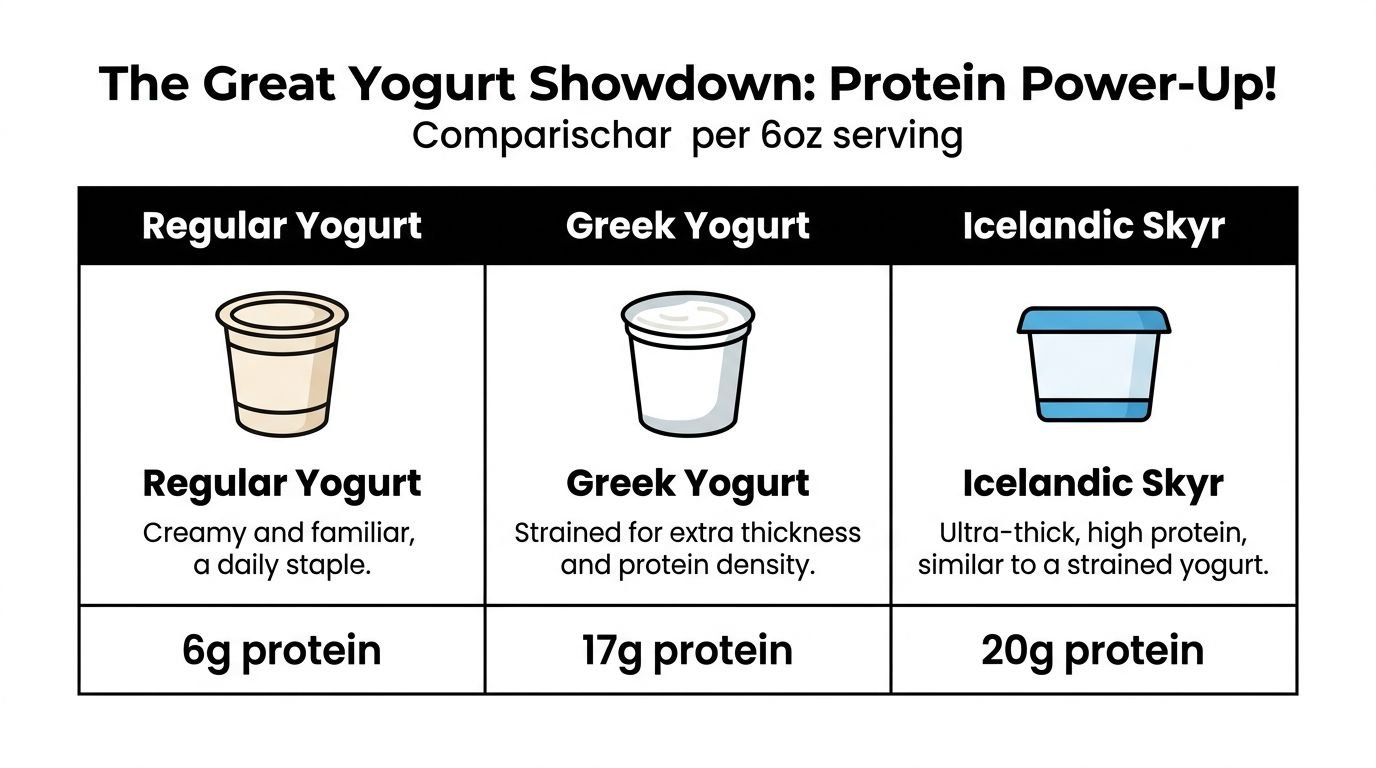
A simple way to compare them is to look at protein per 100 grams first, then translate that into a normal single-serve portion. That gives you a fair comparison instead of letting package size confuse the picture.
The quick hierarchy
If you want the short version, regular yogurt usually sits at the lower end for protein density. Greek yogurt usually climbs much higher. Skyr often lands at the top.
The approximate values below combine figures discussed in Healthline’s guide to yogurt nutrition and Arla’s yogurt protein overview.
| Yogurt Type | Protein per 100g | Protein per 170g Serving |
|---|---|---|
| Plain whole milk yogurt | 3.8g | about 6.5g |
| Plain low-fat yogurt | 4.1g | about 7g |
| Fat-free yogurt | 4.3g | about 7.3g |
| Greek yogurt, 2% fat | 9.2g | about 15.6g |
| Greek yogurt, 10% fat | 5g | about 8.5g |
| Icelandic skyr | 11g | about 18.7g |
Those numbers help explain why yogurt can feel very different in your food log even when cups look similar on the shelf. A thicker, strained yogurt often gives you far more protein in roughly the same eating experience.
For a macro tracker, that matters. If your target is 25 to 30 grams of protein at breakfast, a regular yogurt may only cover a small part of the job. A Greek yogurt or skyr can do much more of the heavy lifting before you add anything else.
Brand examples make it easier
Brand names often make the comparison more real than categories do.
Arla’s protein guide lists examples such as Chobani Greek at around 11 grams per 5.3 oz serving, Fage at 14 grams, Siggi’s skyr at 16 grams, and Oikos Pro at 20 grams.
That range is why “yogurt” is too broad to be useful if you are tracking macros seriously. One cup may act like a small protein boost. Another may function more like a mini protein meal.
A practical mistake to avoid
Calories alone do not tell you how protein-friendly a yogurt is.
A creamier whole milk yogurt can absolutely fit your plan. But if your main goal is getting more protein without adding extra foods, it may give you less return per spoonful than a strained option. For someone logging meals in PlateBird, that difference shows up fast. You either need one item that gets you close to your target, or you need to keep stacking extras to catch up.
What about plant-based yogurts
Plant-based yogurts can work well for dairy-free eating, but the protein is less predictable.
Some are quite low in protein. Others, especially soy-based versions, may be closer to what you want. The safest habit is to use the same test every time. Check the label, look at protein per serving, and ask whether that serving helps your goal or just sounds healthy.
That keeps the comparison practical. It also makes logging faster, because you start choosing yogurt based on what it does for your macros, not just the marketing on the front of the cup.
What Makes Greek Yogurt and Skyr Protein Powerhouses
Greek yogurt looks different because it is different.
The simplest explanation is straining. Regular yogurt contains more liquid. Greek yogurt and skyr go through extra straining, which removes more of that liquid and leaves a thicker, more concentrated product behind.
Think of it like squeezing a sponge
If you soak a sponge and then squeeze water out, what’s left becomes denser.
That’s a good mental model for strained yogurt. When more whey liquid is removed, the remaining yogurt becomes thicker and the protein gets more concentrated in the portion you eat. You’re not adding magic. You’re reducing water.
Healthline notes that Greek yogurt boasts 9 to 10 grams of protein per 100 grams versus regular yogurt’s 3.5 grams per 100 grams because of heavy straining that removes whey liquid for concentration in its guide to yogurt nutrition.
Why thickness and protein often travel together
This is why the spoon test works surprisingly well.
If a yogurt is very thick and dense, there’s a good chance it has been concentrated in a way that boosts protein per bite. It’s not a perfect rule, but it often points you in the right direction.
That same straining process also changes the natural protein balance. Healthline notes that the process alters the natural 80:20 casein-to-whey ratio found in milk. For a shopper, the key takeaway is simpler: thick strained yogurts usually deliver protein more efficiently than looser ones.
Another reason labels can surprise you
Not all high-protein yogurts get there by straining alone.
Some manufacturers increase protein by adding dry milk during processing. That’s not automatically bad. It just means the final number on the label can come from more than one production method.
So if one yogurt seems unusually high in protein for its texture, there may be an ingredient or processing step helping it along.
A higher protein yogurt usually reflects one of two things: more concentration from straining, or added milk solids during production.
That helps explain why some products feel rich and dense while others seem lighter but still post a strong protein number.
What this means at the store
If you want the shortest path to more protein in yogurt, look first at Greek yogurt and skyr.
If you love regular yogurt, that’s fine too. Just know you may need to build around it with toppings or pair it with another protein source. Once you understand the “sponge” idea, the whole shelf starts to feel less random.
Simple Ways to Boost Your Yogurt's Protein Content
Sometimes the best yogurt for your goals is the one you already like, upgraded a little.
If you enjoy regular yogurt, you don’t have to abandon it. You can turn it into a more substantial meal by adding ingredients that increase protein and improve staying power.
Start with the easiest upgrade
A scoop of protein powder is the fastest way to change the numbers.
Whey blends smoothly into many yogurts. Casein can make the bowl even thicker. A plant-based powder can work too, though texture varies more. If you’re sorting through options, this guide on how to choose a simple ingredient protein powder is useful for narrowing down products without overcomplicating it.
Mix a little at a time. Yogurt can go from creamy to cement very fast if you dump in too much all at once.
Practical add-ins that make sense
You don’t need a complicated recipe. A few smart extras do the job.
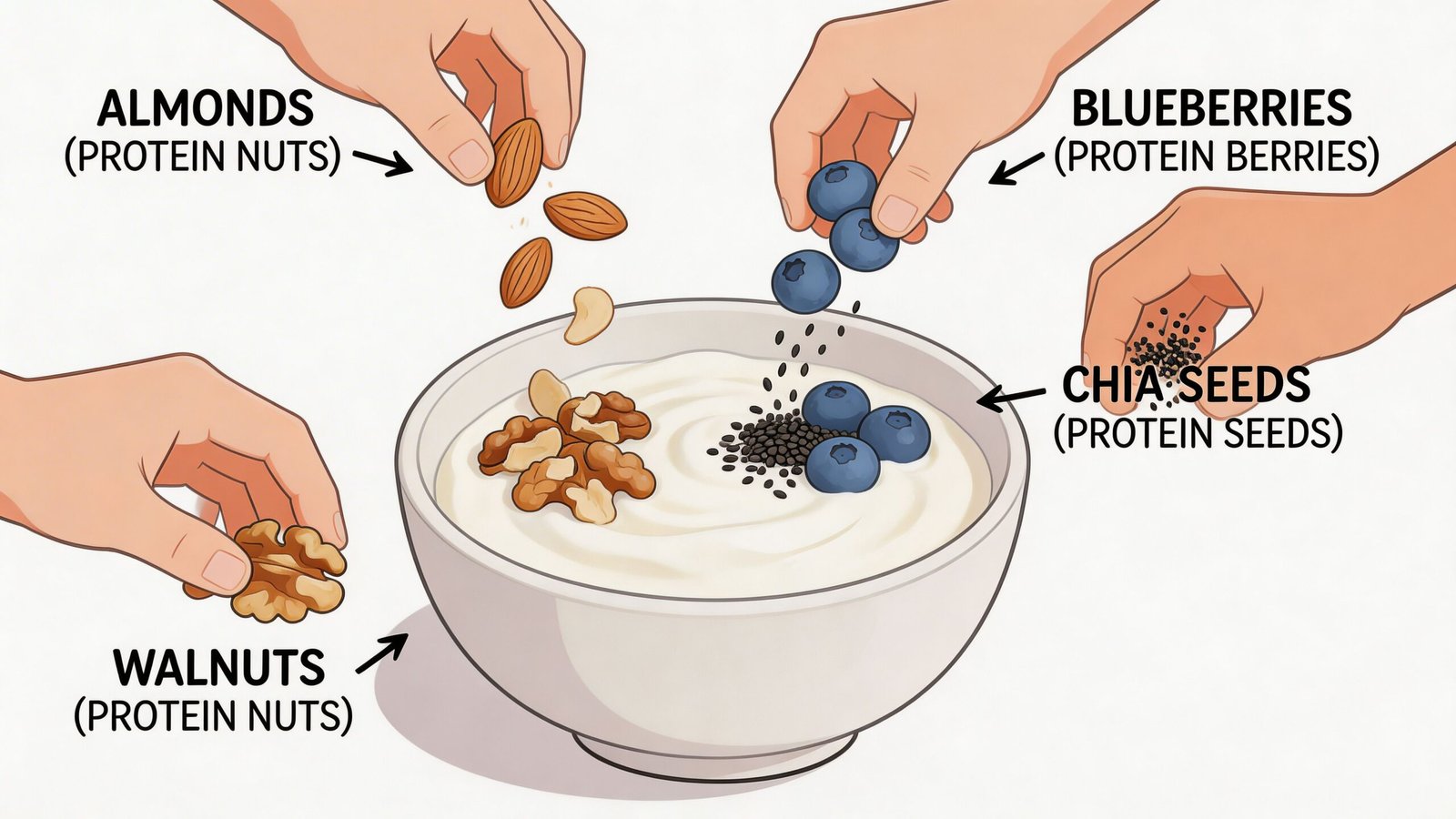
- Protein powder mixed in can make a plain yogurt bowl much more substantial. Vanilla often works best when you want the flavor to stay mild.
- Powdered peanut butter adds a nutty taste and can help when you want something that feels more like a treat.
- Hemp hearts, chia seeds, or sliced almonds can add texture and contribute more staying power.
- A higher-protein base helps before you add anything else. Starting with Greek yogurt or skyr gives you more room to build.
For more food ideas that make daily protein intake easier, this list of ways to increase protein intake is handy.
Build bowls for different goals
A fat-loss-friendly bowl might be plain Greek yogurt with berries and a small crunchy topping.
A post-workout bowl could be skyr mixed with protein powder and fruit.
A family breakfast might be regular yogurt with nuts and seeds, where the goal isn’t perfect macros but a more balanced start than a sugary cup on its own.
The best yogurt bowl is the one you’ll actually repeat. Consistency beats a fancy recipe you make once.
A quick visual can help if you want a few serving ideas before your next grocery run.
Watch for one easy pitfall
Flavored yogurts can still fit your life, but they can change the macro picture more than people expect.
Healthline notes that flavored yogurts can add sugars, which makes them a different choice than plain yogurt when you’re trying to keep tighter control of carbs and calories. If your goal is precision, start plain and add your own fruit or mix-ins so you stay in charge of the final bowl.
That one habit keeps yogurt from drifting from “high-protein breakfast” into “dessert wearing activewear.””
Logging Yogurt Protein with PlateBird in Seconds
Yogurt is simple to eat. Logging it often isn’t.
Traditional tracking gets annoying fast. You search for the exact brand, guess which serving size matches your container, add toppings one by one, then realize the version in the database may not match what’s in your fridge.
Where friction usually happens
A yogurt bowl sounds easy until it includes extras.
Now it’s not just yogurt. It’s Greek yogurt, blueberries, chia seeds, almonds, maybe powdered peanut butter, maybe half a scoop of vanilla protein. That’s the kind of meal people either log badly or stop logging altogether.
And that matters, because yogurt is one of those foods that can look “healthy” while landing very differently depending on type and toppings.
What makes faster logging useful
The easier a meal is to log, the more likely you are to stay consistent.
That’s especially true with repeat foods. A lot of people eat the same breakfast for days at a time. If your standard breakfast is some version of “skyr with berries and nuts,” you don’t want to rebuild that entry from scratch every morning.
A good tracker should reduce typing, reduce searching, and make custom meals feel easy instead of tedious.
Why yogurt is a good test case
Yogurt bowls reveal whether a macro tracker works for real life.
A simple food log handles “banana” and “egg.” A useful one handles mixed meals, brand-specific products, and all the little additions that turn a snack into a meal. If you’re comparing tools, look for one that makes custom food combinations painless, especially if your breakfast tends to repeat. This roundup of what to look for in the best macro tracking app can help you sort through that.
If logging breakfast feels annoying, most people don’t suddenly become more disciplined at lunch.
That’s why fast capture matters. Yogurt is often one of the first meals people should simplify. It’s frequent, customizable, and easy to underestimate. Once you can log that cleanly, the rest of the day usually gets easier too.
Your Path to Protein-Packed Yogurt
The yogurt aisle gets much less confusing once you know what changes the protein.
Regular yogurt is usually lighter in protein. Greek yogurt and skyr are often higher because they’re more concentrated. Some products also raise protein through added dry milk. Once you understand that, the label stops feeling random.
A second shift happens when you stop asking, “Is yogurt healthy?” and start asking, “What job do I want this yogurt to do?”
If you want a light snack, regular yogurt may work well. If you want breakfast to carry more of your protein target, Greek yogurt or skyr often makes more sense. If you like a certain yogurt but want it to do more, you can build it up with a few smart add-ins.
That’s the practical win. Protein in yogurt isn’t just a number to memorize. It’s a tool you can use. A thicker strained yogurt can help you reach your goal faster. A plain base gives you more control. A repeatable yogurt bowl can become one of the easiest meals in your routine.
Pick one option this week and make it deliberate. Read the label. Choose the style that fits your goal. Then build one yogurt bowl you’d be happy to eat again tomorrow.
PlateBird makes that kind of consistency easier. If you want a faster way to track yogurt bowls, meal-prep breakfasts, and repeat meals without digging through endless food entries, try PlateBird. You can type what you ate or snap a photo, and it handles the calories and macros without the usual logging friction.