
It’s 2 PM. Your focus is fading, your eyes feel heavy, and the pull of another coffee or a sugary snack is getting stronger by the minute. That slump isn’t a character flaw. It usually means your last meal gave you a fast burst of energy, then left you with nothing steady to run on.
Caffeine has a place, and I’m not anti-coffee. But if your day is built on caffeine, pastries, and whatever snack is closest to your desk, you’ll keep riding the same cycle of spike, dip, and rescue. Real energy comes from food that digests at a pace your body can use. That usually means a mix of protein, fiber, and slower-digesting carbohydrates, plus enough total food to keep you from running on fumes.
The best foods for energy don’t just wake you up for twenty minutes. They help you stay clear-headed through meetings, training sessions, school pickups, long commutes, and late afternoons when motivation usually drops. They also need to be practical. If a food is healthy but too annoying to prep, carry, or log, it's unlikely to become a regular habit.
That’s where simple tracking helps. Diet and nutrition apps are seeing strong engagement, with a 45% 30-day retention rate, 4.5-star average ratings, and 70% of users reporting improved eating habits after three months. In practice, that matters because awareness changes choices. When you can type a meal like “eggs toast coffee” or snap a photo in seconds, it’s much easier to spot what keeps your energy steady and what sets up the crash.
If you still like a caffeine ritual, fine. Just pair it with better food. And if you want drink ideas that rely less on the usual sugar hit, this guide to natural energy drinks is a useful complement.
1. Oats & Whole Grains
If you want one breakfast category that consistently carries people through the morning, this is it. Oats and other whole grains work because they release energy more gradually than refined cereal, white toast, or pastries. You feel fed, not wired.
That matters most for busy mornings. If you eat a bowl of sugary granola by itself, you may feel good for an hour, then hungry again before lunch. If you eat oats with protein and some fat, the meal usually lands very differently.
How to make oats actually work
The biggest mistake with oats is treating them like a dessert. Flavored packets, too much honey, and a tiny serving size turn a solid food into a short-lived snack.
A better setup looks like this:
- Build around the oats: Use overnight oats or steel-cut oats as the base.
- Add protein on purpose: Greek yogurt or protein powder makes the meal hold you longer.
- Keep toppings useful: Berries, chia, walnuts, or peanut butter add more staying power than syrup does.
A practical example is overnight oats with berries and protein powder before a workday that starts early. Another is steel-cut oats one to two hours before training, especially if you do better with steady fuel instead of fast sugar.
For people learning how carbs affect energy, PlateBird’s guide to complex carbohydrates foods is worth saving. It helps you spot the difference between carbs that carry you through the afternoon and carbs that disappear fast.
Practical rule: If your oat bowl is mostly sugar and barely any protein, don’t expect stable energy from it.
When you log oats, consistency matters more than perfection. If you always make them with the same bowl, same scoop, and same add-ins, PlateBird can turn that into a repeatable meal instead of a daily math problem.
2. Eggs
Eggs are one of the simplest foods for energy because they don’t create the blood sugar roller coaster that many breakfast foods do. They give you protein, fat, and enough substance to shut down the constant urge to snack an hour later.
They also scale well. A fast breakfast can be two boiled eggs and toast. A bigger meal can be a vegetable omelet before a long day on your feet or a lifting session later on.
Here’s a clean visual of the simplest version.

A lot of people say eggs “don’t give them energy” because they ate eggs alone and expected the same feeling they’d get from toast or juice. That’s missing the point. Eggs are a stabilizer. Pair them with whole grain toast, potatoes, fruit, or vegetables, and the meal becomes much more useful.
Best times to use eggs
Eggs are flexible, but they’re especially good in a few situations:
- For rushed mornings: Pre-boiled eggs remove decision fatigue.
- For meal prep: Egg muffins and frittatas reheat well and travel easily.
- For appetite control: An egg-based breakfast usually helps people avoid random vending-machine choices later.
A three-egg scramble with spinach and mushrooms works well for someone who wants a high-protein breakfast without a lot of prep. Soft-boiled eggs with whole grain toast are also excellent before a demanding work block because the meal feels light enough to function on, but substantial enough to last.
If you repeat the same breakfast often, save it as a text shortcut in PlateBird. Typing “3 eggs scrambled” is a lot easier than rebuilding the meal every morning.
This short clip gives a useful way to think about eggs in a balanced meal.
3. Bananas
You finish lunch at noon, get pulled into back-to-back meetings, and by 3:30 your focus drops hard. A banana is one of the simplest ways to prevent that slide when you need energy soon and do not have time for a full meal. It gives you usable carbohydrate in a form that travels well, digests easily, and requires zero prep.
Research on bananas and exercise performance has shown they can work well as a practical carbohydrate source around training, especially for moderate activity, as discussed by the University of Colorado Sports Medicine team. That does not make bananas the answer for every situation. For a long training session, heavy sweat loss, or a full missed meal, they usually need backup.

Where bananas fit best
Bananas earn their spot because timing matters. They work best before activity, after activity, or in the gap between meals when you need to stay productive without feeling heavy.
Use them with a clear purpose:
- Before training: Banana with peanut butter if you have an hour or two and want quick fuel that lasts a bit longer
- Right before activity: Banana by itself when you need something light and easy to tolerate
- After training: Banana with a protein shake or Greek yogurt to support recovery
- At work: Banana with yogurt instead of a pastry, especially if you want steadier energy and more protein. If yogurt is part of your regular rotation, this guide to protein in yogurt helps you choose options that keep you feeling full
The main trade-off is duration. A banana alone works fast, but it fades faster. Pairing it with protein or fat slows digestion and usually gives you a better runway. That is the difference between a pre-workout snack and a desk snack meant to carry you to dinner.
I also tell clients to stop blaming bananas for poor fat-loss progress. The problem is usually untracked extras, not the fruit. If that question keeps coming up, PlateBird’s article on whether bananas are good for weight loss gives a practical frame.
For all-day energy, this is the pattern to track in PlateBird. Log whether you ate the banana alone or paired it, and note how long your energy stayed stable. That takes the guesswork out fast. Within a week, you can usually see whether bananas are best for your pre-gym window, your afternoon slump, or both.
4. Greek Yogurt
Greek yogurt is one of the easiest “upgrade” foods I recommend because it fixes two energy problems at once. It adds protein, and it makes a meal or snack more filling without much effort. That’s useful for people who are always hungry by midmorning or who rely on snack bars that never quite do the job.
It also works in sweet or savory setups. While often associated with fruit, yogurt can also stand in for sour cream, become the base of a dip, or mix into overnight oats.
Why it works better than many convenience snacks
A lot of grab-and-go foods are easy to eat but poor at holding appetite steady. Greek yogurt does the opposite. It’s simple, cold, portable, and far more satisfying than the average muffin, cereal bar, or flavored coffee drink.
Use it in ways that don’t feel like diet food:
- Breakfast bowl: Plain Greek yogurt, berries, and oats
- Desk snack: Yogurt with almonds
- Post-gym option: Yogurt with banana and cinnamon
- Meal prep jar: Yogurt parfait with repeated ingredients you can log quickly
For people trying to hit protein without cooking more meat, this is one of the highest-value foods you can keep around. PlateBird’s guide to protein in yogurt helps sort through the difference between high-protein options and products that are mostly dessert with a health halo.
Greek yogurt is at its best when it replaces something weaker, not when it becomes another sugar vehicle.
Buy it plain if you can tolerate the taste. That gives you control. You can always add berries, cinnamon, or a little honey, but you can’t remove a heavy dose of sweetness once it’s in the cup.
5. Nuts & Seeds
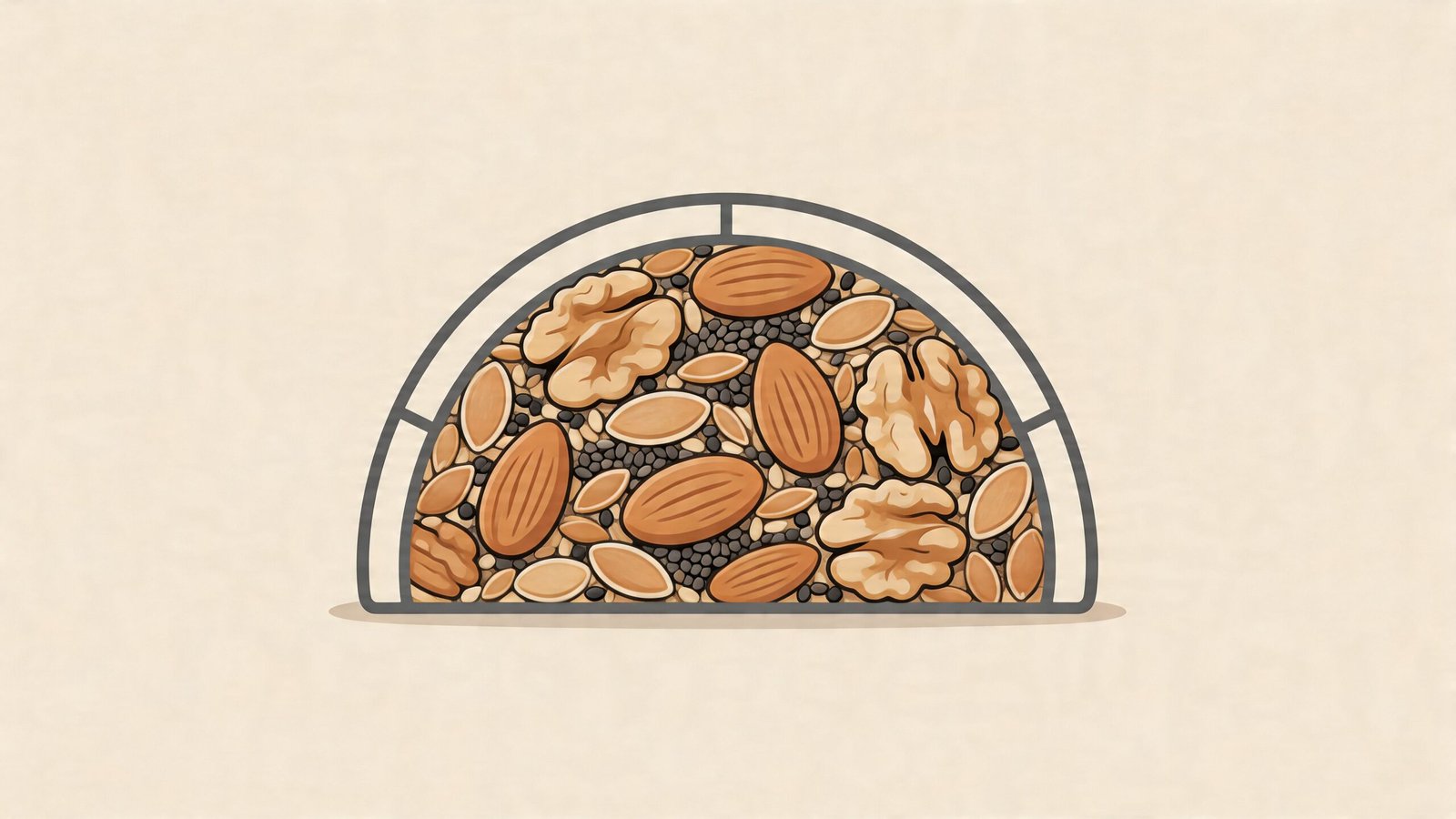
Nuts and seeds don’t feel dramatic, which is exactly why they’re so useful. They’re not a stimulant. They’re not a miracle. They’re a reliable, slow-burning tool when your energy dips because your meals are too small, too refined, or too far apart.
Among the most practical options, a handful of almonds can steady hunger quickly. In the verified nutrition notes, 28 grams of almonds provide 7 grams of protein, 14 grams of fat, 6 grams of carbs, and 164 kcal. That combination helps more than a sweet snack when you need stable energy instead of a rush.
The best uses for nuts and seeds
These foods work best as support pieces, not as random grazing food from a giant bag. Portion matters because they’re easy to overshoot.
Try these setups:
- For afternoon slumps: Pre-portioned almonds or walnuts instead of candy
- For breakfast support: Chia or flax added to oats or yogurt
- For meal prep: Chia pudding when you want an overnight option that isn’t oats
- For balanced snacks: Apple with almond butter
Chia deserves special mention. In the verified notes, chia seeds offer 5 grams of protein and 10 grams of fiber per 28 grams. They absorb liquid and create a thicker texture that slows eating and tends to hold people longer than they expect.
If you like seed-based add-ins, buying bulk hemp seeds can make regular use easier and cheaper.
Keep nuts and seeds visible, portioned, and ready. Most people don’t need more nutrition information. They need fewer barriers between themselves and the better snack.
6. Sweet Potatoes
Sweet potatoes are one of the best foods for energy if you want carbs that feel substantial without being heavy in the wrong way. They’re especially useful for active people who need fuel for training, steps, or physically demanding work, but they’re just as good for anyone who crashes after low-quality lunches.
A common pattern I see is this. Someone tries to “eat light” at lunch, has a salad with barely any carbohydrate, then wonders why they’re exhausted by 3 PM. A sweet potato solves part of that problem because it gives the meal real fuel.
How to use them strategically
Sweet potatoes fit especially well in meal prep because they reheat well and pair with almost any protein. Chicken and sweet potato is common for a reason. It’s simple, dependable, and easy to repeat.
A few reliable uses:
- Post-workout meal: Sweet potato with chicken or Greek yogurt sauce
- Lunch prep: Roasted cubes in bowls with protein and greens
- Breakfast option: Sweet potato hash with eggs
- Travel meal: Baked sweet potato packed whole and reheated later
There’s also a practical trade-off here. Sweet potatoes are excellent for sustained energy, but they’re not the best last-minute pre-workout food if your stomach is sensitive. Dense starch can sit heavily for some people if eaten too close to training. In that case, bananas or a lighter grain meal often work better.
Cook them in batches so they become convenient, not aspirational. If they’re already roasted and in the fridge, it’s easy to add them to dinner. If they’re still raw in a drawer, they tend to remain a good intention.
7. Chicken Breast
You feel this one most at lunch. A meal can look healthy and still fail you by 3 PM if it is missing enough protein to slow digestion and keep appetite steady. Chicken breast earns its place on an energy list because it makes meals hold.
That matters more than novelty. Consistent energy usually comes from repeatable meals you can prepare, portion, and eat without a lot of decision-making.
Why chicken works for sustained energy
Chicken breast is lean, filling, and easy to pair with the carbohydrate foods that carry most of your training fuel, like rice, potatoes, or wraps. The protein helps the meal last longer, which is useful for office workers, parents on the go, and anyone trying to avoid the afternoon snack spiral.
I use chicken most often as an anchor food. Once the protein is handled, it becomes much easier to build the rest of the plate well instead of grabbing random extras and hoping the meal is enough.
A few practical ways to use it:
- Work lunch: Chicken, rice, and a vegetable you enjoy
- Post-workout meal: Chicken with potatoes or quinoa and fruit on the side
- Quick dinner: Pre-cooked chicken in tacos, bowls, or stir-fry
- Higher-protein salad: Chicken over greens with beans or roasted potatoes so the meal has real staying power
The trade-off is obvious. Chicken breast is efficient, but it can get dry and boring fast if you cook it poorly. That is usually why people stop meal prepping it, not because the idea was bad. Use marinades, thigh-breast mixes, spice rubs, salsa, pesto, or yogurt-based sauces if plain chicken makes you lose interest.
Timing matters too. Chicken is usually a better lunch or dinner protein than a last-minute pre-workout choice, especially if you train soon after eating. For that window, lighter carbs often digest more comfortably. Chicken works best when you want a meal that keeps you steady for several hours.
If you use PlateBird, this is the kind of food worth turning into a saved default. Log a few reliable combinations once, then repeat them. That removes friction, makes portion tracking easier, and helps you notice a useful pattern. On days when protein is too low at lunch, energy often drops earlier and cravings hit harder.
Protein variety still matters. If you eat chicken often, rotate in eggs, yogurt, fish, tofu, beans, or lentils across the week so the habit stays practical instead of stale.
8. Berries
Berries are useful because they bring quick, clean energy without turning a meal into a sugar bomb. They also improve the foods people already eat. Add berries to yogurt, oats, or a smoothie, and the meal usually becomes easier to stick with.
They’re especially helpful for people who want something sweet in the afternoon but know cookies or candy make them feel worse an hour later. Berries give you sweetness with more structure.
Best ways to use berries without wasting them
Fresh berries are great, but frozen berries are often the more realistic choice. They’re easy to keep on hand, they work in smoothies and bowls, and they remove the “I forgot to eat them before they spoiled” problem.
A few strong uses:
- Breakfast: Oats topped with berries and seeds
- Snack: Greek yogurt with blueberries or raspberries
- Post-workout: Smoothie with berries and protein powder
- Dessert swap: Berries with yogurt instead of ice cream on ordinary weekdays
Their biggest advantage is what they replace. If berries help you move from pastries, candy, or oversized granola bars to a more balanced snack, your energy usually improves fast. The fruit itself matters, but the substitution matters just as much.
Some of the best foods for energy are powerful because they make your default choices better, not because they contain something magical.
For PlateBird users, berries are also easy to log by habit. Once you’ve built a repeat breakfast bowl, the app can turn it into a shortcut instead of forcing you to re-enter every topping.
9. Brown Rice & Quinoa
Lunch at noon, meetings all afternoon, workout after work, dinner late. That schedule exposes weak meals fast. Brown rice and quinoa help because they give a meal enough carbohydrate to last longer than a salad, a protein shake, or a random snack.
These are practical staples, especially for lunch and dinner. They digest more steadily than highly processed carbs, and they pair well with protein, fiber, and fat, which is what usually separates stable energy from the 3 p.m. crash.
The better choice is usually the one you will prep and eat consistently.
Brown rice fits almost any meal and tends to be more budget-friendly. Quinoa cooks faster in many kitchens, has a lighter texture, and works well in mixed bowls where you want the grain to blend with beans, vegetables, or chopped herbs instead of sitting heavily underneath.
A few combinations that work in real life:
- Standard meal prep: Brown rice with chicken, olive oil, and broccoli
- Plant-based lunch: Quinoa with lentils, greens, and roasted vegetables
- Post-training dinner: Rice with salmon and spinach
- Leftover reset: A grain bowl with whatever protein and vegetables are already in the fridge
Lentils also belong in this category, especially for people who want more staying power from a plant-based meal. As noted earlier, they bring carbohydrate, fiber, and protein in the same serving, which makes a bowl of quinoa and lentils much more effective for sustained energy than grains alone.
The key trade-off is portion size. Too little grain and the meal may look healthy but leave you drained an hour later. Too much, especially without enough protein or vegetables, and the meal can feel heavy. Energy improves when grains are the base, not the whole meal.
If afternoon fatigue keeps showing up, I usually start by checking lunch. A real bowl with brown rice or quinoa, a clear protein source, vegetables, and a little fat is easier to repeat, easier to track in PlateBird, and far more reliable than piecing together snacks and hoping they carry you through.
10. Leafy Greens
Leafy greens aren’t energy food in the way bananas or oats are. You won’t eat a bowl of arugula and feel suddenly charged up. Their value is different. They support the systems that help you use food well, recover well, and avoid the sluggish feeling that often comes with nutrient-poor meals.
Understanding the nuance is key. Greens don’t carry the meal. They complete it.
Why they still matter
The verified notes on lentils point out that legumes are recommended in part because their iron supports oxygen transport in hemoglobin, which matters for fatigue when intake is low. Leafy greens belong in the same broader conversation about energy support. They’re not a standalone fix, but they help build a diet that more effectively addresses the basics.
Practical uses are simple:
- Volume at lunch: Spinach under chicken and rice bowls
- Easy dinner add-on: Sautéed greens with eggs or salmon
- Hidden nutrition: Kale or spinach blended into smoothies
- Fast base: Arugula for wraps, bowls, and salads
The main mistake is eating greens in a way that leaves the meal incomplete. A plain salad with little protein, little carbohydrate, and minimal fat often leads straight back to hunger. Greens work best beside stronger anchors like eggs, chicken, sweet potato, quinoa, or lentils.
There’s another practical win here. Greens make meals larger and more satisfying without making tracking feel complicated. If you’re using PlateBird’s photo logging, a green-heavy bowl is still easy to capture without getting lost in details.
Top 10 Energy Foods Comparison
| Item | Implementation complexity 🔄 | Resource requirements ⚡ | Expected outcomes ⭐ | Ideal use cases 💡 | Key advantages 📊 |
|---|---|---|---|---|---|
| Oats & Whole Grains | Low, simple cook or soak | Low cost, shelf‑stable pantry staple | Sustained energy, stable blood glucose | Pre‑workout, breakfasts, meal‑prep bowls | High fiber, gradual carb release, versatile |
| Eggs | Very low, quick cook | Low cost, refrigeration required | Complete protein, strong satiety | Muscle building, quick meals, macro tracking | Complete AA profile, high bioavailability |
| Bananas | Minimal, ready‑to‑eat | Very low cost, highly portable | Rapid carbs, potassium/electrolyte replenishment | 30–60 min pre‑workout, on‑the‑go snack | Fast energy, gentle digestion, convenient |
| Greek Yogurt | Low, ready to eat; chilled | Moderate cost, refrigerated | High protein, muscle recovery, gut support | Post‑workout, breakfasts, protein snacks | Concentrated protein + probiotics, satiating |
| Nuts & Seeds | Low prep but needs portioning | Moderate–high cost, long shelf life | Slow‑burn energy, long satiety, heart support | Snacks, meal toppings, travel-friendly | Healthy fats, fiber, nutrient-dense (calorie-dense) |
| Sweet Potatoes | Medium, requires cooking | Low cost, needs prep & storage | Slow‑release carbs, high micronutrients | Post‑workout carbs, batch meal‑prep | High vitamin A & potassium, filling |
| Chicken Breast | Medium, cook skill for texture | Low–moderate cost, refrigerated protein | High lean protein, muscle maintenance, satiety | Meal prep, weight loss, bodybuilding | Exceptional protein‑to‑calorie ratio, consistent macros |
| Berries | Low, minimal prep; wash | Moderate cost, fresh or frozen | Antioxidant boost, low‑calorie satiety | Toppings, smoothies, snacks, post‑workout | High polyphenols & fiber with few calories |
| Brown Rice & Quinoa | Medium, cooking + batch prep | Low–moderate cost, pantry staples | Sustained energy; quinoa adds protein | Meal prep, bowls, post‑workout carbs | Batch‑cookable, reliable macros; quinoa = complete protein |
| Leafy Greens | Low, wash/chop; perishable | Very low cost, fresh/frozen options | Dense micronutrients with negligible calories | Volume meals, salads, nutrient boost | High vitamins/minerals, increases meal volume without calories |
Your Action Plan for Sustained Energy
It’s 3 p.m., you’ve already had coffee, and your focus is gone. In coaching, that slump usually traces back to a simple pattern. The first half of the day did not give your body enough protein, enough steady carbs, or enough total food to keep energy stable.
Start by finding the meal that breaks your day. For some people, it’s a rushed breakfast of coffee and nothing else. For others, it’s a lunch built from refined carbs with very little protein or fiber. Fix that one meal first and you usually get more traction than trying to clean up everything at once.
A practical breakfast might be oats with Greek yogurt and berries, or eggs with whole grain toast and fruit. A practical lunch might be chicken with sweet potato and greens, or brown rice with lentils and vegetables. The point is not variety for its own sake. The point is building meals that digest at a reasonable pace and keep you productive for the next few hours.
Timing matters too. Bananas work well before training or between meetings because they give quick, usable carbohydrate. Nuts and seeds travel well and help hold you over, but they are support foods, not a replacement for a real meal. If lunch is too small, no “healthy snack” will fully cover that mistake.
Convenience decides whether good intentions survive a busy week. Keep energy foods visible and ready to eat. Batch-cook rice or quinoa. Roast sweet potatoes in advance. Store boiled eggs at eye level. Portion nuts into small containers. Freeze berries and keep Greek yogurt stocked. Repetition beats motivation here.
Tracking should answer one question. Which meals keep your energy steady?
That’s why low-friction logging matters. If you can type “oatmeal berries walnuts” or snap a photo of your chicken and sweet potato lunch, you can spot patterns without turning nutrition into homework. PlateBird works well for this because the process is fast. Busy professionals, parents, and first-time trackers tend to stick with systems that do not slow them down.
You also have more options than you did a few years ago. Plant-based staples, higher-protein convenience foods, and ready-to-use ingredients make it easier to build balanced meals around your preferences, whether you eat eggs and chicken, rely more on yogurt and grains, or mix in more beans, tofu, and lentils. The trade-off is that convenience foods still need scrutiny. A product marketed for energy can still be light on protein, heavy on sugar, or too small to function as a meal.
Use a simple filter for every meal meant to carry you for hours. Include a protein source, a slower-digesting carbohydrate, and a source of fiber or food volume. If one piece is missing, the meal is more likely to leave you hungry, distracted, or reaching for caffeine.
Keep the plan small enough to repeat. Build two breakfasts, two lunches, and two backup snacks that fit your schedule and budget. Log them for a week. Then adjust based on what happens at 10 a.m., 3 p.m., and after workouts. If you want more everyday strategies for this, this practical guide to boosting energy naturally pairs well with the food-first approach above.
PlateBird makes this easier to put into practice. Instead of guessing what caused your crash or trying to remember what you ate, you can type meals like “eggs toast coffee” or “chicken rice broccoli,” snap a photo, and log in seconds. If you want a faster way to spot which foods for energy work for your body and routine, try PlateBird.