A medium green apple has around 95 calories. Depending on its size and variety, most medium green apples fall in a range of 72 to 102 calories.
That’s probably what you wanted to know when you grabbed one from the fruit bowl, tossed it in your bag, or sliced it up next to lunch and wondered, “Do I need to count this carefully?” The good news is that green apples are one of the simpler foods to track. The tricky part isn’t whether they fit into your goals. It’s figuring out why one app says one number, another says something else, and your apple looks bigger than “medium” anyway.
If you’re new to calorie tracking, that can feel oddly annoying for such a basic snack. You want a clear answer, a practical estimate, and a fast way to log it without pulling out a food scale every time.
Your Quick Answer to Green Apple Calories
You grab a green apple on the way out the door, then pause for a second and wonder whether it is a 60-calorie snack or something closer to 100. For everyday tracking, the fast answer is simple. A medium green apple is about 95 calories.
That estimate is good enough for real life. If the apple fits comfortably in your palm and does not look unusually tiny or oversized, logging 95 calories is a sensible call. A smaller one will usually come in a bit lower. A larger, heavier Granny Smith can come in a bit higher.
The simple number to remember
A helpful way to picture it is by hand size, not by grams:
- Small green apple: lower than your usual medium estimate
- Medium green apple: about 95 calories
- Large green apple: a little above that
That approach keeps calorie tracking practical. You do not need to treat a piece of fruit like a math problem every time you eat one. You need a reliable anchor number, then a quick size check.
Easy rule: If your apple looks average-sized, log it at about 95 calories and move on.
The importance of a simple estimate
Tracking works best when the process is fast enough to repeat. A green apple is a good example. The calorie count can shift a little with size, but the difference is usually small enough that a solid estimate is generally sufficient.
If you are new to logging food, this helps remove the friction. Start with 95 calories as your baseline. Then adjust only when the apple is clearly much smaller or larger than average. PlateBird makes that kind of quick logging easier, especially if you are also learning how fiber contributes to calories and why high-fiber foods can feel more filling than their calorie count suggests.
The bigger win is consistency. Logging one apple accurately enough, in a few seconds, beats skipping it because the number feels annoying to figure out. That same practical mindset matters across your whole day, including post-workout snacks and meals, which is why some readers also like Energy Supplement Reviews' guide on recovery.
The Complete Nutrition Breakdown of a Green Apple
A green apple is one of the simplest foods to understand once you split it into parts. Most of what you are eating is water and carbohydrate, plus a useful amount of fiber. Fat and protein are present only in small amounts, so from a tracking perspective, a green apple fits best in the “fruit carb” category.
That matters because calorie tracking gets easier when you know a food’s job. A green apple is not trying to be a protein snack or a high-fat food. It gives you a light, crisp source of energy that is usually easy to fit into your day.
What you are really getting nutritionally
Here’s the practical version.
- Carbohydrates: the main source of calories in a green apple
- Fiber: part of those carbs, and one reason an apple often feels more filling than candy or crackers with similar calories
- Sugar: naturally occurring fruit sugar, packaged with water and fiber
- Fat: very low
- Protein: very low
If you are new to macros, it helps to picture an apple as a mostly-carb snack with built-in volume. The water gives it size. The fiber slows things down a bit. That combination is why eating a whole apple usually feels different from eating a small handful of sweets.
If you want a plain-English explanation of how fiber affects calorie math, this guide on how fiber contributes to calories clears up a common point of confusion.
A practical size guide
You do not need to memorize grams to log a green apple well. A quick visual estimate is usually enough.
| Visual size | What it looks like in your hand | Estimated calories |
|---|---|---|
| Small | Fits easily in your palm | Lower end of the usual range |
| Medium | About the size most people picture | Around your standard apple entry |
| Large | Fills your hand and feels noticeably heavier | Higher end of the usual range |
That is the useful takeaway. The nutrition profile stays mostly the same, while the calories shift up or down with size. For everyday logging, the smartest move is to identify the size first, then choose the closest entry and keep going.
PlateBird makes that fast. You are not stuck comparing five nearly identical database listings and wondering which one is “perfect.” Pick the closest size, log it in seconds, and stay consistent.
What the macros mean in real life
A green apple works well before a walk, alongside lunch, or as a quick afternoon snack. If you want it to keep you full longer, pair it with something that brings protein or fat, like Greek yogurt, cottage cheese, or a small handful of nuts.
That pairing approach is useful for beginners. The apple gives freshness, crunch, and easy-to-track carbs. The add-on makes the snack more balanced.
A green apple also makes more sense than many packaged snacks when you want something simple and easy to budget into your day. If you are also planning meals around training, Energy Supplement Reviews' guide on recovery gives practical meal ideas that pair well with fruit.
Why Apple Calorie Counts Can Vary
This is one of the most common points of confusion in calorie tracking. You type “green apple” into different tools and see slightly different numbers. That doesn’t mean one number is fake. It usually means the apples aren’t exactly the same.
Variety changes the baseline
“Green apple” is a broad label. A Granny Smith is the green apple typically envisioned, but even within that category, the edible portion, skin, and growing conditions can shift the final calorie count.
Aprifel’s Granny Smith nutrition sheet lists 53.90 kcal per 100g edible portion, with 85.30g water per 100g and 2.60g pectin fiber per 100g. That high water content helps explain why apples are relatively low in calorie density.
Water and fiber both matter
A juicy apple and a denser apple won’t feel exactly the same when you bite into them, and they may not land at the same calorie value per piece either. More water means fewer calories packed into each bite. Fiber also changes the picture.
Aprifel notes that the fiber matrix in Granny Smith apples can trap 10 to 15 percent of carbohydrates from digestion, which reduces net metabolizable energy in practical terms in their analysis. That’s one reason fruit calories can feel less straightforward than the number on a label for a packaged bar.
Don’t panic when two databases differ slightly on an apple. Whole fruit varies by size, water content, and edible portion. That’s normal.
Ripeness and growing conditions add noise
Some apples are more tart, some are sweeter, and some are larger than they appear. Ripeness can affect texture and taste, and growing conditions can influence water content and carbohydrate concentration. You don’t need to memorize the science to track well. You just need to know that a green apple isn’t a factory-made object with the exact same nutrition every time.
That’s why consistency beats perfection here. Use a sensible estimate, keep your logging method the same, and move on.
How to Estimate and Log Your Apple in Seconds
You grab a green apple on the way out the door, take two bites between errands, and then pause when it is time to log it. Is it small or medium? Does the core matter? Do you need to care whether it was a Granny Smith?
That little moment of friction is what throws people off. The goal is not perfect apple math. The goal is a repeatable method you can use in a few seconds.
Use visual size cues first
Your hand is usually enough.
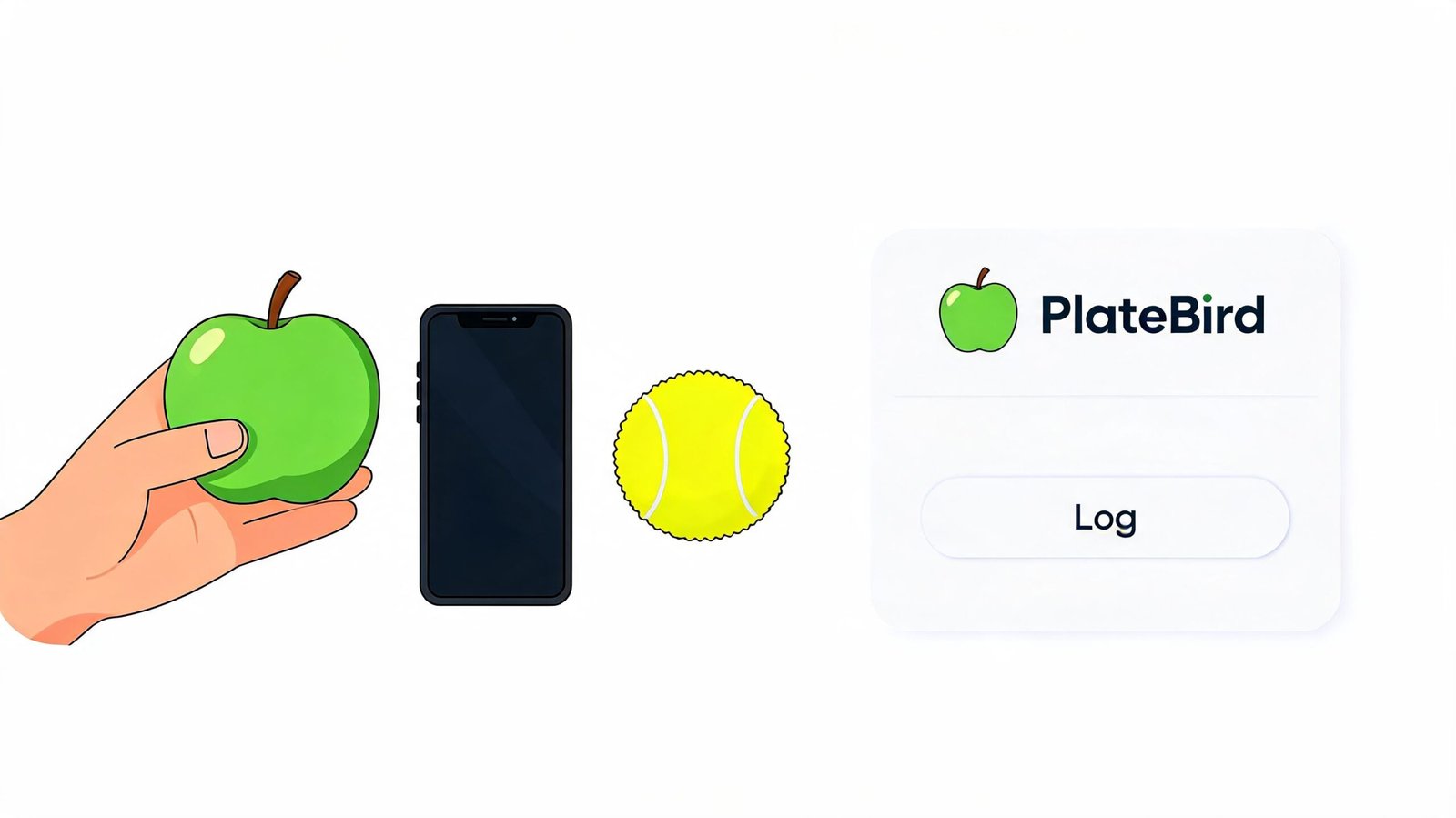
A green apple works a lot like a baked potato or an avocado in calorie tracking. Size changes the total more than tiny differences in variety. Start by sorting it into a simple mental bucket:
- Small: fits easily in your palm and looks more snack-sized
- Medium: the standard lunchbox apple often thought of
- Large: wider, heavier, and closer to the bigger apples in the produce bin
That is usually accurate enough for daily logging.
If you ate the whole apple except the stem and core, log the whole apple. If you only ate part of it, log half or a portion. No need to overthink the inedible bits unless you are weighing food very closely.
When a more specific estimate helps
Some apples clearly sit near the edges. A tiny tart green apple and a big heavy Granny Smith should not land in the same entry.
As noted earlier, a medium green apple is a solid default. For a larger fruit, choose a large apple entry. For a smaller one, choose small. The practical win comes from matching the size category consistently, not from chasing tiny adjustments each time you snack.
A helpful rule is this: if the apple looks close to average, log average. If it obviously stands out, change the size.
Fast habit: Pick one naming style and keep using it, such as “small green apple,” “medium green apple,” or “large Granny Smith.” Consistent labels make your log cleaner and easier to trust.
The fastest way to log it
Use a three-step routine:
- Scan the size. Small, medium, or large.
- Choose the closest database entry. “Green apple” is usually enough.
- Move on. Save precision for foods that are much harder to estimate.
That last step matters. An apple is one of the easier foods to track because it comes in its own package and has a familiar shape. You do not need to treat it like a restaurant meal with hidden ingredients.
If you want a simple system for foods like this, PlateBird makes the process quick. This guide on how to count calories without overcomplicating it shows the same practical approach.
Green Apples vs Other Common Snacks
Knowing how many calories does a green apple have is useful. Knowing what that means compared with other snacks is even more useful, because snack choices are where many people subtly drift away from their goals.
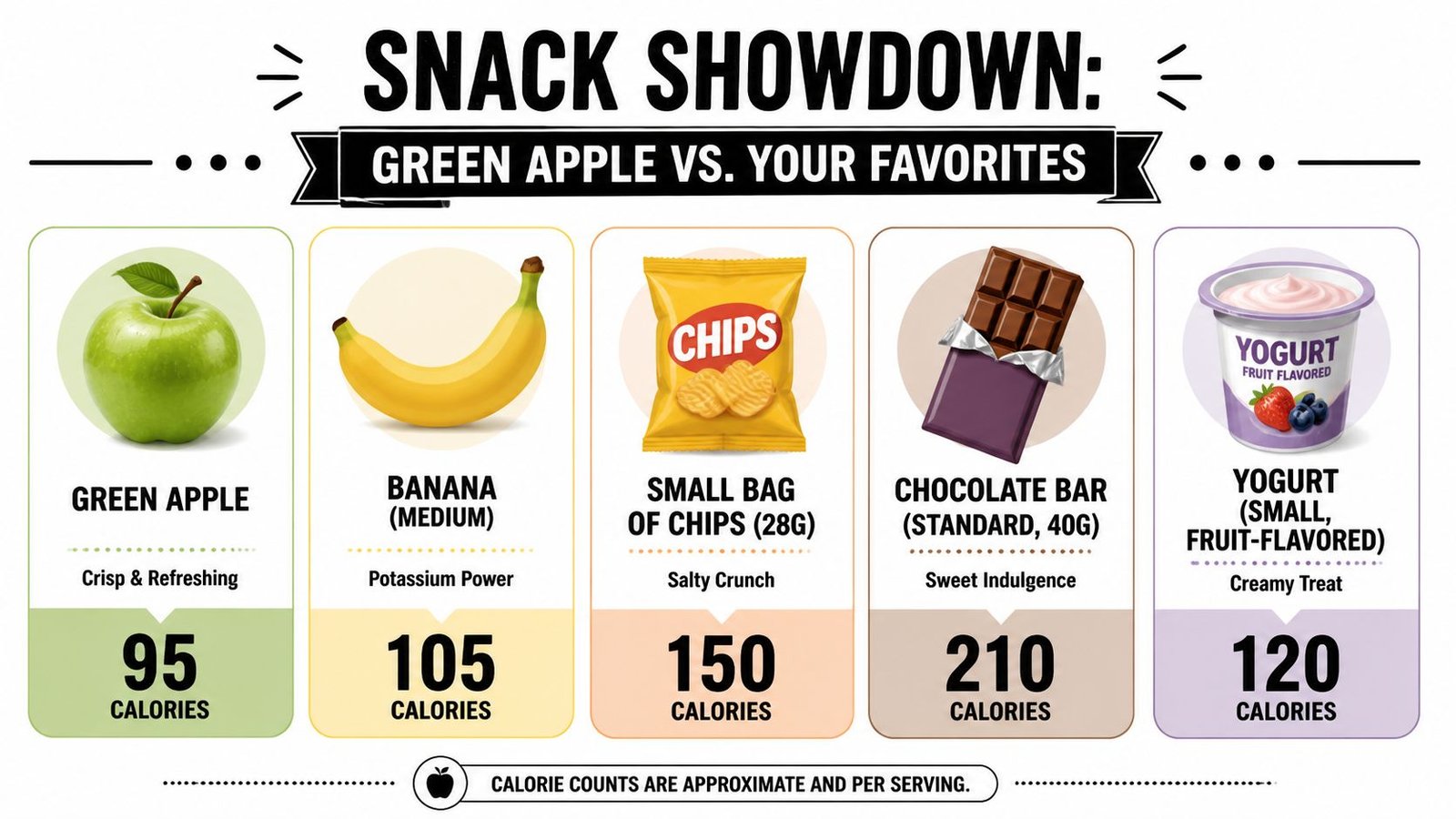
A medium raw unpeeled apple contains 94.6 calories and has a glycemic index of 42 to 44, according to Healthline’s apple nutrition guide. That low glycemic index is one reason apples tend to provide steadier energy than sugary snack foods that hit fast and fade fast.
Here’s a visual comparison.
Why the apple often wins
A green apple gives you crunch, volume, water, and fiber in one simple food. That combination tends to feel more satisfying than a snack that disappears in a few bites.
Compare the general experience:
- Green apple: fresh, crisp, and slower to eat
- Chips or candy: easy to eat quickly, often less filling for the same calorie budget
- Sweet snack bars: convenient, but often more like dessert than fruit
If you’re deciding between fruit options, this article on whether bananas are good for weight loss is a helpful comparison.
A better choice for steady energy
The issue with many snack foods isn’t just calories. It’s how easy they are to overeat and how little staying power they offer. Apples slow you down. You chew more. You get fiber. You usually feel like you ate something real.
This short video gives a useful look at apples and their nutrition in a more visual format.
That doesn’t mean a green apple is the “best” snack for every situation. If you need more staying power, pair it with protein or fat. But if you want a clean, low-effort choice, it’s hard to argue with a whole fruit that lands around 95 calories and doesn’t come with a long ingredient list.
Make the Smart Choice for Your Health Goals
A green apple is one of the easiest foods to fit into a healthy eating pattern. It’s light in calories, rich in fiber, easy to carry, and simple to build into a busy day. Generally, the practical answer is enough: a medium green apple has around 95 calories, and slight variation is normal.
That matters because good nutrition habits usually don’t fall apart over one apple. They fall apart when every small decision feels harder than it should. If you can estimate common foods confidently and log them quickly, you’re much more likely to stay consistent.
Use the simple version when life is busy. Use the more detailed version when the size or variety obviously changes the estimate. Either way, keep moving. Consistent tracking beats perfect tracking every time.
If you want calorie tracking to feel fast instead of frustrating, PlateBird makes it simple. You can type what you ate in plain English or snap a photo, and the app calculates calories and macros without the usual database digging. That means everyday foods like a green apple take seconds to log, so you can stay focused on your goals instead of getting stuck in the tracking process.