- Why water belongs in a macro-tracking routine
- How much water adults actually need
- What hydration changes in your nutrition log
- The easiest way to log water without adding friction
- Hydration habits that improve macro accuracy
- Mistakes people make when they ignore water
- A simple hydration-plus-macros template for daily use
- When to talk to a professional about hydration concerns
- Frequently asked questions
You tracked your meals carefully all week. Protein hit the target, carbs stayed in range, fat came in close. But by Thursday afternoon you had a splitting headache, felt sluggish after lunch, and snacked more than you planned. Nothing in your food log explained it. The macros looked fine.
That gap is worth paying attention to. A log built only on calories, protein, carbs, and fat is missing a variable that shapes how every meal actually feels inside your body. Hydration and macros work together, and when your food log ignores water, you lose context that helps explain the days when things go sideways.
This article explains why water belongs in a nutrition log, how much you likely need, and how to track it without turning your routine into a second job.
Why water belongs in a macro-tracking routine
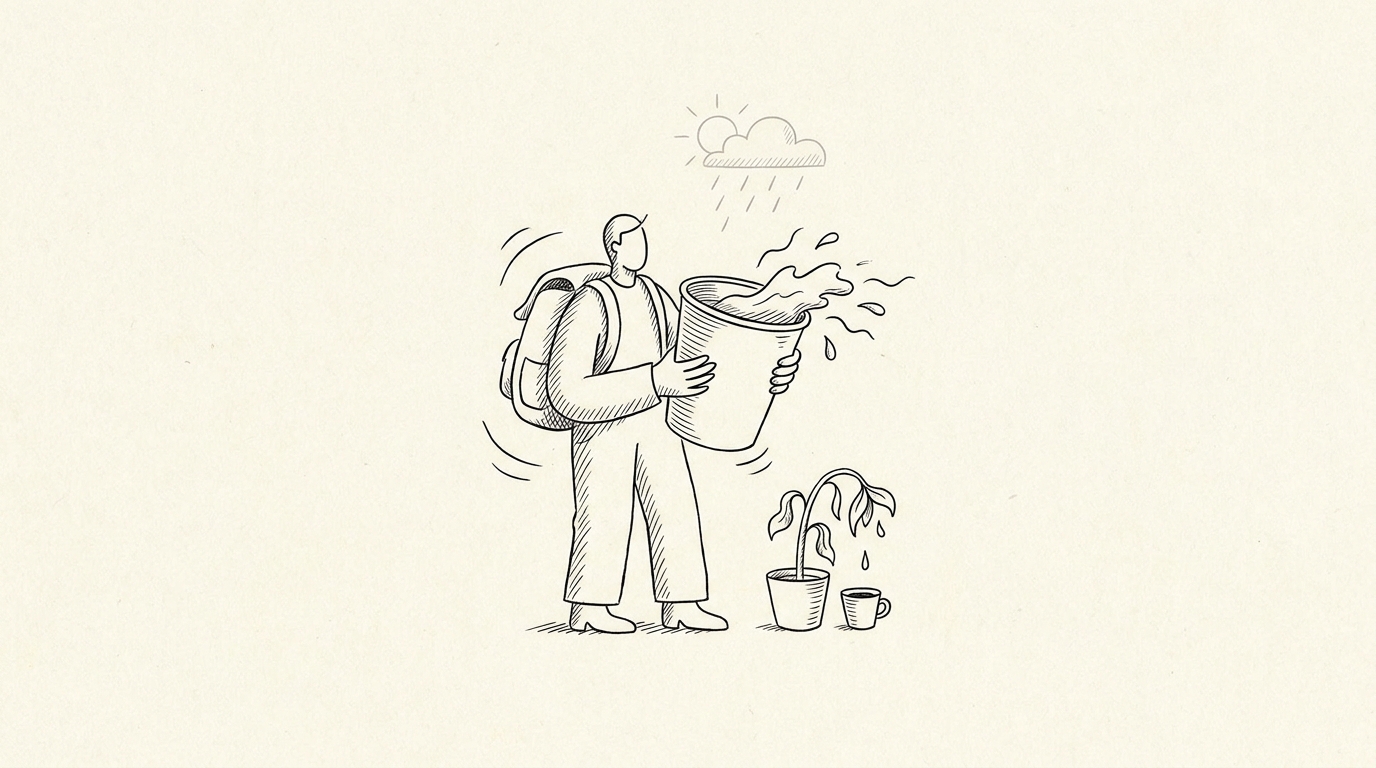
Macros tell you what you ate, not how it felt
A food log captures energy and nutrients. It does not capture whether you were dehydrated when you ate, whether a high-sodium meal pulled water out of circulation, or whether a dry afternoon explained the hunger spike at 4 p.m.
Adding water to your log does not replace calorie tracking. It adds a behavior layer. You start to see whether your high-protein days also included enough fluid, or whether the days you overate were the days you drank almost nothing until dinner.
That pattern recognition is the point. Water logging is context, not competition.
Fullness and hunger signals get muddier without it
Thirst and hunger share some of the same signaling pathways. A useful heuristic I return to often: if you feel hungry within 90 minutes of a full meal, drink 250 to 350 ml of water and wait 10 minutes before reaching for food. In my experience, that resolves the urge more often than not.
That is not a medical claim. It is a practical observation about how incomplete hydration can mimic appetite. Your log will not catch it unless you record both.
Your food log is incomplete if it ignores water. Macros tell you what you ate; water helps explain how it felt.
How much water adults actually need
The numbers from the National Academies
The U.S. National Academies of Sciences, Engineering, and Medicine set Adequate Intake levels for total daily water at approximately 3.7 liters for adult men and 2.7 liters for adult women. That figure covers all sources: plain water, other beverages, and water that comes from food itself.
Food contributes around 20% of total water intake for someone eating a balanced diet with plenty of fruits and vegetables. That leaves roughly 3.0 liters of fluid per day for men and 2.2 liters for women coming from drinks.
Translated into practical terms, that is somewhere between 8 and 13 cups of liquid per day depending on your size and diet. Not a single universal number.
Why individual needs shift the target
The Adequate Intake figure is a population-level reference point. Your actual need moves based on body weight, activity level, climate, and what you are eating. A 90 kg person doing 60 minutes of cardio in summer heat needs more than a 65 kg person working a desk job in an air-conditioned office.
High-protein diets can increase the kidney’s workload slightly, which is one reason fluid intake matters more when protein is above 150 g per day. High-fiber eating patterns, where you are regularly hitting 25 to 35 g of fiber daily, also benefit from consistent fluid intake to keep digestion moving comfortably.
| Context | Approximate daily fluid target |
|---|---|
| Sedentary adult, temperate climate | 2.0 to 2.5 liters from drinks |
| Active adult, moderate exercise | 2.5 to 3.5 liters from drinks |
| High-protein diet (150 g+ per day) | Add 300 to 500 ml above baseline |
| Hot climate or outdoor work | Add 500 ml to 1 liter above baseline |
| High-fiber diet (30 g+ per day) | Add 250 to 400 ml above baseline |
Your hydration target should be based on your context, not a generic eight-glasses rule that ignores what you ate, how hard you trained, or where you live.
What hydration changes in your nutrition log
Dry and salty meals shift the picture
A meal high in sodium, say a restaurant entree with 1,500 mg of sodium or more, pulls water into your bloodstream and can trigger thirst for hours afterward. If you log that meal and nothing else, your log shows the macros but misses the downstream effect on how you felt and whether you compensated by drinking more or snacking more.
Dry meals, things like rice cakes, protein bars, or plain chicken breast without sauce, also land differently depending on whether you drank alongside them. The same 40 g protein meal can feel satisfying or leave you reaching for more food an hour later, partly based on fluid intake around it.
High-fiber and high-protein days need more attention
When fiber intake climbs above 25 g in a day, fluid becomes part of how that fiber works. Without enough water, a high-fiber day can feel bloated or uncomfortable. With enough, the same meals feel clean and filling. That difference does not show up in a macro log unless you track both.
A similar pattern holds for protein. Digesting 180 g of protein in a day costs more metabolic effort than digesting 80 g. In my experience, the days I feel best on a high-protein cut are the days I also hit at least 2.5 liters of water. The days I skip that, something feels off even when macros are identical.
Spotting patterns around energy and late-day hunger
If you log water alongside meals for two weeks, you will likely notice something. The afternoons where you feel foggy or reach for snacks often correlate with mornings where you drank less than usual. That is not a guarantee, and it is not a medical diagnosis. It is a pattern worth seeing.
A food log that captures only macros cannot show you that pattern. One that includes water can.
The easiest way to log water without adding friction
Pick one unit and stick with it
The simplest approach: choose a container you use every day and count refills. A 500 ml bottle means 6 refills gets you to 3 liters. A 750 ml bottle means 4 refills. A standard 240 ml cup means 10 to 12 cups. Any of these works. The one that fails is the system you have to think about.
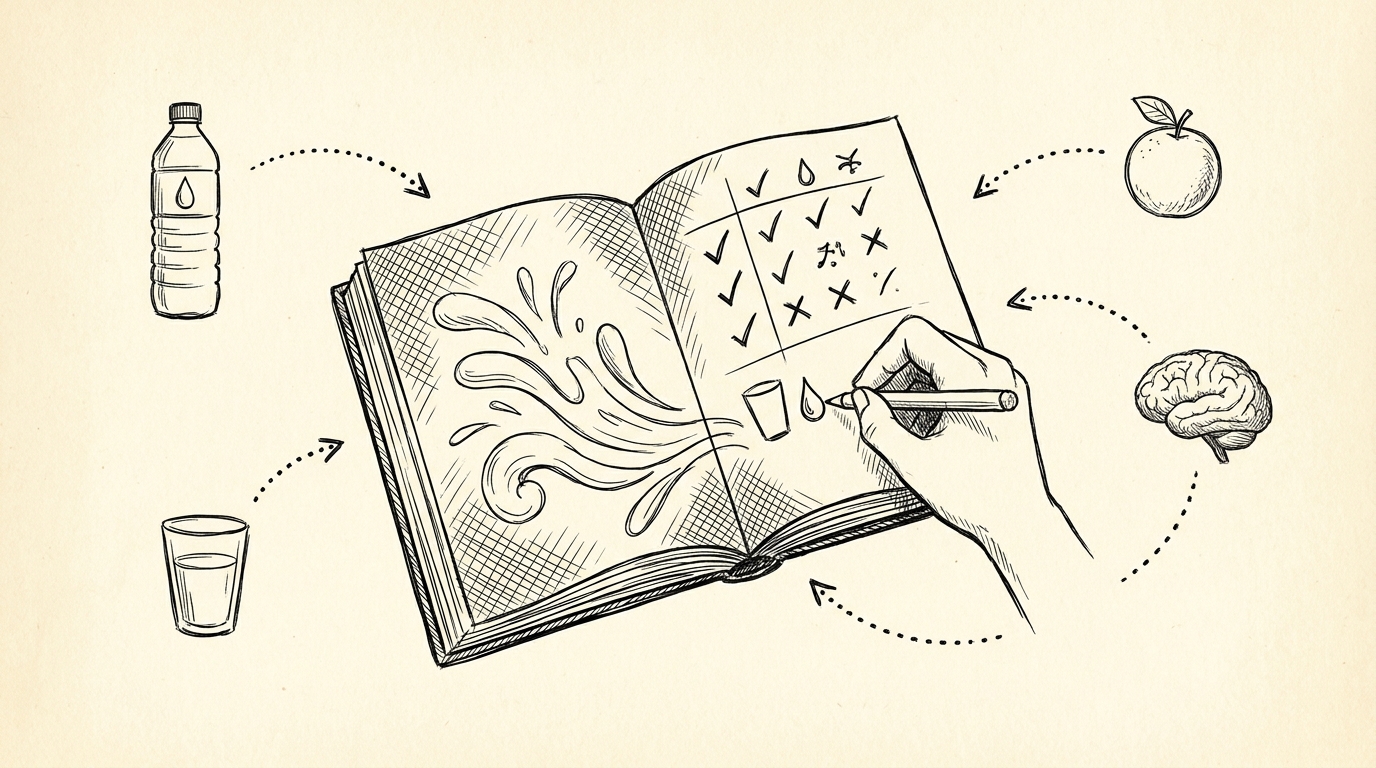
Log the number at the same time you log a meal. Attach it to breakfast, lunch, dinner, and one evening check-in. Four data points per day is enough to see whether you are hitting your target or falling short.
Sync water entries to existing habits
The most reliable water logging habit I have seen is the one that piggybacks on something already happening. Log your morning coffee, then add however much water you had before it. Log your post-workout meal, then add your intra-workout water. Log dinner, then add your evening total.
That approach turns water logging from a separate task into a natural extension of the meal-logging habit you already have. No extra apps, no extra reminders. Just one more line in the same entry.
- Use a fixed bottle size so the math is always the same and you are counting refills, not estimating ounces.
- Log water at each meal entry so it becomes part of the same action rather than a separate task to remember later.
- Include coffee, tea, sparkling water, and other beverages in your fluid total, since they all contribute to daily intake.
- Set a soft daily target in round numbers, like 2.5 liters, and track whether you hit it rather than chasing an exact figure.
- Note any day where you exercised for more than 45 minutes or were in heat, and add 500 ml to your usual target for that day.
Hydration habits that improve macro accuracy
Use water logs to sanity-check high-protein days
When protein is above 150 g in a day, a quick look at your water log tells you whether the day was set up well or set up to feel rough. A high-protein day with only 1.5 liters of water is a different experience than the same macros with 3 liters. The macro log alone cannot show you that.
A useful heuristic: for every additional 50 g of protein above your baseline, add roughly 250 ml to your fluid target for the day. That is not a clinical formula. It is a practical adjustment that tends to make high-protein days feel better.
Pair water tracking with meal timing
If you eat at 7 a.m., 12 p.m., and 7 p.m. and find yourself hungry at 3 p.m. every day, your log can help you figure out why. If your water entries show you had less than 500 ml between lunch and the afternoon hunger spike, that is a data point worth acting on before assuming your macros need adjusting.
Meal timing and hydration interact. Drinking 300 to 400 ml of water 20 to 30 minutes before a meal is a pattern that many people find reduces how much they eat at that meal. Worth testing and worth logging so you can see whether it holds for you.
A good log does more than count calories. It explains the day. Water entries can reveal why your hunger shifted later when the macros looked identical to the day before.
Mistakes people make when they ignore water
Treating every energy dip as a macro problem
Not every afternoon slump is a carb issue. Not every hunger spike before dinner is a protein shortage. Some of those signals are hydration signals. If you only log food, you will only look for food-based explanations. That narrows your diagnostic view considerably.
A simple test: the next time you feel an unexplained energy dip, check your water log before adjusting your meal plan. If you have had less than 1 liter by midday on a day where you usually need 2.5, that is worth addressing first.
Forgetting that beverages count
Coffee, tea, sparkling water, broth, and even zero-calorie drinks all contribute to your fluid total. A person who drinks 2 cups of coffee, 1 cup of green tea, and 500 ml of sparkling water has already logged over 700 ml before touching a plain glass of water. That matters.
Forgetting beverages means underestimating your actual intake and potentially over-correcting with plain water when you are already close to your target. Log everything you drink, not just water from a bottle.
Assuming one target fits every day
A flat daily water goal of 2 liters works fine on a rest day in winter. It falls short on a day where you ran 8 km in 28-degree heat and ate 40 g of fiber. Hydration needs are not static. They shift with temperature, exercise duration, meal composition, and even how much you sweat at night.
A weekly review of your log, looking at water intake against training days, high-sodium meals, and fiber totals, tells you far more than a daily average ever will.
- Logging only plain water and ignoring coffee, tea, and other drinks gives you a false picture of how little you are drinking.
- Treating thirst, fatigue, and hunger as the same signal leads to overeating on days when the real issue was fluid deficit.
- Using the same water target every day regardless of exercise or climate means you are under-hydrated on your hardest days and possibly over-focused on water on your easiest ones.
- Skipping water logs on weekends because tracking feels less important then is exactly when the pattern breaks and the data becomes useless for comparison.
A simple hydration-plus-macros template for daily use
What a complete daily log entry looks like
A useful daily log does not need to be elaborate. It needs to be complete enough to explain the day when you look back at it on Sunday. Here is what a practical entry covers:
- Breakfast entry: food logged, protein and carb totals, water consumed before and during the meal noted in ml or cup count.
- Lunch entry: same format, plus a note if the meal was high in sodium (above 800 mg) or unusually dry.
- Afternoon check-in: total water to that point, any snacks logged with macros, note if hunger felt higher or lower than usual.
- Dinner entry: full macro log, water total for the day, one-line note on exercise duration or heat exposure if relevant.
- Daily summary: total protein, carbs, fat, calories, total fluid in liters, and one honest sentence about how the day felt.
Review weekly, not daily
A single day’s water log tells you almost nothing useful in isolation. Seven days together show you a pattern. Look at whether your lowest-water days match your highest-hunger days. Look at whether high-fiber days above 30 g also had enough fluid. Look at whether your training days included at least 500 ml more than your rest days.
That weekly review takes about 5 minutes and gives you more actionable information than any single day of perfect logging ever could.
Weekly patterns matter far more than one perfect day. A simple template you use every day beats a complicated system you abandon by Wednesday.
When to talk to a professional about hydration concerns
Signs that go beyond self-tracking
Persistent headaches, chronic fatigue that does not resolve with more sleep or better nutrition, or recurring muscle cramps that appear even on days with adequate fluid intake are worth discussing with a doctor or registered dietitian. Those symptoms can have multiple causes. A food log is a useful data source to bring to that conversation, not a substitute for it.
Athletes training more than 10 hours per week, people living in consistently hot climates, and those with kidney conditions, heart conditions, or other health factors should get individualized guidance rather than relying on general population targets. The 3.7 and 2.7 liter figures from the National Academies are starting points, not prescriptions.
Special cases need specific guidance
Pregnancy, breastfeeding, endurance sport, and certain medications all change how the body handles fluid. If any of those apply to you, a general article is not the right tool. A registered dietitian who works with your specific situation is.
What self-tracking can do is give that professional a richer picture of your actual habits. A log that includes water alongside macros is more useful in a clinical conversation than one that only shows food.
Frequently asked questions
Does water have calories or macros?
Plain water has zero calories, zero protein, zero carbs, and zero fat. It does not affect your macro totals. Some flavored waters contain small amounts of carbohydrates, usually between 1 and 5 g per serving, so check the label if you are tracking tightly. Sparkling water and plain mineral water are also calorie-free.
Should I log water in my calorie tracker?
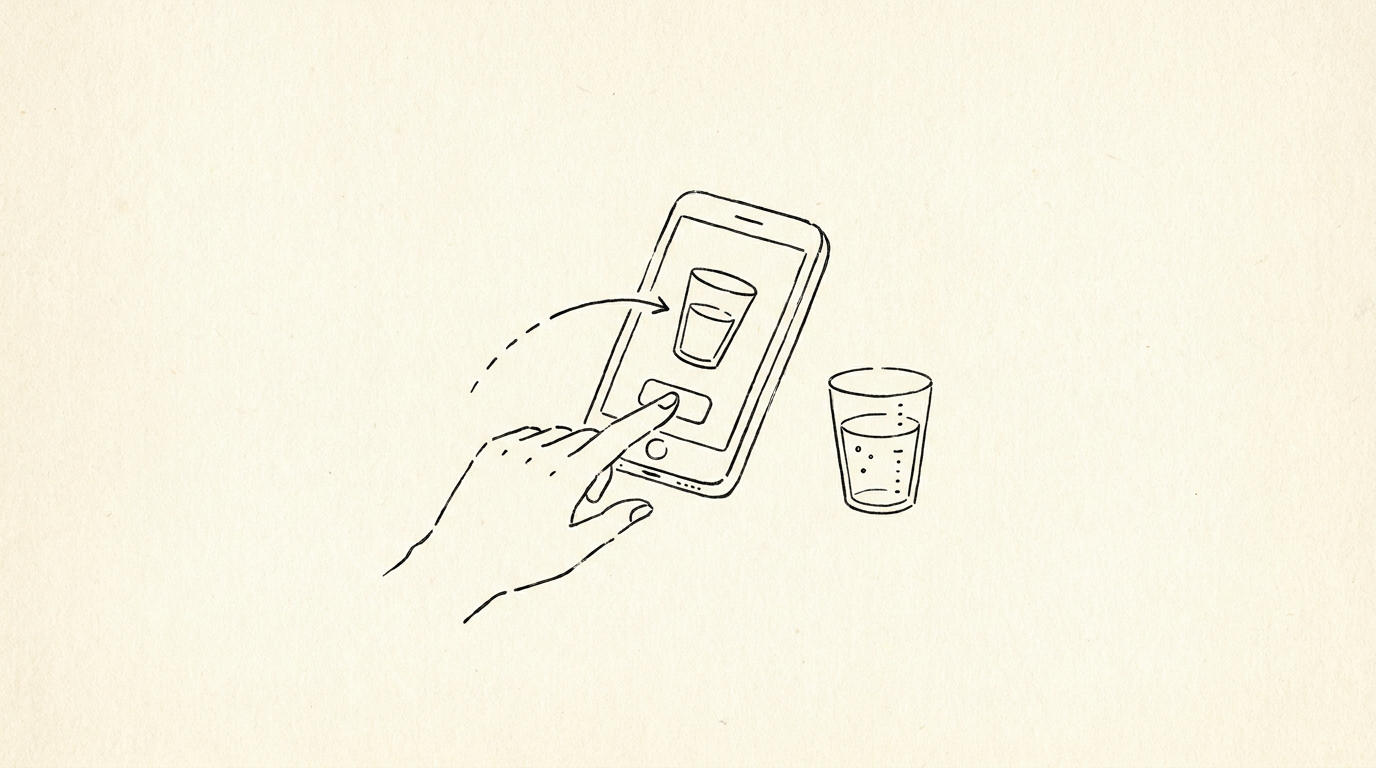
Yes, if your tracker supports it. Even a simple note in the comments field of a meal entry works. The goal is to have water data in the same place as your food data so you can compare the two. A pattern you can see is a pattern you can act on. Keeping water in a separate app makes that comparison harder.
Can drinking more water help with weight loss?
Drinking water before meals is associated with reduced calorie intake at those meals in some people, likely because it increases short-term fullness. It is not a substitute for tracking macros or managing overall energy intake. Think of it as one supporting habit among several, not a standalone strategy. The National Institute of Diabetes and Digestive and Kidney Diseases notes that habits like drinking water before meals can support a broader weight management approach.
How do I know if I am drinking enough water?
Urine color is a practical indicator. Pale yellow generally suggests adequate hydration. Dark yellow or amber suggests you need more fluid. Clear urine can indicate you are drinking more than necessary. This is not a precise test, but it is fast and free. Compare it against your water log to see whether the signal matches your intake data.
Does coffee count toward my daily water intake?
Yes. The Mayo Clinic notes that caffeinated beverages like coffee and tea do contribute to daily fluid intake. The mild diuretic effect of caffeine does not negate the fluid contribution for people drinking moderate amounts, typically under 400 mg of caffeine per day. Log your coffee and tea as part of your daily fluid total.
If you want hydration and macros to work together in one place rather than across two separate systems, try PlateBird free and log your meals by typing what you ate or snapping a photo. The context you build over a week, meals plus water plus how each day felt, is what turns a food log from a record into something you can actually learn from.