- End the Daily Scramble with Smart Meal Planning
- Figure Out Your "Why" to Build a Plan That Sticks
- Building Your Weekly Meal Blueprint
- From Plan to Plate: Nailing Your Shopping and Prep
- Use Technology to Make Your New Habit Stick
- Don't Let These Common Meal Planning Traps Spoil Your Week
- Answering Your Biggest Meal Planning Questions
We’ve all been there. It’s 6 PM, you’re tired, and the dreaded question hits: “What’s for dinner?” That familiar sense of panic is something most of us know all too well.
But what if you could sidestep that daily scramble entirely? The truth is, effective meal planning isn't about rigid, joyless rules. It’s about doing a little thinking ahead to take back control, stop wasting money on last-minute takeout, and make your evenings feel like your own again.
End the Daily Scramble with Smart Meal Planning
Learning how to plan your meals is one of the biggest life hacks I know. It completely reframes what feels like a chore into a powerful tool for reclaiming your time and health. It’s not just about listing out what you’ll eat—it’s about creating a system that makes healthy choices the path of least resistance.
Forget those complicated, all-or-nothing systems you've seen online. This guide is all about a practical, real-world approach that actually fits into a busy, modern life. We’re going to walk through a workflow that turns this overwhelming task into a habit that sticks.
Before we dive into the "how," let's get a bird's-eye view of the system we're building. I've found that every successful meal plan rests on four key pillars. Understanding these from the start makes the whole process click.
The Four Pillars of Successful Meal Planning
| Pillar | What It Means | Why It Matters |
|---|---|---|
| Goal-Setting | Defining your "why." Are you trying to save money, hit a protein goal, or just eat more veggies? | A clear goal is your compass. It guides every choice you make, from the recipes you pick to the groceries you buy. |
| Template Building | Creating a flexible weekly blueprint. Think theme nights (Taco Tuesday) or core meal rotations. | A template eliminates decision fatigue. You're not starting from a blank slate every single week. |
| Efficient Prep | Streamlining your grocery shopping and batch-cooking. | This is where you get your time back. A little work upfront saves you hours of stress during the week. |
| Smart Tracking | Using simple tools to monitor your progress and stay consistent without the obsession. | What gets measured gets managed. Tracking helps you see what's working and adjust your plan as you go. |
Think of these four pillars as the foundation for your entire meal-planning house. Get them right, and everything else falls into place much more easily.
The Growing Demand for Structure
If you feel like you're drowning in daily decisions, you are definitely not alone. Juggling a demanding career, trying to hit the gym, and getting a decent dinner on the table is a modern-day recipe for burnout. It’s precisely this challenge that has caused the global meal planning market to explode—it's projected to hit an incredible USD 1.00 billion by 2032.
That number isn't just a business statistic; it's a reflection of a massive cultural shift. Busy professionals, parents, and fitness enthusiasts everywhere are looking for a way to trade nightly chaos for a sense of calm and predictability. You can discover more about this growing trend and see the data for yourself.
This growth proves one thing: people are tired of winging it.
Meal planning isn't about perfection. It’s about creating a system that gives you more time, less stress, and better health, even on your busiest days.
What You Will Learn
Throughout this guide, I’ll give you the exact tools and mindset you need to finally make meal planning stick. Forget the picture-perfect Pinterest boards and unrealistic expectations that set you up for failure. Instead, you'll learn how to:
- Set Clear Goals: We'll figure out what success actually looks like for you, whether that's hitting a protein number, sticking to a budget, or just feeling more energized.
- Build a Flexible System: I’ll show you how to create a weekly blueprint that adapts to your life, not the other way around. Real life is messy, and your plan needs to be able to roll with the punches.
- Master Your Kitchen: We'll turn grocery shopping and Sunday prep from dreaded chores into efficient, time-saving rituals you can actually look forward to.
- Leverage Technology: You'll see how to use simple tools like PlateBird to make tracking your food and staying consistent almost automatic.
This isn’t just another article with a few tips. It’s a complete playbook for making healthy eating feel like the easy choice. Let's get started and build a plan that puts you back in the driver's seat.
Figure Out Your "Why" to Build a Plan That Sticks
Let's be honest. Before we get into a single recipe or shopping list, we need to talk about the one thing that will actually make or break your meal planning habit: your "why." A fuzzy goal like "I want to eat healthier" sounds nice, but it won't get you through a hectic Wednesday night when takeout is calling your name. A plan that truly works is built on specific, measurable targets.
Think of your motivation as the entire foundation of your meal plan. Without it, the whole thing crumbles. For example, are you hitting the gym and trying to pack in 180g of protein every day to build muscle? Or are you a busy parent laser-focused on cutting the family grocery bill by 20%? Both are fantastic goals, but they lead to completely different plans and shopping carts.
Make Sure Your Goals Fit Your Real Life
Now for a quick reality check. The best-laid plans fall apart when they don't sync up with the life you actually live. If you’re stuck at the office late three nights a week, planning to cook an elaborate, fresh meal on those evenings is just setting yourself up for failure and a fridge full of disappointment.
Let's get practical about what this looks like:
- For Weight Loss: The mission isn't just to "eat less." It's about creating a manageable calorie deficit, maybe 300-500 calories a day, that won’t leave you feeling hungry and miserable.
- For Saving Time: Your goal might be to limit active cooking to just two or three nights a week. The rest of the time, you'll rely on pre-prepped ingredients and quick-assembly meals.
- For Athletic Performance: Here, it’s all about nutrient timing. You might focus on a carb-heavy meal before a long run and then a protein-packed recovery meal afterward. If this is you, our guide on how to count macros will be a game-changer.
When you get this specific, meal planning stops feeling like a chore and starts feeling like a strategy.
Set Your Personal Benchmarks
Once you know what drives you, it's time to set the numbers that will keep you on track. These are the benchmarks that tell you, without a doubt, if your plan is working. It’s like plugging coordinates into a GPS—every decision becomes more purposeful.
Your ‘why’ isn't just a motivational quote for the fridge. It's a set of hard numbers that dictates your food choices, your shopping list, and your cooking schedule. It’s the difference between a plan that lasts a week and a habit that lasts a lifetime.
This goal-first approach is exactly why so many people are turning to meal planning apps. In fact, the global market for these tools is expected to jump from USD 2.71 billion to USD 7.49 billion by 2035. A massive driver behind this is the 38% of users who depend on these apps for tracking calories and nutrition—something that always starts with a clear goal. You can see the data on meal planning app market trends for yourself and see how this mindset is shaping what people eat.
Building Your Weekly Meal Blueprint
Okay, you’ve figured out why you want to meal plan. Now for the fun part: turning those goals into food you’ll actually want to eat. This isn't about creating a rigid, boring menu that makes you feel trapped. We're building a flexible blueprint—a structure that works with your life, not against it.
The most effective trick I've learned is to give each night a theme. This simple idea sounds almost too easy, but it’s a powerhouse for killing decision fatigue. Instead of staring into the fridge wondering what to make, you already have your starting point.
Your plan should always tie back to your primary goals, whether that’s saving money, managing your health, or just getting more time back in your day.
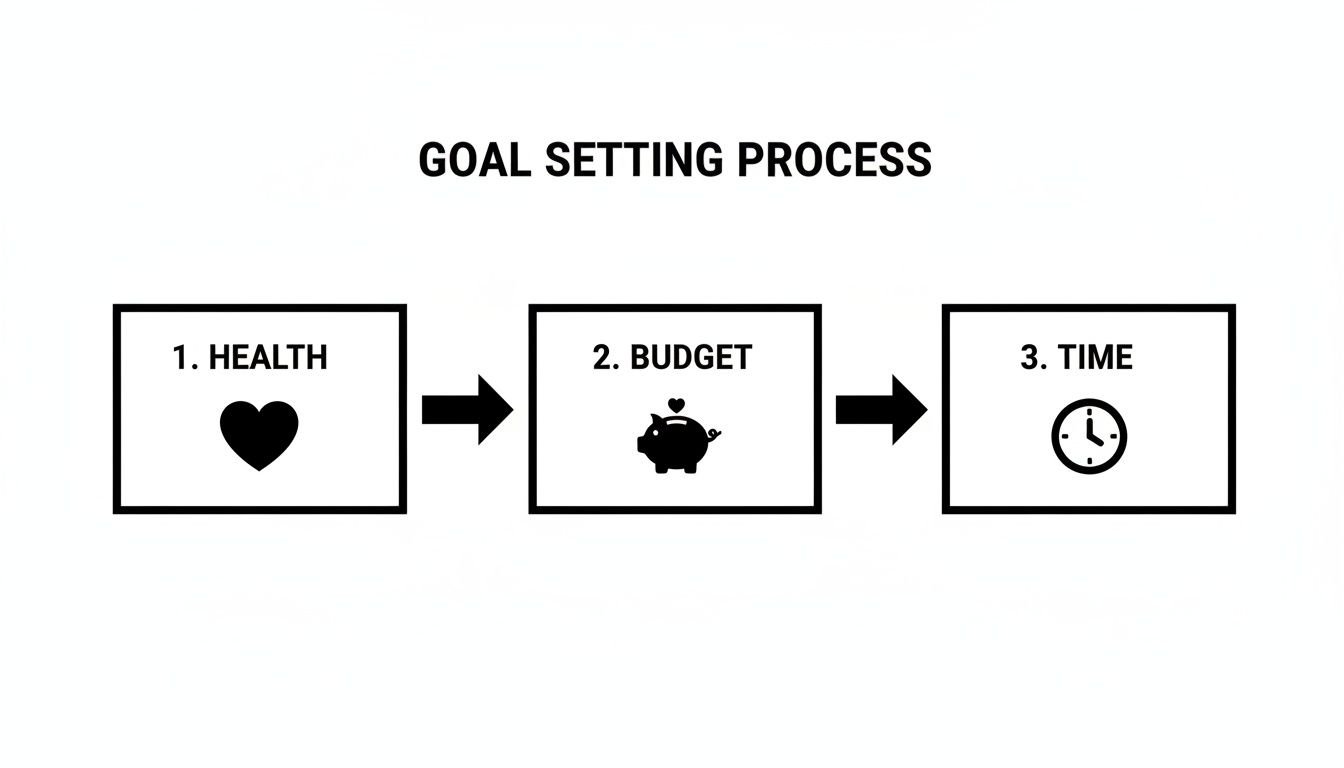
Think of it this way: your goals are the compass. Your meal plan is the map. Everything you choose should get you closer to your destination.
Create Your Go-To Recipe Bank
Here’s a secret: successful meal planning isn't about finding a dozen brand-new recipes every single week. That's a fast track to burnout. The real key is building a personal bank of 10-15 trusted meals you know by heart. These are your heavy hitters—the meals you can cook quickly, that taste great, and that hit your nutritional targets without much thought.
Start by jotting down the meals your family already loves. From there, aim to test-drive one new recipe a week that fits your goals, like a 20-minute sheet pan dinner or a hearty lentil soup. Soon you’ll have a solid rotation.
To put this all together, a themed weekly template is your best friend. It gives you structure without being restrictive.
Sample Weekly Meal Template
| Day | Breakfast | Lunch (Prep-Ahead) | Dinner Theme |
|---|---|---|---|
| Monday | Overnight Oats | Quinoa & Roasted Veggies | Meatless Monday |
| Tuesday | Greek Yogurt | Chicken Salad | Taco Tuesday |
| Wednesday | Scrambled Eggs | Quinoa & Roasted Veggies | Stir-Fry Night |
| Thursday | Smoothie | Chicken Salad | Pasta Night |
| Friday | Greek Yogurt | Leftover Pasta | Pizza/Fun Night |
| Saturday | Pancakes | Leftovers | Grill/Flex Night |
| Sunday | Scrambled Eggs | Leftovers | Soup & Sandwich |
This template isn’t about eating the exact same thing forever. It's about knowing that Wednesday is Stir-Fry Night, which makes grocery shopping and planning almost automatic.
Become a Batch-Cooking Pro
Batch cooking is what makes your meal plan actually happen. It’s the practical, hands-on work you do upfront that saves you from the 5 PM scramble all week long. But here’s what most people get wrong: a Sunday prep session isn’t about cooking five totally separate meals. It's about cooking components.
The goal is to cook once and assemble many times. This mindset transforms weeknight cooking from an hour-long chore into a 15-minute assembly job.
A really productive hour of prep might look like this:
- Grilling a big batch of chicken breasts.
- Roasting a sheet pan piled high with broccoli, bell peppers, and onions.
- Cooking a large pot of a versatile grain, like quinoa or brown rice.
With just those three things done, look what happens to your week. That grilled chicken gets sliced for salads, shredded for Tuesday's tacos, and diced for Wednesday's stir-fry. The roasted veggies and quinoa become instant grain bowls for lunch. It’s all about working smarter.
Our guide on creating an easy family meal planner dives even deeper into these templates and prep strategies. This is the strategic thinking that bridges the gap between having a plan and actually living it.
From Plan to Plate: Nailing Your Shopping and Prep
Having a perfect meal plan on paper is one thing, but turning it into actual food in your fridge is where the magic really happens. This is the part of the process that gives you back your time and money, moving your plan from an idea to a reality you can taste.
Let’s start with the grocery store. I’ve seen so many people’s good intentions fall apart in the aisles. The secret isn't just what you buy, but how you buy it. Stop writing random, jumbled lists. Instead, build a shopping list that mirrors the layout of your grocery store. This tiny shift in strategy can turn a long, wandering trip into a focused 20-minute mission.
The Art of the Strategic Shopping List
Think of your list as a map. By grouping everything by department, you create a clear path through the store, eliminating the backtracking and impulse buys that kill both your budget and your macros.
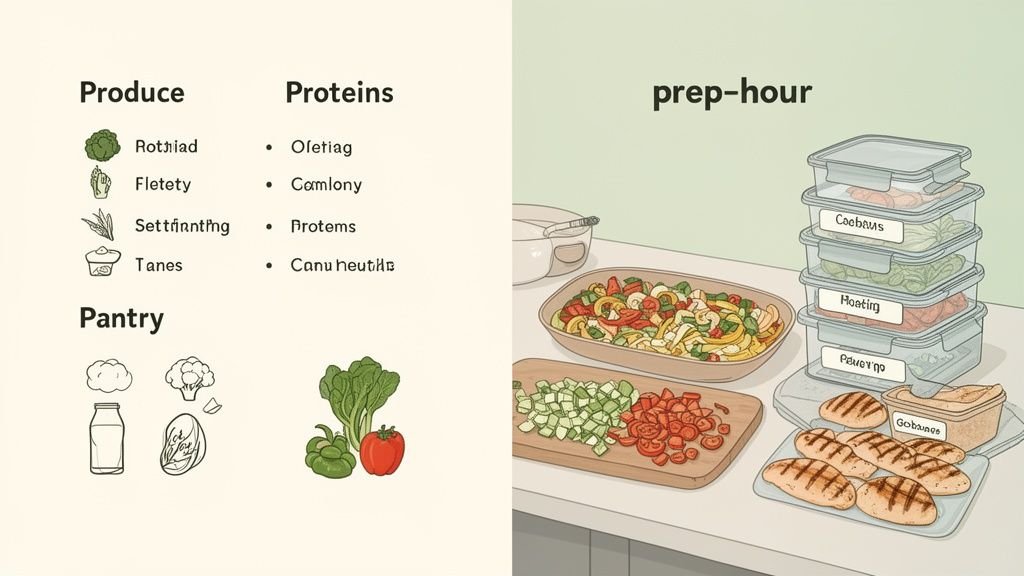
My own list always looks something like this:
- Produce: All the fresh stuff first—fruits, veggies, herbs.
- Proteins: The butcher and seafood counter for chicken, fish, beef, or tofu.
- Pantry & Grains: Center aisles for rice, canned tomatoes, oils, and spices.
- Dairy & Refrigerated: A quick stop for yogurt, eggs, and milk.
- Frozen: Last stop for frozen berries or veggies before checkout.
This isn't just about being organized; it's about taking control. It’s the same reason the meal kit industry is projected to hit USD 30.00 billion by 2026—people are desperate to simplify their food decisions. You can get the exact same benefits of less waste and less decision fatigue, all without the weekly subscription box. You can see for yourself how big the demand for simplicity is in the market data.
Your Most Powerful Hour: The Post-Shop Prep
When you get home with your groceries, don't just dump them and run. The next 60 minutes are your single biggest investment for the week ahead. I call this the "prep hour."
This isn’t about cooking five different dinners from start to finish. It's about tackling all the little, annoying tasks at once, so when you’re tired on a Tuesday night, most of the work is already done. For a complete breakdown, our guide on how to meal prep goes into even more detail.
Your Sunday prep hour is a trade. You’re giving up one hour now to buy back four or five hours of calm, stress-free evenings later in the week.
So, what does a powerful prep hour look like?
- Wash and Chop Your Veggies: Get those onions, bell peppers, and broccoli ready for action. Store them in clear containers so you can see what you have.
- Portion Your Proteins: Divide that bulk pack of chicken breasts or ground beef into the exact portions you need for your meals. This is also the perfect time to get them marinating.
- Cook a Big-Batch Grain: Get a pot of quinoa, brown rice, or even pasta going. Having a cooked grain ready makes throwing together lunches and dinners incredibly fast.
When these components are waiting for you, making a healthy, home-cooked meal becomes a 15-minute assembly job—not a 60-minute battle against a messy kitchen.
Use Technology to Make Your New Habit Stick
Alright, you’ve done the hard part. Your goals are set, your weekly template is mapped out, and you’ve even figured out your grocery runs and prep schedule. So, what’s the biggest thing that can derail all this great work?
Consistency. It's the moment the initial excitement wears off and the daily reality of it all sets in. This is where most people's best-laid plans quietly fall apart.
The secret I’ve learned over the years isn't about white-knuckling it with more willpower; it’s about creating a system with less friction. And that's where a little bit of smart tech can be your best friend. An app like PlateBird can turn the most tedious part of this whole process—tracking—into something you barely even think about.
Say Goodbye to Tedious Food Logging
Let's be honest, nobody actually enjoys scrolling through a massive food database or meticulously scanning every barcode. It’s a chore, and chores are easy to skip. PlateBird was built to get rid of that exact headache with a few really clever features.
Type to Log: Instead of searching for every little thing you ate, you can just type it out in plain English. Something like ‘chicken rice broccoli’ gives you an instant calorie and macro count. It’s literally as fast as sending a text.
Snap a Photo: This is a lifesaver for homemade meals or restaurant food. You just take a picture of your plate, and the app’s AI recognizes what’s on it, logging it all before you even pick up your fork. No more guessing weights or deconstructing your own cooking.
Here’s a look at how the app presents your day. It’s all about making the data clean and simple, so you can see where you stand in a single glance.
This clean layout turns what could be overwhelming numbers into simple, clear feedback on your day's progress.
Your Personal Meal Plan Assistant
The real magic happens when the app starts learning your habits. The ‘saved meals’ feature remembers the meals you eat most often. That go-to breakfast or your prepped lunch becomes a one-tap entry, making consistency almost effortless.
Think about how this plays out in a real week:
- Sunday: You prep your classic chicken, quinoa, and roasted veggie bowls for the week's lunches.
- Monday: You snap a quick photo of your first bowl. The app identifies everything and logs it for you.
- Wednesday: You sit down for that same lunch. This time, PlateBird already knows it from your history, letting you log the entire meal with a single tap.
This is how you learn how to plan meals for the long haul. Technology transforms the most annoying part of the process—tracking—into an invisible habit that works for you, not against you.
It’s not about becoming obsessive; it's about staying informed. When logging your food takes seconds instead of several minutes, you’re infinitely more likely to stick with it. That consistency is what gives you the feedback you need to see what’s working, make smart adjustments, and finally hit the goals you set out to achieve.
Don't Let These Common Meal Planning Traps Spoil Your Week
We've all been there. You start Sunday with a beautifully organized meal plan, feeling like you've finally got your life together. But thinking about how to plan meals is one thing; actually sticking to it when a chaotic week hits is another beast entirely.
The good news? The ways meal plans fall apart are incredibly predictable. Once you know what to look for, you can build a plan that's resilient enough to survive even your busiest weeks.
The number one mistake I see people make is being wildly overambitious. It's so tempting to pin a week's worth of gorgeous, gourmet dinners. But in reality, that's just a recipe for burnout. By Wednesday, you're exhausted, and that elaborate recipe suddenly feels like climbing a mountain. That's when the allure of takeout becomes impossible to resist.
Another classic error is completely ignoring your own schedule. Planning to whip up a complex dish on a night you know you'll be dragging yourself home late from work or the gym is just setting yourself up to fail. Your meal plan has to fit the life you actually live, not the one you wish you had.
The All-or-Nothing Mindset
A rigid, inflexible plan is a fragile one. So often, we forget to schedule a "leftovers night" or leave any wiggle room for a spontaneous dinner out with friends. When life inevitably happens and you go "off-plan," it’s easy to feel like you’ve failed and just throw in the towel for the week. This is how perfectly good food ends up in the trash and our motivation vanishes.
A meal plan isn’t a contract; it’s a flexible guide. The goal is to reduce stress and food waste, not to follow a set of rigid rules perfectly. Building in flexibility is the key to making the habit last.
This all-or-nothing thinking just creates unnecessary pressure. Instead of feeling empowered by your plan, you end up feeling restricted by it.
Smart Solutions for Real-World Problems
The real secret to successful meal planning is building an adaptable system that works with your life, not against it. It’s about being realistic and a little bit clever.
Here are a few strategies I swear by to keep a plan on track:
- Create a Flexible Dinner Menu: Don't assign a specific meal to each day. Instead, just list 5-6 dinner options for the week. Every evening, you can look at the list and pick the one that best fits your energy level and the time you have.
- Plan a "Buffer" Night: I always build in a free-for-all night. This is your designated time for leftovers, a "clean out the pantry" creation, or guilt-free takeout. It adds breathing room to your plan and prevents food waste when the week goes sideways.
- Embrace "Semi-Homemade" Meals: Not every meal has to be a culinary masterpiece made from scratch. It is perfectly okay to grab a rotisserie chicken and pair it with a bagged salad kit and some quick-cooking rice. The goal is a satisfying home-cooked meal, not winning a cooking competition.
- Match Complexity to Your Schedule: Save those new, more involved recipes for the weekend or a quiet evening when you actually have the headspace for it. For weeknights, keep it simple. Your goal should be delicious meals you can get on the table in under 30 minutes.
Answering Your Biggest Meal Planning Questions
Once you dive into meal planning, you're bound to have a few questions. That's a good thing—it means you're getting serious. I’ve heard them all over the years, so let's tackle some of the most common hurdles right now.
How Far Out Should I Actually Plan My Meals?
My honest answer? Stick to one week at a time. It’s the sweet spot.
A weekly plan is long enough to cover one big grocery trip, which saves you time and seriously cuts down on wasted food. But it's short enough that you don't feel completely locked in. Life happens, and a seven-day plan gives you the wiggle room for a last-minute dinner out or a change of heart.
I've seen people try to map out an entire month, and it almost always leads to burnout. A week feels manageable and keeps the whole process from becoming a soul-crushing chore.
But Won't I Get Bored of Eating the Same Meals?
This is probably the number one fear I hear. The trick isn't to find a brand-new, exciting recipe for every single meal. That's exhausting. Instead, build a "greatest hits" list of 10-15 meals you know you love and can cook well.
From there, just rotate them. You can also bring in theme nights to keep things interesting. Think "Taco Tuesday" or "Pasta Thursday." The theme provides structure, but you can easily switch up the fillings, sauces, or proteins for variety. Another pro tip is to prep versatile ingredients. Cook a batch of shredded chicken on Sunday and use it for salads, wraps, or quesadillas throughout the week.
The goal isn't endless novelty—it's sustainable variety. A small arsenal of go-to meals you genuinely enjoy is far better than chasing a new recipe every night.
Do I Really Have to Spend All of Sunday Cooking?
Absolutely not! The idea of a massive 2-3 hour Sunday cook-a-thon works for some, but it's a nightmare for others. Your prep should serve you, not the other way around.
Find a rhythm that fits your life. Maybe that’s a quick 1-hour session on Sunday just to chop veggies and mix a sauce. Then, you can do another short session mid-week to grill some chicken or cook a pot of quinoa. The whole point is to make your week easier, not to chain yourself to the kitchen on your day off.
Ready to make logging those meals feel as easy as sending a text? PlateBird lets you track food just by typing what you ate or snapping a photo. It turns a tedious task into a simple, two-second habit. Download PlateBird for free and start hitting your goals.