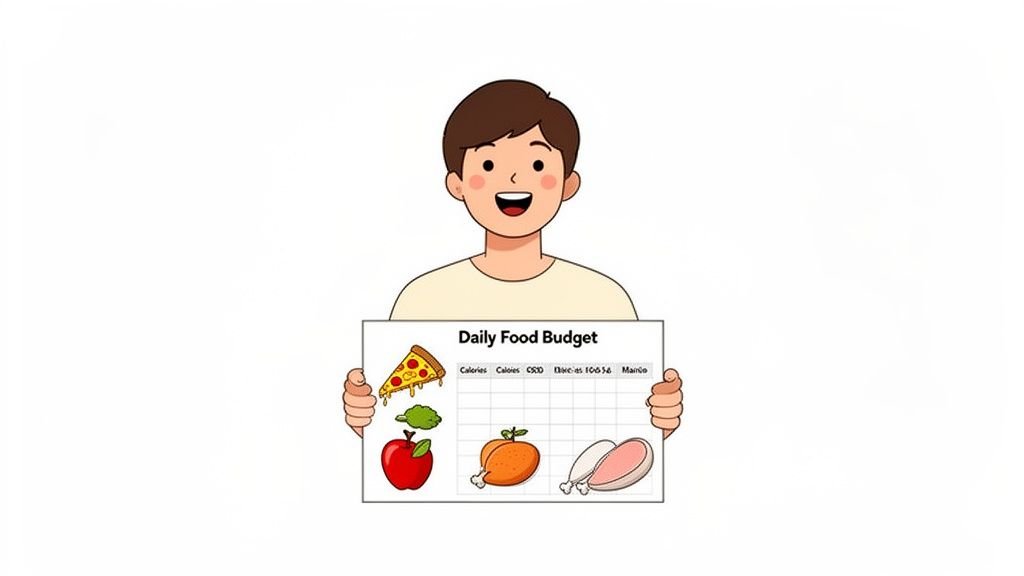
Think of your daily nutrition like a budget. But instead of dollars and cents, your currency is calories and macronutrients—protein, carbs, and fat. Flexible dieting, which you've probably heard called ‘If It Fits Your Macros’ (IIFYM), is all about spending that daily nutritional budget on foods you actually enjoy, as long as you hit your targets for the day.
It’s a simple concept with a powerful impact.
Moving Beyond "Good" vs "Bad" Food Labels
At its heart, flexible dieting challenges a long-held belief in the fitness world: that you have to eat from a very short list of "clean" foods to get results. This approach throws out the old rulebook that labels foods as either 'good' or 'bad'.
Instead of seeing a cookie as a failure, you see it for what it is: a combination of carbs and fats. This simple shift in perspective is everything.
This idea really started to catch fire around 2010. Coaches and everyday people began to realize that for changing your body composition, hitting your daily macro targets was the most important piece of the puzzle. The source of those macros? That was far more, well, flexible.
The Real Superpower: Sustainability
The magic of IIFYM isn't getting a free pass to eat junk food 24/7. The real win is the psychological freedom it gives you. When no food is forbidden, the destructive cycle of restriction, intense cravings, and guilt simply disappears.
You can go out for dinner with friends or have a slice of birthday cake without feeling like you've completely ruined your progress. That's a game-changer. This built-in wiggle room is precisely why so many people stick with it long-term.
To see just how different this approach is, let's compare it side-by-side with the old-school, rigid diets most of us have tried before.
Flexible Dieting vs Rigid Diets at a Glance
| Aspect | Flexible Dieting (IIFYM) | Traditional Rigid Diets |
|---|---|---|
| Food Choices | All foods can fit; focus on hitting macro targets. | Strict lists of "allowed" and "forbidden" foods. |
| Mindset | Empowerment and education about what's in your food. | Restriction and guilt associated with "bad" foods. |
| Social Life | Easily adaptable to social events and dining out. | Social situations often cause stress and dietary "failure." |
| Long-Term Success | High adherence due to its sustainable nature. | Low long-term success rates; often leads to yo-yo dieting. |
| Psychology | Fosters a healthy, balanced relationship with food. | Can create food anxiety and disordered eating patterns. |
As you can see, the philosophies are worlds apart. One is about building a sustainable lifestyle, while the other is about short-term restriction.
The data backs this up. One 2014 study showed that flexible dieters didn't just have an impressive 85% adherence rate (compared to only 52% for rigid dieters), but they also lost 12% more body fat. You can learn more about why this approach works so well for long-term success.
The core idea is that your body recognizes nutrients, not specific foods. A gram of protein is a gram of protein, whether it comes from a chicken breast or a protein bar. This empowers you to build a diet that fits your life, not the other way around.
This shift from restriction to responsibility changes everything. It helps you build a healthier relationship with food, cuts down on diet-related stress, and makes the whole process feel less like a chore and more like a puzzle you get to solve every single day. You're the one in charge of your "food budget," making smart choices that serve your goals and your happiness.
The Three Pillars: Protein, Carbs, and Fat
To really get what flexible dieting is all about, you have to stop seeing food as just "good" or "bad." Instead, think of it like looking under the hood of a car. What you'll find are the three core components that actually make it run: protein, carbohydrates, and fat. These are the macronutrients, or "macros" for short.
Getting a handle on flexible dieting is really just about learning what each of these three macros does and then giving your body the right amount of each to reach your goals. It’s like managing a small, powerful team—get the balance right, and the whole project succeeds.
Protein: The Body's Construction Crew
Think of protein as the builder. It’s the raw material your body uses to construct and repair just about everything—muscle, skin, hair, you name it. When you work out, you’re essentially creating tiny tears in your muscle fibers. Protein is what comes in to patch things up, making the muscle bigger and stronger in the process.
This is exactly why people trying to lose fat or build muscle focus so much on protein. It’s also incredibly filling. A high-protein meal keeps you feeling satisfied for hours, which is a huge advantage when you're trying to manage hunger and stick to a calorie budget.
A great way to visualize it: If your body is a high-rise building, protein is the crew working 24/7. Not enough crew members? Repairs get delayed, and new construction grinds to a halt.
It's also worth knowing that not all protein sources are built the same. Some are more effective than others. If you're curious about which foods give you the most bang for your buck, we've put together a guide on understanding protein quality. For every gram you eat, protein provides your body with 4 calories.
Carbohydrates: The Primary Energy Source
Carbs get a really bad rap sometimes, but they are your body's number-one fuel source. It's what your system prefers to run on. When you eat carbs, your body converts them into glucose, which powers everything from your brain trying to solve a problem to your muscles pushing through a tough workout.
If your body is a race car, carbs are the high-octane fuel. You can’t expect to hit top speed if the tank is empty. You'll just feel sluggish, foggy, and weak.
You'll generally run into two types:
- Simple Carbs: These are the fast-acting ones you find in fruit, sugar, and white bread. They digest quickly for a rapid energy spike.
- Complex Carbs: Found in foods like oatmeal, sweet potatoes, and veggies. These take longer to break down, giving you a much more stable, slow-release energy.
Both have their place. A simple carb can be perfect for a quick pre-workout boost, while complex carbs are your best friend for sustained energy all day long. Just like protein, every gram of carbohydrate gives you 4 calories.
Fat: The Essential Support System
Finally, we have fat—the unsung hero of the nutrition world. For decades, we were told to avoid it, but the truth is that dietary fats are absolutely vital for your health. They play a critical role in producing hormones, absorbing key vitamins (like A, D, E, and K), and even cushioning your organs.
Think of fat as your body's essential support staff. While carbs are the immediate-use energy, fats are the reliable, long-term energy reserve that keeps all the background systems running smoothly.
But here’s the key difference: fat is incredibly energy-dense. Every single gram of fat provides 9 calories—more than double the amount from protein or carbs. A little goes a long way, which is why you have to be mindful of it. This caloric difference is at the very heart of flexible dieting; it’s all about budgeting your macros to hit your goals without going over on calories.
How to Calculate Your Personal Macro Targets
Alright, let's get to the good stuff—translating all this theory into a practical, personalized plan that actually works for you. This is where flexible dieting stops being an idea and starts becoming your day-to-day reality. We're going to walk through the exact steps to figure out your starting numbers.
Think of it like getting a custom-tailored suit. Sure, an off-the-rack plan might be "good enough," but a plan built for your body, your activity, and your goals? That’s what fits perfectly and gets real results. We’ll figure out your unique calorie budget first, then split it into the right amounts of protein, carbs, and fat.
Step 1: Find Your Basal Metabolic Rate
Everything starts with your Basal Metabolic Rate (BMR). In simple terms, this is the number of calories your body needs just to run its basic operating system—think breathing, circulating blood, and brain function, all while you're lying perfectly still. It’s the energy cost of just being alive.
The Mifflin-St Jeor equation is a trusted and accurate way to pin this down.
- For Men: (10 x weight in kg) + (6.25 x height in cm) – (5 x age) + 5
- For Women: (10 x weight in kg) + (6.25 x height in cm) – (5 x age) – 161
Don't let the math scare you. A quick search for a BMR calculator online will do the heavy lifting in seconds. Just plug in your numbers. This BMR is the foundation we’ll build on.
Step 2: Calculate Your Total Daily Energy Expenditure
Your BMR is your baseline, but you don't spend all day in bed (hopefully!). This is where your Total Daily Energy Expenditure (TDEE) comes in. Your TDEE is the real number of calories you burn every day. It’s your BMR plus all the energy you use walking, working, hitting the gym, and even digesting your food.
To get your TDEE, you just multiply your BMR by an activity factor:
- Sedentary: (Desk job, little to no organized exercise) – BMR x 1.2
- Lightly Active: (Light workouts or sports 1-3 days a week) – BMR x 1.375
- Moderately Active: (Consistent exercise 3-5 days a week) – BMR x 1.55
- Very Active: (Hard exercise 6-7 days a week) – BMR x 1.725
- Extra Active: (Physically demanding job or training twice a day) – BMR x 1.9
A word of advice from someone who’s seen it all: be honest here. It’s incredibly common to overestimate activity levels. It’s always smarter to start a little lower and adjust up if needed.
Step 3: Adjust Calories for Your Goal
Now you have your TDEE, which is your "maintenance" number—the calories you’d eat to keep your weight exactly the same. From here, we tweak that number based on what you’re trying to accomplish.
- For Fat Loss: You need a calorie deficit. A great place to start is by subtracting 15-20% from your TDEE. This is the sweet spot for losing fat without tanking your energy or losing hard-earned muscle.
- For Muscle Gain: You need a calorie surplus. To build new muscle, you have to give your body extra fuel. Start by adding about 10-15% (or roughly 250-500 calories) to your TDEE.
Let me be clear: slow and steady wins the race. It's tempting to slash calories for quick results, but that almost always backfires. You’ll just end up burned out, hungry, and potentially losing muscle instead of fat.
Step 4: Distribute Calories Into Macros
This is the final piece of the puzzle. We take your new calorie target and divide it into grams of protein, carbs, and fat.
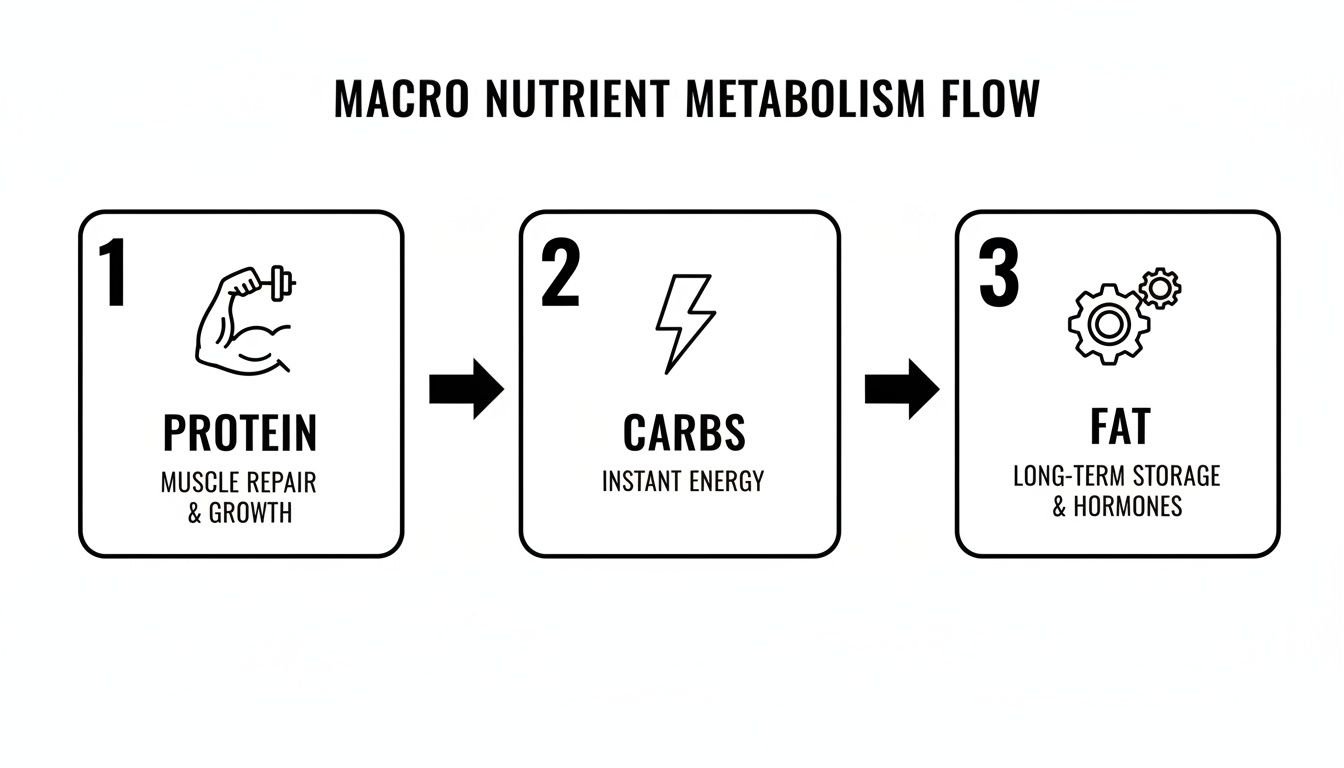
First, this chart gives you a quick visual of how each macronutrient fuels your body. Protein is for building and repairing, carbs are your go-to energy source, and fats are essential for your underlying systems like hormone production.
Now, let's do the math. Here’s a simple and effective breakdown:
- Set Your Protein: This is your anchor. A solid target for preserving muscle and feeling full is 1 gram of protein per pound of your goal body weight (or 2.2g per kg). Protein provides 4 calories per gram.
- Set Your Fat: Healthy fats are non-negotiable for hormone balance and overall health. Aim for 20-30% of your total daily calories to come from fat. Fat provides 9 calories per gram.
- Fill in Your Carbs: Whatever calories you have left over are for carbohydrates. They’re your body's primary fuel for performance and daily energy. Carbs provide 4 calories per gram.
These calculations give you a powerful starting point. If you want to get even more specific, our guide on how to determine exactly what your macros should be goes into even greater detail. But for now, you have a concrete daily plan to kick off your flexible dieting journey.
Bringing Your Flexible Dieting Plan to Life
Alright, you've got your numbers—your personal calorie budget and your targets for protein, carbs, and fat. Now for the million-dollar question: what does that actually look like on a plate? This is where the theory ends and the real-world magic of flexible dieting begins, turning those abstract numbers into meals you'll genuinely enjoy.
Forget about sad, restrictive food lists. The whole point is to make the foods you already love work for you, not against you. A day of eating should feel balanced and satisfying, including everything from a hearty breakfast to the cookie you've been thinking about all afternoon.
A Sample Day in the Life
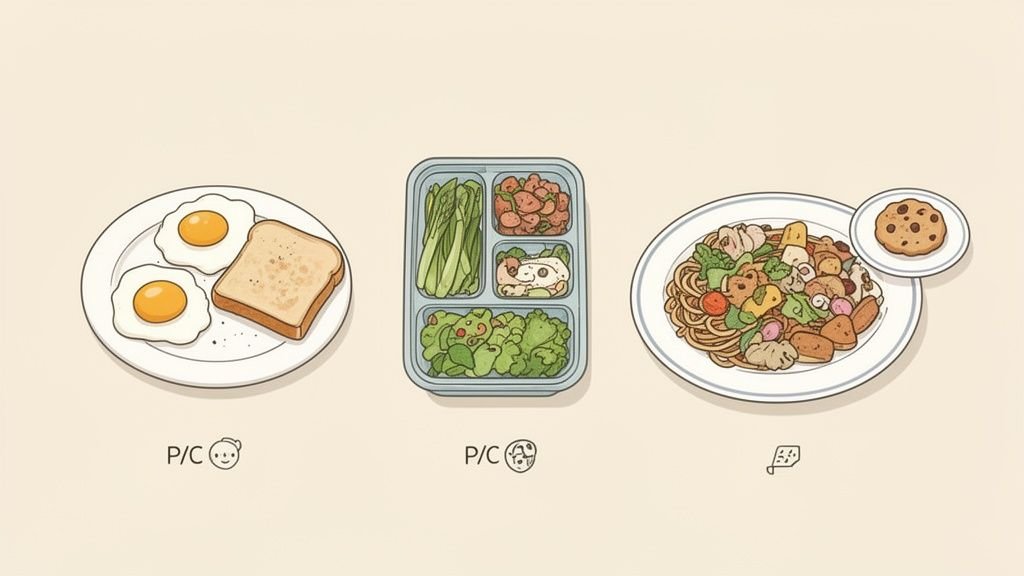
Let's walk through a day with "Alex," who's using flexible dieting to shed a little fat. Alex's daily targets are: 1,800 calories, 150g protein, 165g carbs, and 60g fat. Here’s one way Alex could spend that nutritional budget.
Breakfast (7:30 AM): The day kicks off with two scrambled eggs, a slice of whole-wheat toast with some avocado, and a black coffee. This combo is loaded with protein and healthy fats, which is great for keeping hunger at bay until lunch.
Lunch (12:30 PM): Alex grabs a meal prepped earlier in the week: grilled chicken breast, a cup of quinoa, and a big serving of roasted broccoli. It’s a classic for a reason—high in protein, packed with fiber and quality carbs, and it actually feels like a substantial meal.
Afternoon Snack (4:00 PM): To beat the 4 p.m. slump, Alex has a Greek yogurt with a handful of berries. That little hit of protein is perfect for crushing cravings and provides a clean energy boost to finish the workday strong.
Even after all that, Alex has a decent budget left for dinner and a treat. That's the power of planning ahead.
Fitting in Your Favorites, Guilt-Free
Now for the best part. Alex has been looking forward to a homemade chocolate chip cookie, and it’s time to see how easily it fits into the plan.
Dinner (7:00 PM): For dinner, Alex whips up a quick stir-fry using lean ground turkey and a mountain of bell peppers, onions, and snap peas with a light soy-ginger sauce. It's incredibly flavorful and high-volume, helping to hit that final protein goal.
The Treat (8:30 PM): Finally, it’s time for that cookie. Because Alex planned for it, it slides perfectly into the remaining carb and fat budget for the day. There's no guilt, no feeling of "cheating"—just a delicious, well-earned treat. It's simply part of the plan.
This is what flexible dieting is all about. You're the one in control. When you see food as just a combination of macros, a cookie isn't "bad." It's just carbs and fat that you account for, the same way you account for the chicken and broccoli.
This sustainable mindset is why the approach works so well. Studies show that flexible dieters not only get results—one trial saw an average 9.5-pound loss in 18 weeks—but they also tend to save money. For more on where nutrition is headed, you can read about the future of healthy eating on BBC Good Food.
Making Tracking Effortless
I get it, you might be thinking, "This sounds great, but logging every single thing I eat seems like a huge pain." And you're right, it used to be.
Thankfully, technology has made tracking incredibly simple. Modern tools like the AI-powered PlateBird app have completely changed the game. Instead of manually searching databases for every ingredient, you just snap a picture of your meal. The app's AI does the heavy lifting, identifying the food and logging the macros for you.
This simple, visual approach takes the friction out of tracking. What was once a chore becomes a quick habit, making it easier than ever to stay consistent. If you want a deeper dive, check out our complete guide on how to count macros for more tips and tricks.
Common Pitfalls and How to Avoid Them
Flexible dieting is incredibly freeing, but that same freedom is exactly where things can go sideways. I've seen it time and time again: someone hears "If It Fits Your Macros" and thinks they’ve found a loophole—a free pass to live on Pop-Tarts and protein shakes as long as the numbers line up.
While you could technically do that, it's the fastest route to feeling sluggish, hungry, and completely stalling out. This approach is powerful, but it’s not magic. Let's walk through the most common traps people fall into so you can steer clear and build a lifestyle that actually lasts.
The Junk Food Trap
Just because a doughnut and a sweet potato have a similar carb count doesn't mean your body treats them the same. This is, without a doubt, the biggest mistake people make: filling their macro budget with low-quality, processed foods.
Sure, you might be hitting your targets on paper, but you'll be starving your body of essential micronutrients—the vitamins, minerals, and fiber that keep you energized and healthy. This path almost always leads to nagging hunger, low energy, and poor results.
A much better way to think about it is the 80/20 rule. Focus on getting 80% of your calories from whole, nutrient-dense foods. We're talking lean proteins, fruits, veggies, and quality carbs. The other 20%? That’s your fun money—for the cookie, the slice of pizza, or whatever you truly enjoy. This way, you're fueling your body right while still making room for life.
The Danger of "Guesstimating"
When you’re just starting out, guessing your portion sizes is a recipe for frustration. It’s almost impossible to get it right. That casual "tablespoon" of peanut butter you just eyeballed? It's probably closer to two, which can easily double the calories and fat without you ever knowing.
Think of using a food scale for the first few weeks as a short-term training course. It’s not about being obsessive; it's about calibrating your eyes. You’re learning what an actual serving of rice or a 6-ounce chicken breast looks like. This initial investment in accuracy pays off big time, giving you the confidence to estimate portions accurately down the road.
Avoiding the Obsession Trap
On the other end of the spectrum, you have the person who gets completely consumed by hitting their numbers perfectly. Every. Single. Day. This can spiral into anxiety and stress, dragging you right back into the all-or-nothing mindset you wanted to leave behind.
Life isn't perfect, and neither is your diet. Some days you'll be over on fats, and other days you'll be under on protein. That's okay.
The key is to zoom out and look at your weekly averages. This perspective smooths out the daily bumps and fosters a much healthier relationship with food. If you go a little over one day, you can pull back a bit the next. It’s the consistency over the long haul that really drives results, not daily perfection.
Forgetting to Adjust as You Go
Your body is constantly adapting. The macro targets that got you great results in your first month won't necessarily be the right ones in month three. As you lose fat or build muscle, your metabolism and energy needs change. Sticking with the same numbers for too long is a classic reason why progress grinds to a halt.
To keep moving forward, make it a point to re-evaluate your numbers every 4-6 weeks or after any significant change in weight (about 10 pounds is a good benchmark). This simple check-in ensures your plan evolves with you, helping you break through those frustrating plateaus and stay on track toward your goal.
Frequently Asked Questions About Flexible Dieting
Alright, let's talk about the real world. No matter how solid a plan seems on paper, questions always pop up once you start living it. Flexible dieting is no exception. This is where we get into the nitty-gritty and tackle those nagging "what if" scenarios that can trip people up.
Think of this as a conversation with a coach who's seen it all before. We'll clear up the confusion so you can stick with this for the long haul.
What Happens if I Go Over My Macros for a Day?
First off, relax. It happened. One day of eating more than you planned isn’t going to undo weeks of progress. It’s just one meal, one day. The biggest mistake you can make right now is throwing your hands up and saying, "Well, I blew it," and letting it spiral into a bad week.
That "all-or-nothing" mindset is the real enemy, not the extra slice of pizza.
The goal here isn't perfection; it’s consistency over the long haul. A single day over your targets is just a tiny blip on the radar. The most important thing is to simply get back on track with your very next meal. No guilt, no punishment.
Don't try to "fix" it by skipping meals or doing extra cardio the next day. Just wake up and get back to your normal plan. For most of us, the best move is to just move on. If you're really bothered, you could pull back just a tiny bit on your fats or carbs for a day or two to balance the weekly average, but honestly, just getting back to normal is usually the simplest and most effective strategy.
Is It Necessary to Track Every Single Day?
When you’re just getting started? Yes, I'd say it's pretty crucial. Think of it like learning to drive—at first, you're hyper-aware of everything. Daily tracking is your training phase. It’s what builds your nutritional literacy, teaching you what a real portion of peanut butter looks like and how much protein is in your favorite chicken dish.
But the whole point is flexibility. The goal isn't to be tethered to an app for the rest of your life. Once you've got a feel for it, you can start to loosen the reins.
Many experienced flexible dieters evolve their approach over time:
- The Weekday Warrior: They track diligently Monday through Friday when their routine is predictable and then ease up on the weekends, eating more intuitively.
- Protein & Produce Focus: A great method for maintenance is to just focus on hitting your daily protein goal and getting plenty of veggies. After that, you let the carbs and fats land where they may.
- The Monthly Spot-Check: Some people stop tracking altogether but will do a "check-in" week every month or two, just to make sure their intuitive portions haven't started creeping up.
Tracking is a tool to educate yourself, not a life sentence.
Can Flexible Dieting Be Unhealthy?
This question comes up all the time, and it's a fair one. The short answer is: it's as healthy as you make it. If you take the idea of "If It Fits Your Macros" and use it as a permission slip to eat Pop-Tarts and protein powder all day, then yeah, you’re going to feel terrible. You might hit your numbers, but you'll be starving your body of essential vitamins, minerals, and fiber.
But that's not what smart flexible dieting is about. A truly successful, sustainable approach is actually built on a foundation of whole, nutrient-rich foods.
The vast majority of your diet should come from high-quality sources:
- Lean Proteins: Think chicken, fish, lean beef, eggs, Greek yogurt, and legumes.
- Complex Carbohydrates: Oats, brown rice, quinoa, sweet potatoes, and whole grains fuel you for the long haul.
- Healthy Fats: Avocado, nuts, seeds, and olive oil are crucial for hormone health and satiety.
- Tons of Fruits and Vegetables: These are non-negotiable for fiber and micronutrients.
When 80-90% of your daily intake comes from foods like these, you're building a rock-solid foundation for health. That leaves you with that 10-20% of wiggle room for the "fun" foods—the ice cream, the cookie, the glass of wine—that make this way of eating feel less like a diet and more like a lifestyle. Done right, it’s an incredibly healthy way to live.
How Do I Eat Out at Restaurants?
Going out to eat can feel like a pop quiz you didn't study for, but it doesn't have to be. This is where flexible dieting really shines, because you don't have to turn down social invites or be "that person" ordering a dry salad with lemon juice.
With a little bit of foresight, you can handle any menu with ease:
- Do Some Recon: Nearly every restaurant posts its menu online. Take two minutes before you go to find a couple of good options. You can even plug a rough estimate into your tracker to see how it fits and plan the rest of your day around it.
- Bank Your Macros: Know you're going out for a big Italian dinner? Plan for it. Have a lighter, high-protein lunch. This "saves" a good chunk of your daily macros for your restaurant meal, so you can enjoy it guilt-free.
- Build Your Plate Around Protein & Veggies: When scanning the menu, look for entrees centered on grilled fish, chicken, or a good steak. Ask to swap the fries for double vegetables or a side salad.
- Don't Be Afraid to Ask: It's your meal! Asking for "sauce on the side" or for your fish to be "grilled, not fried" are simple requests that chefs handle all the time.
Eating out is part of a full life. Flexible dieting gives you the tools to enjoy it without feeling like you've fallen off the wagon.
Ready to make tracking feel less like a chore and more like a simple, quick habit? PlateBird is designed to remove the friction from food logging. Simply type what you ate or snap a picture, and let our AI handle the rest. Download the app and start logging your first day in under a minute—no account required. Get started with PlateBird today and see how easy hitting your goals can be.