Let’s be honest: the best macro tracking app is the one you actually use. While most apps love to talk about their massive food libraries, the real game-changer is how fast you can log your meals. If it feels like a chore, you’ll quit. It’s that simple.
Why Sticking with Macro Tracking Feels Impossible
It’s a familiar story. You’re fired up about a new goal—maybe you want to build some muscle, drop a few pounds, or just figure out what you’re really eating. You download a popular app, full of motivation and ready to go. The first couple of days are a breeze. You’re hitting your numbers and feeling great.
But then, the novelty wears off.

Logging your lunch suddenly feels like a second job. You spend ten minutes scrolling through an endless list, just trying to find the exact brand of Greek yogurt you bought. And that homemade chili? Good luck. You’re stuck adding every single ingredient one by one, from the can of tomatoes all the way down to a pinch of cumin, all while guessing at the portion sizes.
The Willpower Myth
This is the exact moment where most people give up. The initial excitement is gone, replaced by the soul-crushing grind of manual data entry. You start "forgetting" to log a snack, then a whole meal, and before you know it, the app is just another icon collecting dust on your phone. It's easy to beat yourself up and think you just didn't have enough willpower.
The problem isn't a lack of willpower; it’s the high-friction design of most apps. The tedious process of searching, scrolling, and guessing creates a barrier to consistency.
When an app makes you spend more time logging your food than you do enjoying it, it’s working against you, not for you. A great macro tracker shouldn't be a daily test of your discipline. It should feel like a natural part of your routine.
The Real Key to Success
Here’s the thing: a giant food database isn't the trophy feature it used to be. What truly makes or breaks your success is speed and simplicity. The less mental energy it takes to log a meal, the more likely you are to do it consistently. And as anyone who's achieved a fitness goal knows, consistency is everything.
This is where a new wave of tracking apps is completely changing the game. They’re built on one powerful idea: make logging ridiculously fast.
Instead of endless searching, newer apps use AI to figure out your meal from a simple photo or a line of text. Imagine just typing “chicken salad sandwich” and getting the macros instantly. Or snapping a quick picture of your plate and having a full nutritional breakdown pop up in seconds. This shift transforms logging from a frustrating chore into a quick, almost invisible habit, making consistency not just achievable, but effortless.
So, what separates a decent macro tracker from one you’ll actually stick with for the long haul?
It’s easy to think the answer is a massive food database, but that's not the whole story anymore. The real magic is in the small, thoughtful details that make logging feel less like a chore and more like a reflex.
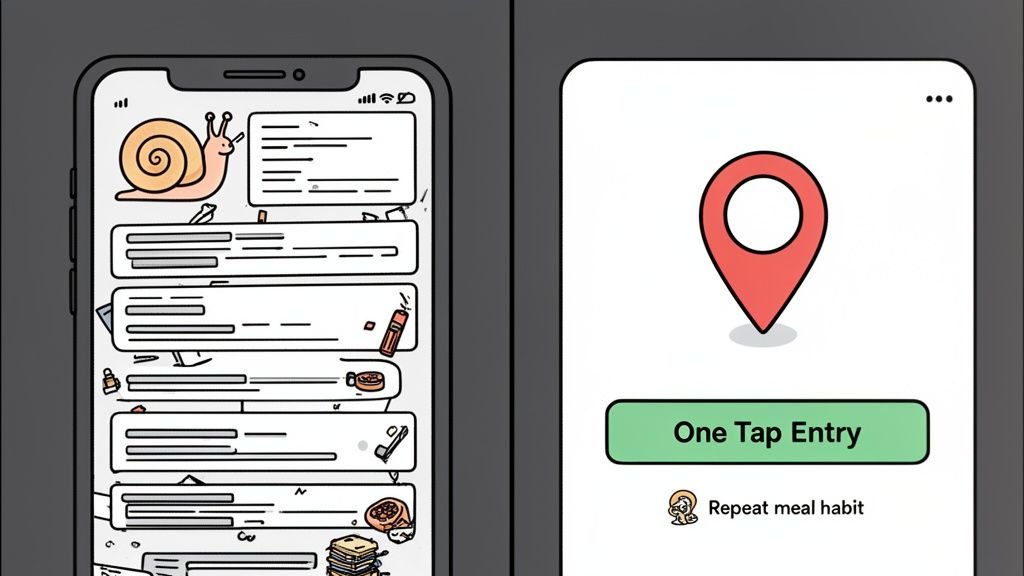
Think about it this way: logging your lunch can either feel like sending a quick text or drafting a formal email. One is instant and barely requires a thought, while the other is a task you might just put off until later. The best apps are built for the speed of a text message.
This relentless focus on effortless logging is exactly why the nutrition app market is booming. It hit a staggering $5.2 billion in 2024 and is projected to climb to an incredible $17.4 billion by 2035. This isn't just a random spike; it’s driven by busy people and serious gym-goers who have zero time for clunky, manual food journals. They want an app that does the heavy lifting, like PlateBird’s AI feature that gives you instant macro breakdowns just from a photo of your meal.
Speed and Simplicity: The Non-Negotiables
At the end of the day, the core of a great app is how fast you can get in, log your food, and get on with your life. Every single extra tap, scroll, or search is a tiny point of friction that slowly erodes your consistency.
A truly fast app should have:
- One-Tap Entries: The app needs to learn your habits. If you have the same protein shake every morning, logging it should be a single tap—not a frustrating search and-entry process every single time.
- Intelligent Search: When you do need to search, the app should immediately bring up your most frequent or recent foods. You shouldn't have to scroll past pages of obscure brands to find the Greek yogurt you eat every day.
- Minimalist Interface: A clean, simple design is about more than just looks; it reduces mental fatigue. You shouldn't feel like you're navigating a maze of buttons just to log an apple.
The ultimate goal is to close the gap between the moment you eat and the moment you log. An app that masters this turns tracking from a conscious effort into an unconscious habit.
Accuracy That Builds Trust
Of course, speed is completely useless if the numbers are wrong. Your macro app is like a GPS for your fitness goals. If the map is blurry or points you in the wrong direction, you'll never get where you want to go. An app’s accuracy is a combination of its database and its intelligence.
A huge part of this is how it handles homemade meals. A top-tier app will include a smart, built-in macro calculator for recipes that saves you from pulling out a calculator. This is an absolute game-changer for anyone who meal preps.
If you cook a lot at home, you know the struggle is real. We've put together some of our best tips on https://platebird.com/how-to-calculate-calories-in-homemade-food/ to make it easier.
Smart Customization and Privacy
Finally, the best app is one that molds to your needs, not the other way around. It should give you powerful customization options without overwhelming you with complexity.
- Goal-Specific Tracking: On a high-protein diet? The app should let you pin your protein goal front and center. Focusing on low-carb? It should adapt your dashboard to highlight what matters most to you.
- Recipe and Meal Saving: You should only have to do the work of logging a complex homemade meal once. The app must let you save it as a custom entry for quick logging in the future.
- Privacy First: This is a big one. You shouldn't have to create an account or hand over a bunch of personal information just to see if you like an app. A truly user-friendly app lets you jump right in and start tracking immediately, respecting your privacy from the start.
How AI Is Finally Making Macro Tracking Effortless
Anyone who’s tried macro tracking knows the drill. The promise is a better understanding of your nutrition, but the reality? It’s often a tedious, soul-crushing chore. You’d sit down to a perfectly good meal, only to spend the next ten minutes on your phone, wrestling with a search bar.
It was a frustrating cycle. You’d have to deconstruct your entire plate, one ingredient at a time. First, you search for "chicken breast," scroll through a dozen different entries, and take a wild guess at the portion size. Then you do it all over again for the rice, and again for the broccoli. By the time you were done, your food was cold and your patience was shot. It’s no wonder so many people give up.
The Dawn of AI-Powered Logging
Thankfully, artificial intelligence is changing the game entirely. The best macro tracking apps today aren’t just glorified food databases anymore; they’re smart assistants that actually understand what you’re eating. This shift finally turns logging from a dreaded task into a quick, simple, and almost invisible habit.
Instead of fighting with endless drop-down menus, you can now log your meals in two new ways that feel less like data entry and more like sending a quick text to a friend.
From Frustration to Flow with Natural Language
The first major breakthrough is natural language input. Just think of it as describing your meal in plain English.
Instead of logging each item separately, you just type (or even speak) a single sentence about what you ate.
- "A bowl of oatmeal with blueberries and almonds"
- "Two scrambled eggs, a piece of toast with butter, and a black coffee"
- "Chicken rice broccoli for lunch"
An AI-powered app like PlateBird instantly gets it. The AI parses your sentence, identifies each food, and adds up the macros for you. What used to be a frustrating, multi-step process is now done in about five seconds. This might sound like a small change, but it's a profound one, making it ridiculously easy to log a meal the moment you eat it.
The old way required you to deconstruct your meal for the app. The new way lets the app deconstruct your words. This small shift in responsibility makes a massive difference in daily usability.
This approach is perfect for logging your go-to meals or when you’re in a hurry and just need to get it done. It completely removes the mental gymnastics that used to make tracking feel like a second job.
Snap a Photo, Let AI Do the Work
The second big leap forward is computer vision, and it feels like pure magic the first time you use it. You just open your app, take a quick photo of your plate, and let the AI do all the heavy lifting.
In seconds, the technology identifies everything on your plate—it sees the salmon, the asparagus, and the quinoa—and gives you a solid estimate of the portion sizes and their nutritional info. It turns a visually complex meal into clean, organized data, and you barely have to lift a finger.
The accuracy here has come a long way. Studies on AI food recognition have seen success rates jump from around 63% in 2020 to over 92% on average in 2024 for complex dishes. It's now a seriously reliable tool. Sure, it might not nail hidden ingredients like cooking oil every time, but it gives you an amazing starting point that you can tweak with a simple tap if needed.
Photo logging is a lifesaver for complicated homemade recipes, restaurant meals, or any time you’ve got a lot going on with your plate. It turns the hardest meals to log into the easiest.
Old Way vs New Way: How AI Transforms Macro Tracking
The result of all this is a workflow that’s not just a little better—it’s drastically faster and more intuitive. To really see the difference, let’s compare what it takes to log a simple, common lunch using the old-school method versus a modern AI-powered app.
| Task | Traditional App (The Old Way) | AI-Powered App like PlateBird (The New Way) |
|---|---|---|
| Logging a Meal | Search "chicken," select type, guess weight. Repeat for rice and broccoli. Adjust portions individually. | Snap one photo or type "chicken rice broccoli." Review and confirm. |
| Time Spent | 5-10 minutes | Under 30 seconds |
| Effort Level | High mental load. It's tedious, feels like a chore, and is prone to errors. | Low effort. Feels intuitive and almost automatic. |
This isn’t just some minor, incremental update; it's a complete overhaul of the entire experience.
By slashing the time and mental energy it takes to log a meal by over 90%, AI makes consistency something anyone can achieve—whether you're a busy professional or a parent juggling a million things at once. This is how the best macro tracking apps help you finally build a habit that sticks.
Finding the Right Macro App for Your Lifestyle
Let’s be honest: the "best" macro tracking app isn't the one with a million bells and whistles. It's the one that actually fits into your life without feeling like a chore. The perfect tool for a competitive bodybuilder prepping for a show would be total overkill for someone just trying to lose a few pounds. It all comes down to your goals and your daily rhythm.
The great news is that the market is finally catching on. We're seeing huge growth in apps dedicated to macro tracking, leaving simple calorie counters in the dust. Why? Because people are getting more sophisticated. Fitness enthusiasts and nutrition coaches demand the precision of tracking protein, carbs, and fats to fuel specific goals, like those in a flexible dieting approach.
In 2024 alone, trends like keto and flexible dieting were adopted by 15% of all dieters. The entire industry, which was a $5.95 billion market in 2025, is now projected to explode to $27.73 billion by 2035. It’s a massive shift, and it’s driven by people like you who want better tools.
Modern apps have moved way beyond tedious manual entry. The process has gotten a whole lot smarter.
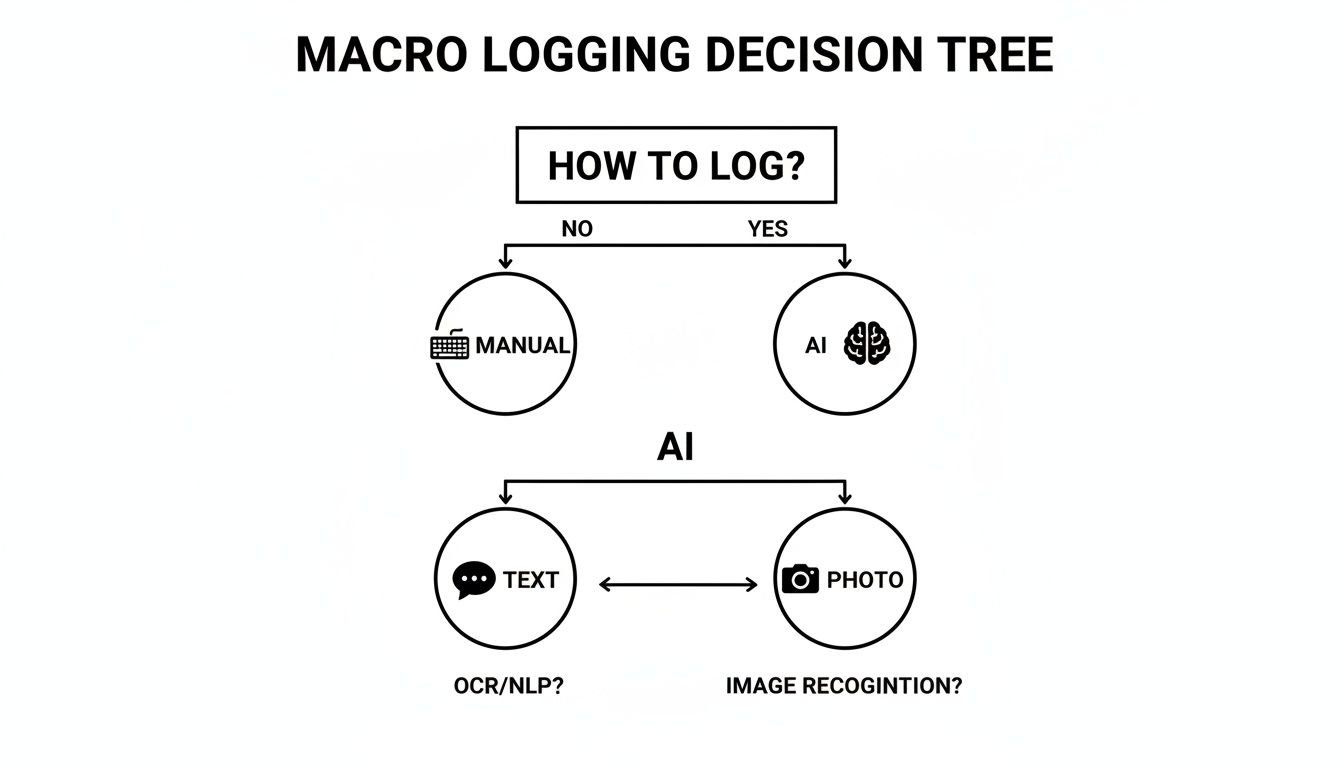
As you can see, AI offers some incredible shortcuts to make logging faster, whether you're typing what you ate or just snapping a quick picture. So, let's figure out which features actually matter for you.
For the Weight-Loss Seeker
If your main goal is to lose weight, your mission is simple: stay in a consistent calorie deficit. The last thing you need is a complicated app that makes you want to throw your phone across the room. You need a tool that makes you aware of your calories without adding stress to your day.
What Really Matters:
- Effortless Logging: Logging your food should feel like a reflex, not a research project. This is where AI-powered text and photo logging become game-changers.
- Clear Visual Feedback: You need to see your progress at a glance. A simple bar showing your daily calorie goal versus what you've eaten is far more motivating than a wall of numbers.
- Habit-Building Nudges: The app should help you build consistency. Look for smart features like one-tap logging for meals you eat often and gentle reminders to keep you on track.
An app like PlateBird was built for this. You can type "salad with grilled chicken" or snap a photo of your plate, and it’s logged in seconds. That speed is what makes the habit stick.
For the Dedicated Gym-Goer
If you practically live at the gym, your needs are much more specific. Hitting your daily protein goal is just as crucial as your total calorie intake. You need an app that gives you precision and control without slowing you down.
For a serious athlete, a macro app isn't just a diary—it's an instrument. It’s how you measure the fuel you're giving your body for performance and recovery. It needs to be precise.
What Really Matters:
- Macros Front and Center: Your protein, carb, and fat numbers should be impossible to miss. You shouldn't have to hunt through three different screens to see if you've hit your protein target.
- An Accurate Recipe Calculator: You probably make a lot of your own meals to dial in your nutrition. A reliable recipe calculator that lets you save your go-to dishes is a must-have for accuracy and speed.
- Micronutrient Details: To really optimize your performance, tracking vitamins and minerals becomes key. The ability to monitor things like sodium, potassium, and iron is a massive advantage.
For the Busy Professional and the Meal Prepper
For those of us juggling a packed schedule, time is everything. Your week is planned, your lunches are prepped, and you don’t have a single minute to waste on a clunky interface. You need an app built for speed and efficiency.
Your routine is all about structure and repetition, so your app should reward that. This is especially true if you follow a flexible dieting approach, where you need to plan ahead but also have the ability to adjust on the fly. You can learn more about getting started with our guide on what is flexible dieting.
What Really Matters:
- One-Tap Logging: Eat the same breakfast every morning? Logging it should take one single tap. The best apps learn your habits and turn your repeat meals into instant shortcuts.
- Smart Recipe Features: If you meal prep a big batch of chili on Sunday, the app should make it dead simple to log one serving on Wednesday without re-entering everything.
- Quick-Entry Tools: A fast barcode scanner is essential for packaged foods and ingredients. A "quick add" function is also a lifesaver for logging just calories or macros when you're in a rush and don't need all the details.
Practical Tips for Sticking with Macro Tracking for Good
So, you've found a slick, intuitive app. That's a huge first step, but let's be honest—the app itself doesn't build the habit. The real magic happens when you weave tracking into your daily life, turning it from a short-term diet tactic into something you just do.
Think of a great app as a freshly paved highway. It makes the journey incredibly smooth, but you still have to be the one behind the wheel. The goal is to make tracking so automatic that you hardly notice you're doing it.
Log as You Go, Not at the End
I can’t tell you how many people I’ve seen fall into this trap: they wait until the end of the day to log everything. By 10 PM, you’re trying to remember the exact portion of rice you had for lunch or that handful of almonds you grabbed on the way out the door. It’s a recipe for inaccurate data and feeling totally overwhelmed.
The fix is simple: log your meal the moment you eat it. A modern app like PlateBird lets you do this in under 30 seconds. Just type what you ate or snap a picture before you take your first bite. This one little change keeps your data clean and dodges that dreaded end-of-day scramble.
This push for data-driven health is why the nutrition apps market is exploding, projected to hit between $4.5 and $6.94 billion by 2026 as more people look for ways to manage their health proactively. The results speak for themselves. Studies show that people who consistently track their macros see 15-20% better results in muscle gain and fat loss than those who just estimate. Discover more insights about the growing nutrition app market on DataInsightsMarket.com.
Embrace Imperfection and Connect to Your Why
Perfection is the enemy of progress. You will have days where you go over your targets or can’t log a meal perfectly. That's not just okay; it's normal. So many people get derailed by an all-or-nothing mindset. If you have an "off" day, don't throw in the towel. Just acknowledge it and get right back on track with your very next meal.
The goal isn't to be a perfect tracker every single day. The goal is to be a consistent one over the long haul. One off-day is just a data point, not a reason to quit.
To power through those tough moments, you have to stay connected to your why. What made you start this journey in the first place? Maybe you want more energy to play with your kids, to hit a new PR at the gym, or to take control of your health.
Whatever it is, keep that reason front and center. Write it down on a sticky note. Make it your phone's wallpaper. That purpose is the fuel that will keep you going long after the initial burst of motivation fades.
Of course, to track consistently, you need a solid grasp of the fundamentals of how to track macros effectively. Building that foundation makes the whole process feel much more natural. If you're looking for a refresher on the basics, you might find our complete guide on how to count macros helpful.
Your Macro Tracking Questions Answered
Once you decide to start tracking macros, a million questions usually pop into your head. It's totally normal. Getting clear on a few common worries from the start can make all the difference between sticking with it and giving up.
So, let's get into some of the things people always ask me.
How Accurate Is AI Food Recognition?
This is usually the first question, and it's a fair one. Can you really trust an app to know what’s on your plate from just a photo? The technology has come an incredibly long way. We're now seeing top-tier systems hit over 92% accuracy, even when you show them a complex, messy plate of food.
Think of it like the facial recognition on your phone. It wasn’t perfect at first, but it learned your face from different angles and in different lighting. Food AI works the same way. It might occasionally mistake a yam for a sweet potato, but it gives you a massive head start that's lightyears beyond typing everything in by hand. It's a lifesaver for restaurant meals or those "I don't even know where to begin" home-cooked recipes.
What About Hidden Ingredients Like Oils?
Great point. This is where a little bit of your own knowledge turns a good tool into a great one. The AI can easily spot the chicken and the broccoli, but it can't always see the two tablespoons of olive oil they were sautéed in.
The best apps are designed for this. They let the AI do the heavy lifting—identifying the big stuff—and then make it dead simple for you to make a quick adjustment. You can add that oil or tweak the portion of dressing in seconds. This small step is what turns a ten-minute logging chore into a quick ten-second task.
Do I Need to Track Every Single Day to See Results?
This is the mental trap that gets so many people. They aim for perfection, miss one meal or one day, and then throw in the towel completely. The truth is, you absolutely do not need to be perfect to see amazing results.
The goal isn't perfection; it's consistency. Tracking most days is far more effective than tracking perfectly for one week and then quitting because you felt overwhelmed.
Think of it like you're collecting data for a science experiment on your own body. The more data you have, the clearer the picture. If you miss a day, who cares? Just jump right back in the next. An 80/20 approach—where you’re on top of it 80% of the time—is more than enough to create real, lasting change.
Ready to stop guessing and start tracking with effortless speed? PlateBird uses powerful AI to log your meals from a simple photo or a line of text. No more endless searching or manual data entry—just fast, accurate tracking that fits your life. Download PlateBird on the App Store and start building a habit that sticks.