You're standing in the kitchen, coffee brewing, pan warming, and the first pancake is already on the plate. It smells great. Then the practical question shows up right on cue: how many calories are in a pancake?
The motivation behind asking isn't a desire for stressful breakfasts. Rather, the question arises because pancakes are one of those foods that can look simple while changing a lot based on size, batter, and what goes on top. A small plain pancake and a restaurant-style stack with butter and syrup may both be called “pancakes,” but they don't behave the same on your plate.
That's why memorizing one number usually doesn't help much. What helps is understanding the mechanics. Think of pancakes like building blocks. First there's the base pancake. Then there's the size of that pancake. Then there are the extras, which can become the biggest part of the total.
Once you see it that way, the topic gets less confusing and a lot less restrictive. You don't need to avoid pancakes. You just need a simple way to read the plate in front of you.
The Sunday Morning Pancake Puzzle
Sunday breakfast often starts with good intentions and a vague plan. Maybe you tell yourself you'll keep it light. Then a stack lands on the table, someone passes the syrup, and you realize you're guessing.
That guesswork is the problem. It's not the pancake itself.
A client once told me that pancakes feel “impossible to track” because they're homemade one weekend, from a box mix the next, and at a café the week after that. That's a fair complaint. Pancakes don't come with a built-in label once they hit the plate. Even the same cook can make them thinner, thicker, wider, or richer from one batch to the next.
The confusion gets even bigger when breakfast turns into a full ritual. Butter melts into the center. Syrup runs over the edges. Maybe there's a latte on the side and a cozy recipe idea pulled from a weekend roundup like Allied Drinks Systems, where pancakes show up as part of that classic coffee-and-brunch moment so many people love.
Pancakes aren't nutritionally mysterious. They're just layered.
That's the mindset that makes this easy. Instead of asking for one magic number, ask three smaller questions:
- What is the base? Plain pancake calories start with the batter and the size.
- How big is it? Diameter matters more than commonly understood.
- What got added after cooking? Toppings can change the total faster than the pancake itself.
If you can answer those three things, you can estimate calories in a pancake with a lot more confidence. That's useful whether you're trying to lose weight, eat more intentionally, or just stop feeling like breakfast is a math test.
Your Pancake's Calorie Blueprint
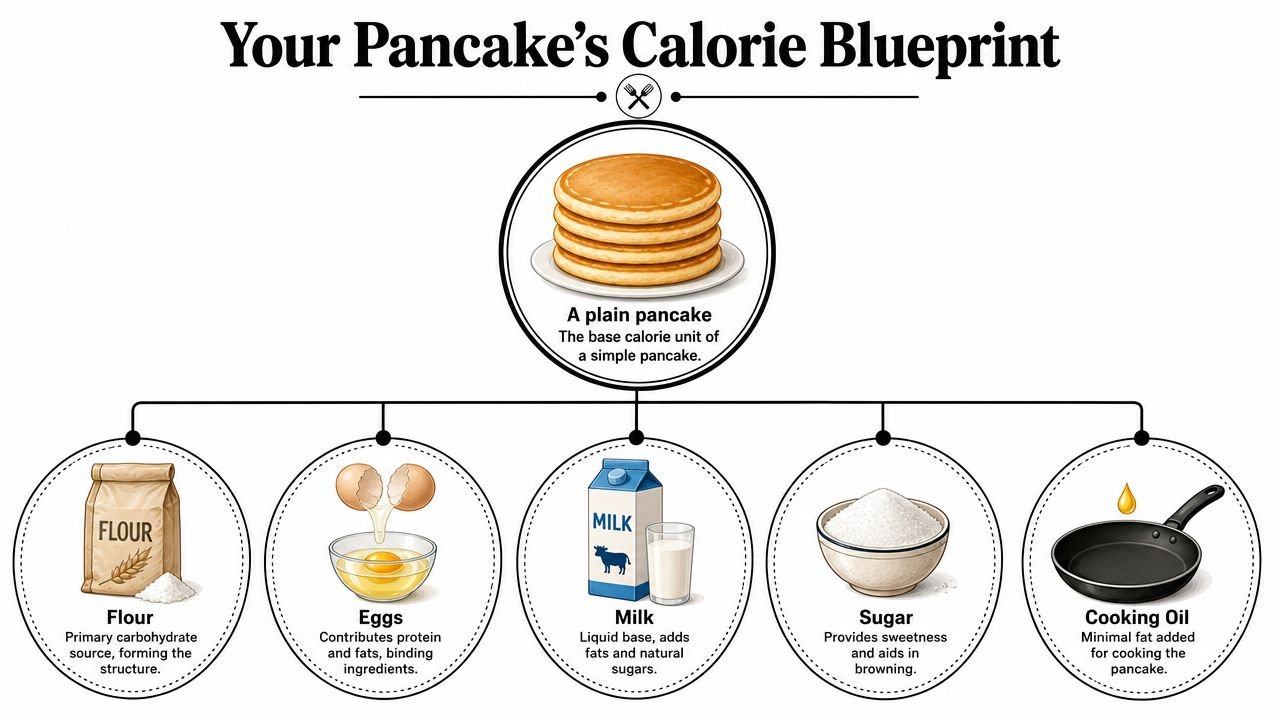
The easiest way to understand calories in a pancake is to treat the plain pancake as the blueprint. Before butter, before syrup, before fruit, there's the base structure.
A plain, medium homemade pancake prepared from a basic recipe contains about 175 calories, with a macronutrient breakdown of 50% carbohydrates, 39% fat, and 11% protein, according to Eat This Much's pancake nutrition entry. That same source notes that size is the primary determinant, with a small 4-inch pancake at about 86 calories and a large 7-inch pancake at about 186 calories.
Start with the plain pancake
That medium pancake number matters because it gives you a reference point. If someone serves you one average homemade pancake, 175 calories is a useful anchor. Not perfect for every recipe, but strong enough to guide a real-life estimate.
If the pancake is clearly smaller, think closer to the small end. If it covers most of the plate, think closer to the large end.
Here's a simple way to picture it:
| Pancake size | Approximate calories |
|---|---|
| Small 4-inch plain pancake | About 86 |
| Medium 77g homemade pancake | About 175 |
| Large 7-inch plain pancake | About 186 |
Why size changes so much
People often assume one pancake equals one serving. That's where confusion starts. A pancake is not a fixed unit like a packaged granola bar. It's more like pouring batter into a circle, and that circle can vary a lot.
A silver-dollar style pancake behaves very differently from a diner-style pancake, even if both are made from similar ingredients. When the pancake gets wider and thicker, the calories rise because there's more batter in play.
Practical rule: Before you count toppings, identify the pancake's size category. Small, medium, or large is often enough.
Think in layers, not labels
The ingredients in a plain pancake are familiar: flour, eggs, milk, a little sugar, and some fat from butter or oil. That's why the blueprint idea works so well. You don't need to obsess over every gram. You just need to remember that the base already carries a meaningful amount of energy, especially in a medium or large serving.
If you want one mental shortcut, use this: plain pancake first, extras second. That single habit prevents most underestimates.
The Topping Effect How Butter and Syrup Add Up
Most undercounting doesn't happen in the batter. It happens after the pancake leaves the pan.
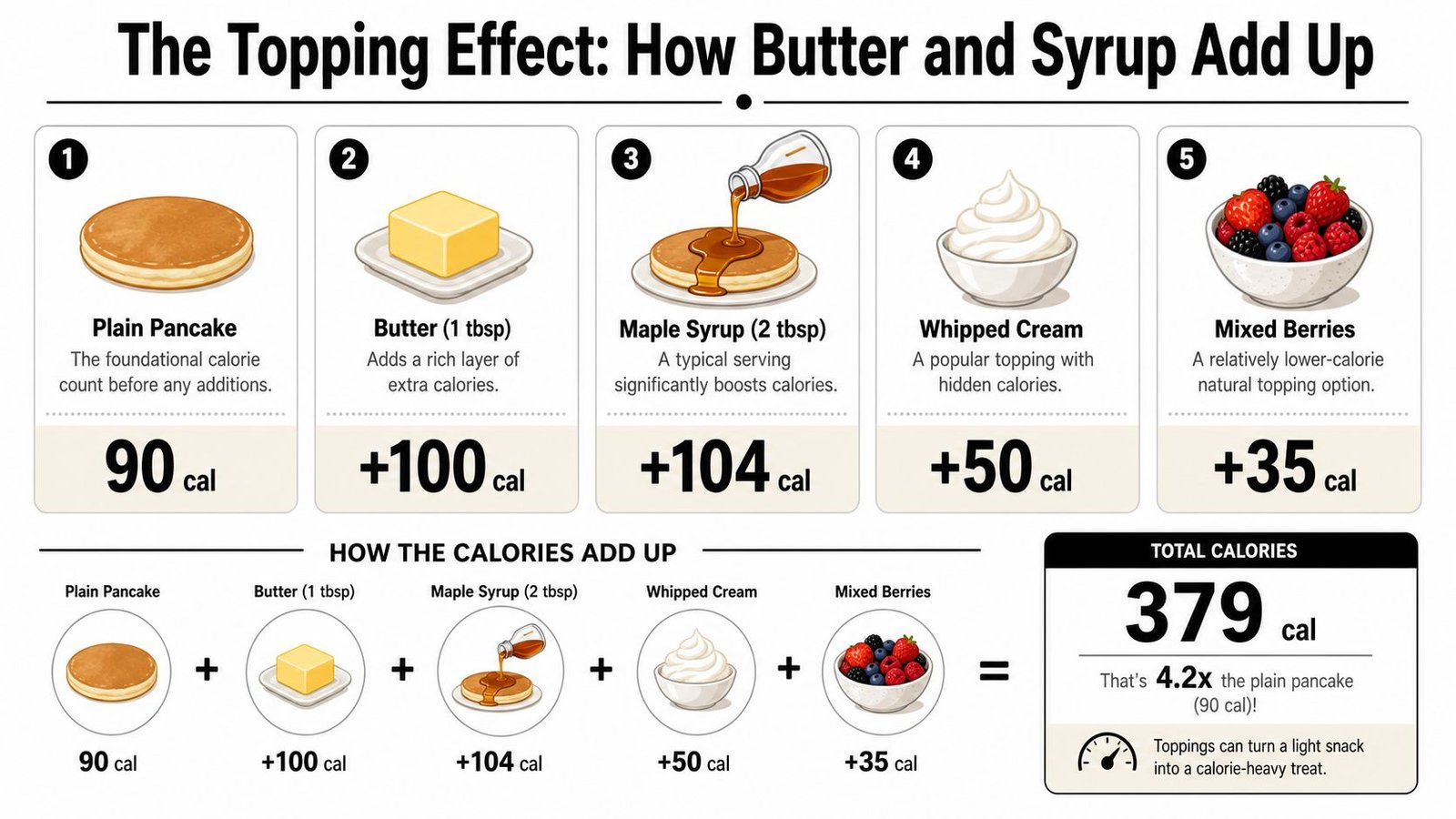
A guide from Kimecopak on pancake calories shows how dramatic that shift can be. Two medium plain pancakes provide roughly 180 to 200 calories, whereas two pancakes with butter and syrup can reach approximately 520 calories. That's why someone can feel like they had a moderate breakfast when the plate landed much heavier.
Small add-ons, big total
Butter and syrup are easy to overlook because they don't make the plate look much bigger. They spread. They melt. They disappear into the food.
But they still count.
If you cook often and want more confidence in portioning butter, a practical kitchen reference like Chef Royale's butter conversion guide can help you translate casual “pat” or “slice” habits into something more concrete. And if you're trying to get better at reading serving sizes on packaged syrups or pancake mixes, this guide on how to read nutrition labels is useful for spotting where calorie creep usually hides.
Common Pancake Topping Calorie Counts
| Topping | Serving Size | Approximate Calories |
|---|---|---|
| Butter | 1 tablespoon | 102 |
| Pure maple syrup | 1 ounce | 99 |
| Pure maple syrup | 1 tablespoon | 52 |
| Butter-flavored syrup | 1 tablespoon | 59 |
The easiest place to adjust breakfast
This is why toppings are the most flexible lever. If you love pancakes, you don't need to eliminate them. You can decide how generous you want the extras to be.
Some people prefer a light drizzle and a bit of fruit. Others want the full diner experience and just want to log it accurately. Both approaches can work. The important part is recognizing that the pancake and the topping are two separate calorie events.
A plain pancake is one decision. Butter and syrup are another.
That mental separation helps a lot. It turns “pancakes are bad for me” into a more useful question: “How much of this total is batter, and how much is topping?”
Recipe Roulette From-Scratch vs Mixes
Two pancakes can look almost identical and still start from different calorie baselines. One reason is the recipe itself.
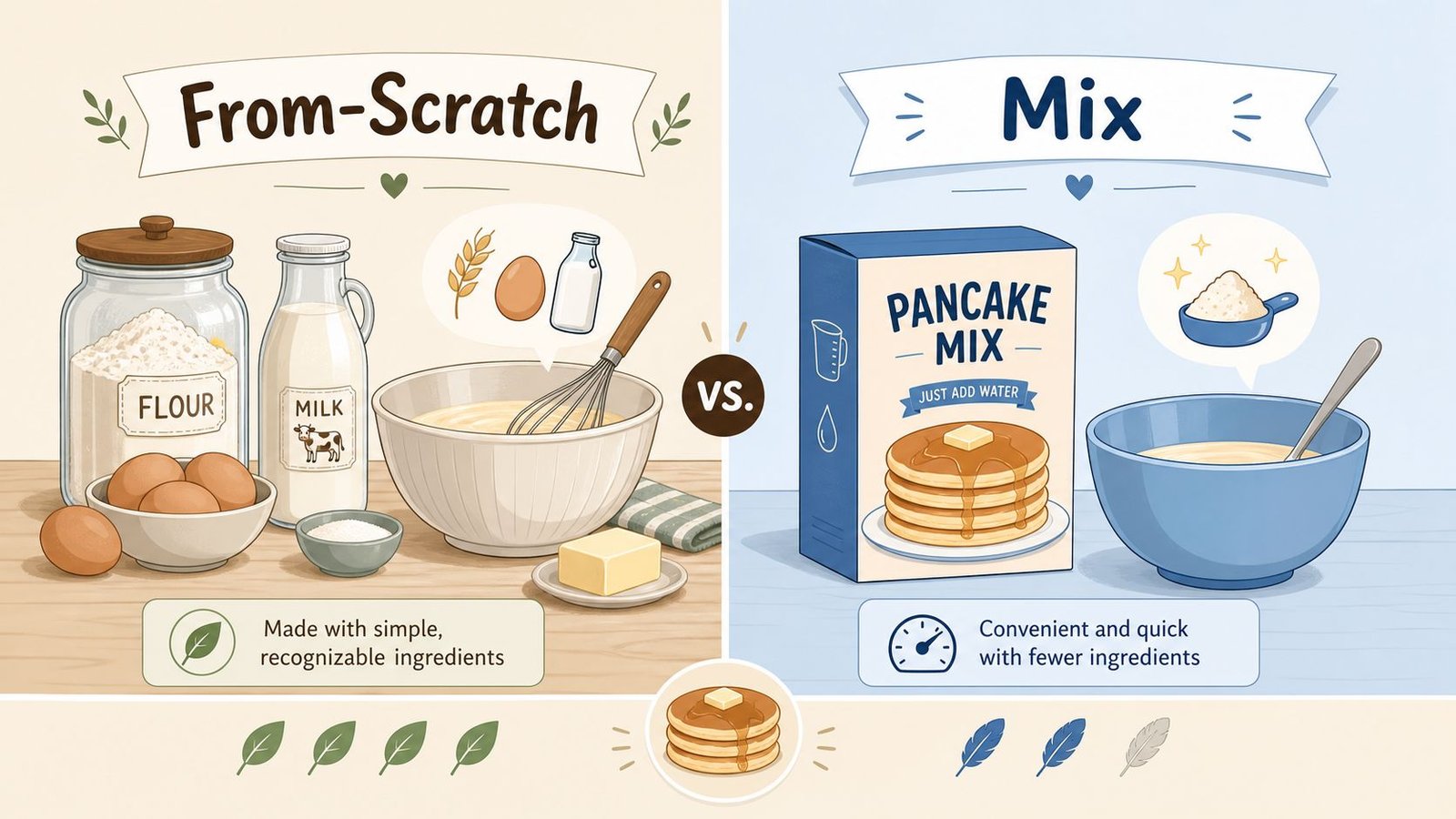
According to Foodstruct's pancake comparison, a pancake made from a homemade recipe using buttermilk and whole ingredients contains 227 kcal per 100g, while a pancake made from a complete dry mix contains 194 kcal per 100g.
Why homemade can come out higher
Homemade pancakes often include richer ingredients like buttermilk, butter, and whole eggs. Those choices can improve texture and flavor, but they also raise the calorie density.
A complete mix may rely on a different ingredient profile, which can bring the calorie level down by weight. That doesn't automatically make it “better.” It just means the starting point is different.
What to do with that information
If you're cooking at home and trying to estimate the meal more accurately, recipe type matters almost as much as pancake size. A buttermilk pancake from scratch is not the same food, nutritionally, as a pancake made from a leaner commercial mix.
That's why homemade logging works best when you count from the recipe, not from the name alone. If you need a practical way to do that, this guide on how to calculate calories in homemade food walks through the process clearly.
A good rule is simple: when a pancake tastes richer, denser, and more buttery, it probably is.
The Modern Pancake Protein Power and Smart Swaps
Traditional pancakes are usually built around flour and liquid, with protein playing a smaller role. That's fine for enjoyment, but it may not match what a lot of active people want from breakfast.
One example of that gap appears in this Instagram reel discussing high-protein pancakes, which notes that three high-protein, egg-white-based pancakes can contain about 717 calories and 69g of protein, compared with about 190 calories and 6g of protein for two mix-based pancakes. The same source says a 6-inch traditional pancake has 4g of protein, while modern protein-focused versions can deliver 20 to 25g.
Why protein changes the experience
Protein doesn't just change the label. It changes how the meal functions. A higher-protein pancake can fit better into strength training, fat-loss, or appetite-control goals because the breakfast becomes more than a quick carb-and-topping vehicle.
That doesn't mean every pancake needs protein powder. It means you have options now that older pancake guides often ignore.
Smart ways to rethink the batter
If you want pancakes that work harder for you nutritionally, a few directions make sense:
- Use egg whites or eggs differently. This can shift the protein balance upward.
- Add a protein-focused ingredient. Many people use a scoop in the batter or build recipes around cottage cheese or similar ingredients.
- Keep the pancake enjoyable. A breakfast you want to eat is more sustainable than a “perfect” one you resent.
If you want ideas that move in that direction, this collection of recipes with protein powder can help you experiment without turning breakfast into a science project.
If a pancake keeps you full longer and supports your goals better, it may be the better pancake for you, even when the calorie total looks similar.
That's the modern shift. Instead of asking only “How many calories in a pancake?” more people are also asking, “What am I getting for those calories?”
Logging Pancakes Perfectly with PlateBird
Pancakes are one of the easiest breakfasts to mislog because they rarely arrive as a neat, single item. You're usually looking at a stack, a topping, maybe fruit, maybe butter that melted into the center before you even sat down.
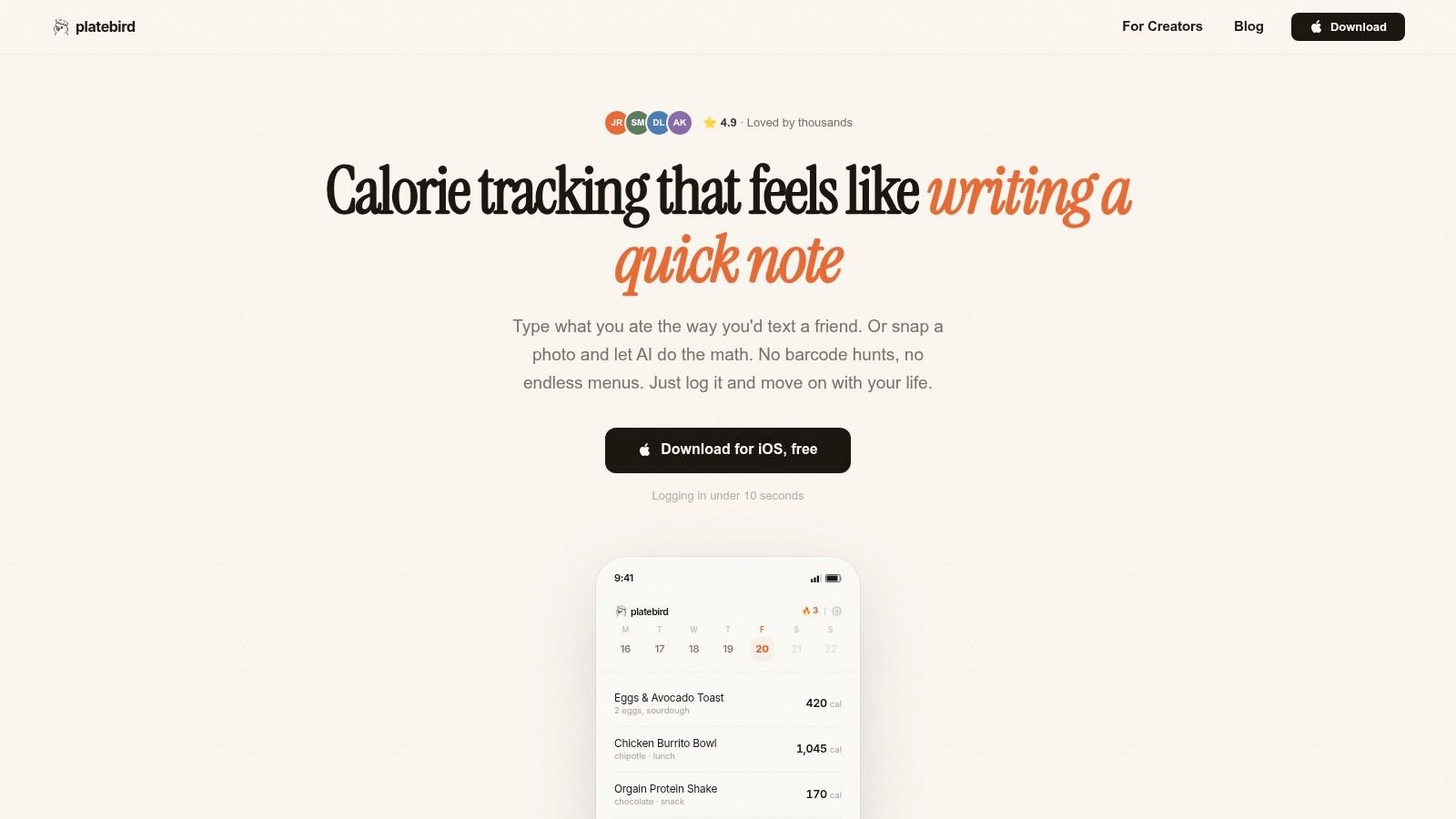
A typical manual entry can get tedious fast. You search for “pancake.” Then you choose between homemade, dry mix, buttermilk, plain, restaurant style, and several serving sizes. Then you add syrup separately. Then butter. Then berries. Then you wonder whether the butter on the plate was a teaspoon, a tablespoon, or more.
That topping problem matters. In Lose It's article on pancake calories, a single tablespoon of butter adds 102 kcal and one ounce of pure maple syrup contributes 99 kcal. Those are exactly the kinds of add-ons people forget because they feel small and familiar.
Why pancake logging breaks down
Manual logging usually fails in two places:
- The pancake entry is too generic. “One pancake” doesn't tell you enough.
- The extras vanish. Melted butter and poured syrup are easy to miss.
When you're tired, busy, or eating out, that friction adds up. People often stop tracking carefully not because they don't care, but because breakfast becomes annoying to record.
A faster method helps most with meals like this. You can see what that looks like below.
A better way to think about the log
The best log is the one that matches how you eat. For pancakes, that usually means recording the plate as a meal, not as a scavenger hunt of separate database entries.
Try describing the whole breakfast in one plain sentence. For example: two buttermilk pancakes, syrup, butter, and berries. That kind of complete description reduces the chances that the hidden parts get dropped.
When people miss pancake calories, they usually miss the finishing touches, not the flour.
Your Top Pancake Calorie Questions Answered
Are gluten-free pancakes lower in calories?
Not automatically. Gluten-free changes the flour source, but it doesn't guarantee a lower-calorie pancake. The final number still depends on recipe, size, and toppings. Treat them like any other pancake until you have recipe details.
Are vegan pancakes lighter?
Sometimes, but not always. Removing eggs or dairy can change the fat and protein balance, yet calories still depend on what replaces them. A vegan pancake made with rich ingredients can easily be more energy-dense than a simpler traditional one.
Does cooking oil matter?
Yes, especially if the pan is generously greased or the pancake is fried in visible fat. Even when people remember syrup, they often forget what was used on the pan. If the pancake has crisp, browned edges and tastes noticeably rich, some of that energy may be coming from cooking fat.
How do restaurant pancakes compare?
Restaurant pancakes are often harder to estimate because portions tend to be larger and toppings may be added before the plate reaches you. The safest approach is to assume the serving is bigger, richer, and more heavily finished than a modest homemade pancake unless the menu gives more detail.
What's the simplest way to estimate calories in a pancake?
Use this mental model:
- Start with the base pancake. Small, medium, or large.
- Ask how rich the recipe seems. Homemade buttermilk and buttery batters usually run heavier than leaner mixes.
- Add toppings separately. Don't fold them into the pancake in your mind.
What if I'm trying to lose weight but still want pancakes?
Keep the food, change the build. Smaller pancakes, lighter toppings, fruit, or a protein-focused recipe can all make the meal fit more comfortably into your day. Pancakes don't need to be “off limits” to be manageable.
The big takeaway is simple. Calories in a pancake are mechanical, not mysterious. Once you learn to separate batter, size, and toppings, you can make informed choices without draining the joy out of breakfast.
If you want calorie tracking to feel less like spreadsheet work, PlateBird makes it easy to log meals the way you think about them. You can type what you ate in plain language or snap a photo, and it calculates calories and macros without the usual friction of hunting through food databases.