
- 1. Oats (Rolled & Steel-Cut)
- 2. Brown Rice
- 3. Quinoa
- 4. Sweet Potatoes
- 5. Whole Wheat Bread & Pasta
- 6. Legumes (Beans, Lentils, Chickpeas)
- 7. Barley & Farro
- 8. Oat Bran
- 9. Whole Grain Cereals (Unsweetened)
- 10. Whole Grain Bread Alternatives (Sprouted, Ezekiel)
- Top 10 Complex Carbs Comparison
- Turn Your Knowledge Into Action, Effortlessly
Imagine a fuel source that doesn’t just burn bright and fast but provides a steady, reliable stream of energy for hours. That’s the power of complex carbohydrates. While simple carbs found in sugar and white bread give you a quick, fleeting rush, complex carbs are the unsung heroes of sustained performance, satiety, and overall health. They are the marathon runners of the nutrition world, built with long chains of sugar molecules that your body breaks down slowly, preventing energy crashes and keeping you feeling full.
In a world often focused on carb-cutting, understanding which ones to embrace is a genuine advantage for your fitness and wellness goals. This article isn't just another generic complex carbohydrates list foods; it is your definitive guide to the top 10 most effective, nutrient-dense options available.
We will break down not just what these foods are, but how to practically integrate them into your diet for maximum benefit. You will get specific meal ideas, portion guidance, and actionable tips for quickly logging them in PlateBird. This way, you can focus on achieving your goals, not getting bogged down by your food diary. Let’s dive into the foods that will truly fuel your body the right way.
1. Oats (Rolled & Steel-Cut)
Oats are a cornerstone of any effective complex carbohydrates list foods, celebrated by everyone from bodybuilders fueling pre-workout sessions to busy professionals seeking sustained morning energy. What makes them so powerful is their high concentration of beta-glucan, a unique type of soluble fiber. This fiber forms a gel-like substance in your gut, slowing down digestion and the absorption of glucose into your bloodstream. The result is steady, reliable energy without the sharp spike and subsequent crash associated with simple carbs.

This slow-release mechanism is precisely why oats have a high satiety index, keeping you feeling full and satisfied for hours. A single cooked cup (around 40g dry) provides roughly 27g of carbs and a surprising 5g of protein, making it an excellent base for a muscle-building or weight-management meal. The fiber content also plays a crucial role in digestive health, and you can learn more about how fiber contributes to your daily intake by exploring the details of whether fiber has calories.
Practical Tips for Oats
- Prep for the Week: Make a large batch of overnight oats on Sunday. Portion it into 3-4 containers with different toppings (like fruit, nuts, or seeds) for grab-and-go breakfasts.
- Boost Protein & Satiety: Elevate your oatmeal by mixing in a scoop of protein powder, a dollop of Greek yogurt, or a tablespoon of chia seeds. This turns a carb-focused meal into a balanced macronutrient powerhouse.
- Choose Wisely: Opt for steel-cut or rolled oats over instant varieties. Steel-cut oats have a lower glycemic index (around 42-55) compared to instant oats (around 79), ensuring an even slower energy release.
- Quick Logging: Use the photo logging feature in PlateBird to quickly capture your oatmeal bowl. The app can help identify the ingredients, making macro tracking for complex meals much faster.
2. Brown Rice
A foundational staple in meal prep circles and a cornerstone of any complex carbohydrates list foods, brown rice is prized for its nutritional density and versatility. Unlike white rice, brown rice is a whole grain that retains its bran and germ layers. These layers are packed with fiber, vitamins, and minerals, making it a far superior choice for sustained energy. Its slower digestion helps prevent the blood sugar spikes common with refined grains, making it a reliable fuel source for both fitness enthusiasts and anyone seeking stable energy throughout the day.
With a glycemic index of around 68 compared to white rice's 89, brown rice delivers energy steadily, which is ideal before a workout or as part of a balanced lunch. A single cooked cup contains about 45g of carbohydrates and 5g of protein, providing a solid base for a muscle-building or weight-management meal. To get the most out of your meals, you can fine-tune your portions by learning more about what your macros should be for your specific goals. For those looking to incorporate more complex carbohydrates, consider options like Organic Brown Basmati Rice for your meals.
Practical Tips for Brown Rice
- Cook in Bulk: Use a rice cooker to prepare a large batch (e.g., 5 dry cups) at the start of the week. This gives you a ready-to-go carb source for multiple meals, saving significant time.
- Balance Your Bowl: Always pair your brown rice with a quality protein source (like grilled chicken, tofu, or beans) and vegetables. Aim for 25-30g of protein to create a complete, satiating meal.
- Perfect Portions: A standard serving is typically 1/2 to 1 cup cooked, which provides 22-45g of carbohydrates. Adjust based on your energy needs and fitness goals.
- Effortless Logging: When you've portioned your meal-prep bowl, just snap a picture with the PlateBird app. Its recognition technology can identify the brown rice and estimate the portion size, simplifying your macro tracking.
3. Quinoa
Quinoa has earned its superfood status and a prominent spot on any complex carbohydrates list foods, especially among plant-based athletes and health-conscious eaters. Technically a pseudocereal, it behaves like a grain but offers a unique advantage: it's a complete protein containing all nine essential amino acids. This makes it an invaluable source of fuel for muscle repair and sustained energy, setting it apart from many other plant-based carbohydrates.
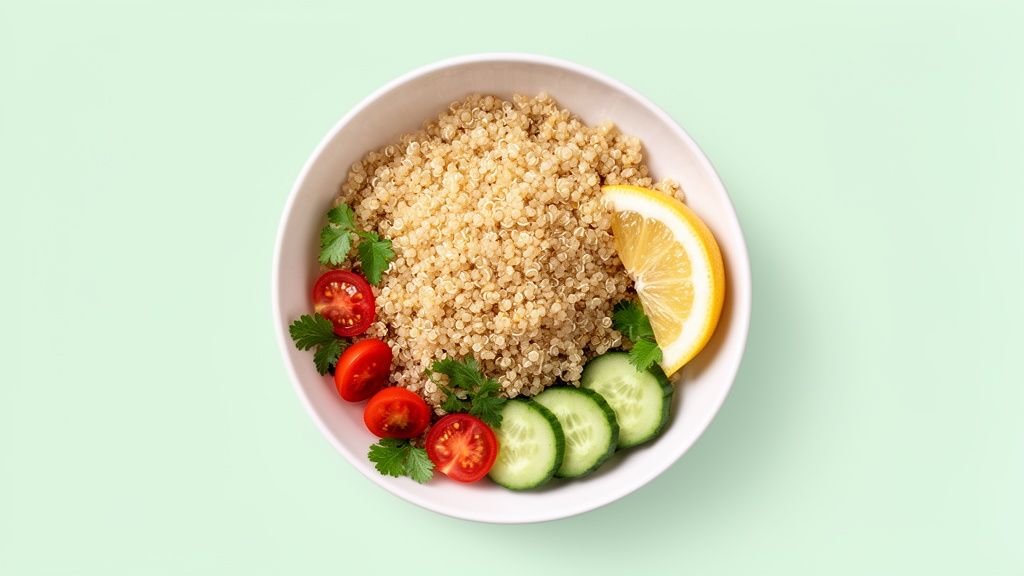
With a glycemic index of around 53, quinoa provides a steady release of energy ideal for fueling workouts or maintaining focus throughout the day. A single cooked cup delivers approximately 39g of carbs and a powerful 8g of protein, alongside essential minerals like magnesium and manganese. Its balanced profile makes it an excellent rice alternative in meal-prep bowls or the base for vibrant Mediterranean salads. For more inspiration, you can explore some of our favorite easy meal prep ideas that feature quinoa.
Practical Tips for Quinoa
- Rinse Before Cooking: Always rinse quinoa under cool, running water using a fine-mesh sieve. This step removes the natural coating called saponin, which can give it a bitter or soapy taste.
- Perfect the Ratio: For fluffy, perfectly cooked quinoa, use a 1:2 ratio of quinoa to liquid. Bring one cup of quinoa and two cups of water or broth to a boil, then simmer until the liquid is absorbed.
- Batch-Prep for the Week: Cook a large batch on Sunday. Once cooled, it stores well in an airtight container in the refrigerator for up to five days, ready for quick lunches and dinners.
- Log It Fast: When logging a meal in PlateBird, simply search for "quinoa bowl." The app's smart recognition can often identify common additions like black beans, corn, and avocado, making your tracking process quicker.
4. Sweet Potatoes
Sweet potatoes have earned their spot on any complex carbohydrates list foods, transitioning from a holiday side dish to a year-round staple for fitness enthusiasts and health-conscious eaters. Their power lies in their nutrient density, delivering slow-digesting energy without the heaviness of other starches. A single medium sweet potato provides about 20g of carbs and an impressive 3.9g of fiber, which helps moderate blood sugar release and promotes a feeling of fullness.

This makes them a prime choice for pre-workout fuel, giving athletes sustained energy for demanding sessions. Beyond energy, they are packed with beta-carotene, which the body converts to vitamin A, and are a great source of potassium. With a moderate glycemic index of around 63, they provide reliable energy that's ideal for both performance and weight management goals. A medium potato also contains a surprising 3.6g of protein, adding to its well-rounded nutritional profile.
Practical Tips for Sweet Potatoes
- Quick Cooking: For a fast meal, pierce a sweet potato with a fork and microwave it for 5-8 minutes until tender. For a crispier, caramelized result, bake it at 400°F (200°C) for 40-45 minutes.
- Keep the Skin: Don’t peel it! The skin contains an additional 2-3g of valuable fiber. Just give it a good scrub before cooking.
- Perfect Pairings: Top a baked sweet potato with a dollop of Greek yogurt or cottage cheese to create a balanced meal with a fantastic protein boost.
- Easy Portioning: Use your hand as a guide. A fist-sized sweet potato is roughly one medium serving, which simplifies portion control without needing a scale every time.
- Smart Storage: Store raw sweet potatoes in a cool, dark, and well-ventilated place, not the refrigerator. The cold temperature can negatively affect their texture and flavor.
5. Whole Wheat Bread & Pasta
Whole wheat bread and pasta are indispensable staples in any complex carbohydrates list foods, particularly for busy professionals and athletes needing convenient, reliable energy. Unlike their refined white counterparts, these options retain the entire grain kernel-bran, germ, and endosperm. This composition delivers a significantly higher nutrient payload, including fiber, vitamins, and minerals that support overall health beyond just providing fuel.
The inclusion of the bran and germ slows down the digestive process, leading to a more gradual release of glucose into the bloodstream. This prevents the energy slumps common with simple carbs, making whole wheat products an excellent choice for a focused workday or a pre-competition carb-loading meal. A typical serving (two slices of bread or one cup of cooked pasta) offers around 35-43g of carbohydrates and an impressive 6-8g of fiber, which is key for digestive regularity and satiety. For a staple that can be incorporated into countless healthy dishes, consider including quality whole wheat pasta in your meal prep routine.

Practical Tips for Whole Wheat Bread & Pasta
- Read the Label: Always look for "100% whole wheat" on the packaging. Phrases like "made with whole grain" can be misleading, so check that the first ingredient listed is "whole wheat flour."
- Balance Your Macros: Pair your whole wheat base with a quality protein source to create a balanced meal. A whole wheat sandwich with deli turkey or pasta with grilled chicken ensures sustained energy and muscle support.
- Extend Freshness: Store whole wheat bread in the freezer to prevent it from going stale. You can toast slices directly from frozen or let them thaw for a few minutes for sandwiches.
- Create Logging Shortcuts: If you have a regular go-to, like a turkey and cheese sandwich, create a "Meal" or "Recipe" shortcut in PlateBird. This allows you to log the entire meal with a single tap instead of entering each ingredient every time.
6. Legumes (Beans, Lentils, Chickpeas)
Legumes are a powerhouse in any complex carbohydrates list foods, championed by plant-based athletes and nutritionists for their unique blend of macros. They are exceptionally high in both fiber and protein, making them incredibly satiating. A single cooked cup of black beans, for example, packs about 40g of carbs, 15g of protein, and a massive 15g of fiber. This outstanding profile is ideal for both weight management and muscle building.
The slow-digesting nature of legumes gives them a very low glycemic index (around 32-40), which helps maintain stable blood sugar and energy levels. This makes them a foundational food in many weight loss programs; a hearty lentil soup can provide over 20g of protein and keep you full for hours. Additionally, legumes are affordable, shelf-stable, and incredibly versatile, fitting into everything from Mediterranean chickpea salads to Asian-inspired lentil curries.
Practical Tips for Legumes
- Convenience is Key: Buy canned beans for a quick meal addition. To significantly reduce sodium (often by over 30%), simply drain and rinse them thoroughly before use. Their nutritional value is very similar to dried beans.
- Bulk Prep & Freeze: Cook dried beans or lentils in a large batch. Portion them into 1-cup servings and freeze for quick access, making it easy to add protein and fiber to any meal.
- Reduce Cooking Time: Soak dried beans for 8-12 hours before cooking. This not only cuts down on cooking time but also helps break down some of the compounds that can cause gas.
- Create a Complete Protein: Pair legumes with a grain like rice. This combination provides all nine essential amino acids, creating a complete plant-based protein source perfect for post-workout recovery.
7. Barley & Farro
Barley and farro are ancient grains that have earned a prime spot on any complex carbohydrates list foods due to their exceptional nutritional density and satisfyingly chewy texture. Barley is a standout for its high fiber content, boasting the most beta-glucan of any grain. This soluble fiber is key for slowing digestion, managing blood sugar, and promoting satiety, making it an ideal choice for athletes needing low-GI fuel or anyone managing diabetes. Similarly, farro delivers a nutty flavor and a robust nutritional profile.
The incredibly low glycemic indexes of barley (around 28) and farro (around 35) ensure a very gradual energy release. A single cooked cup of barley provides about 44g of carbs and an impressive 8g of protein, while farro offers 37g of carbs and 7g of protein. This composition makes them excellent for building Mediterranean-inspired meal-prep bowls that keep you full and energized for hours.
Practical Tips for Barley & Farro
- Enhance the Flavor: Before cooking, toast the dry grains in a pan for 2-3 minutes. This simple step unlocks a deeper, nuttier flavor that elevates any dish.
- Batch Cook for Efficiency: Prepare a large batch using a 1:3 ratio (one cup of grain to three cups of liquid). The cooked grains store well in the refrigerator for 5-7 days, ready for salads, soups, or side dishes.
- Build a Complete Meal: Use these grains as a base. Combine ½ to 1 cup of cooked barley or farro with roasted vegetables and a lean protein source like chickpeas or grilled chicken for a balanced and satisfying meal.
- Simplify Your Log: When tracking in PlateBird, search for "barley soup" or "farro salad" and adjust the portion size. The app’s database helps you quickly account for these nutrient-dense ingredients.
8. Oat Bran
While oats are a staple, oat bran isolates the most powerful part of the grain for maximum impact. As the outer layer of the oat kernel, oat bran is a super-concentrated source of the beta-glucan fiber that makes this family of foods so effective. This concentration means it excels at slowing digestion and glucose absorption, providing exceptionally steady energy and a profound sense of fullness that makes it a standout on any complex carbohydrates list foods.
Its low glycemic index (around 50) and high fiber content make it a favorite in weight loss and diabetes management circles for its powerful appetite control. A single cooked serving delivers about 46g of carbs but a massive 5.7g of beta-glucan fiber, making it ideal for anyone seeking the highest fiber-to-calorie ratio. This makes it a popular addition to protein smoothies for fitness enthusiasts looking for a satiety boost without excess carbs.
Practical Tips for Oat Bran
- Start Small: If you're new to high-fiber foods, begin with a 1/4 cup dry serving. Oat bran is potent, and a gradual introduction helps prevent digestive discomfort like bloating.
- Perfect the Cook: For a smooth, creamy porridge, use a 1:3 ratio of oat bran to liquid (e.g., 1/2 cup bran to 1.5 cups water or milk). Add the bran to boiling liquid while whisking constantly to prevent lumps from forming.
- Enhance the Flavor: Oat bran's mild flavor is a perfect canvas. Elevate it with toppings like cinnamon, fresh berries, a swirl of nut butter, or a scoop of protein powder to create a balanced and delicious meal.
- Log It Fast: Use PlateBird’s photo feature to capture your creation. A quick entry like “oat bran with berries and almonds” allows the app to recognize the components and streamline your macro tracking.
9. Whole Grain Cereals (Unsweetened)
Unsweetened whole grain cereals are a fantastic, convenient entry on any complex carbohydrates list foods, especially for busy professionals and athletes needing a quick fuel source. Unlike their sugary counterparts that line most supermarket aisles, these cereals are built from whole grains like wheat, oats, or bran. This means they retain their fiber, which is key to slowing carbohydrate digestion and preventing the energy spikes and crashes common with refined grains. They offer a no-cook, instant breakfast solution that delivers sustained energy.
This makes them ideal for early morning gym-goers who need quick carbs before a session or for parents looking for a nutritious and fast option for their kids. A standard serving (about one cup) provides 20-30g of carbs, a respectable 3-6g of protein, and a significant 5-8g of fiber. The glycemic index can range from 43 to 74, depending on the grain and level of processing, so choosing minimally processed options is crucial for maximizing benefits.
Practical Tips for Whole Grain Cereals
- Read the Label: The first ingredient should always be a whole grain (e.g., "whole wheat," "whole grain oats"). Aim for cereals with more than 5g of fiber and less than 5g of sugar per serving. Top brands to look for include Nature's Path, Bob's Red Mill, and unsweetened varieties from Cascadian Farm.
- Portion Control is Key: It's incredibly easy to over-pour cereal. Use a standard measuring cup to portion out your serving. What looks like one serving is often closer to 1.5 or 2, which can significantly alter your calorie and carb intake.
- Balance Your Bowl: A typical bowl with one cup of cereal and one cup of milk provides around 30-35g of carbs and 8-10g of protein. To increase satiety and add more protein, pair it with a side of Greek yogurt or cottage cheese.
- Quick Logging in PlateBird: Since cereal and milk is a frequent breakfast for many, create a "meal shortcut" in the PlateBird app. This allows you to log your entire breakfast with a single tap instead of searching for the cereal and milk separately every morning.
10. Whole Grain Bread Alternatives (Sprouted, Ezekiel)
Sprouted grain breads, like those from the popular Ezekiel brand, are a nutritional upgrade from conventional whole wheat and a top-tier choice for any complex carbohydrates list foods. Unlike regular bread, these are made from whole grains and legumes that have started to germinate, or sprout. This natural process unlocks nutrients, increases the bioavailability of vitamins and minerals, and reduces anti-nutrients like phytic acid. The result is a bread that's easier to digest and far more nutrient-dense.
This unique composition provides an exceptional macronutrient profile. A single slice often contains 18-20g of carbohydrates and an impressive 12-14g of complete protein, thanks to the combination of grains and legumes. This makes it a favorite among plant-based athletes for muscle support and weight-loss specialists who recommend it for its high satiety factor. The glycemic index is also notably low (around 36), ensuring stable blood sugar and sustained energy, which is ideal for anyone managing their glucose levels.
Practical Tips for Sprouted Bread
- Proper Storage is Key: Sprouted breads contain no preservatives and must be stored in the freezer immediately after purchase. This keeps them fresh for over three months. Simply thaw slices in the refrigerator overnight or at room temperature for an hour.
- Create a Powerhouse Meal: Toast one or two slices and top with a healthy fat like avocado or almond butter. This simple meal delivers a balanced mix of complex carbs, complete protein, and healthy fats, keeping you full for hours.
- Choose a Quality Brand: Look for brands like Food for Life (Ezekiel 4:9) or Dave's Killer Bread (sprouted varieties) in the freezer aisle of most grocery stores.
- Quick Logging: When you make your breakfast, log it in the PlateBird app by describing it as "Ezekiel toast with almond butter." The app’s smart recognition makes tracking this high-protein, complex carb meal quick and simple.
Top 10 Complex Carbs Comparison
| Item | Preparation & Complexity 🔄⚡ | Resources & Cost 💡 | Expected Outcomes ⭐📊 | Ideal Use Cases | Key Advantages |
|---|---|---|---|---|---|
| Oats (Rolled & Steel-Cut) | Low 🔄 (instant 1–2 min); Moderate 🔄 for steel-cut; ⚡ instant option | Affordable, shelf-stable; minimal equipment | ⭐ High satiety; 📊 steady energy, moderate protein when paired with protein | Pre-workout, daily meal‑prep, weight loss | Versatile, high beta‑glucan fiber, customizable |
| Brown Rice | Moderate 🔄 (45 min standard; ⚡ faster with rice cooker) | Very affordable, long shelf life | ⭐ Good for muscle fuel; 📊 sustained carbs and micronutrients | Meal‑prep bowls, bulking, everyday staple | Whole‑grain nutrients, budget‑friendly, batch‑cooks well |
| Quinoa | Low 🔄 (15 min); rinse required | Moderate cost; widely available but pricier than rice | ⭐ Complete plant protein; 📊 nutrient‑dense, low GI | Plant‑based athletes, nutrient‑dense bowls | Complete amino acid profile, quick cook time |
| Sweet Potatoes | Moderate 🔄 (bake 40–45 min; ⚡ microwave 5–8 min) | Affordable; shorter shelf life than grains | ⭐ Nutrient‑dense (vitamin A, potassium); 📊 filling with lower calorie density | Pre‑workout carbs, weight‑loss meals, roasting/air‑fry sides | High micronutrients, very satiating, whole‑food option |
| Whole Wheat Bread & Pasta | Low 🔄 (ready‑to‑eat or 10 min pasta) ⚡ very convenient | Moderate cost; portable; good shelf life (frozen to extend) | ⭐ Convenient energy; 📊 moderate fiber & protein, medium GI | Busy professionals, quick lunches, carb‑loading | Extremely convenient, consistent macros, higher fiber vs refined |
| Legumes (Beans, Lentils, Chickpeas) | High 🔄 for dried (soak + long cook); ⚡ canned = low complexity | Very low cost dry; long shelf life; canned convenient | ⭐ Exceptional satiety & protein+fiber; 📊 low GI, supports weight loss/muscle | Plant‑based meals, weight loss programs, bulk cooking | Dual protein+fiber source, budget‑friendly, versatile |
| Barley & Farro | High 🔄 (45–60 min cook); may need specialty sourcing | Moderate cost; long dry storage | ⭐ Very low GI; 📊 highest grain beta‑glucan and fiber for stable blood sugar | Diabetes management, pre‑competition low‑GI meals, hearty salads | Exceptional fiber, digestive benefits, nutty flavor |
| Oat Bran | Low 🔄 (5 min); less versatile texture | Cost‑effective, concentrated fiber | ⭐ Maximum satiety per calorie; 📊 potent cholesterol & appetite control | Weight‑loss breakfasts, fiber boost in smoothies | Highest beta‑glucan concentration; quick to prepare |
| Whole Grain Cereals (Unsweetened) | Very low 🔄 (ready‑to‑eat); ⚡ fastest option | Affordable; quality varies by brand | ⭐ Convenient quick carbs; 📊 variable satiety and GI depending on product | Early‑morning gym sessions, busy mornings, grab‑and‑go | Zero prep, consistent portioning, fortified nutrients |
| Whole Grain Bread Alternatives (Sprouted, Ezekiel) | Low 🔄 (ready‑to‑eat); refrigerate/freeze due to short shelf life | Higher cost; specialty/limited availability | ⭐ High protein and low GI; 📊 strong satiety and nutrient bioavailability | Weight‑loss protocols, high‑protein breakfasts, plant‑based athletes | Complete protein from sprouted grains/legumes, low GI, nutrient‑dense |
Turn Your Knowledge Into Action, Effortlessly
You've journeyed through the heart of sustainable energy, exploring a detailed complex carbohydrates list foods that can fundamentally change how you feel and perform. From the comforting warmth of a morning bowl of steel-cut oats to the satisfying texture of a farro salad, the power of these foods isn't just in their nutritional profile; it's in their ability to provide lasting fuel and deep satiety.
We’ve seen how simple swaps, like choosing whole wheat pasta over its refined counterpart or adding a scoop of lentils to a soup, can dramatically increase your fiber intake and stabilize your blood sugar. The real takeaway isn't just a list, but a new perspective: viewing these foods as the reliable foundation of your daily meals, not as a restrictive dietary rule. They are the building blocks for energy that won't leave you crashing an hour later.
From List to Lifestyle
The gap between knowing what to eat and consistently doing it is where most people stumble. Having a great complex carbohydrates list foods is the first step, but the real progress happens when incorporating and tracking these foods becomes an automatic, thoughtless part of your routine. This is where intention meets execution. The goal is to make healthy eating feel less like a chore and more like a natural rhythm.
Key Insight: Consistency isn't about perfection; it's about reducing friction. The easier it is to track your meals, the more likely you are to stick with your plan and see meaningful results.
Think about the 'quinoa bowl with chickpeas and roasted sweet potato' we discussed. In a traditional tracking app, logging that meal involves searching for three separate ingredients, adjusting portion sizes, and maybe even scanning barcodes. That daily friction adds up, quickly turning a positive habit into a burden. The secret to long-term success lies in making this process as seamless as possible.
Making Tracking Effortless
Imagine simply taking a photo of that same quinoa bowl and having the entire meal, complete with calories and macronutrients, logged in seconds. That's the difference between tracking that feels like work and tracking that feels like magic. By turning your favorite complex carb meals into simple, one-tap entries, you eliminate the daily decision fatigue and mental workload.
Start small. This week, choose just one food from our list-perhaps brown rice or sweet potatoes. Prepare a batch for the next few days. As you incorporate it into your lunches or dinners, notice how much more stable your energy levels are. More importantly, experience how simple it can be to log these meals when your tools work for you, not against you. Turning this knowledge into tangible, lasting results is now more achievable than ever.
Ready to stop guessing and start tracking with precision and speed? PlateBird uses AI to let you log meals from a single photo or text entry, making it the perfect companion for your journey with complex carbohydrates. See how effortless it is to turn this article's advice into real-world results by downloading PlateBird for free today.