
- The Aisle of Good Intentions
- The Direct Answer on Blueberry Fiber Content
- Decoding Soluble and Insoluble Fiber
- How Blueberry Fiber Boosts Your Health
- Blueberry Fiber Compared to Other Fruits
- Effortlessly Track Blueberries with PlateBird
- Your Takeaway on Blueberries and Fiber
- Answering Your Top Blueberry Fiber Questions
You’re standing in the produce aisle, holding a carton of blueberries, and doing that quick mental math many healthy eaters do. Are these just a sweet snack? Or do they help with fiber, fullness, and better energy through the day?
That question matters more than it seems. Many foods wear a “healthy” halo, but not all of them meaningfully move the needle on digestion, appetite, or blood sugar. Blueberries do. The useful part is not only that they contain fiber, but that their fiber works in more than one way.
The Aisle of Good Intentions
You toss blueberries into the cart because they feel like a smart choice. Then the doubts creep in. Maybe you’re trying to eat more fiber. Maybe you want a snack that feels lighter than chips but more helpful than a random handful of candy. Maybe you’re building breakfasts that keep you full.

Blueberries are one of those foods people buy with good intentions. They go into oatmeal, yogurt, smoothies, lunchboxes, and meal prep containers. But “good for you” is vague. Many want a clearer answer than that.
If you’ve ever wondered whether blueberries really count toward your fiber goal, the short answer is yes. They are not a fiber gimmick. They contribute real dietary fiber, and the kind they contain helps explain why a bowl of blueberries can feel different from a sweeter, lower-fiber snack.
Some readers even take that curiosity a step further and start cultivating your own blueberry plants, especially if they use berries often enough to want a steady supply at home. That can make the habit easier to stick with.
A food earns its place in a healthy routine when it is easy to eat, easy to enjoy, and supports your goals.
The Direct Answer on Blueberry Fiber Content
Yes. Blueberries do contain fiber, and they contribute enough to matter in a normal day of eating.
For a clear benchmark, a 1-cup serving of raw blueberries provides 3.6 grams of fiber, according to the USDA FoodData Central entry for blueberries. That is not the same as a fiber supplement or a bowl of beans, but it is far more than a token amount. If your meals are a puzzle, blueberries can fill one useful piece without much effort.
That practical part matters. A cup is an amount many people eat. It fits into breakfast, snacks, or dessert without feeling forced.
How to read that number
Here is a simple way to frame it. If your daily fiber goal is like filling a water bottle, blueberries do not fill the whole bottle. They do help you make steady progress. Add a cup to oatmeal, yogurt, or a smoothie, and you have moved closer without changing your routine much.
Blueberries also bring sweetness, volume, and texture at the same time. That combination is one reason they are easier to repeat than many high-fiber foods people buy once and forget in the pantry.
Fresh blueberries vs. wild blueberries
You may also notice that fiber numbers can vary a bit depending on the type of blueberry and how it is measured. Cultivated blueberries, the kind most stores sell fresh, commonly land around that 3.6 grams per cup mark. Wild blueberries are often smaller and denser, so the fiber per cup can be higher.
The useful takeaway is simple. Regular grocery-store blueberries still count. Wild blueberries can be a helpful option if you want a little more fiber in the same scoop, especially in frozen smoothie packs.
Make the number useful
Knowing the gram amount is helpful. Using it is better.
If you track meals in PlateBird, logging blueberries lets you see how that serving fits into your full day, especially alongside oats, chia seeds, or other fiber-rich foods. It also helps answer related questions such as whether fiber has calories when you are trying to understand food labels more clearly.
Blueberries are an easy, repeatable fiber food. That is what gives the number value.
Decoding Soluble and Insoluble Fiber
A blueberry does more than add a few grams of fiber to your day. It brings two different fiber jobs in one small package, and that helps explain why blueberries often feel better in a meal than a sweet food with little fiber.
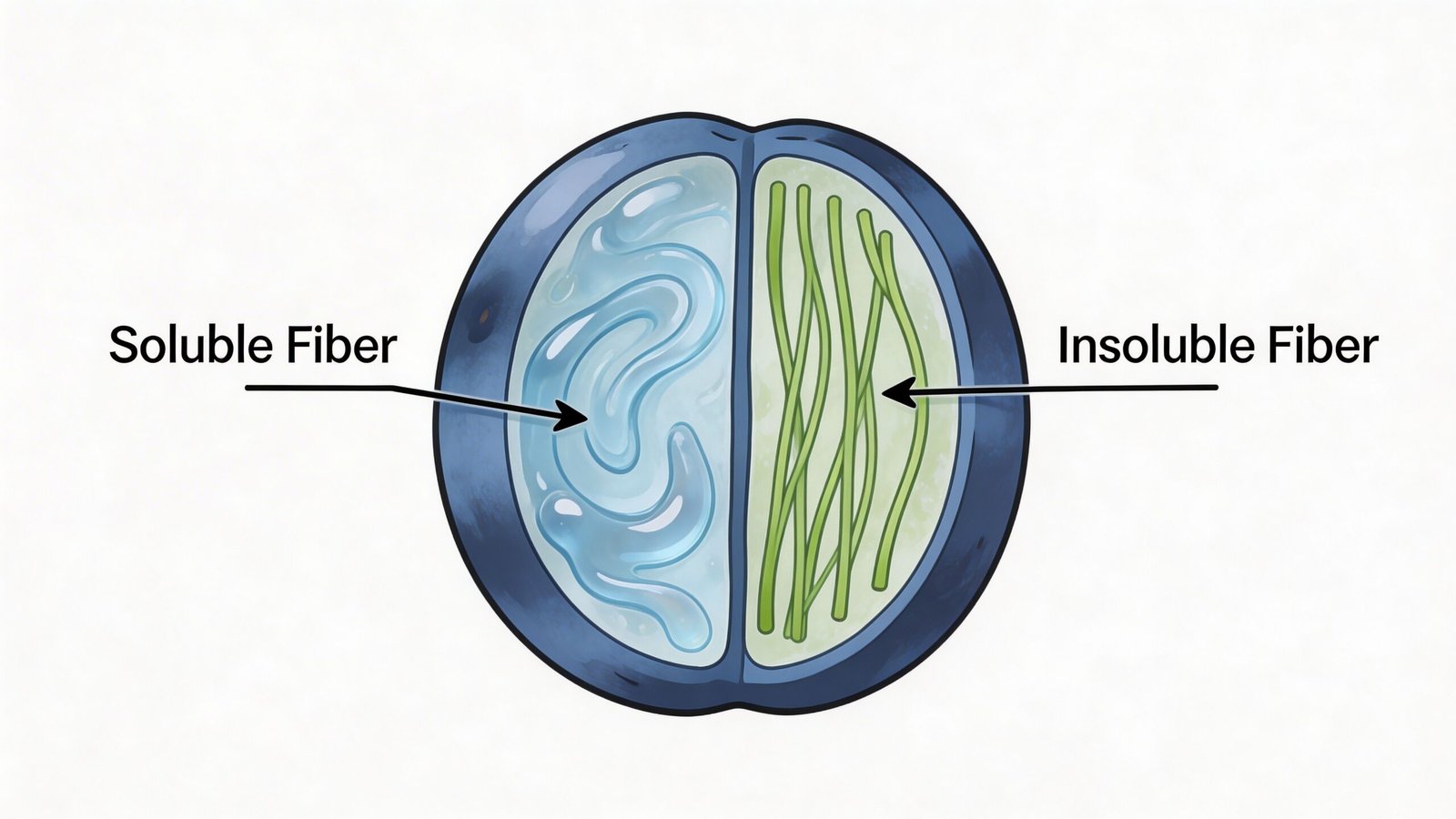
Blueberries contain both soluble fiber and insoluble fiber. The names sound technical, but the difference is practical.
Soluble fiber slows the flow
Soluble fiber mixes with water during digestion and forms a soft gel. A spoonful of chia in liquid gives you a similar effect. The texture changes, movement slows, and digestion becomes more gradual.
That slower pace matters for two reasons readers usually care about. First, food can feel satisfying for longer because it empties from the stomach more gradually. Second, sugar enters the bloodstream at a steadier pace instead of all at once. Blueberries are not only sweet. Their soluble fiber helps put some brakes on how quickly that sweetness is processed.
Insoluble fiber adds structure
Insoluble fiber does not turn gel-like. It stays more intact and adds bulk as food moves through the digestive tract.
A simple comparison is sawdust mixed into packing material. It gives the contents more body and shape. In your body, that added bulk supports regular bowel movements and helps waste move along more smoothly.
This is the part people often mean when they say fiber helps keep digestion regular.
Why blueberries work well in real meals
The benefit is the mix.
Soluble fiber helps a meal feel steadier and more filling. Insoluble fiber supports bulk and regularity. Together, they make blueberries more useful than a fruit you eat only for sweetness.
That is also why blueberries pair so well with foods like oats, yogurt, or nuts. You are not just stacking nutrients on paper. You are building a meal that digests at a calmer pace and keeps you full longer.
If you track meals in PlateBird, this becomes easy to spot. Log blueberries with breakfast and compare that meal to one with a lower-fiber sweet add-in. You can see your fiber total rise without doing any math by hand, and if food-label questions come up, this guide on whether fiber has calories helps clear up the nutrition math.
For a quick visual explanation of how dietary fiber works in foods, this short video is a good companion:
Soluble fiber helps digestion move at a steadier pace. Insoluble fiber adds bulk and supports regularity. Blueberries give you both in one easy serving.
How Blueberry Fiber Boosts Your Health
A handful of blueberries can do more than add color to breakfast. Their fiber changes how a meal feels and how steadily it moves through your system.
Fullness that feels steadier
Blueberries contain soluble fiber, including pectin. In a meal, that type of fiber mixes with water and forms a soft gel-like texture during digestion. The practical result is slower stomach emptying and a meal that tends to stick with you longer.
That is why blueberries often work better as part of a real breakfast than as a small sweet extra on the side. Add them to yogurt, oats, or cottage cheese, and the meal usually feels more satisfying for longer because the fiber is working alongside protein and fluid.
A calmer rise after eating
Fiber also helps carbohydrates enter the bloodstream at a slower pace. A better comparison than a traffic signal is a dimmer switch. Instead of everything turning on at once, the rise is more gradual.
For people who feel hungry again soon after a sweet snack, that distinction matters. Blueberries still contain natural sugar, but the fiber helps soften the speed of digestion. If you track carbs and fiber together, PlateBird can make that easier, especially if you want a simple refresher on how net carbs work in everyday meals.
Digestive help you can notice
The insoluble portion of blueberry fiber supports movement through the digestive tract. It adds structure to what your body is processing, which can make bathroom habits more regular over time.
This usually shows up through consistency, not through one dramatic serving. If your usual routine is low in fruit, vegetables, beans, or whole grains, adding blueberries regularly can be one small step that makes digestion feel less sluggish.
Why the fiber mix matters in real meals
Blueberries' strength lies in the combination. Soluble fiber helps with fullness and a steadier blood sugar response. Insoluble fiber helps with bulk and regularity.
That gives blueberries a useful job in meals:
- With Greek yogurt, they add fiber to a protein-rich breakfast
- With oatmeal and nuts, they help build a bowl that stays with you longer
- With cottage cheese, they turn a quick snack into something more balanced
- With eggs on the side, they add fruit and fiber without much prep
Small fruit, useful effect.
Blueberries help most when you use them as part of a balanced meal. Their mix of soluble and insoluble fiber can support fullness, steadier energy, and more regular digestion without much effort.
Blueberry Fiber Compared to Other Fruits
Blueberries look tiny, so many people assume they must be lower in fiber than chunkier fruits. That is not always how it plays out.
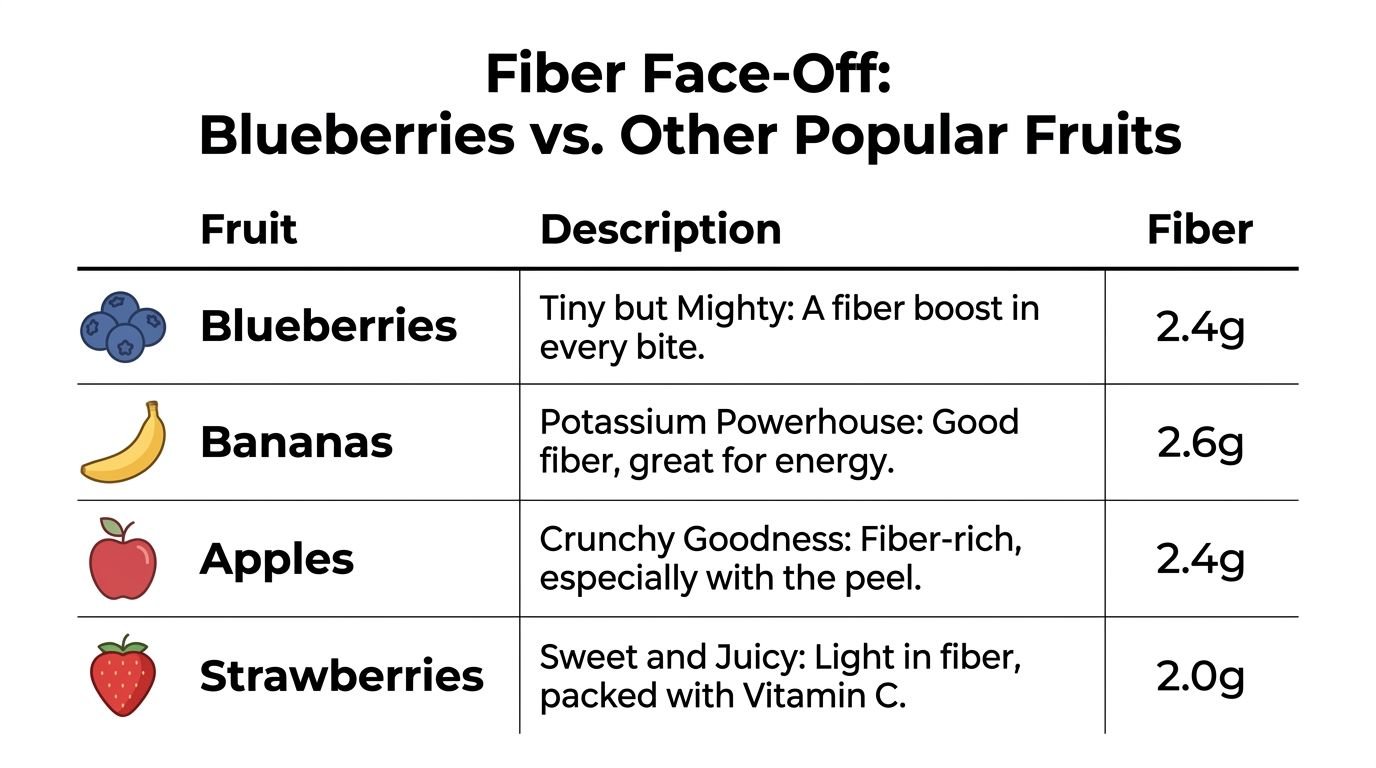
The comparison infographic below gives a quick snapshot per 100 grams.
What the comparison shows
Per the infographic details provided for this article, blueberries and apples each come in at 2.4g fiber per 100g, bananas at 2.6g, and strawberries at 2.0g.
That tells us something important. Blueberries are not an outlier in a bad way. They hold their own well among popular fruits.
A practical reading of the chart
If your goal is variety, this is good news. You do not need to treat blueberries as the only smart fruit. But they absolutely belong in the “good fiber choice” group.
If your goal is consistency, blueberries have one big advantage. They are easy to scatter into meals without prep. No peeling, slicing, or coring. You rinse them and eat them.
Comparison table
| Fruit | Fiber (g) | Calories (kcal) | Sugar (g) |
|---|---|---|---|
| Blueberries | Qualitatively moderate | Not specified here | Not specified here |
| Bananas | Qualitatively similar | Not specified here | Not specified here |
| Apples | Qualitatively similar | Not specified here | Not specified here |
| Strawberries | Qualitatively lighter | Not specified here | Not specified here |
I’m keeping the calorie and sugar columns qualitative here because this section does not have verified values for those fruits beyond the infographic’s fiber notes. The useful point is the relative picture. Blueberries compare well.
If you also track carbohydrate quality, this guide to what are net carbs can help you understand how fiber changes the nutrition conversation around fruit.
Effortlessly Track Blueberries with PlateBird
Knowing that blueberries help is good. Remembering to count them consistently is where many people get stuck.
A lot of food tracking apps turn simple foods into a search project. You type “blueberries,” scroll through duplicate entries, guess the serving, then hope you picked the right one. That friction adds up.
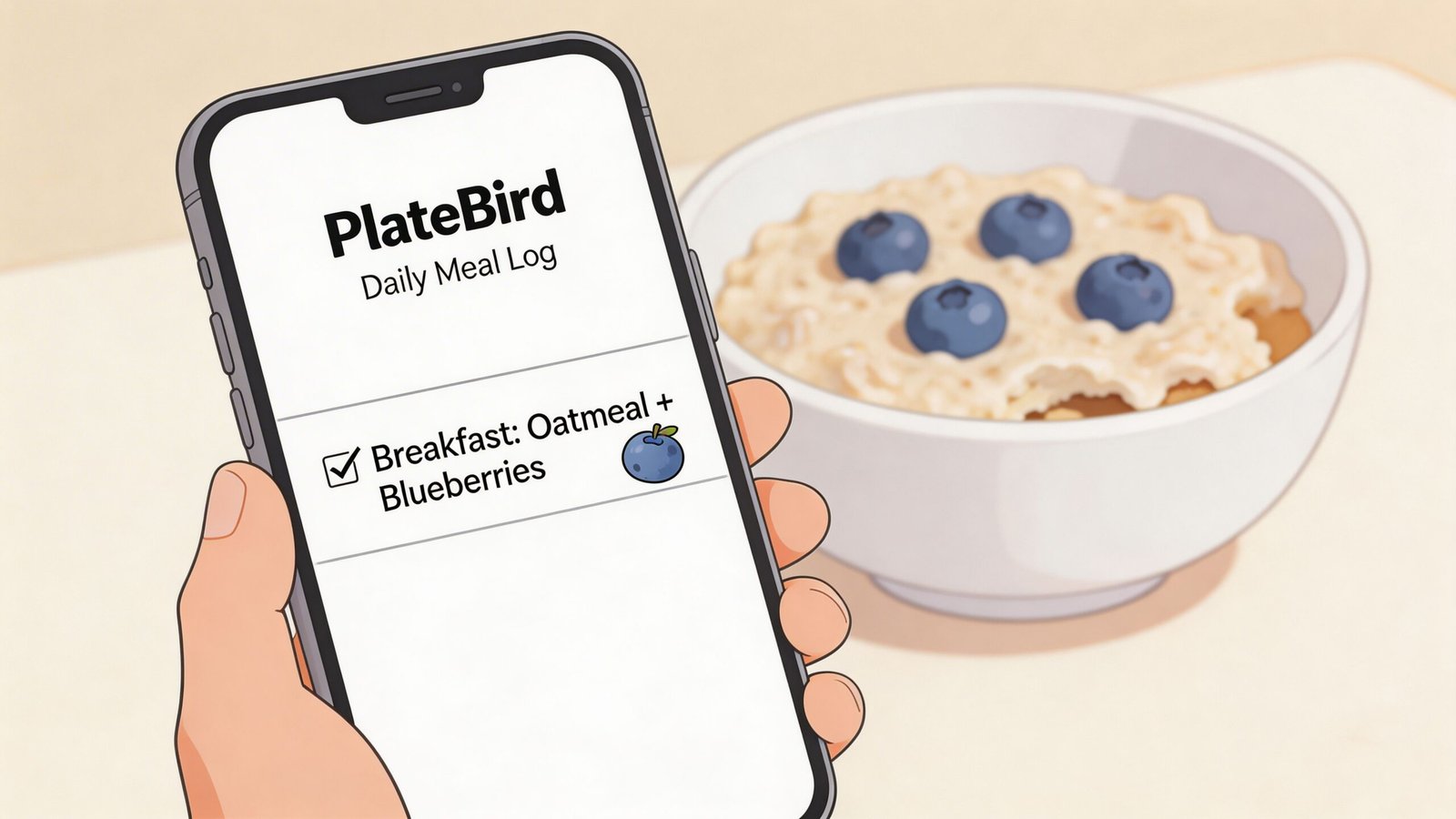
Type the meal the way you think about it
The easiest way to track blueberries is to log the meal, not just the ingredient.
Examples:
- “One cup blueberries and greek yogurt”
- “Oatmeal with blueberries”
- “Cottage cheese, walnuts, blueberries”
That style is closer to how people eat. It reduces the mental load.
Use a photo when the bowl is mixed
Blueberries often show up in layered foods. Overnight oats, smoothie bowls, yogurt cups, pancakes with toppings. Those meals are harder to break apart item by item when you are in a rush.
That is where a photo-based log is helpful. You snap the meal, review the food breakdown, and move on.
Why this matters for fiber habits
Fiber goals are usually won by repetition.
You do not hit them with one heroic salad. You hit them by repeatedly noticing, “This breakfast had berries,” or “This snack included fruit and protein.” Tracking makes that pattern visible.
If you want a simpler logging workflow, PlateBird is built for exactly that. You can type meals in plain language or snap a photo, which makes foods like blueberry oatmeal or yogurt bowls much easier to record without turning breakfast into admin work.
Keep the process light
A useful tracking routine should feel almost boring in the best way.
You eat. You log. You learn your patterns. Then you repeat the meals that make you feel good.
That is how blueberries become more than a healthy purchase. They become part of a system you can maintain.
Your Takeaway on Blueberries and Fiber
Blueberries do have fiber, and they bring more than a simple number on a nutrition label.
They contain a mix of soluble and insoluble fiber, which helps explain why they can support fullness, steadier blood sugar, and regular digestion. That combination makes them a smart fruit for everyday meals, especially when paired with a protein-rich food.
The bigger lesson is simple. Small foods can do meaningful work when you understand what they bring. Blueberries are easy to enjoy, easy to repeat, and helpful in ways you can feel over time.
If you have been asking “do blueberries have fiber,” the answer is yes. They deserve a spot in a balanced, realistic eating routine.
Answering Your Top Blueberry Fiber Questions
Do frozen blueberries have fiber
Yes, frozen blueberries still contain fiber. Freezing changes the texture more than the basic fiber presence. For many people, frozen berries are one of the easiest ways to keep fruit on hand for oatmeal, smoothies, and yogurt bowls.
Does cooking blueberries reduce their fiber content
Cooking can soften blueberries and change how they feel, but they still remain a fiber-containing food. What usually changes more noticeably is texture. A warm blueberry sauce on oatmeal may feel very different from fresh berries on top, even though the berries themselves still contribute fiber.
Are wild blueberries better for fiber
If fiber density is your main goal, wild blueberries are the stronger option based on the verified data shared earlier in this article. Regular cultivated blueberries still help, so this is more about optimization than a pass-or-fail choice.
Can you eat too many blueberries for fiber
Any time you raise fiber intake quickly, your digestion may need time to adjust. If blueberries are part of a broader shift toward more fruits, vegetables, beans, or whole grains, increasing gradually is often more comfortable than changing everything in one day.
What is the best way to eat blueberries for fullness
Blueberries tend to work best for fullness when they are part of a balanced meal or snack. Good pairings include yogurt, cottage cheese, oats, or eggs on the side. The goal is not to make blueberries do all the work. The goal is to let their fiber support a meal that already has structure.
Are blueberries a good fruit if you are trying to eat more fiber
Yes. They are a practical choice because they are easy to buy, easy to serve, and easy to repeat. That last part matters. A healthy food helps most when you keep eating it.
If you want to turn all this nutrition knowledge into an easy daily habit, try PlateBird. It lets you log meals by typing what you ate or snapping a photo, so tracking foods like blueberry oatmeal, yogurt bowls, and smoothies feels quick enough to stick with.