
Let's get straight to the point. You're wondering if that beautiful cut of filet mignon is just a special-occasion indulgence or if it can actually fit into your fitness-focused diet. The answer? It's a fantastic choice. A typical 6-ounce filet delivers a solid 36-40 grams of protein, making it a powerhouse for muscle repair and growth.
Your Quick Guide to Filet Mignon Protein Content
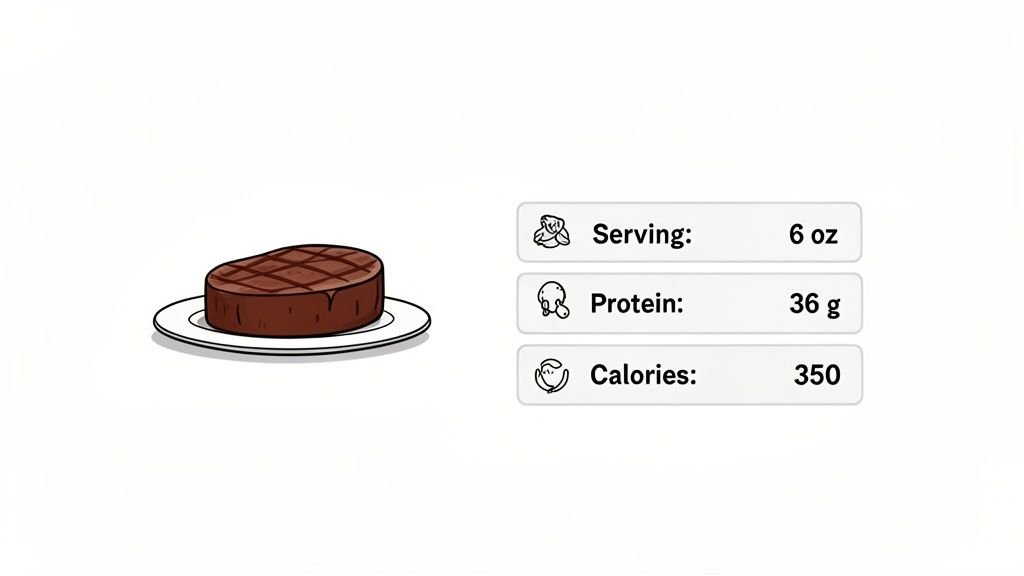
It’s time to reframe how you think about filet mignon. It's not just a fancy dinner—it’s high-performance fuel. What really sets it apart is its incredible protein-to-calorie ratio, making it a smart, strategic move for anyone serious about their nutrition, whether you're aiming to build mass or lean out.
You get a huge protein hit without the extra fat and calories that often come with other cuts of steak.
To get more specific, let’s look at the numbers. A standard 3-ounce cooked serving of filet mignon packs about 22 grams of protein into roughly 227 calories. With zero carbs, it's a dream for anyone following a low-carb or keto plan. For an active adult weighing around 165 pounds, that single serving knocks out 44% of their daily protein needs. That's what I call efficiency.
Filet Mignon Nutrition At a Glance (Per 3-Ounce Cooked Serving)
Here’s a quick table to break down exactly what you're getting in a standard, trimmed portion. It really highlights why this cut is a favorite among athletes and health-conscious eaters.
| Nutrient | Approximate Amount | Key Benefit |
|---|---|---|
| Protein | 22g | The foundation for muscle repair, growth, and feeling full. |
| Calories | 227 | A surprisingly lean option, perfect for controlled diets. |
| Carbohydrates | 0g | Ideal for low-carb and ketogenic lifestyles. |
| Fat | 15g | Provides rich flavor and supports essential hormone function. |
This snapshot shows why filet mignon is such a valuable tool for hitting your macros. Of course, protein is just one piece of the puzzle. If you really want to dial in your nutrition, you need to know how to calculate macronutrients to see the full picture and make the best choices for your body.
The real advantage lies in its density. You get a significant dose of high-quality protein in a relatively small, lean portion, making every bite count towards your goals.
And with a tool like PlateBird in your corner, you can log that premium steak perfectly every time. No more guesstimating, just accurate tracking that keeps you on target.
Why This Steak Is a Protein Powerhouse
Let's get one thing straight: not all protein is created equal. This is where filet mignon really shines. Think of your body as a high-performance engine. To run smoothly, it needs a specific blend of high-grade fuels. Protein provides those fuels in the form of amino acids, and your body specifically needs nine essential amino acids to repair muscle, regulate hormones, and keep everything running.
Filet mignon delivers the premium-grade stuff. It’s what we call a complete protein, which is just a way of saying it contains every single one of those nine essential amino acids your body can't make for itself. This is what makes the filet mignon protein so incredibly effective for building strength and recovering from activity.
Picture someone like Alex, who is serious about their fitness. After a tough workout, their muscle fibers are essentially torn down and screaming for repair. By fueling up with a quality source like filet mignon, Alex is giving their body the exact materials it needs to not just patch things up, but rebuild stronger than before. It’s not just about the amount of protein, but the exceptional quality that truly speeds up results.
More Than Just Muscle Fuel
Beyond its stellar amino acid lineup, filet mignon is loaded with other micronutrients that are crucial for feeling your best. It's a fantastic natural source of highly bioavailable iron and zinc—two minerals that are absolute game-changers for anyone with an active lifestyle.
This steak is more than just a delicious meal—it's comprehensive fuel. The combination of complete protein and vital micronutrients works together to boost energy, strengthen the immune system, and support your body’s most important functions.
For example, a beautiful 8-ounce serving of grass-fed filet mignon can deliver a massive 44 grams of complete protein. That makes it an incredible asset for anyone trying to build muscle or simply hit their daily protein targets without feeling overly full. It's the kind of lean, efficient fuel that helps you build and repair tissue without a lot of waste.
The Complete Nutritional Package
When you put filet mignon on your plate, you're getting so much more than a number for your protein macro. You're getting a synergistic fuel that supports your entire system.
- Boosted Energy: Iron is the taxi service for oxygen in your blood. Better iron levels mean more oxygen gets delivered to your muscles, which directly translates to more stamina and less fatigue.
- Stronger Immunity: Zinc is a key player in your immune system, helping you fend off sickness so you can stay on track with your workouts and your life.
- Enhanced Recovery: With a full deck of amino acids, your body has the direct building blocks for muscle repair. This means less soreness and a quicker return to your next session.
Ultimately, this cut proves that a truly great protein source does more than just fill a macro bucket—it nourishes your whole body. If you're looking for other great options, check out our guide on different ways to increase protein intake.
How Protein in Filet Mignon Varies
It’s easy to think of a steak’s nutrition facts as set in stone, but that’s rarely the case. The numbers you see on a generic label are just a starting point. When you dig in, you quickly find that the final protein and calorie count on your plate can change quite a bit based on a few key factors.
Where the filet comes from and how you cook it are two of the biggest game-changers. For instance, a filet from a grass-fed cow often has a different fat profile than one from a grain-fed animal. This means the filet mignon protein you're actually eating can shift before it even hits your kitchen.
This is a great way to visualize what happens next. The protein in that beautiful steak gets broken down into the amino acids your body uses for everything from muscle repair to basic energy.
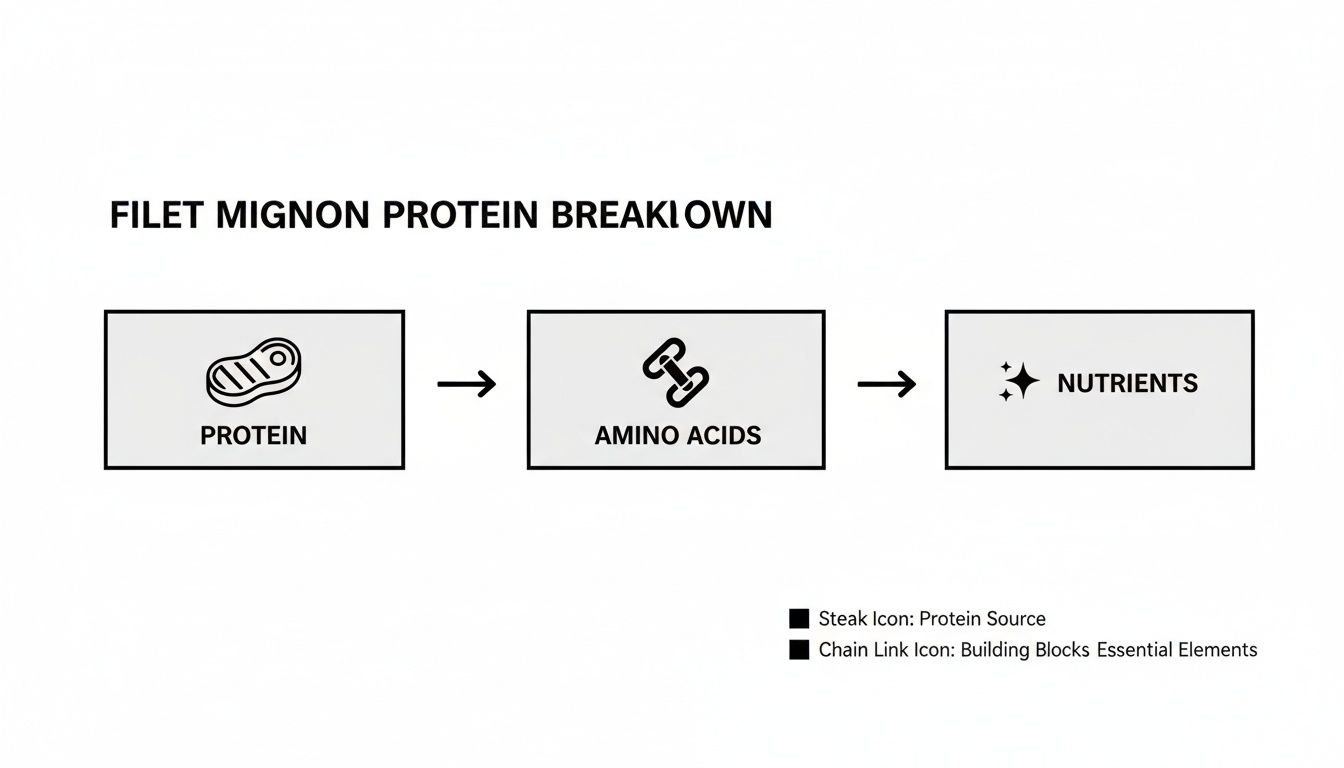
The real takeaway here is that protein isn't just a single number on a log. It’s the complete package of building blocks your body needs to thrive.
Raw Versus Cooked: The Water Loss Factor
Ever wonder why your steak seems to shrink on the grill? It's not an illusion. It's losing water, and this is probably the single most important concept to grasp for accurate macro tracking.
I like to think of a raw steak as a wet sponge—heavy and full of water. When you apply heat, that water gets squeezed out. The sponge becomes lighter, but the material of the sponge itself is now more concentrated. The exact same thing happens with your filet.
The total amount of protein in the steak doesn't actually change during cooking. What changes is its density. A cooked steak weighs less, so each ounce packs more protein than an ounce of that same steak did when it was raw.
This is a detail that trips up so many people. For the most accurate tracking in an app like PlateBird, you absolutely want to weigh your food after it’s cooked. Logging "6 ounces of cooked filet" gives you a far more precise picture of your meal's macros than logging "6 ounces of raw filet."
Sourcing Leaner Alternatives for Better Macros
The specific type of meat you choose can also make a huge difference in your protein-to-fat ratio. While beef filet is already a fantastic lean option, exploring some alternatives can really help you fine-tune your macros.
This table shows just how much sourcing and preparation can matter for a standard 6-ounce portion.
Filet Mignon Protein Comparison
| Filet Mignon Type (6 oz) | Protein (g) | Fat (g) | Calories |
|---|---|---|---|
| USDA Prime Beef (Raw) | 33g | 17g | 290 |
| USDA Prime Beef (Cooked) | 41g | 21g | 360 |
| Grass-Fed Bison (Cooked) | 38g | 3g | 180 |
| Standard Beef (Cooked) | 33g | 28g | 420 |
As you can see, the differences are dramatic. Choosing a leaner source like bison can cut your calories and fat by more than half while keeping the protein impressively high.
For example, the protein in filet mignon truly stands out when you look at leaner varieties. A 6-ounce bison filet can pack a massive 38 grams of protein with only 3 grams of fat. According to data from Nebraska Bison, that serving comes in at just 180 calories. Compare that to a more standard beef filet, which might land closer to 420 calories and 33g protein for the same 6-ounce size. You can see the full breakdown for yourself on the Nebraska Bison nutrition page.
It’s a perfect illustration of a core principle in smart dieting: small, strategic swaps can lead to massive wins. By simply choosing a leaner version of a cut you already love, you get to enjoy a premium meal while hitting your fitness goals that much faster.
Filet Mignon Versus Other Steak Cuts for Protein
We’ve all been there, standing at the butcher counter, staring through the glass. The beautifully marbled ribeye calls your name, the thick New York strip looks like a serious meal, but then there's the sleek, almost understated filet mignon. If you're someone who tracks their macros and lives a fitness-focused life, you might wonder how they really stack up.
Let's think of it this way. If your body is a high-performance engine, the steak you choose is your fuel. A rich, fatty cut like a ribeye is like a leisurely Sunday drive fuel—it’s immensely satisfying, but it's not exactly optimized for peak performance.
That’s where filet mignon comes in. With its high protein content and leaner profile, it’s the clean-burning, premium fuel for your body. It delivers precisely what your muscles need to repair and grow, all without the extra baggage from heavy fats that can slow you down.
Flavor Versus Function: A Trade-Off
The real difference between these cuts boils down to one thing: fat. A ribeye or New York strip gets its signature, mouth-watering flavor and juicy texture from intramuscular fat, what we call marbling. While that marbling is undeniably delicious, it also adds a hefty amount of fat and calories to your plate.
For instance, a typical 7-ounce ribeye can easily clock in at 600-700 calories with over 50 grams of fat. It still delivers a solid punch of protein, but the calorie cost is steep. This makes it an incredible choice for a special occasion but a tough fit for a regular post-workout meal.
Choosing your steak is a strategic move. You're constantly balancing the incredible sensory experience of a rich, flavorful cut against the functional need for lean, efficient protein. Neither choice is wrong, but they serve completely different purposes.
Filet mignon is the total opposite. It comes from the tenderloin, a muscle that does very little work, which is why it's so incredibly tender without needing much fat. A cooked 7-ounce American Wagyu filet, for example, lands somewhere around 520-550 calories with a fantastic 38-40 grams of protein. You get a deeply satisfying, high-protein meal with a much friendlier macro profile. If you want to see how different protein sources measure up, our protein quality chart is a great resource for making smarter comparisons.
Making the Right Choice for Your Goal
So, how do you decide which one to throw on the grill? It’s all about matching the steak to your goal for that specific meal.
- For pure indulgence: When flavor is king and you're not sweating the macros, nothing beats a well-cooked ribeye. It's a treat for a reason.
- For a balanced option: The New York strip is a great middle-ground. It has fantastic flavor but is generally a bit leaner than a ribeye.
- For muscle building and recovery: The filet mignon is your champion. It’s a dense source of high-quality protein with minimal fat, making it the perfect fuel for your fitness journey.
Thinking this way lets you pick the perfect cut for any occasion with confidence. You can still enjoy the richness of other steaks when the moment is right, but you’ll know to lean on filet mignon when you need high-impact nutritional support.
Making Your Filet Mignon Count: Logging with PlateBird

Knowing the numbers is one thing, but putting them to work is what actually gets you results. This is where all that great info about filet mignon protein becomes real. Let’s walk through just how simple it is to log this kind of meal without any of the usual guesswork.
Imagine you just finished a fantastic steak dinner out on the town. In the past, trying to log something like that was a nightmare. You’d either throw a wild guess into your app or, more likely, just skip it altogether and hope for the best. With PlateBird, that entire headache is gone.
The "Good Enough" Log: A Quick Photo
You pull out your phone, open PlateBird, and tap the camera icon. You snap a picture of your plate—a beautiful filet, some grilled asparagus, and a few roasted potatoes.
Almost instantly, the app’s AI identifies everything and gives you a surprisingly solid estimate of the macros. This is perfect for those times when you just need a quick, reasonably accurate entry to stay on track. For most people, most of the time, this is more than enough.
But let's say you're aiming for precision.
You remember the menu said it was a 6-ounce portion, and you want your log to reflect that exactly. This is where PlateBird really shines, letting you get as granular as you want.
Accuracy is the bridge between effort and results. We designed PlateBird to make that bridge as sturdy and simple to cross as possible, turning a complex meal into data you can actually use.
The Precision Log: Fine-Tuning with Text
Instead of sticking with the photo estimate, you can take it a step further. It only takes a few seconds.
- First, you just clear the items the photo log suggested.
- Then, you tap the text bar and simply type what you ate, just like you’d say it: "6 oz cooked filet mignon with asparagus and potatoes".
That’s it. The app immediately pulls the exact nutritional data for a cooked 6-ounce filet from its verified database, along with the sides. You get a precise breakdown of protein, carbs, fats, and calories—no more guesstimating or searching through endless, confusing food lists.
Whether you need a fast snapshot or a perfectly precise entry, the whole point is to make logging the high-quality filet mignon protein you just enjoyed feel effortless. It’s what makes PlateBird the best macro tracking app for people who have better things to do than fight with their food log. It’s all about making accuracy easy so you can just focus on hitting your goals.
Answering Your Top Questions About Filet Mignon
When you get serious about your nutrition, you start asking the right questions. It's one thing to know filet mignon is a "good" source of protein, but it's another to understand exactly how it fits into your personal health goals.
Let's tackle some of the most common questions I hear from people trying to dial in their diet.
Is Filet Mignon Good for Weight Loss?
Absolutely. In fact, it can be a secret weapon for weight loss when used correctly. The magic lies in its incredible protein density and how full it keeps you.
Think about this: a modest 3-ounce serving packs a huge 22 grams of protein for only 227 calories and zero carbs. That kind of satisfaction is what helps you naturally eat fewer calories overall without feeling deprived. It's this high protein-to-calorie ratio that helps protect your muscle mass while you're in a calorie deficit, keeping your metabolism fired up.
How Much Protein Should I Get from a Steak Meal?
This is a great question, and the answer is all about hitting that sweet spot for muscle growth and repair. For most people, that magic number is between 20 and 40 grams of high-quality protein in a single meal.
A typical 4 to 6-ounce filet mignon lands you perfectly in that zone, delivering anywhere from 26 to 38 grams of complete protein. This makes it an almost perfect choice for a post-workout dinner or any meal where you’re focused on recovery and building lean tissue.
Does Cooking My Steak Affect Its Protein?
Here’s a detail that trips a lot of people up. While the total amount of protein in your steak doesn't really change whether you cook it rare or well-done, the final weight and protein density certainly do.
A steak cooked well-done loses more water, so it weighs less than its rare counterpart. This means that ounce for ounce, the well-done steak is actually more concentrated in protein. It's a small detail, but it matters for accurate tracking.
For the most accurate macro tracking, always weigh your steak after you cook it and log that final weight. This one simple step accounts for all the moisture loss and removes any guesswork, ensuring your numbers are always spot-on.
Ready to stop guessing and start tracking with precision? PlateBird makes it simple. Log your meals with a quick photo or by typing what you ate. Download PlateBird on the App Store and see how easy it is to hit your goals.