
- 1. Eggs
- 2. Fatty Fish (Salmon, Mackerel, Sardines)
- 3. Non-Starchy Vegetables (Spinach, Broccoli, Cauliflower, Zucchini)
- 4. Greek Yogurt (Full-Fat, Plain)
- 5. Avocados
- 6. Chicken Breast
- 7. Cheese (Hard Varieties: Cheddar, Parmesan, Gruyère)
- 8. Nuts and Seeds (Almonds, Macadamia, Walnuts, Chia, Flax)
- 9. Beef and Lamb (Lean Cuts: Sirloin, Tenderloin, Ground Beef 93%)
- 10. Cottage Cheese (Full-Fat, Plain)
- 10 Low-Carb, Low-Sugar Foods Comparison
- Bringing It All Together for Sustainable Success
Your Guide to a Flavorful, Low-Carb Lifestyle
Exploring the world of nutrition can feel like a chore, especially when your goal is to reduce carbohydrates and sugar. It's easy to get lost in a sea of conflicting advice, bland meal plans, and tedious tracking. But what if you could build a delicious, satisfying diet around foods that naturally support your goals without the constant guesswork? This guide is designed to do just that, offering a clear path forward.
We'll move beyond the obvious and dive deep into ten powerhouse food categories that are exceptionally low in both carbs and sugar. This isn't just a simple list; we will explore how to integrate these foods into your daily routine with practical meal ideas, smart shopping strategies, and actionable tips for effortless tracking. As you begin this journey, understanding the small details is key, such as knowing exactly how many carbs are in olive oil to ensure every component of your meal fits your plan.
The focus here isn't on restriction; it's on empowerment. It’s about creating a sustainable lifestyle where you feel energized, satisfied, and in control of your choices. From eggs and fatty fish to avocados and even cheese, you’ll discover a variety of options to keep your meals interesting. We'll also show you how an intuitive tool like PlateBird can make logging these foods, whether by a quick photo or a simple text entry like 'salmon and broccoli', so seamless that it becomes a natural part of your day, not a chore. Let's begin building a vibrant, low-carb, low-sugar plate that you'll actually look forward to eating.
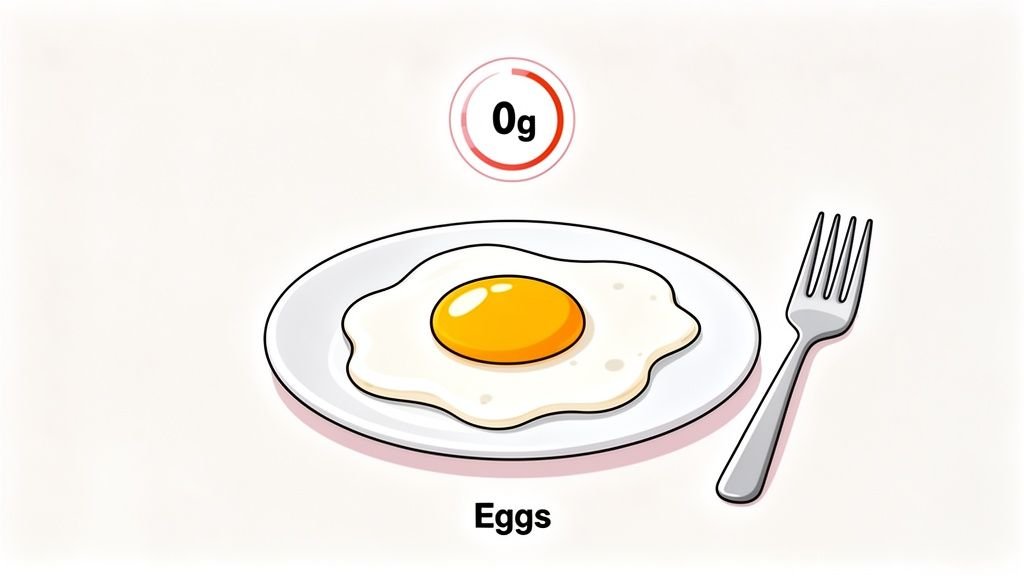
1. Eggs
Often called nature's perfect food, eggs are a cornerstone for anyone seeking foods low in carbs and sugar. They are a nutritional powerhouse, packing a significant amount of high-quality protein and healthy fats into a small, affordable package. A single large egg contains approximately 6 grams of protein, 5 grams of fat, and less than one gram of carbohydrates, making it an ideal choice for maintaining satiety and muscle mass without impacting blood sugar levels.
Because they are a complete protein source, eggs provide all nine essential amino acids your body needs for recovery and repair. This makes them incredibly versatile, serving as the foundation for a quick breakfast, a satisfying snack, or a protein-rich dinner.
Making Eggs a Routine Staple
Integrating eggs into your diet is simple. You can kickstart your day with three scrambled eggs mixed with spinach and a sprinkle of feta cheese, or meal prep a dozen hard-boiled eggs for grab-and-go snacks throughout the week. An omelet is another excellent option, as you can customize it with low-carb vegetables like bell peppers, mushrooms, and onions to add fiber and nutrients.
Pro Tip: When logging your meals in a food tracker, precision is key. For recurring meals like a morning scramble, create a custom shortcut. In PlateBird, you can save "3 eggs + spinach" as a one-tap entry to make tracking consistent and effortless.
Tips for Easy Logging and Meal Prep
- Track by Count: For maximum speed, log whole eggs by count (e.g., "2 large eggs") rather than weighing them. PlateBird's text entry makes this a seconds-long process.
- Visual Logging: Don't have time to type? Just snap a picture of your plate. PlateBird's AI instantly recognizes eggs and other common foods, logging them for you.
- Build Balanced Meals: Pair eggs with non-starchy vegetables to boost your meal's fiber content, which aids digestion and promotes fullness. They are a perfect protein base for meal-prep containers.
For a visual guide on making the perfect fluffy scrambled eggs, check out this short video:
2. Fatty Fish (Salmon, Mackerel, Sardines)
Fatty fish like salmon, mackerel, and sardines are celebrated as premier foods low in carbs and sugar. They are exceptional protein sources loaded with beneficial omega-3 fatty acids, particularly EPA and DHA, which support cardiovascular health and brain function. A typical 100-gram serving of salmon offers around 25 grams of high-quality protein and 13 grams of healthy fats with absolutely zero carbohydrates or sugar, making it a fantastic choice for building muscle and staying full.
These fish are foundational to healthy eating patterns like the Mediterranean diet and are frequently recommended by nutritionists. Their rich fat content provides sustained energy and promotes satiety, helping to curb cravings for less healthy, high-carb options.
Making Fatty Fish a Routine Staple
Adding fatty fish to your weekly menu is straightforward and delicious. You can pan-sear a mackerel fillet with asparagus and a drizzle of olive oil for a quick, nutrient-dense dinner. For lunch, try meal-prepping 150g portions of baked salmon with broccoli. Even canned sardines make for a powerful snack when paired with cucumber slices, delivering a fast and effective protein boost.
Pro Tip: Don't overlook frozen fish fillets. Buying frozen salmon is often more affordable than fresh, and it retains all of its nutritional value. Keep a few portions in your freezer for a convenient, ready-to-cook meal base.
Tips for Easy Logging and Meal Prep
- Track by Weight: For precise tracking, log cooked fish by weight (e.g., "150g baked salmon"). PlateBird’s text entry allows for quick and accurate logging of specific portion sizes.
- Visual Calibration: Snap a photo of your cooked fish portion before eating. This helps you visually calibrate portion sizes over time, making future estimations faster and more accurate.
- Build Balanced Meals: Pair fatty fish with healthy fats like avocado or a side salad with an olive oil-based dressing. This combination enhances satiety and ensures your meal is both balanced and deeply satisfying.
- Prep for the Week: On Sunday, cook 3-4 portions of salmon or mackerel. Store them in airtight containers for easy grab-and-go lunches or quick dinners throughout the week.
3. Non-Starchy Vegetables (Spinach, Broccoli, Cauliflower, Zucchini)
Often overlooked in favor of protein, non-starchy vegetables are the true workhorses of any diet focused on foods low in carbs and sugar. These foods are exceptionally nutrient-dense, providing essential fiber, vitamins, and minerals with barely any impact on blood sugar. A cup of spinach or broccoli contains just 2-5 grams of net carbs and virtually no sugar, making them foundational for sustainable, healthy eating.
These vegetables add volume and satisfaction to meals, helping you feel full on fewer calories. Their high fiber content is crucial for digestive health and can slow the absorption of any carbs you do eat, promoting stable energy levels. For an in-depth explanation of how fiber impacts your carbohydrate intake, you can learn more about net carbs and why they matter.
Making Vegetables a Routine Staple
Integrating more non-starchy vegetables into your diet is straightforward and impactful. A great starting point is to reserve at least half of your plate for them at every meal. For lunch, you can build a robust salad with a base of two cups of spinach, 100g of grilled chicken, and a simple olive oil dressing. For dinner, a quick stir-fry with broccoli, cauliflower, and zucchini alongside your preferred protein source is both delicious and low-carb.
Pro Tip: Make vegetables the easiest choice. Buy pre-cut or frozen vegetables to eliminate prep time. Roasting a large batch of seasoned Brussels sprouts (around 150g per portion) on a Sunday can provide a ready-to-go side for several meals throughout the week.
Tips for Easy Logging and Meal Prep
- Visual Logging: For rapid tracking, snap a photo of your meal. PlateBird's image recognition can instantly identify common vegetables like broccoli and spinach, logging them for you. Photographing your portions before cooking also helps create a visual reference for future meals.
- Track by Text: Use PlateBird's quick-text feature for complex meals. Simply typing "spinach broccoli chicken" will log all the components at once.
- Create Shortcuts: If you have a recurring meal, like a standard salad base, save it as a custom shortcut in your tracker. This turns a multi-item entry into a single tap.
- Boost Variety: To ensure a wide range of micronutrients, rotate your vegetable choices weekly. If you had broccoli and cauliflower this week, try bell peppers and asparagus next week.
4. Greek Yogurt (Full-Fat, Plain)
A staple in Mediterranean diets and a favorite among fitness athletes, full-fat plain Greek yogurt is an exceptional choice for anyone looking for foods low in carbs and sugar. It boasts a creamy texture and a rich, tangy flavor, but its true power lies in its macronutrient profile. A typical 100-gram serving delivers around 10 grams of high-quality protein with only 3-4 grams of carbs and minimal naturally occurring sugar, making it a fantastic tool for managing hunger and supporting muscle maintenance.
Because it is strained to remove most of the whey and lactose, Greek yogurt is thicker and higher in protein than regular yogurt. This process also reduces its carbohydrate content, providing a satisfying food that has a minimal impact on blood sugar levels. Plus, it contains beneficial probiotics that support gut health.
Making Greek Yogurt a Routine Staple
Integrating this versatile food into your diet is incredibly straightforward. For a quick and filling breakfast, start with a bowl of 150g of full-fat Greek yogurt and top it with a handful of almonds and fresh berries. It also works as a rapid protein-packed snack on its own or as a rich base for savory sauces and dips to serve with meats or vegetables. You can even blend it into a smoothie with spinach and almond milk for a nutrient-dense boost.
Pro Tip: When choosing Greek yogurt, always opt for plain, unsweetened, and full-fat (5-10% milk fat) versions. Flavored yogurts are often loaded with added sugars that negate their low-carb benefits. Full-fat options provide better satiety and a richer taste.
Tips for Easy Logging and Meal Prep
- Track by Weight: For the highest accuracy, log Greek yogurt by weight (grams) using a food scale, as density can vary between brands. This ensures your macro tracking is precise.
- Visual Logging: Once you are familiar with your typical portion size, you can use a quick photo to log your meal. Snap a picture of your yogurt bowl, and PlateBird's AI will identify the yogurt, berries, and nuts for an instant entry.
- Flavor without Sugar: Add flavor to plain yogurt with a dash of cinnamon, a few drops of vanilla extract, or a teaspoon of unsweetened cocoa powder instead of sugary additions.
- Create Shortcuts: If you eat the same yogurt bowl for breakfast, save it as a custom meal in PlateBird. A "Yogurt Bowl" shortcut lets you log a multi-ingredient meal with a single tap.
5. Avocados
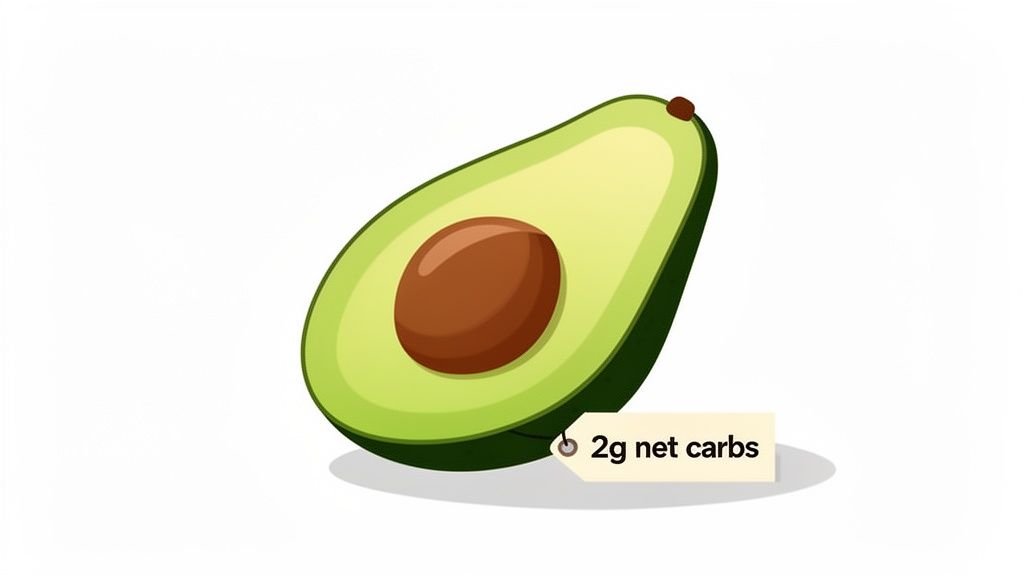
Praised by nutritionists and keto diet advocates alike, avocados are a unique fruit celebrated for their creamy texture and impressive health benefits. Unlike most fruits, they are exceptionally low in sugar and carbs, making them a fantastic addition to this list of foods low in carbs and sugar. A 100-gram serving (about half an avocado) contains around 9 grams of carbs, but 7 of those are fiber, resulting in only 2 grams of net carbs and virtually no sugar. Instead, avocados are rich in heart-healthy monounsaturated fats, which promote satiety and help your body absorb fat-soluble vitamins from other foods.
Their high fiber and healthy fat content helps stabilize blood sugar and keeps you feeling full for longer, curbing the urge to snack on less healthy options. Packed with potassium, vitamin K, and folate, avocados are as nutrient-dense as they are delicious.
Making Avocados a Routine Staple
Integrating this creamy fruit into your meals is easy. Add half an avocado to your morning eggs for a boost of healthy fats, slice a quarter of one onto a lunchtime salad to make it more filling, or simply enjoy half an avocado with a sprinkle of sea salt and a squeeze of lime juice for a quick, satisfying snack. For meal prep, it's best to prepare them the morning-of to minimize browning.
Pro Tip: Purchase avocados at various stages of ripeness. Keep the greener ones on the counter and the ripe ones in the refrigerator to slow down the ripening process, ensuring you have a perfect avocado ready all week.
Tips for Easy Logging and Meal Prep
- Precise Portioning: For the most accurate tracking, measure avocado by weight in grams rather than by piece. Simple text entry like "100g avocado" in PlateBird gives you exact macros.
- Visual Logging: Snapping a quick picture of your avocado toast or salad is the fastest way to log. PlateBird's AI recognizes avocado instantly, making tracking effortless.
- Prevent Browning: To keep sliced or mashed avocado fresh for meal prep, squeeze lemon or lime juice over the exposed flesh. The citric acid significantly slows oxidation and browning.
6. Chicken Breast
Skinless chicken breast is the gold-standard lean protein for anyone tracking their intake of foods low in carbs and sugar. It’s incredibly popular among fitness enthusiasts and meal preppers for good reason: it contains virtually zero carbohydrates and zero sugar. A 100-gram cooked portion packs around 31 grams of high-quality protein, making it exceptionally effective for building muscle and promoting satiety.
Its versatility and affordability make it a staple in countless healthy eating plans. Whether you’re grilling, baking, or stir-frying, chicken breast serves as a clean protein base that can be adapted to any flavor profile without adding unwanted carbs or sugars. This makes it a perfect fit for a structured, goal-oriented diet.
Making Chicken Breast a Routine Staple
Integrating chicken breast into your weekly meals is straightforward with a bit of planning. Many people batch-cook a large quantity, like 4-5 pounds, on a Sunday to have ready-to-eat protein for the week. A quick lunch could be 150g of pre-cooked grilled chicken breast paired with broccoli and a drizzle of olive oil. For dinner, you can quickly dice 200g of chicken for a vegetable stir-fry or add 100g of shredded chicken to a large salad for a satisfying protein boost.
Pro Tip: Don't let your chicken dry out. Use a meat thermometer to ensure it reaches an internal temperature of 165°F (74°C) without overcooking. Marinating it in acidic ingredients like lemon juice or vinegar for just 30 minutes before cooking can also make it incredibly tender.
Tips for Easy Logging and Meal Prep
- Track by Cooked Weight: For the most accurate logging, weigh your chicken after it's cooked, as it loses a significant amount of water weight. Log this weight in grams (e.g., "150g grilled chicken breast").
- Create Portion Shortcuts: If you frequently eat the same amount, create custom meal shortcuts in PlateBird. Saving entries like "200g Chicken" or "Chicken Salad" makes daily tracking a one-tap process.
- Visual Calibration: After weighing your standard portions a few times, take a picture. This helps you visually calibrate your portion sizes, making it easier to log accurately even when you don't have a scale. The AI in PlateBird can also recognize and log it from a photo.
- Season Generously: Don't be shy with salt, pepper, garlic powder, or paprika. Most dried herbs and spices add incredible flavor with negligible calories or carbs. For more ideas on how to hit your protein goals, check out these other ways to increase protein intake.
7. Cheese (Hard Varieties: Cheddar, Parmesan, Gruyère)
Far from being a diet-wrecker, hard cheese is a fantastic addition to a list of foods low in carbs and sugar. Varieties like cheddar, parmesan, and gruyère are nutrient-dense, offering a significant amount of protein and fat with almost negligible carbohydrates. A 100-gram serving can provide between 25 to 38 grams of high-quality protein and less than 1.5 grams of carbs, making it an excellent food for promoting satiety and supporting muscle without a sugar crash.
Because of its rich flavor and satisfying texture, even a small portion of hard cheese can make a meal feel more complete. Its caloric density means you don't need much, which is perfect for adding a boost of flavor and nutrients to salads, omelets, and snacks while keeping your carb intake minimal.
Making Cheese a Routine Staple
Integrating hard cheese into your diet is straightforward. For a quick macro-boosting snack, pair 30 grams of cheddar with a handful of almonds. You can start your day by melting 50 grams of gruyère into a spinach omelet or elevate a simple lunch salad by topping it with 40 grams of parmesan shavings. For easy meal prep, portion cheese into 30-gram servings in small containers for grab-and-go tracking.
Pro Tip: Portion awareness is crucial with cheese due to its high calorie and fat content. Weighing your portions is the most accurate way to stay on track. A small 30g serving is often enough to deliver flavor and satiety benefits without overdoing it.
Tips for Easy Logging and Meal Prep
- Log by Weight: For superior accuracy, always log cheese by weight (grams) rather than by piece or slice. A "slice" of cheddar can vary dramatically in size and calories.
- Create Shortcuts: If you frequently eat the same portion, create custom shortcuts in PlateBird. Saving entries like "30g cheddar" or "40g parmesan" makes logging consistent portions a one-tap process.
- Visual Reference: Use your food scale to weigh out a 30g portion and take a photo of it next to a familiar object, like a coin. This helps you build a visual reference for times when a scale isn't available.
- Proper Storage: To extend the freshness of hard cheese, store it wrapped in parchment or wax paper, not plastic wrap. This allows it to breathe and prevents it from drying out or developing an off flavor.
8. Nuts and Seeds (Almonds, Macadamia, Walnuts, Chia, Flax)
Nuts and seeds are nutrient-dense powerhouses that deliver an ideal combination of healthy fats, protein, and fiber with minimal net carbohydrates. Their portability and long shelf life make them a convenient and satisfying choice among foods low in carbs and sugar. An ounce of almonds, for instance, provides about 6 grams of protein and just 2.7 grams of net carbs, while chia seeds are celebrated for their exceptional fiber content that aids in digestion and promotes a feeling of fullness.
This impressive nutritional profile, popularized by low-carb advocates and dietitians, supports satiety and cardiovascular health without causing a spike in blood sugar. They are perfect for a quick snack, a crunchy salad topping, or a way to boost the nutrient content of yogurt or oatmeal.
Making Nuts and Seeds a Routine Staple
Adding nuts and seeds to your diet is incredibly easy. You can create a simple trail mix with almonds, macadamia nuts, and a few unsweetened chocolate chips for an on-the-go snack. For a breakfast boost, mix two tablespoons of chia seeds into Greek yogurt and let it sit for a few minutes to thicken. A sprinkle of walnuts (about 14 grams or 7 halves) on a salad adds healthy fats and a satisfying crunch.
Pro Tip: Because nuts are calorie-dense, portion control is key. Pre-portioning them into one-ounce bags prevents mindless overeating and makes logging them in your food tracker quick and accurate.
Tips for Easy Logging and Meal Prep
- Track by Count or Weight: For speed, you can log certain nuts by count, like "23 almonds," or use a food scale for precision. PlateBird's flexible text entry handles both methods easily.
- Visual Logging: Create a visual reference by taking a photo of your standard portion the first time you log it. This makes future visual logging faster and more consistent.
- Build Smart Shortcuts: If you frequently eat the same portion, create a custom shortcut in PlateBird. A one-tap entry for "14 walnut halves" or "2 tbsp chia seeds" simplifies the process.
- Proper Storage: To prevent healthy fats from going rancid, store your nuts and seeds in airtight containers in a cool, dark place like a pantry or refrigerator. This preserves their taste and nutritional value. Understanding how these fats fit into your diet can be a game-changer; you can get a clearer picture by learning more about what your macros should be.
9. Beef and Lamb (Lean Cuts: Sirloin, Tenderloin, Ground Beef 93%)
Red meat, particularly lean cuts of beef and lamb, is a powerhouse of nutrition and a foundational component for anyone seeking foods low in carbs and sugar. These meats deliver complete protein with zero carbohydrates and zero sugar, making them exceptionally effective for building muscle and promoting satiety. A 100-gram serving provides between 22 and 25 grams of high-quality protein along with essential, highly bioavailable nutrients like iron, zinc, and B vitamins that support energy levels and overall fitness.
Because it is so flavorful and satisfying, incorporating lean beef or lamb can prevent feelings of deprivation often associated with restrictive diets. Its robust nutritional profile supports both muscle development and weight management goals, all while being simple to track.
Making Beef and Lamb a Routine Staple
Integrating lean red meat into your meal plan is straightforward. You can batch-cook a kilogram of 93% lean ground beef on Sunday to use in various dishes throughout the week, such as a lunch bowl with cauliflower rice and vegetables. For a quick, high-protein dinner, a 200-gram lean sirloin steak paired with asparagus and butter is a classic choice. You can even form 93% lean ground beef into patties for a bunless burger.
Pro Tip: Weighing meat after cooking provides the most accurate data for your food log. Meat loses a significant amount of weight from water and fat rendering during the cooking process. Log the final cooked weight for true precision.
Tips for Easy Logging and Meal Prep
- Choose Lean Cuts: When shopping, look for cuts with minimal visible fat. Sirloin, tenderloin, and ground beef labeled "93% lean" or higher are excellent choices.
- Drain Excess Fat: After cooking ground beef, be sure to drain off any rendered fat. This simple step significantly reduces the overall saturated fat content of your meal.
- Create Logging Shortcuts: If you frequently eat standard portions, create shortcuts in PlateBird. Saving entries like "150g Ground Beef" or "200g Sirloin" makes daily tracking a one-tap process.
- Build Balanced Meals: Pair your beef or lamb with micronutrient-dense, non-starchy vegetables. This balances the meal's nutrient profile, adding essential fiber, vitamins, and minerals.
10. Cottage Cheese (Full-Fat, Plain)
Once a diet food staple, cottage cheese is making a major comeback as one of the best foods low in carbs and sugar, especially for those focused on muscle preservation and satiety. A 100-gram serving of plain, full-fat cottage cheese delivers around 11 grams of protein with just 3.4 grams of net carbs and minimal sugar. Its primary protein, casein, digests slowly, providing a steady release of amino acids that can help keep you feeling full for hours.
This slow-release property makes it a favorite among bodybuilders and fitness enthusiasts for overnight nutrition, but its benefits are universal. The creamy texture and mild flavor make it an incredibly versatile ingredient that can be enjoyed sweet or savory, making it a budget-friendly protein powerhouse for any low-carb lifestyle.
Making Cottage Cheese a Routine Staple
Integrating cottage cheese into your diet is straightforward. For a quick, protein-packed breakfast, mix 150 grams of plain cottage cheese with a handful of berries and almonds. It also works as a fantastic post-workout snack or a simple, satisfying evening meal to curb late-night hunger. For a savory twist, try mixing 75 grams into a salad to boost its protein content without adding heavy dressings.
Pro Tip: The density of cottage cheese can vary significantly between brands, affecting its nutritional value per scoop. For the most accurate tracking, always log cottage cheese by weight (grams) rather than by volume (cups or spoons).
Tips for Easy Logging and Meal Prep
- Create Shortcuts: If you frequently eat the same portion, create custom shortcuts in PlateBird. Saving entries like "150g cottage cheese" or "200g cottage cheese" allows for one-tap logging.
- Visual Logging: When you're in a hurry, just take a picture of your bowl. PlateBird's AI can identify the cottage cheese and other ingredients like berries, logging the meal for you.
- Flavor without Sugar: Enhance plain cottage cheese with a dash of cinnamon, a few drops of vanilla extract, or a spoonful of unsweetened cocoa powder. Always check labels and choose plain, full-fat varieties to avoid the hidden sugars and fillers in flavored versions.
10 Low-Carb, Low-Sugar Foods Comparison
| Item | 🔄 Preparation / Complexity | ⚡ Resource & Cost | ⭐ Expected Outcomes | 📊 Results / Impact | 💡 Ideal Use Cases / Quick Tip |
|---|---|---|---|---|---|
| Eggs | Low — boil/scramble/poach quickly | Very low cost; shelf-stable short-term | ⭐⭐⭐⭐ — complete protein, high satiety | Promotes weight loss adherence & muscle maintenance | Quick breakfasts, log by count, create one-tap shortcut |
| Fatty Fish (Salmon, Mackerel, Sardines) | Moderate — cook properly; refrigerate/freeze | Moderate–high cost; needs cold storage | ⭐⭐⭐⭐⭐ — high protein + EPA/DHA (anti-inflammatory) | supports recovery, cardiovascular benefits, strong satiety | Buy frozen fillets, meal-prep 3–4 portions, log by weight |
| Non‑Starchy Vegetables (Spinach, Broccoli…) | Low–moderate — wash/prepare or use frozen | Very low cost (frozen cheaper); minimal storage needs | ⭐⭐⭐⭐ — nutrient-dense, low calories, high fiber | High volume satiety, improved gut health, low net carbs | Reserve half plate for veg, buy pre-cut/frozen, photograph portions |
| Greek Yogurt (Full‑Fat, Plain) | Low — ready to eat | Low–moderate cost; refrigerated; long-ish shelf life | ⭐⭐⭐⭐ — high protein, probiotics, good satiety | Supports muscle, digestion; moderate carbs if plain | Buy plain full-fat, log by weight, add cinnamon/vanilla (no sugar) |
| Avocados | Low — minimal prep but ripeness sensitive | Moderate cost; short ripeness window; refrigerate when cut | ⭐⭐⭐⭐ — healthy fats, long satiety, fiber-rich | Prolonged fullness, aids fat‑soluble nutrient absorption | Buy varied ripeness, weigh portions (½ avo ≈ 100g), refrigerate once cut |
| Chicken Breast | Low — quick cook (15–20 min) | Very low cost; freezes well for meal prep | ⭐⭐⭐⭐⭐ — exceptional lean protein per calorie | Strong muscle support, cost-effective meal‑prep staple | Batch-cook, log cooked weight, use thermometer to avoid dryness |
| Cheese (Hard: Cheddar, Parmesan) | Low — ready to eat; portion control needed | Moderate cost; long shelf life if stored properly | ⭐⭐⭐⭐ — concentrated protein & calcium, calorie-dense | High satiety in small portions; requires discipline for calories | Weigh servings (e.g., 30g), store in parchment, log by grams |
| Nuts & Seeds (Almonds, Chia…) | No prep — portioning recommended | Moderate cost per serving; long shelf life | ⭐⭐⭐⭐ — healthy fats, portable, fiber-rich | Sustained energy, strong satiety but high calorie density | Pre-portion 1‑oz bags, log by count/weight, prefer unsalted |
| Beef & Lamb (Lean Cuts) | Moderate — cook & drain fat for lean profile | Higher cost; refrigerate/freezer; choose lean cuts | ⭐⭐⭐⭐⭐ — complete protein, rich in iron/zinc | Excellent for strength, recovery, long satiety | Choose lean cuts (sirloin/93% ground), log cooked weight |
| Cottage Cheese (Full‑Fat, Plain) | Low — ready to eat | Low–moderate cost; refrigerated; good shelf life | ⭐⭐⭐⭐ — high protein (casein), slow digestion, filling | Supports overnight muscle preservation & satiety | Buy plain full‑fat, log by grams, blend if smoother texture preferred |
Bringing It All Together for Sustainable Success
Navigating the world of nutrition can often feel like a complex puzzle, but as we've journeyed through this guide, a clear picture emerges. Building a diet around foods low in carbs and sugar isn't about restriction; it's a powerful act of addition. It’s about adding nutrient-rich proteins like salmon and chicken, vibrant non-starchy vegetables, and satisfying healthy fats from sources like avocados and almonds to your plate. These foods form the bedrock of a sustainable, enjoyable, and effective approach to managing your health.
The true secret to making this lifestyle stick isn't a dramatic overhaul, but a series of small, intentional upgrades. It’s about recognizing that the journey is made up of individual choices. You don't need to be perfect from day one. Instead, focus on progress.
Your Action Plan for Lasting Change
The distance between knowing what to do and actually doing it can feel vast. Let's bridge that gap with a few practical next steps that turn abstract goals into concrete actions.
- Start with One Meal: Don't try to change everything at once. Pick one meal, like breakfast, and commit to a low-carb, low-sugar option for a week. Swap your morning cereal or pastry for two scrambled eggs with spinach and a side of avocado. Once that feels like a habit, move on to lunch.
- Embrace Batch Cooking: Your willpower is a finite resource. Protect it by making healthy choices the easy choices. Dedicate an hour or two on the weekend to prep. Grill several chicken breasts, roast a large tray of broccoli and cauliflower, and hard-boil a dozen eggs. This simple act removes daily decision fatigue and sets you up for a week of success.
- Upgrade Your Kitchen Tools: Making healthy food preparation easier is a game-changer. For instance, investing in a good quality kitchen appliance like a food steamer can make cooking vegetables and fish incredibly simple and fast, preserving nutrients and flavor without needing to add oils or fats. When healthy cooking is convenient, you're more likely to do it.
The Mindset of Mastery
Adopting this way of eating is about more than just the food; it's about shifting your perspective. You are moving away from a reliance on processed, high-sugar items that cause energy crashes and toward whole foods that provide steady, reliable fuel for your body and mind. Think of it as an investment in your future self, one that pays dividends in mental clarity, stable energy, and long-term health.
Remember this: every meal is an opportunity. It's a chance to nourish your body, stabilize your blood sugar, and build momentum toward your goals. Each time you choose one of the fantastic foods low in carbs and sugar we've discussed, you are casting a vote for the person you want to become.
The real value of mastering this approach lies in its sustainability. It’s not a 30-day challenge; it’s a set of principles that can serve you for a lifetime. By focusing on these foundational foods, you create a flexible framework that allows for enjoyment, social events, and real life without derailing your progress. You learn to listen to your body’s true hunger signals and provide it with the high-quality fuel it's asking for, which is perhaps the most valuable skill of all.
Ready to turn these insights into consistent action? PlateBird makes tracking your low-carb, low-sugar meals effortless. Ditch the tedious barcode scanning and simply describe your meal or snap a photo to get instant feedback, helping you stay on track and reach your goals faster. Start your journey with PlateBird today and make healthy eating simple.