- The Creamy Compromise in Your Coffee Cup
- Decoding the Nutrition Label, One Serving at a Time
- How Those "Little Splashes" Add Up (A Lot)
- Can Half and Half Fit Into Your Diet Plan
- Understanding the Saturated Fat in Your Cup
- Making Nutrition Tracking Effortless with PlateBird
- Your Half and Half Questions, Answered
So, you've got that carton of half and half in your hand. You know it’s a 50/50 mix of whole milk and heavy cream, but what does that actually mean for your daily nutrition? A standard pour—about two tablespoons—will run you around 40 calories. Most of those calories come from its 3-4 grams of fat, making it a much richer choice than milk, but still lighter than pure cream.
The Creamy Compromise in Your Coffee Cup
Let's take a step back and really get to know what's in your mug. If you stroll down the dairy aisle, you'll see whole milk on one end and heavy cream on the other. Half and half sits right in the middle, a perfect marriage of the two.
This handy blend really took off back in the 1950s as coffee shops started popping up everywhere. People wanted something that added more richness than milk could, but they didn't want the full-on, intense fat of heavy cream. Half and half hit that sweet spot.
What Defines Half and Half
Think of it as the ultimate dairy middle-ground. For a product to legally earn the "half and half" label, it has to contain a milkfat content between 10.5% and 18%. This specific window is what sets it apart from its dairy cousins. For comparison's sake, whole milk typically has just 3.5% fat, while heavy cream comes in with a whopping 36% or more.
This unique recipe is what gives it that velvety texture we love in our coffee. But it also means every splash adds more calories and fat than you might realize. A small, seemingly innocent pour can add up fast, especially if you're a multi-cup-a-day person.
The key is understanding that even a small amount has an impact. A single tablespoon might not seem like much, but its calorie density means that paying attention to how much you pour is crucial for hitting your goals.
Why Its Composition Matters
Knowing that half and half is an even split of milk and cream is the secret to understanding the half and half nutrition facts. The calories you're adding are coming almost entirely from fat, not from carbs or protein. This makes it a go-to for many people on low-carb or keto diets, but it can be a sneaky problem if you’re trying to keep an eye on your total fat and calorie intake.
This is especially true when you start using it for cooking, like in a creamy soup or a pan sauce. What starts as a small splash in your coffee can quickly become a major source of calories and saturated fat in a meal. At the end of the day, this creamy compromise is a fantastic tool, but you have to use it mindfully to keep it in line with a balanced diet.
Decoding the Nutrition Label, One Serving at a Time
To really get a handle on the half and half nutrition facts, we need to think less about the carton and more about the amount you're actually pouring. It’s easy to overlook, but that small splash in your coffee can pack more of a nutritional punch than you might guess. Let's break down the numbers for the portions you use every day.
The standard serving size on most nutrition labels is two tablespoons (that’s one ounce, or 30 ml). This is what most people would consider a "normal" pour to get their coffee to that perfect, creamy, caramel color. So, what does that single pour really cost you, nutritionally?
For that go-to amount, you’re looking at about 40 calories. Most of that comes from fat—around 3 grams of total fat, with 2 grams being saturated fat. You’ll also get about a gram of protein and a gram of carbs, plus trace amounts of a few minerals.
A Closer Look at Common Portions
Of course, we all pour differently. A quick dash in your afternoon tea isn't the same as the cup you might use to make a creamy tomato soup. As the volume goes up, the numbers change—a lot.
You can see exactly where half and half gets its name and its signature richness in this simple breakdown. It's the perfect middle ground between milk and heavy cream.
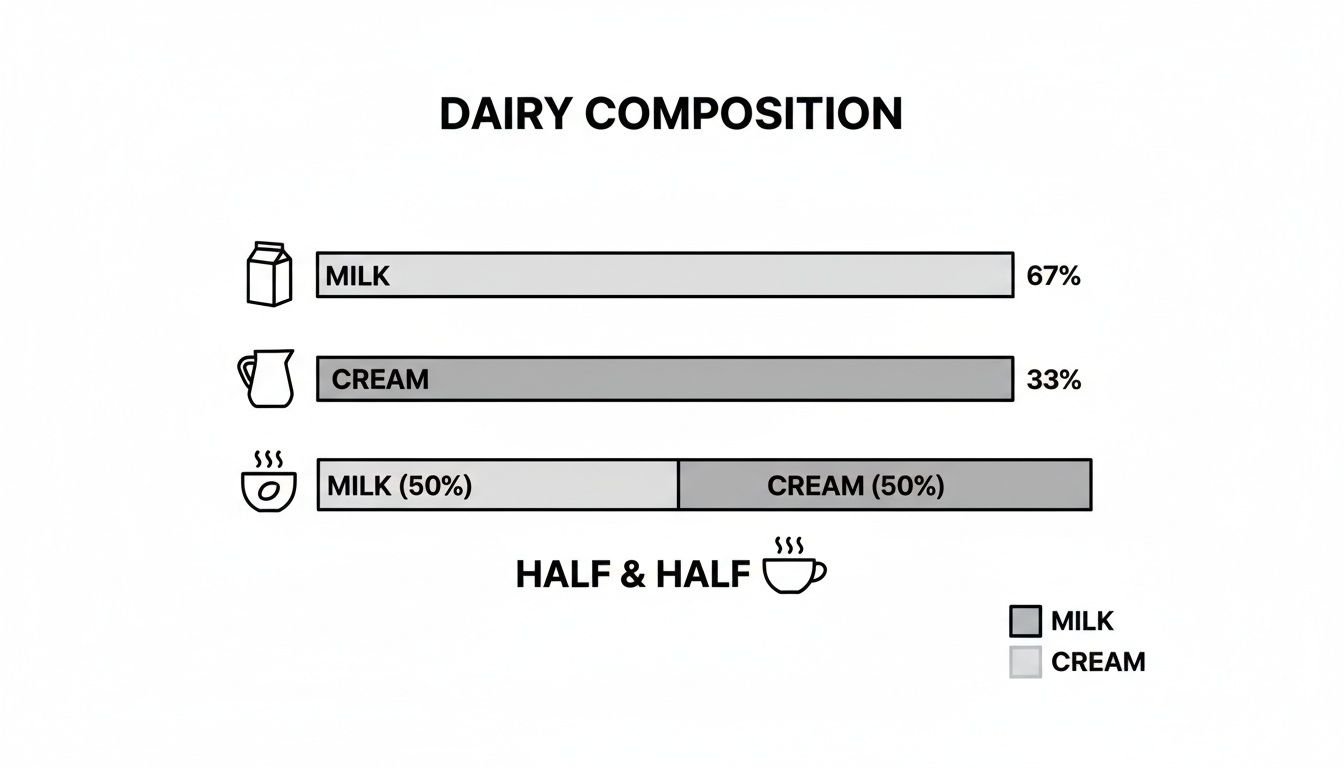
This visual makes it clear: half and half is a blend, combining the lighter profile of milk with the dense fat from cream.
Seeing how this translates into real-world numbers is the key to accurately tracking your intake. If you want to get even better at decoding food packaging, our guide on how to read nutrition labels is a great place to start.
For now, here’s a quick-reference table that shows just how quickly the calories and macros can add up.
Half and Half Nutrition Breakdown by Common Serving Size
This table provides a snapshot of the nutritional values for half-and-half at three common serving sizes, from a small splash to a full cup used in cooking.
| Nutrient | Per 1 Tbsp (15 ml) | Per 1/4 Cup (60 ml) | Per 1 Cup (240 ml) |
|---|---|---|---|
| Calories | ~20 kcal | ~80 kcal | ~315 kcal |
| Total Fat | ~1.7 g | ~7 g | ~28 g |
| Saturated Fat | ~1 g | ~4 g | ~17 g |
| Carbohydrates | ~0.6 g | ~2.5 g | ~10 g |
| Protein | ~0.5 g | ~2 g | ~7 g |
| Calcium | ~1.5% DV | ~6% DV | ~25% DV |
See how fast that escalates? A single tablespoon is pretty minor, but a full cup in a recipe contributes a hefty dose of calories and fat—especially saturated fat.
This isn't meant to scare you away from half and half! It's all about awareness. When you know exactly what’s in each pour, you can make choices that fit your health goals, whether that means measuring your morning splash or finding ways to lighten up a favorite recipe.
How Those "Little Splashes" Add Up (A Lot)
It’s just a splash, right? That’s what most of us think as we pour half-and-half into our morning coffee. It seems so harmless. But the truth is, those small, innocent-looking pours can be deceptive, and the calories add up much faster than you’d expect.
While a single tablespoon won't make or break your day, it's the repeated splashes—or the larger amounts used in cooking—that can quietly throw your health goals off track.
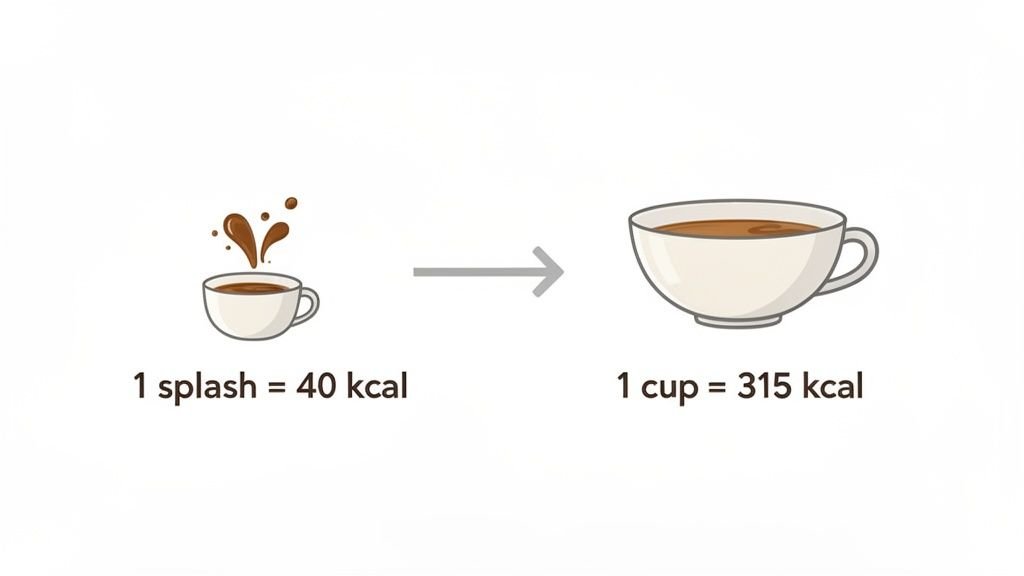
The real eye-opener isn't in your coffee mug, though. It’s in the kitchen. Many of our favorite creamy soups, rich pasta sauces, and decadent desserts call for a full cup or more of half-and-half. This is where the numbers get really interesting.
The Cumulative Effect of Calories and Fat
A single cup of half-and-half contains a staggering 315 calories. To put that in perspective, you're looking at more calories than you'd find in a standard candy bar or a small bag of potato chips.
When you look at the macronutrients, the picture becomes even clearer. It’s almost entirely fat. The breakdown is roughly 78% fat, with only 13% from carbohydrates and a mere 9% from protein.
This makes it an incredibly calorie-dense food. That one cup delivers 28 grams of total fat, with 17 grams of that being saturated fat. That single ingredient can knock out 87% of your daily value for saturated fat in one go.
Think about it this way: a cup of half-and-half has the caloric weight of a small meal. When you add that to a recipe without accounting for it, you're essentially eating an extra meal's worth of calories without even realizing it.
To get a better sense of how these numbers fit into your own diet, it’s helpful to calculate daily calorie needs. Seeing the 315 calories from half-and-half next to your personal energy budget can be a powerful motivator for change.
What This Means for Heart Health
The high saturated fat content is what really warrants our attention. While fat is a necessary part of a healthy diet, consistently overdoing it on the saturated kind has been linked to higher LDL (the "bad") cholesterol levels, which can increase the risk of heart disease over time.
This isn't to say you should toss your half-and-half in the trash. It's about being smart and mindful. Knowledge is power, after all.
- In your coffee: Instead of free-pouring, try measuring out a tablespoon or two. You might be surprised how little you were actually using—or how much.
- In your cooking: Get creative with lightening up recipes. Try swapping half the half-and-half for whole milk, or simply challenge yourself to use a little less than the recipe calls for.
Ultimately, awareness is everything. Once you recognize that those small additions accumulate into a significant calorie and fat load, portion control becomes less of a chore and more of a strategy—one that lets you enjoy that creamy texture without derailing your progress.
Can Half and Half Fit Into Your Diet Plan
So, let's get to the real question: can you keep enjoying your creamy coffee and still hit your health goals? The truth is, there's no simple "yes" or "no" answer. It really comes down to your specific diet and what you're trying to achieve.
Think of it this way: what works for someone on a strict keto plan is totally different from what works for someone just looking to lose a few pounds. By understanding the numbers behind half-and-half, you can make it work for you, not against you.
For anyone on a ketogenic or low-carb diet, half-and-half can feel like a lifesaver. With only about 1 gram of carbs in a two-tablespoon serving, it’s a much smarter choice than milk, which packs a surprising amount of sugar. It lets you get that creamy texture without kicking you out of ketosis.
But—and this is a big but—it’s not a "free" food. The calories and fat are very real. To stay in ketosis and lose weight, you still need to be in a calorie deficit, which means tracking every splash is non-negotiable.
Finding the Right Fit for Your Goals
If your main goal is general weight loss, the most important word to remember is moderation. You absolutely do not have to give up that splash of creaminess in your morning coffee. As long as you’re mindful of your portions, you can easily fit it into a balanced calorie budget. It’s all about awareness, not deprivation.
To see why, it helps to put half-and-half side-by-side with its neighbors in the dairy aisle. Each one has a different balance of fat, carbs, and calories.
- Heavy Cream: This is the go-to for many strict keto followers. It's higher in fat and calories but has almost zero carbs, making it perfect if minimizing sugar is your top priority.
- Whole Milk: While lower in fat and calories than half-and-half, it's much higher in carbs due to lactose (milk sugar). If you're watching your sugar intake, this can add up quickly.
- Non-Dairy Creamers: This is a huge category, with everything from almond and soy to oat milk. The nutrition can be all over the place. Many flavored or "fat-free" versions are loaded with hidden sugars and artificial thickeners, so always read the label.
If you’re curious about how plant-based options measure up in your latte, it’s worth looking into comparisons like Oat Milk vs Dairy for Latte to see the full picture.
No single food is inherently "good" or "bad." The power lies in understanding how to make it work for you. By knowing the numbers, you can enjoy the rich flavor of half-and-half while still crushing your health and wellness goals.
Making Smart Swaps and Comparisons
The context of your diet is everything. A splash of half-and-half in your coffee is one thing; using a full cup as the base for a creamy soup is something else entirely. Being aware of these differences is key to managing your intake without feeling restricted.
If you're really digging into dairy and its place in your diet, our guide on the best milk for weight loss is a great next read.
Ultimately, you don't have to give up the foods you love to be healthy. Armed with a clear understanding of the nutrition facts, you can confidently decide how, when, and how much half-and-half belongs in your life.
Understanding the Saturated Fat in Your Cup
When we look at the half and half nutrition facts, the conversation almost always lands on fat content. But it's not just about the total grams of fat—it's about the type of fat. The rich, velvety texture of half and half comes at a cost, and that cost is a high concentration of saturated fat.
Half and half's fat profile is dominated by the saturated kind, with much smaller amounts of monounsaturated and polyunsaturated fats. While our bodies absolutely need some fat to function, diets that are consistently high in saturated fat have been linked to higher LDL ("bad") cholesterol, which can affect heart health down the road.
Putting the Saturated Fat Content into Perspective
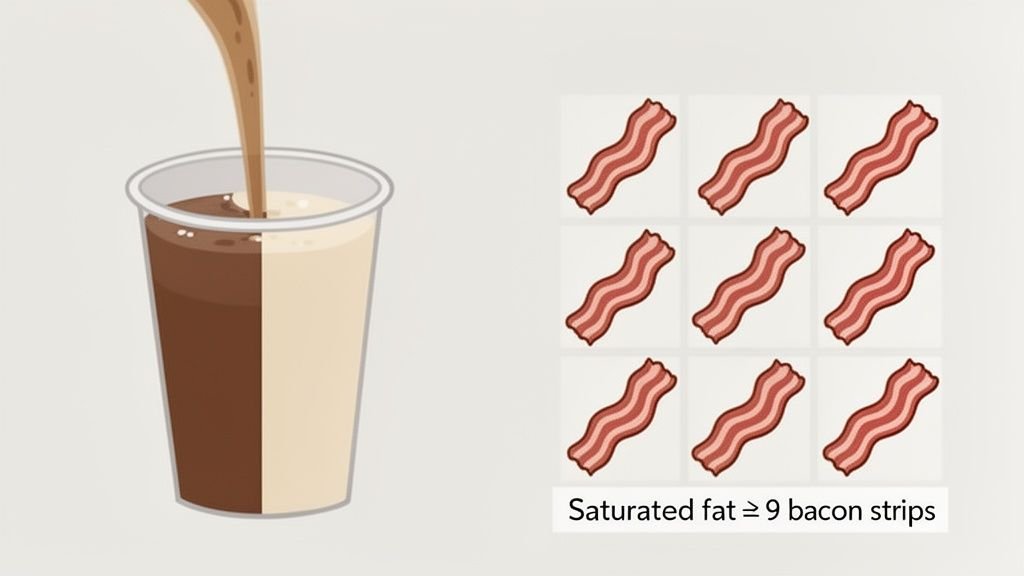
So, what does this actually look like in your kitchen? If you're using half and half to make a creamy soup or a rich pasta sauce, you might use a full cup. That one cup contains a staggering 17 grams of saturated fat. For most adults, that’s almost 90% of the entire recommended daily limit in one go.
A more detailed breakdown from nutritional databases confirms this, showing about 17.32g of saturated fats, 8.04g of monounsaturated fats, and just 1.03g of polyunsaturated fats per cup. You can see all the numbers for yourself in this in-depth nutritional information of half and half.
Imagine cooking nine strips of bacon. The amount of saturated fat you'd get from eating them is roughly equivalent to what's in that one cup of half and half.
This isn't meant to be a scare tactic. It's about building a real-world picture of what you're consuming. The small splash you put in your morning coffee is worlds away from using a cup or more in a recipe. Knowing just how concentrated the saturated fat is helps you use it wisely, so you can enjoy that creaminess without accidentally derailing your health goals.
Making Nutrition Tracking Effortless with PlateBird
So, you’ve got all the half and half nutrition facts memorized. That’s a great first step, but the real challenge is tracking it day in and day out. Let’s be honest—life gets busy. Who has the time to meticulously measure and log every single splash of creamer in their morning coffee? It can feel like a chore, and chores are easy to skip.
This is exactly why we built PlateBird: to make tracking feel less like work and more like a quick, intuitive habit. Instead of getting bogged down in conversion charts and searching through generic databases, you can just talk to it like a person.
Simply type "coffee with a splash of half and half," and the app knows what you mean. It instantly logs a smart estimate for the calories and macros, no food science degree required.
Snap a Photo to Log Your Macros
It gets even easier. For those moments when you're in a rush, you can just snap a picture of your meal. PlateBird's photo recognition identifies everything on your plate—including that cup of coffee with creamer—and gives you a full nutritional breakdown.
This is what it looks like in action. The app gives you a clean, simple view of your macronutrients.
With a single glance, you can see how that half-and-half fits into your daily goals, helping you make smarter choices on the fly.
Over time, the app starts to recognize your habits. That daily coffee with cream you log every morning? It quickly becomes a one-tap entry, making your tracking faster each day. The whole point is to remove the hassle so you can focus on what really matters: your food choices and your health.
The secret to long-term success isn't just knowing the numbers—it's having a system that makes using those numbers feel effortless. When tracking is as simple as sending a text message, you’re far more likely to stick with it and finally hit your goals.
Whether your goal is weight loss, sticking to a keto plan, or simply being more mindful, a seamless tracking process makes all the difference. For more ideas on how to make tracking work for you, take a look at our guide on the best macro tracking app.
Consistency is built on convenience. With the right tools, you can enjoy your half-and-half without derailing your entire wellness journey.
Your Half and Half Questions, Answered
Even after breaking down the numbers, a few practical questions always seem to pop up. When you're standing in the dairy aisle trying to make the best choice, the details really matter.
Let's clear the air on some of the most common things people wonder about, so you can pour that splash of cream with confidence.
Is Fat-Free Half and Half a Healthier Choice?
You'd think "fat-free" automatically means healthier, right? Not so fast. When manufacturers remove the natural dairy fat, they have to add something back in to create that creamy texture we expect.
That "something" is often a mix of corn syrup, chemical thickeners, and other artificial ingredients. You end up trading natural fat for added sugars and a more processed product. For many people, especially those watching their carb intake, the original version is actually the better deal. Always flip the carton over and read the ingredients list.
Can I Use Half and Half on a Keto Diet?
Absolutely, as long as you're mindful of how much you use. A standard two-tablespoon serving has only about 1 gram of carbs, which makes it a fantastic, keto-friendly way to add creaminess to your coffee without derailing your day. It’s a much better fit than regular milk.
Just remember that the calories still count. If weight loss is part of your keto goal, you’ll want to track those splashes to make sure you’re staying within your daily targets.
For anyone on keto, half and half is a great tool, but it's not a "free" food. If you need the lowest carb option available, heavy cream is king. But if you're also managing calories, half and half strikes a great balance.
How Does It Compare to Heavy Cream in Coffee?
This really comes down to your personal goals for the day. Heavy cream is the go-to for strict keto followers because it's almost pure fat with virtually zero carbs. On the other hand, half and half has noticeably fewer calories and less fat, but a few more carbs from its milk content.
Think of it this way:
- Strictly minimizing carbs? Heavy cream is your winner.
- Trying to reduce calories and fat? Half and half is the smarter choice.
Does Half and Half Contain a Lot of Sugar?
No, traditional half and half has no added sugar at all. The 1 gram of carbohydrate you see on the label is from lactose, the natural sugar found in the milk portion of the blend.
The only time you need to be wary is with flavored or fat-free versions. Those often contain added sugars to make them taste better, so be sure to check the nutrition panel before buying.
Trying to remember every splash and spoonful can feel exhausting, but it doesn't have to be. With PlateBird, you can just type what you ate ("coffee with a splash of half and half") or snap a photo of your meal, and our AI handles the details. Take the guesswork out of logging your food and get a clear picture of your habits. You can download the PlateBird app here to get started.