Eating a high-protein, low-sodium diet is one of the most powerful moves you can make for your long-term health. It’s not about bland, restrictive meals. It's about making smart, delicious swaps to balance muscle maintenance with heart health, and it's far more achievable than you might think.
The Real Reason You Need High Protein and Low Sodium
It’s a story I hear all the time. You decide to eat healthier, start grabbing high-protein snacks to fuel your workouts, and then—bam—you check the nutrition label. The sodium content is off the charts. It feels like an impossible choice: build muscle or protect your heart?
I'm here to tell you that’s a false choice. This journey isn't about restriction; it's about rebalancing your plate with intelligent, flavorful foods that work together for your health.
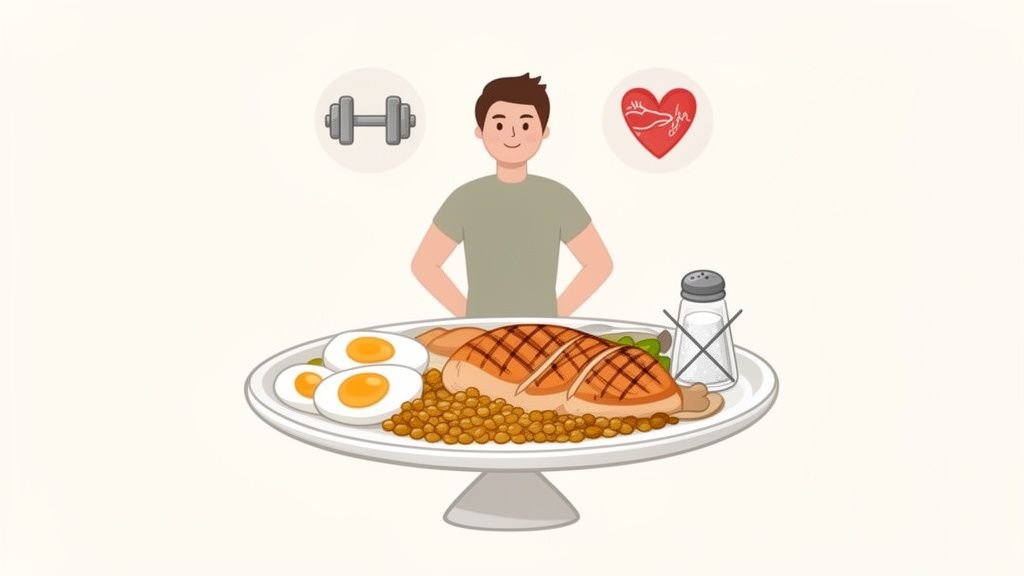
Beyond Separate Goals to a Unified Strategy
For too long, we’ve treated protein and sodium as separate issues. Protein was for athletes, and low sodium was for people with high blood pressure. This way of thinking misses the bigger picture of how these two nutrients are deeply connected. My own "aha!" moment came when I finally understood this relationship.
I was crushing my protein goals but constantly felt bloated, and my blood pressure was slowly creeping up, even though I was active. The culprit was hidden sodium in my supposedly "healthy" protein sources—deli turkey, canned beans, and even some brands of cottage cheese.
This realization led to a fundamental shift. It's not just about avoiding salt; it's about simultaneously boosting your intake of high-quality, lean protein.
This isn't just about avoiding the "bad" and eating more of the "good." It's about understanding that the combination of high protein and low sodium creates a powerful synergy that optimizes your body's function from your muscles to your heart.
This isn’t just a hunch; it’s backed by solid research. One fascinating study revealed that the most dangerous dietary pattern was low sodium combined with inadequate protein. The real sweet spot? The data showed that individuals with low sodium intake combined with higher protein intake had the lowest mortality risk of any group. You can explore the full findings of this health study online.
The Protein and Sodium Balancing Act
Understanding how different combinations of protein and sodium affect your health is crucial. It’s easy to focus on one nutrient while letting the other slide, but finding the right balance is where the real magic happens.
| Dietary Combination | Associated Health Risk or Benefit | Key Takeaway |
|---|---|---|
| High Protein + High Sodium | Muscle support but increased risk of high blood pressure and heart strain. | A common pitfall. Many processed high-protein foods are loaded with sodium. |
| Low Protein + Low Sodium | Reduced cardiovascular risk but can lead to muscle loss and a slower metabolism. | This combination can be especially risky for older adults, leading to frailty. |
| High Protein + Low Sodium | The Gold Standard. Supports muscle mass, satiety, and heart health simultaneously. | This is the target. It requires mindful choices but delivers the best of both worlds. |
As you can see, getting it right isn't about extremes. It’s about building a plate where protein and sodium work in harmony, not against each other.
Creating Your Balanced Plate
So, what does this actually look like on your plate every day? It means being intentional.
- Protect Your Heart: Lowering sodium is a proven strategy for managing blood pressure and reducing the strain on your entire cardiovascular system.
- Maintain Your Muscle: Getting enough protein is non-negotiable for repairing and building muscle, keeping your metabolism fired up, and supporting bone health as you age.
- Manage Your Weight: Protein keeps you feeling full and satisfied far longer than carbs or fats, which is a game-changer for preventing overeating.
The good news is that you don’t have to do this all in your head. I personally use the PlateBird app to track both nutrients without the guesswork. It turns what feels like a complex nutritional puzzle into a simple, clear daily habit, showing you in real-time how your food choices are adding up.
Setting Your Personal Protein and Sodium Targets
Before you touch a single thing in your pantry, we need to set a clear destination. Jumping into a high-protein, low-sodium eating plan without concrete goals is like setting off on a road trip with no map—you’ll just end up driving in circles. So, let's get past the vague advice and dial in the specific numbers that actually work for your body and your life.
Decoding Your Sodium Limit
First up is sodium, where the small numbers pack the biggest punch. The World Health Organization isn't just throwing numbers around when they recommend adults stick to less than 2,000 milligrams of sodium per day. This is a critical line in the sand for protecting your health long-term.
The tough reality? Most of us are blowing past this limit without even realizing it. Global sodium intake has hit startling levels, with the average person consuming a whopping 4,310 mg daily—more than double what's recommended. The biggest consequence is high blood pressure, which is a fast track to cardiovascular disease, kidney issues, and more. The good news is that awareness is growing, and there's hope on the horizon. Projections show a potential drop in these health problems by 2040 as people start paying more attention. You can read the full research on global sodium intake trends and health impacts if you want to go deeper.
What does 2,000 mg of sodium actually look like? Think of it as about one teaspoon of table salt. And no, that's not just from the salt shaker. It includes all the sodium lurking in processed foods—from your bread and cheese to sauces and cured meats.
To put this in perspective, think of your daily sodium intake as a budget. A single slice of some fast-food pizzas can eat up over 640 mg of that budget. A can of soup? That could easily cost you more than 1,500 mg. This is exactly why knowing your limit is the first real step toward making smarter choices.
Calculating Your Personalized Protein Goal
Now, let’s talk protein. Unlike sodium’s hard-and-fast rule, your protein target is much more personal. It really depends on your body weight, your age, and how active you are.
The textbook starting point is 0.8 grams of protein per kilogram of body weight (or about 0.36 grams per pound). But I’ll be honest—for most people I work with, this is just a baseline. Your real-world needs often call for a higher number.
Let’s create a quick profile. We'll call him 'Alex.' He's a busy 45-year-old professional who weighs 180 pounds (around 82 kg) and wants to build a little muscle and feel more energetic.
- The Baseline: 82 kg x 0.8 g/kg = 66 grams of protein/day. This is the absolute minimum he should be getting.
- The Activity Factor: Alex hits the gym for strength training 3-4 times a week. Active people need more protein for muscle repair, usually somewhere in the 1.2 to 1.7 g/kg range.
- The New Goal: Let's aim for the middle of that active range. 82 kg x 1.5 g/kg = 123 grams of protein/day.
This new target of 123 grams gives Alex a much more effective goal for building strength and staying full. It’s also worth noting that older adults often do better with a higher protein intake—around 1.0 to 1.2 g/kg—to help fight off age-related muscle loss (sarcopenia). If you need more help with this, our guide on determining what your macros should be is a great resource.
Turning Numbers into Action with PlateBird
Knowing your targets—say, under 2,000 mg of sodium and around 123 g of protein—is half the battle. The other half is actually tracking them. This is where those abstract numbers become a real, actionable plan. And when you're setting those protein targets, knowing the best time to take protein powder can make a real difference in your results, too.
This is exactly why I use the PlateBird app. It turns my goals into a simple, visual dashboard. I plug my custom targets right into the app. Then, as I log my meals throughout the day—either by typing "grilled chicken salad" or just snapping a quick picture—I get a real-time snapshot of my progress. It empowers me to build a plan that’s truly for my body, not just a generic one I found online.
Building Your High Protein Low Sodium Grocery List
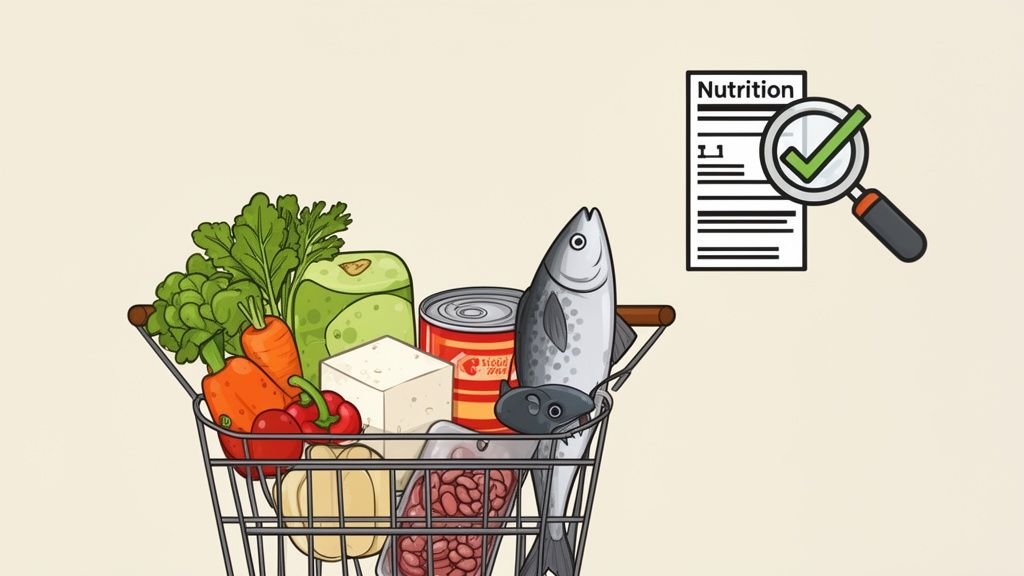
This is where the rubber meets the road. All the planning in the world means nothing if you can't navigate the grocery store. It can feel overwhelming when you're trying to find foods that fit a high protein low sodium plan, but I promise it gets easier. Let's walk through the aisles and turn what feels like a chore into a confident, health-boosting routine.
I always start in the produce section. It's the safest place in the entire store for this way of eating. Fruits and vegetables are naturally low in sodium and loaded with potassium, a mineral that helps your body balance blood pressure.
Don't be shy here. Load up your cart with leafy greens like spinach and kale, vibrant bell peppers, broccoli, and sweet potatoes. Think of these as the foundation of your meals, not just an afterthought.
Now, let's head over to the protein counters—this is where you need to be a bit more of a detective. Hidden sodium lurks everywhere.
Navigating Proteins at the Counter
When you're choosing animal proteins, your mantra should be "fresh and unseasoned." It’s tempting to grab those pre-marinated chicken breasts or seasoned fish fillets for convenience, but they're almost always soaked in high-sodium solutions.
Think about this: a single serving of pre-marinated steak tips can easily pack over 500 mg of sodium before you even cook it. It’s so much better to buy the plain, unadulterated cuts and add your own delicious, salt-free seasonings at home.
- Lean Poultry: Stick with fresh chicken or turkey breast. If you opt for ground meat, look for at least 93% lean to keep the saturated fat down.
- Fresh Fish: Salmon, cod, and tuna steaks are fantastic choices, rich in healthy omega-3s. A 5-ounce can of tuna can have 360 mg of sodium, while the same amount of fresh tuna has just 83 mg. The difference is staggering.
- Red Meat: Go for lean cuts like sirloin or flank steak and be sure to trim any visible fat. Just remember, portion size matters here.
Even the freezer aisle isn't a guaranteed safe zone. Frozen shrimp, for instance, is often preserved in a salty brine. A 3-ounce serving can have over 300 mg of sodium, while fresh shrimp has about a third of that. Always, always check the labels on frozen goods.
My personal rule is simple: if it comes in a sauce or a seasoning rub from the store, I put it back. This one habit has made the biggest difference in keeping my sodium intake down while still enjoying high-quality protein.
Unlocking Plant-Based Powerhouses
The plant-based section is full of incredible high-protein, low-sodium options, especially if you’re willing to do a tiny bit of prep. Canned goods are a perfect example—they're convenient, but you have to read the labels carefully.
A standard can of beans can be a real sodium bomb. But here’s a simple trick: drain the beans and give them a good rinse under running water. This simple step can slash the sodium content by up to 41%! Or, even better, just look for cans specifically marked "No Salt Added."
Here are some of my top plant-based picks:
- Lentils and Dried Beans: Cooking these from scratch gives you total control over the sodium. They're also incredibly cheap and versatile.
- Tofu and Tempeh: These are true protein champions. A block of firm tofu is a blank canvas just waiting for whatever flavor you want to throw at it.
- Edamame: A fantastic snack or an easy addition to any meal, edamame is packed with both protein and fiber.
Becoming a Label Detective
This is the single most important skill you will develop. Sodium content can vary wildly between two products that look almost identical on the shelf.
Take cottage cheese, a classic protein source. I’ve seen one brand’s half-cup serving with 380 mg of sodium sitting right next to another brand with only 150 mg. You’d never know the difference unless you flip the container over and read the nutrition facts. To get a better handle on how different protein sources measure up, a good protein quality chart can be a huge help in making smarter choices.
When you're scanning labels, look for the Percent Daily Value (% DV) for sodium. The FDA's guidance is a great shortcut: 5% DV (115 mg) or less per serving is considered low, while 20% DV (460 mg) or more is high.
This simple rule of thumb makes it easy to compare products on the fly. Before you know it, you'll be spotting the better options in seconds, filling your cart with confidence, and building a kitchen that truly supports your health.
Mastering Flavor Without the Salt Shaker
When people start a high-protein, low-sodium plan, their biggest fear is always the same: bland, boring food. I get it. We’ve been trained to think flavor comes from a salt shaker. But that’s a myth I’m excited to bust. This is where you get to be creative in the kitchen and discover a world of flavor you might not even know exists.
Forget just listing ingredients. We’re going to talk about building deep, satisfying flavors from the ground up using fresh herbs, vibrant spices, and the bright kick of citrus and vinegar. You’ll quickly learn that salt was never the star of the show.
Building Umami and Smoky Notes
One of the first things you miss when you cut back on sodium is that deep, savory satisfaction in food. That taste is called umami, and it’s what makes dishes feel rich and complete. The good news is, you don't need high-sodium soy sauce or processed meats to find it.
My secret is turning to natural sources. Sautéed mushrooms, especially shiitake or porcini, create an incredibly rich, meaty base for sauces or stir-fries. I also love nutritional yeast; a sprinkle adds a cheesy, nutty flavor to everything from popcorn to pasta sauce, and it’s packed with B vitamins.
If you’re craving that smoky flavor from bacon or cured meats, reach for spices like smoked paprika or chipotle powder. A little goes a very long way. Try it in your next batch of chili or as a rub for chicken breast. You get all that complex, smoky depth without a single milligram of sodium.
Your Go-To Salt-Free Seasoning Blend
Honestly, the biggest game-changer for me was creating an all-purpose, salt-free seasoning blend. Having it ready to go takes all the guesswork out of meal prep. I keep a big jar of this on my counter and use it on practically everything.
My All-Purpose Flavor Mix
- 2 tablespoons smoked paprika
- 2 tablespoons garlic powder
- 2 tablespoons onion powder
- 1 tablespoon dried oregano
- 1 tablespoon black pepper
- 1 teaspoon cayenne pepper (or more, if you like it spicy)
Just mix it all together. The paprika gives it a smoky body, the garlic and onion powders are a savory foundation, oregano adds an earthy note, and cayenne provides a gentle warmth. It's proof that you don’t need salt to make something taste incredible. If you want to dive deeper, exploring aromatic Middle Eastern spices and flavours can open up a whole new world in your cooking.
Don’t be afraid to experiment with your spice cabinet. I love toasting whole cumin and coriander seeds before grinding them. The warmth and complexity it adds to roasted vegetables or meats is just fantastic. It’s all about layering flavors.
Brightening Flavors with Acidity and Zest
Here’s another one of my favorite tricks: using acid. A simple squeeze of citrus or a splash of vinegar can wake up an entire dish, giving it the same "pop" you’d expect from salt.
Think about it. A plain grilled chicken breast is fine, but a squeeze of fresh lemon juice makes it amazing. A salad dressing made with a good balsamic or apple cider vinegar doesn't need much else to be delicious.
Let’s walk through a quick, zesty salad dressing you can whip up in seconds.
- Start with a base of 3 parts extra virgin olive oil to 1 part acid, like red wine vinegar.
- Add a teaspoon of Dijon mustard—just be sure to check the label for a low-sodium brand.
- Whisk in a pinch of your all-purpose seasoning blend and some freshly chopped herbs like parsley or dill.
This simple formula creates a dressing that tastes anything but boring. The same idea works for finishing a rich chili with a splash of lime juice or deglazing a pan with white wine after searing a steak. Acidity just cuts through richness and makes every other flavor shine. As you get the hang of this, you’ll naturally become a pro at spotting sodium on labels, but you can always refer back to our guide on how to read nutrition labels for a refresher.
From Plan to Plate: A Real-Life Look at Meal Tracking
Theory is great, but let's be honest—it’s what you do in the kitchen and at the table that really counts. This is where the magic happens. A solid plan is your roadmap, but only if you can actually follow it without getting bogged down.
So, let me walk you through what a typical day looks like for me. We'll cover some delicious, high-protein, low-sodium meals and, just as importantly, how I track everything without it feeling like a soul-crushing chore. My secret weapon? A fantastic little app called PlateBird.
This isn't about being perfect or following a rigid diet. It's about seeing firsthand how small, smart choices add up throughout the day. We're focusing on simple prep and logging everything so fast it becomes second nature. The goal is to see your progress in real-time, watching those protein numbers climb while sodium stays in check.
What a Day of High-Protein, Low-Sodium Eating Actually Looks Like
To give you a clearer picture, I've put together a sample meal plan. This isn't meant to be a strict prescription, but more of a jumping-off point to show you what's possible. You'll notice it's packed with whole foods and big flavors that don't come from a salt shaker.
Here's a quick look at a sample day of eating, along with the numbers to show you just how achievable your goals can be.
Sample 1-Day High Protein Low Sodium Meal Plan
| Meal | Example Dish | Estimated Protein (g) | Estimated Sodium (mg) |
|---|---|---|---|
| Breakfast | Plain Greek Yogurt (1 cup) with Berries (1/2 cup) and a sprinkle of unsalted almonds | 25g | 80mg |
| Lunch | Turkey Hummus Collard Wrap (4 oz low-sodium turkey, 2 tbsp low-sodium hummus, fresh veggies) | 30g | 450mg |
| Dinner | Baked Salmon (6 oz) with Roasted Sweet Potatoes and Steamed Asparagus | 45g | 150mg |
| Snack | Hard-Boiled Egg (1) and a small apple | 7g | 65mg |
| Totals | ~107g | ~745mg |
And there you have it. We easily cleared 100 grams of protein and stayed well under 800 mg of sodium with meals that are genuinely delicious and filling. That turkey collard wrap is a perfect example of a smart swap—ditching a tortilla, which can pack over 1,000 mg of sodium, for a crisp collard green saves a massive amount of sodium without sacrificing the experience.
Making Tracking a Breeze with PlateBird
Now for the part that trips most people up: tracking. If logging your food feels like a part-time job, you're not going to stick with it. This is precisely why I use PlateBird. It was built for speed and simplicity.
Let me show you how I'd log that entire sample day in just a few moments.
Logging Breakfast in Seconds
My morning yogurt bowl is a staple. I don't bother with scanning or searching. I just open PlateBird and type it out like a text message: “one cup greek yogurt with berries and almonds.” The app’s AI gets it instantly, calculating the protein and sodium in about five seconds. Done.
Snapping a Pic of Lunch
I'm often in a rush at lunchtime. For something like the turkey collard wrap, I just snap a quick photo. Before I even take a bite, PlateBird's photo recognition identifies the low-sodium turkey, the collard green, and the veggies inside, breaking it all down for me automatically. It’s a game-changer for meals with lots of ingredients.
This is where you can really see the power of layering flavors instead of just dumping on salt.
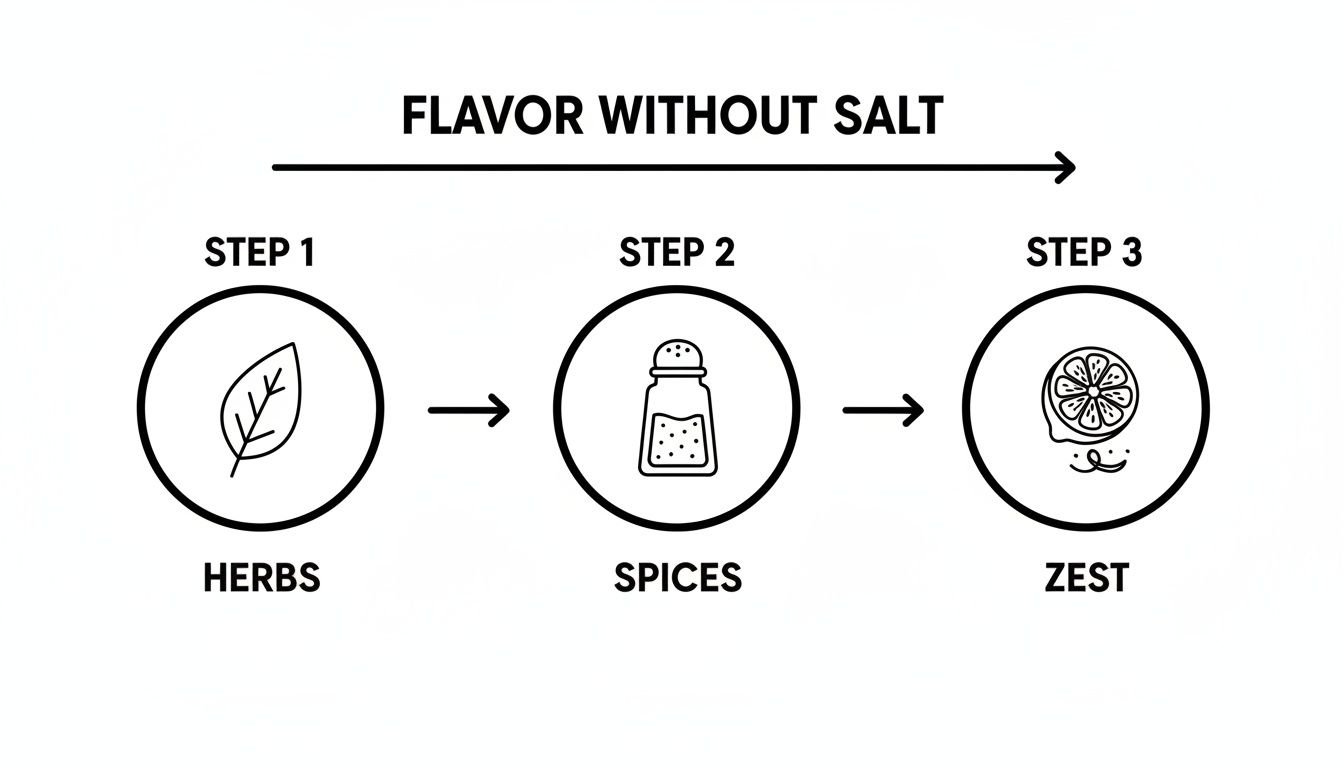
Starting with a base of herbs, adding a layer of complex spices, and finishing with a bright pop of citrus zest creates incredible depth. It's a technique I use every single day.
Creating One-Tap Meals for Meal Prep
Meal prepping is my lifeline. Let’s say I made a big pot of low-sodium turkey chili for the week. The first time I log it, I enter the ingredients into PlateBird and save it as a custom meal called “My Turkey Chili.”
For the rest of the week, logging is a one-tap (or one-type) affair. I just select “My Turkey Chili,” and the entire meal—with all its macros and sodium perfectly calculated—is logged instantly. This feature alone saves me so much time.
Staying Motivated with Real-Time Feedback
The real power here is in the visual feedback. Throughout the day, I can glance at the app and see my protein bar filling up while the sodium bar stays comfortably low. It’s immediate, positive reinforcement that keeps me going.
There’s no more guessing or end-of-day anxiety about whether I hit my numbers. I know I'm on track.
When the process of tracking is as easy as sending a text message, you knock down the biggest barrier to staying consistent. And that’s how you turn a short-term plan into a lifestyle you can truly live with.
Your Questions, Answered
Making a change this significant is a big deal, and it’s natural to have a bunch of questions swirling around. I’ve been there! Let's walk through some of the most common concerns that pop up when people first start focusing on high-protein, low-sodium eating. My hope is to clear things up so you can move forward with confidence.
Can I Actually Eat at a Restaurant Again?
Yes, you absolutely can! But it does mean you’ll need to be a little more strategic. I like to think of it as doing a bit of reconnaissance before heading out. A quick look at the menu online usually tells me everything I need to know.
When you’re scanning the menu, pay close attention to how things are cooked. Words like grilled, steamed, or baked are your friends. On the other hand, terms like "crispy," "fried," or anything swimming in a heavy sauce are usually packed with sodium.
And please, don't be afraid to speak up! A simple request like, "Could the chef prepare this without any added salt?" or "Can I get the dressing on the side?" is something most kitchens are happy to handle. When in doubt, a simple piece of grilled fish with steamed veggies and a baked potato is a safe, delicious bet almost anywhere.
What Can I Even Snack On?
This is a fantastic question because, let's be honest, snacks are often sodium traps. Having a few solid, go-to options ready to go is the secret to not getting derailed when you’re hungry and busy.
Here are a few of my personal staples:
- Plain Greek yogurt with a handful of fresh berries.
- A small handful of unsalted almonds or walnuts.
- Hard-boiled eggs. I make a batch at the start of the week so they're always ready.
- Steamed edamame (you can find it in the freezer aisle).
- A quality, low-sodium protein shake for those really hectic days.
- My personal favorite: a DIY trail mix with unsalted nuts, seeds, and a little dried fruit. You control everything that goes in.
It’s worth remembering that these small changes add up to something huge. Take bread, for example. In France, a voluntary agreement to reduce salt in bread was projected to prevent over 1,000 deaths each year. For every dollar spent on sodium reduction, the public health return is at least twelve times that. You can dig into the numbers and learn about the heart health benefits of sodium reduction on heart.org.
Is My Food Going to Taste Bland Forever?
I promise you, it won't! This is probably the biggest myth out there. Your palate just needs a little time to adjust—usually about two to three weeks. Think of it as a "reset" for your taste buds, which have likely become desensitized from all the salt in modern foods.
Once you push through that initial phase, you’ll be amazed. You’ll start tasting the real, inherent flavor of food again. A fresh tomato will taste sweeter, and grilled chicken will taste richer and more savory. This is your chance to really lean into all the other ways to build flavor: fresh herbs, spices, a squeeze of citrus, a splash of vinegar. Before you know it, you won't even miss the salt shaker.
So, All Processed Foods Are Off-Limits?
Not at all, but this is where you have to become a savvy label-reader. The word "processed" is so broad—it can mean anything from a bag of potato chips to a bag of frozen broccoli.
The trick is learning to spot the difference between minimally processed foods and their highly processed cousins. For instance, canned beans (rinsed well!), plain frozen vegetables, and Greek yogurt are all technically processed, but they can be lifesavers on this diet. They're a world away from things like cured meats, most canned soups, and pre-made frozen dinners, which tend to have long, baffling ingredient lists and sky-high sodium. Your best defense is always flipping the package over and reading that nutrition label.
Keeping track of all this might sound like a full-time job, but it doesn’t have to be. This is exactly why tools like PlateBird are so helpful. You can quickly log what you're eating—either by typing or just snapping a photo—and instantly see if you're hitting your protein goals while staying under your sodium targets. It takes the guesswork completely out of the equation.
Get started with PlateBird today and see for yourself. It’s free on the App Store