- What's Really Inside That Box of Instant Potatoes
- The Foundation Dehydrated Potato Flakes
- Decoding the Additives Common Instant Potato Ingredients
- How to Read an Instant Potato Label Like a Pro
- Choosing Healthier Instant Potato Alternatives
- Create Your Own Clean Instant Mashed Potato Mix
- Logging Instant Mashed Potatoes Accurately for Your Goals
Dinner is already running late. The chicken is done, the kids are hungry, or maybe you just got home from work and want something warm on the plate fast. You grab a box or pouch of instant mashed potatoes because it feels like the easiest win in the pantry.
Then you flip it over.
The front says potatoes. The ingredient list says things like mono- and diglycerides, sodium bisulfite, or maltodextrin. That's the moment a lot of people pause. Are these just dried potatoes, or something much more processed?
The honest answer is both simpler and more useful than most labels make it seem. Instant mashed potatoes usually start with real potatoes. After that, different brands build very different products. Some stay pretty close to plain potato flakes. Others add oils, dairy ingredients, starches, flavoring agents, and preservatives to make the mix creamier, faster to hydrate, and more shelf-stable.
If you track food, that difference matters. A generic entry for mashed potatoes can miss what's in the box and what you stirred in at the stove.
What's Really Inside That Box of Instant Potatoes
A common weeknight scene goes like this. You need a side dish in minutes, not an hour. Fresh potatoes sound nice, but washing, peeling, boiling, draining, and mashing them just isn't happening tonight. So the box of instant potatoes comes off the shelf.

Then comes the little burst of doubt. You expected “potatoes.” Instead you see a list that looks half pantry, half chemistry set. That doesn't mean the product is automatically bad. It means the manufacturer made choices about texture, shelf life, flavor, and speed.
Some instant mashed potatoes ingredients are there to help the flakes mix smoothly. Some help preserve color. Some add richness so the product tastes creamy even before you add milk or butter. In other words, the ingredient list is less a warning sign and more a roadmap of how the product was designed.
Instant potatoes aren't one single food. They're a category, and that category ranges from very simple potato flakes to full seasoned mixes with added dairy and fats.
That's why two boxes that both say “instant mashed potatoes” can behave very differently in a bowl and in your food log. One might be mostly dried potato. Another might already contain ingredients that change the calories, sodium, allergens, and texture before you even add a splash of liquid.
If you've ever wondered whether you should feel guilty for using them, the answer is no. Convenience is a real need. The better question is whether you understand what you're buying.
The Foundation Dehydrated Potato Flakes
Instant mashed potatoes begin with real potatoes. The box may feel highly processed, but the base ingredient is still familiar food that has had most of its water removed so it can wait in your pantry until you need it.
Here's the simple version. Manufacturers cook potatoes, mash them, and dry that mash into flakes or granules. Later, you add hot water, milk, or both to bring the potato back to a soft, spoonable texture. It works a lot like a sponge drying out and then soaking water back up, except here the goal is dinner.
How flakes are made
Drying matters because water is what makes fresh potatoes perishable and heavy. Remove most of that water, and you get a product that stores well and cooks fast. The potato does not stop being potato. It just changes form.
That form affects how it behaves in your bowl. Instant flakes are designed to absorb liquid quickly, which is why they can go from dry paper-thin pieces to mash in minutes. If the label says flakes, granules, or buds, you are still looking at dehydrated potato as the foundation, with slight differences in texture and hydration speed.
Why the texture can feel different
Potatoes are naturally rich in starch. Starch is the part that swells when it meets hot liquid, helping mashed potatoes feel fluffy and full. It also explains why instant potatoes can turn pasty if you overmix them or use too little liquid. The flakes are doing their job fast, so small prep changes make a bigger difference than many people expect.
This is also where food tracking gets more interesting than it seems.
A plain box of dehydrated potato flakes often has nutrition data based on the dry product, while the serving you eat is usually the prepared product. If you make it with water, the calories mostly come from the flakes themselves. If you make it with whole milk and butter, the final bowl can be very different from the number on the front of the package. For accurate logging in an app like PlateBird, check whether the label lists nutrition for "dry mix," "prepared as directed," or both. That one detail changes the entry you should choose.
A good rule is to separate three layers before you log it:
- The potato base: dehydrated potato flakes or granules
- The preparation liquid: water, milk, or cream
- The extras you add: butter, sour cream, cheese, or seasoning
That breakdown helps you avoid a common mistake. Many people log "instant mashed potatoes" as one generic food, even though one serving made with water can land very differently from a buttery version made with dairy.
If certain additives bother your digestion or you suspect sensitivity, this is also the stage where ingredient simplicity matters. A plain potato-flake product is easier to assess than a fully seasoned mix with dairy, fats, and preservatives. For readers interested in understanding food additive intolerance, starting with the base ingredient first usually makes labels much easier to sort out.
Practical rule: Start by asking, "How much of this box is dried potato, and what will I add back?" That question gives you a clearer picture of texture, ingredients, and the nutrition you should log.
Decoding the Additives Common Instant Potato Ingredients
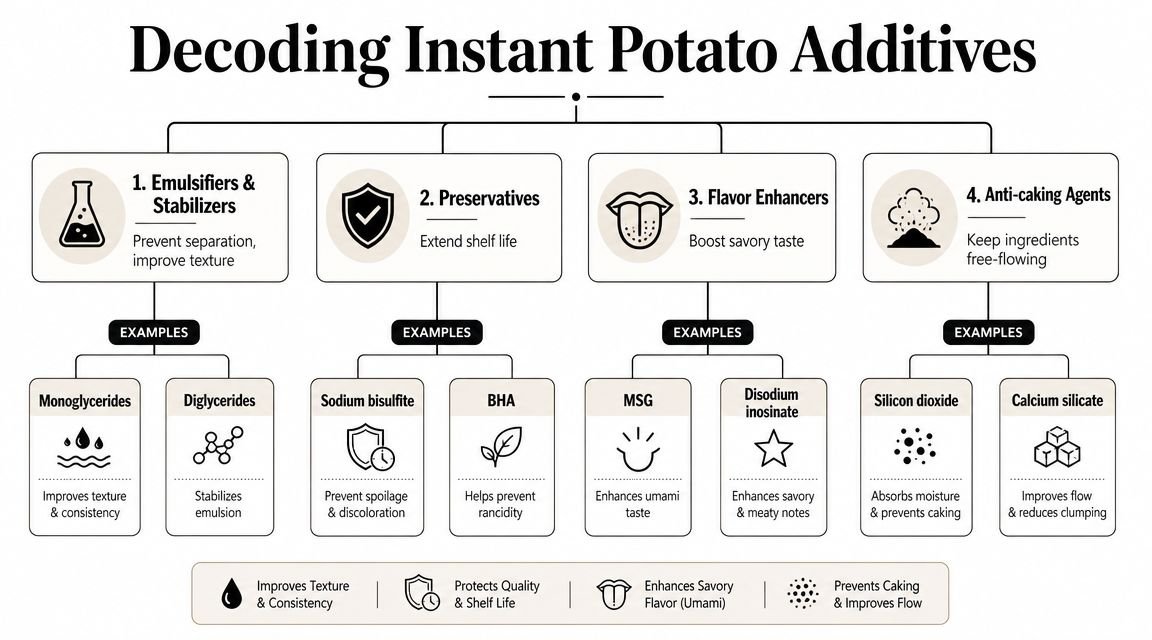
Once you get past the potato itself, the rest of the label usually makes more sense when you group ingredients by job. A typical formula can include dehydrated potato, mono- and diglycerides, preservatives such as sodium acid pyrophosphate and sodium bisulfite, and in more complex mixes, sunflower oil, corn syrup solids, salt, sodium caseinate, maltodextrin, natural flavor, and dipotassium phosphate, as shown on this commercial instant mashed potato ingredient panel.
Ingredients that help texture
The most intimidating names often belong to texture helpers.
Mono- and diglycerides are emulsifiers. In plain language, they help fat and water stay evenly dispersed during mixing. That means fewer oily spots, fewer lumps, and a creamier feel.
Sodium caseinate is a milk-derived ingredient. Its job is mostly about mouthfeel. It can make the potatoes seem richer and smoother, even before you add your own dairy.
Ingredients that help the mix behave
Some ingredients are there because manufacturers need the product to hydrate quickly and predictably.
Maltodextrin and corn syrup solids add bulk and help with dispersion. They can also make the mix feel smoother and more uniform. They aren't there because the company forgot how to make potatoes. They're there because a dry shelf-stable mix has to perform reliably when someone adds liquid in a hurry.
Ingredients that protect shelf life and appearance
At this stage, labels start to sound especially chemical, but the jobs are practical.
Sodium acid pyrophosphate helps preserve color. Potatoes naturally darken, and this ingredient helps keep the final product from looking gray or dull.
Sodium bisulfite, citric acid, and in some products BHA are used to preserve quality and shelf stability. Whether a person wants these ingredients is a personal choice, but their purpose is usually straightforward: keep the product stable, safe-looking, and consistent over time.
If you suspect you react badly to certain additives, it can help to read more about understanding food additive intolerance. The useful takeaway isn't panic. It's learning which ingredients deserve a closer look for your own body.
A simple cheat sheet
| Ingredient Category | Common Examples | Purpose in the Mix | What to Know (Nutrition/Allergens) |
|---|---|---|---|
| Texture helpers | Mono- and diglycerides | Help fat and water mix evenly | Often included for smoother texture |
| Dairy-based richness | Sodium caseinate | Improves mouthfeel | Milk-derived, matters for dairy avoidance |
| Bulk and fast hydration | Maltodextrin, corn syrup solids | Help the mix disperse and rehydrate | Can make a product feel more processed |
| Preservation and color | Sodium acid pyrophosphate, sodium bisulfite, citric acid, BHA | Help protect color and shelf stability | Some shoppers prefer to limit these |
| Flavor and seasoning | Salt, natural flavor, sunflower oil | Build taste and richness | Can change sodium and overall nutrition |
A long ingredient list isn't automatically worse. But it usually means the product is doing more than rehydrating potatoes.
How to Read an Instant Potato Label Like a Pro
You likely don't need a full ingredient lecture in the grocery aisle. You need a fast screen. The good news is that instant mashed potatoes ingredients vary a lot between brands. Some mixes stay close to potatoes plus a few processing aids, while others add oil, corn syrup solids, sodium caseinate, maltodextrin, phosphates, and several preservatives, as noted on this foodservice product page highlighting label differences.
Step one starts with the ingredient list
Look at the first few ingredients, not just the front of the package. If potatoes or dehydrated potato lead the list, you know what the product is built on.
If the list quickly expands into added oils, dairy ingredients, sweeteners, and many stabilizers, you're looking at more of a complete flavored mix than a plain flake product.
Step two checks what kind of convenience you're buying
There's a big difference between “potato flakes that need your own seasoning” and “fully built buttery mix.” Neither is wrong in itself. They just fit different goals.
Use this quick scan:
- Find the base first. Potatoes should be easy to spot.
- Look for built-in extras. Oil, sodium caseinate, maltodextrin, and flavorings tell you the product is doing more work for you.
- Watch sodium and serving details. That's where two similar-looking products can diverge in a way that matters to your tracking.
For broader practice with panels and ingredient lists, this guide on how to read nutrition labels is worth bookmarking.
Shorter labels aren't always “better,” but they are easier to understand and easier to log accurately.
Step three matches the label to your real needs
If you avoid dairy, scan for sodium caseinate. If you want something closer to plain potatoes, skip products built around flavor packets and richness enhancers. If sodium matters to you, compare the nutrition panel instead of assuming all instant potatoes are similar.
That last habit matters more than people think. The category is broad. Your best choice depends on whether you care most about speed, simplicity, allergens, or tighter macro tracking.
Choosing Healthier Instant Potato Alternatives
“Healthier” means different things to different people. For one person, it means fewer additives. For another, it means lower sodium. For a third, it means a product they can doctor up at home without starting from scratch.
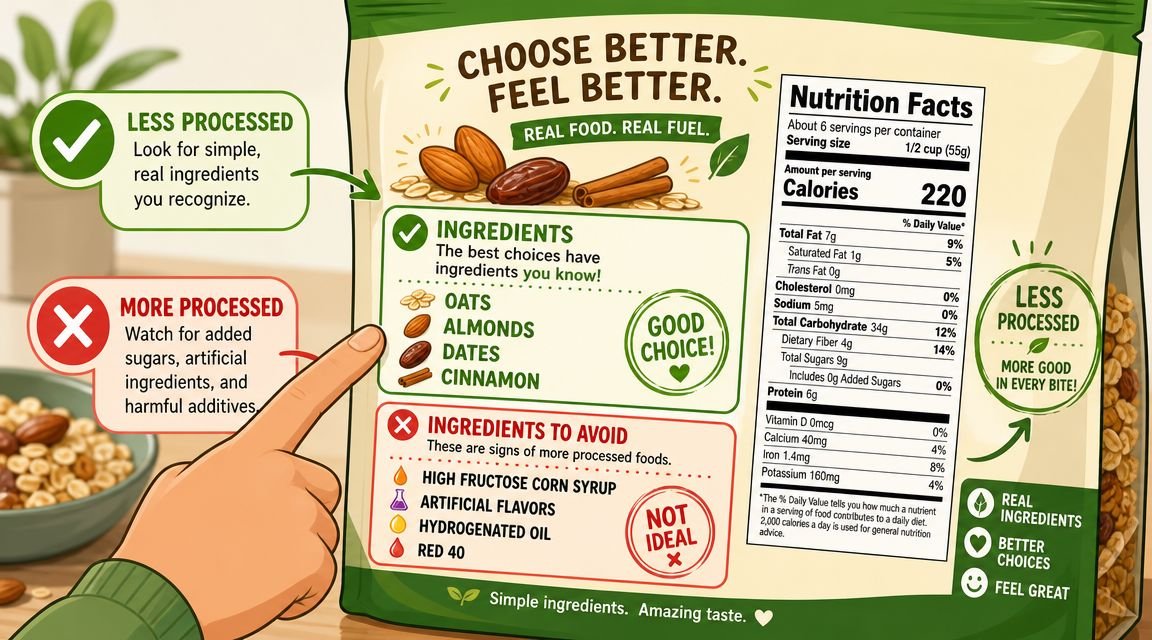
Some simpler commercial potato flake products are surprisingly minimal. One foodservice formula lists potatoes first, with only 2% or less of additives such as mono- and diglycerides and preservatives. That same product lists 80 calories per 1/2 cup and 15 mg of sodium per 1/2 cup, which you can see on this instant potato flakes product page.
What a cleaner option often looks like
A cleaner-label instant potato product usually has a short ingredient list centered on potato flakes, maybe salt, and a small number of processing aids. That can be a great middle ground if you want pantry convenience without the feel of a heavily built mix.
A more complex all-in-one version may be better if you want a ready-made buttery flavor. But it often gives you less control.
Side-by-side thinking helps
Here's a practical way to compare:
Plain flakes
- Better if you want to control salt, milk, butter, and seasonings yourself
- Easier to fit into different diets
- Often simpler to log because the base product is less “pre-combined”
Flavored complete mix
- Better if speed matters most
- Often creamier straight from the package
- More likely to include dairy ingredients, oils, and additional additives
If you want convenience and control, plain potato flakes are often the sweet spot.
Another useful alternative is to buy basic flakes and treat them like an ingredient rather than a finished side dish. That gives you a pantry shortcut without locking you into the manufacturer's full flavor system.
Create Your Own Clean Instant Mashed Potato Mix
If you like the idea of convenience but want full control, making your own pantry mix is the easiest solution. You don't need a factory-style formula. You just need a simple base that rehydrates well and tastes good.
A simple DIY mix
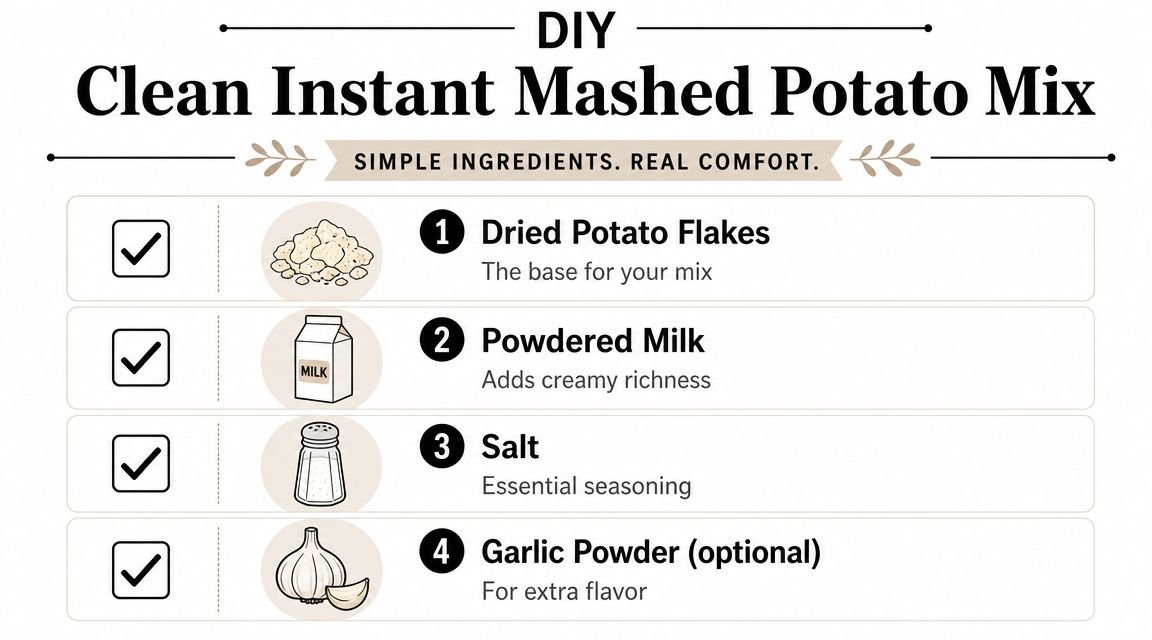
Start with these ingredients:
- Dried potato flakes for the base
- Powdered milk if you want built-in creaminess
- Salt for basic seasoning
- Garlic powder or onion powder if you want a little flavor
That's it. The beauty of this version is that every ingredient has a familiar job. Powdered milk plays a similar practical role to creamy dairy ingredients in store mixes. Salt makes the flakes taste like food, not wallpaper paste. Garlic or onion powder gives the mix personality.
A lot of home-preserving cooks use this same principle in other pantry staples: build from simple ingredients, then customize later. If you enjoy that style of kitchen prep, this guide on how to make jam without pectin is a good example of the same “less packaged, more control” mindset.
How to use it
Store the dry mix in a sealed container. When you want mashed potatoes, scoop out a portion, add hot water or milk, stir gently, then adjust.
If you want richer potatoes that day, add butter or sour cream when serving. If you want a lighter bowl, stick with water or a modest amount of milk. The base stays the same.
This walkthrough can also help if you prefer seeing a prep method before trying it:
Why homemade works so well for tracking
A DIY mix is easier to log because you know exactly what's in it. There's no mystery around hidden dairy solids, added oils, or flavoring systems. If you make your own blends often, this article on calculating calories in homemade food is especially useful.
That clarity is the main benefit. Not perfection. Just fewer surprises.
Logging Instant Mashed Potatoes Accurately for Your Goals
Instant potatoes are one of those foods that look simple in a tracker and get messy in real life. The box might seem like the whole story, but the final bowl often depends on what you added in the kitchen.
A recipe example from a cooking guide uses 2 cups milk + 2 cups chicken broth for 8 ounces of instant potatoes, then adds butter, sour cream, cream cheese, and seasonings, which you can see in this recipe discussion about making instant mashed potatoes taste better. That's a perfect example of why generic entries can miss the mark.
The best way to log them
Treat instant mashed potatoes as two separate things:
- Log the dry mix by brand or label
- Log the add-ins separately
If you prepared the flakes with water only, your entry will look very different from the same flakes made with milk, broth, butter, and cream cheese. The potato base didn't change. The meal did.
For people who track closely, that same principle applies across recipes. This explainer from Mise's blog on calculating calories in a recipe by ingredient does a good job showing why ingredient-by-ingredient thinking improves accuracy.
What people often miss
The most common logging mistake is choosing a generic “instant mashed potatoes prepared” entry and calling it done. That shortcut hides the biggest variables.
Use this mental checklist:
- Brand matters because ingredient formulations differ
- Preparation matters because milk, butter, broth, and sour cream can materially change the final nutrition
- Serving size matters because prepared volume depends on how much liquid you used
If you're also tracking fullness and digestion, it helps to remember that potato dishes don't behave exactly the same depending on fiber content and what's mixed in. This quick read on whether fiber has calories adds useful context when you're trying to understand why two starch-heavy sides can feel different.
The most accurate entry is rarely the shortest one. It's the one that reflects both the package and the pan.
If you want food logging to feel fast enough to do every day, PlateBird makes that part easier. You can type what you ate in plain language or snap a photo, then log meals without digging through endless database entries. That's especially helpful for foods like instant mashed potatoes, where the brand, mix, and add-ins all matter.