- 1. The Container Method (3-Component Meal Prep)
- 2. The Macro Cycling Approach
- 3. The Ratio-Based Meal Prep (Hands Method)
- 4. The Protein-First Meal Prep
- 5. The Modular Prep System (Mix-and-Match Components)
- 6. The Calorie Density Stacking Method
- 7. The Intermittent Fasting (IF) Meal Prep
- 8. Seasonal Plant-Based Whole-Foods Macro Prep
- 9. The Athletic Performance Periodized Prep
- 10. The Budget-Optimized Macro Prep (Cost-Per-Macro Framework)
- 10 Macro Meal Prep Methods Compared
- Your Blueprint for Effortless Nutrition
Imagine a week where every meal is delicious, perfectly aligned with your fitness goals, and requires zero thought. No more last-minute scrambles for something to eat, no more guessing your macros, and absolutely no more bland, repetitive dishes that make you dread lunchtime. This isn't a far-off dream; it's the direct result of strategic meal prepping.
But we're not talking about just cooking a mountain of plain chicken and rice. We're diving deep into ten powerful macro meal prep ideas that turn this weekly chore into a seamless part of your success story. Forget the one-size-fits-all approach. These are distinct systems designed for different lifestyles and goals, from the visual Container Method for beginners to the Athletic Performance Periodized Prep for serious competitors.
This guide is your complete playbook. We'll break down each approach with specific recipes, clear portioning guides, and practical tips for any goal, whether it's fat loss, muscle gain, or simple maintenance. We’ll show you exactly how to implement these methods to get back your time and accelerate your results.
Our goal: To make your nutrition work for you, not against you.
You'll also see how an app like PlateBird makes logging these prepped meals so fast-literally a single tap-that you'll never dread tracking again. Get ready to finally take control of your diet and build a routine that sticks. Your most organized, goal-crushing week starts now.
1. The Container Method (3-Component Meal Prep)
The Container Method is a cornerstone of structured macro meal prep ideas, celebrated for its simplicity and effectiveness. Popularized by evidence-based fitness experts like Dr. Layne Norton and Dr. Mike Israetel, this approach strips meal prep down to its essentials. You build each meal with three core components: a lean protein source, a complex carbohydrate source, and a fibrous vegetable source. This creates a predictable, repeatable system that makes hitting your daily macros almost effortless.
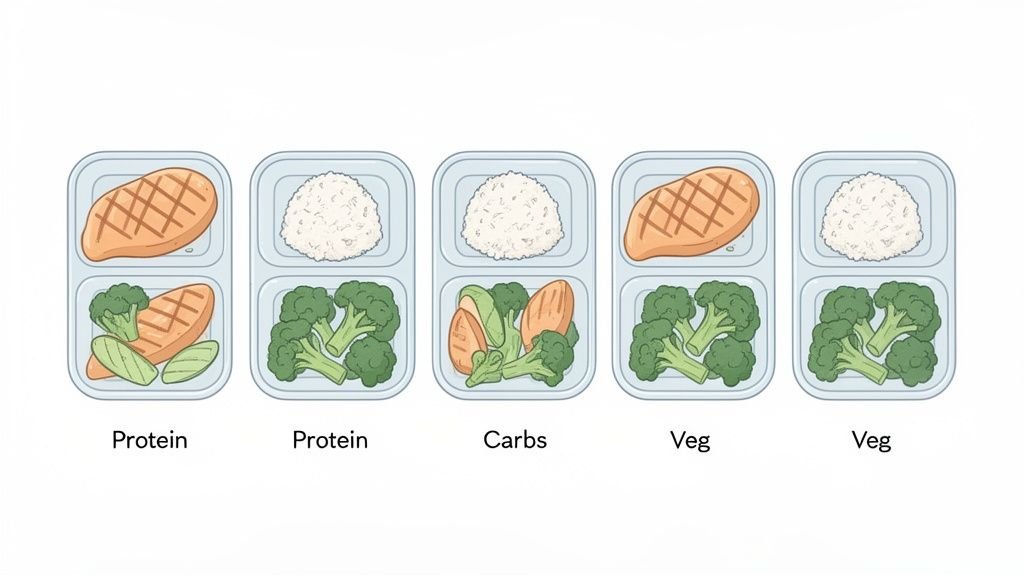
Imagine five identical containers lined up on your counter. Each one holds 6 ounces of grilled chicken, 1.5 cups of jasmine rice, and 2 cups of steamed broccoli. This isn't just a meal; it’s a perfectly balanced, macro-friendly unit that you can grab and go throughout the week. The consistency removes decision fatigue and guesswork, making it a favorite for bodybuilders, fitness competitors, and anyone seeking consistent results.
How to Implement The Container Method
Getting started is straightforward. You prepare large batches of each component and then assemble your containers. The key is consistent portioning, which is why a food scale is your best friend here.
- Protein: Batch cook sources like chicken breast, 93/7 ground turkey, lean steak, or tofu.
- Carbohydrates: Prepare large amounts of rice, quinoa, sweet potatoes, or whole-wheat pasta.
- Vegetables: Roast, steam, or sauté fibrous veggies like broccoli, asparagus, green beans, or bell peppers.
Pro Tip: Don't have a food scale handy? Use your hand as a rough guide. A palm-sized portion for protein, a fist for carbs, and two cupped handfuls for vegetables is a great starting point for a balanced meal.
Once your containers are prepped, logging them is simple. Use an app like PlateBird to scan one meal with its photo recognition feature, adjust the macros, and save it as a custom meal. The next day, you can log the exact same meal with a single tap. This system works exceptionally well because it prioritizes efficiency, ensuring you spend less time tracking and more time living. Store meals in airtight glass containers with a date label; they'll stay fresh for 4-5 days in the fridge.
2. The Macro Cycling Approach
The Macro Cycling Approach is a more dynamic strategy for macro meal prep ideas, designed for those whose energy needs fluctuate. Pioneered by nutrient timing authorities like Lyle McDonald and John Meadows, this method involves varying your daily macronutrient intake, primarily carbohydrates, to match your activity level. You'll eat more carbs on training days to fuel performance and replenish glycogen, and fewer on rest days when your energy demands are lower.
This flexible system allows you to optimize both muscle growth and fat loss without feeling overly restricted. For example, an athlete might have a meal with 6 ounces of chicken, 2 cups of rice, and vegetables on a heavy lifting day, but reduce the rice to just 1 cup on a rest day. Protein and fats often remain consistent, making the only variable the carb source. This approach supports both performance and recovery with precision.
How to Implement The Macro Cycling Approach
Success with this method hinges on preparing components separately. This allows for quick, mix-and-match meal assembly based on the day's requirements. Your protein, fat, and vegetable portions stay the same, while your carb portions change.
- Prep Components: Batch cook your protein (e.g., ground turkey, salmon) and veggies (e.g., asparagus, bell peppers) as usual. Cook your carbohydrate sources (rice, potatoes, quinoa) in a separate large batch.
- Establish Portions: Define your "High-Carb" and "Low-Carb" meal templates. For instance, a training day lunch might be 150g carbs, while a rest day lunch is only 80g.
- Assemble Daily: Each morning or the night before, assemble your containers for the day according to your training schedule.
Pro Tip: Use PlateBird to create two separate custom meal entries: "Training Day Lunch" and "Rest Day Lunch." Log your base meal, then simply adjust the carbohydrate portion for each version. This allows you to track your intake with a single tap, saving valuable time.
This method is ideal for athletes or anyone looking to maximize performance while managing body composition. By aligning your nutrition with your daily output, you can fuel your body effectively without derailing your goals. To refine your approach, you can learn more about how to count macros and find the optimal carb thresholds for your body over a few weeks of tracking.
3. The Ratio-Based Meal Prep (Hands Method)
The Ratio-Based Meal Prep, often called the "Hands Method," is one of the most intuitive and accessible macro meal prep ideas, perfect for those who want balance without the burden of a food scale. Popularized by organizations like Precision Nutrition and embraced in practical fitness circles like CrossFit, this approach uses your own hands as a portable portioning tool. Each meal is built using a simple ratio: one palm of protein, one fist of carbohydrates, two cupped handfuls of vegetables, and one thumb of fat.
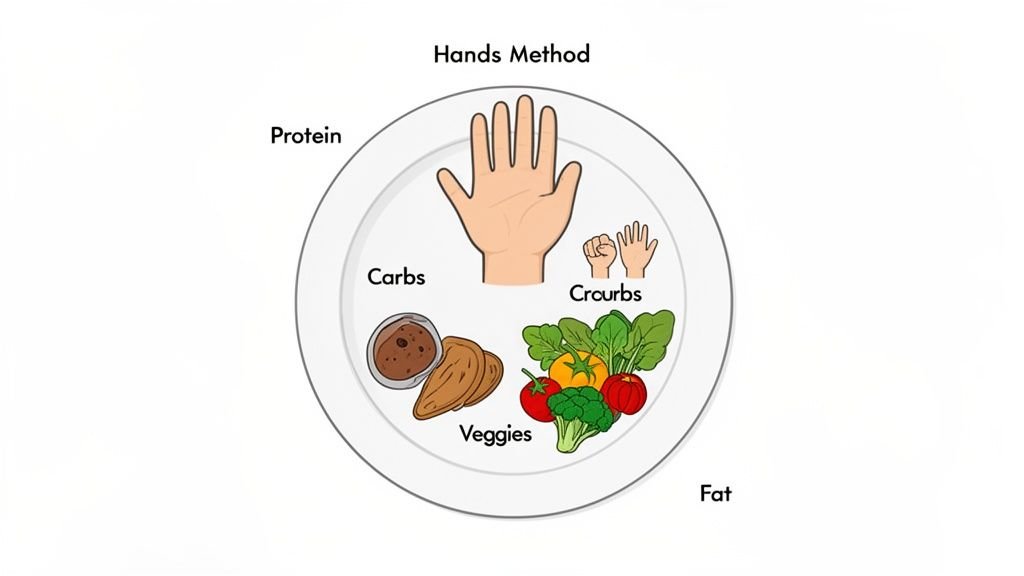
This method frees you from the meticulous weighing and measuring that can feel restrictive. Instead of grams and ounces, you're working with a personalized, consistent guide that scales with your body size. A lunch could be a palm-sized portion of salmon, a fist of roasted sweet potato, two handfuls of broccoli, and a thumb-sized serving of chopped nuts. It’s a beautifully simple system for creating well-rounded meals whether you’re at home or eating out.
How to Implement The Hands Method
Mastering this method is all about visualization and consistency. You still batch-cook your ingredients, but assembly becomes a fluid process of "eyeballing" portions based on your hand-guides.
- Protein: Aim for a portion that matches the size and thickness of your palm (e.g., chicken, salmon, tofu, chickpea curry).
- Carbohydrates: Portion a serving about the size of your clenched fist (e.g., oatmeal, rice, quinoa).
- Vegetables: Include a generous serving that would fill two of your cupped hands (e.g., spinach, dal, asparagus).
- Fats: Add a dense source of fat approximately the size of your thumb (e.g., olive oil, coconut oil, avocado).
Pro Tip: Establish a personal baseline. For one week, measure your hand-portioned meals with a scale and log them. This will show you the actual average macros you’re consuming, allowing you to make small adjustments to better align with your specific goals.
Logging these meals is also straightforward. Snap a photo of one of your plated meals and use PlateBird to get a macro estimate. You can then save this as a custom meal named "Balanced Hand-Portion Meal." The next time you prep a similar meal, you can log it with a single tap, making it ideal for those focused on general health and sustainable habits rather than precise macro targets.
4. The Protein-First Meal Prep
The Protein-First Meal Prep strategy flips the traditional meal-building script on its head. Instead of balancing everything at once, this approach prioritizes hitting your daily protein target first and foremost. Championed by experts like Eric Helms and Layne Norton, it's a powerful tool for muscle retention, satiety, and body recomposition. The core idea is to secure your protein intake for the day, then fill the rest of your calorie budget with carbohydrates and fats as needed.
This method works because protein is the most satiating macronutrient and is crucial for repairing and building muscle tissue, especially during a calorie deficit. For example, a 180-pound person aiming for 200 grams of protein might first allocate their protein sources across their meals: 5 ounces of chicken breast in four separate meals, supplemented with a Greek yogurt and cottage cheese snack. This ensures the most important macro goal is met before anything else.
How to Implement The Protein-First Method
Success with this strategy comes from planning your protein sources before you even think about carbs or fats. A food scale is essential for precision, as hitting a specific gram target is the main objective.
- Set Your Protein Goal: First, determine your daily protein target. A common recommendation is 1.6 to 2.2 grams per kilogram of body weight.
- Batch-Prep Protein: Cook large batches of your primary protein sources. This could be grilled chicken, 93/7 ground turkey, baked tofu, or hard-boiled eggs.
- Allocate & Fill: Divide your cooked protein among your meal prep containers. From there, add carbs and fats to meet your remaining calorie and macro goals. For fat loss, this might mean adding low-calorie, high-volume vegetables. For muscle gain, you might add more rice or healthy fats like avocado.
Pro Tip: For a vegetarian approach, hitting a high protein target requires combining multiple sources. A day's worth of protein could come from a mix of tofu, tempeh, lentils, chickpeas, and a high-quality protein powder.
Logging this style of prep is efficient in an app like PlateBird. You can set a prominent daily macro goal for protein and create shortcuts for your staple protein portions, like "6oz Chicken Breast," to log them instantly. This approach to macro meal prep ideas is particularly effective because it guarantees you're fueling muscle growth and recovery. To dive deeper into planning your meals this way, check out our guide to high-protein meal prep.
5. The Modular Prep System (Mix-and-Match Components)
The Modular Prep System offers a flexible approach to macro meal prep ideas, perfect for anyone who craves variety without sacrificing consistency. Instead of assembling identical meals for the week, you prepare large batches of individual proteins, carbohydrates, and vegetables separately. Each day, you simply mix and match these pre-portioned components to build a new meal, preventing flavor fatigue while keeping your macros in check.
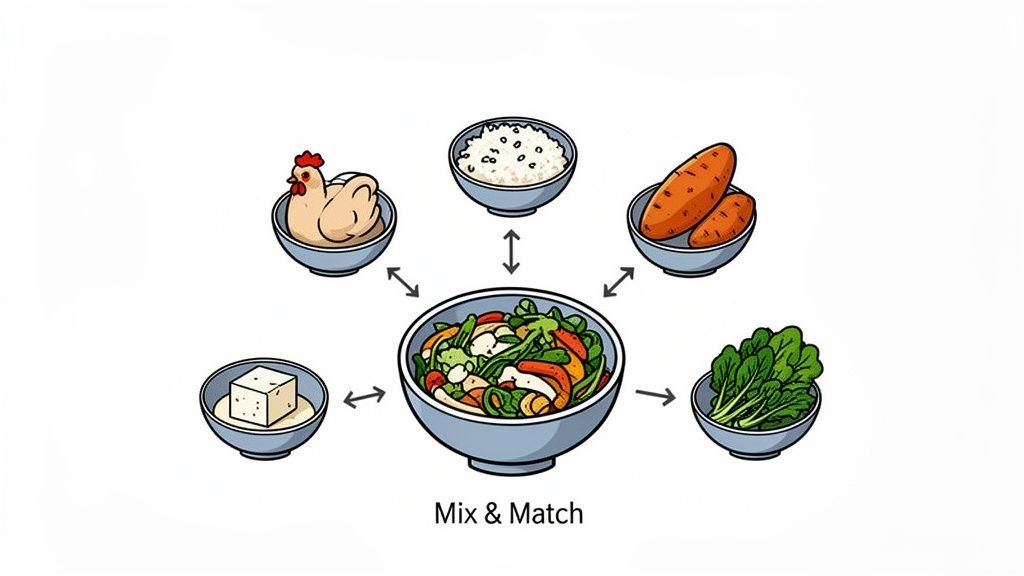
This method, championed by platforms like Meal Prep on Fleek and Budget Bytes, gives you the freedom to build a meal based on your daily cravings. On Monday, you might combine grilled chicken, brown rice, and broccoli. By Tuesday, you could switch to ground turkey with sweet potatoes and spinach. The components are ready and waiting; all that’s left is the assembly, which takes mere minutes.
How to Implement The Modular Prep System
Success with this system relies on organized batch prepping. Dedicate specific times to cook each food group, storing them in separate, clearly labeled containers. A food scale is crucial for portioning each component accurately before storage.
- Proteins: Prepare multiple options like grilled chicken, salmon fillets, ground turkey, and hard-boiled eggs.
- Carbohydrates: Cook batches of brown rice, farro, quinoa, and roasted sweet potato chunks.
- Vegetables & Toppings: Chop and store raw or cooked veggies like bell peppers, carrots, and spinach.
Pro Tip: Create individual entries in your PlateBird app for each prepped component (e.g., "Grilled Chicken 6oz," "Brown Rice 1.5 cup"). When you assemble your meal, you can quickly add the separate items to log your macros in seconds.
To make tracking even faster, create combination shortcuts. For example, a "Modular Bowl 1" shortcut could automatically log your standard chicken, rice, and broccoli serving. Labeling each container with the prep date and macro info ensures you can grab what you need and build a perfectly balanced meal without a second thought. This system is ideal for those who get bored easily but still need a reliable structure for hitting their nutritional goals.
6. The Calorie Density Stacking Method
The Calorie Density Stacking Method is a strategic approach to macro meal prep ideas designed for maximum satiety. Championed by nutrition experts like Barbara Rolls and Don Saladino, this method involves building meals from a base of low-calorie, high-volume foods and then "stacking" on calorically dense sources in measured amounts. This allows you to feel full and satisfied on fewer calories, making it a powerful tool for weight management without the feeling of deprivation.
This technique is all about smart food pairing. You anchor your meal with lean protein and fibrous vegetables, which take up a lot of space on your plate and in your stomach for very few calories. Then, you strategically add fats and carbohydrates to meet your energy and macro needs. This fixed-ratio system makes adjusting meals for different goals, like cutting or maintenance, incredibly simple.
How to Implement The Calorie Density Stacking Method
Start by building your high-volume base, then carefully measure and add your dense components. A food scale is essential for accuracy with calorie-dense additions like oils, nuts, and grains, where small miscalculations can significantly impact your totals.
- Weight Loss Meal: Start with 8oz of chicken and 3 cups of broccoli. Stack on 1 tablespoon of olive oil. The result is a highly satiating 400-calorie meal.
- Maintenance Meal: Use the same base (8oz chicken, 3 cups broccoli) and stack on 1 cup of rice and 1 ounce of nuts for a balanced 650-calorie meal.
- Bulking Meal: Build on the maintenance meal by increasing the dense items. Use the same base but add 2 cups of rice, 2 tablespoons of olive oil, and 1 ounce of nuts for a substantial 950-calorie meal.
Pro Tip: Create a meal template in PlateBird called "High-Volume Bowl Base" that only includes your protein and veggies. When you build your meal, log the base and then add your measured dense components (rice, oil, nuts) on top for precise tracking.
This method teaches you the fundamentals of how to count calories by focusing on food volume. Once you plate your meal, you can use PlateBird's photo recognition to identify the different components and their portion sizes, which helps reinforce your understanding of calorie density. Rotate your low-calorie vegetable choices weekly to keep your meals interesting and nutrient-diverse.
7. The Intermittent Fasting (IF) Meal Prep
The Intermittent Fasting (IF) Meal Prep approach is specifically designed for those who compress their eating into a defined window. Popularized by pioneers like Martin Berkhan of Leangains and Dr. Jason Fung, this method focuses on preparing one or two larger, nutrient-dense meals that fulfill your entire day’s macro requirements. It’s a powerful strategy for simplifying your day, reducing cooking time, and aligning your nutrition with fasting protocols like 16:8 or One Meal a Day (OMAD).
Instead of five or six small meals, your counter might have just two large containers. One could be a massive serving of salmon with avocado, quinoa, and roasted asparagus for your first meal, with the second being a high-protein Greek yogurt bowl loaded with nuts, seeds, and berries. This method supports fasting by making your eating window incredibly efficient and satisfying, which is a key component of these macro meal prep ideas.
How to Implement The Intermittent Fasting (IF) Meal Prep
Success with IF meal prep hinges on nutrient density and strategic planning. You need to pack all your required protein, carbs, and fats into fewer meals without feeling overly stuffed or deprived. A food scale is critical here to ensure you hit your macro targets accurately in each large meal.
- 16:8 Protocol: Prep two meals, each containing roughly 50% of your daily macros. For example, a 12 PM "break-fast" meal and a 5 PM dinner.
- OMAD (One Meal a Day): Prepare one very large meal that contains 100% of your daily calories and macros. This requires focusing on calorie-dense foods like oils, fatty proteins, nuts, and avocados to make the volume manageable.
- Nutrient Density: Prioritize whole foods. Your limited meals must deliver not only macros but also essential micronutrients, so a balance of lean proteins, complex carbs, healthy fats, and fibrous vegetables is crucial.
Pro Tip: When breaking your fast, start with your protein and vegetable source before moving on to carbohydrates. This can help manage blood sugar response and improve satiety, making it easier to stick to your feeding window.
Logging your IF prep with PlateBird is remarkably simple. You can create a custom meal for your first large meal, then another for your second. If you’re on an OMAD plan, you just log one single, comprehensive meal. This makes daily tracking take just a few seconds, freeing you up to focus on your fast and your day. Store these larger meals in well-sealed containers to maintain freshness for 3-4 days.
8. Seasonal Plant-Based Whole-Foods Macro Prep
This approach blends the discipline of macro tracking with the philosophy of eating whole, seasonal, plant-based foods. Championed by experts like Dr. Michael Greger and plant-based athletes like Nimai Delgado, it adapts your meal prep to what’s fresh and available. It’s a flexible system that prioritizes nutrient-dense, minimally processed ingredients while still methodically hitting your protein, carb, and fat targets.
Think of it as macro meal prep with a farmer's market guide. Instead of the same chicken and rice year-round, your menu changes with the seasons. A spring prep might feature asparagus, peas, and quinoa, while a winter rotation would include roasted butternut squash, kale, and farro. This variety not only keeps your meals interesting but also diversifies your micronutrient intake, which is crucial for a thriving plant-based diet. The core challenge, which this method solves, is getting complete protein and balanced macros from a shifting menu.
How to Implement Seasonal Plant-Based Prep
Success with this method comes from smart planning and bulk preparation of foundational plant-based components. You’ll build your meals around what you find at the market.
- Build a Macro Swap List: Create a list of "macro-equivalent" foods. For example, if your plan calls for 40g of carbs, you know you can swap 1 cup of brown rice for 1 cup of cooked farro or quinoa.
- Pair Your Proteins: To ensure a complete amino acid profile, pair complementary proteins. Lentil dal with rice is a classic, providing around 15g of protein per cup. A base of hemp seeds, quinoa, and a legume like chickpeas can easily deliver 20-25g of complete protein per serving.
- Batch Cook Legume Bases: Cook large batches of lentils, chickpeas, and black beans. Portion and freeze them so you can quickly add a high-quality protein and fiber source to any seasonal meal.
Pro Tip: Plan in two-week rotations instead of four-week blocks. This allows you to adapt to new produce as it comes into season without constant overhauls. Also, ensure you have a reliable source of Vitamin B12, like nutritional yeast or fortified plant milk.
When you bring home your seasonal finds, use PlateBird to quickly log your new creations. Take a photo of your meal-prepped container of zucchini, heirloom tomatoes, and a plant-based chicken alternative. The app's photo recognition gives you a starting point to adjust the macros for your new seasonal favorite, making these delicious macro meal prep ideas easy to track.
9. The Athletic Performance Periodized Prep
The Athletic Performance Periodized Prep is a sophisticated strategy for serious athletes and lifters who want to align their nutrition directly with their training cycles. This method, influenced by the work of experts like Dr. Mike Israetel and Lyle McDonald, synchronizes your macro meal prep ideas with distinct training phases such as hypertrophy, strength, endurance, or deloads. Your calorie and macro targets shift weekly or monthly to precisely fuel performance, optimize recovery, and drive specific body composition changes.
This approach goes beyond static daily targets. During a high-volume hypertrophy phase, your meals might be larger to support muscle growth, totaling 3,000 calories with higher carbs. When you transition to a strength phase, calories and carbs might dip slightly to 2,800 while protein remains high to support neural adaptations. For a deload week, portions shrink further to match reduced energy expenditure, aiding recovery without accumulating unwanted body fat. This dynamic system ensures your nutrition is always working in concert with your training goals.
How to Implement Periodized Prep
Success with this method depends on planning your prep around your training calendar. You'll adjust meal components and volumes as you move from one phase to the next, keeping your nutrition perfectly dialed in. A food scale is non-negotiable for the precision required.
- Hypertrophy Phase: Larger portions of carbs and moderate fat to fuel high-volume training (e.g., 350g carbs, 85g fat).
- Strength Phase: High protein with slightly reduced carbs to support strength gains (e.g., 230g protein, 300g carbs).
- Endurance Phase: Very high carbs to maximize glycogen stores for prolonged activity (e.g., 350g carbs, 60g fat).
- Deload/Recovery Phase: Reduced overall calories and carbs to match lower activity levels (e.g., 200g carbs, 60g fat).
Pro Tip: Create separate meal shortcuts in your tracking app for each phase. A "Hypertrophy Breakfast" might have a full cup of oats, while a "Deload Breakfast" has only half a cup. This makes logging your meals nearly instant when you transition between training blocks.
To stay organized, adjust your daily macro targets in PlateBird at the start of each new training phase. By preparing meals that align with these targets, you can simply grab the appropriate container for that day. Tracking performance metrics like strength increases or recovery alongside your nutritional data in PlateBird will give you a clear picture of how your periodized prep is fueling your progress. Store your phase-specific meals in labeled containers for up to 5 days.
10. The Budget-Optimized Macro Prep (Cost-Per-Macro Framework)
The Budget-Optimized Macro Prep is a tactical approach to nutrition that prioritizes affordability without sacrificing your fitness goals. Popularized by creators like Budget Bytes and supported by the cost-benefit analysis of nutrition experts like Eric Helms, this framework shifts your focus from just the food itself to the cost per gram of each macronutrient. It's one of the most practical macro meal prep ideas for anyone on a tight budget, proving that hitting your numbers doesn't have to be expensive.
This method involves creating a simple cost analysis to identify the most economical sources of protein, carbs, and fats. For instance, you might find that chicken leg quarters at $1.00 per pound offer protein at just $0.01 per gram, while eggs at $0.25 each provide it for $0.04 per gram. This data empowers you to build your grocery list around the most cost-effective ingredients, ensuring every dollar spent maximizes your nutritional return.
How to Implement The Budget-Optimized Macro Prep
Getting started requires a little math, but the savings are well worth the effort. A simple spreadsheet is your best tool for calculating the cost-per-macro of your favorite foods.
- Calculate Cost-Per-Macro: For each food item, divide the price by the total grams of the target macronutrient. For a $1 can of tuna with 20g of protein, the cost is $0.05 per gram of protein.
- Prioritize Inexpensive Staples: Build your meals around foods that consistently rank as the cheapest. Think bulk lentils, chicken leg quarters, eggs, oats, and potatoes.
- Buy in Bulk and on Sale: When you see a great price on a staple protein like chicken or ground turkey, buy a large quantity and freeze it for future meal preps.
Pro Tip: Don't overlook store brands and bulk bins. They often provide the same nutritional value as name-brand products for a fraction of the price, significantly lowering your overall grocery bill.
To make tracking simple, log these budget-friendly meals in PlateBird. Once you've created a few go-to cheap and macro-friendly meals, you can save them as custom entries. This builds a "budget meal bank" you can pull from each week, making it quick and easy to log your food without having to re-calculate every time.
10 Macro Meal Prep Methods Compared
| Method | 🔄 Implementation Complexity | ⚡ Resource & Time Efficiency | 📊 Expected Outcomes | 💡 Ideal Use Cases | ⭐ Key Advantages |
|---|---|---|---|---|---|
| The Container Method (3-Component Meal Prep) | Low — fixed compartments and routine prep (2–3 hrs/week) | High — quick daily meals, needs containers and upfront time | Predictable macro adherence and consistent portion control | Fitness enthusiasts, busy professionals, first-time trackers | Repeatable, easy to log with PlateBird, reduces decision fatigue |
| The Macro Cycling Approach | Medium — plan multiple daily macro variations | Medium — more prep variations and planning required | Better performance alignment and flexible body-composition control | Athletes, experienced trackers wanting fueling flexibility | Optimizes recovery/performance while supporting long-term adherence |
| The Ratio-Based Meal Prep (Hands Method) | Low — visual, no scales or complex tracking | High — minimal tools, fast portions, less precision | Good general health outcomes; ±10% macro variance | Beginners, parents, on-the-go eaters, coaches teaching portions | Intuitive and portable; quick validation with PlateBird photos |
| The Protein-First Meal Prep | Medium — prioritize protein then adjust carbs/fats | Medium — batch protein prep; slightly higher food cost | Increased satiety, muscle retention, effective recomposition | Weight-loss seekers, muscle builders, busy professionals | Research-backed; simplifies priorities; PlateBird highlights protein |
| The Modular Prep System (Mix-and-Match) | Medium–High — organize multiple prepped components | High — prep once, assemble daily; needs storage and labeling | High variety with consistent macros and improved adherence | Families, variety-seekers, flexible meal preppers | Maximum variety with minimal repeated cooking; easy PlateBird shortcuts |
| Calorie Density Stacking Method | Medium — plan low-volume vs dense-food ratios | High — eat high-volume for less calories; measure dense items | Maximal satiety per calorie; effective for weight loss adherence | Weight-loss seekers, appetite-prone eaters, satiety-focused clients | Eat larger volumes while in deficit; pairs well with PlateBird volume logging |
| Intermittent Fasting (IF) Meal Prep | Low–Medium — fewer meals but higher per-meal density | High — fewer items to prep/log, meals are larger and denser | Simplified tracking and potential adherence benefits; may be uncomfortable | Time-restricted eaters, busy professionals, fasting practitioners | Fewer meals to log; streamlined routine and reduced decision points |
| Seasonal Plant-Based Whole-Foods Macro Prep | High — weekly swaps, protein complementation, micronutrient planning | Medium — lower cost but more shopping and planning effort | Improved nutrient density, lower cost, may need supplements | Vegetarians/vegans, eco-conscious, budget-aware preppers | Fresh, seasonal variety with high fiber and phytonutrients; PlateBird-friendly |
| Athletic Performance Periodized Prep | High — synchronize macros with training phases and volumes | Medium–Low — variable food volumes, higher cost in surplus phases | Optimized performance, recovery, and phase-specific body composition | Competitive athletes, serious lifters, performance-focused trainees | Science-backed periodization that prevents plateaus and aids progress |
| Budget-Optimized Macro Prep (Cost-Per-Macro) | Medium — cost calculations and sale-driven planning | Very high — minimizes cost per macro via bulk buying | Achieves macro goals affordably; possible tradeoffs in variety/quality | Students, low-income individuals, budget-conscious meal preppers | Maximizes protein/carbs/fat value per dollar; supports sustainable budgeting |
Your Blueprint for Effortless Nutrition
You've just walked through a comprehensive toolkit of ten powerful strategies, each offering a unique approach to conquering your nutrition. This collection of macro meal prep ideas isn't meant to be a rigid prescription, but rather a flexible blueprint you can adapt to build a system that truly serves you. The goal was never to present a single, "perfect" method. Instead, it was to show you the sheer variety of paths available, proving that there is a sustainable approach for every lifestyle, budget, and goal.
From the visual simplicity of the Ratio-Based Hands Method to the strategic complexity of the Athletic Performance Periodized Prep, each framework offers a distinct advantage. You might be drawn to the efficiency of the Modular Prep System, relishing the ability to mix-and-match components on the fly. Or perhaps the cost-conscious, data-driven nature of the Budget-Optimized Prep aligns perfectly with your analytical mind. The key is recognizing that you don't need to do it all. You just need to find what works for you.
Turning Knowledge into Action
The gap between knowing and doing is where most people falter. Don't let the wealth of information paralyze you. The most important step you can take right now is to choose one method and commit to it for the next two weeks.
- If you're a beginner: Start with the Container Method or the Protein-First approach. Their simplicity provides structure without being overwhelming, allowing you to build foundational habits.
- If you're an experienced tracker: Experiment with Macro Cycling or the Modular Prep System. These offer more flexibility and can help break through plateaus or simply add variety to your routine.
- If you're on a tight budget: The Budget-Optimized framework is your go-to. It reframes meal prep not just as a health tool, but as a financial one.
Remember, the initial setup is the hardest part. Once you've completed your first weekly prep using one of these systems, the process becomes exponentially easier. The mental energy you once spent worrying about what to eat for lunch or how to hit your protein target is suddenly freed up. That is the real power of a solid meal prep routine.
Key Insight: Consistency is not about willpower; it's about system design. A good meal prep system removes friction, making the right choice the easiest choice. Your "aha" moment will be when you realize you're hitting your macros on autopilot.
The True Impact of Mastering Your Meals
This journey is about so much more than perfectly portioned containers and balanced macros. It’s about taking back control. It’s about fueling your body with intention, whether your goal is to lose weight, build muscle, or simply feel more energetic throughout your day. When your nutrition is dialed in, every other aspect of your life feels the positive ripple effect. Your workouts become more productive, your focus at work sharpens, and your confidence grows.
The macro meal prep ideas laid out in this article are your vehicle. They are designed to get you from Point A, where you might feel frustrated and inconsistent, to Point B, where nutrition is a source of strength and empowerment. The final piece of the puzzle is making the tracking process just as seamless as the prepping process. That’s where a tool built for this exact workflow becomes invaluable. By logging your pre-portioned meals with a quick photo or a single tap, you close the loop, making the entire system effortless from start to finish. The path to your goals is paved with the small, consistent actions you take every day, and an effective meal prep system is what makes those actions second nature.
Ready to make tracking your prepped meals as simple as eating them? PlateBird turns your macro-perfect creations into one-tap loggable entries, so you spend less time on your phone and more time living your life. Get started with PlateBird today and see how effortless accountability can be.