Heard the advice "just eat less"? It’s frustratingly simple and utterly unhelpful. Real, successful meal planning for weight loss isn't about restriction; it's about taking back control. A solid plan is your secret weapon against decision fatigue and those late-night takeout temptations. It lays out a clear path, making your goals feel less like a dream and more like a destination.
Why Meal Planning Is Your Secret to Sustainable Weight Loss
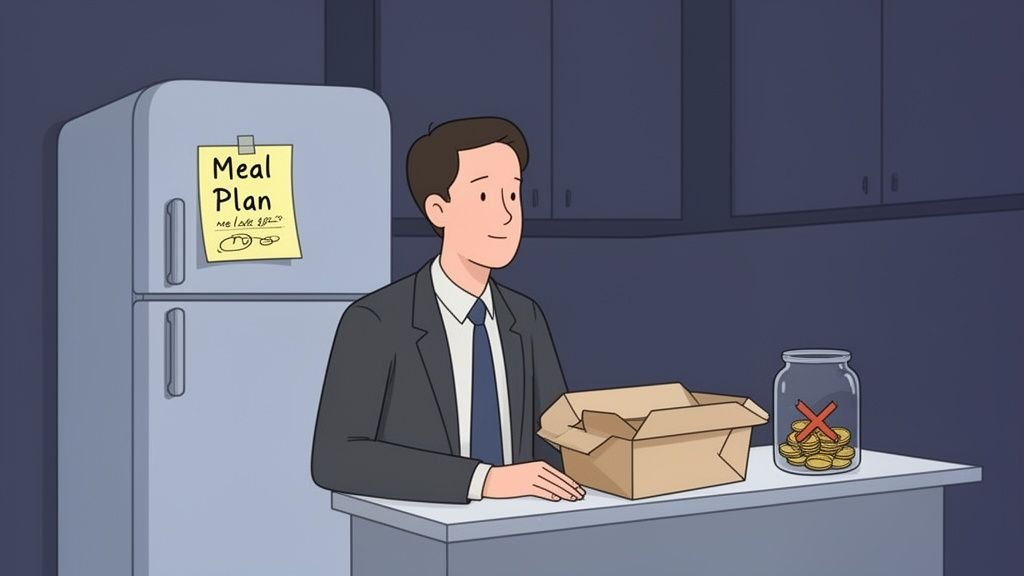
Let's be real—the thought of meal planning can sound rigid, maybe even a little soul-crushing. But what if you thought about it differently? It's not a chore; it’s the single most powerful tool you have for getting results that actually stick. It’s the difference between hoping for weight loss and actively engineering it.
Think about it. You’ve had a long, draining day at work. The last thing you want to do is stare into the fridge and figure out a healthy meal from scratch. That's the moment the pizza delivery app starts calling your name. Meal planning cuts off that internal debate before it even starts. The healthy choice becomes the easy choice.
More Than Just Calories and Control
The benefits go so much deeper than just hitting your calorie goals. When you have a plan, you bring a sense of order and predictability to your week. This frees up an incredible amount of mental energy you probably didn't even realize you were spending just thinking about food.
Here’s what a little planning really does for you:
- Kills Decision Fatigue: No more "what's for dinner?" debates. You already know.
- Saves Serious Cash: A plan means a smarter grocery list. You buy only what you need, which means less food waste and fewer impulse buys.
- Boosts Your Nutrition: Planning ahead is how you build truly balanced meals packed with the protein, fiber, and nutrients your body needs to thrive.
The real magic of meal planning is how it builds confidence. Every prepped meal is a small win—a promise you keep to yourself that reinforces your commitment to your health.
A Proven Strategy That Lasts
This isn't some new fitness fad. It's a time-tested strategy with the science to back it up. Structured meal programs have been delivering results for decades. Early participants in programs like Weight Watchers consistently achieved 5-10% body weight loss, with a remarkable 40% keeping it off a year later. That’s a world away from unstructured diets, where most people regain the weight they lose.
It’s no surprise that the global weight loss market, which leans heavily on meal planning, is projected to hit $45.43 billion by 2030. With over 1 billion adults classified as obese in 2022, the need for effective, sustainable strategies is clear. You can dig into some of the data behind these structured diet programs on GlobeNewswire.
By embracing meal planning, you’re not just starting another diet. You’re building a system for your life—one that gives you control, saves you money, and creates the consistency you need for real, lasting change.
Setting Your Personal Calorie and Macro Targets
So, you're ready to get serious about meal planning for weight loss? That's the best decision you can make. But before you dive headfirst into collecting recipes, we need to lay the groundwork. I've seen countless people get frustrated because they skip this part, and it's the one thing that truly sets you up for success.
We need to figure out your personal roadmap: your calorie and macro targets. Think of it as setting the destination in your GPS. Without it, you're just driving, hoping you end up somewhere you want to be.
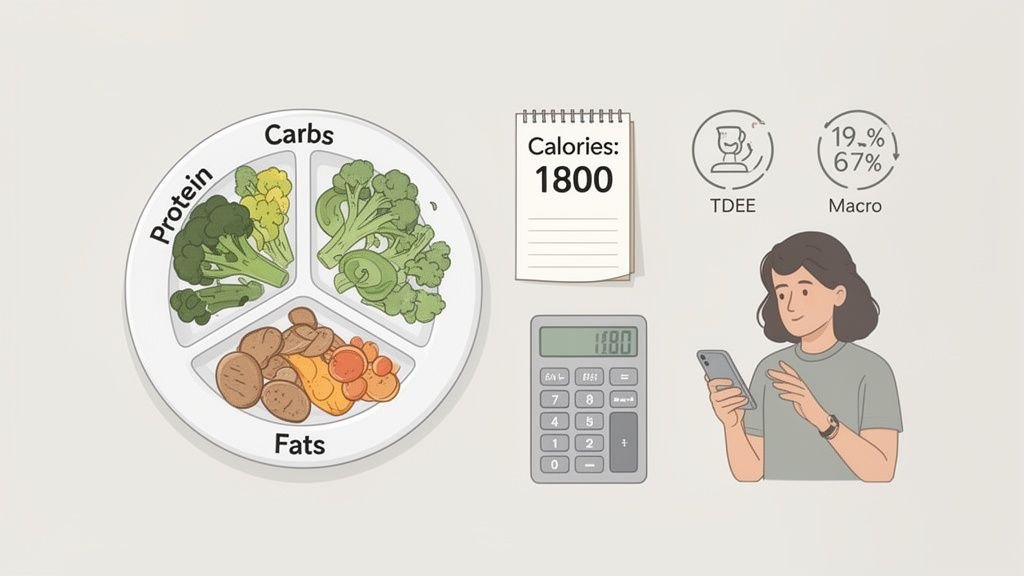
The very first number we need is your Total Daily Energy Expenditure (TDEE). It sounds technical, but it’s simply how many calories your body burns in a typical day—from sleeping to walking the dog to hitting the gym. There are plenty of free TDEE calculators online that will give you a solid estimate based on your age, height, weight, gender, and activity level.
Go find that number. It’s the key to everything else.
Creating a Sustainable Calorie Deficit
Once you have your TDEE, the magic happens by creating a small, consistent calorie deficit. This just means eating slightly fewer calories than your body burns, which signals it to start using stored body fat for fuel.
For steady, sustainable loss, the sweet spot is a deficit of 300-500 calories per day. For instance, if your TDEE is around 2,200 calories, you’d set your daily goal between 1,700 and 1,900 calories. This gentle approach typically results in losing about 0.5 to 1 pound per week—a pace that prevents burnout and muscle loss.
Trust me on this one: a small, consistent deficit is infinitely better than a drastic, all-out cut. Extreme calorie restriction almost always backfires, leading to miserable hunger, nutrient gaps, and quitting altogether.
This planned approach is what separates long-term success from another failed diet attempt. We know that while nearly half of Americans go on a diet each year, only about 20% manage to keep the weight off. The missing piece is almost always the plan. Having a clear target from day one puts you in that successful 20%.
Why Macros Matter More Than Just Calories
Okay, so you have your calorie number. But here's where we get a bit more strategic. Not all calories are created equal, and the source of those calories—your macronutrients (protein, carbs, and fat)—has a massive impact on your results and how you feel.
If there’s one non-negotiable for weight loss, it’s this: prioritize protein.
Protein is your best friend when you're in a calorie deficit. It keeps you feeling full and satisfied, crushes cravings, and helps your body hold onto precious muscle while you're shedding fat. I've found that clients who focus on hitting a high-protein target have a much easier and more enjoyable experience.
To give you a better idea of how this looks in practice, here's how different macro splits can work for the same 1,800-calorie goal.
Sample Daily Macro Targets for a 1800-Calorie Weight Loss Plan
| Macro Split | Protein (grams) | Carbohydrates (grams) | Fats (grams) | Best For |
|---|---|---|---|---|
| Balanced (40/30/30) | 180g | 135g | 60g | A great starting point for most people focusing on satiety and muscle retention. |
| Higher Carb (30/50/20) | 135g | 225g | 40g | Individuals with high energy needs or who perform lots of cardio. |
| Lower Carb (40/20/40) | 180g | 90g | 80g | Those who feel better with fewer carbs or want to maximize satiety with protein and fat. |
As you can see, you have flexibility. The "best" plan is the one that you can stick with and feel good on. If you're still not sure where to start, our in-depth guide can walk you through what your macros should be based on your personal preferences and goals.
Building a Meal Plan That's Delicious and Actually Affordable
Okay, you’ve got your numbers—your calorie goal and macro targets. But let's be real, nobody eats a spreadsheet for dinner. The real magic happens when we turn those numbers into food you're genuinely excited to eat.
This is where most people get tripped up. They think weight loss means a sad, bland rotation of chicken and broccoli. I'm here to tell you that's not just boring, it's a recipe for failure. A plan you can stick with for the long haul has to be built on flavor, variety, and—just as importantly—your budget.
The Simple 'Plate Formula' I Swear By
Over the years, I've found the most successful approach isn't some complex, rigid set of rules. It’s a simple "mix-and-match" framework that makes building a balanced meal feel completely automatic.
Think of your plate as having three main slots to fill:
A Lean Protein: This is the anchor of your meal. It’s what keeps you feeling full and satisfied, and it’s crucial for maintaining muscle while you lose fat. Think grilled chicken or fish, lean ground turkey, eggs, tofu, or Greek yogurt.
A Fibrous Carb: Forget what you've heard about "bad" carbs. The right ones give you steady, slow-release energy and tons of fiber. We’re talking about things like brown rice, quinoa, sweet potatoes, whole-wheat pasta, and oats.
Heaps of Veggies: This is your secret weapon for adding volume without a ton of calories. Pile your plate high with non-starchy vegetables like broccoli, spinach, bell peppers, or zucchini. They’re packed with vitamins and minerals, too.
Putting it together is easy. Lunch could be grilled salmon (protein), a scoop of quinoa (carb), and a big side of roasted asparagus (veggies). This formula takes the guesswork out and ensures you’re creating a filling, nutrient-dense meal every single time.
If you want a deeper dive into putting these meals together day-by-day, our complete guide on how to plan your meals with PlateBird walks you through the entire process.
Make Budget-Friendly Foods Your Superstars
Eating healthy doesn't have to drain your bank account. Honestly, some of the most powerful foods for weight loss are also the cheapest. This is where you learn to love beans, lentils, and legumes—they are the unsung heroes of a smart meal plan.
Nutritionists are even forecasting 2026 as 'the year of the bean' for its huge role in affordable weight loss. Every 50g daily intake is linked to a 6% lower risk of all-cause mortality, and some studies show that including just 100g of legumes daily can seriously boost weight loss results. You can read more about these healthy eating trends on BBC Good Food.
Try swapping a more expensive animal protein for a plant-based option a few times a week. A hearty lentil soup or a flavorful chickpea curry can give you a massive dose of protein and fiber for a fraction of the cost of steak.
For example, a single cup of chickpea curry can pack around 25g of protein for just 300 calories. That’s a powerhouse meal that’s great for both your wallet and your waistline.
The Art of Smart Meal Prep for Busy People
Let’s be honest. A beautiful meal plan on paper is one thing, but actually executing it during a hectic week is where the wheels often fall off. This is where a little bit of smart meal prep comes in, and it's the single biggest factor that separates people who succeed from those who just keep starting over.
I'm not talking about chaining yourself to the kitchen for an entire Sunday. Far from it. This is about strategically investing just a couple of hours to save yourself from that dreaded "What's for dinner?" panic on a busy Tuesday night. Think of it as buying back time and mental energy for the week ahead.
Find Your Meal Prep Style
There isn't one "correct" way to do this. The best method is the one you'll actually stick with. I’ve seen clients succeed with all sorts of approaches, so it's all about finding what clicks with your personality and schedule.
Here are a few of the most popular ways people tackle prep:
- Batch-Cook Full Meals: This is the classic "cook once, eat for days" strategy. You make a big pot of turkey chili, a tray of baked salmon and asparagus, or a hearty lentil soup. Portion it all out, and you have instant, healthy meals ready to grab and reheat.
- Prep Ingredients, Not Meals: Hate eating the same thing every day? This is your jam. You'll spend your prep time cooking a big batch of quinoa, grilling a few chicken breasts, chopping a mountain of veggies, and maybe whipping up a homemade vinaigrette. Your fridge becomes a healthy buffet, ready for you to build different salads, bowls, and wraps in minutes.
- No-Cook Prep: This is a lifesaver for breakfasts and snacks. Think portioning out nuts and seeds into small bags for a perfect 3 PM pick-me-up, assembling a few days' worth of overnight oats in jars, or building some high-protein yogurt parfaits.
No matter which style you lean into, the core principle is the same: build your meals around a solid foundation.
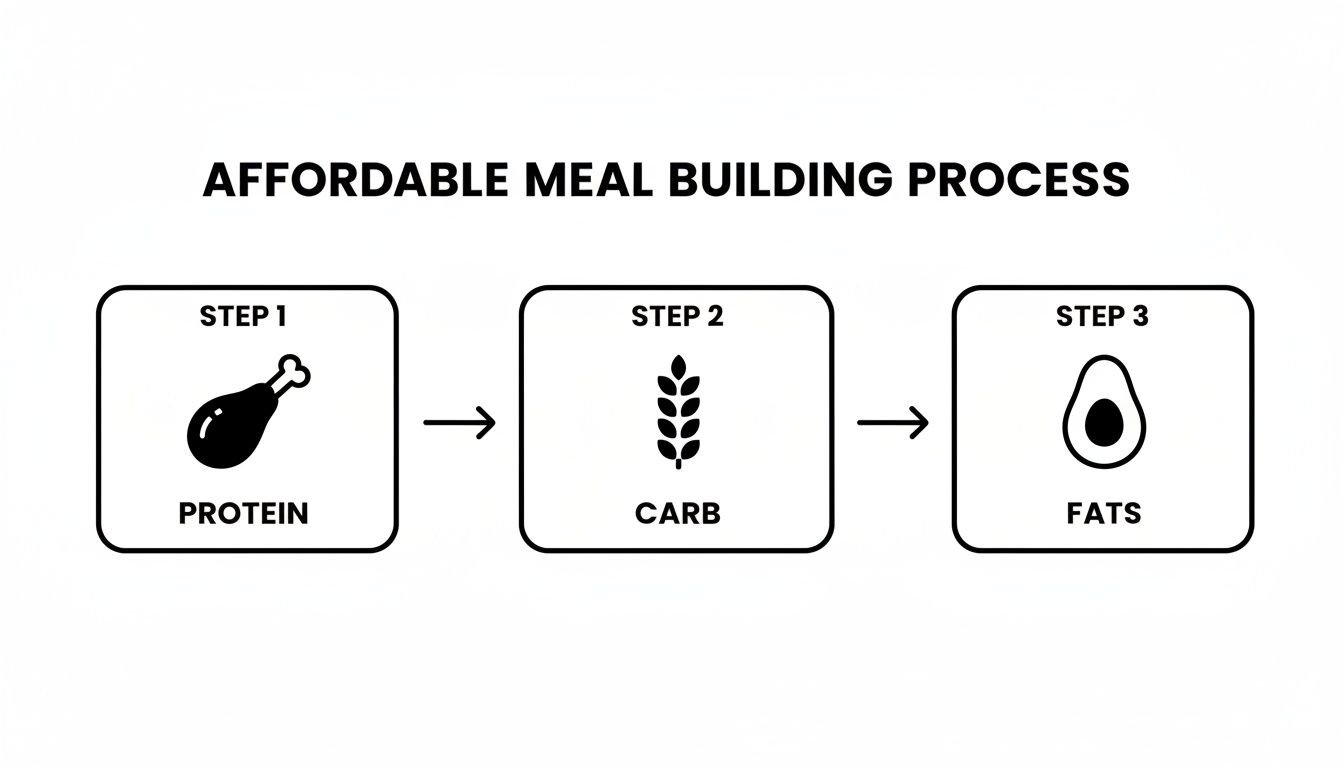
As you can see, every good meal starts with protein, then gets filled out with quality carbs and healthy fats. It’s a simple formula that keeps you full and fueled.
Turn Your Plan Into Action
Okay, you've picked a prep style that feels right. Now it's time to get moving. The very first thing to do is turn your weekly meal plan into an organized shopping list. Don't just scribble it down—organize it by section (produce, meat, dairy, pantry) to fly through the store.
After years of coaching, I can tell you this: Never, ever go to the grocery store without a list. It's your best defense against the impulse buys that wreck your diet and your budget. Stick to the plan and shop the perimeter of the store first—that's where all the fresh, whole foods live.
Once you’re home, set the mood. Block out your prep time, put on a great podcast or your favorite playlist, and get into a rhythm. My advice? Start with the things that take the longest to cook, like baking sweet potatoes or roasting a whole chicken. While those are in the oven, you can chop your veggies, cook your grains, and portion out snacks.
And please, invest in good food storage. I'm a huge fan of glass containers because they don't hold onto smells or stains and can go right into the microwave. When your prepped food looks and stays fresh, you'll actually be excited to eat it.
Effortless Progress Tracking with PlateBird
Alright, you’ve done the hard work. The meal plan is set, your fridge is stocked, and you’re feeling motivated. But now comes the part that I’ve seen derail countless people, myself included: the daily, tedious chore of actually logging your food.
If you’ve ever wanted to throw your phone against a wall after spending ten minutes trying to find the exact Greek yogurt you ate or scanning a barcode that simply refuses to cooperate, you know what I’m talking about. This daily friction is the silent killer of consistency.
From Tedious Tracking to Simple Snapping
Let’s re-imagine that whole process. For breakfast, you just text yourself a note: ‘eggs toast coffee’. Done. When lunch rolls around, instead of weighing out every last gram of chicken and rice from your prepped container, you just snap a photo of it. That's it.
Before you’ve even had your first bite, the calories and macros are logged for you. The day’s nutrition is laid out clearly, just like this:
This isn't science fiction—it’s how modern tools have completely changed the game for meal planning for weight loss. That screenshot shows you just how fast logging can be, giving you an immediate look at your day without the soul-crushing data entry. When a task is this simple, it stops feeling like a chore and starts becoming a habit.
What’s really incredible is how the app gets to know you. It learns your routines. That go-to breakfast you eat on weekdays? It soon becomes a one-tap entry. Your favorite tupperware meal of chicken, rice, and broccoli? The system remembers it, turning a five-minute logging ordeal into a five-second action.
This shift from clunky databases to intuitive logging removes the biggest barrier to long-term success. It makes consistency not just possible, but practically effortless.
Suddenly, you’re not wrestling with your food tracker anymore. It’s a quiet partner that already knows your plan. All that mental energy you used to waste on logging can now be spent on what really moves the needle: enjoying the great food you planned and sticking with your goals. The tracker becomes a source of empowerment, not frustration.
If you're tired of tracking being the reason your plans fall apart, see how simple it can be with the AI-powered food tracker from PlateBird. It’s the missing link that finally connects your hard work in the kitchen to real, sustainable results on the scale.
Your Top Meal Planning Questions, Answered
Alright, let's talk about the real world. Once you have a plan on paper, a million "what if" questions pop up. It's totally normal to wonder how this all fits with social events, cravings, and those stubborn moments when the scale just won't budge. I've heard them all, so let’s walk through the most common ones so you can handle them like a pro.
"What If I Get Sick of Eating the Same Things?"
This is the big one, right? The fear of eating the same sad chicken and broccoli forever. Diet boredom is a very real thing, and it’s probably the number one reason people fall off the wagon. But it's also completely avoidable.
The trick isn’t to find a million brand-new recipes. Instead, think of it as changing the costume for the foods you already have. Spices, herbs, and sauces are your best friends here.
That big batch of shredded chicken you prepped? It has endless possibilities:
- Taco Night: Toss it with some lime juice, cumin, and chili powder for amazing tacos or a burrito bowl.
- Quick Stir-fry: A splash of low-sodium soy sauce, some grated ginger, and sesame oil transforms it completely.
- Classic Chicken Salad: Mix it with Greek yogurt, diced celery, and your favorite herbs for a killer high-protein lunch.
You're using the same core protein, but creating totally different meal experiences. I also tell my clients to challenge themselves to try just one new, healthy recipe a week. It’s a great way to keep your go-to list fresh and exciting.
"How Can I Eat Out Without Wrecking My Progress?"
Yes, you can have a social life! Your weight loss plan shouldn’t feel like a prison sentence. The key here is having a game plan before you walk in the door. Don't wait until you're at the table, starving and staring at a menu full of temptations.
Take two minutes to look up the menu online before you go. Your mission is to find one or two solid, healthy choices ahead of time. Look for words like "grilled," "baked," or "steamed." A beautiful piece of fish or grilled chicken with a double side of veggies instead of fries is almost always a winning option.
Look, one meal out won't undo all your hard work. This journey is about consistency, not perfection. Enjoy the moment, make a smart choice, and get right back to your plan with the very next meal. What you do most of the time is what really matters.
Another pro tip? Have a small, protein-packed snack—like a Greek yogurt or a handful of almonds—before you leave. Showing up to a restaurant absolutely starving makes it ten times harder to stick to your game plan.
"What Do I Do If the Scale Stops Moving?"
First, take a breath. Hitting a weight loss plateau is incredibly frustrating, but it happens to nearly everyone. It's a sign that your body is adapting to the new, lighter you.
Before you make any drastic changes, do a quick, honest audit. Have you gotten a little loose with your tracking lately? It’s so easy for "calorie creep" to happen—a little extra olive oil here, a handful of nuts there—and those small things can add up and stall your progress.
If you’re confident your tracking is still on point, it might be time for a small adjustment. As you lose weight, your body's daily energy requirement (your TDEE) naturally decreases. A small tweak, like reducing your daily target by 100-200 calories or adding an extra 20-minute walk to your day, is often all it takes to get things moving in the right direction again. And don't forget to check in on your sleep, stress, and hydration—they all play a huge role!
Ready to make tracking the easiest part of your plan? With PlateBird, you can log your meals just by typing or snapping a photo, so you can focus on your results, not the process. Download PlateBird for free on the App Store and see how simple consistency can be.