When we talk about serving sizes for weight loss, we’re not talking about what you get at a restaurant or see on a package. A correct serving size is one that’s tailored to your body's specific calorie needs. It’s often best measured with a food scale or, with a little practice, estimated using visual cues like your hand.
Why 'Eating Less' Is Failing You
If you've ever tried to just "eat less" and felt like you were getting nowhere, you're not alone. And I’m here to tell you it’s probably not your fault. The advice is simple, but it completely ignores the fact that our modern food environment is practically designed to make us overeat.
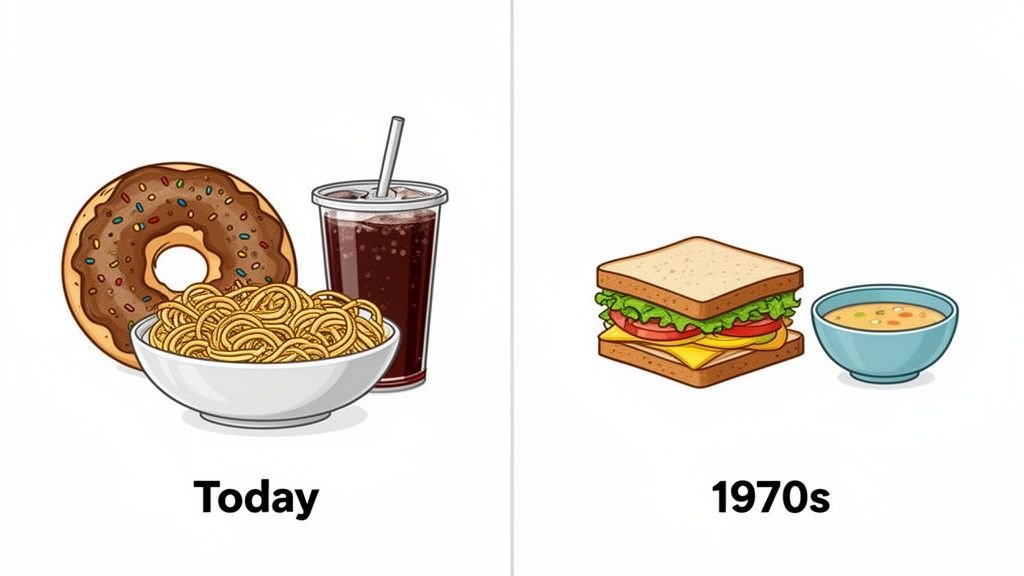
The real culprit is something called portion distortion. Over the last few decades, the standard serving sizes for almost everything have quietly ballooned, completely changing our idea of what a "normal" meal looks like.
We've been conditioned to see a giant plate of pasta or a bagel the size of a saucer as the default. This makes trying to lose weight by intuition almost impossible. How can you trust your gut when the world around you has completely skewed your perception of "how much"?
The Explosion of Marketplace Portions
This isn't just a feeling—it’s a documented fact. The food available in our grocery stores and restaurants started getting bigger in the 1970s, and it hasn't stopped. Research from the National Institutes of Health shows a direct link between these growing portion sizes and rising body weights.
A groundbreaking study from 2003 found that many common foods were two to five times larger than they were just a few decades prior. That’s a massive, and often invisible, increase in calories. We’re eating more simply because we’re being served more.
The biggest challenge in modern eating isn't just what we eat. It's relearning how much a true portion is. Taking back control starts with seeing food portions for what they actually are, not what they've become.
How Portion Sizes Have Changed Over Time
Let's look at how this plays out with everyday foods. The difference in calories between a portion from the 1970s and one today can be genuinely shocking. It’s how a reasonable meal can turn into a calorie overload without you even realizing it.
| Food Item | Typical Serving Size (1970s) | Typical Serving Size (2026) | Calorie Increase |
|---|---|---|---|
| Soda | 6.5 oz bottle (85 calories) | 20 oz bottle (250 calories) | +165 calories |
| Cheeseburger | 333 calories | 590 calories | +257 calories |
| French Fries | 2.4 oz (210 calories) | 6.9 oz (610 calories) | +400 calories |
| Muffin | 1.5 oz (210 calories) | 4 oz (500 calories) | +290 calories |
Seeing the numbers side-by-side makes it clear. We're not imagining things—the plates have gotten bigger, and so have the calories that come with them.
Understanding the Calorie Creep
This gradual increase in calories, meal after meal, is often called "calorie creep," and it's a huge obstacle for anyone trying to manage their weight.
Think about it in real terms:
- Soda: That classic 6.5-ounce glass bottle is a relic. Now, a 20-ounce bottle is standard, and "value-sized" cups can add hundreds of liquid calories to your meal without you even blinking.
- Pasta: A restaurant serving used to be about one cup. Today, it's common to see four or five cups of pasta served on a platter-sized plate.
- Muffins: The humble muffin has transformed into a jumbo-sized cake disguised as a breakfast food, sometimes containing 300% more calories than its original version.
The only way to fight back against this is to get intentional. You have to define your own serving sizes based on your personal goals. This all comes down to creating a sensible calorie deficit, which is the foundation of any effective weight loss plan.
Once you understand this context, you can stop blaming your willpower and start using the right strategies to navigate the modern food world with confidence.
Creating Your Personal Nutrition Blueprint
Let’s be honest: those one-size-fits-all diets are doomed to fail. They hand you a meal plan but never explain the why behind it. If you want to make a real, lasting change, you need a plan built specifically for you. The first step is to ditch the guesswork and create a personal nutrition blueprint using a personalized nutrition approach. This isn't about following rigid rules; it’s about finally understanding what your body actually needs to thrive.
Think of it like getting your financial house in order. You wouldn't start spending without knowing your income, right? The same logic applies here. We need to figure out your body's energy budget, and that starts with two key numbers: your Basal Metabolic Rate (BMR) and your Total Daily Energy Expenditure (TDEE).
Your BMR is your baseline—it's the energy your body burns just to stay alive at rest (think breathing, circulating blood, all the behind-the-scenes work). But the TDEE is the number that really matters. It’s your BMR plus all the energy you burn from moving around, whether that’s a tough workout or just walking to your car.
This TDEE figure is your true starting line. It’s the total number of calories your body burns in a day. Once you know it, you can create a gentle, sustainable calorie deficit that actually works.
Calculating Your Calorie Target
For fat loss that is both healthy and effective, I’ve found that a deficit of 15-20% below your TDEE is the sweet spot. If your TDEE is 2,200 calories, that means you'd aim for a daily target of around 1,760 to 1,870 calories.
This moderate approach is crucial. It helps ensure you’re losing fat instead of just water weight or hard-earned muscle. Plus, it prevents the ravenous hunger that so often leads people to give up entirely.
This is more important today than ever before. Consider this: back in 1970, the average American ate about 2,160 calories a day. Now? That number has ballooned to 2,673 daily calories. That’s a staggering 20-25% increase, making a mindful, calculated approach essential for anyone trying to manage their weight.
Setting Your Macronutrient Goals
With your calorie target locked in, the next piece of the puzzle is deciding where those calories come from. This is where macronutrients—protein, carbs, and fats—enter the picture. Getting the balance right is the secret to feeling full, energized, and satisfied, even when you're in a deficit.
For most people focused on fat loss, a fantastic starting point is this distribution:
- Protein (4 calories per gram): Dedicate about 30-40% of your calories here. Protein is the hero of satiety; it keeps you feeling full longer and protects your muscle mass.
- Fats (9 calories per gram): Aim for 25-35% from healthy fats. They’re non-negotiable for hormone production and absorbing key nutrients, not to mention making food taste great.
- Carbohydrates (4 calories per gram): The final 30-40% goes to carbs. Prioritize high-fiber sources like veggies, fruits, and whole grains for slow-release energy that won't leave you crashing.
Let's see what this looks like for our example of an 1,800-calorie target.
| Macronutrient | Percentage | Grams Per Day |
|---|---|---|
| Protein | 35% | ~158g |
| Fat | 30% | ~60g |
| Carbohydrates | 35% | ~158g |
Remember, this is a flexible guide, not a rigid prescription. Your personal blueprint gives you the numbers—the "what." In the next section, we’ll get into the "how" and translate these targets into real, delicious food on your plate.
Bringing Your Nutrition Blueprint to Life
Okay, you’ve done the hard work and have your blueprint—your personal calorie and macro numbers. But right now, they're just numbers on a screen. The real magic happens when we turn "30 grams of protein" into a perfectly cooked chicken breast and "15 grams of fat" into a few slices of creamy avocado.
This is where we move from theory to the kitchen. It's all about developing what I call portion literacy. Think of it as a new skill: the ability to look at a plate of food and instinctively know what a proper serving size looks like, whether you're at home or out at your favorite restaurant.
Let's quickly recap how your blueprint numbers work together.
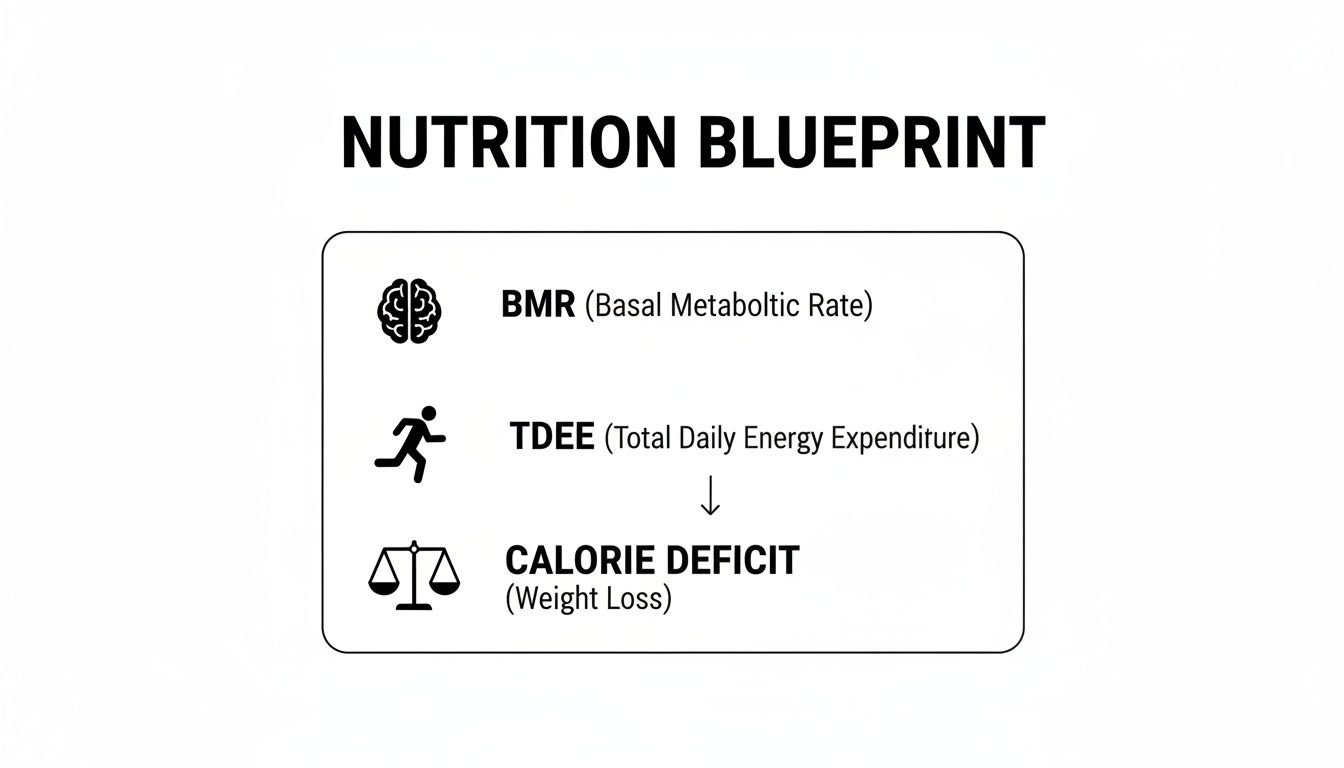
These three figures—your baseline metabolism, your total daily energy burn, and that all-important calorie deficit—are the foundation for every single meal you're about to build.
Your Essential Portioning Toolkit
You don’t need a bunch of fancy gadgets to get this right. Over the years, I've found that a few simple tools are all you need to handle any situation, from precise meal prep to making smart choices on the fly.
A Digital Food Scale (Your Accuracy Secret Weapon): Seriously, this is your best friend when you're starting out. A food scale takes all the guesswork out of portioning calorie-dense foods like meats, cheeses, and nuts. It's the fastest way to train your eyes to see what a true 4-ounce chicken breast or a 30-gram serving of almonds actually looks like. The initial learning curve pays off for years.
Measuring Cups & Spoons (Your Go-To for Consistency): For anything you can scoop or pour—think oatmeal, rice, yogurt, milk, or cooking oils—measuring cups and spoons are perfect. They're quick, practical, and ensure your portions are consistent day after day, which makes logging your meals a breeze.
Your Own Hand (The Ultimate Portable Guide): This one is a game-changer. When you’re away from your kitchen, your hand becomes an incredibly reliable tool for estimating portions. It's always with you, and once you learn the basics, it’s surprisingly accurate.
Your Hand as a Portable Portion Guide
Let’s be honest, you’re not going to bring your food scale to a dinner party. This is where using your hand as a guide becomes so powerful. It helps you mentally break down a meal and make an informed choice instead of just winging it.
Here's a quick reference I teach all my clients to help them stay on track when eating out.
| Food Type | Hand-Based Measurement | Approximate Portion |
|---|---|---|
| Protein (Chicken, Fish, Beef) | Your palm (not including fingers) | 3-4 ounces, cooked |
| Carbohydrates (Rice, Pasta, Potatoes) | Your cupped hand | About 1/2 cup |
| Vegetables (Broccoli, Spinach, Salad) | Your entire fist | About 1 cup |
| Fats (Oils, Butter, Nut Butters) | The tip of your thumb | About 1 tablespoon |
Mastering these simple visual cues is a skill that will serve you for the rest of your life. It’s what gives you the confidence to navigate any food environment without derailing your progress.
This Is More Important Than You Think
Learning to portion isn't about a lack of willpower; it’s about pushing back against a food environment that's practically designed to make us overeat. We’re constantly surrounded by super-sized meals and distorted ideas of what a "normal" serving is.
This isn't just a feeling; it's backed by research. I remember reading a fascinating study where researchers secretly varied sandwich sizes. The result? Men ate 23% more and women ate 12% more when served a 12-inch sub instead of an 8-inch one, even if they weren't any hungrier. We instinctively eat what’s in front of us.
This is precisely why developing portion literacy is so critical. You are actively retraining your brain to recognize appropriate amounts, counteracting years of exposure to "portion distortion."
Once you've got your blueprint and a handle on portioning, a great next step is to streamline the whole process. Learning how to meal prep for beginners can be a lifesaver, saving you time and decision fatigue during a busy week.
Another key skill is becoming fluent in the language of food labels. If you want to become even more confident in your choices at the grocery store, our guide on how to read nutrition labels is the perfect place to start.
Building a Satisfying Plate for Weight Loss
Alright, you’ve got your numbers. Now for the fun part—turning that data into real, delicious food. This is where the magic happens, moving from theory to the kitchen. We're about to walk through what a typical day looks like, focusing on building meals that hit your targets while leaving you feeling full and satisfied, not deprived.
The whole point is to create meals that feel good, both mentally and physically. If you're picturing sad, tiny salads or plain boiled chicken, think again. Smart serving sizes for weight loss are all about strategic composition, not just cutting back.
Revamping Your Breakfast
So many of us start the day in a way that sets us up for failure. That first meal dictates your energy and hunger for hours to come, and a high-carb, low-protein breakfast is a recipe for a mid-morning crash. I see it all the time.
Let's look at two common morning meals:
- The High-Carb Trap: A big bowl of sugary cereal with some low-fat milk. It might have a "healthy" halo, but it sends your blood sugar on a roller coaster. You get a quick burst of energy, then a crash that leaves you hungry and hunting for snacks an hour later.
- My High-Protein Go-To: Two scrambled eggs (~12g protein), a chicken sausage link (~10g protein), and a big handful of spinach sautéed in a little olive oil. This breakfast is loaded with protein and healthy fats, giving me steady, reliable energy that keeps me full straight through to lunch.
The difference in how full you feel is night and day. The calorie counts might even be similar, but the macro profile of the high-protein breakfast makes it a clear winner for managing hunger.
Designing a Lunch That Actually Fills You Up
Lunch is often where good intentions go to die, especially when you’re busy. The trick is to build a meal with enough volume, fiber, and protein to carry you through that afternoon slump. We've all seen the "sad desk salad"—a bit of lettuce, a few lonely cucumber slices, and a prayer. We can do so much better.
Here’s how to build a salad that actually works:
- Anchor it with Lean Protein: This is the most important part. You need at least 4-5 ounces of grilled chicken breast, a can of tuna, or a cup of chickpeas. This is your first line of defense against the 3 p.m. snack attack.
- Build a High-Volume Veggie Base: Don’t stop at lettuce. Go big with 2-3 cups of mixed greens, bell peppers, cucumbers, and tomatoes. They add a ton of volume and nutrients for almost no calories.
- Add a Smart Carb: A 1/2 cup of quinoa or some roasted sweet potato chunks will give you that slow-burning energy and make the salad feel like a real, substantial meal.
- Finish with Healthy Fats: A little fat makes everything more satisfying. Add 1/4 of an avocado or a tablespoon of sunflower seeds. For a creamy dressing, I just mix a couple of tablespoons of Greek yogurt with lemon juice and herbs.
That combination is the secret formula for a lunch that won't leave you raiding the vending machine.
Crafting a Perfectly Balanced Dinner Plate
Dinner should feel like a satisfying reward at the end of the day, not another complicated math problem. I love using the "Plate Method" because it's a simple visual trick that helps you nail your portions without having to weigh and measure everything once you get the hang of it.
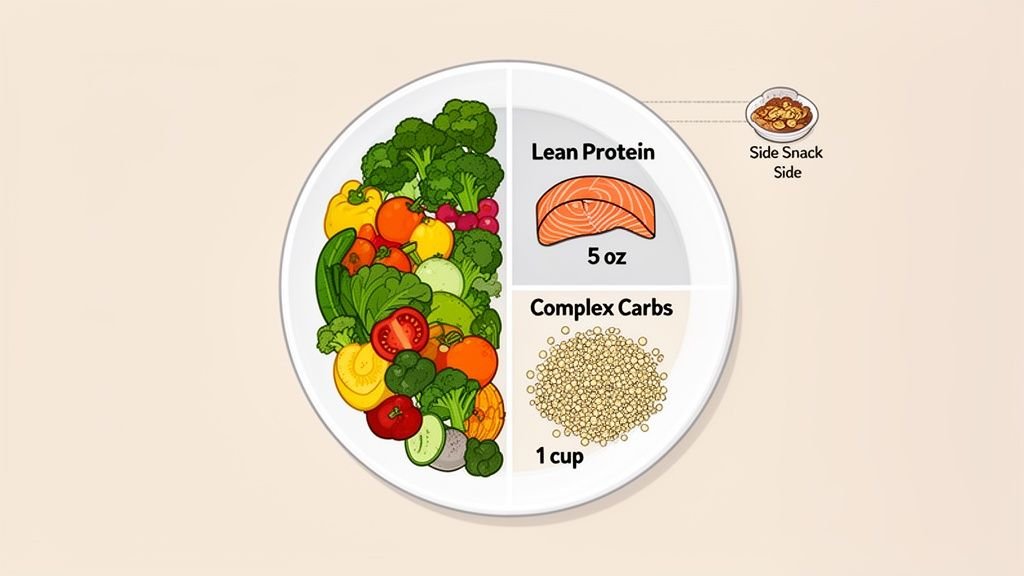
Imagine your dinner plate divided into three sections. This visual map helps you build a balanced meal that lines up with your goals, every single time.
Here's how you fill it up for great results:
- Half Your Plate (50%): Non-Starchy Vegetables. This is where you start. Fill half your plate with 1-2 cups of things like roasted broccoli, grilled asparagus, or a big side salad. This ensures you get tons of fiber and nutrients, which is key for feeling full.
- One Quarter of Your Plate (25%): Lean Protein. This section is reserved for your protein. A 5-ounce salmon fillet or a 4-ounce lean steak is a perfect fit. Protein is crucial for keeping you full and supporting muscle.
- One Quarter of Your Plate (25%): Complex Carbohydrates. The last quarter is for your starchy carbs. A 1-cup serving of brown rice, a medium baked potato, or some whole-wheat pasta gives your body the energy it needs and makes the meal feel complete.
This simple framework turns your nutrition targets into a visual, repeatable habit. It takes the guesswork out of dinner and keeps you on track.
Making Food Logging Effortless
We’ve talked about how to build the perfect plate, but let’s get real about the biggest obstacle on any health journey: sticking with it. If you’ve ever tried to track your food before, you know the drill. The main reason people quit is because it’s a soul-crushing hassle. Fiddling with a clunky app, searching for the right barcode, and manually typing in every last ingredient is enough to make anyone give up.
This is where a modern tool can genuinely change the game, turning that tedious chore into a habit so quick you barely even notice you're doing it. The point isn't to become obsessive; it's to use smart technology to make consistency feel almost effortless.
Say Goodbye to Manual Entry
Think about this for a second. Instead of laboriously typing out "one large egg, two slices of whole wheat toast with butter, and one cup of black coffee," what if you could just type "my usual breakfast"? A smart logger like PlateBird learns your patterns and does the math for you. That simple change can be a complete game-changer.
Honestly, this is how I manage to stay on track during a packed week. My morning routine is pretty set, so logging breakfast takes me less than five seconds. It completely removes the friction that used to make me just skip logging altogether. It’s no longer a task; it's just a quick tap.
The Power of a Picture
But what about the meals that aren't your usual? That lunch at a new cafe, or a dinner you threw together from whatever was left in the fridge? This is where photo-logging becomes a lifesaver. Instead of trying to deconstruct the meal and guess the portion sizes, you just snap a picture and let the app do the heavy lifting.
Here’s a look at how PlateBird can analyze a meal from a single photo.
The app's computer vision instantly identifies the food on your plate—the chicken, the rice, the broccoli—and spits out a nutritional breakdown in seconds. This is incredibly useful for keeping your serving sizes for weight loss accurate, even when you're away from your own kitchen and food scale.
Turning Tracking Into a 60-Second Habit
The whole point of this isn't to spend your life staring at a food log. It's to get the data you need with the least amount of effort possible so you can make smarter choices. When logging your entire day takes less than a minute, it stops feeling like a chore and starts feeling like a powerful feedback tool.
Here’s how a smarter approach helps you stay consistent:
- Quick Entry: Just type what you ate in plain English, like "chicken salad sandwich and an apple." The app figures out the rest.
- Photo Logging: Snap a picture of your plate for an instant estimate when you’re short on time or details.
- Habit Recognition: The app remembers your go-to meals and snacks, creating one-click shortcuts that make logging your favorites a breeze.
This streamlined process keeps you in the game because it respects your time. You get all the benefits of tracking without the burnout that comes from tedious, manual data entry.
The best tracking method is always the one you'll actually stick with. By removing the friction and saving time, you turn food logging from a daily burden into a sustainable, empowering habit.
When you're just starting, understanding how to track your macros is what makes an app truly powerful. If you want to see how different features can support your goals, our guide on the best macro tracking app is a great place to start. Finding the right tool makes all the difference in turning your plan into reality, one effortless entry at a time.
Answering Your Toughest Questions on Serving Sizes
Once you start paying attention to portion sizes, a million little questions are bound to pop up. I’ve been there—staring at a food scale, a restaurant menu, or a friend’s dinner plate, wondering, “Am I even doing this right?”
Don’t worry, you’re not alone. Let’s tackle some of the most common hurdles I see with my clients so you can move forward with confidence.
Do I Have to Weigh My Food Forever?
The short answer? Absolutely not. Think of your food scale as a set of training wheels, not a life sentence.
Initially, weighing your most common foods—like the oats in your breakfast bowl, the chicken you prep for lunch, or the rice you have with dinner—is all about training your eyes. You’re building a new skill from the ground up: being able to accurately estimate portions without a tool. You'd be surprised how quickly you can learn what 4 ounces of chicken or a half-cup of quinoa actually looks like.
After a few weeks, you'll have a solid "portion intuition." You can put the scale away and rely on your new skill. I do suggest pulling it out maybe once a month for a quick spot-check to make sure your portion sizes haven't started to creep up again. It’s just a quick calibration, not a daily chore.
How Do I Manage Portions When I'm Eating Out?
This is a huge one, but it's totally manageable once you have a game plan. First off, your hand is your new best friend. Remember the hand guide we talked about earlier? It’s your secret weapon for estimating protein, carbs, and fats on the fly. A palm-sized piece of fish is a fantastic visual.
Next, you have to become your own advocate. It might feel a little awkward at first, but don't be shy about making simple requests. Asking for sauces and dressings on the side is one of the easiest and most powerful moves you can make. It puts you in control of what are often hundreds of hidden calories.
Finally, strategize before you even take a bite. Most restaurant meals are supersized, often containing two or even three standard servings. Decide right away to eat only half and ask for a to-go box when your food arrives. Getting the other half out of sight makes it so much easier to avoid mindless munching.
What Matters More: Calories or Macros?
When it comes to pure weight loss, the calorie deficit is the undisputed champion. To lose weight, you simply have to consume fewer calories than your body burns. There’s no magic trick that gets around that fundamental principle of energy balance.
But—and this is a big but—where those calories come from is what determines the quality of your results and how you feel along the way. That's where your macronutrients (protein, carbs, and fat) come in.
- Protein is crucial for feeling full and preserving your hard-earned muscle. This ensures the weight you lose is mostly fat, not muscle.
- Fats are non-negotiable for hormone health and that feeling of satisfaction after a meal. Plus, they make food taste great.
- Carbs provide the fuel for your brain and your workouts. The right carbs give you the energy to stay active and feel fantastic.
Think of it this way: Calories set your budget, and macros are how you spend it. The winning strategy is to nail your calorie goal first, then arrange your macros within that budget to optimize for fullness, energy, and muscle retention. They’re a team, not competitors.
Ready to stop the guesswork and start logging your food effortlessly? PlateBird makes tracking your meals as simple as sending a text. Type what you ate or snap a picture, and let the AI do the rest. Download it for free and see how easy it is to hit your goals.