- 1. Track Protein Intake with Macro Monitoring
- 2. Incorporate High-Protein Whole Foods Into Every Meal
- 3. Optimize Breakfast with High-Protein Options
- 4. Utilize Protein Supplements and Powders Strategically
- 5. Master Meal Prep with Protein-Focused Recipes
- 6. Swap Lower-Protein Foods with High-Protein Alternatives
- 7. Leverage Snacks as Protein Delivery Opportunities
- 8. Increase Protein Intake for Specific Fitness Goals
- 9. Build Protein Consistency Through Habit Stacking
- 10. Optimize Restaurant and Takeout Orders for Protein
- 10-Point Comparison of Ways to Increase Protein Intake
- Making Protein Work for You, Effortlessly
Boosting your protein intake isn't just a goal for elite athletes or bodybuilders. It’s a foundational piece of the puzzle for anyone looking to support muscle growth, improve satiety for weight management, or simply feel more energized and focused throughout the day. Yet, many of us consistently fall short, often defaulting to convenient, carb-heavy meals and overlooking simple opportunities to add more of this crucial macronutrient.
The real challenge isn't just knowing you need more protein; it's figuring out practical ways to increase protein intake without resorting to a monotonous diet or a complete lifestyle overhaul. The internet is full of generic "eat more chicken" advice, but true success comes from building sustainable habits that fit seamlessly into your existing routine. This guide is designed to move beyond the obvious.
We will explore 10 specific, actionable strategies that you can implement immediately. You’ll discover everything from simple food swaps and habit-stacking techniques to optimizing your breakfast and making smarter choices when dining out. We'll also touch upon how modern tools can make tracking your progress almost effortless, helping you build lasting dietary patterns. This isn’t about a radical diet change; it's about making small, intelligent adjustments that deliver significant results. Let's dive into practical methods to make every meal a deliberate step toward your protein goals, ensuring you not only start strong but also maintain momentum for the long haul.
1. Track Protein Intake with Macro Monitoring
You can’t improve what you don’t measure. This old adage is especially true for nutrition, and it’s the core principle behind using macro monitoring as one of the most effective ways to increase protein intake. Instead of just guessing, this method involves using a nutrition tracking app to log everything you eat and drink, giving you a precise, data-driven view of your daily protein consumption.
The process starts with setting a specific protein target. A common guideline for active individuals is 0.7 to 1.0 grams of protein per pound of body weight. Once your goal is set in an app like MyFitnessPal, Cronometer, or PlateBird, you log your meals. This simple act of recording reveals exactly where your protein is coming from and, more importantly, where it’s lacking. For instance, a bodybuilder might realize their breakfast is almost entirely carbs and fat, prompting them to add eggs or a protein shake to start their day strong.
Putting It Into Practice
To make tracking feel less like a chore and more like a tool for success, consistency is key.
- Log in Real-Time: Don't wait until the end of the day. Log your meals immediately after you eat them to ensure accuracy.
- Build Around Protein: Plan your meals by choosing your protein source first (e.g., chicken, tofu, or fish) and then adding your carbs and fats.
- Use Shortcuts: Most apps have features to save frequent meals or copy-paste entries, saving you significant time.
By visualizing your macronutrient breakdown, you can quickly identify protein gaps in your diet. A midday snack of chips could be swapped for Greek yogurt, instantly adding 15-20 grams of protein and helping you hit your goal.
This strategy offers clear accountability. If you're serious about building muscle, losing fat while preserving lean mass, or simply improving your overall nutrition, tracking provides the roadmap. For those new to the concept, understanding the fundamentals of macronutrients is the first step. You can learn how to count macros to get a solid foundation before you begin your tracking journey.
2. Incorporate High-Protein Whole Foods Into Every Meal
One of the most foundational ways to increase protein intake is to stop treating it as an afterthought. Instead, make a high-protein whole food the centerpiece of every meal you eat. This approach ensures a steady supply of amino acids throughout the day, which supports muscle repair, satiety, and metabolic function, rather than trying to cram all your protein into a single, large dinner.
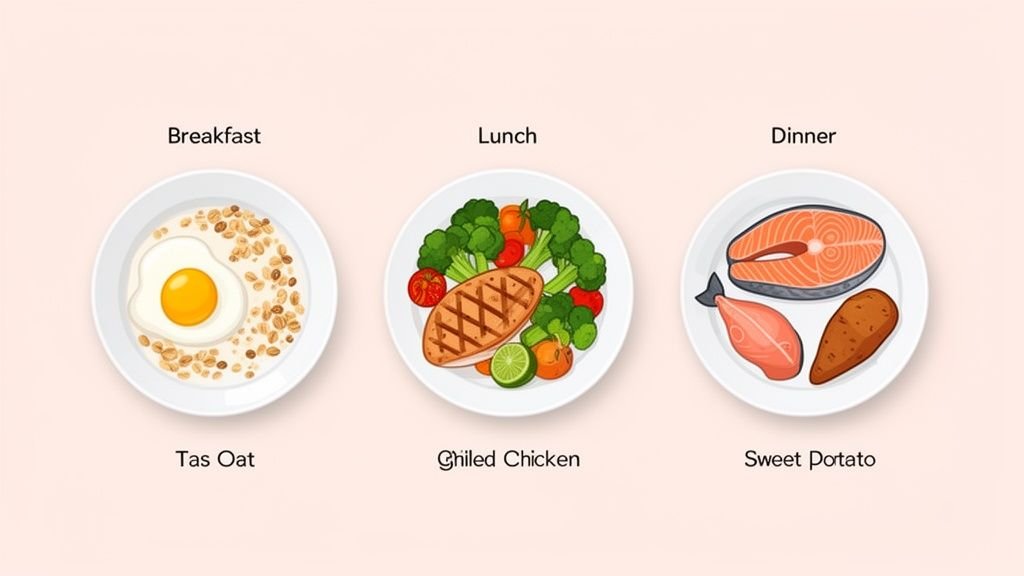
Structuring your meals this way creates a reliable rhythm for your body. It starts with breakfast and continues through lunch, dinner, and even snacks. For example, instead of a carb-heavy pastry, you might have eggs or Greek yogurt. At lunch, a salad becomes a powerhouse with the addition of grilled chicken or chickpeas. This method fundamentally shifts your meal planning from "what do I want to eat?" to "what protein will I build this meal around?"
Putting It Into Practice
Making this strategy a sustainable habit requires a bit of planning, but it quickly becomes second nature.
- Prep Proteins in Bulk: Cook a large batch of chicken breast, ground turkey, or lentils on a Sunday. This makes assembling protein-rich meals during a busy week effortless.
- Keep Frozen Options Ready: Stock your freezer with frozen fish fillets, shrimp, or edamame. They cook quickly and serve as excellent backups when fresh options run out.
- Pair with Fiber and Fats: Build balanced meals by adding complex carbs (like quinoa or sweet potatoes) and healthy fats (like avocado or nuts) to your primary protein source.
By anchoring each meal with at least 20-30 grams of protein, you naturally improve satiety and reduce the likelihood of overeating less nutrient-dense foods between meals. A simple dinner of a salmon fillet with asparagus can deliver around 40 grams of high-quality protein.
This strategy is effective because it relies on consistency. Ensuring every eating occasion contributes to your daily total makes hitting your protein target far more manageable. To get the most benefit, it helps to understand which sources provide the best amino acid profiles. You can explore a protein quality chart to learn more about the biological value of different foods and make informed choices.
3. Optimize Breakfast with High-Protein Options
For many, breakfast is a rushed meal dominated by carbs and sugar-a missed opportunity for hitting protein goals. Optimizing your first meal of the day with high-protein options is one of the most effective ways to increase protein intake because it sets a strong nutritional foundation. A protein-forward breakfast, as championed by researchers like Dr. Donald Layman, helps regulate appetite, reduces midday cravings, and provides sustained energy, preventing the common mid-morning crash.
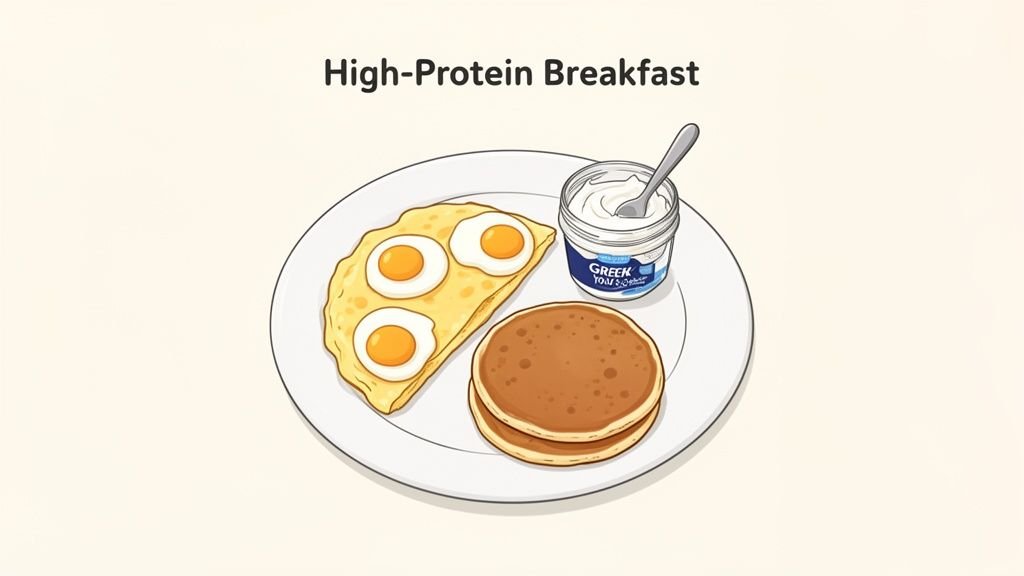
This strategy involves swapping traditional, low-protein breakfast foods like cereal or toast with butter for protein-dense alternatives. Instead of just grabbing a pastry, you intentionally build a meal around a quality protein source. A simple switch from a bowl of cereal (5g protein) to a Greek yogurt parfait (20g protein) can make a significant difference in your daily total, kicking off your day with a substantial protein deposit.
Putting It Into Practice
Making your breakfast a protein powerhouse doesn't have to be complicated or time-consuming. A little bit of planning goes a long way.
- Prep Ahead: Make a batch of egg muffins or protein pancakes on Sunday for quick, grab-and-go options during the week.
- Embrace Staples: Keep high-protein staples like Greek yogurt, cottage cheese, and eggs on hand. A cottage cheese bowl with fruit takes less than two minutes to prepare.
- Boost Your Usuals: If you love oatmeal or smoothies, simply add a scoop of protein powder to instantly increase the protein content by 20-30 grams.
By front-loading your protein intake, you make hitting your daily target far more manageable. A breakfast of a three-egg omelet with cheese and a side of turkey sausage can provide over 40 grams of protein, getting you nearly a third of the way to your goal before 9 a.m.
This approach is perfect for busy professionals and fitness enthusiasts who need sustained energy and focus. Starting the day with a satiating, protein-rich meal helps you avoid unhealthy snacking and supports muscle repair and growth. It's a simple but powerful shift that redefines breakfast from a filler meal to a foundational one for your nutritional success.
4. Utilize Protein Supplements and Powders Strategically
While whole foods should always be the foundation of your diet, protein supplements offer a practical and efficient solution to bridge nutritional gaps. This approach acknowledges that relying solely on food sources isn’t always feasible, especially for those with busy schedules or elevated protein needs. Powders like whey, casein, or plant-based blends provide a concentrated dose of protein that can be quickly prepared and consumed, making them one of the most convenient ways to increase protein intake.
The core benefit is convenience without compromise. Instead of cooking a full meal, you can mix a scoop of protein powder with water or milk for a post-workout shake that kick-starts muscle recovery. This strategy is not about replacing meals but supplementing them. For example, someone struggling to hit a 150-gram daily protein target might find it difficult to eat enough chicken or fish. Adding one or two shakes can easily contribute 50-60 grams, making their goal much more attainable.
Putting It Into Practice
To integrate supplements effectively, think of them as a versatile ingredient rather than just a drink mix.
- Boost Your Breakfast: Stir a scoop of vanilla or unflavored protein powder into your morning oatmeal or Greek yogurt. This simple addition can add 20-25 grams of protein with minimal effort.
- Create High-Protein Snacks: Mix casein powder into batter for protein pancakes or blend a plant-based powder into a smoothie with fruit and oats.
- Choose the Right Type: Use fast-digesting whey isolate post-workout for rapid absorption. Opt for slow-digesting casein in overnight oats or before bed to support muscle maintenance.
Supplements are a tool, not a crutch. Aim for 70-80% of your protein from whole foods like meat, fish, eggs, and legumes, and use powders to strategically fill the remaining gap.
This pragmatic method ensures you consistently meet your protein targets, which is crucial for building muscle, preserving lean mass during weight loss, and supporting overall recovery. For those with dietary restrictions, options like pea or soy isolate offer excellent plant-based alternatives. Reputable brands like Optimum Nutrition and Isopure provide high-quality options to fit different needs and budgets.
5. Master Meal Prep with Protein-Focused Recipes
The single biggest obstacle to a high-protein diet is often a lack of preparation. When you’re busy, tired, or hungry, grabbing a convenient but low-protein meal is easy. Mastering protein-focused meal prep is one of the most effective ways to increase protein intake by making the right choice the easiest choice. This strategy involves dedicating a few hours each week to batch-cook protein sources, which can then be assembled into quick meals throughout the week.
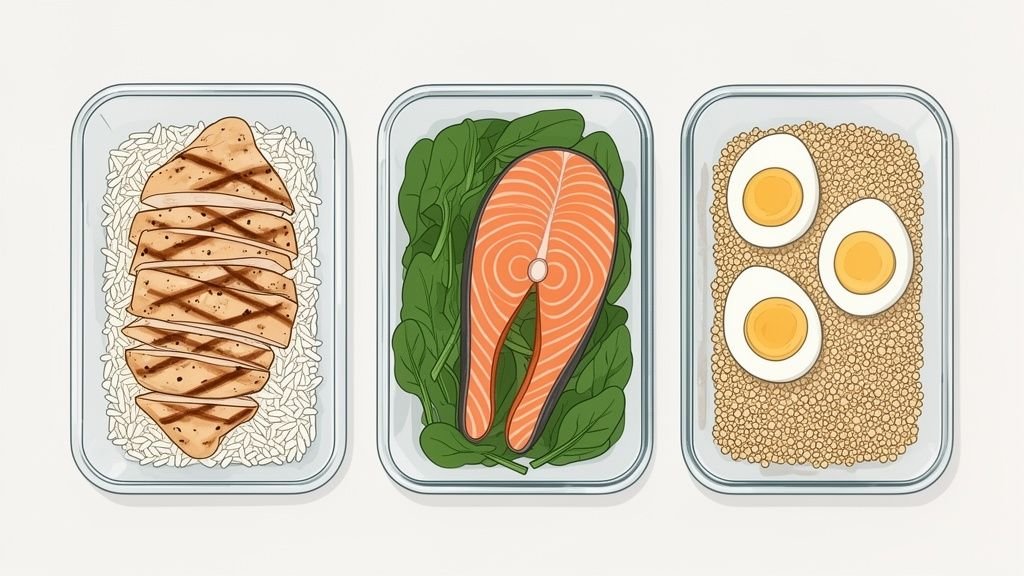
The idea is simple: by preparing your protein ahead of time, you eliminate the daily friction of cooking from scratch. Instead of deciding what to make for dinner after a long day, you simply open your fridge to find perfectly portioned grilled chicken, ground turkey, or baked fish ready to go. For example, baking six salmon fillets on Sunday provides a 40-gram protein base for several dinners. Similarly, hard-boiling a dozen eggs gives you instant 6-gram protein snacks for the entire week.
Putting It Into Practice
To turn meal prep into a sustainable habit, focus on efficiency and variety.
- Prep Proteins Plain: Cook your main protein sources like chicken, ground beef, or pork with minimal seasoning. You can then add different sauces, spices, or marinades each day to create a new flavor profile and prevent taste fatigue.
- Choose Proteins That Store Well: Opt for proteins that hold up well in the fridge for several days. Grilled chicken, ground meats, hard-boiled eggs, and firm tofu are excellent choices.
- Use Quality Containers: Invest in glass containers. They don't stain or retain odors like plastic and are safer for reheating.
- Batch and Freeze: Double your recipe and freeze half of the prepped meals. This builds a stash of ready-to-go options for extra busy weeks.
By having pre-cooked protein on hand, a decision that used to take 30 minutes now takes 30 seconds. Instead of ordering takeout, you can build a high-protein bowl with your prepped ground turkey, rice, and salsa in less than five minutes.
This approach creates a system of nutritional accountability. It ensures that even on your busiest days, a protein-rich meal is the most convenient option available, directly supporting your fitness and health goals. For those looking to get started, you can find a variety of delicious high-protein meal prep recipes to build a solid foundation for your weekly plan.
6. Swap Lower-Protein Foods with High-Protein Alternatives
One of the most seamless ways to increase protein intake is to make small, strategic substitutions in your daily meals. This approach doesn't require overhauling your entire diet; instead, you simply swap common food items with their higher-protein counterparts. The goal is to boost your protein total incrementally without drastically changing your familiar eating habits or flavors.
This method works by identifying foods you already eat and finding a similar alternative that packs more protein. For example, your morning yogurt bowl can be a major protein opportunity. By swapping regular yogurt, which often has just 3-5 grams of protein, for Greek yogurt, you can easily get 15-20 grams per serving. Similarly, choosing chickpea-based pasta (around 20 grams of protein) over traditional wheat pasta (about 7 grams) can turn a carb-heavy dinner into a balanced, protein-rich meal.
Putting It Into Practice
Making these swaps effective is all about gradual integration and finding alternatives you genuinely enjoy.
- Start Small: Begin by identifying just one or two swaps to make. For instance, switch your regular milk to a protein-fortified one like Fairlife, which increases protein from 8 grams to 13 grams per cup.
- Read the Labels: Get in the habit of comparing nutrition labels at the grocery store. You might be surprised to find a brand of bread with 10 grams of protein per slice versus your usual 4 grams.
- Combine for Compounding Gains: The power of this strategy comes from combining multiple small swaps. A sandwich made with protein bread and filled with ground turkey instead of higher-fat ground beef adds protein from two different sources.
A simple change like using cottage cheese instead of ricotta in your lasagna recipe can add an extra 10-13 grams of protein per cup. These small adjustments add up quickly over the course of a day, making it much easier to hit your protein target.
This strategy is perfect for anyone who feels overwhelmed by the idea of a complete diet makeover. It allows you to build on your existing meal structures, making it a sustainable, long-term approach to better nutrition. Keeping a list of successful swaps you like helps create a new, effortless baseline for your high-protein diet.
7. Leverage Snacks as Protein Delivery Opportunities
Snacking often gets a bad rap, viewed as a source of empty calories that can derail your nutrition goals. However, a strategic approach can transform snacking from a dietary liability into a powerful asset. This method involves consciously choosing snacks that are rich in protein, turning those in-between meal moments into valuable opportunities to boost your daily total. Instead of reaching for chips or cookies, you can easily add a significant amount of protein to your day.
The core idea is to treat snacks as mini-meals designed to bridge the gap between your main meals while contributing meaningfully to your protein target. A single high-protein snack can deliver 10-25 grams of protein, meaning just two or three well-chosen snacks per day could add an extra 20-60 grams. For someone struggling to hit their protein goal through meals alone, this is one of the most effective ways to increase protein intake without feeling overly full. For instance, a fitness enthusiast might find their main meals only get them to 120 grams of protein, but two strategic snacks can easily push them over their 160-gram goal.
Putting It Into Practice
To make your snacks work for you, planning and intentionality are crucial.
- Prep Your Options: Dedicate a small part of your meal prep day to portioning out 3-5 different protein snacks for the week, like hard-boiled eggs or cottage cheese cups.
- Combine for Satiety: Pair your protein source with a healthy carb or fat to stay full longer. An apple with a handful of almonds or a cheese stick offers a balanced, satisfying snack.
- Keep Portable Snacks on Hand: Stock your desk, car, or gym bag with non-perishable options like beef jerky, protein bars (such as Quest or ONE Bars), or sealed nuts.
By reframing snacks as purposeful protein boosts, you can effortlessly close the gap on your daily target. Swapping a 200-calorie bag of pretzels for a 200-calorie Greek yogurt and fruit not only adds 15-20 grams of quality protein but also provides greater satiety, keeping you on track until your next meal.
This strategy ensures that every calorie you consume serves a purpose. It helps maintain a steady supply of amino acids to your muscles throughout the day, which is ideal for muscle repair and growth, and it helps stabilize blood sugar levels to prevent energy crashes. Simply put, smart snacking makes hitting your protein goals more achievable and enjoyable.
8. Increase Protein Intake for Specific Fitness Goals
Your protein needs aren’t one-size-fits-all; they are directly tied to your fitness objectives. Rather than aiming for an arbitrary number, one of the most effective ways to increase protein intake is to align it with specific goals like building muscle, gaining strength, or losing fat. This personalized approach ensures you’re consuming enough protein to fuel recovery and drive results without over- or under-doing it.
The concept, supported by experts like Dr. Eric Helms and Jeff Nippard, is to calculate your target based on your body weight and training style. For example, a 150-pound individual focused on muscle building would aim for around 150 grams of protein daily (1 gram per pound). However, a 140-pound endurance athlete might only need 84-105 grams to support recovery. By defining your target, you can work backward to structure your meals and snacks to meet that precise number, making your dietary efforts far more efficient.
Putting It Into Practice
To match your protein intake to your goals, you need a clear calculation and a plan for adjustment.
- Calculate Your Target: Use your body weight in pounds and multiply it by a factor based on your goal: 0.7-0.8g for strength, 1.0-1.2g for fat loss, or 0.6-0.75g for endurance.
- Establish a Baseline: If you’re new to this, track your current intake for a week. This shows you how big the gap is between what you’re eating and what you need.
- Adjust as Needed: Your goals and training intensity change over time. Re-evaluate your protein target every 4-8 weeks to ensure it still aligns with your current regimen.
A 160-pound person aiming to lose weight while preserving muscle could aim for 160-192 grams of protein daily. This higher intake promotes satiety, helping them stick to a caloric deficit, and provides the building blocks to prevent muscle loss.
This strategy turns a vague recommendation to "eat more protein" into a concrete, actionable number. It provides a clear benchmark for success, whether your goal is to add five pounds of muscle or simply recover faster from your weekend long runs. If you’re unsure where to start, begin with a moderate target of 0.8 grams per pound of body weight and adjust from there based on your progress and how you feel.
9. Build Protein Consistency Through Habit Stacking
Relying on willpower to remember your new protein goals is exhausting and often fails. A much more effective approach is to anchor your new high-protein habits to existing daily routines. This behavioral psychology technique, known as "habit stacking," makes increasing protein intake automatic by linking a new action to a habit you already perform without thinking.
The concept, popularized by authors like James Clear in Atomic Habits, is simple: "After [CURRENT HABIT], I will [NEW PROTEIN HABIT]." Instead of finding time for a protein snack, you tie it to something you already do. For example, a person who always has a 3 PM coffee could decide: "After I pour my afternoon coffee, I will eat a Greek yogurt." The coffee becomes the trigger, making the protein snack a natural, almost subconscious, part of the sequence.
Putting It Into Practice
To successfully build these automatic protein behaviors, you need to choose the right anchors and set yourself up for success.
- Choose Solid Anchors: Select a habit that is already deeply ingrained in your daily life, like brushing your teeth, commuting to work, or your post-workout cooldown.
- Start Small: Begin with just one or two habit stacks. For instance, "After my workout, I will immediately drink my protein shake." Once this becomes automatic, you can add another.
- Prepare in Advance: Make the new habit effortless. If your stack is to eat a hard-boiled egg after your morning stand-up meeting, have the eggs boiled and ready in the fridge.
The goal is to remove friction and decision-making. By linking protein intake to an established routine, you're not creating a new behavior from scratch; you're simply adding a small step to a well-worn path.
This strategy is one of the most powerful ways to increase protein intake because it doesn't require constant motivation. It works by rewiring your brain to associate an everyday activity with a specific protein-rich food or action. With consistency, typically over 21 to 66 days, these stacked habits become second nature, ensuring you hit your protein targets without even trying.
10. Optimize Restaurant and Takeout Orders for Protein
Eating out doesn't have to derail your nutrition goals. By making intentional modifications to restaurant and takeout orders, you can easily turn a standard meal into a protein-packed one without sacrificing flavor or the social experience. This strategy is perfect for busy professionals, frequent travelers, or anyone who enjoys dining out but still wants to prioritize their protein intake. It's one of the most practical ways to increase protein intake when you're not in control of the kitchen.
The approach involves strategically navigating menus and making simple requests to boost the protein content of your chosen dish. Instead of accepting a meal as-is, you become an active participant in its creation. For example, a standard breakfast of pancakes might only offer a few grams of protein. By asking to add a side of egg whites, you could easily add 25-30 grams of protein, transforming it into a muscle-supporting meal. Similarly, at lunch, you could ask to substitute the rice in a burrito bowl for a double portion of grilled chicken.
Putting It Into Practice
To get the most out of every dining experience, a little planning and confident ordering can make all the difference.
- Review the Menu Online: Most restaurants post their menus online, often with nutritional information. Plan your high-protein choice before you arrive to avoid making a last-minute, less-optimal decision.
- Request Double Protein: Don’t be shy. Most restaurants are happy to accommodate a request for double meat, fish, or tofu for an extra charge. This is one of the simplest and most effective modifications.
- Make Smart Substitutions: Swap carb-heavy sides like fries or white rice for double vegetables, a side salad, or an extra portion of the protein source.
You have more control than you think. A simple request like "double chicken, no mayo" on a sandwich or "grilled instead of fried" can significantly alter a meal's macronutrient profile in your favor, adding valuable protein while cutting unnecessary fats and carbs.
This method empowers you to stay on track with your fitness and health goals, even with a busy social calendar. It proves that you can enjoy the convenience and pleasure of restaurant dining while still making progress. By looking for grilled, baked, or broiled options and asking for sauces on the side, you maintain control over your intake and ensure your meal aligns with your needs.
10-Point Comparison of Ways to Increase Protein Intake
| Strategy | 🔄 Implementation Complexity | ⚡ Resource Requirements & Time | 📊 Expected Outcomes (⭐) | Ideal Use Cases | 💡 Key Tips |
|---|---|---|---|---|---|
| Track Protein Intake with Macro Monitoring | Moderate — daily logging habit and setup | App + food database; daily minutes to log | Precise macro adherence, better muscle/recovery control — ⭐⭐⭐⭐ | Fitness enthusiasts, strength trainees, weight-loss with muscle retention | Set protein target first, use quick-entry, review weekly totals |
| Incorporate High-Protein Whole Foods Into Every Meal | Low–Moderate — requires meal planning/cooking | Whole-food grocery spend; regular cooking time | Steady protein distribution, improved satiety and micronutrients — ⭐⭐⭐⭐ | Long-term health, families, meal preppers | Pick 2–3 rotateable proteins, bulk-cook, pair with carbs/fats |
| Optimize Breakfast with High-Protein Options | Low — simple swaps or brief prep | Small morning prep or weekend batch prep | Reduced midday cravings, improved energy and focus — ⭐⭐⭐ | Weight-loss seekers, early exercisers, busy professionals | Prep egg muffins, use Greek yogurt, add protein powder |
| Utilize Protein Supplements and Powders Strategically | Low — mix and consume; product selection matters | Purchase powders; shaker/blender; storage | Fast protein delivery, convenient post-workout support — ⭐⭐⭐⭐ | Busy schedules, high targets, immediate post-workout needs | Choose quality brands, use isolate for lactose issues, don’t rely solely on supplements |
| Master Meal Prep with Protein-Focused Recipes | Moderate — weekly planning and batch-cooking | 1–2 hours/week, containers, freezer space | Consistent macros all week, time- and cost-efficient long-term — ⭐⭐⭐⭐ | Meal preppers, busy professionals, weight-loss programs | Prep proteins plain, freeze half, rotate recipes to avoid boredom |
| Swap Lower-Protein Foods with High-Protein Alternatives | Low — straightforward substitutions | Minimal cost differences; label reading | Gradual protein increase with high sustainability — ⭐⭐⭐ | Those wanting small habit changes, families, beginners | Start with 1–2 swaps, read labels, keep a favorites list |
| Leverage Snacks as Protein Delivery Opportunities | Low — plan and carry options | Purchase portable snacks; prep 3–5 options | Bridges intake gaps, stabilizes energy, reduces overeating — ⭐⭐⭐ | On-the-go workers, people who snack between meals | Prep snacks on prep day, combine protein+fat/carb, account calories |
| Increase Protein Intake for Specific Fitness Goals | Moderate — requires calculations and adjustments | Tracking tool or coach; possible higher food cost | Optimized, goal-specific results and muscle preservation — ⭐⭐⭐⭐ | Athletes, bodybuilders, people in calorie deficits | Calculate lb×0.6–1.2g, start mid-range, re-evaluate every 4–8 weeks |
| Build Protein Consistency Through Habit Stacking | Low–Moderate — initial behavior design effort | Planning anchors, reminders; minimal ongoing time | High long-term adherence and automatic consistency — ⭐⭐⭐⭐ | Busy professionals, habit-focused individuals | Use strong anchors, start with one stack, prepare foods ahead |
| Optimize Restaurant and Takeout Orders for Protein | Low — knowledge + simple requests | Menu review time; may incur small extra cost | Maintain protein targets while dining out; flexible social eating — ⭐⭐⭐ | Frequent diners, business lunches, travelers | Review menus, request swaps/double protein, ask sauces on side |
Making Protein Work for You, Effortlessly
You've just walked through a complete playbook of actionable strategies, each one a powerful tool for boosting your daily protein intake. The journey from simply knowing you need more protein to consistently achieving your targets can feel immense, but it doesn't have to be. The real secret isn’t a single, magic-bullet food or a punishing workout routine; it’s about weaving small, intelligent habits into the fabric of your daily life.
Think of it as building a sturdy structure, one brick at a time. Each strategy we covered, from optimizing your breakfast with eggs and Greek yogurt to mastering protein-focused meal prep, is a foundational block. Swapping your afternoon chips for a handful of almonds or a protein bar isn't a monumental sacrifice; it's a smart, calculated upgrade. Ordering the grilled chicken salad instead of the creamy pasta at your favorite restaurant isn't about deprivation; it's about making a choice that aligns with your goals. These individual actions, when repeated, create powerful momentum.
The Power of Small, Consistent Wins
The most effective ways to increase protein intake are often the simplest. You don't need to overhaul your entire diet overnight. In fact, trying to do so is a common recipe for burnout. Instead, focus on incremental progress.
- Start with one meal: Make your breakfast a protein powerhouse. Once that becomes second nature, move on to lunch.
- Focus on swaps: Identify one or two low-protein items you eat regularly and find a high-protein alternative you enjoy just as much.
- Plan your snacks: Keep protein-rich snacks like jerky, hard-boiled eggs, or cottage cheese readily available to avoid reaching for empty calories.
This approach of "habit stacking," as we discussed, is what turns conscious effort into automatic behavior. Attaching your new protein habit to an existing part of your routine, like adding collagen to your morning coffee, removes the friction and makes consistency feel almost effortless.
From Intention to Action: The Role of Tracking
Knowledge is only potential power. You now have the knowledge of how to increase your protein, but turning that knowledge into tangible results requires one final, critical component: accountability. This is where tracking your intake moves from a "nice-to-have" to a "must-do."
Monitoring your protein isn't about judgment or perfection; it's about clarity. It provides direct feedback on what's working and what isn't. Did that protein-packed lunch actually get you to your midday goal? Was your post-workout shake enough to support recovery? Without data, you’re just guessing.
The act of measuring your intake is often the catalyst for change. What gets measured gets managed. By simply paying attention, you naturally start making better choices.
This is precisely why we’ve seen a shift toward tools that simplify this process. The days of tedious manual entry and confusing spreadsheets are over. Technology can now serve as your personal nutrition assistant, giving you the insights needed to adjust your course in real time. It closes the gap between your intention to eat more protein and the reality of what ends up on your plate. By embracing these strategies and committing to consistent tracking, you’re not just chasing a number; you are investing in your health, your strength, and your overall well-being. Your journey to mastering protein starts with a single, deliberate choice. Make it today.
Ready to stop guessing and start seeing real progress? PlateBird makes tracking your macros, especially protein, as simple as snapping a photo. Get instant, accurate nutritional data without the hassle of manual logging, so you can focus on hitting your goals. Try PlateBird today and turn your protein intentions into measurable results.