A single plain breadstick can be as low as about 25 calories, while a single restaurant-style breadstick can be 140 calories or more. That big range is why calories in breadsticks can feel confusing when you're trying to log them accurately.
If you're staring at a bread basket, a nutrition label, or a restaurant menu and thinking, “How bad is this, really?” the frustrating answer is that it depends on the kind of breadstick, the size, and what's brushed or sprinkled on top. A thin, dry breadstick and a warm garlic-butter one might look like cousins, but they don't land the same in your food log.
That doesn't mean breadsticks are impossible to track. It just means you need a better mental model than one random calorie number. Once you understand what changes the count, you can make much better estimates, whether you're eating packaged grissini, soft breadsticks with dinner, or the shiny ones that keep appearing at the table.
That Basket of Breadsticks Before Dinner
You sit down at a restaurant feeling pretty reasonable. Maybe you planned to order a salad with chicken, or maybe you've been careful all day because you knew you were eating out. Then the basket arrives. The breadsticks are warm, soft, and a little glossy. Someone grabs one. You grab one too.
A few minutes later, you're trying to remember whether you had one, two, or three.
That's where a lot of people get stuck with calories in breadsticks. They aren't usually treated like a “real” part of the meal, so they often slip past your attention. They feel small. They come before the entrée. Sometimes they're even unlimited. But calories still count before dinner just as much as they count during dinner.
The bigger problem is that breadsticks don't come in one standard form. Some are thin and crisp like a snack cracker in stick form. Others are soft and fluffy, almost like a small roll stretched into a tube. Some are plain. Some are brushed with oil or garlic butter. Some come with dipping sauces, cheese, or extra butter on the side.
Practical rule: Don't ask, “How many calories are in breadsticks?” Ask, “What kind of breadstick am I eating, and what's on it?”
That small shift makes the whole topic easier. Instead of chasing one magic number, you start looking at clues: size, texture, sheen, toppings, and whether it's more like dry bread or buttery restaurant bread.
If you're new to calorie tracking, think of breadsticks like coffee drinks. Black coffee and a whipped cream mocha are both “coffee,” but nobody expects them to have the same calories. Breadsticks work the same way. The name stays the same. The nutrition can change a lot.
How Many Calories Are in a Breadstick?
A better starting point is a range, not a single number. Breadsticks can be tiny and crisp, or soft, heavy, and brushed with fat. Once you see that range, the calorie numbers stop feeling random.
Breadstick calorie comparison
| Breadstick Type | Calories (per stick) | Calories (per 100g) |
|---|---|---|
| Plain breadstick, small | 25 | 412 |
| Olive Garden breadstick with garlic-butter spread | 140 | 500 |
| Soft breadstick | 183 | Not listed in the verified data |
That table shows why one answer rarely helps. A small plain breadstick can land around 25 calories, while a restaurant-style breadstick can be many times higher per piece. The difference is not just the recipe. It is also size.
Per-stick numbers are useful, but they can also hide what is happening. A very light breadstick can look low in calories because it weighs very little. A larger one may not look dramatically different, yet it contains much more food. If you are new to tracking, it helps to learn how calories relate to weight in grams, because breadsticks are one of those foods where weight explains a lot.
A simple way to read breadstick calories is to use three clues:
- Thin and crisp usually means fewer calories per piece.
- Soft and larger usually means more calories per piece.
- Oily, buttery, or cheesy usually means the total rises again.
Breadsticks work like coffee drinks. The label sounds simple, but the final calories depend on what version you ordered. A plain black coffee and a sweet blended drink share the word "coffee." A boxed crunchy breadstick and a buttery restaurant breadstick share the word "breadstick."
For the plain version, earlier verified data showed 412 calories per 100 grams and about 25 calories for one small stick. That same source also listed 190 calories for 1 cup, or 46 grams, which is a good reminder that handfuls add up faster than single sticks.
Plain breadsticks are also mostly refined carbohydrate, so they often provide quick energy without much staying power. That is one reason a few breadsticks before dinner can disappear from memory while still meaningfully affecting your total intake.
If you prefer simpler ingredient lists at home, some people look for products with a homemade taste from an independent maker. The same idea applies here. Small changes in ingredients and preparation can noticeably change the final calorie count, even when two breadsticks look similar on the plate.
What Makes Breadstick Calories Add Up
Think of a breadstick like a stack of building blocks. The first block is the dough itself. After that, every extra ingredient can add another block.
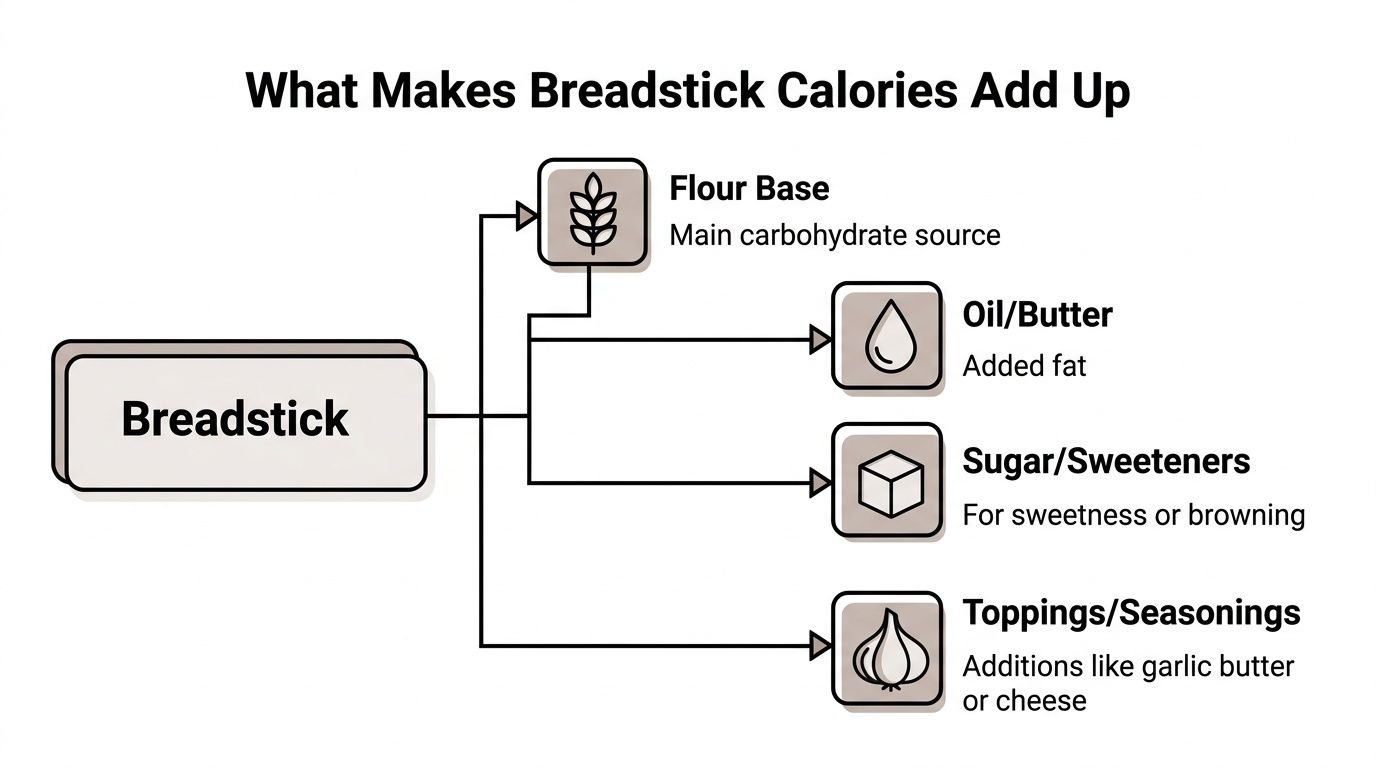
The flour base gives you most of the carbohydrate calories. Then come the add-ons: oil in the dough, butter brushed on top, sugar for browning or flavor, cheese, seeds, or dipping fat on the side. Each one can push the final total higher without making the breadstick look dramatically different.
That's why two breadsticks of similar length can log very differently.
The base is only the beginning
Plain breadsticks are mostly a bread product, so the dough drives most of the nutrition. But restaurants and home bakers often change the formula for texture and flavor. A softer breadstick may contain more fat in the dough, and a shinier surface usually means some kind of oil or butter was brushed on after baking.
If you like baking, you've probably seen this in recipes. Traditional breadsticks can stay very simple, while softer or more indulgent versions often use richer ingredients for tenderness and color. That's also why people looking for a more ingredient-conscious option sometimes prefer products with a homemade taste from an independent maker, where the ingredient list feels easier to understand.
The hidden add-on most people forget
The easiest calories to miss are the ones that don't come from the breadstick itself.
While 1 cup of small plain bread sticks contains 190 calories, calories can compound quickly when people eat 3 to 4 sticks with added butter, which adds approximately 100 calories per tablespoon, based on NutriFox's plain bread stick nutrition page.
That matters because butter doesn't always register as a separate food in your mind. You may think, “I had a few breadsticks,” when what you had was breadsticks plus a spread.
If you've ever wondered why calorie tracking can feel off, this is one of the biggest reasons. Bread is visible. Butter is easy to forget.
A simple mental checklist
Use this quick scan before you log calories in breadsticks:
- Size check. Is it thin like a pencil, or thick like a small roll?
- Texture check. Crisp and dry usually logs differently than soft and chewy.
- Shine check. A glossy surface often means oil or butter.
- Extras check. Cheese, garlic spread, and dips need their own attention.
- Serving check. One breadstick is different from “a basket while talking.”
If you struggle with translating ingredients into calories, a basic primer on how calories work per gram helps make this easier. You don't need to memorize formulas. You just need to know that fat-rich additions pack more energy into a small amount.
If the breadstick looks richer than dry bread, log it like a richer food.
The Truth About Restaurant Breadsticks
You sit down for dinner planning to order one meal, then a warm basket hits the table before the menu decision is even over. By the time your entrée arrives, you may have eaten two or three breadsticks without counting them the same way you would count slices of bread at home.
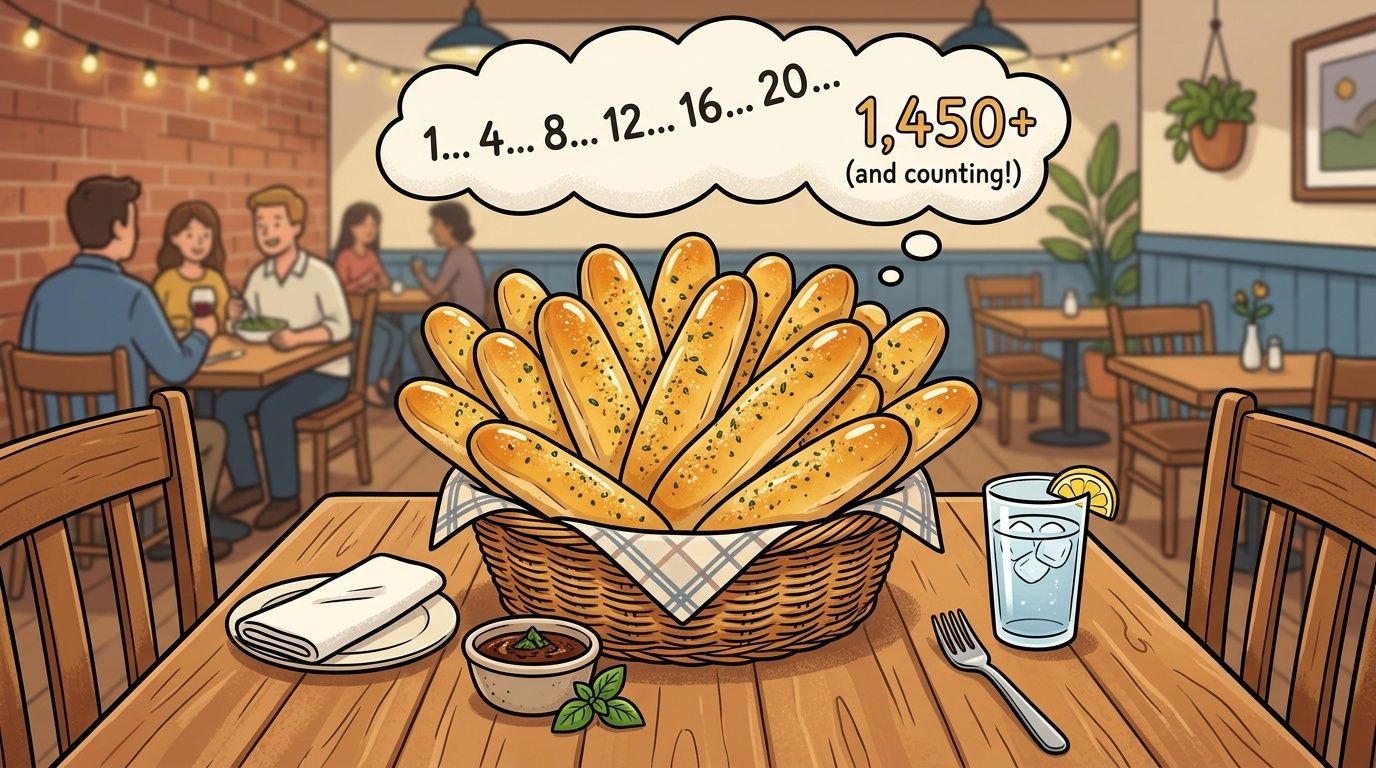
Restaurant breadsticks are often a different food category from the dry, plain versions people picture first. They are usually larger, softer, and brushed or coated with extra flavor after baking.
Olive Garden is a familiar example. One Olive Garden breadstick with garlic-butter spread contains 140 calories per stick, or 28 grams, with a macronutrient breakdown of 73% carbs, 13% fat, and 14% protein. The same listing also puts it at 500 calories per 100 grams according to Eat This Much's Olive Garden breadstick listing.
That higher calorie density makes sense once you look at how restaurant breadsticks are built.
A restaurant breadstick often works like a plain roll plus a finishing layer. The bread provides the base calories. Then the oil, butter, garlic coating, or seasoning adds a little more to every bite. None of that is confusing once you split the food into parts.
Why restaurant versions run higher
Size is the first change. A longer, thicker breadstick contains more dough.
Texture matters too. Soft breadsticks are usually less like crisp grissini and more like enriched bread, which can mean a denser, more substantial bite.
The finish is what catches many beginners off guard. A shiny surface usually means added fat, and fat is the most calorie-dense part of the picture. Even a light brush can change the total more than people expect.
That is why “one breadstick” is not a very useful estimate in a restaurant. It is a label, not a full description.
Why unlimited feels harmless
Restaurant breadsticks are easy to eat on autopilot. They show up before the main meal, often while people are talking, waiting, and not paying close attention to portions. A basket on the table changes the pace of eating in the same way a bowl of chips does. One piece turns into several before your brain logs it as a real part of the meal.
That is also why restaurant estimates work better when you judge the actual version in front of you instead of searching one generic database entry. A practical guide to estimating calories when eating out can make this much easier, especially when restaurant foods include oils, butter, and larger portions that are not obvious at first glance.
Here's a quick visual reminder of the kind of food environment people are navigating:
Restaurant breadsticks are usually richer and larger than the plain versions many people have in mind, so they deserve their own estimate.
Logging Breadsticks Without the Guesswork
When you log breadsticks, the goal isn't perfect math. It's honest consistency.
The easiest starting point is visual. Ask yourself whether the breadstick is small and dry, medium and soft, or large and glossy with toppings. That simple classification gets you much closer than searching “breadstick calories” and picking the first number you see.
Use separate entries when needed
A lot of logging mistakes happen because people combine multiple foods into one mental item. Breadstick plus butter isn't just “breadstick.” Breadstick plus cheese dip isn't just “breadstick” either.
Try logging it in parts when the extras are obvious:
- One plain breadstick
- One restaurant garlic breadstick
- Breadstick plus butter on the side
- Breadstick plus dipping sauce
That may sound fussy, but it reduces confusion. You stop guessing what was included in a generic database entry.
Match the log to the real-world version
For homemade or bakery breadsticks, the safest approach is to think from ingredients. Was the dough lean and simple, or enriched and buttery? Was there a topping brushed on after baking? Did you add anything at the table?
If you cook at home, a guide to calculating calories in homemade food can be particularly helpful. Homemade food often feels harder to track, but it becomes manageable when you treat the recipe as a set of parts instead of one mysterious total.
A simple fallback when you're unsure
If you can't identify the exact type, use the richer estimate when the breadstick is soft, shiny, or heavily seasoned. That's usually better than defaulting to the lowest number and hoping for the best.
Log the breadstick you ate, not the breadstick you wish you ate.
That mindset keeps tracking useful without turning it into a stress project. Close and consistent beats technically perfect but unrealistic.
Enjoying Breadsticks on a Calorie Budget
You don't need to swear off breadsticks to stay on track. You just need a plan before the basket lands.
One option is timing. Ask for the bread to come with the meal instead of well before it. That changes the experience because you're less likely to eat several while distracted and hungry. Another simple move is to decide in advance that you'll have one, enjoy it slowly, and then move on to the main meal.
Small choices that make a real difference
- Keep spreads separate. If butter or oil comes on the side, you stay in control of how much goes on each bite.
- Pair bread with protein. Breadsticks are easier to fit into a meal when they're part of a plate that also includes satisfying foods.
- Watch the “free food” trap. Complimentary food still counts nutritionally.
- Use swaps when the craving is really for crunch. Vegetables with hummus can scratch the same snacky itch for some people.
If you're also paying attention to carbs for blood sugar reasons, broader meal context matters too. A practical example is this guide on managing taco carbs with diabetes, which shows how carbohydrate awareness works best when you zoom out and look at the whole meal rather than one item in isolation.
Breadsticks can fit. The win isn't avoiding them forever. The win is knowing what version you're eating and making a choice on purpose.
If you want calorie tracking to feel less like detective work, PlateBird makes logging meals faster. You can type what you ate in plain language or snap a photo, which is especially handy for mixed meals and restaurant foods that are hard to estimate on the fly.