You’re at a restaurant because life is happening. Maybe it’s a client lunch where everyone orders quickly, or a birthday dinner where the menu is all glossy adjectives and no nutrition info. You want to stay on track, but you also don’t want to spend the whole meal playing detective while everyone else is already halfway through the bread basket.
That tension is normal. It’s also where many find themselves either giving up and guessing wildly, or swinging too hard in the other direction and avoiding eating out altogether. Neither approach works for long.
The skill that does work is learning how to estimate calories when eating out without needing perfection. You need a method that fits real life. Some days that means a fast visual estimate. Some days it means a closer manual calculation. And if you eat out often, the smartest move is building a repeatable system you can reuse.
The Restaurant Calorie Black Box
You sit down with good intentions and order what sounds reasonable. Grilled salmon. Rice. Vegetables. Or maybe a chicken sandwich that seems lighter than the burger. Then the plate arrives, glossy from oil, larger than expected, with a sauce you didn’t realize was part of the meal.
That’s the black box. You can see the food, but you can’t see the butter on the grill, the extra oil in the pan, the oversized scoop of rice, or the generous hand with dressings and sauces. Restaurant meals are built to taste good first. That’s why they’re satisfying, and it’s also why they’re easy to underestimate.

A significant 2013 study published in the British Medical Journal found that consumers systematically underestimate the calorie content of fast food restaurant meals, with adults underestimating by an average of 175 calories, adolescents by 259 calories, and about one-quarter of all participants erring by at least 500 calories (British Medical Journal study).
That’s not a character flaw. It’s a predictable human blind spot.
What usually throws people off
A meal can look clean and still be calorie-dense. A business lunch salad can come loaded with dressing, cheese, candied nuts, and oil on the protein. A celebratory pasta dish can look like “one bowl” while carrying the calories of multiple home portions.
The biggest traps tend to be:
- Invisible fats like cooking oil, butter, mayo, and creamy sauces
- Portion creep where the plate is larger than what you’d serve at home
- Upgrades by default like cheese, aioli, glaze, or a side you didn’t think much about
- Health halos where words like salmon, bowl, or salad make the whole dish seem lighter than it is
Restaurant calorie tracking gets easier when you stop asking, “What’s the exact number?” and start asking, “Where are the hidden calories likely to be?”
If eating out is part of your routine and your medical situation adds another layer of complexity, structured guidance matters. Some people need more than a few generic tips, especially after major weight changes or surgery. In those cases, support like support for bariatric surgery patients in Ohio can help turn restaurant meals from a source of stress into something manageable.
The real goal
You’re not trying to become a human lab instrument. You’re trying to become a better estimator.
That shift matters. Once you accept that restaurant logging is about getting close, you can use practical methods that hold up in practice instead of relying on hope, optimism, or whatever number sounds least offensive in the moment.
Become a Menu Language Detective
Before the plate hits the table, the menu usually tells you more than you think. Not with numbers, but with clues. Good estimators learn to read restaurant language the way a coach reads body language. Certain words almost always signal extra calories. Others usually point to simpler prep.
Red flag words
These aren’t automatic deal-breakers. They’re alerts that the dish probably carries more hidden calories than the base ingredient alone would suggest.
- Creamy means added fat is likely doing a lot of the work.
- Crispy usually signals frying or a coating that changes the meal fast.
- Battered tells you the food has a calorie-dense outer layer before it even hits the fryer.
- Smothered often means sauce, cheese, or both.
- Loaded is rarely subtle.
- Rich is restaurant code for “this tastes amazing because somebody was generous.”
- Stuffed can turn a lean protein into a much heavier dish.
- Breaded changes texture and calories at the same time.
If a chicken breast is grilled and lightly seasoned, that’s one estimate. If the menu says crispy chicken, smothered in creamy garlic sauce, that’s a different category of meal.
Green flag words
These words don’t guarantee a low-calorie dish, but they usually point to cleaner preparation and fewer hidden extras.
- Grilled
- Steamed
- Baked
- Roasted
- Fresh
- Plain
- Lightly dressed
- Sauce on the side
The reason these help is simple. They make the cooking method easier to picture. The easier it is to picture, the easier it is to estimate.
Practical rule: If the menu describes the flavor more than the cooking method, assume there’s more room for hidden calories.
Better ordering scripts
A lot of people know what they should ask for but hesitate because they don’t want to sound difficult. You don’t need a speech. You need a clean sentence.
Try these:
- For sauces: “Can I get the sauce on the side?”
- For swaps: “Can I do vegetables instead of fries?”
- For cooking method: “Can that be grilled instead?”
- For salads: “Please put the dressing on the side.”
- For bowls and platters: “Can you go light on the dressing and heavier on the vegetables?”
That one line often changes the estimate more than people realize. It also gives you more control once the food arrives.
How this looks in real life
At a business lunch, a “crispy chicken ranch wrap” with fries should set off alarms. So should a salad described as “loaded,” “crunchy,” or “tossed in house dressing.” A better move might be grilled chicken, dressing on the side, and a potato or vegetables you can visually estimate more easily.
At dinner, “pan-roasted cod with seasonal vegetables” is easier to work with than “crispy cod over creamy risotto with lemon butter.” One isn’t morally better. It’s just easier to read and log.
If you want to sharpen this skill beyond restaurant menus, learning packaged food language helps too. This guide on how to read nutrition labels makes it easier to spot where calories and macros hide when foods sound healthier than they are.
Master Visual Estimation with Your Hands
A client sits down at a business lunch, the server drops a plate of grilled salmon, rice pilaf, and vegetables, and the conversation moves on before she has ten seconds to think. That is the moment hand estimates earn their keep. This is the good level in the good, better, best framework. Fast enough for real life, structured enough to beat a wild guess.
The goal is simple. Turn one hard-to-read restaurant plate into a few smaller estimates you can trust.
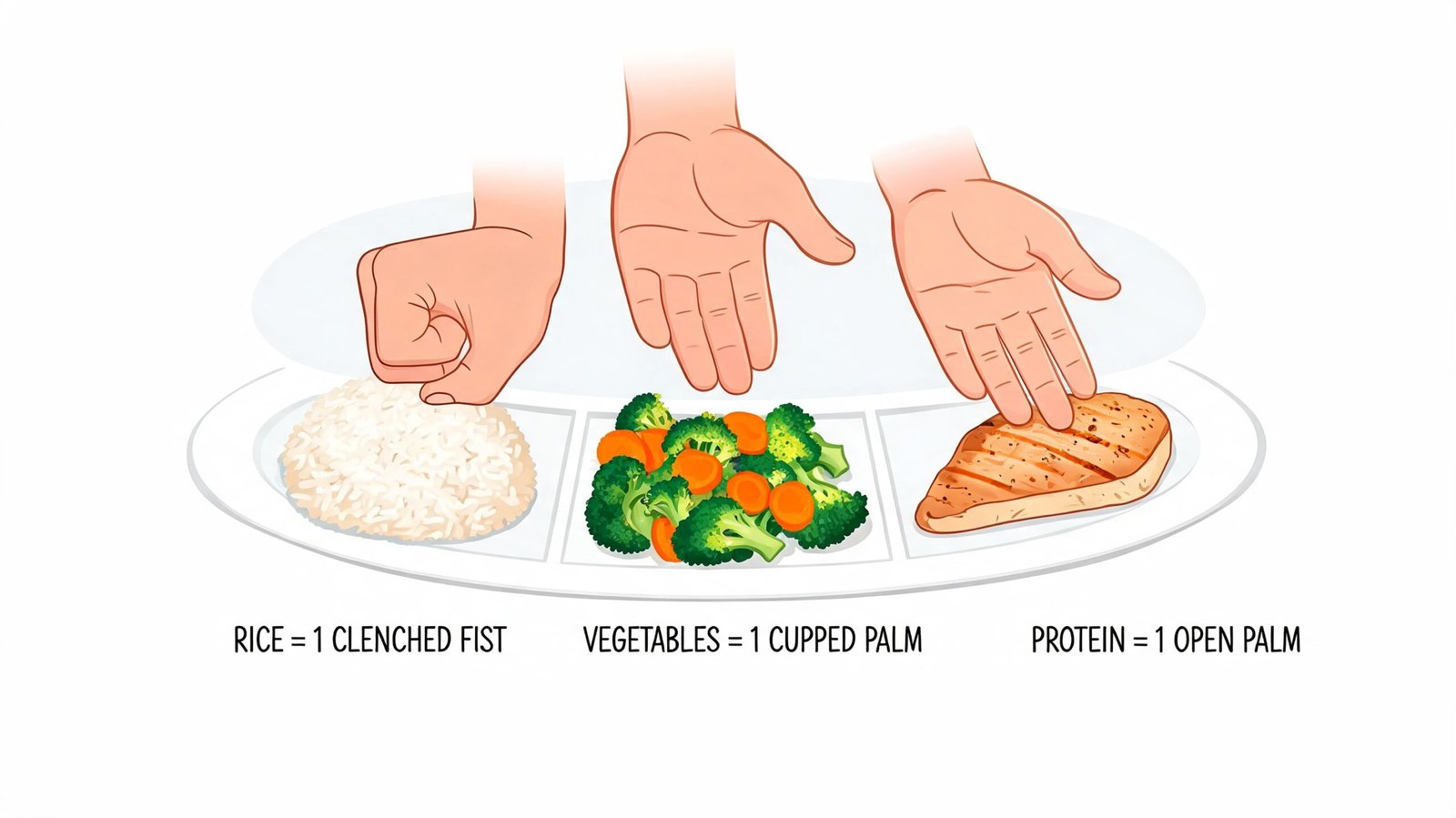
I coach clients to start with three anchors:
- Palm = protein
- Cupped hand = carbs
- Thumb = fats
It is not exact. It is useful. In a restaurant, useful wins.
Start with protein first
Protein is usually the easiest part of the plate to estimate, especially with chicken breast, steak, salmon, shrimp, tofu slabs, burger patties, or sliced meat laid on top of a salad. Compare the portion to your palm, then decide whether it looks like one palm, one and a half, or two.
At a celebratory dinner, a filet may look modest until you notice the thickness. At a business lunch, the grilled chicken on a power bowl may be less than it looked in the menu photo. This is why I tell people to estimate what is on the plate, not what they hoped they ordered.
Mixed dishes take more effort, but the same rule still works. In tacos, pasta, or stir-fries, pick out the visible protein and estimate that portion on its own.
Estimate carbs by volume, not by optimism
Rice, pasta, mashed potatoes, fries, naan, and burger buns add up fast because restaurants serve more than people realize. A cupped hand gives you a solid visual reference. If the rice side fills the space of two or three cupped hands, log two or three. Do not squeeze it into one because the meal looks healthy overall.
A few common situations:
- Rice with an entrée: easy to judge by height and spread on the plate
- Fries in a metal cup or basket: often more than they appear because they are stacked tightly
- Pasta: if it covers most of the plate, treat it like the center of the meal
- Bread before the meal: count it separately, especially if oil or butter is involved
Clients who practice this at home improve faster in restaurants. This guide to serving sizes for weight loss helps train your eye before the plate hits the table.
Fats deserve more respect
At this stage, estimates drift off course.
Oil brushed on vegetables, butter melted over fish, aioli on a sandwich, creamy dressing tossed through a salad, sour cream hidden under taco toppings. You may not see a huge portion, but you can usually see the effect. A glossy plate means added fat. A rich sauce pooled under the food means added fat. A crispy coating usually means more than the menu description admitted.
Use your thumb as the check. If the dish clearly includes one thumb of added fat, count it. If it looks heavily dressed or finished in butter, count more than one.
A plate-by-plate example
Say you order grilled chicken, rice, and mixed vegetables at a hotel restaurant between meetings. The chicken looks about one palm and a bit thick. The rice is close to two cupped hands. The vegetables look light, but they have a visible sheen from oil.
A practical estimate would look like this:
- Protein: about 1 to 1.5 palms of chicken
- Carbs: about 2 cupped hands of rice
- Fat: at least 1 thumb from cooking oil
- Vegetables: usually low impact unless they are clearly sautéed heavily
That gives you a usable number in under a minute.
If you are trying to line up restaurant estimates with your broader calorie and macro targets, Strive Workout's weight loss macro tool can help set the guardrails. Then your hand estimates have context, which matters more than chasing perfect precision at the table.
The long-term win is repetition. Use the same hand rules often enough and you stop seeing a plate as “pasta” or “salad” or “healthy bowl.” You see protein, carbs, fats, and extras. That shift is what makes the better and best methods work later.
The Database Detective Method for Better Accuracy
A business lunch is where hand estimates start to strain. You order a steak burrito from an independent Mexican spot. It arrives the size of your forearm, packed tight, with rice, beans, cheese, sour cream, and enough oil on the tortilla to leave a mark on the plate. A quick visual estimate gives you a starting point. A database check keeps that estimate honest.
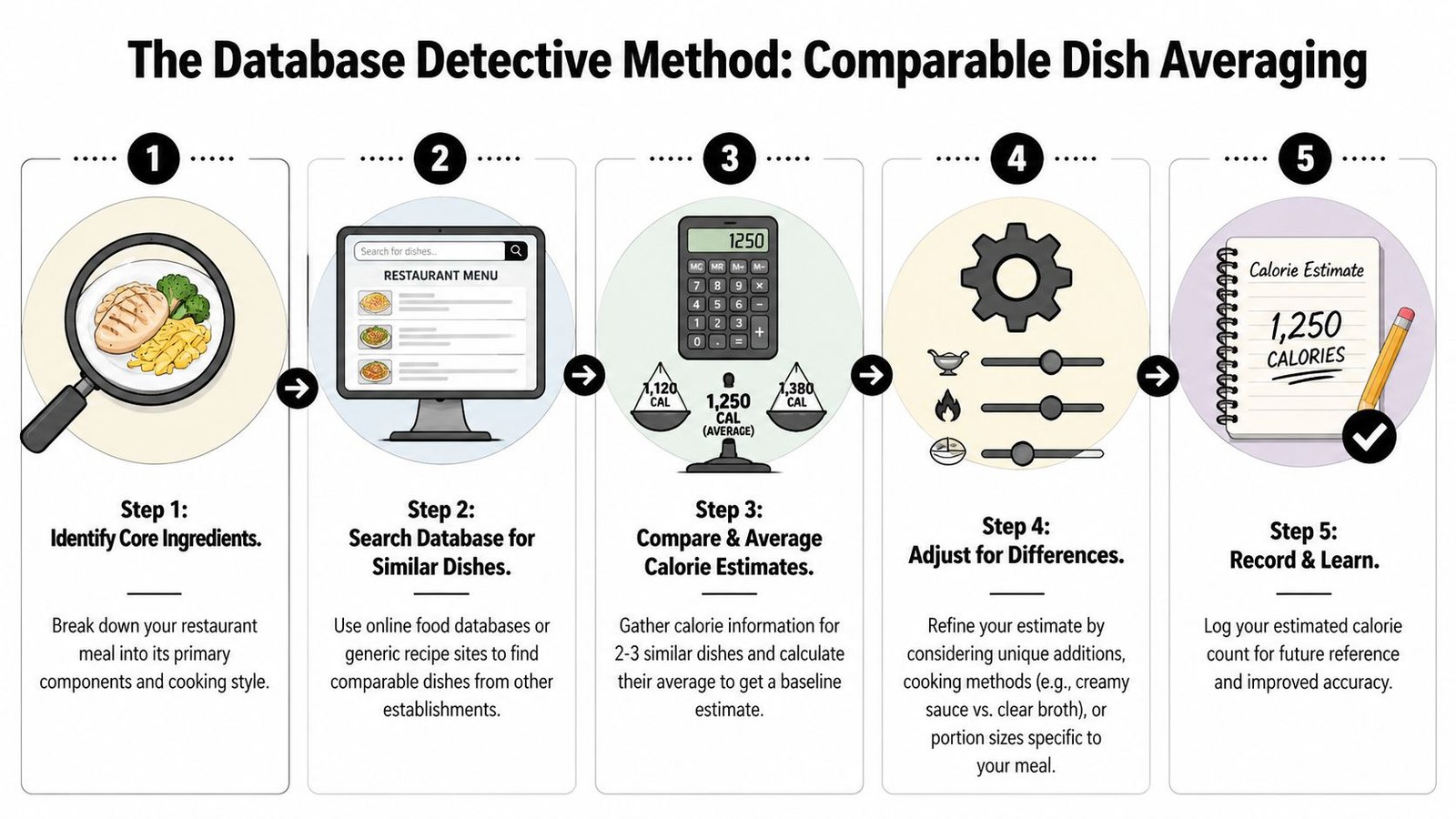
This is the better option in the good, better, best framework. Good is a fast visual call. Better is comparing your meal to published chain nutrition data and using that range to log a number you can defend. Best comes later, when you want the same accuracy with less effort.
I use Comparable Dish Averaging with clients who want more accuracy without turning dinner into math homework. The method is simple. Find two or three similar chain meals, average them, then add a buffer for the reality of restaurant cooking. Independent restaurants often pour more oil, serve larger portions, and vary from cook to cook.
How to do it in real life
A menu says “steak burrito.” Start there, not with “Mexican food.”
Then follow this process:
Match the actual dish
Search for chain burritos with the same main components: steak, rice, beans, cheese, sauces, tortilla.Use more than one comparison
One database entry can be misleading. Two or three gives you a range.Take the middle, not the lowest
Logging the smallest option because it feels safer is how undercounting becomes a weekly habit.Add a reasonable restaurant buffer
If the local version looks bigger, heavier, or more loaded than the chain versions, log accordingly.Count the extras separately
Chips, queso, guac, tortillas on the side, and creamy dressings can change the meal fast.
Here is how that looks at a celebratory dinner. Say the table orders burgers and fries at a local pub. You find two comparable chain burgers, one at 800 calories and one at 1,000. Averaging those gives you 900. If the pub burger is thicker, comes on a buttered brioche bun, and the fries look generous, logging above that average is the disciplined move, not the pessimistic one. For many people, that single decision is the difference between “I tracked” and “I guessed low.”
A worked example
Build-your-own meals are usually the easiest place to practice because you can break them into parts. A lunch bowl with greens, rice, chicken, feta, vegetables, hummus, and dressing might look like this:
- Greens: low calorie base
- Rice: moderate calorie carb portion
- Chicken: primary protein entry
- Hummus and feta: small items that still matter
- Vegetables: usually modest unless cooked heavily
- Dressing: often the swing factor
Add the components, then pressure-test the result against similar fast-casual bowls. If your first total feels suspiciously low for how filling and heavy the meal is, it probably is. That is the value of the database method. It gives you a second filter.
You can use the same approach with Chipotle-style bowls, deli lunches, poke, pasta dishes, and restaurant salads that clearly have more going on than “lettuce and chicken.” If your calorie targets are tied to macro goals, Strive Workout's weight loss macro tool helps set the range you are trying to hit before you start estimating restaurant meals.
Fast calorie anchors for common restaurant meals
These ranges are not there to make you precise. They stop obviously inaccurate logs.
| Dish | Typical low end | Typical high end | Practical use |
|---|---|---|---|
| Steak burrito | Lower end for a smaller, simpler version | Higher end for a large, loaded version | Use chain comparisons, then adjust for size and extras |
| Small non-chain meal | Often lighter lunch plates or simple entrees | Can climb quickly with oil or sides | Good for sanity-checking a quick log |
| Medium non-chain meal | Common for standard restaurant entrees | Higher if sauces and starches are generous | Useful for most sit-down lunches |
| Large non-chain meal | Big pasta dishes, loaded burgers, combo plates | Very high with appetizers or alcohol | Common at dinner spots and celebrations |
What works:
- Comparing your meal to recognizable chain entries
- Using the average or middle of the range
- Bumping the number up when the local portion is clearly larger
- Logging a defensible estimate even if you cannot know the exact recipe
What fails:
- Cherry-picking the lowest database result
- Ignoring sides and add-ons
- Treating restaurant portions like home portions by default
- Skipping the log because the meal is complicated
The payoff is consistency. After you do this a few times, you stop seeing a mystery plate. You see a burrito comparable to other burritos, a pasta comparable to other creamy pastas, a pub burger comparable to other pub burgers. If you want that same process with less manual searching, a macro tracking app that uses AI for restaurant meals can cut the lookup work without giving up accuracy.
The Frictionless Fix with AI Tracking
Manual estimating works. It also asks a lot from you in the middle of a busy day. You have to read the menu well, judge portions accurately, remember the hidden fats, and sometimes search for comparable meals while everyone else is already eating.
That’s why the best version of how to estimate calories when eating out is the one that removes as much friction as possible.
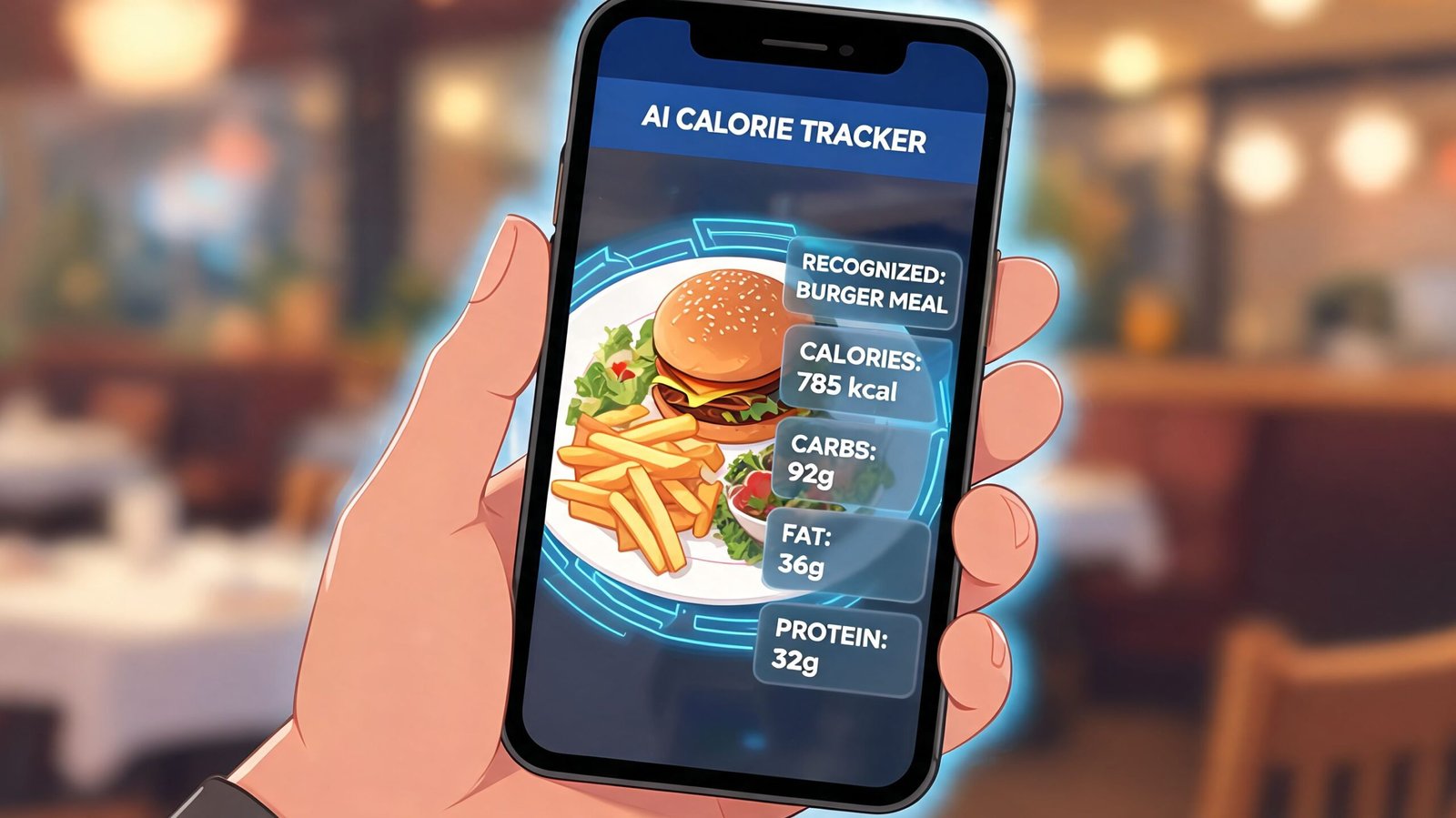
If you’ve ever tried to log a restaurant meal manually, you know the issue isn’t knowledge alone. It’s effort. People can usually estimate once or twice. What breaks is consistency. A long day, a social dinner, travel, a late lunch meeting, and suddenly tracking feels like homework.
AI tools solve that by collapsing multiple steps into one action. Instead of thinking through every ingredient, you type the meal in plain English or snap a photo and let the system do the heavy lifting.
Why fewer steps matters
A good tracking method has to survive real conditions:
- You’re in a rush.
- You’re hungry.
- You’re distracted.
- You don’t want to pull up three different menu pages.
- You don’t want to build a custom entry from scratch.
That’s where app-based AI has an edge over pure manual logging. It reduces the number of decisions between “I ate this” and “it’s logged.”
For people comparing options, this roundup of the best macro tracking app is useful because it focuses on what affects adherence: speed, ease, and how much thinking the app removes.
Text and photo logging change the game
Text logging is underrated. If you can type “chicken rice broccoli” and get a usable estimate instantly, you’re far more likely to track the meal than if you need to search ingredient by ingredient.
Photo logging goes even further. That’s especially helpful when the plate has multiple components and you don’t want to mentally dissect it at the table.
This kind of workflow is easiest to understand when you see it in action:
The best AI tracking doesn’t make you passive. It still benefits from the judgment skills you built with menu reading and visual estimation. You’ll get better results if you can notice that a dish is heavily sauced, oversized, or missing an obvious add-on in the estimate.
What AI does is remove the repetitive burden. It handles the tedious part so you can stay consistent.
Use your coaching brain for the hard calls. Let technology handle the repeatable ones.
Build Your Personal Restaurant Cheat Sheet
Individuals don’t need more calorie facts. They need a system they can use on a Tuesday when they’re tired and ordering from the same three places they always use.
That’s why the smartest final step is building a personal restaurant cheat sheet. Not a giant spreadsheet. Just a short, reusable note on your phone that reflects how you eat.
What to put on the cheat sheet
Start with the meals you order most often. Your cheat sheet should make those meals easy to estimate without starting from zero every time.
Include these sections:
My go-to orders
Write down the dishes you order repeatedly. Think office lunch spots, family takeout, the restaurant you hit after your kid’s game, the date-night place you always choose.Menu words to watch
Keep your own short list of red flags and green flags. You don’t need every term. You need the ones that show up where you eat.My hand guide reminders
Save quick prompts for protein, carbs, and fats so you can scan a plate and move on.Pre-logged estimates for favorite meals
If you order the same burrito bowl, sushi combo, grilled chicken platter, or burger setup often, save your best estimate and reuse it.
A simple template
You can copy this into your notes app:
Restaurant cheat sheet
Favorite lunch spot
Grilled chicken bowl, dressing on side, rice, vegetables
My estimate: saved entryBurger place
Single burger, no bacon, sauce on side, side salad
My estimate: saved entryItalian place
Grilled fish, vegetables, potato
My estimate: saved entryRed flag words
creamy, crispy, battered, loadedGreen flag words
grilled, roasted, baked, steamedVisual reminders
palm for protein
two cupped hands for carbs
thumb for fats
That note becomes your shortcut library.
How to make it accurate over time
Your first version doesn’t need to be polished. It just needs to exist.
Refine it when patterns show up:
- If a meal keeps stalling progress, estimate it more conservatively next time.
- If a restaurant always serves giant portions, note that in the entry.
- If a dish is reliable and easy to estimate, keep it as a safe default.
- If a meal is too chaotic to track well, reserve it for special occasions and treat it as a higher-calorie event meal.
Experience is particularly valuable. The more often you repeat the same restaurants, the less mental effort you need. Estimation gets faster because you’re not solving a new puzzle every time.
Good, better, best in one system
Your cheat sheet should reflect the three levels:
- Good when you need a fast hand estimate at the table
- Better when you can compare a dish to known entries and add a buffer
- Best when your app or saved meal entry lets you log it with almost no effort
That’s what makes the habit sustainable. You’re not relying on motivation. You’re reducing decision-making.
And once your frequent meals are saved, eating out stops feeling like a derailment. It becomes just another logged day.
If you want the fastest way to turn restaurant meals into repeatable, low-friction logs, try PlateBird. You can type what you ate in plain English, snap a photo of the plate, and save recurring meals into one-tap entries. That’s the easiest way to make your personal restaurant cheat sheet usable in real life.