You're probably here because 90 grams of protein sounds both sensible and oddly arbitrary.
Maybe you've seen it in meal-prep videos, fitness posts, or weight-loss advice. It's high enough to feel intentional, but low enough that it seems doable without living on shakes and chicken breast. That's why the number sticks. It feels like a real target.
It can be a useful target. It's just not a universal one. In practice, the smartest way to think about protein is to personalize the number first, then build meals that make it easy to hit with normal food.
Is 90 Grams of Protein Your Magic Number?
You eat a normal breakfast, grab something quick for lunch, make a decent dinner, and still have no idea whether 90 grams of protein is too low, too high, or oddly specific.
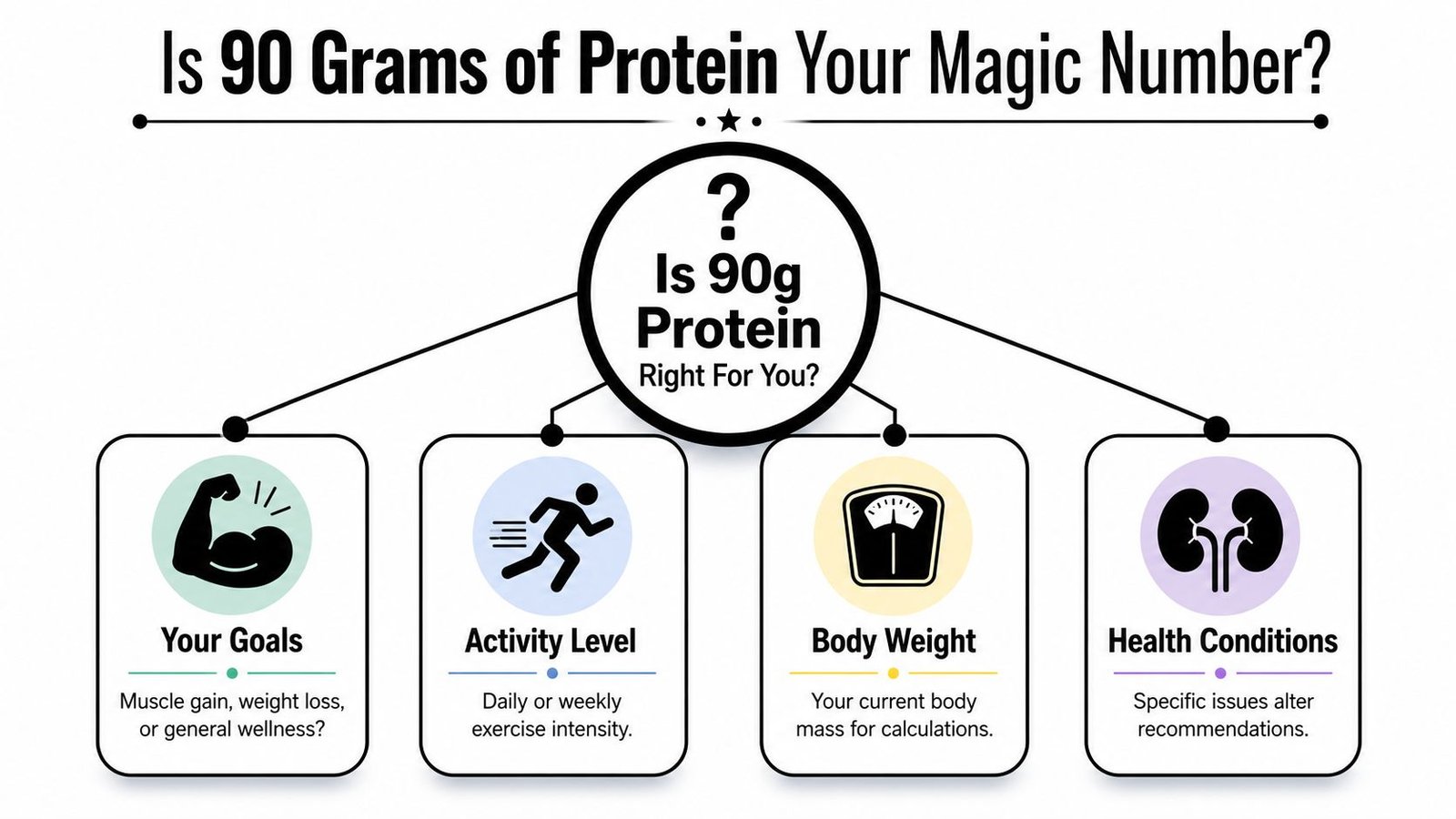
That confusion is reasonable. Ninety grams can be a smart target, but it only makes sense after you match it to your body size, age, activity level, and goal.
A practical way to start is with three quick questions. How much do you weigh? Are you mostly sedentary, older and trying to hold onto muscle, or regularly active? Are you aiming to maintain, lose fat while staying full, or support training recovery? Those answers matter more than the popularity of any round number.
According to the University of Missouri article on protein intake, a 165-pound sedentary adult may only need about 60 grams by the basic RDA, while intake may rise to 75 to 90 grams to support muscle maintenance and independence with aging. The same source notes that active adults and weight trainers may need 1.1 to 1.7 grams per kilogram, which puts a 75 kg person around 90 to 130 grams per day.
That is why 90 grams shows up so often. It lands in the middle of a useful range for many adults, especially if the goal is something more practical than bare-minimum deficiency prevention.
Here is the distinction that clears up a lot of bad protein advice. It is common to confuse “enough to avoid deficiency” with “enough to support your goals.” They are not the same target.
In coaching, I treat 90 grams as a checkpoint.
If you are smaller, less active, and just trying to cover your bases, 90 grams may be plenty. If you are older, it may be a smart daily goal because preserving muscle gets harder with age. If you lift, run, or stay very active, 90 grams may be your starting point rather than your finish line. If you have kidney disease or another medical condition that affects protein planning, your clinician should set the range.
Protein also gets framed as risky far too often. For healthy adults, higher-protein eating patterns within evidence-based ranges are generally considered safe. The concern is not the number by itself. Instead, the trade-off involves food quality, total calories, and whether the plan is realistic enough to repeat.
If you want a simple refresher on how protein contributes to daily fuel, GutRx insights on protein energy adds useful context beyond the usual muscle-building discussion.
For a personalized target based on your weight, age, and routine, use this protein needs calculator guide from PlateBird and treat 90 grams as a reference point, not a rule.
A Simple Meal Plan for 90 Grams of Protein
Breakfast is coffee and toast. Lunch is a salad with barely any protein. By 7 p.m., dinner is carrying the whole day.
I see that pattern all the time, and it is why 90 grams can feel harder than it needs to. The fix is not a rigid menu. It is giving each meal a real protein job.
Build the day around three protein anchors
For many adults, a practical starting pattern is about 25 to 35 grams at each main meal. That gets you close to 90 grams without forcing a huge dinner or relying on shakes.
That range also leaves room for real life. A smaller person with lighter activity might do well with 20 grams at breakfast and a bit more later. Someone older, more active, or trying to maintain muscle during fat loss may feel better closer to 30 grams per meal. If you want a training-focused perspective on meal timing and meal size, your protein strategy with OBF Gyms is a useful companion read.
What matters in practice is consistency. A day with three decent protein servings usually works better than a day with one very high-protein dinner and two light meals.
A mix-and-match template that keeps 90 grams realistic
You do not need to eat the same three meals every day. You need a short list of combinations that are easy to repeat.
| Meal Component | Example | Approx. Protein (g) |
|---|---|---|
| Breakfast base | Greek yogurt bowl plus 2 eggs | 25 to 30 |
| Breakfast plant-forward option | Cottage cheese or soy yogurt with chia, plus edamame or toast with eggs | 20 to 30 |
| Lunch protein | Chicken, grain, and vegetables | 25 to 35 |
| Lunch plant-based option | Lentil or bean bowl with tofu, cheese, or seeds | 25 to 35 |
| Dinner protein | Fish with potatoes or rice and vegetables | 25 to 35 |
| Dinner vegetarian option | Tofu or tempeh bowl with quinoa and vegetables | 25 to 35 |
The table is a template, not a rulebook. If breakfast lands at 22 grams and lunch is 35, that still works.
Meals that add up without protein powder
Here is one simple day built from whole foods:
- Breakfast: Greek yogurt, berries, and two eggs
- Lunch: Chicken bowl with rice, vegetables, and pumpkin seeds
- Dinner: Salmon, potatoes, and broccoli
- Optional top-up if needed: Cottage cheese, roasted edamame, or a glass of milk
That kind of day gets many people to roughly 90 grams without much effort. It also shows why this target is not a magic number. For some people, this is enough. For others, it is a solid baseline that still leaves room for a snack or a larger post-workout meal.
In coaching, the people who hit their protein target most often are not using advanced tactics. They repeat meals they like, keep protein in the fridge, and stop treating protein as an afterthought.
A few habits help:
- Choose the protein first. Decide on eggs, yogurt, chicken, fish, tofu, beans, or cottage cheese before the sides.
- Use side foods to close small gaps. Seeds, cheese, milk, or edamame can add enough protein to rescue a light meal.
- Cook in batches by protein type. A tray of chicken, a block of baked tofu, or a pot of lentils gives you faster lunches all week.
- Keep two no-cook backups. Greek yogurt and cottage cheese work well. So do canned fish or shelled edamame.
If your weekdays go off track by Wednesday, this high-protein meal prep guide from PlateBird gives a practical system for keeping enough protein on hand without turning food prep into a second job.
Visualizing Portions and Smart Protein Snacks
Numbers are tidy on paper. They're fuzzier when you're standing in your kitchen looking at a bowl, a pan, or a lunch container.
That's why I like to shift people away from abstract math and toward visual patterns. If a meal has a real protein center, you can usually tell before you ever track it.
What 30 grams tends to look like
A practical plate often makes sense before the label does.
A portion of chicken or fish that covers most of your palm usually looks like a real protein serving, not a garnish. A bowl built around Greek yogurt looks different from one that uses yogurt as a topping. Tofu works best when it's the main event in the pan, not a few cubes mixed into a mountain of vegetables.
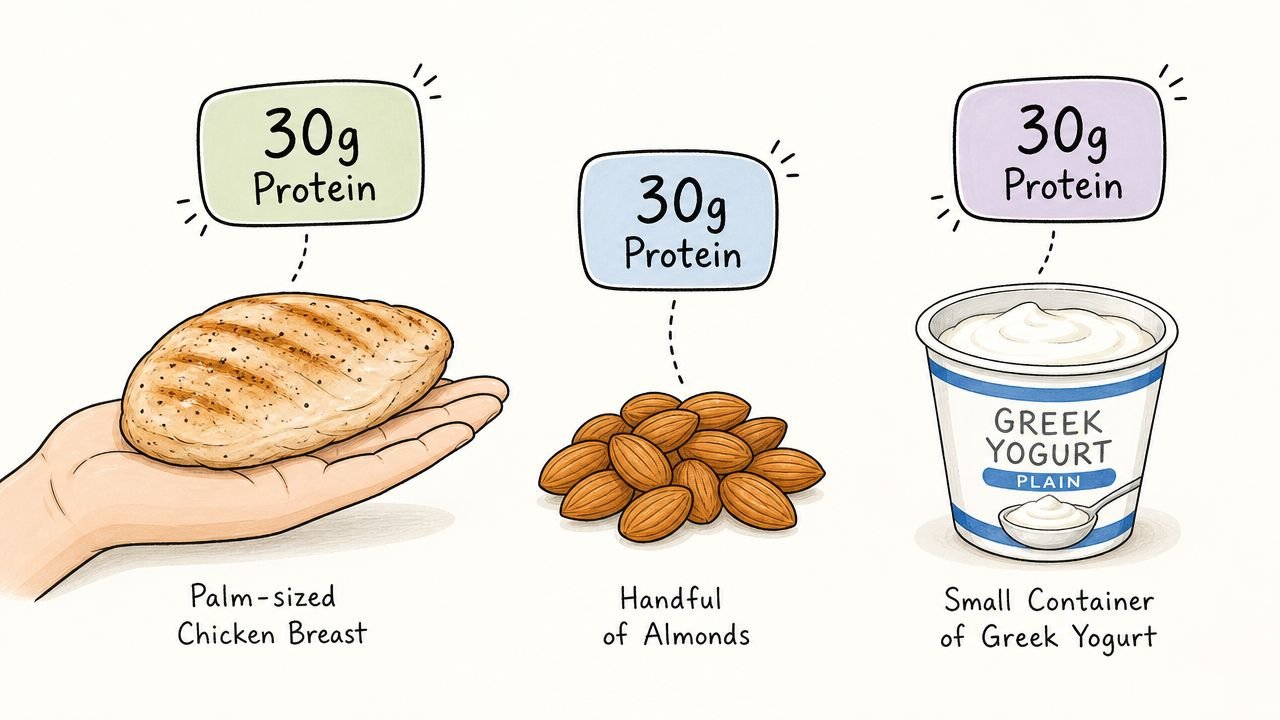
The visual shift matters because many meals that people call “healthy” are still light on protein. Oatmeal with fruit. Salad with lots of vegetables. Toast with nut butter. Those foods can fit well into a balanced diet, but they often need help if your goal is 90 grams of protein.
Snacks can rescue a low-protein day
Snacks aren't mandatory, but they're useful when a meal undershoots.
A mid-morning or afternoon snack can bridge the gap without forcing dinner to do all the work. The easiest options are the ones that require almost no thought once you've bought them.
A few reliable examples:
- Greek-style or strained yogurt: Easy to keep on hand and easy to pair with seeds.
- Edamame: A strong option when you want something savory and plant-based.
- Cottage cheese: Simple, filling, and useful when meals have been carb-heavy.
- Jerky: Convenient for busy days, though ingredient quality still matters.
- Nuts and seeds: Better as a booster than a sole protein source.
A smart snack doesn't need to be perfect. It just needs to move the day back into balance.
The easiest way to use snacks well
Use snacks strategically, not automatically.
If breakfast and lunch were protein-forward, you may not need one. If breakfast was light or lunch was rushed, a snack can keep the day from unraveling. This is especially helpful for people who think they “can't” reach 90 grams, when one meal was too light and no correction was built in.
In practice, snacks work best as small course corrections. That mindset keeps them useful instead of random.
Effortlessly Track Your Intake with PlateBird
Even a good protein plan can fall apart when tracking feels like paperwork.
That's the part many people underestimate. They don't stop aiming for 90 grams of protein because the goal is unreasonable. They stop because logging food becomes annoying, repetitive, and weirdly time-consuming.
Friction is the real problem
Traditional tracking often asks too much. Search for every ingredient. Pick from duplicate food entries. Guess which database listing is right. Repeat that for every meal.
That's exactly why tools that reduce friction matter. PlateBird is designed around a much simpler behavior. You type what you ate in plain language, and it calculates calories and macros for you. If you prefer visuals, you can snap a photo and let the app identify the foods and estimate nutrition.
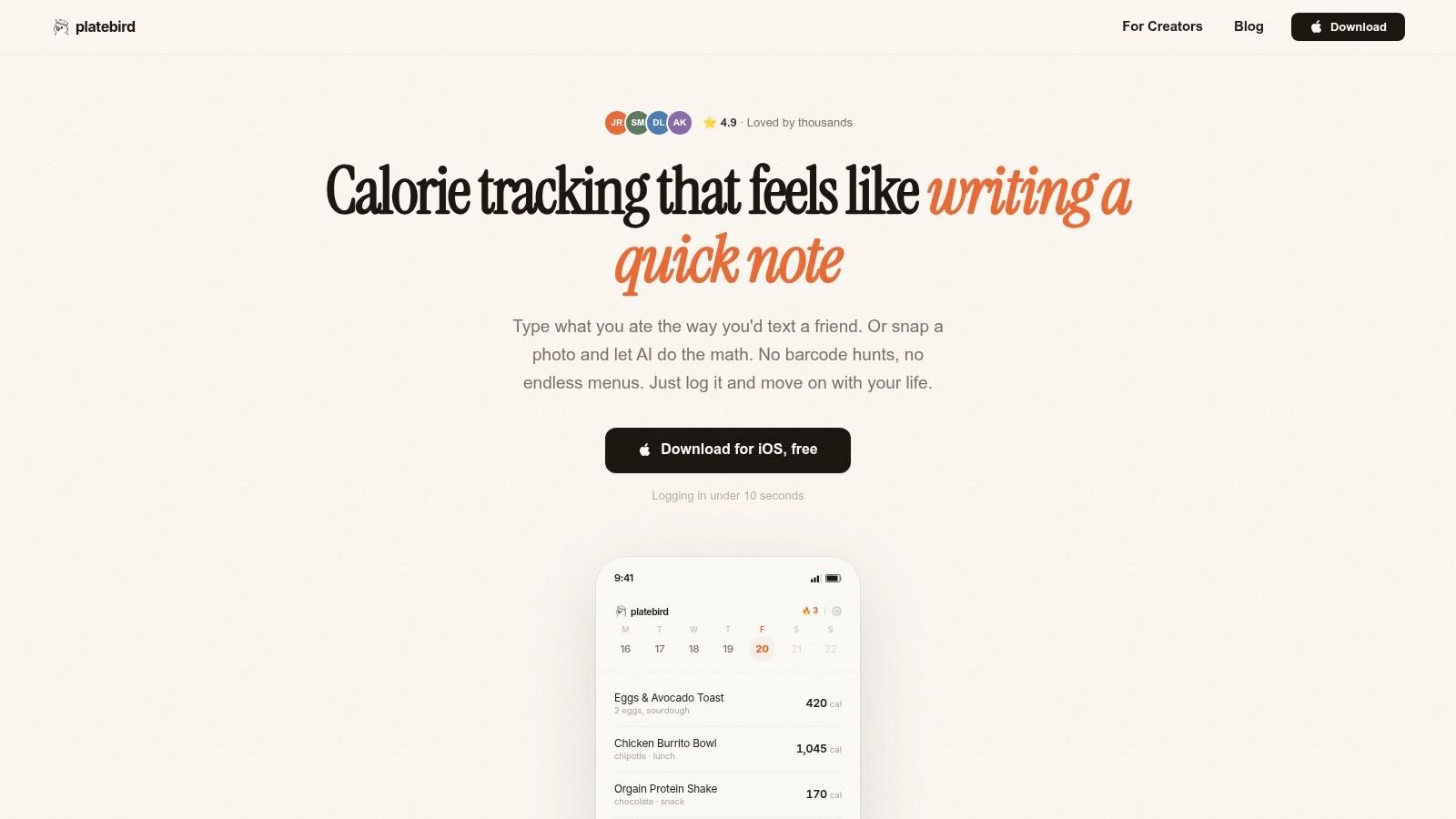
That matters for protein because consistency beats precision theater. You don't need to obsess over every bite. You do need a fast way to notice patterns.
What tracking should help you see
The best food log answers simple questions:
- Was breakfast protein-light?
- Did lunch carry enough of the day?
- Am I relying on dinner to catch up?
- Are my “healthy” meals balanced?
Once you can see those patterns, the problem becomes fixable. You stop guessing. You start adjusting.
Coach's note: Good tracking should feel like feedback, not punishment.
PlateBird also learns from repeat meals, which is especially helpful if you cycle through the same breakfasts, lunches, or meal-prep staples. That turns routine eating into one-tap logging instead of daily re-entry.
If you want a closer look at how these tools compare, this guide to the best macro tracking app breaks down what makes tracking practical rather than tedious.
Common Protein Myths and Your Supplement Strategy
A client hits 90 grams for the first time and immediately asks two questions. “Is that too much?” and “Do I need a shake every day to keep it up?”
Those questions come up for a reason. Protein advice gets distorted fast, especially once a personalized target gets repeated like a universal rule.
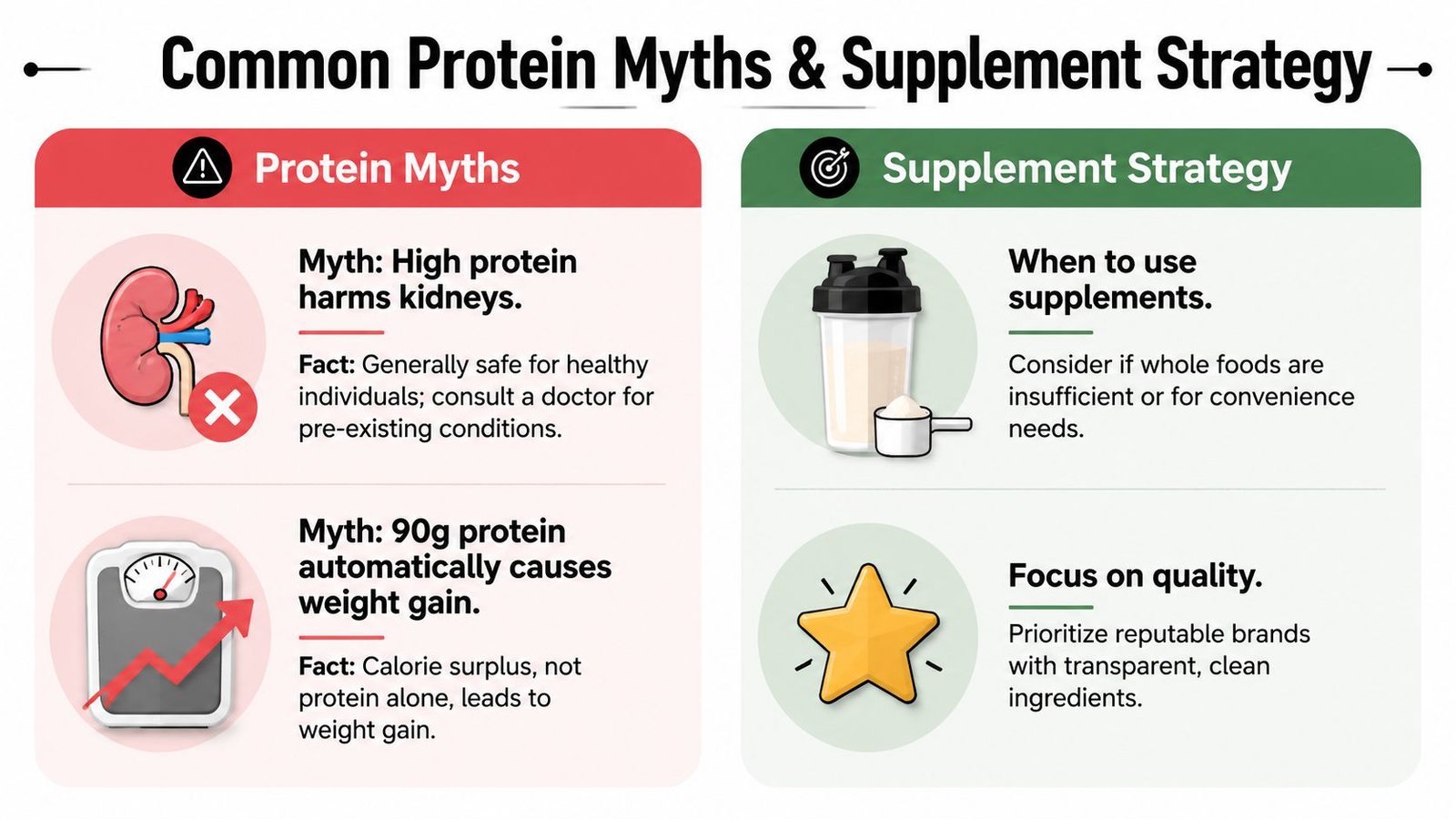
Myth one, 90 grams is automatically too much
For many healthy adults, 90 grams is a reasonable intake. For others, it may be more than they need, or not enough. Body size, age, activity, dieting phase, and appetite all matter.
The bigger point is that “high protein” is relative. The Harvard T.H. Chan School of Public Health protein guide explains that protein needs depend on the person, and it also notes that concerns about protein harming kidney function are mainly relevant for people who already have kidney disease. That matches what I tell clients. Healthy kidneys and diagnosed kidney disease are two different conversations, and they should never be lumped together.
So if 90 grams feels high, do the math against your actual situation before calling it excessive.
Myth two, more protein means automatic weight gain
Protein does not cause fat gain on its own. Total intake still matters, and so does the form that protein comes in.
A grilled chicken bowl, lentil soup with yogurt, or tofu stir-fry usually fits very differently into a day than breaded chicken sandwiches, processed snack sticks, and oversized restaurant portions. Same nutrient category. Different calorie load, different fullness, different habit pattern.
This video does a good job of explaining the practical side of that balance.
Do you need protein powder
No. Whole foods can cover this target for many people, and they usually give better staying power because they bring volume, texture, and other nutrients with the protein.
The International Society of Sports Nutrition position stand on protein and exercise makes a practical point here. Protein supplements are a convenient way to meet needs, not a requirement. That is the right frame. Use powder if it solves a real problem, such as rushed mornings, low appetite after training, travel, or a limited food setup at work.
I usually suggest a food-first approach, then add a supplement only if there is a clear gap. If breakfast is consistently light and dinner is doing all the work, a shake may help. If meals already cover the target, supplements add cost more than value.
If you do buy one, keep standards simple. Pick a product you tolerate well, with ingredients you recognize, and use it to support meals instead of replacing them by default. If you want a broader look at supplement options in the context of overall wellness, support your wellness with proteins offers a useful product category overview.
Whole foods should handle most of the workload. Supplements are there for convenience, not as the foundation of your protein intake.
Start Building Your High-Protein Habit Today
The best protein target is the one you can hit consistently with food you enjoy.
If 90 grams of protein fits your body, age, and activity level, start small. Raise the protein in one meal first. Breakfast is often the easiest win. Then add one dependable lunch, one dependable dinner, and one snack you can keep around for busy days.
You don't need a perfect menu. You need a repeatable rhythm. Protein intake gets easier when you stop treating it like a daily test and start treating it like meal structure.
A few solid habits done often will beat a perfect plan you abandon by Thursday.
If you want a low-friction way to keep your protein goal visible, PlateBird makes tracking simple. You can type your meals in plain English, snap a photo, and get quick macro feedback without the usual logging hassle. That's especially helpful when you're trying to see whether your normal meals add up to your target.