- Why Your Protein Goal Is More Than Just a Number
- The Foundational Methods for Calculating Protein Needs
- Adjusting Your Protein Intake for Your Goals and Activity
- Protein Calculation Examples for Common Scenarios
- From Calculation to Your Plate Practical Tracking Tips
- Common Questions About Daily Protein Intake
You're probably here because protein advice has turned into background noise. One post says you need the bare minimum. Another says every meal should be a protein bomb. A calculator gives you one number, your gym friend gives you another, and neither tells you what to do when real life means work meetings, takeout, or a breakfast that's mostly coffee.
That's why protein gets confusing. The math is simple enough. Living it is the hard part.
A useful protein target should do two things. It should fit your body and goal, and it should be realistic enough that you can hit it most days without turning eating into a part-time job.
Why Your Protein Goal Is More Than Just a Number
A lot of people start with the same question: “How much protein do I need?” What they usually mean is something more practical. “How much protein do I need if I want to lose fat without feeling hungry all day?” Or, “How much do I need if I'm training and don't want my effort wasted?”
That difference matters.
Protein isn't just a number on a tracker. It helps you build and maintain muscle, recover from training, and make meals feel more satisfying. When someone tells me they're trying to “eat better,” one of the first things I look at is whether their meals contain enough protein to support the result they want.
Why online advice feels all over the place
One person is talking about the minimum needed for health. Another is talking about performance. Another is sharing what worked for their very specific routine.
That's why broad explainers can be helpful but still leave you stuck. If you want a plain-English overview of how protein fits into a diet, the Smokey Rebel protein guide is a solid starting read because it helps frame protein in everyday terms instead of bodybuilding jargon.
There's also a quality question, not just a quantity question. If your meals technically hit a target but most of that protein comes from low-quality, inconsistent choices, the plan gets harder to repeat. A simple protein quality chart can help you compare foods without overthinking every bite.
Protein works best when the number matches your life. A perfect target that you never hit is less useful than a good target you can repeat.
What usually works better
Individuals achieve better results when they stop chasing random advice and use a personal range instead. Start with a baseline. Adjust for activity, age, and goal. Then ask the question most articles skip: can you eat this way on a Tuesday?
That's the part that changes everything.
The Foundational Methods for Calculating Protein Needs
If you want to learn how to calculate daily protein needs, start with the method that gives the clearest answer fastest. This often means using body weight.
A foundational rule used globally for healthy adults is the Recommended Dietary Allowance of 0.8 g/kg/day, which is the minimum intake set to maintain body tissues and normal function. In practical terms, a person weighing 80 kg (176 lb) would need about 64 g of protein per day, and a 65 kg (143 lb) adult would need about 52 g per day. This standard is also often expressed as 0.36 g per pound for easier conversion in imperial units, as outlined by the American Heart Association protein guidance.
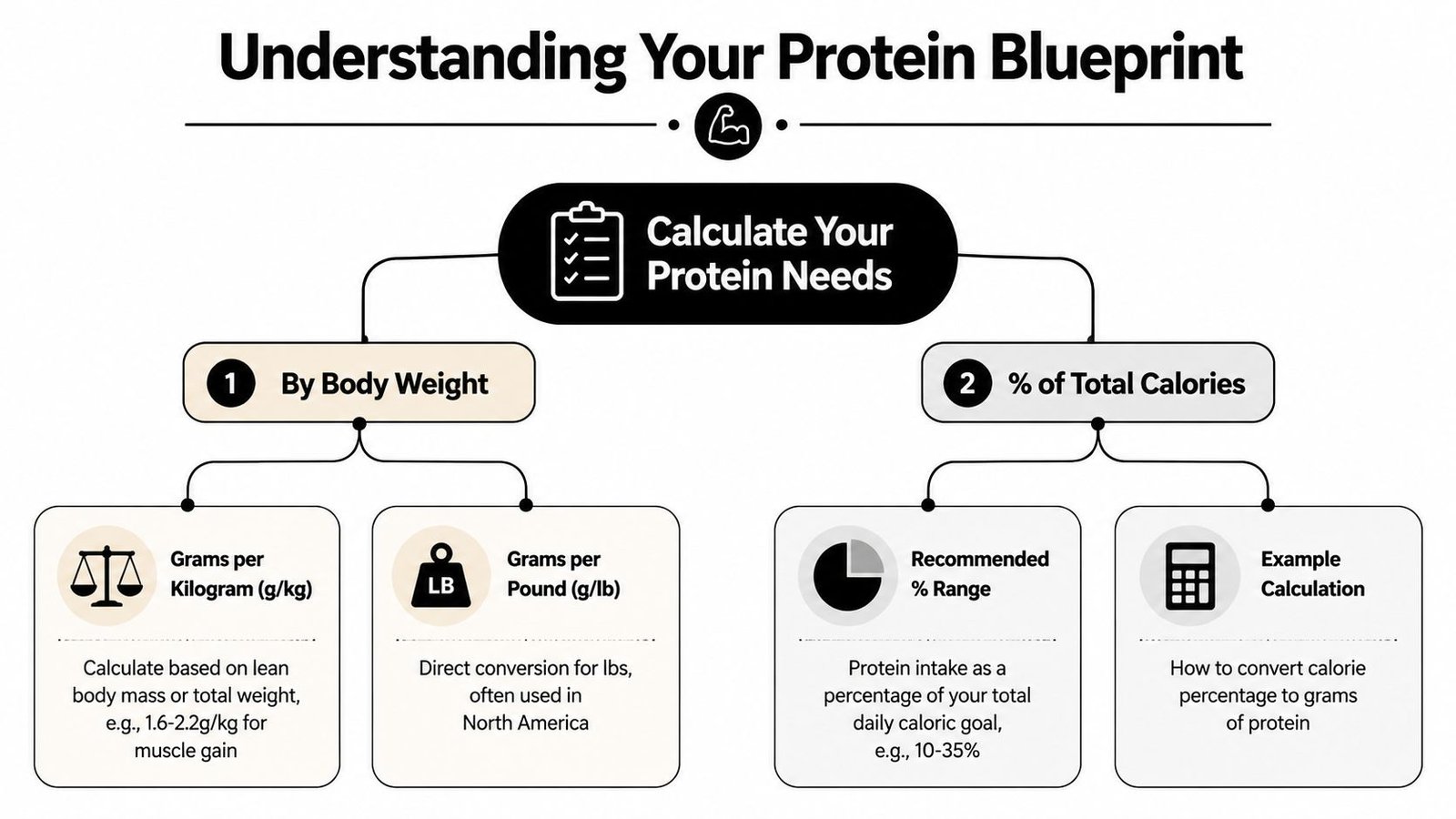
Method one uses body weight
This is the most practical approach because it ties protein to the size of the body it needs to support.
Here's the basic formula:
- Take your body weight in kilograms
- Multiply by your protein target in grams per kilogram
- The result is your daily protein goal
If you prefer pounds, you can use the per-pound version where appropriate, but kilograms make the math cleaner because most formal guidance uses g/kg.
This method works well because it's direct. It also makes it easier to adjust your intake later if your goal changes from general health to fat loss, muscle gain, or healthy aging.
Method two uses a share of total calories
Some people prefer to think in macros, not just grams. In that case, protein can also be estimated as part of your daily calorie intake.
The catch is practical. This method only works well if you already know your calorie target and regularly think in macro splits. If you don't, it often adds complexity without giving you a better answer.
Practical rule: If you're new to nutrition, body-weight math is usually easier to use than percentage-of-calories math.
For most clients, I treat calorie percentage as a secondary check, not the main tool. If you already track carbs, fats, and calories, it can help you keep the full plan balanced. If you don't, it tends to feel abstract.
A good primer on that bigger-picture macro setup is this guide on what your macros should be.
What the baseline does and does not do
The RDA gives you a minimum baseline, not a performance target. That distinction gets missed all the time.
If someone is mostly sedentary and just wants a health floor, the baseline is useful. If they train hard, are dieting, or are older and trying to maintain strength, the baseline is often just the starting point for a more customized number.
Adjusting Your Protein Intake for Your Goals and Activity
The “one formula for everyone” idea falls apart.
Protein needs change when your body is doing more work, recovering from training, trying to hold onto muscle during fat loss, or dealing with the natural changes that come with aging. Daily protein needs rise substantially with activity level, age, and energy deficit, which is why many calculations go beyond the baseline. For active adults and athletes, published guidance commonly recommends 1.2 to 2.0 g/kg/day, while related sports guidance cited by Mass General Brigham gives 1.2 to 1.7 g/kg/day. For example, someone weighing 200 lb (91 kg) may need about 109 to 155 g/day in that active range. In older adults, some clinical guidance recommends 1.0 to 1.2 g/kg/day to help prevent age-related muscle loss, and some nutrition texts note that protein may be increased up to 2.0 g/kg/day during an energy deficit to help preserve lean mass, as summarized in this protein needs reference from Cal State Pressbooks.
Different goals change the job protein is doing
If your goal is general health, protein mostly supports maintenance.
If your goal is muscle gain, protein supports repair and growth after training.
If your goal is weight loss, protein helps protect lean mass while calories are lower. That's one reason higher-protein diets often feel easier to stick to than low-protein ones. Meals tend to feel more substantial, and your body has better support for holding onto muscle while you lose weight.
For older adults, the focus often shifts again. The goal may be less about changing body composition and more about maintaining strength, function, and independence.
Daily protein recommendations by goal
| Primary Goal | Grams per Kilogram (g/kg) | Grams per Pound (g/lb) |
|---|---|---|
| General healthy adult baseline | 0.8 | 0.36 |
| Active adult or athlete | 1.2 to 2.0 | qualitative equivalent varies |
| Active adult in commonly cited sports guidance | 1.2 to 1.7 | qualitative equivalent varies |
| Older adult support range | 1.0 to 1.2 | qualitative equivalent varies |
| Energy deficit with lean-mass focus | up to 2.0 | qualitative equivalent varies |
Because the verified guidance is strongest in g/kg, that's the number I'd use first. It's more precise and easier to compare across goals.
A sedentary person, an active parent trying to lose fat, and a retired adult working on strength should not all be using the exact same protein formula.
What tends to work in practice
A few patterns hold up well:
- If you're not very active, start near the baseline and build meal consistency before chasing higher numbers.
- If you lift, run, or train regularly, move into the active range instead of pretending the minimum will cover performance and recovery.
- If you're cutting calories, don't lower protein to make room for everything else. That usually backfires.
- If you're older, don't assume lower appetite means lower need. In many cases, the opposite planning problem shows up.
What doesn't work is picking a target because it sounds intense or impressive. High numbers aren't automatically better. A useful target is one that matches your goal and can be distributed across meals you'll eat consistently.
Protein Calculation Examples for Common Scenarios
At this point, the numbers stop feeling theoretical.
A lot of calculators spit out a target but don't explain who should use current weight and who might think more carefully about goal context. That gap matters. Many calculators still use one body-weight formula for everyone, yet guidance for older adults and people with weight-loss or illness goals often changes the calculation to help prevent lean-mass loss rather than scaling directly to current body weight. MD Anderson notes that adults 65+ should use about 1.0 to 1.2 g/kg to help prevent weight loss, while active adults may need 1.2 to 1.5 g/kg, which is explained in their dietitian Q&A on protein needs.
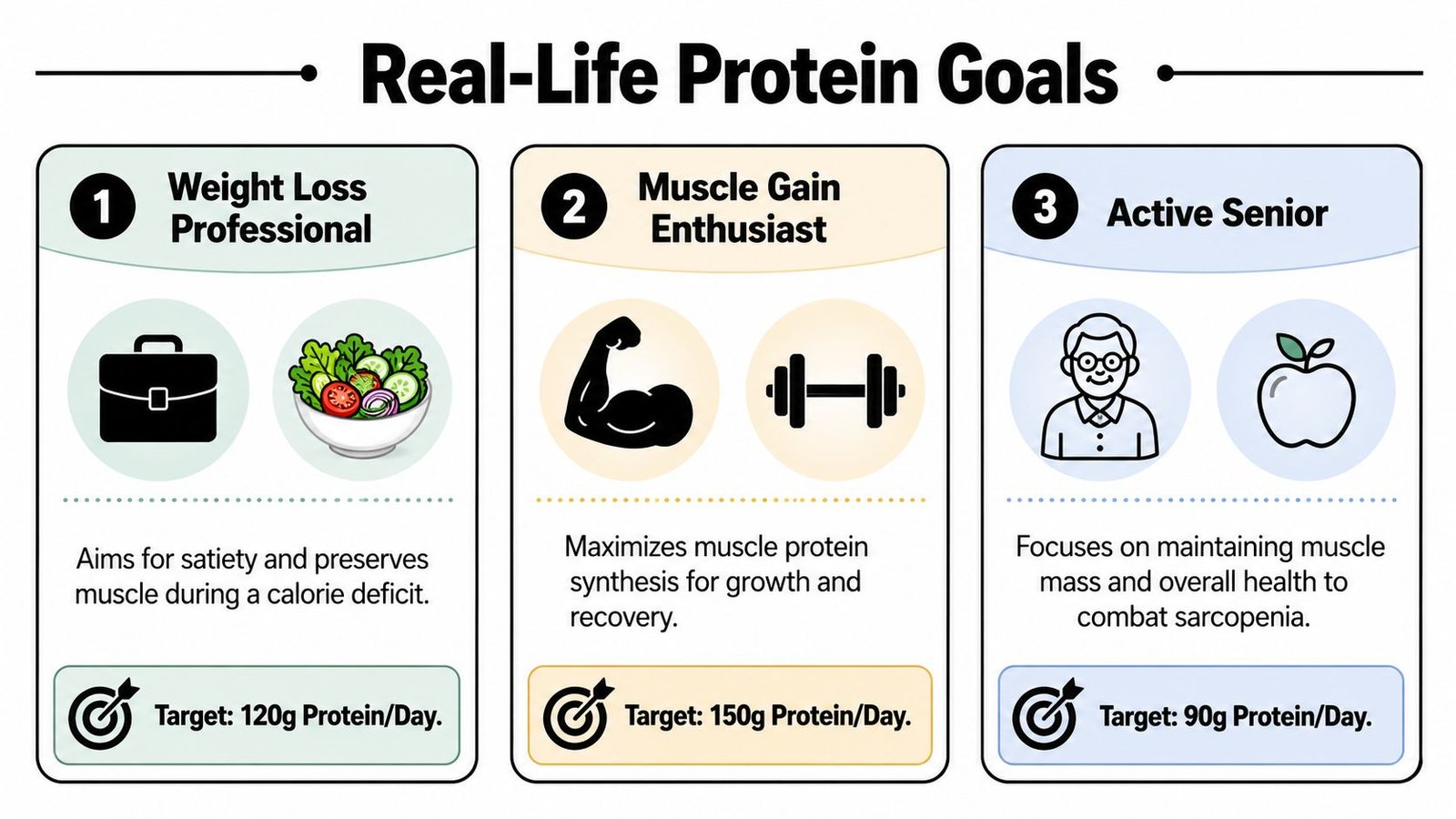
The busy professional trying to lose weight
Let's say someone weighs 80 kg and wants to lose body fat without giving up strength.
The baseline would be 64 g/day using the minimum formula from earlier. But because this person is eating in a calorie deficit and wants to preserve lean mass, a higher target makes more sense than the bare minimum.
The useful takeaway isn't to chase the highest possible number. It's to avoid using a sedentary maintenance number for a fat-loss phase that asks your body to hold onto muscle.
The gym-goer focused on muscle gain
Now take a person who weighs 91 kg, roughly 200 lb, and trains consistently.
Using the active range already covered, this person may land around 109 to 155 g/day depending on training load and context. That's a wide span, but that's real life. Someone lifting a few times per week and someone training hard across the week don't need the exact same intake.
The older adult prioritizing strength maintenance
Take an adult over 65 who weighs 65 kg and wants to stay strong, independent, and well-nourished.
The basic RDA would put them at 52 g/day, but the older-adult guidance above places them closer to 1.0 to 1.2 g/kg. That moves the target higher than the simple minimum and often better reflects the goal, which is maintaining function and reducing the risk of unintentional muscle loss.
The best protein number is the one that matches the body you have, the goal you're pursuing, and the phase you're in right now.
From Calculation to Your Plate Practical Tracking Tips
Knowing your number is one job. Eating it is another.
A major gap in protein advice is what happens after the calculator result. Many articles give you the grams-per-day math but stop before the part people struggle with most. Translating that target into meals. Practical guidance often works better when protein is spread across three meals and snacks, rather than crammed into one big dinner, which is one reason this protein calculator explainer stands out.
Make the daily target easier to hit
A few habits make protein simpler without making eating obsessive:
- Anchor each meal with protein first. Decide the protein source before you think about sides.
- Use repetition on busy days. A repeat breakfast or lunch can remove a lot of decision fatigue.
- Prep the boring parts in advance. Washed produce, cooked staples, and portion-ready proteins make better choices easier to repeat.
If you batch-cook or pack lunches, practical storage matters more than people think. Good containers won't solve nutrition by themselves, but they do make consistency easier. This roundup of GrifGlo's meal prep advice is useful if your routine falls apart between cooking and transporting food.
Tracking should reduce friction, not add more
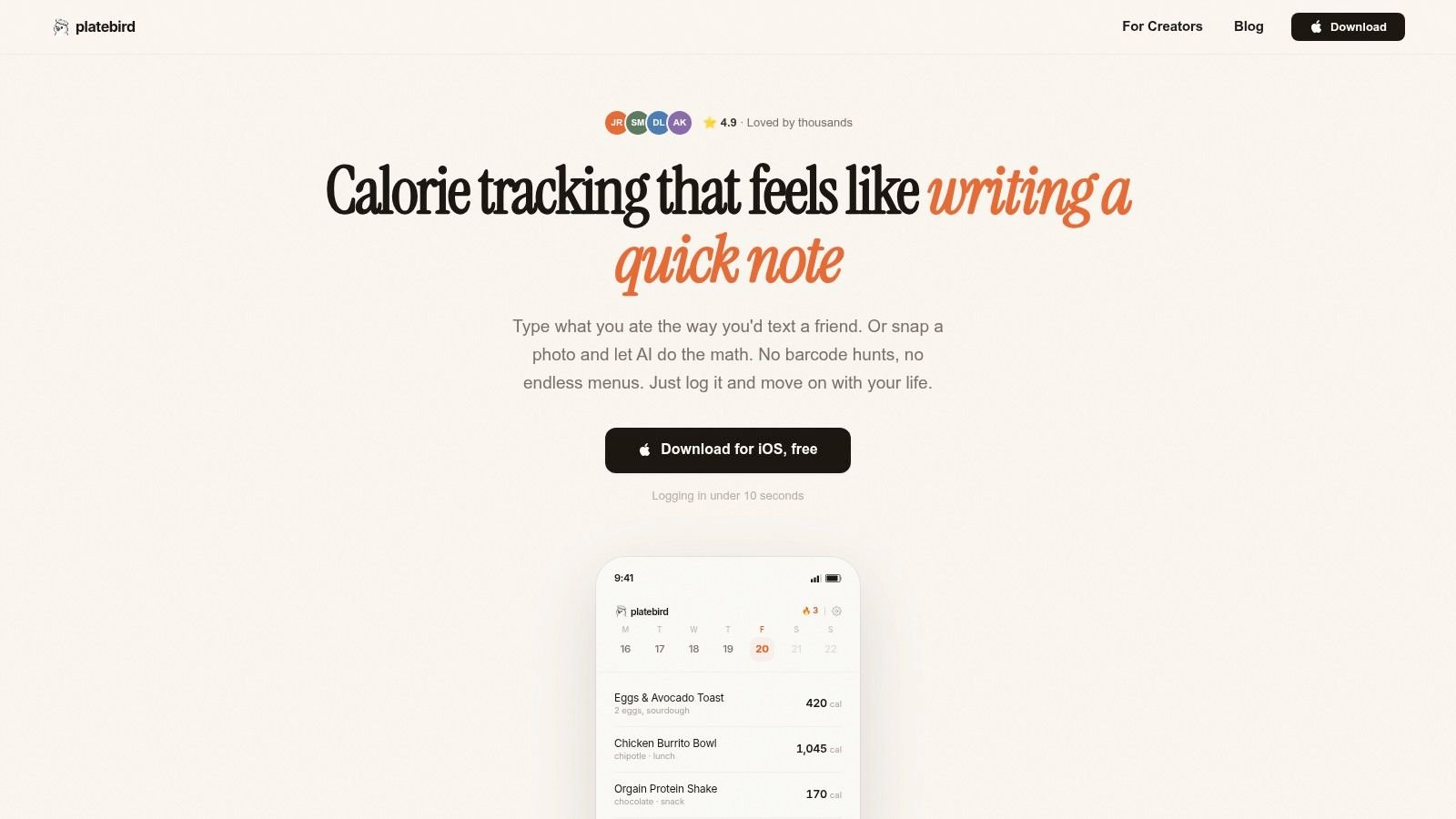
Traditional food logging can be tedious. That's why many people quit even when they're motivated. If tracking takes too long, the plan breaks under its own weight.
The better approach is fast capture. Log meals, review patterns, and move on. If you want a cleaner system for learning the basics, this guide on how to count macros helps connect the math to everyday meals.
Sometimes seeing the flow helps more than reading about it. This walkthrough gives a clearer sense of how quick logging can fit into a normal day.
If your tracking method feels heavier than your nutrition plan, you probably won't stick with it.
What usually fails
People often miss protein for predictable reasons. Breakfast has almost none. Lunch is carb-heavy and rushed. Dinner turns into a catch-up meal for the whole day.
That pattern is common, but it's fixable. A steady rhythm across meals usually works better than trying to rescue the day at night.
Common Questions About Daily Protein Intake
Is higher protein always better
No. Better means appropriate for your goal, activity, and life. More protein isn't automatically more effective if it crowds out the rest of your diet or creates a target you can't sustain.
Should I focus more on the total or meal timing
Overall daily intake comes first. After that, distribution matters because it's easier to hit your goal and support recovery when protein shows up across the day rather than all at once.
What if I struggle to eat enough protein from regular meals
Start by upgrading meals you already eat instead of rebuilding your whole diet. Add a stronger protein source to breakfast. Make snacks more intentional. If a supplement helps fill a real gap, that can be practical too. For people exploring convenient options, Healtsy wellness protein is one example of a neutral protein product that may fit into mixed meals or drinks depending on your needs.
If you want the easiest way to turn your protein target into a daily habit, try PlateBird. It's built for fast calorie and macro tracking, so you can type what you ate or snap a photo, get your protein count quickly, and stay consistent without turning every meal into a spreadsheet.