
- Your Guide to Clean Protein Powder Starts Here
- The Why Behind Skipping Artificial Sweeteners
- How to Read Labels and Identify Hidden Sweeteners
- Embracing Natural Sweeteners and Unflavored Options
- Finding the Right Protein Source for You
- Creative Protein Recipes Beyond the Smoothie
- Smart Buying and Easy Macro Tracking
You're in the supplement aisle, holding a tub that says “lean,” another that says “natural,” and a third that says “zero sugar.” All three look healthy. Then you flip them over and the ingredient lists start reading like a chemistry quiz.
That's usually the moment people realize they're not just buying protein. They're also buying flavor systems, thickeners, sweeteners, and marketing language.
If you've been looking for protein powder without artificial sweeteners, you're probably not trying to be perfect. You just want something simpler. Maybe you're tired of the metallic aftertaste. Maybe your stomach feels off after shakes. Maybe you want a powder that fits into your meals without turning everything into dessert.
A cleaner protein powder can make that easier. It can also give you more control over taste, calories, and how you use it day to day. If your goal is weight loss, muscle recovery, or eating enough protein without extra clutter, this practical guide to protein benefits is a useful companion read because it connects protein choices to everyday goals in plain language.
Your Guide to Clean Protein Powder Starts Here
A lot of people start with the same assumption. If the front of the tub looks healthy, the inside must be simple. That's not always true.
I think of protein powder labels like pasta sauce labels. One jar has tomatoes, olive oil, garlic, and herbs. Another has a long list of extras added to create a certain texture and taste. Both are still “sauce,” but they're not the same experience. Protein powder works the same way.
When you choose a powder without artificial sweeteners, you're usually choosing one of two paths. The first is a naturally sweetened product, often using ingredients like stevia or monk fruit. The second is an unflavored or unsweetened product, where the protein itself is the main ingredient and you build the flavor yourself.
That second option confuses people at first. They assume it will taste bad or feel limiting. In practice, it often feels more flexible. You can make it sweet when you want. You can also stir it into foods where sweetness would be strange.
Clean protein isn't about chasing a trend. It's about making the ingredient list match the job you want the powder to do.
Some people want a post-workout shake. Others want help hitting protein goals at breakfast. Busy parents may want something they can blend into oatmeal. Meal preppers may want something that disappears into soup or dips.
That's where the right powder matters. Not because one label is magically “good” and another is “bad,” but because your ingredient choices shape taste, digestion, and how useful that powder becomes in real life.
The Why Behind Skipping Artificial Sweeteners
You grab a tub that looks perfect for your routine. Then you mix a scoop into coffee, oats, or a quick soup at lunch, and the sweetness feels out of place. That moment explains why many people start looking for protein powder without artificial sweeteners.
For a lot of shoppers, the issue is not fear. It is fit. Some notice a lingering aftertaste. Some feel better with a shorter ingredient list. Others want a powder that can work in more than one kind of meal.
Taste and comfort matter
Artificial sweeteners can push a shake toward a very sweet, dessert-like flavor. If you enjoy that, there is nothing wrong with it. But if you want your protein to disappear into plain yogurt, overnight oats, scrambled oats, mashed potatoes, or a creamy soup, that sweetness can feel like adding vanilla frosting to a sandwich. The flavor takes over a job that did not need it.
That is one reason unflavored or naturally sweetened powders often feel easier to use day to day. They give you more control over the final taste, especially if your routine includes savory meal prep and not just smoothies.
Comfort matters too. Some people tolerate sweetened powders without any issue. Others notice bloating, a chemical aftertaste, or a general sense that the product feels heavier than expected. A simpler formula will not fix every digestion problem, but removing one possible irritant can make it easier to notice what your body responds to.
If you want a better foundation for comparing ingredient lists, this guide to how to read nutrition labels on packaged foods helps you spot what is doing the work in a supplement.
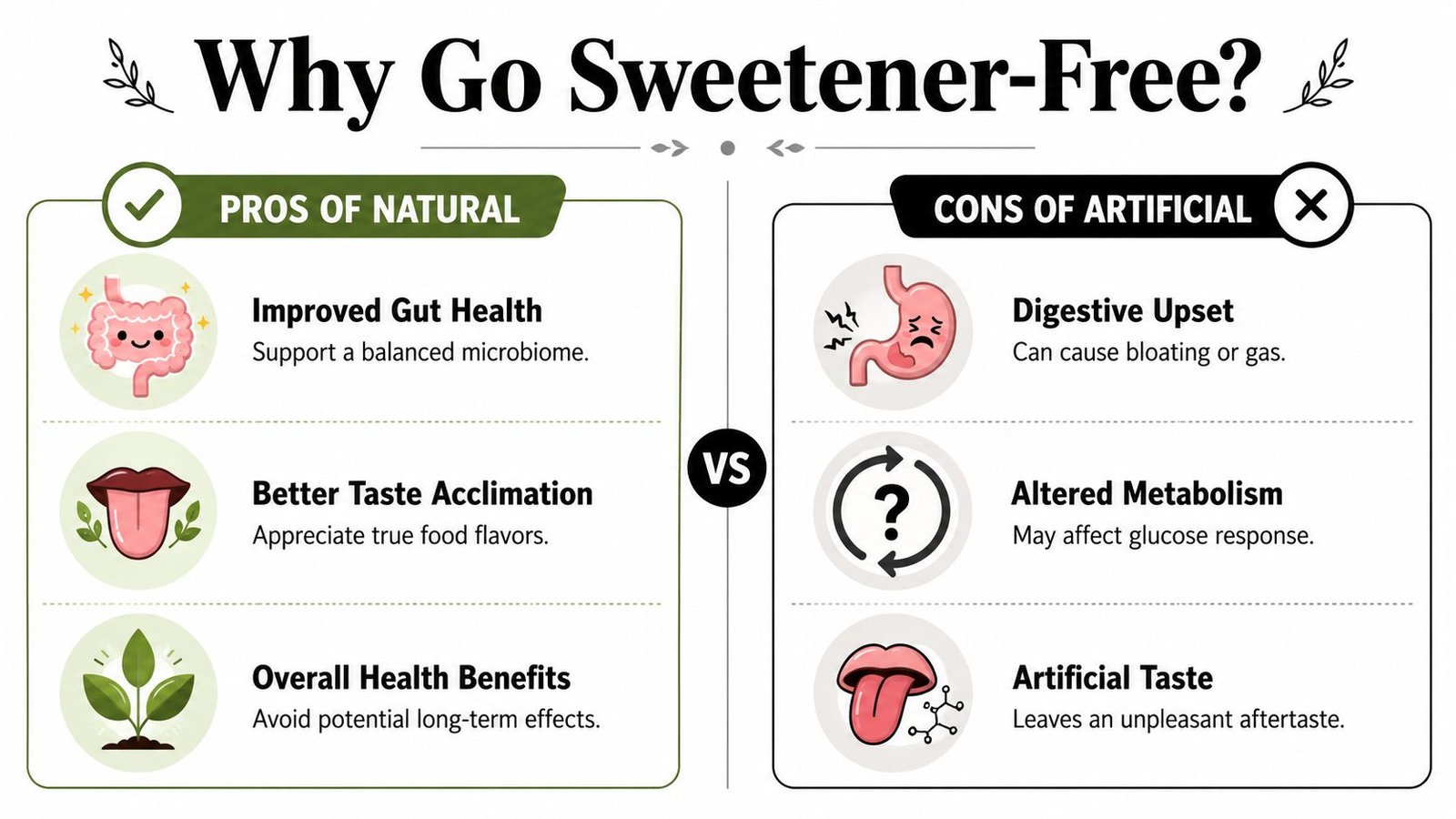
The science is more nuanced than social media makes it sound
Online nutrition advice often turns this topic into a fight between two extreme positions. One side treats artificial sweeteners as meaningless. The other treats them as a crisis. Real life is usually less dramatic.
In XXL Nutrition's discussion of protein powder without sweetener, the company notes that major health institutions consider artificial sweeteners safe at normal intake levels, while also pointing to research that raises questions about possible effects on metabolism and the gut microbiota in some contexts. That framing is more useful than panic, because it leaves room for personal response.
That distinction helps. “Generally considered safe” answers one question. “Do I enjoy this, digest it well, and want it in my regular meals?” answers a different one.
A practical way to make the call
I usually suggest treating sweeteners like seasoning. If a seasoning improves the food and agrees with you, great. If it dominates the dish or leaves you feeling off, you do not need a moral reason to skip it.
Here is a calmer way to decide:
- If you tolerate artificial sweeteners well, you may be fine keeping them in your routine.
- If the taste feels too intense or lingers, a naturally sweetened or unflavored powder will probably suit you better.
- If you are troubleshooting digestion, simplifying the ingredient list can give you a clearer starting point.
- If you want one powder for sweet and savory meals, less sweetness usually gives you more flexibility.
A clean choice is often just a useful choice. You remove one variable, and it becomes easier to build meals that taste right, fit your goals, and work in real life.
How to Read Labels and Identify Hidden Sweeteners
Upon reviewing a label, attention often goes to grams of protein first. That's understandable, but it's not enough. If you want a cleaner tub, the ingredient list provides the full picture.
Read the label like a detective
Start with the back, not the front. The front makes promises. The back shows the ingredients.
Look for the protein source first. That might be whey protein isolate, whey concentrate, casein, pea protein, soy protein, brown rice protein, or a blend. After that, scan for sweeteners.
The names to watch for are straightforward once you know them:
- Sucralose
- Aspartame
- Acesulfame potassium
- Ace-K
- Saccharin
Some shoppers get tripped up by “no added sugar” or “zero sugar.” Those phrases don't mean a product is free of artificial sweeteners. They only tell you the product isn't relying on regular sugar.
If you want help decoding the rest of the nutrition panel, this guide on how to read nutrition labels gives a solid foundation for understanding what's in a packaged food.
What to compare side by side
Once you spot the sweetener section, compare it with natural alternatives. This table gives you a quick shopping shortcut.
| Artificial Sweetener to Avoid | Common Natural Alternative |
|---|---|
| Sucralose | Stevia |
| Aspartame | Monk fruit |
| Acesulfame potassium | Unsweetened or unflavored formula |
| Ace-K | Stevia |
| Saccharin | Monk fruit |
This isn't a ranking of “good” and “bad.” It's a filter. If your goal is protein powder without artificial sweeteners, these are the names that usually signal the product isn't the right fit.
Watch for wording that creates confusion
Manufacturers know shoppers skim. That's why wording matters.
A few practical checks help:
- Look past the flavor name. “Vanilla” or “Chocolate” tells you nothing by itself.
- Find the actual sweetener. If the label uses sucralose or Ace-K, it isn't artificial-sweetener-free.
- Check whether it says unflavored, unsweetened, or naturally sweetened. Those terms are more useful than “clean” or “natural.”
- Notice how many flavor helpers appear. The longer and more engineered the ingredient list feels, the farther you usually are from a simple product.
When a label feels hard to understand, that confusion is useful information. Simple products tend to read simply.
A fast in-store checklist
If you only have thirty seconds, use this:
- First check: protein source.
- Second check: sweetener names.
- Third check: whether the powder could work outside shakes.
- Final check: whether you'd still buy it if the front label disappeared.
That last question sounds odd, but it works. If the back label looks clean and practical on its own, you're probably holding a better option.
Embracing Natural Sweeteners and Unflavored Options
Once you stop focusing only on what to avoid, shopping gets easier. Then the question becomes, “What do I want this powder to do?”
Natural sweeteners can be a middle ground
For many people, stevia and monk fruit are the bridge between heavily sweetened shakes and fully plain protein. They keep calories low while offering a sweeter taste than unflavored powder.
Their biggest difference is sensory, not moral. Some people like stevia right away. Others notice a plant-like aftertaste. Monk fruit often feels rounder to some palates. Neither one is automatically better for everyone. Taste is personal.
If you're switching from a very sweet protein powder, a naturally sweetened option can make the transition easier. Your taste buds often need a little time to adjust to less sweetness, just like they do when someone starts drinking coffee with less sugar.
Unflavored powder gives you full control
Unflavored protein is the plain yogurt of the supplement world. On its own, it's neutral. Its value comes from what you pair it with.
That control is useful if you want to build flavor from real ingredients:
- Cinnamon and vanilla extract for a warm breakfast shake
- Unsweetened cocoa or carob for a chocolate-style flavor
- Frozen berries or banana when you want natural sweetness
- Nut butter for richness and a more filling texture
Carob is especially helpful for people who want a naturally sweet, cocoa-like flavor without relying on the standard chocolate profile. If you're curious about ingredient quality and sourcing, source quality carob wholesale offers a good example of the kind of real-food ingredient many people now use to customize unflavored powders.
Make it taste like your food, not like a product
Many readers get stuck at this point. They think “healthy” means they have to force down something bland.
You don't.
Try thinking of protein powder as a base, not a finished drink. A base invites seasoning. A finished drink gives you less room to move. That's why unflavored products often work well for people who meal prep, cook often, or get bored with standard vanilla and chocolate tubs.
If you've ever added cinnamon to oatmeal or cocoa to yogurt, you already know how to flavor unflavored protein.
That shift in thinking turns the powder into an ingredient instead of a flavored snack. For many people, that's the point where a cleaner product starts feeling easier to use every day.
Finding the Right Protein Source for You
Sweeteners matter, but the protein source matters too. A powder can be beautifully simple and still not fit your digestion, diet, or routine.
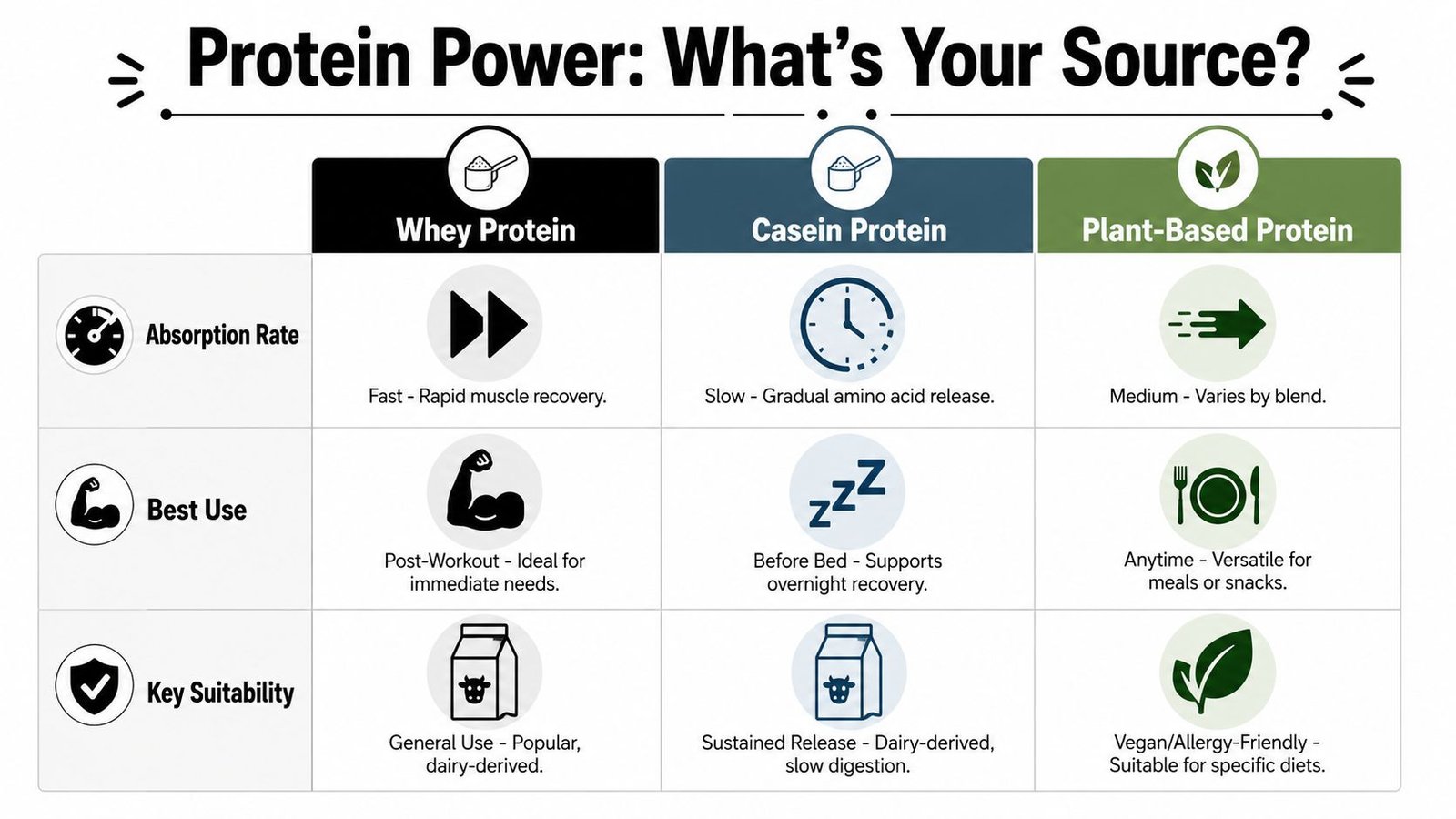
Whey for speed and convenience
Whey protein is often the first option that comes to mind. It's dairy-derived, mixes easily, and is commonly used after training because it digests relatively quickly.
If you do well with dairy and want something familiar, whey can be a strong fit. The main catch is that many mainstream whey products are heavily flavored and sweetened, so the label-reading skills from above really matter here.
Athletes who care about recovery often focus on the full picture, not just the scoop in the shaker bottle. For readers exploring training support more broadly, this overview of optimal recovery options for athletes is a helpful complement because it puts protein choices into a bigger recovery context.
Casein for a slower release
Casein is also dairy-derived, but it digests more slowly than whey. Many people like it in the evening or when they want a more filling shake.
Texture is part of the decision here. Casein often feels thicker. Some people love that because it creates a pudding-like result. Others find it too heavy. If you're sensitive to dairy, casein can raise similar issues to whey, so it's not automatically the gentler choice.
Plant-based for flexibility and cleaner-label variety
Plant-based protein covers a wide range. Pea, soy, brown rice, hemp, and mixed blends all land here. The taste and texture can vary more than dairy proteins, which is why one plant powder may feel smooth while another tastes earthy or chalky.
Still, this category is leading the move toward simpler sweetener choices. According to market analysis on plant and whey protein sweeteners, nearly 20% of plant-based protein powders now contain zero sweeteners, which is more than double the 9.5% rate observed in whey protein products. The same analysis notes that this reflects a strong preference for clean-label formulas in the plant-based category.
That's useful if you're vegan, dairy-sensitive, or want more unsweetened choices on the shelf.
For a broader look at how different proteins compare nutritionally, this protein quality chart can help you sort through the main types without getting buried in jargon.
A simple fit guide
Here's the practical version:
- Choose whey if you want a classic, easy-mixing option and tolerate dairy well.
- Choose casein if you prefer a thicker texture and want a slower-digesting powder.
- Choose plant-based if you avoid dairy, want more sweetener-free options, or prefer a plant-forward diet.
The best protein source isn't the one with the strongest marketing. It's the one you digest well, enjoy enough to use consistently, and can fit into your real meals.
Creative Protein Recipes Beyond the Smoothie
You buy a plain protein powder with good intentions, use it in two smoothies, then watch the tub sit in the pantry because everything starts tasting overly sweet. That is usually not a protein problem. It is a recipe problem.
Unflavored powder works best when you treat it like a plain pantry staple, not a dessert mix. Flour can go into pancakes or dumplings. Greek yogurt can become breakfast or a dip. Protein powder can do the same.
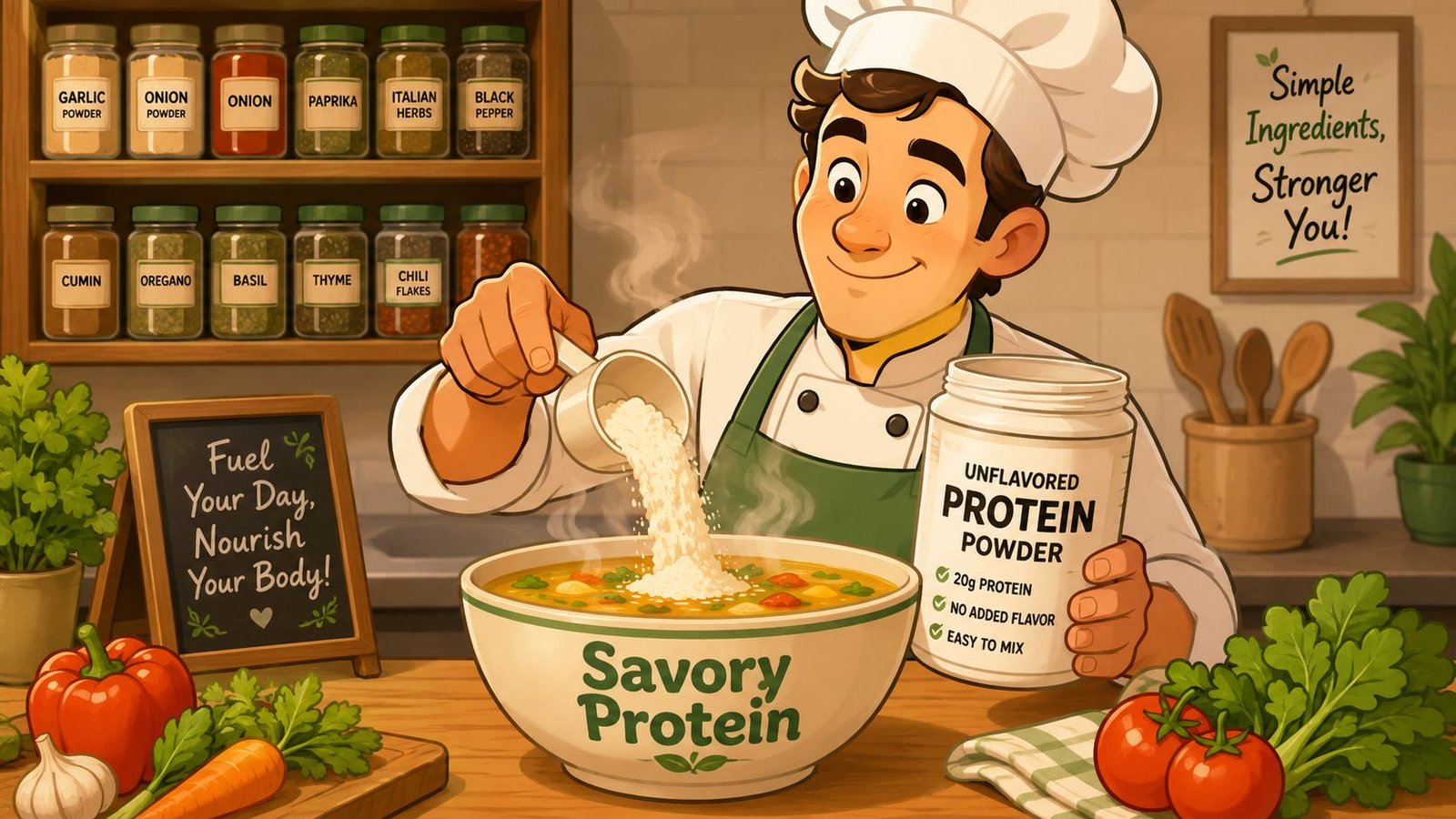
Savory uses make unsweetened powder more practical
A useful point raised in Samantha Cassetty's roundup of protein powders without artificial sweeteners is that completely unsweetened powders like Naked Whey Plain are especially versatile for savory recipes, oatmeal, soups, and dips. Many guides stay focused on shakes, but real-life use often looks different.
That matters if you meal prep, pack lunches, or want more protein without turning every snack into a vanilla dessert. A neutral powder can disappear into everyday foods in a way sweetened powders usually cannot.
Three easy ideas that work
Stir it into soup. Mix the powder with a little cool broth or milk first, then stir it into warm soup after cooking. This works best in thicker soups like tomato, butternut squash, cauliflower, or blended bean soups.
Add it to oatmeal or savory oats. Protein powder does not need to push oats toward a cookie flavor. After cooking, stir in a small amount and season the bowl the way you like to eat it, with cinnamon and nut butter, or with salt, pepper, greens, and a runny egg.
Fold it into dips or spreads. Plain yogurt, cottage cheese, white beans, or hummus can carry unflavored protein well. Lemon juice, herbs, garlic, and olive oil help round out the taste so the powder supports the recipe instead of taking it over.
If you want more practical meal and snack ideas, this collection of recipes with protein powder shows how to use it as a normal kitchen ingredient instead of a gym-only add-on.
How to avoid the chalky taste
Chalkiness usually comes from technique, not from the idea of using protein in food.
Powder needs enough moisture and enough flavor around it. If you dump a full scoop into a thin liquid, it can clump and leave a dry finish. If you whisk it into something creamy and well-seasoned, the texture is usually much better.
A few small fixes help:
- Make a slurry first. Stir the powder with a small amount of liquid until smooth before adding it to the full recipe.
- Start with less than a full scoop. Half a scoop is often enough to test texture without overwhelming the dish.
- Use stronger base flavors. Broth, garlic, herbs, cocoa, citrus, nut butter, and spices all help cover any plain or earthy notes.
- Choose thicker foods first. Yogurt, oats, mashed beans, blended soups, and batters hide texture better than thin drinks.
For a quick kitchen demo, use this video URL: https://www.youtube.com/watch?v=DHYeawcc-2k
The sweetener debate does not have to be dramatic here. Some people enjoy sweetened powders and use them consistently. Others get tired of the taste and want something more flexible. If you fall into that second group, savory recipes are often what turn a clean, unsweetened powder from an occasional purchase into something you finish.
Smart Buying and Easy Macro Tracking
You get home with a new tub of protein powder, use it twice, then watch it sit in the pantry for three months. That usually is not a motivation problem. It is a buying problem.
A good purchase fits your real meals, your budget, and the way you already eat. If you like savory meal prep, an unflavored powder often gives you more room to use it in soups, oats, egg dishes, or yogurt bowls without forcing everything to taste sweet. If you only enjoy protein in shakes, a naturally sweetened option may still work well. The goal is not to pick the "purest" tub on the shelf. It is to pick one you will finish.
Shop with a short checklist
Use the label like a quick grocery test.
- Match the powder to your routine. If you cook often, unflavored is usually more flexible than a dessert-style flavor.
- Start small. A smaller bag or tub lets you test taste, texture, and how well it fits your meals.
- Compare serving sizes. Two powders can look similar on the shelf but deliver different amounts of protein, calories, and carbs per scoop.
- Check how many ingredients are doing flavor work. The more extras in the formula, the more carefully you may need to log it and the fewer ways you may want to use it.
- Buy for repeat use. A powder that works in oats, soups, sauces, and shakes is often a better value than one that only works in one very specific drink.
That last point matters more than it seems.
Macro tracking gets easier when your staples are predictable. An unflavored or lightly sweetened powder usually has a simpler nutrition panel, so it is easier to plug into breakfast, lunch prep, or a post-workout snack without rechecking the tub every time. It works like using plain rice instead of a heavily seasoned boxed mix. You know what is in it, so adjusting the rest of the meal is easier.
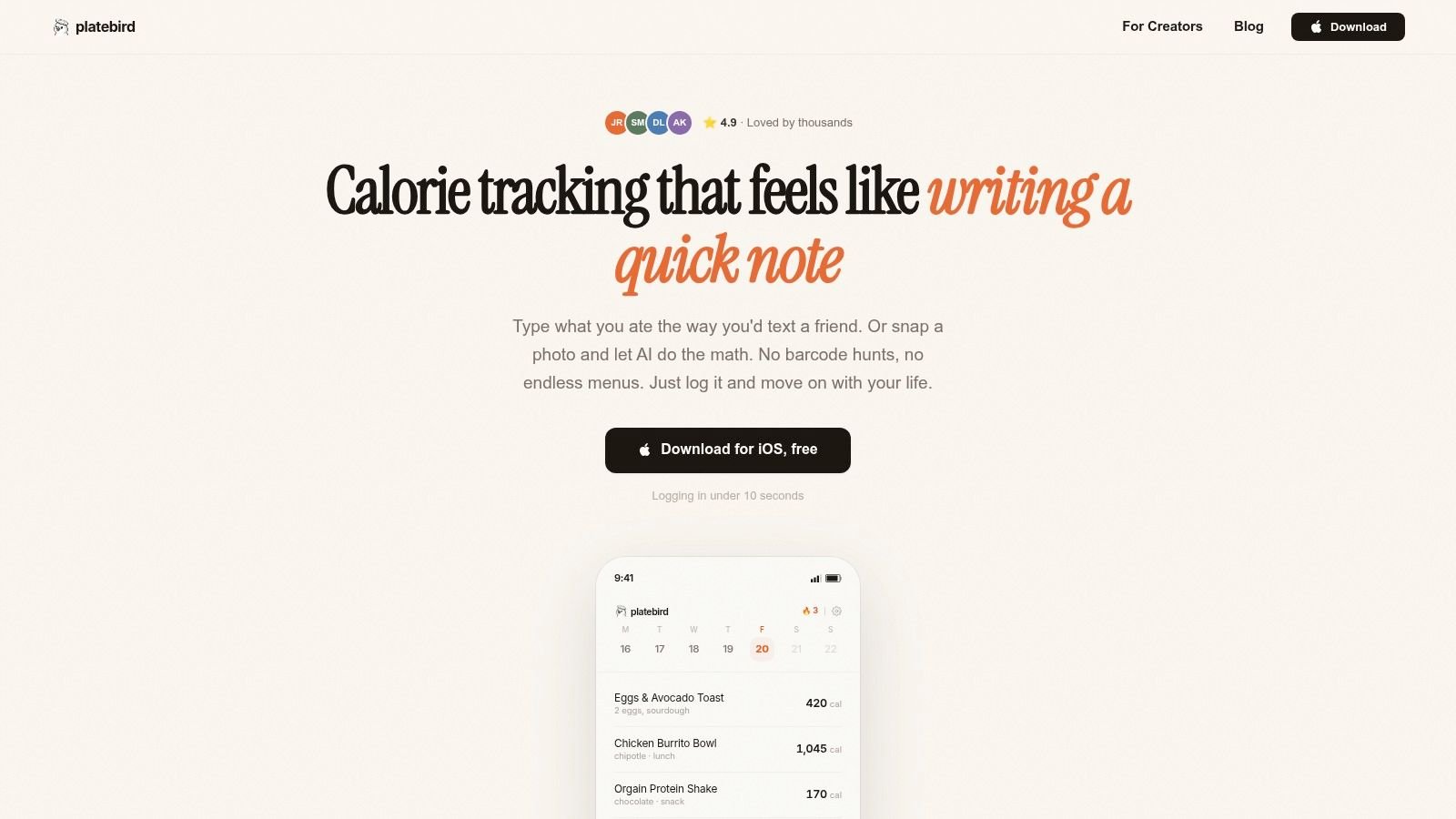
Tracking gets easier when the formula is simpler
Simple does not always mean better for every person. It often means easier to understand.
If breakfast is oats, berries, and a scoop of unflavored protein, logging is straightforward. If a powder adds several sweeteners, flavor blends, and mix-ins, it can still fit your goals, but reading the label takes more attention and repeating the same meal becomes less intuitive. For anyone trying to hit a protein target without overshooting calories, fewer moving parts can make daily tracking feel calmer.
Simpler foods are also easier to adjust. If dinner already includes a rich sauce or salty broth, a plain protein powder can raise protein without competing with the meal. That flexibility is one reason many people end up using sweetener-free powders more consistently than they expected.
If you want a faster way to keep up with protein, calories, and macros without turning logging into a chore, PlateBird makes that process easier. You can type what you ate or snap a photo, and the app handles the breakdown so your focus stays on building meals that work, whether that is a sweet breakfast bowl or a batch of savory meal prep for the week.