You're staring at a carb tracking app, already knowing the hard part isn't understanding low-carb eating. It's opening the app three, four, five times a day and not getting annoyed enough to quit. That's why the best tool isn't the one with the longest feature list, it's the one that makes logging feel almost automatic. The market is big enough to prove this is a mainstream habit, with an estimated 175 million to 200 million people worldwide using calorie or nutrition tracking apps by 2026, and fast logging has become a real product differentiator because people need to keep up with daily entry (global app usage summary).
I've tested these apps with the same question in mind, how fast can I log a meal when I'm hungry, rushed, or halfway out the door. Some apps make that process feel clean and modern, with text, photo, or AI-assisted entry. Others still depend on menu hunting and manual cleanup, which is fine if you're meticulous, but a headache if you want consistency. If you want a broader meal-tracking comparison beyond carbs, there's also a useful best meal tracking apps for 2026 roundup to compare with this list.
1. PlateBird
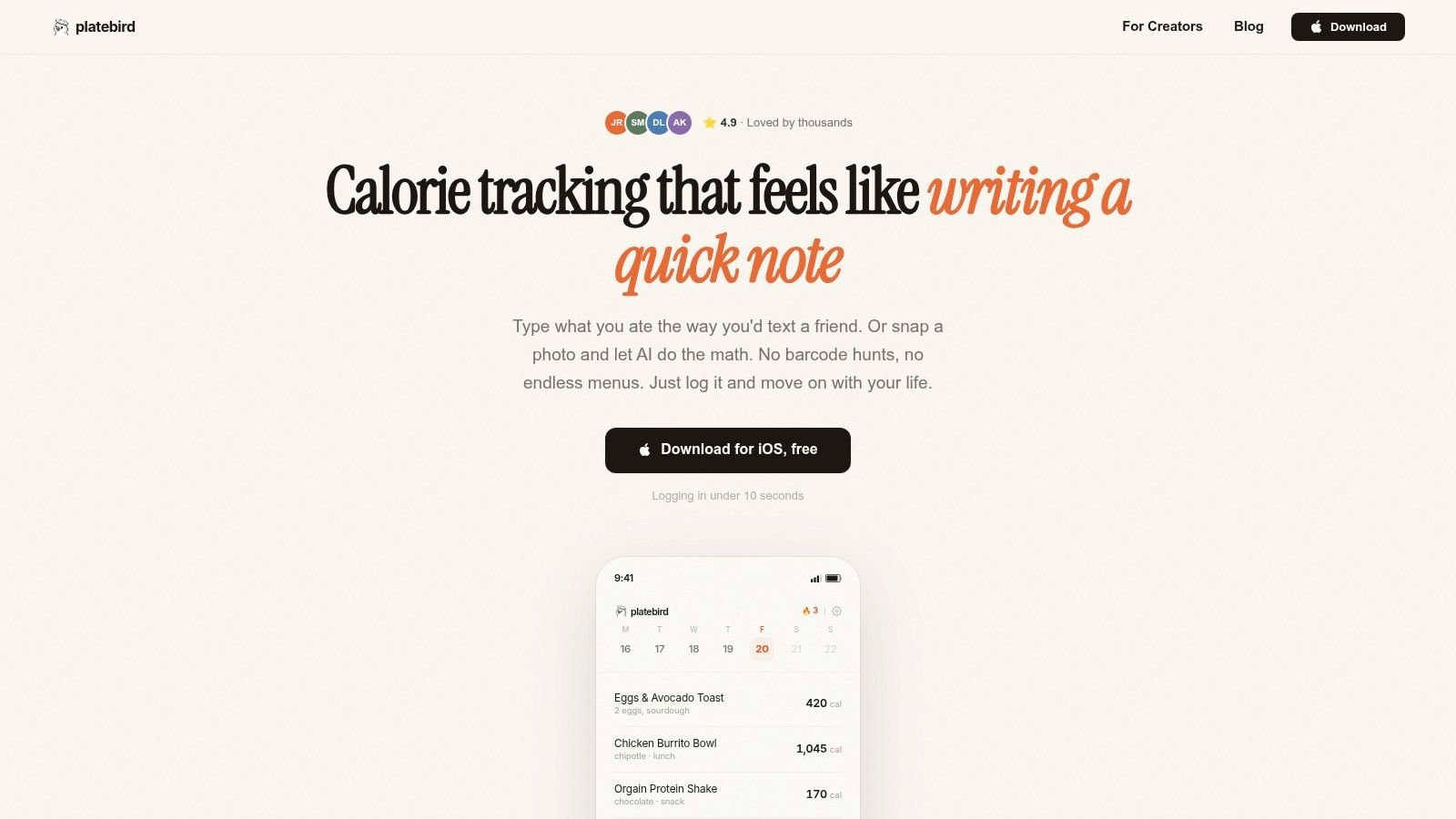
PlateBird is the rare app that feels built for people who hate logging, but still care about doing it well. On iPhone, you can type something plain like “eggs toast coffee” or “chicken rice broccoli,” and it turns that into a carb and macro breakdown without the usual search-drill frustration. You can also snap a photo and let the app identify the plate before you even sit down to eat, which changes the rhythm of tracking from reactive to near-instant.
Why it stands out in daily use
What makes PlateBird feel different is the shortcut layer. Once it learns your habits, recurring breakfasts, coffee orders, and meal-prep plates become one-tap entries, so the app gets faster the more you use it. That matters because carb tracking succeeds or fails on the boring middle of the week, not the perfectly planned Monday.
Practical rule: if logging takes more than a few seconds, most people stop doing it honestly.
The product is also easy to try. It's free to download, you don't need an account to start, and the App Store listing shows a 4.9/5 rating with social proof that points to long-term use rather than novelty (PlateBird website, PlateBird App Store presence). For people trying to build a habit, that frictionless start is a real advantage.
PlateBird fits weight-loss users, gym-goers, meal preppers, coaches, and first-time trackers who want the meal log to disappear into the background. The main trade-off is platform reach, since it's iOS-first right now. If you're on Android, you'll have to look elsewhere for the same kind of speed.
2. Carb Manager
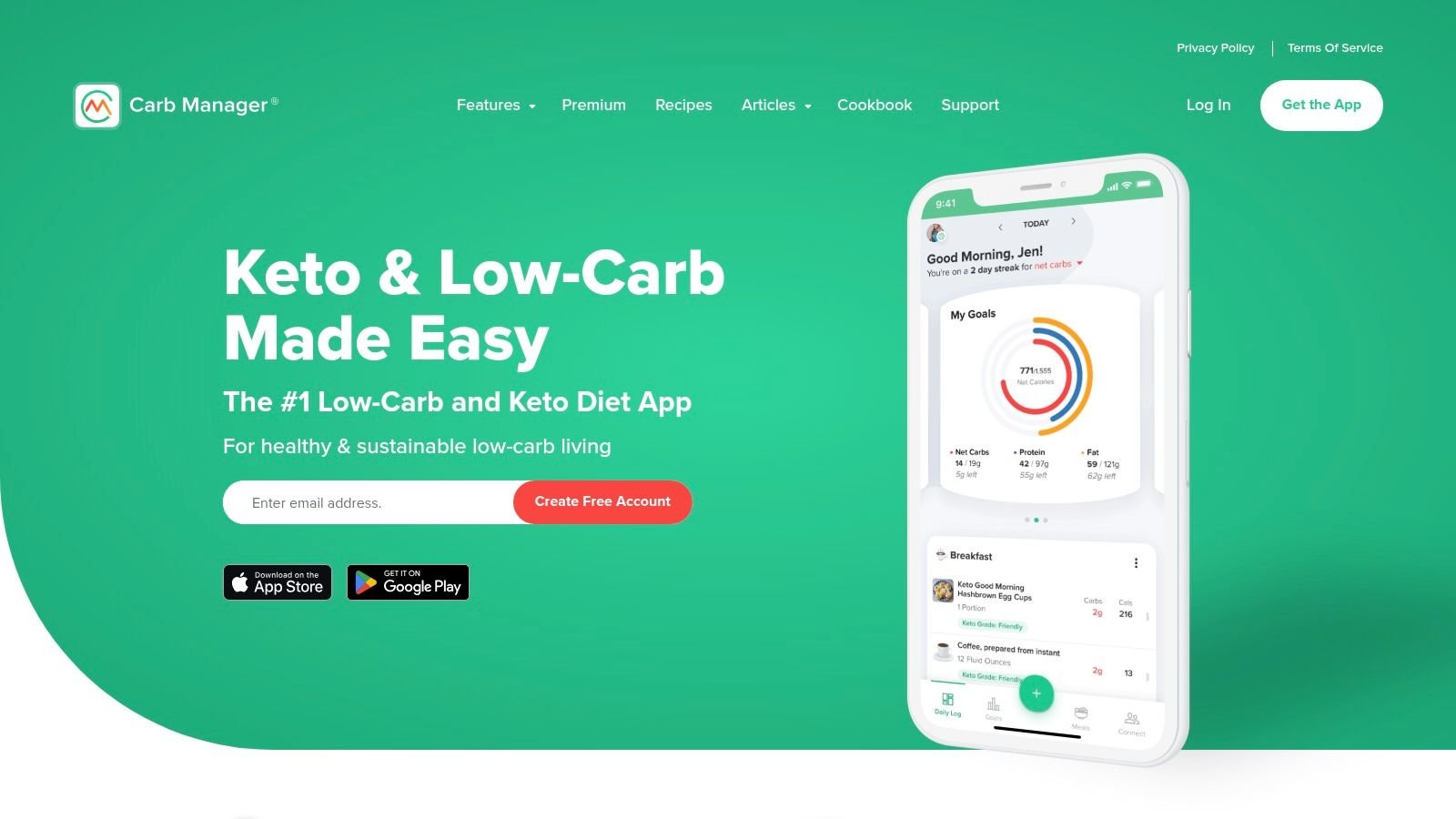
Carb Manager is the app I'd choose when the job is strict low-carb tracking, not broad wellness logging. It focuses on net carbs, carb cycling, recipe planning, and the kind of breakdown that helps people stay in ketosis instead of just counting calories. That focus makes it feel more specialized than general trackers that only list carbs as one field among many.
The day-to-day experience works best when you want to see the structure of your diet, not just the total. Reports, nutrient tracking, and low-carb recipe support give you useful context when weight loss slows or meals start to feel repetitive. The trade-off is that the fuller version lives behind Premium, so the free tier is more of a preview than the complete product (Carb Manager website, Carb Manager pricing and barcode scanning details, Carb Manager pricing details).
Best for people who already think in net carbs
If you're strict keto, Carb Manager feels familiar because the app uses the same language. It is not trying to be a generic calorie notebook, it is built to help you stay inside a low-carb framework. The community side, recipe library, and challenges also help if you want structure, not just numbers.
The app works best for users who already know their rules and want software that reinforces them every day.
The main trade-off is clarity around pricing and feature access. Carb Manager's stronger tools often sit behind paid tiers, and that can make the free experience feel less complete than the feature list suggests.
3. Cronometer
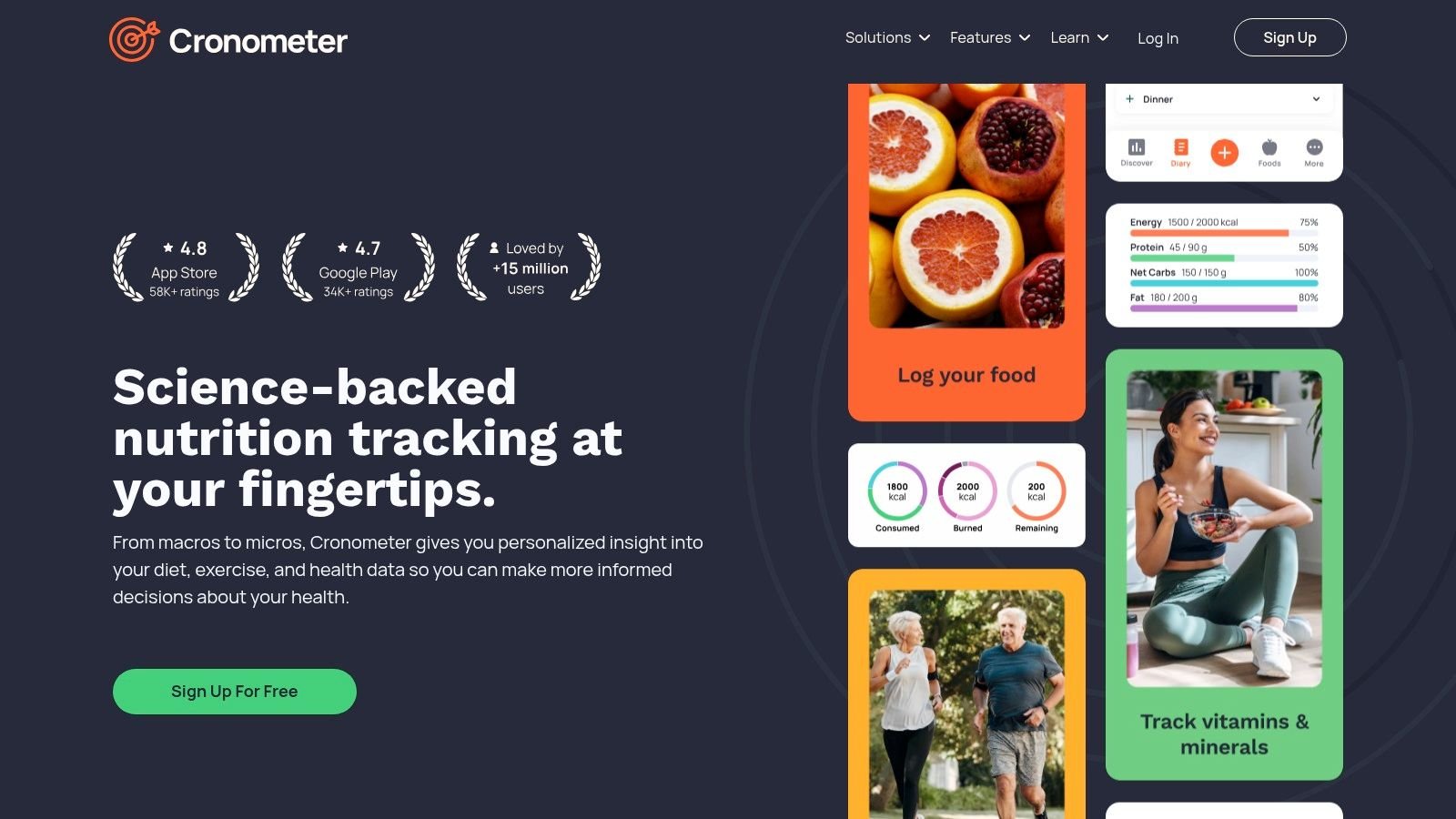
Cronometer is the app for people who care about what's inside the food, not just the carb total. It tracks 80+ nutrients and supports carb and net-carb goals, which makes it especially useful if you're trying to troubleshoot why a low-carb plan still isn't feeling right. For anyone who wants more than a macro summary, the depth is hard to beat (Cronometer website).
What I like about Cronometer is that it doesn't hide its seriousness. The interface feels more utilitarian than polished, but that's part of the appeal if accuracy matters more than vibes. It's also transparent about free versus Gold features, which makes it easier to understand where the upgrade line sits.
A good fit for detail-oriented trackers
This app suits people who want verification, barcode scanning, wearable integration, and deep charting without sacrificing nutrition detail. If you're the sort of person who notices micronutrient gaps, Cronometer gives you the level of granularity you'll use.
The downside is the learning curve. Cronometer asks more from you than the sleekest calorie apps, and that can slow down the first few days of use. If your biggest problem is keeping logs alive, not analyzing them, the interface may feel like work before it feels helpful.
For low-carb eaters who also care about broader health markers, that trade-off can still be worth it. For people who only want the fastest possible meal entry, it may feel like too much dashboard and not enough momentum.
4. MyFitnessPal
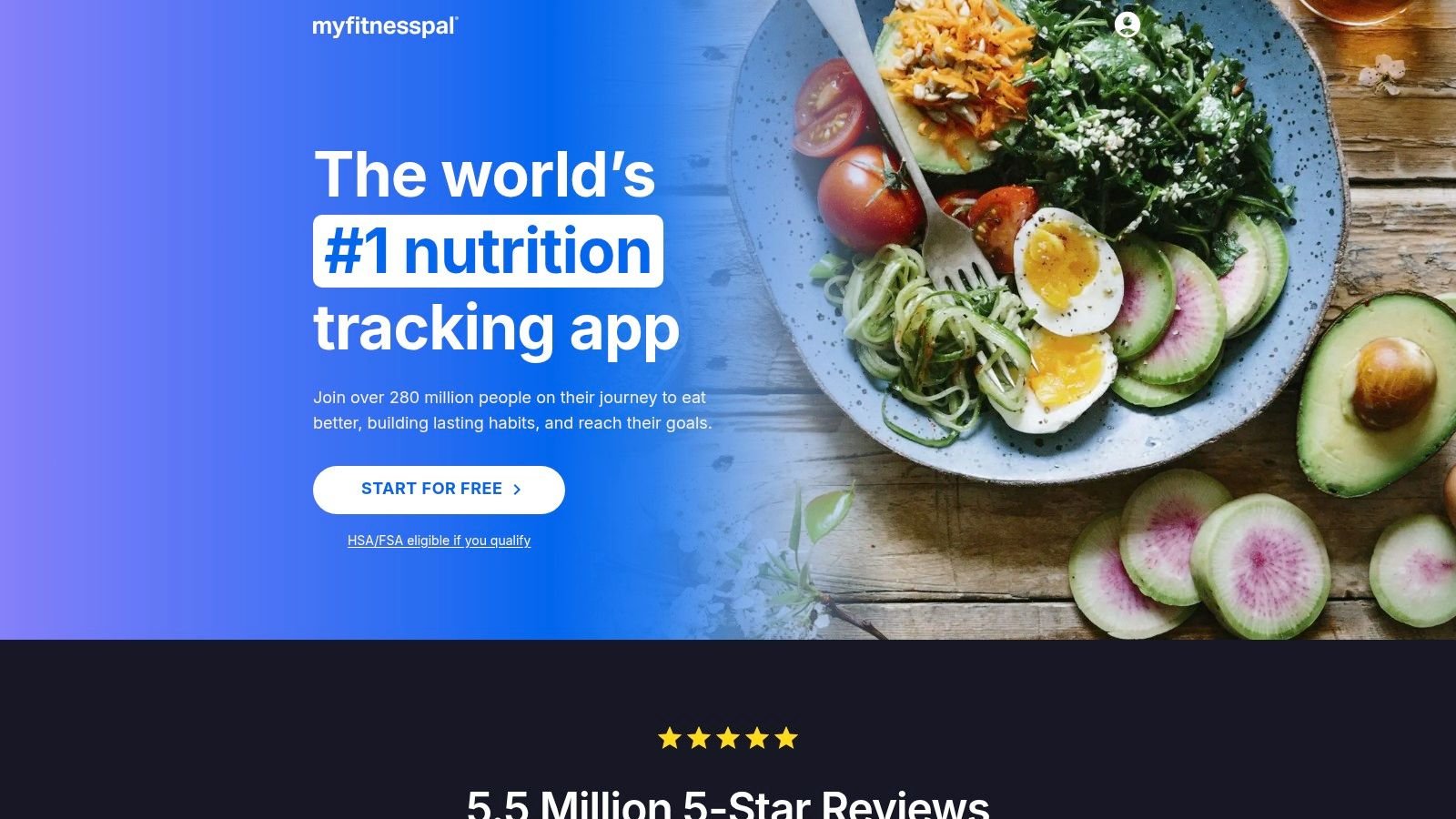
MyFitnessPal still has a lot of mindshare because the food database is huge, and that matters when you eat branded foods, restaurant meals, or packaged items often. For pure breadth, it is one of the easiest apps to rely on, especially if you want carb tracking to sit inside a larger calorie and macro habit. That broad reach is part of why it still leads the category with about 28 million monthly active users and roughly 29.2% share, even though that share has reportedly fallen from 38% in 2022 as AI-first trackers have taken some attention (market share summary).
Fast enough for many, but not the fastest
The basic workflow is familiar, and that familiarity helps. If you have tracked food before, MyFitnessPal feels like a language you already know. It also supports broad device and integration coverage, which makes it useful for general fitness as much as diet tracking (MyFitnessPal website).
The trade-off shows up in the details. Barcode scanning and Meal Scan require Premium, so the speed advantage is partly gated behind a paid plan. For carb counting specifically, it also is not built around diabetes-style glucose context, so it tells you what you ate, not how your body responded.
If you want broad food coverage first and carb tracking second, MyFitnessPal makes sense. If you want a meal log that feels tailored to low-carb decision-making, it can feel generic fast.
For readers deciding between a broad tracker and a more carb-focused tool, the PlateBird vs MyFitnessPal comparison is a useful place to see where the daily logging experience starts to diverge.
That is why I see it as a strong all-purpose tracker, but not the sharpest carb tool.
5. Lose It!
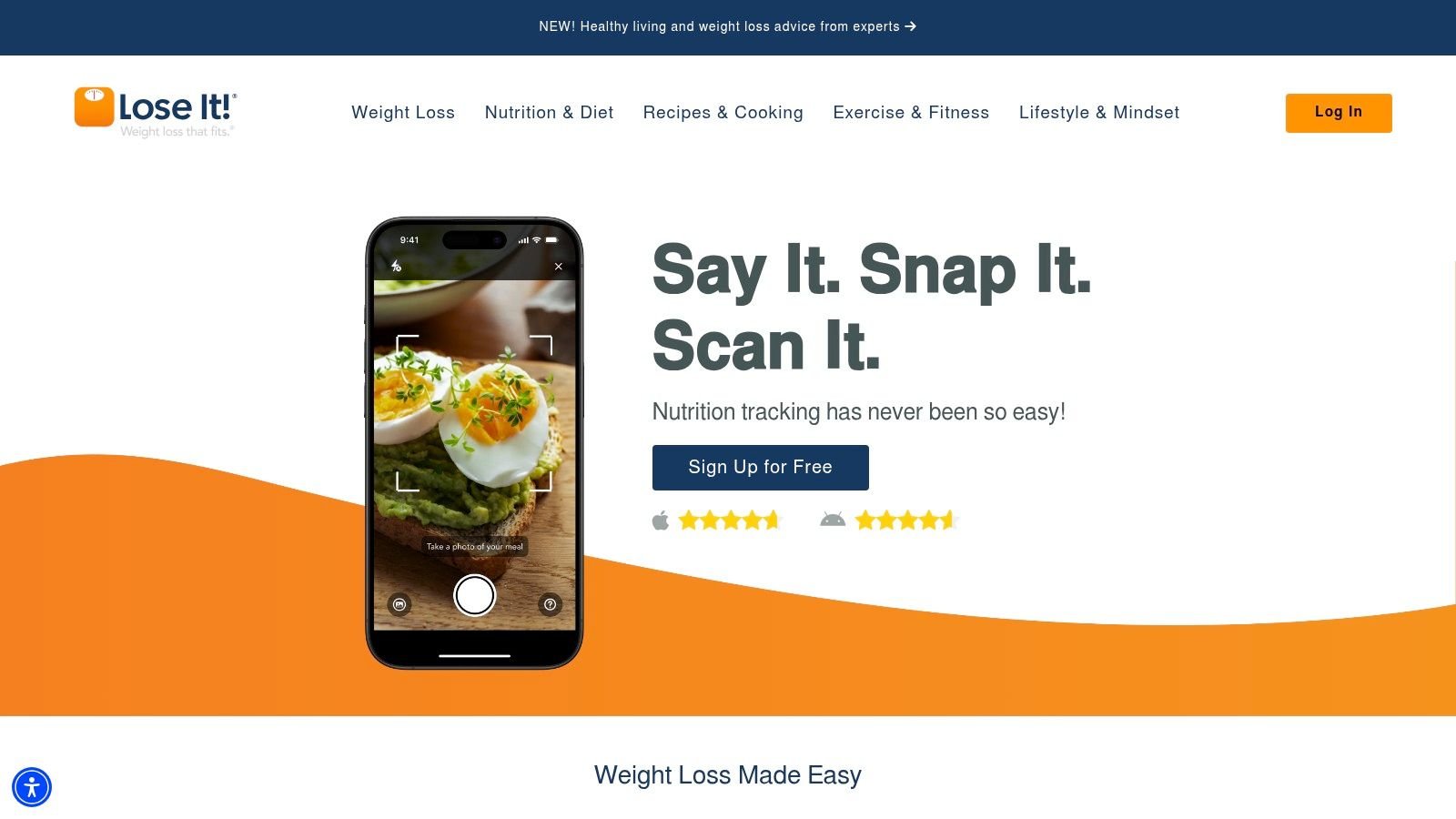
Lose It! is easy to recommend to first-time trackers because it doesn't make the process feel intimidating. The interface is approachable, the logging flow is quick, and the app's photo and voice options lower the friction for busy days. If your real goal is to cut carbs without turning every meal into a spreadsheet session, that matters.
The app also supports macro tracking, including carbs and net carbs, so it can grow with you if you start with broad weight loss and later get more specific. Community support and challenges give it a little more energy than a plain food diary. The catch is that the automations and more advanced macro tools are tied to Premium, so the easiest path isn't always the cheapest one (Lose It! website).
Strong on simplicity, lighter on depth
Lose It! works best when your priority is easy consistency. You open it, log fast, and move on. That's more valuable than complex reporting for a lot of people, especially if they've already dropped other diet apps because they felt like homework.
The trade-off is that advanced carb management isn't the app's strongest lane. You can absolutely use it for low-carb eating, but if you want deeper trend analysis, more detailed nutrient work, or a more clinical workflow, you'll probably feel the ceiling sooner than you would in Cronometer or Carb Manager.
6. MacroFactor
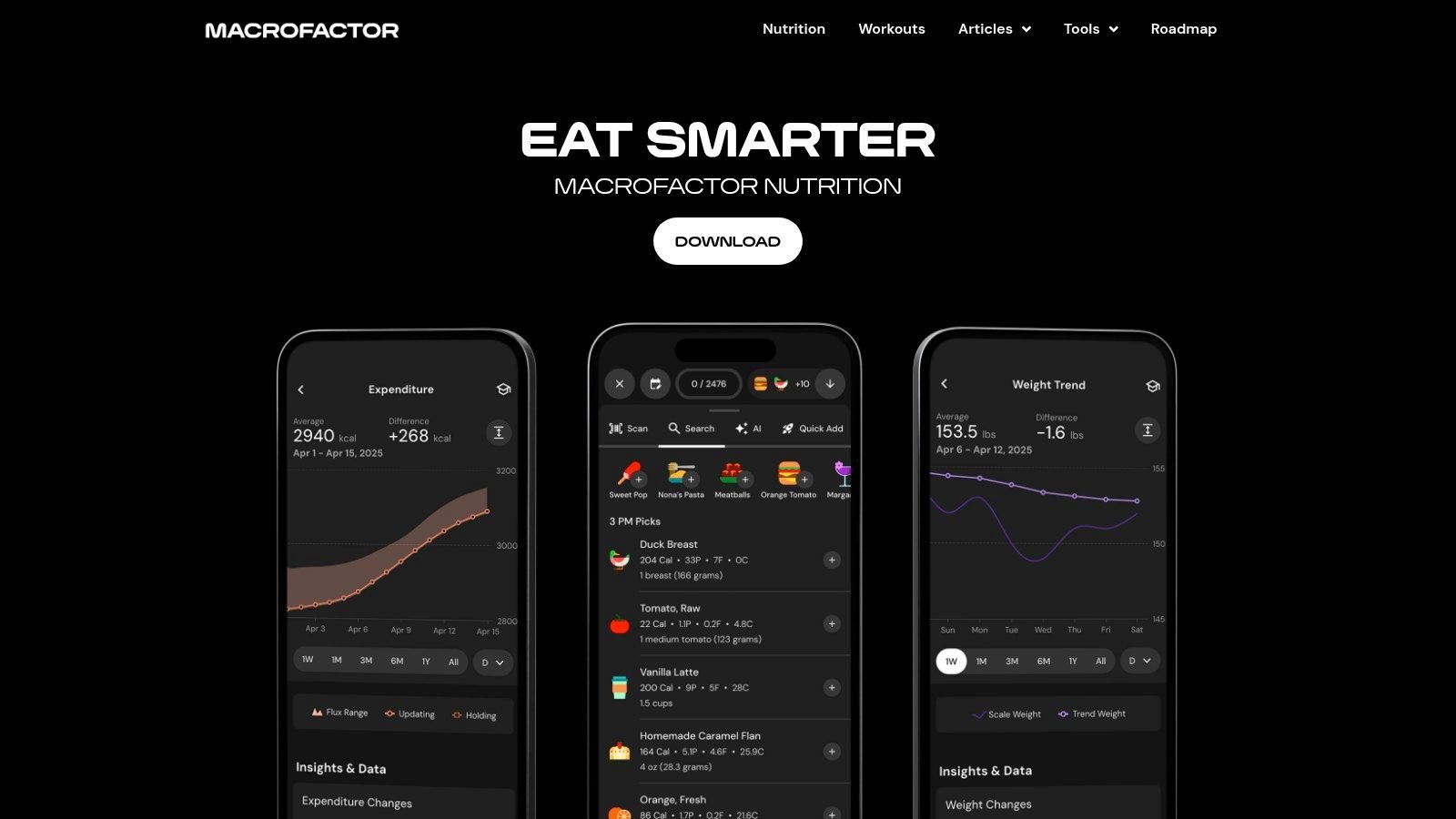
MacroFactor feels like the app for people who want the software to think with them. It automatically adjusts your calorie and macro targets based on your actual progress, which makes it much more dynamic than fixed-goal trackers. For carb tracking, that means the numbers can stay relevant as your body weight and routine change instead of drifting into stale advice.
The product is premium-first, but the pricing is simpler than many competitors because it doesn't fragment the feature set as aggressively. That clarity is useful if you hate wondering what got locked away behind another upgrade prompt (MacroFactor website).
Best for data-driven users, not casual dabblers
MacroFactor makes sense if you care about the process as much as the outcome. You log meals, the app updates targets, and you get progress insight that reflects your current trend rather than a generic plan from month one. That makes it especially appealing to athletes and serious body composition users who still need carb targets, not just calorie totals.
The trade-off is obvious. There's no permanent free tier, so this isn't a casual experiment. It also has a smaller community layer than older incumbents, which means fewer built-in social features if that matters to you.
For disciplined users, that's less of a drawback than it sounds. If you're looking for a carb tracker that feels like coaching rather than recordkeeping, MacroFactor is one of the stronger choices.
7. MyNetDiary
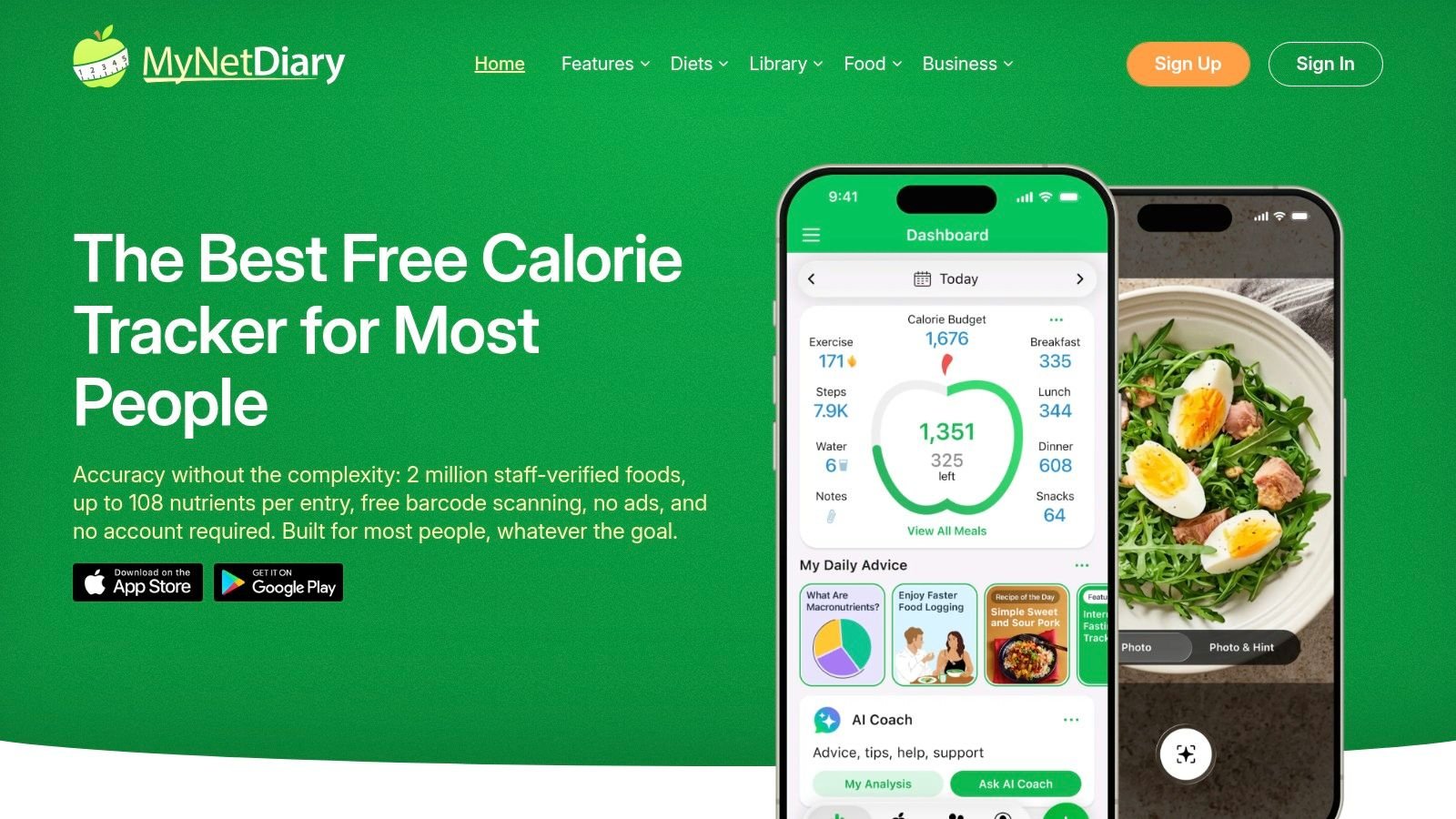
MyNetDiary strikes a good balance between speed and structure. It has a staff-verified US food database, which helps with trust, and it adds photo-assisted Meal Scan plus AI voice logging for faster day-to-day capture. That makes it a strong middle ground for people who want low-carb tracking without losing time to repetitive entry.
It's also one of the better choices if a dietitian or coach needs to stay involved. The Professional Connect feature gives it more of a guided-care feel than most consumer calorie apps (MyNetDiary website).
Balanced, especially for guided tracking
I see MyNetDiary as a practical pick for people who want some automation but still want a conventional tracking workflow. The verified database reduces second-guessing, and the quick capture tools help when meals are simple but repetitive. It's not as flashy as PlateBird or as recipe-heavy as Carb Manager, but it's easier to live with than many full-featured apps.
The downside is tier confusion. Some AI and photo tools are priced higher, and the difference between web and app features can be hard to parse if you're comparing plans in a hurry. If you want the shortest path to fast logging, that can be annoying.
Still, for a lot of users, MyNetDiary hits a practical sweet spot. It's fast enough to use every day and structured enough to matter over time.
8. Lifesum

Lifesum stands out because it feels more guided than mechanical. Instead of just asking you to log carb totals, it offers structured programs like keto, low-carb, and high-protein, plus recipe ideas and a polished interface that makes healthy eating feel more approachable. That can be a big help if you like direction, not just data.
The app is also appealing for users who want carb tracking alongside broader meal planning. Recipes, macro customization, and health-app integrations make it feel less like a simple tracker and more like a lightweight nutrition companion (Lifesum website).
Best when you want the app to suggest the next meal
Lifesum is at its best for people who don't want to invent every meal from scratch. The recipe library and structured programs reduce decision fatigue, which is a real reason people fall off low-carb plans in the first place. The polished UI also makes it easier to keep opening the app.
The main drawback is that many useful features are Premium-only, and pricing can feel high depending on region or platform. If you're mainly after fast logging, you may end up paying for guidance you don't use.
That said, Lifesum is a good fit for users who want encouragement with their carb tracking. It's friendlier than the more data-heavy tools and easier to adopt if you're easing into low-carb eating rather than optimizing every macro.
9. YAZIO
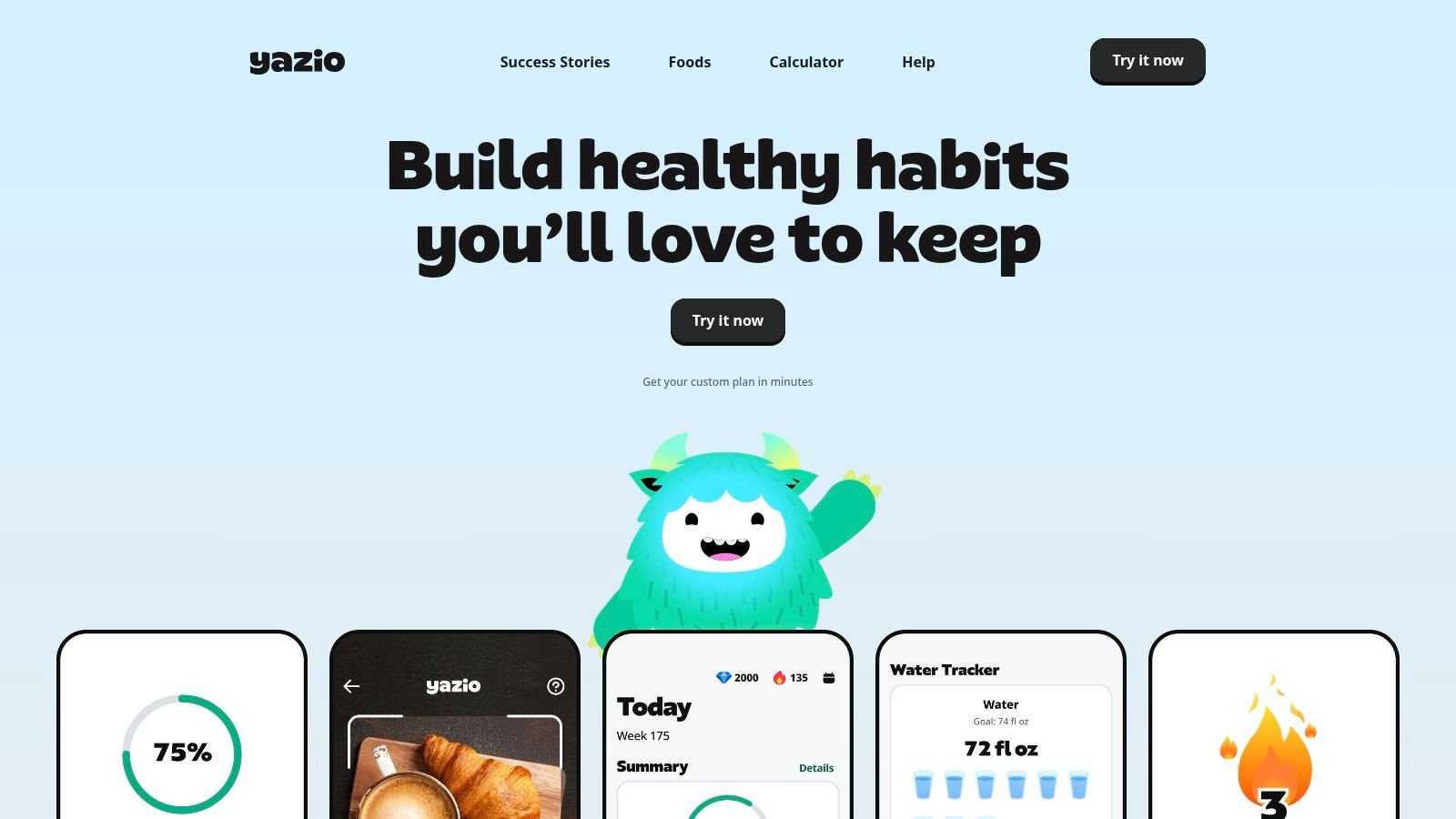
YAZIO works well for people who like the combination of carb tracking and intermittent fasting in one place. That pairing is practical because many low-carb eaters also care about meal timing, and YAZIO gives you a simple way to watch both habits without bouncing between separate apps. It also supports carbs and net carbs, which keeps it relevant for structured low-carb diets (YAZIO website).
A solid mainstream option with broad availability
The strength of YAZIO is that it feels familiar and widely usable. Recipe ideas, structured programs, and a fasting timer make it easy to build a repeatable routine, especially if you want your app to help shape your day instead of just record it.
The trade-off is the usual one, advanced tools live behind YAZIO Pro, and pricing can vary by region or platform. That makes it harder to compare at a glance than apps with simpler pricing.
Still, if you want an established app that combines meal timing and carb tracking in a straightforward way, YAZIO does the job well. It's not the most specialized carb analyzer on this list, but it's one of the easier mainstream options to keep using.
10. MacrosFirst
MacrosFirst has a more athletic, macro-first feel than the big consumer calorie apps. It's especially useful if you repeat meals often, meal prep in batches, or want to manage flexible dieting without extra clutter. The recipe tools and website import features make it easy to move from a meal idea to a repeatable log.
I also like that it handles practical macro use cases that other apps often ignore, like allocating alcohol calories to carbs and fat. That kind of detail sounds niche until you try to fit a real life social meal into a macro plan (MacrosFirst website).
Good for repeat loggers and practical planning
MacrosFirst works best if you already think in macros and want a logger that doesn't slow you down. The free core app gives you a way to try the workflow before paying, which lowers the risk of testing it against your own habits.
The main drawback is depth. Compared with the biggest incumbents, the database is smaller, so it may take a little more effort when you eat outside your usual rotation. Some broader automation also sits behind Premium, so the free experience is useful but not exhaustive.
If your meals are repetitive and your priorities are speed, flexibility, and macro control, MacrosFirst is a smart pick. It won't try to be everything, and that restraint is part of why it works.
Top 10 Carb-Tracking Apps, Feature Comparison
| App | Core features | ★ (Quality) | 💰 (Price) | ✨ Unique selling points | 👥 Target audience |
|---|---|---|---|---|---|
| PlateBird 🏆 | Type-to-log + photo AI; habit-aware one‑tap shortcuts; ultra-fast day logging | ★4.9/5, very fast & accurate | 💰 Free to download; no account required | Instant computer vision; natural‑language logging; learned meal shortcuts | Busy professionals; first‑time trackers; gym‑goers; coaches |
| Carb Manager | Net-carb modes; 30+ nutrients; deep reports; recipe library | ★★★★☆, keto-focused analytics | 💰 Freemium (Premium for best tools) | Net-carb & carb‑cycling tooling; large low‑carb recipe library | Keto/low‑carb users; data‑oriented dieters |
| Cronometer | 80+ nutrients; verified DB; barcode; integrations & charts | ★★★★☆, high accuracy & nutrient depth | 💰 Freemium (Gold subscription for advanced) | Lab-verified foods; exceptional micronutrient detail | Clinicians; micronutrient-focused users; accuracy seekers |
| MyFitnessPal | Massive food DB; barcode scan; macro targets; broad integrations | ★★★★, breadth & community | 💰 Freemium (Premium for advanced features) | Huge US‑centric database; wide device/brand support | Casual trackers; brand/restaurant eaters; community users |
| Lose It! | Photo ("Snap It") & AI voice logging; macro tracking; challenges | ★★★★, approachable & quick | 💰 Freemium (Premium for automations) | Photo + voice capture; simple UI for fast entries | First‑time trackers; social/challenge participants |
| MacroFactor | Auto-adjusting weekly macros; macro-focused logging; progress insights | ★★★★, adaptive, evidence-informed | 💰 Paid subscription (trial available) | Weekly auto-adjust algorithm; coaching-style planning | Data-driven users; people wanting adaptive coaching |
| MyNetDiary | Custom macros (incl. net carbs); Meal Scan photo; verified DB; coach connect | ★★★★, verified DB + automation | 💰 Freemium (some AI/photo features premium) | Dietitian/coach connectivity; staff-verified foods | Users needing professional support; fast loggers |
| Lifesum | Macro goals; structured meal plans/programs; large recipe catalog | ★★★★, polished UI & guidance | 💰 Freemium (Premium meal plans) | Program-based plans (keto, Mediterranean, etc.); Life Score | Users wanting guided meal plans & recipes |
| YAZIO | Calorie/macro tracking + fasting timer; recipes & programs | ★★★★, fasting + tracking combo | 💰 Freemium (Pro for advanced) | Built-in intermittent fasting tools; large recipe catalog | Fasting practitioners; international users |
| MacrosFirst | Macro-first logging; recipe import; alcohol macro allocation | ★★★★, very fast for repeat meals | 💰 Freemium (usable free core) | Alcohol calorie allocation; quick bulk/repeat logging | Athletes; meal-preppers; flexible dieters |
Your Best Tool Is the One You Use Consistently
Choosing a carb tracking app comes down to your goal, but more than that, it comes down to your workflow. If you're doing strict keto, Carb Manager gives you one of the strongest low-carb ecosystems. If you want a massive database and a familiar interface, MyFitnessPal is still hard to ignore. If you care most about precision and nutrient depth, Cronometer earns its place.
The question is whether you'll keep opening the app after the first week. That's where fast logging matters more than feature depth, because a perfect tool that feels annoying will still end up abandoned. The category is large enough to prove this isn't a niche hobby anymore, and the fact that carb-counting accuracy can materially change usability is part of why the logging experience matters so much (carb-counting app accuracy study).
For many people, the best answer is the app that gets meals into the log with the least resistance. PlateBird is built around exactly that problem, with text and photo logging designed to make the daily habit feel quick instead of punishing. If you've dropped other trackers because logging felt like work, start with the app that was built to remove that friction.
If you want a carb tracker that's built for speed, PlateBird makes logging feel more like sending a note than filling out a form. It's a strong fit if you care about keeping carbs visible every day without losing momentum. Try PlateBird and see whether faster logging is the missing piece in your routine.