- What 20000 Steps Actually Costs Your Body and Schedule
- Building Up to 20000 Steps Without Breaking Down
- A Sample Day That Fits 20000 Steps Into a Working Schedule
- Protecting Your Joints and Staying Injury-Free
- Calorie Burn and Adjusting Your Nutrition Plan
- Tracking Tips and Staying Consistent Long-Term
You've decided to walk more, checked your phone, and noticed that your usual workday barely gets you halfway to 20,000 steps. The target sounds simple until you account for meetings, commuting, family responsibilities, weather, sore feet, and the recovery your body needs after repeatedly covering that much ground.
Walking 20000 steps a day can be a useful high-activity goal, but it isn't automatically better than a lower, sustainable target. The practical question is whether you can build the volume gradually, protect your feet and joints, and organize your schedule so the habit doesn't consume every evening.
What 20000 Steps Actually Costs Your Body and Schedule
Twenty thousand steps is a serious daily workload. At a moderate walking cadence, it can require well over two to three hours of walking, especially when you include slower stretches, hills, crowded pavements, and pauses. The cost isn't only the time spent moving. It's also the shower, meal timing, footwear management, and recovery that follow.
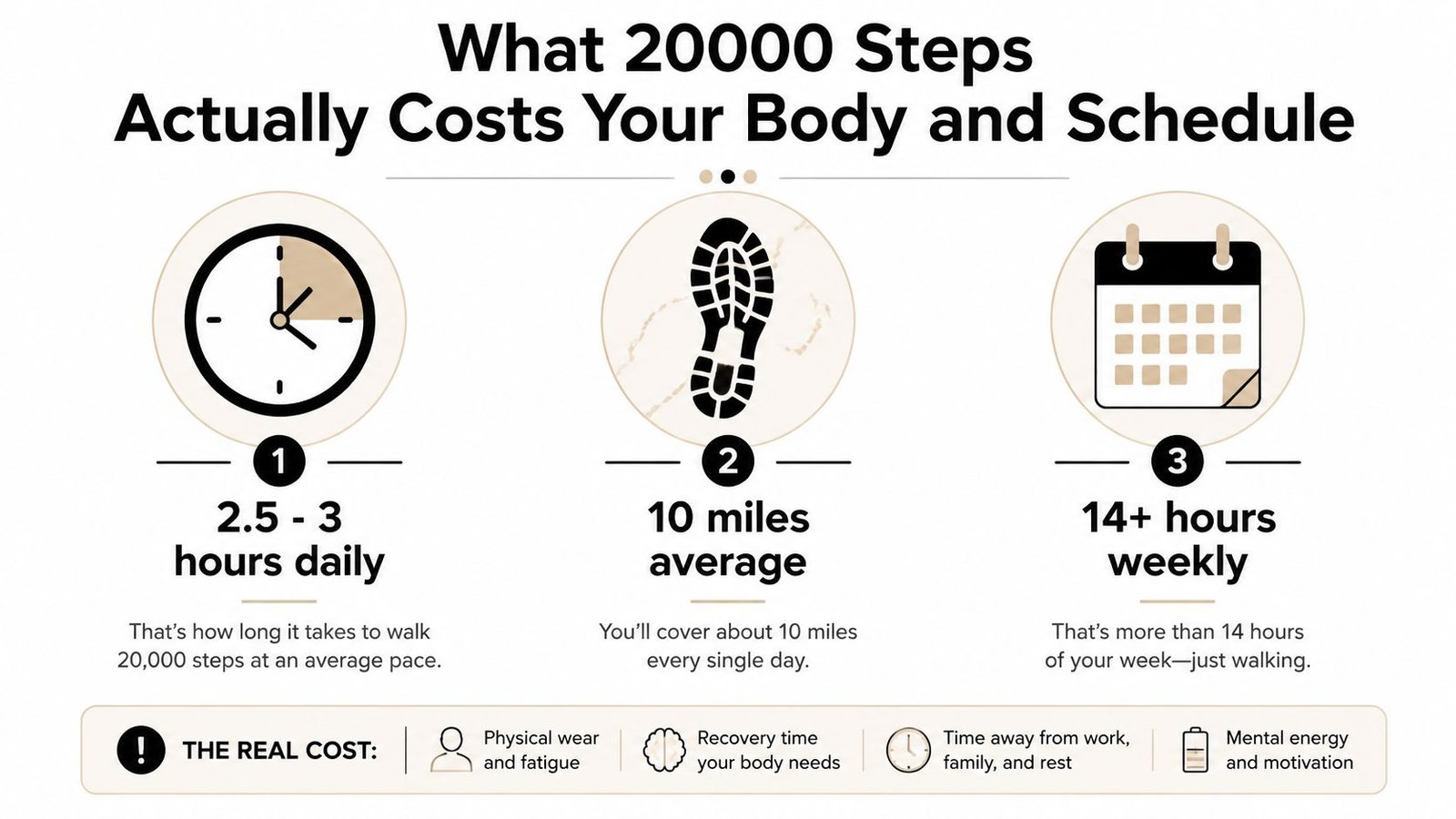
Before committing, compare the target with your current routine using a framework such as setting realistic fitness goals. A goal that leaves you rushing through sleep, skipping strength work, or ignoring persistent pain usually needs adjusting, even if the step count looks impressive.
Where the health gains appear
The strongest evidence doesn't treat 20,000 steps as a magic threshold. A large 2023 analysis in the Journal of the American College of Cardiology found that the optimal dose for all-cause mortality was about 8,763 steps per day, associated with a 60% risk reduction, while the optimal dose for incident cardiovascular disease was about 7,126 steps, associated with a 51% risk reduction. The analysis found lower risk beginning at roughly 2,600 steps for all-cause mortality and 2,800 steps for incident cardiovascular disease. The JACC analysis also reported that Harvard's summary found no clear upper limit to benefit among people walking as many as 20,000 steps, although relatively few participants reached that level.
A related NIH summary of a major U.S. cohort reported that, compared with 4,000 steps per day, taking 8,000 steps was linked to a 51% lower all-cause mortality risk, while 12,000 steps was linked to a 65% lower risk. These findings suggest that 20,000 steps sits well beyond the range where many people capture the largest population-level gains, while still remaining within a high-activity range where observational research has continued to see benefit rather than harm.
The hidden weekly commitment
The historical evidence points in the same direction. A 2021 meta-analysis of 15 international cohorts found that mortality risk declined with more steps, then plateaued around 6,000 to 8,000 steps for adults aged 60 and older and around 8,000 to 10,000 steps for adults younger than 60. A separate systematic review found that each additional 1,000 steps per day was associated with lower all-cause mortality and cardiovascular disease risk, with benefits present below 10,000 steps. The Lancet Public Health review00302-9/fulltext) explains why the old 10,000-step target works better as a practical benchmark than a physiological ceiling.
That doesn't make 20,000 steps pointless. It means you should pursue it for a clear reason, such as enjoying long walks, preparing for a walking-heavy trip, increasing daily activity, or supporting a broader fitness plan. Device-based cohort evidence found that 9,000 to 10,500 steps per day most consistently optimized mortality and incident cardiovascular disease risk independent of sedentary time, making 20,000 a high-volume choice rather than a requirement for maximal risk reduction. The device-based analysis also highlights the practical time cost.
Your feet may need support before your lungs do. If long walks leave your arches or heels irritated, consider whether properly fitted walking insoles for foot pain could improve comfort, alongside appropriate footwear and a gradual progression.
Building Up to 20000 Steps Without Breaking Down
The fastest way to make walking 20000 steps a day miserable is to treat it like a motivation test. A sudden jump raises the repetitive load on your shins, calves, Achilles tendons, plantar fascia, knees, and hips before those tissues have had time to adapt.
Start by recording your normal step count for several ordinary days. Don't choose an unusually active weekend as your baseline. Use the average that reflects your work, commute, errands, and current exercise habits, then increase the workload conservatively.
An eight-week progression
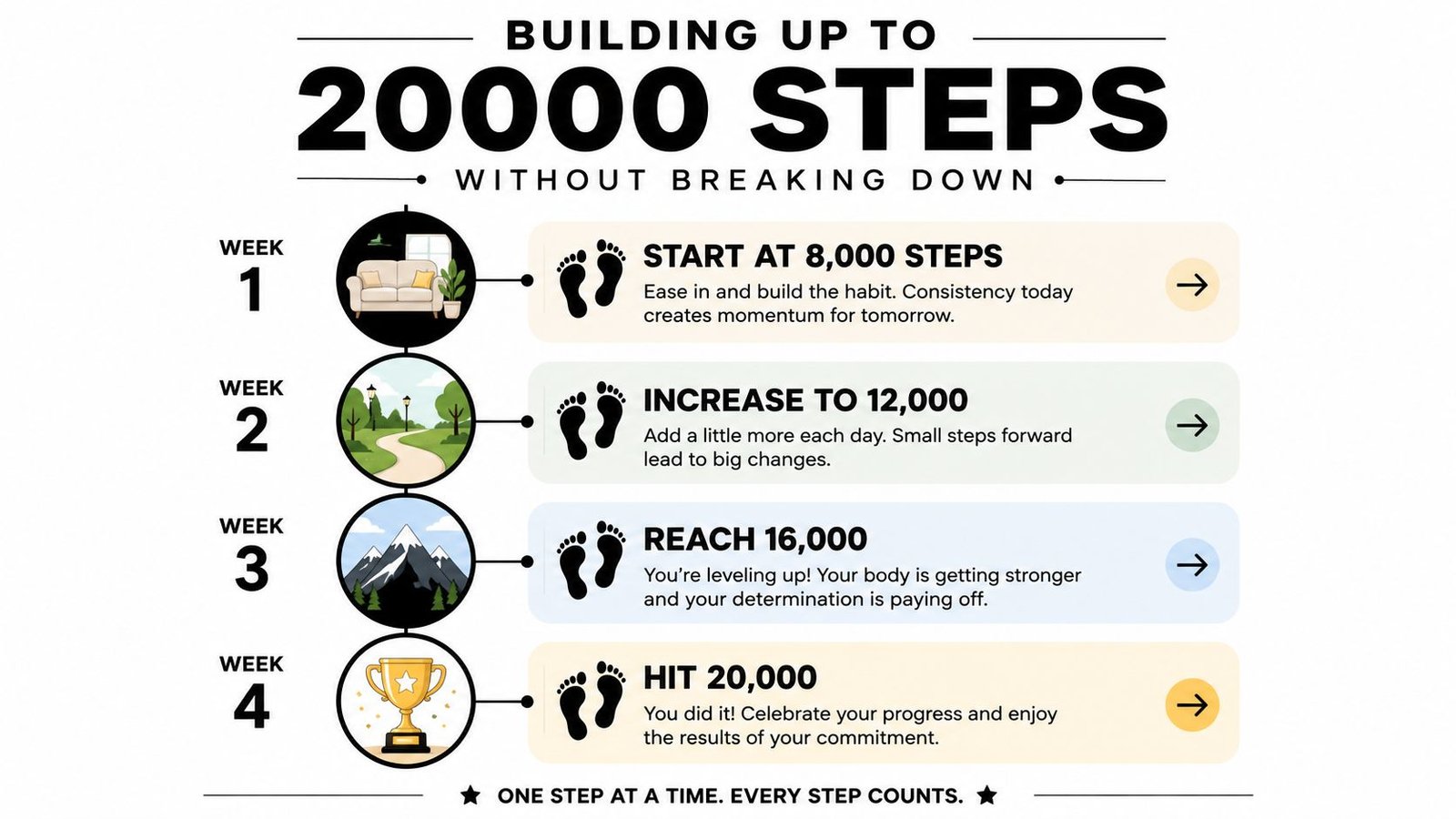
The following roadmap uses the requested 8,000-step starting point. If your current average is lower, begin at your actual baseline and preserve the same gradual principle rather than forcing the first target.
| Week | Daily target | Main focus |
|---|---|---|
| 1 | 8,000 | Establish routine and comfortable footwear |
| 2 | 9,000 | Add a short midday walk |
| 3 | 10,000 | Keep most walks easy and conversational |
| 4 | 10,000 | Deload and allow tissues to adapt |
| 5 | 12,000 | Add a longer evening or morning bout |
| 6 | 14,000 | Split the volume across at least three bouts |
| 7 | 16,000 | Practice the schedule you can maintain |
| 8 | 20,000 | Test the full target, then assess recovery |
A jump of 10% to 15% per week is a useful ceiling for many healthy adults, but it isn't a guarantee against injury. The evidence showing benefits beginning at roughly 2,300 steps per day and rising in approximately 500-step increments supports a stepwise approach rather than a dramatic leap. The dose-response meta-analysis also found that the curve flattened around 8,000 to 10,000 steps for adults under 60 and 6,000 to 8,000 for adults 60 and older, so there's no reason to rush through the higher stages.
How to know when to hold steady
Add a second walking bout when your current target feels routine and your next-day soreness is mild. Add a third bout once the second walk no longer creates lingering calf, foot, or shin discomfort. A deload week isn't wasted time. It gives connective tissue space to catch up with the cardiovascular improvement that often arrives first.
Pull back when pain changes your stride, worsens during the walk, appears at rest, or remains more noticeable from one day to the next. Swelling, sharp pain, numbness, or persistent Achilles and heel pain deserves assessment from a qualified clinician rather than another increase.
Use the following video as a movement reference, but keep the progression tied to your response, not someone else's challenge:
A Sample Day That Fits 20000 Steps Into a Working Schedule
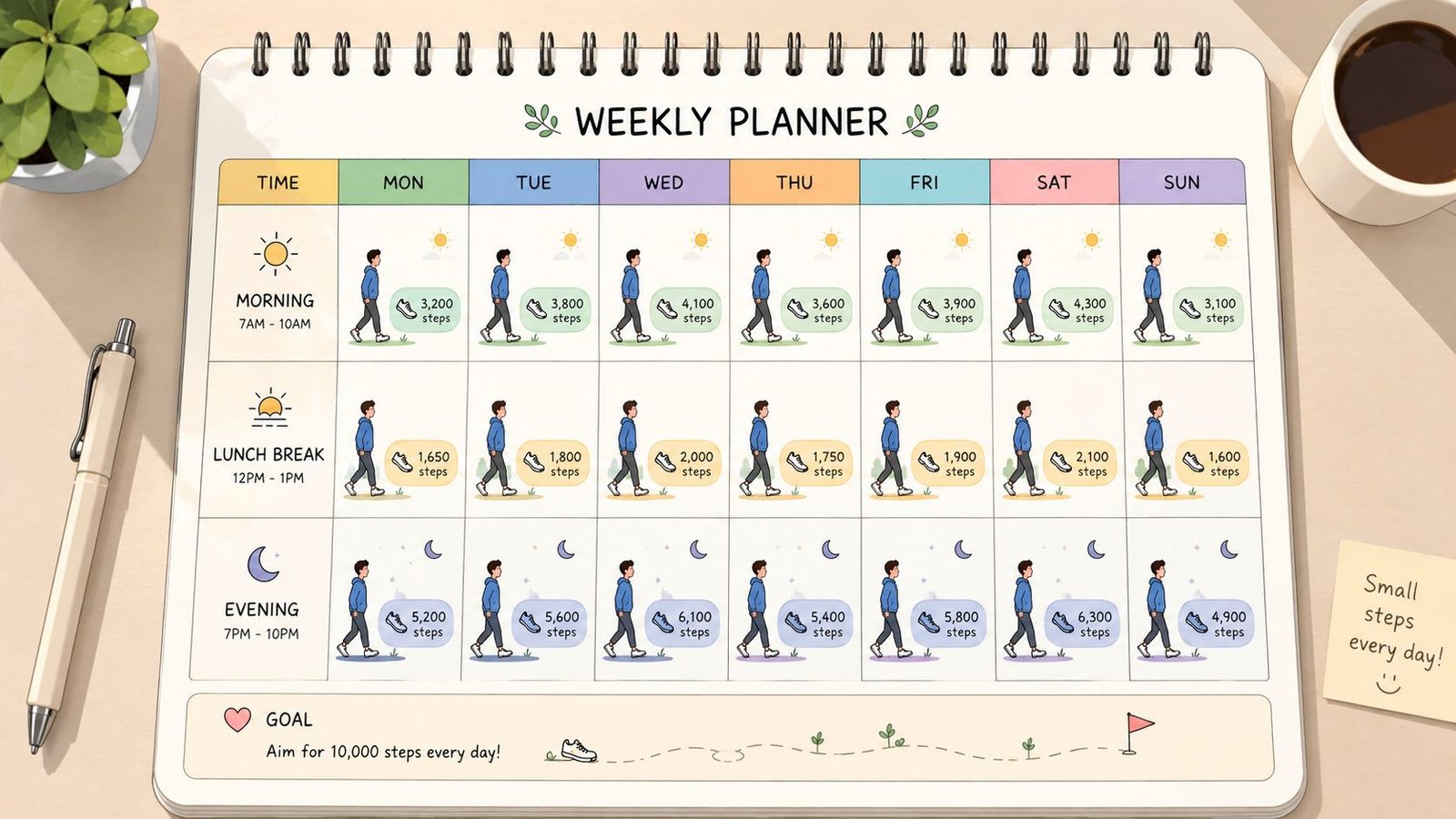
The schedule works when walking becomes a series of appointments instead of one enormous task. A professional with a desk-based job might start before breakfast, use the middle of the workday for a purposeful loop, and reserve the evening for whatever remains. The exact pace varies, but the distribution matters more than one heroic outing.
At 6:30 a.m., a brisk walk before breakfast can bank roughly 3,000 to 4,000 steps. Keep it easy enough that you aren't starting work depleted. At midday, walk during a meeting when the format allows it, take a longer route for lunch, or combine errands on foot. That block can contribute roughly 4,000 to 5,000 steps.
The working-day math
A practical day might look like this:
- Before work: Use a dedicated walk to create an early reserve rather than hoping incidental movement will carry you.
- Commute and office movement: Get off transit earlier, use stairs where comfortable, and walk to colleagues instead of sending every message.
- Lunch period: Take a purposeful loop before eating or split the break into two shorter walks.
- After work: Complete the largest remaining block before dinner, when family and household demands often compete for attention.
- Evening: Use a gentle wind-down walk to finish rather than turning the last miles into a race.
Bad weather changes the setting, not the principle. A shopping centre, covered walkway, indoor track, or home walking pad can preserve the routine. For people working from home, a MedEq Fitness R500 pad may make short workday walking blocks easier, but it still needs a place in the room and a defined time slot. Equipment doesn't create consistency without a calendar cue.
Long office hours require earlier planning. Put the first walk before the day becomes reactive, then protect the lunch block as seriously as a meeting. Family commitments may call for a stroller walk, a playground loop, or a shared after-dinner route. The best schedule is the one that survives ordinary interruptions, not the one that looks perfect on paper.
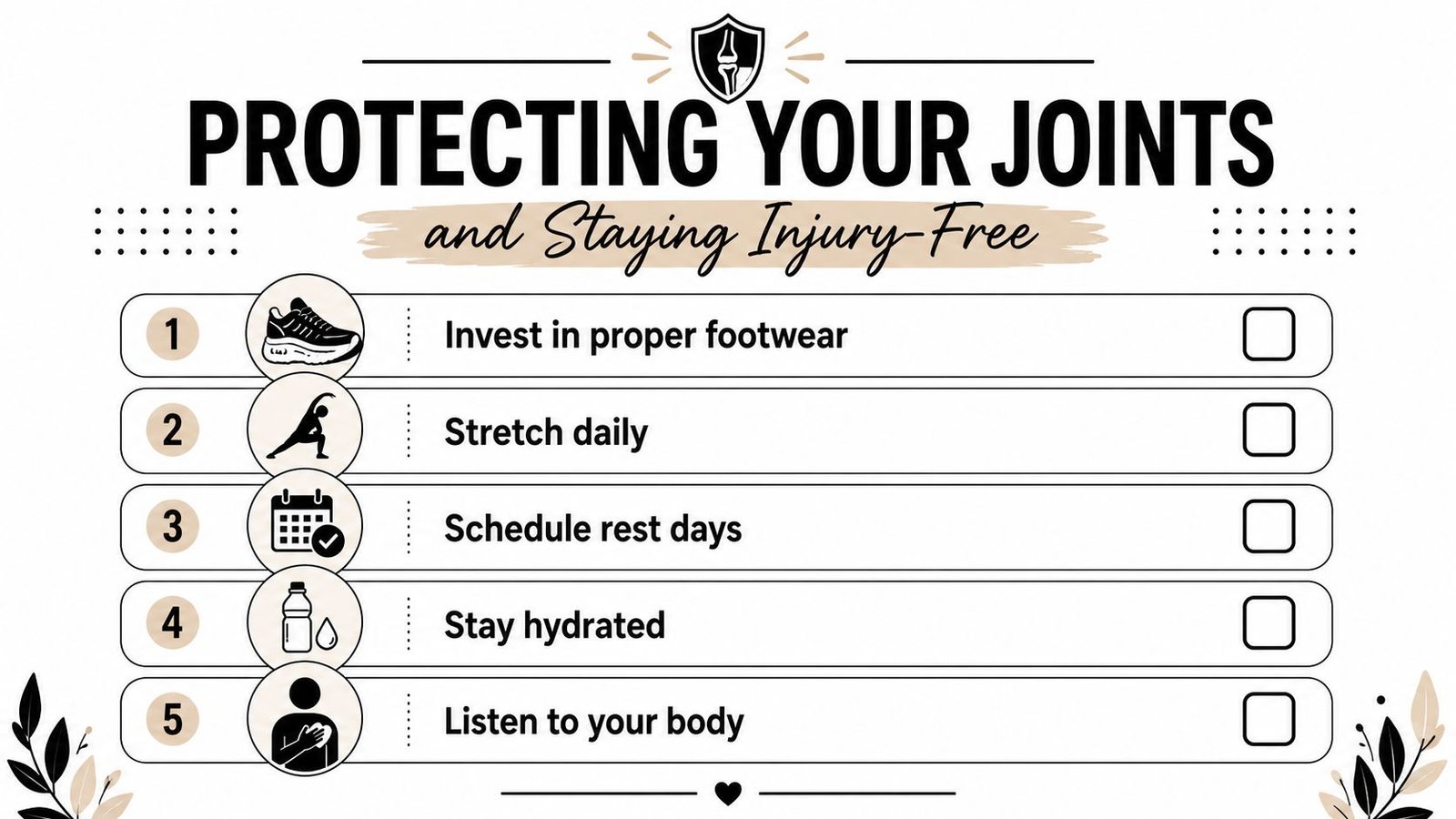
Protecting Your Joints and Staying Injury-Free
High-volume walking is low impact compared with running, but 20,000 daily steps still repeat the same movement thousands of times. Small footwear problems, restricted ankle motion, weak calves, or a hurried stride can become painful when repeated day after day.
Make footwear part of the plan
Wear shoes that fit your current foot shape, leave room for normal daily swelling, and feel stable across your usual surfaces. Rotating between at least two pairs can help you avoid repeating the same pressure points and lets each pair dry between long walks. Replace footwear when the outsole is uneven, the midsole feels flat, or discomfort appears even though your walking volume hasn't changed.
Don't try to solve every foot problem by adding cushioning. Arch support, heel fit, toe-box space, and the way the shoe bends all matter. If pain persists, a podiatrist or physiotherapist can help distinguish a footwear issue from a load-management problem.
Use a short mobility routine
After walking, spend a few calm minutes on:
- Calves: Perform a straight-knee calf stretch, then a bent-knee version to address different tissues.
- Ankles: Move the knee gently toward the wall while keeping the heel grounded.
- Plantar fascia: Roll the sole over a ball or massage it lightly, without forcing painful pressure.
- Hip flexors: Use a half-kneeling stretch with the ribs stacked over the pelvis.
- Strength: Add controlled calf raises and simple glute work on separate training days.
A useful resource for improving movement quality is this guide to hip mobility for adults. Mobility won't compensate for an excessive workload, but it can help you move more comfortably when combined with gradual progression.
Early warning: If pain changes your walking pattern, grows sharper during the session, or remains worse the next morning, reduce the volume instead of trying to walk through it.
Rest days don't have to mean total inactivity. Replace a long walk with gentle mobility, easy cycling, swimming, or another low-impact option if it feels comfortable. Comparing walking vs. an elliptical machine can help you choose a lower-impact substitute when your feet need a break. Sleep, hydration, and adequate food also influence whether your body can recover from repeated daily loading.
Calorie Burn and Adjusting Your Nutrition Plan
Twenty thousand steps can increase daily energy expenditure substantially, but no honest coach can give you one universal calorie figure from the step count alone. Body weight, walking pace, hills, terrain, stride length, and the amount of movement you already perform all change the result. Treat any tracker estimate as a starting point, not permission to automatically eat back every displayed calorie.
The more useful question is whether the extra walking changes your total daily energy needs and whether your appetite responds. Some people remain comfortable with their usual meals. Others become hungry later, snack while walking, or unconsciously reduce movement elsewhere. That compensation can erase the expected calorie deficit even when the pedometer shows an impressive total.
Set the food target from the whole day
Use your estimated total daily energy expenditure, or TDEE, as the planning anchor. Then compare your actual body-weight trend, hunger, training quality, and recovery over time. Don't slash food aggressively while adding a large walking workload. Low energy can make your stride sloppy, reduce sleep quality, and turn a manageable routine into a cycle of restriction and overeating.
Build meals around foods that travel well and digest comfortably:
- Before a longer walk: Choose familiar carbohydrate-rich food with some protein, especially if walking first thing leaves you flat.
- During a busy day: Carry a planned snack instead of relying on whatever is available at the end of a stressful shift.
- After walking: Eat a proper meal with protein, carbohydrate, fluids, and produce rather than treating the walk as a reason to graze continuously.
- On easier days: Keep portions responsive to actual hunger and activity instead of preserving a high-volume walking intake automatically.
Log the walk separately from food, then review the pattern rather than chasing precision. If weight loss is the goal, a stable downward trend matters more than a single day's tracker estimate. If performance and body composition are the goal, persistent fatigue, poor sleep, and unusually strong cravings suggest that your intake may not match the workload.
A simple food log also reveals where walking triggers extra eating. Record meals soon after they happen, include drinks and snacks, and note whether hunger appeared before or after the walk. That information lets you adjust portions deliberately instead of guessing.
Tracking Tips and Staying Consistent Long-Term
A single 20,000-step day proves that you can complete the task. A repeatable system proves that it belongs in your life. Set your tracker to show the current count, remaining steps, and a weekly view, then use reminders for the walking blocks you tend to skip.
Weekly averages are more useful than treating every day as a pass-or-fail test. Travel, illness, weather, and family emergencies will interrupt the routine. A lower day doesn't erase the habit, but pretending that every week will be identical makes the target harder to sustain.
Build visible cues
Keep walking shoes by the door, store a spare pair at work, and put the midday walk on your calendar. Pair movement with existing routines, such as walking while taking a phone call or completing a familiar loop after lunch. The less often you negotiate with yourself, the less motivation the plan requires.
Use milestones that measure process as well as steps:
- Schedule: Did you protect the morning, midday, and evening walking windows?
- Recovery: Did your feet, calves, and joints feel ready for the next session?
- Nutrition: Did you log meals accurately enough to understand your hunger?
- Consistency: Did you complete the planned bouts, even when the total fell short?
Review your data at the end of each week. A declining average, growing soreness, or repeated evening catch-up walks signals that the schedule needs redesigning. During illness, stop chasing the number and return gradually once normal energy and movement have returned. During seasonal changes, move the route indoors or shorten the individual bouts while preserving the daily cue.
The strongest long-term target may not be 20,000 every day. For some people, a lower weekday baseline plus occasional high-step days delivers better adherence and recovery. Choose the highest level you can maintain without sacrificing sleep, relationships, work, or pain-free movement.
PlateBird makes calorie and macro tracking faster by letting you type meals such as “eggs toast coffee” or snap a photo of your plate for quick nutrition estimates, while saving recurring meals as one-tap shortcuts. Visit PlateBird to make your walking-related food adjustments easier to track without turning every meal into a data-entry project.