
You've logged breakfast, but the app's numbers still look like a foreign language. The toast counts as carbohydrates, the eggs contribute protein and fat, and the coffee may change the total depending on what you added. You're not doing anything wrong. Macro counting becomes easier when you separate the meaning of the numbers from the arithmetic and then choose a logging method you can repeat.
This guide to how to count macros for beginners starts with that practical sequence. You'll learn what protein, carbohydrates, and fat represent, how to turn a calorie target into grams, when a food scale is worth using, and how to build a one-week routine without treating every meal like a laboratory experiment.
What Macros Do in a Beginner Meal Plan
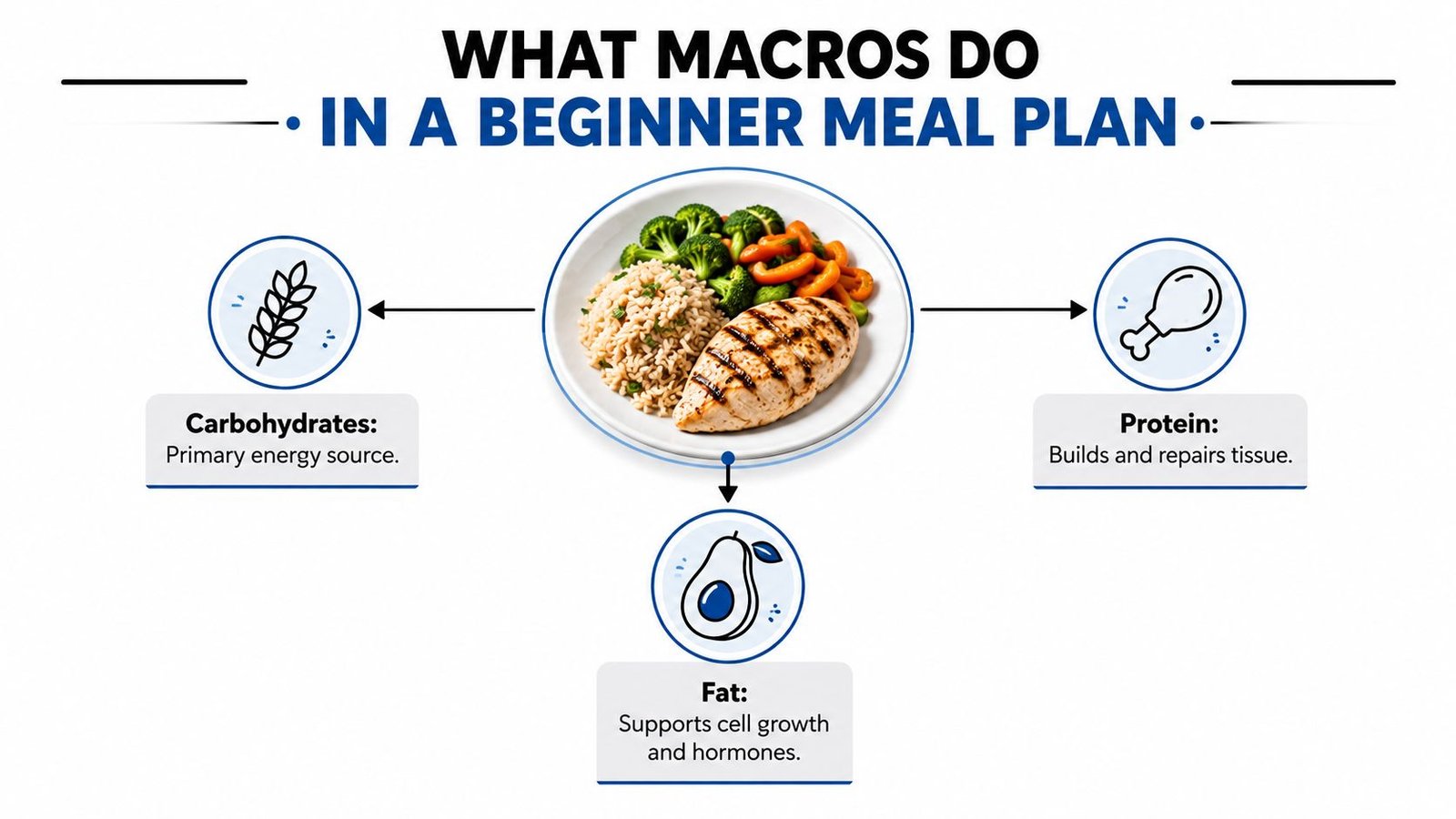
On the first day, Maya logs eggs, toast, and coffee. The app gives her calories, protein, carbohydrates, and fat, but the totals don't yet feel connected to the food on her plate. That connection matters because macros are the three main calorie-bearing parts of food: protein, carbohydrates, and fat.
Protein is the macro many beginners use as a meal anchor. It appears in foods such as eggs, chicken, fish, yogurt, tofu, beans, and lentils. In a practical meal plan, a protein source helps make a meal feel substantial and gives the tracker a clear starting point. A BionicGym diet and exercise plan can provide broader context for combining eating habits with movement, but your macro targets still need to fit your own routine and goal.
Carbohydrates are flexible. Rice, oats, bread, potatoes, fruit, beans, and many vegetables contribute carbohydrates, and they can occupy a large share of a beginner plan. Fat is more calorie-dense, so oils, butter, nuts, seeds, cheese, avocado, and creamy sauces can move the daily total quickly even when the portion looks small.
The U.S. Acceptable Macronutrient Distribution Range gives adults a broad starting framework of 45%–65% of calories from carbohydrates, 20%–35% from fat, and 10%–35% from protein. These are ranges, not mandatory daily settings, and they're useful because they express macros as a share of total energy rather than as one rigid gram prescription. You can review the U.S. AMDR explanation for the full context.
Beginner mindset: Calories describe the size of the budget. Macros describe how that budget is divided.
That distinction keeps the process manageable. You're not trying to make every food “good” or “bad.” You're learning what each meal contributes, then repeating a pattern that supports your chosen target.
Calculate Your Calorie and Macro Targets
Start with total daily energy expenditure, or TDEE. It estimates the calories your body uses in a day, so use it as a starting line rather than a permanent verdict. Your goal then determines whether you set calories near maintenance, below it for fat loss, or above it for gain. The first target is a working estimate that you can compare with actual meals and progress.
Use this five-step process:
- Estimate maintenance calories. Use a suitable calculator or qualified professional guidance.
- Choose a goal-based calorie target. Decide whether maintenance, fat loss, or gain fits your current goal.
- Select a macro split. Keep the percentages practical and within the broad adult AMDR ranges from the previous section.
- Convert percentages into calories. Multiply your calorie target by each percentage.
- Convert calories into grams. Protein and carbohydrates provide 4 calories per gram, while fat provides 9 calories per gram, as explained in this macro calculation guide.
Use a 2,000-calorie target with 50% carbohydrates, 30% fat, and 20% protein:
| Macro | Calorie Share | Calories | Conversion | Daily Grams |
|---|---|---|---|---|
| Carbohydrates | 50% | 1,000 | 1,000 ÷ 4 | 250 g |
| Fat | 30% | 600 | 600 ÷ 9 | About 67 g |
| Protein | 20% | 400 | 400 ÷ 4 | 100 g |
The arithmetic stays the same for any calorie target. 2,000 × 0.50 = 1,000 carbohydrate calories, and 1,000 ÷ 4 = 250 grams. 2,000 × 0.30 = 600 fat calories, and 600 ÷ 9 is about 67 grams. 2,000 × 0.20 = 400 protein calories, and 400 ÷ 4 = 100 grams.
Change the calorie target, and the gram targets change with it. Change the macro split, and the calorie allocation changes before you convert it into grams. For a homemade dish, you can calculate calories by ingredient, add the ingredients together, and divide the recipe into the portions you plan to eat.
A target should guide your routine, not grade it. If the numbers feel unclear, this guide to what your macros should be can help you compare reasonable approaches instead of copying a random ratio. Start with targets you can apply to ordinary meals, then refine them as your tracking provides more useful information.
Choose a Tracking Method That Fits Real Life
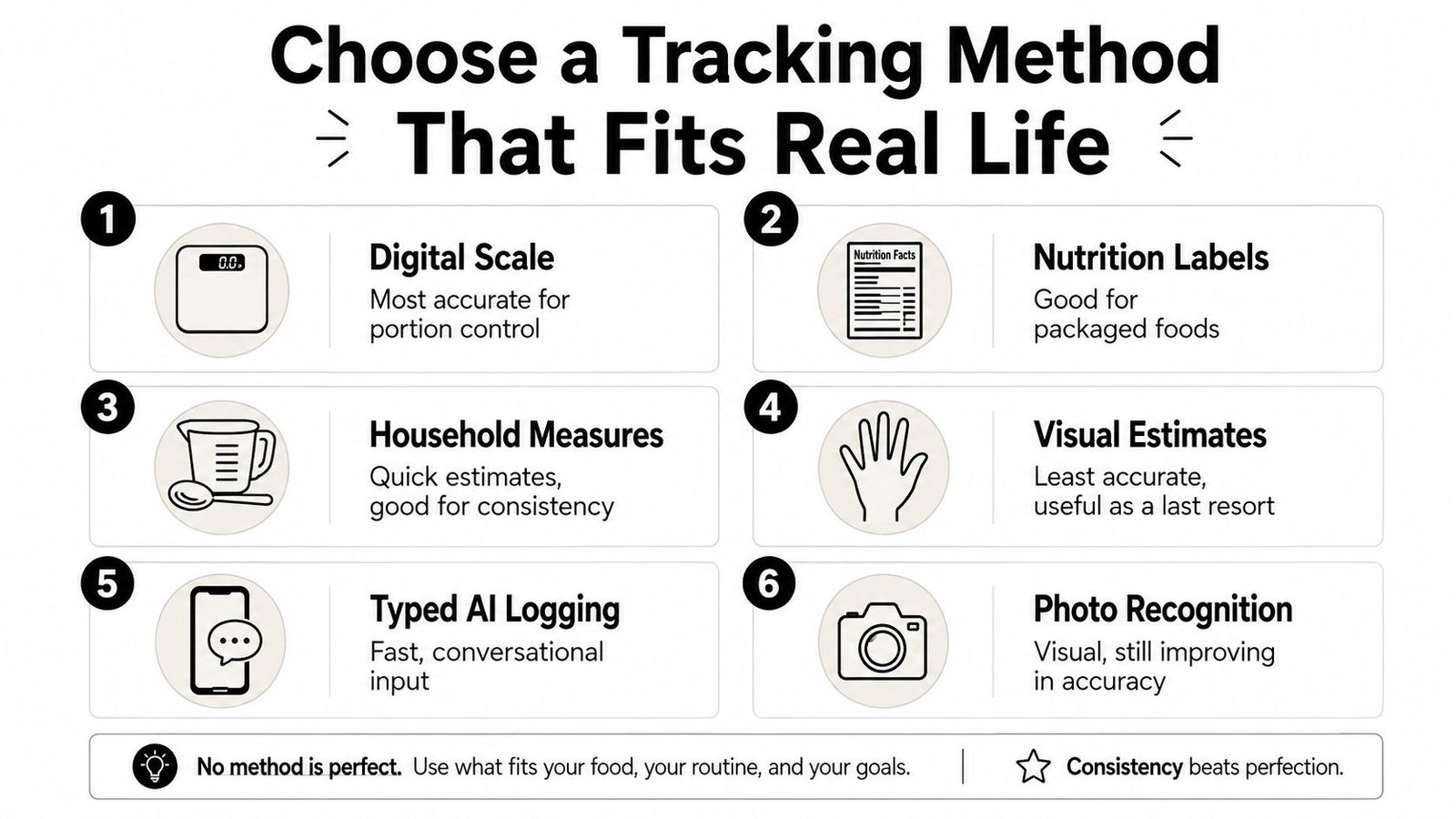
The most accurate method is the one that matches the food in front of you and your willingness to use it. A digital scale is especially helpful for calorie-dense ingredients such as oil, nut butter, cheese, cereal, rice, and pasta. It's also useful for repeated meal-prep staples because one careful measurement can create a reliable saved meal.
Nutrition labels are faster for packaged food. If a yogurt container or frozen meal provides the serving information, enter the package amount and check whether you ate one serving or more. Household measures, such as cups and tablespoons, work well when you use them consistently, although they're less precise than weighing.
Visual estimates are a reasonable fallback at a restaurant or social meal. Don't pretend they're exact. Break the plate into visible components, then inspect whether the entry includes dressing, oil, cheese, butter, sauces, or drinks.
Typed AI logging offers speed when you can describe the meal clearly. Photo logging offers convenience for plated meals, but the first result should be treated as an estimate that you review. A meta-analysis found pooled mean absolute percentage errors of 5.1% for protein, 6.3% for carbohydrates, and 8.7% for fat with AI-powered trackers, while cited validation work suggests photo logging can miss protein and fat by wider margins than digital-scale logging. See the AI tracker accuracy analysis for that comparison.
A simple policy works well:
- Weigh staples: Use a scale for oils, grains, calorie-dense spreads, and repeat recipes.
- Read labels: Use package information for single-serving foods.
- Estimate strategically: Use visual portions when weighing would make the situation impractical.
- Inspect AI results: Confirm the food, preparation, portion, and hidden ingredients before accepting the entry.
- Repeat successful meals: Save combinations you eat often instead of rebuilding them from scratch.
For more guidance on choosing between manual entry and automated tools, compare these macro-tracking app options. Your system doesn't need perfect precision at every meal. It needs a clear rule for uncertain meals and a consistent rule for ordinary ones.
Log Meals Faster With PlateBird
PlateBird fits into the gap between careful weighing and rushed estimation. You can type a meal in plain language, such as “eggs toast coffee” or “chicken rice broccoli,” then review the estimated calories and macro breakdown before saving it. The convenience is useful, but you remain responsible for checking whether the portion and ingredients match what you ate.
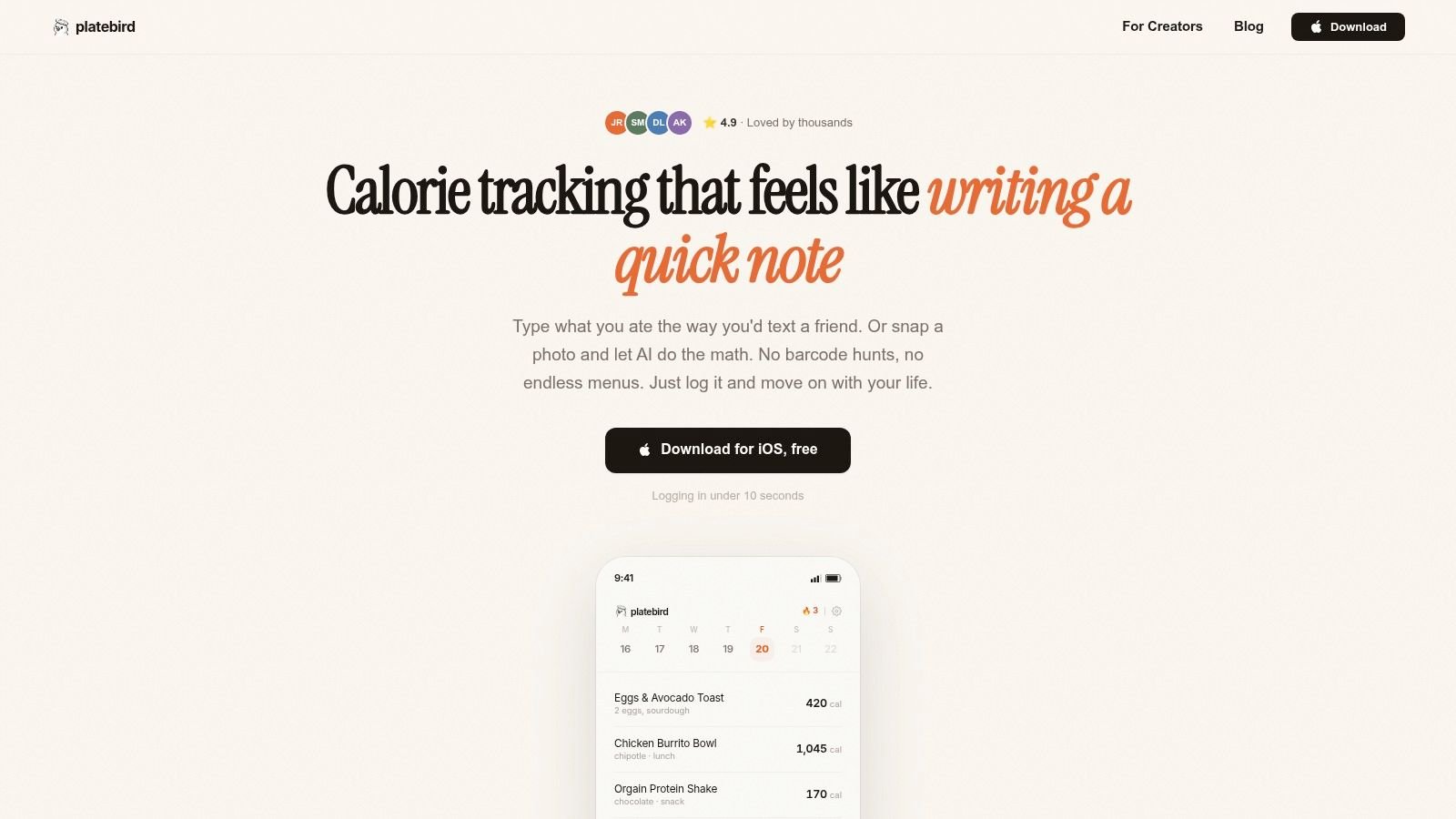
For a photographed meal, take the picture before eating and inspect the identified components. If the app misses the sauce, confuses a grain, or assigns a portion that looks too large, correct that item rather than accepting the first estimate. A small correction is more useful than false confidence.
A repeated chicken-and-rice lunch shows where shortcuts help. Weigh the cooked rice, measure the chicken, record the vegetables and sauce, and save the completed meal after checking it once. The next time you eat the same lunch, reuse the saved entry and adjust only the portion that changed.
| Situation | Best Starting Method | What to Check |
|---|---|---|
| Breakfast at home | Typed description or label entry | Milk, spreads, cooking fat, and serving size |
| Meal-prep lunch | Food scale plus saved meal | Raw or cooked state, batch yield, and sauce |
| Mixed plated dinner | Photo followed by review | Each ingredient and uncertain portion |
| Restaurant meal | Visual estimate or typed description | Oil, dressing, toppings, drinks, and shared items |
| Repeated snack | Package label or saved item | Whether the amount matches one serving |
Use PlateBird's calorie counter photo workflow when a picture is faster than typing, especially for a meal with several visible components. The key habit is review, correct, save, reuse. That sequence reduces repetitive searching without asking you to surrender judgment to an app.
Follow a One-Week Beginner Macro Menu
A first-week menu should feel familiar enough to repeat. Use the meals below as templates, not fixed prescriptions. Adjust portions to your calorie and macro targets, and swap foods with similar roles when your preferences or schedule change.
| Day | Breakfast | Lunch | Dinner | Snack |
|---|---|---|---|---|
| Day 1 | Eggs, toast, and fruit | Chicken, rice, and broccoli | Salmon, potatoes, and vegetables | Yogurt and berries |
| Day 2 | Oats with yogurt and fruit | Turkey sandwich with salad | Tofu stir-fry with rice | Apple with nut butter |
| Day 3 | Greek yogurt, oats, and banana | Tuna bowl with rice and vegetables | Chicken pasta with tomato sauce | Cottage cheese and fruit |
| Day 4 | Eggs, toast, and avocado | Lentil bowl with vegetables | Lean beef, potatoes, and salad | Yogurt |
| Day 5 | Oats with milk and berries | Chicken wrap with vegetables | Fish, rice, and broccoli | Fruit and nuts |
| Day 6 | Yogurt bowl with oats | Leftover protein, grain, and vegetables | Tofu or chicken stir-fry | Toast with nut butter |
| Day 7 | Eggs, toast, and fruit | Bean and chicken salad | Pasta with protein and vegetables | Cottage cheese or yogurt |
The menu's repeated anchors make tracking easier. You can keep breakfast nearly identical, rotate lunch leftovers, and vary dinner carbohydrates or fats according to the room left in your daily target. This follows the practical workflow of setting calories, choosing a split, converting grams, and logging with labels and a food scale to reduce portion error, as outlined in this beginner macro-counting workflow.
The details that change the numbers
Cooked grains need a consistent method. If you weigh cooked rice for one entry, keep using cooked weight for that recurring meal. Don't log uncooked rice while measuring the portion after cooking, because the database entry and your measurement no longer describe the same thing.
Measure cooking oil rather than letting a quick pour decide the total. Log sauces, dressings, cheese, milk in coffee, and spreads as separate components when they aren't included in the main food entry. These small additions are easy to overlook and often repeat throughout the week.
Save the meals that work. A chicken, rice, broccoli, and sauce bowl can become a one-tap lunch, while a dependable eggs, toast, and coffee breakfast can remove several daily decisions. The menu should make your routine simpler, not turn food into a set of rules you can't live with.
Troubleshoot Tracking Mistakes and Stalled Progress
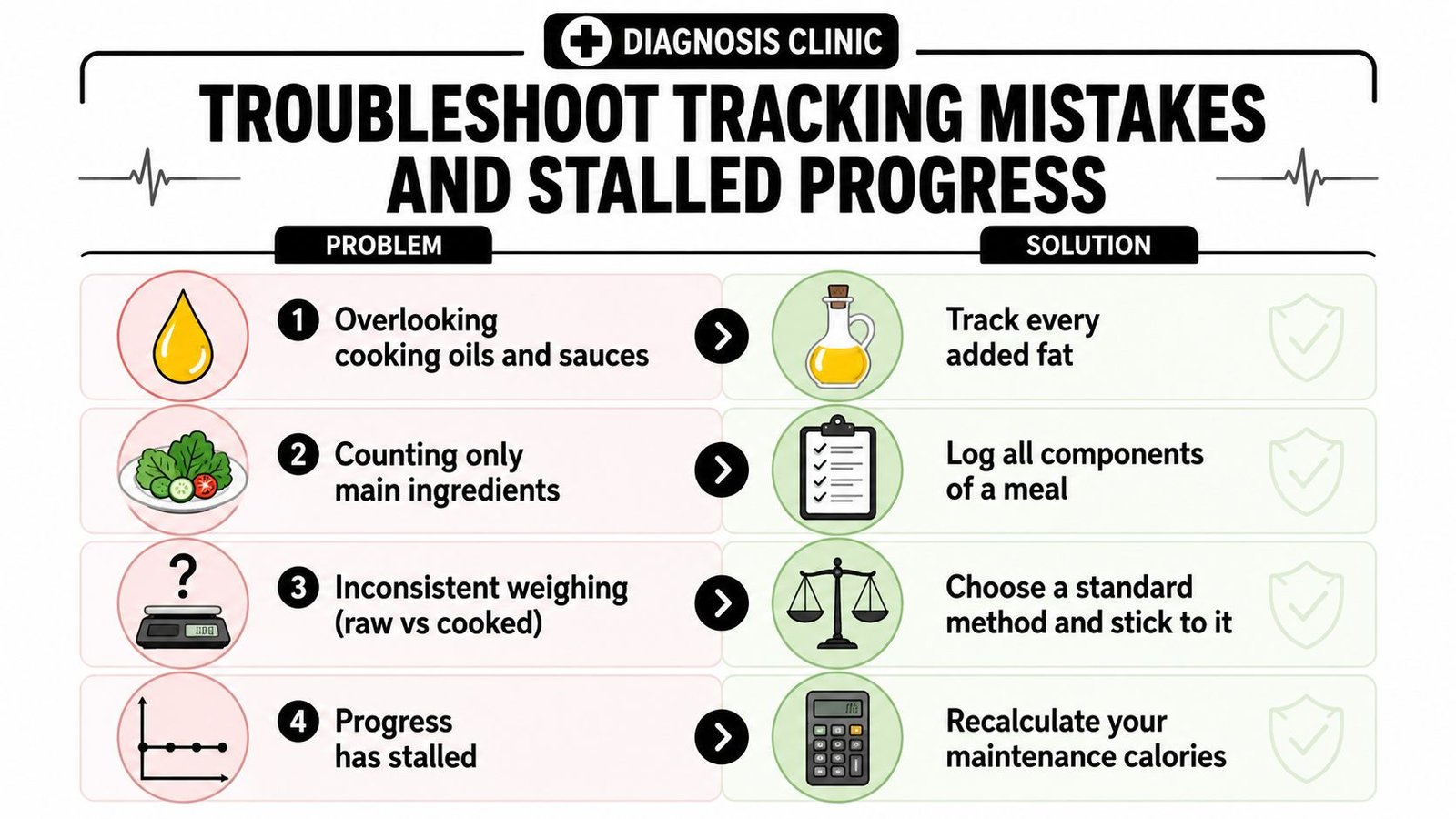
A beginner can weigh chicken carefully, forget the oil in the pan, record vegetables, and skip the dressing. Another person may weigh cooked rice but select a raw-rice database entry. The arithmetic is still simple, yet the daily total becomes difficult to explain because the measurement and the logged food no longer match.
Use the log to find the repeated error:
- Oil and sauce are missing: Check the pan, dressing, spread, and condiments.
- Only main ingredients are recorded: Add toppings, drinks, sides, and other meal components.
- Raw and cooked weights are mixed: Use one measurement standard for each recurring food.
- Restaurant portions look too optimistic: Choose a cautious comparable entry and record visible extras.
- Daily targets feel impossible: Review several days before changing the plan.
- The scale hasn't moved: Check consistency, target assumptions, hunger, and activity before changing multiple variables.
Practical rule: Correct the most repeatable error first. One difficult dinner does not require a complete diet redesign.
Adherence matters more than flawless entries. Research on self-monitoring shows that completion can fall sharply over successive months when the process is standardized rather than personalized. That pattern supports a calmer approach: simplify logging, set targets that fit the person, and value repeated completion over perfect records.
After 2–4 weeks of real-world tracking, review the pattern rather than a single day. Compare your target with logged intake, hunger, workout performance, and progress. Then make one measured adjustment and continue gathering observations. If a target repeatedly leaves too little protein, carbohydrate, or fat, check the arithmetic and recurring portions before changing the entire split.
A stalled result does not automatically mean the plan failed. Maintenance calories may be estimated incorrectly, portions may vary, or the target may no longer fit your routine. Treat the log like a car dashboard: one unusual reading deserves inspection, while a repeated pattern points to the setting that needs adjustment.
Start Your Sustainable Macro Routine Today
Make the first week uncomplicated. Estimate maintenance calories, choose your goal, select a practical macro split, convert it into grams, and create one breakfast, one lunch, one dinner, and one snack template. Log the food you eat before trying to make every meal look perfect.
Use a scale for calorie-dense staples, nutrition labels for packaged foods, and estimates when the situation makes weighing impractical. For faster entries, use typed descriptions or reviewed photo estimates in PlateBird, then save meals that recur.
At the end of each day, ask three questions:
- What food did I plan?
- Did I log the portions and extras?
- How much room remains for each macro?
That short check turns macro counting into feedback rather than judgment. After enough consistent entries, adjust one variable at a time and let your routine become more accurate through use.
PlateBird lets you type meals in plain language or photograph a plate, review estimated calories and macros, and save recurring meals as shortcuts. Visit PlateBird to make your first week of macro tracking faster and easier to repeat.