- The Most Overlooked Tool in Your Weight Loss Kit
- How Water Actually Helps You Lose Weight
- Calculating Your Personalized Daily Water Goal
- Strategic Water Timing to Amplify Your Results
- Practical Tips to Drink More Water Effortlessly
- Track Your Water for Success with PlateBird
- A Quick Word on Water Safety
You’re logging meals, trying to hit your protein target, maybe squeezing in workouts before work or after dinner, and still feeling like your progress is slower than it should be. That’s frustrating, especially when you’re doing so many things right.
A lot of people in that spot start looking for a more aggressive calorie target, a better supplement, or a stricter plan. Often, the simpler issue is that hydration hasn’t been treated like part of the plan. If you’ve been searching for how much water to lose weight, the useful answer isn’t “just drink more.” It’s “drink enough for your body, your activity, and your diet, then use timing strategically.”
The Most Overlooked Tool in Your Weight Loss Kit
Water usually gets treated like background health advice. Eat your vegetables. Sleep more. Drink more water. It sounds so basic that people assume it can’t be a meaningful lever.
But when someone is trying to lose weight, water acts more like the body’s operating system than a minor wellness habit. If hydration is off, hunger signals get messier, food choices get less consistent, workouts feel harder, and sticking to a calorie target becomes more difficult.
That’s why I want you to think about water as a support tool, not a magic trick. It won’t cancel out overeating. It won’t replace a calorie deficit. It won’t make body fat disappear on its own. What it can do is make the rest of your plan work better.
Why this matters more than most people realize
A lot of weight loss friction happens in tiny moments:
- Mid-afternoon cravings that feel like hunger, even when lunch was adequate
- Low energy at the gym that makes you cut a session short
- Extra snacking at night because your body feels “off” and wants something
- Poor meal pacing where you eat fast and don’t notice fullness until it’s too late
Hydration can influence all of those moments. That’s one reason broader health education keeps coming back to it. If you want a good primer on the bigger picture, Why Water Is Vital For Your Health is a helpful read because it frames water as a foundation, not a fad.
Water won’t do the job of nutrition and consistency. It helps those habits land.
The biggest mindset shift is this. Stop asking whether water “burns fat” by itself. Start asking whether your current intake is making your eating, training, and recovery harder than they need to be.
For many people, the answer is yes.
How Water Actually Helps You Lose Weight
There are a few reasons hydration can support fat loss, and they’re easier to understand than they sound. You don’t need to memorize biology terms. You just need a clear picture of what water is doing inside the body.
It slightly raises energy use
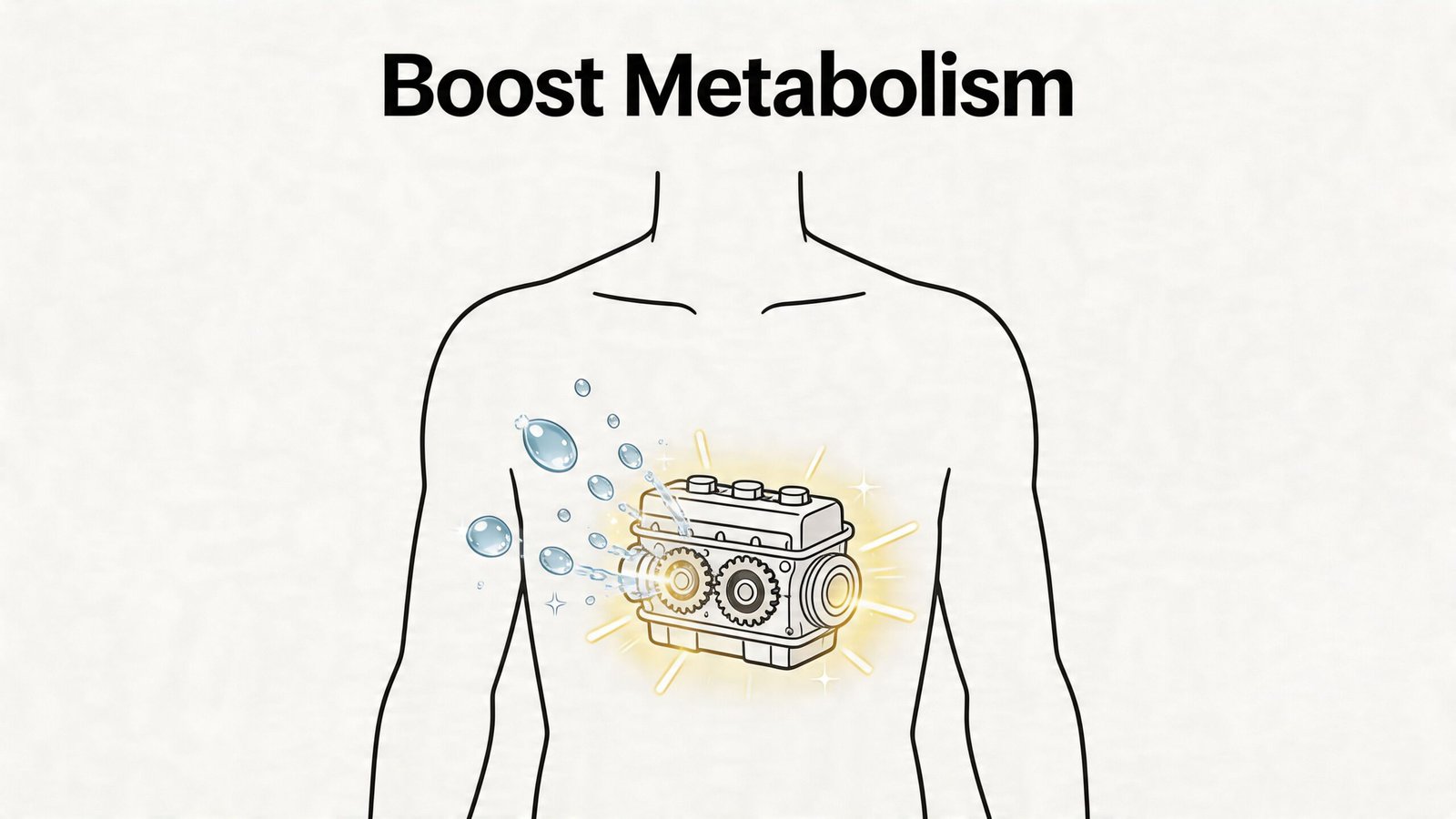
Think of your body like an engine that has to process whatever you put into it. Drinking water isn’t the same as doing cardio, but it does create a small workload.
According to a Johns Hopkins wellness summary, drinking 16 oz (approximately 500 mL) of water can increase metabolic rate by an average of 30% for about an hour, in part because the body expends energy warming the fluid to body temperature. The same source also notes that this amount can help fill the stomach and that a systematic review found premeal water loading produced weight loss ranging from 0.4 kg to 8.8 kg across studies, though evidence quality was low to moderate and follow-up varied (Johns Hopkins).
People often get confused on this point. A temporary bump in metabolic rate is real, but it’s not the main reason water helps with weight loss. It’s better viewed as a bonus, not the headline.
It helps your fullness signals show up sooner
This is the practical part. When you drink water before eating, the stomach has more volume in it. That gives your brain a stronger “we’re getting full” message.
A good analogy is a gas gauge that’s slightly delayed. If you eat quickly while underhydrated, you can overshoot before your fullness signal catches up. Water helps calibrate that gauge.
That’s one reason a calorie deficit is easier to maintain when hydration is solid. If you want the bigger framework behind that, this guide on what a calorie deficit is lays out the core idea clearly.
Practical rule: Water helps most when it reduces accidental eating, not when it becomes a substitute for meals.
It supports fat processing and beverage decisions
There’s also a behavior piece that matters a lot. Water often helps weight loss because it displaces drinks that come with calories. If you drink water instead of soda, juice, or alcohol, you reduce intake without touching your meals.
Water also supports the body’s normal process of handling metabolic byproducts. It functions as a transport system that keeps things moving. It doesn’t “melt” fat, but it helps the body run the systems involved in digestion, circulation, and waste removal.
So when people ask, “Does water help you lose weight?” the honest answer is yes, but mostly through appetite support, meal control, and better beverage choices, with a smaller thermogenic effect layered on top.
Calculating Your Personalized Daily Water Goal
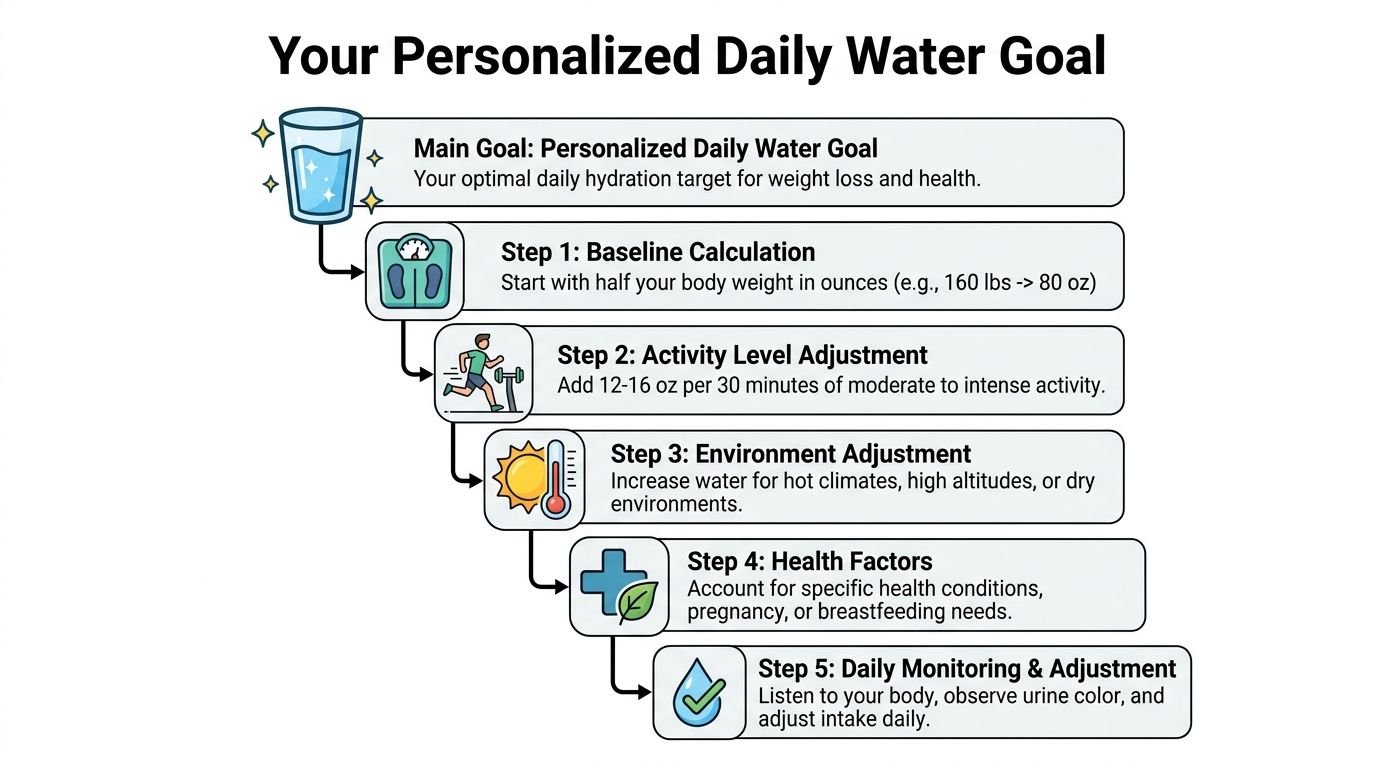
Many start with one rule and stop there. Usually it’s “drink half your body weight in ounces.” That’s not a bad baseline. It’s just incomplete.
If you want a better answer to how much water to lose weight, use a layered approach:
Baseline from body weight + adjustment for activity + adjustment for protein intake + real-life environment check
Start with the simple baseline
The common starting point is half your body weight in ounces. So if someone weighs 160 pounds, the baseline would be about 80 ounces.
That gives you a working target, not a perfect number. It’s best used as a floor for many active adults, not a final answer.
Add for exercise and sweat loss
If you train, commute in heat, take long walks, or sweat heavily, your water needs go up. A simple coaching rule is to add more fluid around activity, especially if the workout leaves you noticeably thirsty or your urine gets darker later in the day.
The exact amount can vary person to person, which is why rigid one-size-fits-all rules fall apart fast. Environment matters too. A hot climate, dry air, and altitude can all push needs higher.
For a broader framework on how to determine your ideal water intake, that guide is useful because it shows why context matters more than a single generic formula.
Add for high protein intake
This is the piece most articles skip, and it matters if you’re actively tracking macros.
According to Fay Nutrition, protein metabolism requires an extra 1 to 1.5 mL of water for every gram of protein consumed to help process nitrogen byproducts. For someone eating 180 g of protein, that can mean 180 to 270 mL, or about 6 to 9 oz, of extra water beyond standard advice (Fay Nutrition).
That doesn’t sound huge until you look at a full day. If you’re meal prepping, eating lean meat, protein yogurt, shakes, and high-protein snacks, your generic target may be too low.
Here’s a simple way to view it:
| Part of your goal | What to do |
|---|---|
| Baseline | Start with half your body weight in ounces |
| Exercise | Add more water on training days and sweaty days |
| Protein | Add extra fluid if you eat a high-protein diet |
| Environment | Increase intake in heat, dryness, or altitude |
| Feedback | Adjust based on thirst, urine color, and how you feel |
A plain-language example
Let’s say you weigh 180 pounds and eat a high-protein plan with 180 g of protein. Your baseline would be about 90 oz from the half-body-weight rule. On top of that, the protein adjustment alone could add about 6 to 9 oz based on the Fay Nutrition guidance above.
Then ask the important questions:
- Did you train today? Add more.
- Was it hot or humid? Add more.
- Did you wake up thirsty or finish the day drained? Your current target may still be low.
If you’re learning food logging at the same time, this guide on how to count calories can help you connect hydration with the rest of your nutrition habits.
The best water goal is one you can actually hit consistently and adjust intelligently.
Strategic Water Timing to Amplify Your Results
Drinking enough water over the full day matters. Timing can make that water more useful.
Two strategies stand out because they’re straightforward and tied to actual weight-loss outcomes. The first is drinking water before meals. The second is using water as your default swap for calorie-containing drinks.
Use premeal water loading
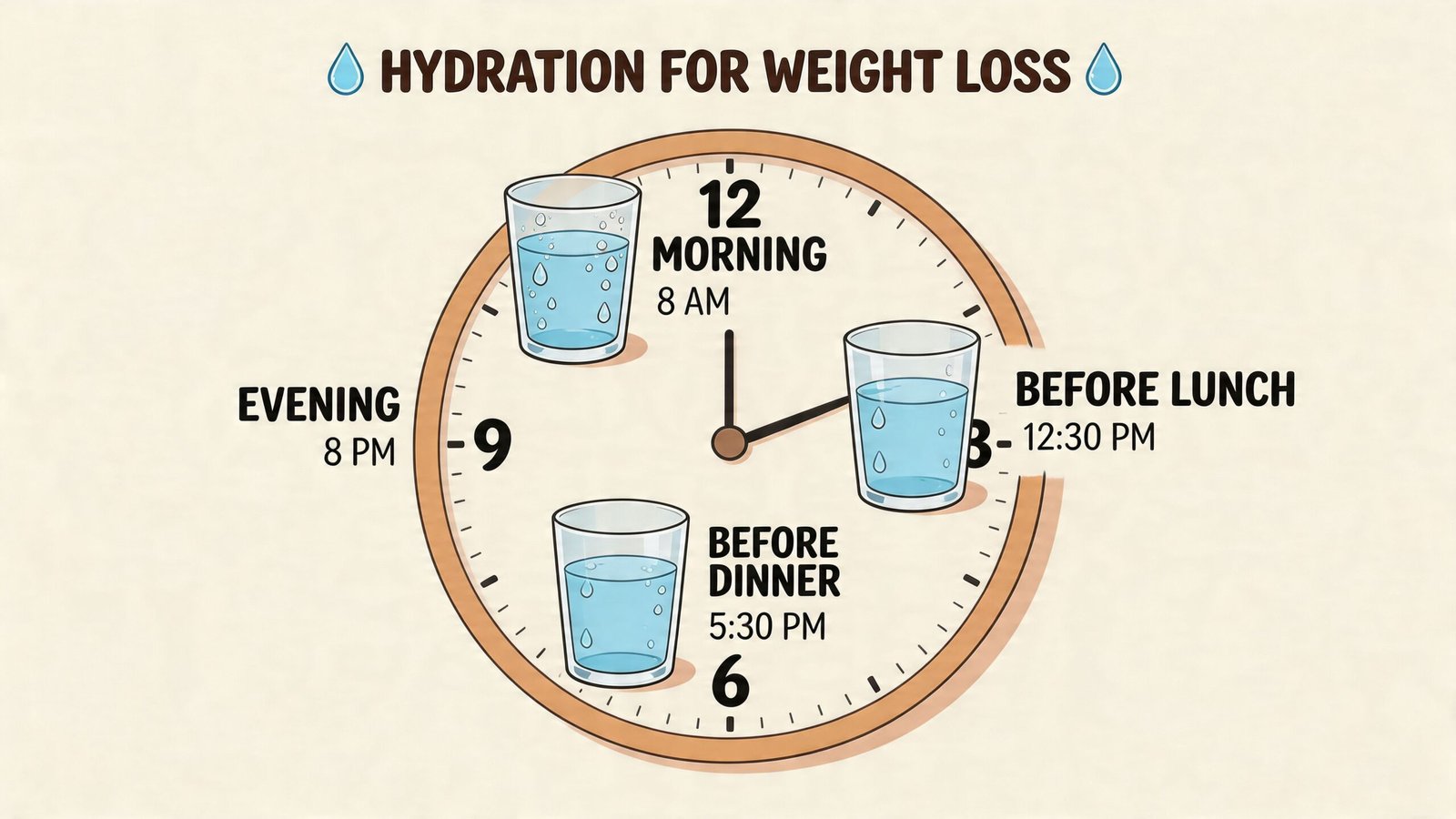
A 2008 randomized controlled trial found that adults who drank 500 ml, about 16 oz, of water 30 minutes before their three main meals lost about 4.4 lbs, or roughly 2 kg, more over 12 weeks than those following a diet alone. The researchers also reported a 44% greater rate of weight decline, which they linked to reduced meal energy intake (Virginia Tech trial summary).
That strategy works because it’s simple and specific. You don’t have to think about “drinking more all day” in an abstract way. You just build a routine:
- Before breakfast drink a full glass or bottle
- Before lunch repeat it
- Before dinner do it again
For many people, this reduces the odds of arriving at meals overly hungry and eating too fast.
Replace calorie drinks first
If I had to choose one hydration habit for weight loss, this would be near the top of the list. Water isn’t only helpful because of what it adds. It’s helpful because of what it replaces.
A useful training principle is to make your highest-risk hydration moments predictable. If you usually reach for soda with lunch, sweet coffee drinks in the afternoon, or alcohol in the evening, those are the moments to plan around.
Athletes already do this kind of planning with fluids, especially around training and recovery. If you play recreational sports or coach teens, these Essential Football Hydration Tips are a practical example of how timing can shape performance and recovery habits.
This short video gives a simple visual take on meal-timing and hydration habits:
If your water habit lives at the exact time your old liquid calories used to show up, your results usually get easier to maintain.
Practical Tips to Drink More Water Effortlessly
Knowing your target is one thing. Hitting it on a busy Tuesday is another.
The good news is that small changes count. An analysis of NHANES data from 18,300 adults found that increasing plain water intake by just 1%, which worked out to about 1 to 3 cups daily, was linked to a drop in daily calorie intake of 68 to 205 calories and sugar intake of 5 to 18 grams (GoodRx summary of the NHANES analysis).
That’s why I like low-effort hydration strategies. You don’t need a personality transplant. You need a system that fits your day.
If you work at a desk all day
You probably don’t forget water because you dislike it. You forget because nothing cues you to drink.
Try this:
- Use a visible bottle: Put it where your eyes land when you check email.
- Pair it with routine tasks: Drink every time you start a meeting, finish a bathroom break, or sit back down at your desk.
- Make the first bottle automatic: Finish one bottle before lunch so you’re not trying to “catch up” at night.
If you train regularly
Gym-goers often focus on protein and overlook hydration until after the workout feels flat.
Use a rhythm instead of random sipping:
- Drink on the way to the gym
- Keep water visible during training
- Finish another serving with your post-workout meal
If plain water gets boring, use flavor strategically. Citrus with lunch, mint in the afternoon, or berries in cold water can make repetition easier without turning hydration into a treat you have to think about.
If you’re a meal prepper or health-conscious parent
This group does great with structure. Build water into the food environment.
A few easy wins:
- Prep hydration with meals: If containers are lined up in the fridge, fill bottles at the same time.
- Use water-rich foods: Fruit, cucumber, lettuce, soups, and yogurt can support hydration alongside fluids.
- Serve yourself first: Pour your water before plating dinner, not after.
Small hydration habits work best when they happen before thirst gets loud.
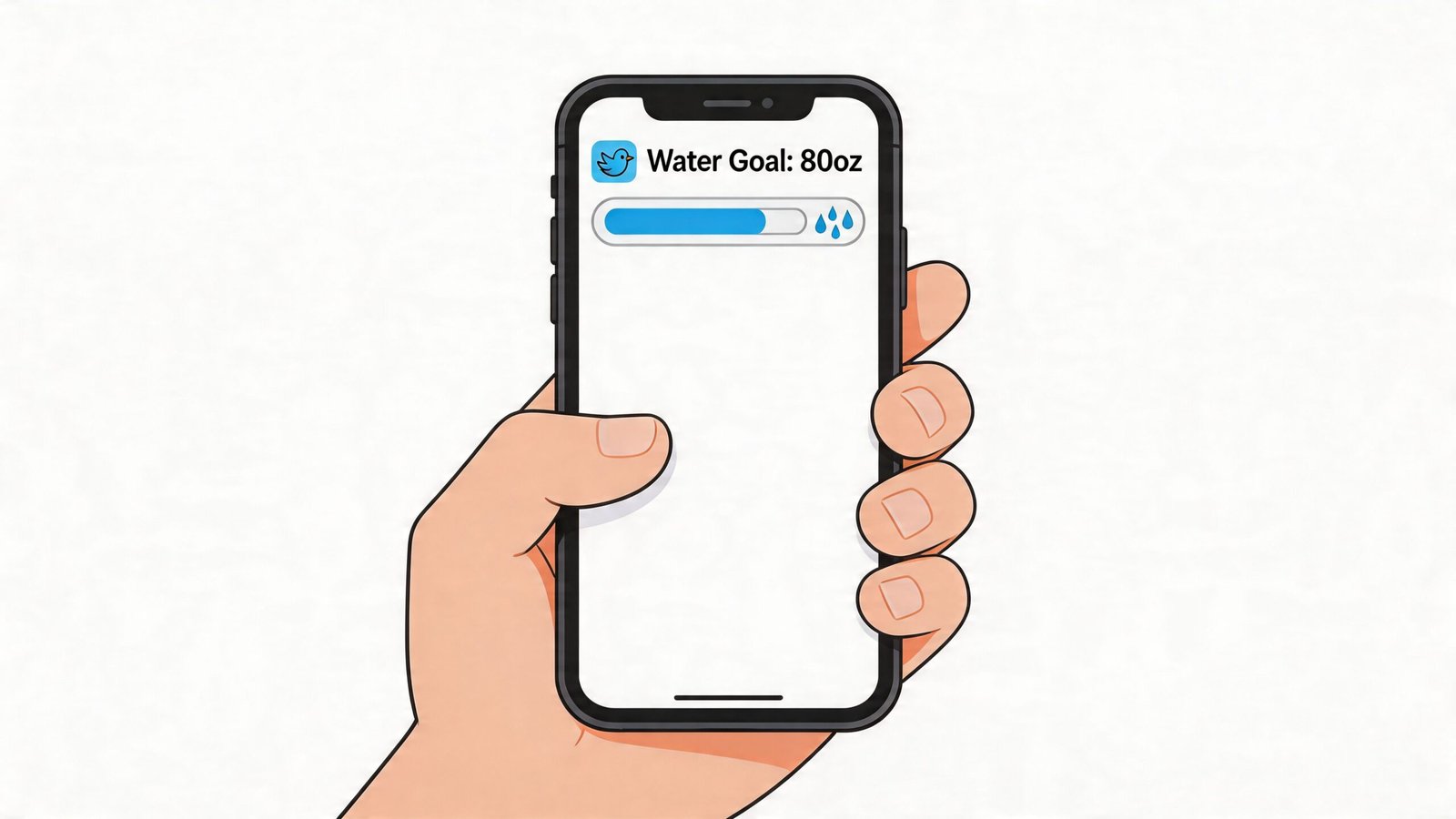
Track Your Water for Success with PlateBird
Individuals often track the hard stuff and ignore the easy stuff. They’ll log chicken, rice, and protein grams, but they won’t record what they drank. That creates a blind spot.
Tracking water matters because beverage choices affect hunger, fullness, and total calorie intake. It also helps you see patterns. If you’re under your water goal on the same days you overeat, that’s useful information. If your high-protein days leave you feeling snacky and depleted, low hydration may be part of the picture.
A beverage log also makes substitutions more visible. Research summarized in a PubMed-linked review notes that a 12 oz soda contains about 140 calories, and swapping one daily for water creates an annual deficit of over 51,000 calories. The same source also notes that a 2015 study found overweight women who replaced diet drinks with water achieved significantly greater weight reduction (PubMed review summary).
That’s not just theory. It’s exactly the kind of change people forget to count because drinks feel incidental.
What to track
A simple water log should include:
- What you drank with meals
- Your premeal water habit
- Any soda, juice, alcohol, or sweet coffee drinks
- Whether you hit your personalized daily target
If you use an app, the goal is speed. Friction kills consistency. A fast logger like PlateBird makes that easier because you can record food and drinks in the same flow instead of treating hydration like a separate project.
The benefit of tracking isn’t perfection. It’s feedback. Once you can see your beverage pattern, you can change it.
A Quick Word on Water Safety
Most healthy adults don’t need to be scared of drinking more water. But it’s worth understanding the edge case people hear about online: hyponatremia, sometimes called water intoxication.
That happens when someone drinks so much water, often too quickly, that sodium in the blood becomes dangerously diluted. It’s most associated with unusual situations, especially endurance events or prolonged exercise where someone keeps taking in large amounts of plain water without balancing electrolytes.
Who should be more careful
The average person trying to lose weight with regular meals and normal hydration habits is not the typical high-risk case.
More caution makes sense for:
- Endurance athletes during long events
- People with certain medical conditions that affect fluid balance
- Anyone told by a clinician to limit or manage fluids carefully
If you have kidney, heart, or other health conditions that affect hydration, your personal guidance should come from your healthcare team, not a generic formula online.
What normal, safe practice looks like
For weight loss, safe hydration usually looks boring in the best way. You spread your intake across the day, drink around meals, increase when you sweat more, and pay attention to your body.
Reasonable signs you may need to adjust include:
- Persistent thirst
- Dark urine
- Headaches
- Feeling drained or foggy
- A sloshy, uncomfortable overfilled feeling if you’re forcing too much at once
The answer is usually not “chug aggressively.” It’s “pace yourself better.”
Drink steadily, not competitively.
If you remember one thing, remember this. Better hydration for weight loss should make you feel more stable, not stressed. It should reduce friction in your routine, not turn into another extreme habit to manage.
If you want an easier way to stay consistent with food and hydration habits, PlateBird can help you log meals and beverages quickly without turning tracking into a chore. The easier it is to record what you eat and drink, the easier it is to spot patterns, hit your targets, and stay consistent long enough to see results.