Protein and carbohydrates each have 4 calories per gram, fat has 9 calories per gram, and alcohol has 7 calories per gram. Those four numbers are the basic code behind nutrition labels, calorie counting, and understanding why one meal feels light while another packs in far more energy than it looks like.
If you're staring at a plate of eggs, toast, avocado, or a meal-prep bowl and wondering how those foods turn into calories, you're asking the right question. The struggle isn't that nutrition is impossible. Rather, it's that labels talk in grams, apps talk in calories, and your goals talk in outcomes like fat loss, muscle gain, or better energy.
Once you understand how many calories in a gram, food starts making more sense. You can look at a meal and stop guessing. You can see why adding a little oil changes the numbers fast, why protein keeps showing up in fitness advice, and why two foods with the same weight can affect your calorie intake very differently.
The Question on Everyone's Plate
You make a meal that looks healthy. Maybe it's grilled chicken, rice, vegetables, and a drizzle of dressing. It feels balanced. But then the question hits: how many calories are in this?
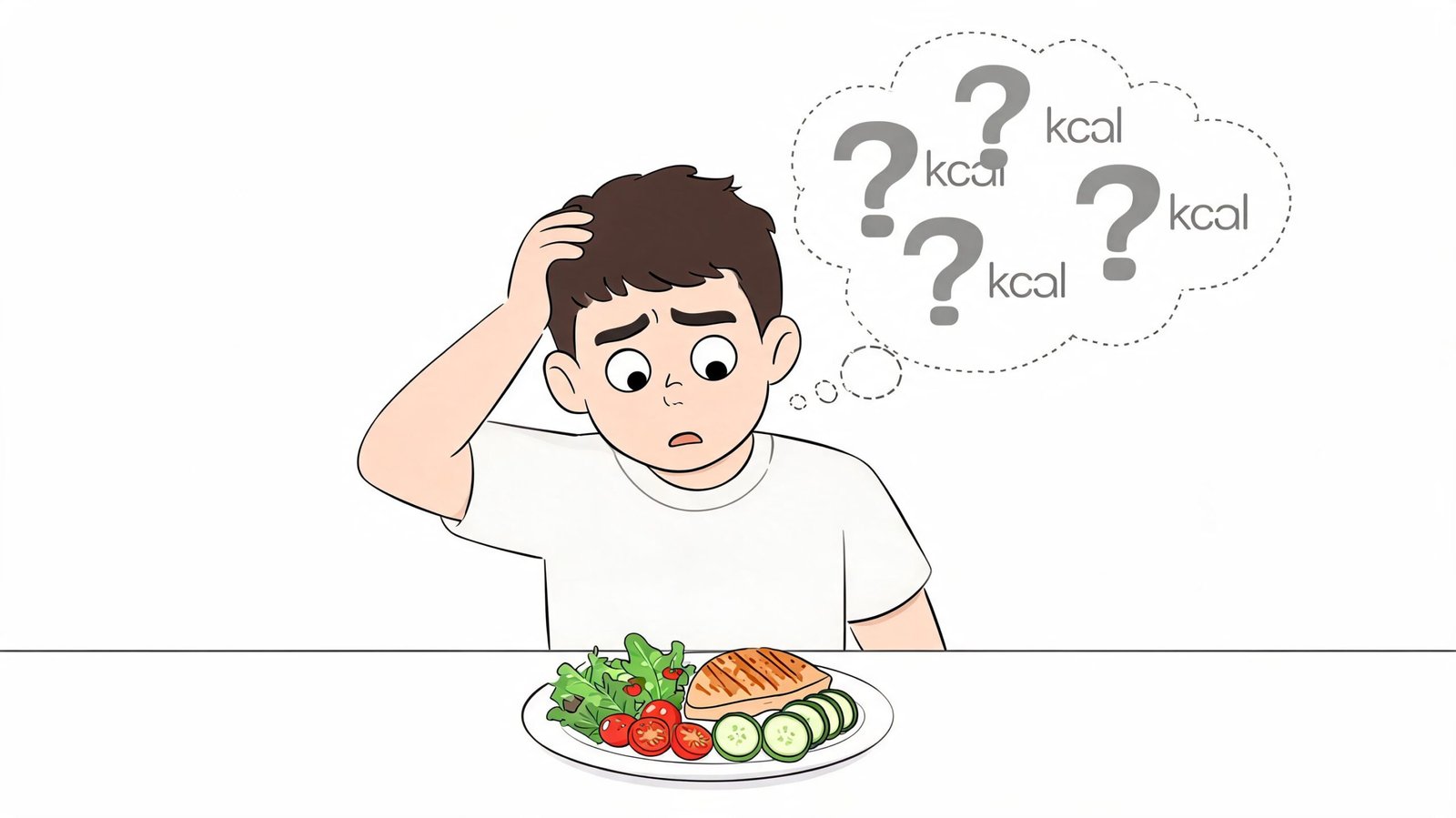
That moment trips up beginners all the time. The plate doesn't come with a clear answer unless you're eating something from a package. Even then, the numbers can feel disconnected from the food in front of you.
Why grams matter more than people realize
Calories don't float around in food randomly. They come mainly from macronutrients. That's the big idea. If you know the grams of carbohydrate, protein, fat, and sometimes alcohol, you can understand where the calories come from and why.
Think of grams like the units of fuel loaded into your body. The number of grams tells you how much nutrient is there. The calories per gram tell you how much energy that nutrient brings along.
Practical rule: If you can read grams of carbs, protein, and fat, you can usually make sense of the calorie total.
Why this matters for real goals
This isn't just label trivia. It affects how you build meals.
- For weight loss: You need a realistic sense of which foods give you more energy in a smaller amount.
- For muscle building: You need to see how protein contributes to both your calorie total and your macro balance.
- For everyday eating: You need a simple system that helps you eat enough without overshooting.
A lot of articles stop at the headline number. They say carbs and protein are 4, fat is 9, and move on. That's useful, but incomplete. Real food is messier than a simple formula, and understanding that nuance helps you track more accurately without becoming obsessive.
The Building Blocks of Calories in Food
The system most nutrition labels rely on is the Atwater general-factor system, which assigns 4 kcal per gram to protein and carbohydrate, 9 kcal per gram to fat, and 7 kcal per gram to alcohol. These factors were developed from calorimetry work and became the standardized way food energy is estimated across nutrition labeling systems, as explained in this overview of Atwater factors and food energy calculation.
The simple table to remember
| Macronutrient | Calories per Gram |
|---|---|
| Carbohydrate | 4 |
| Protein | 4 |
| Fat | 9 |
| Alcohol | 7 |
That's the whole cheat sheet.
A fuel analogy that makes it stick
Think of your macros like different fuels stored in containers of the same size.
Carbs and protein are like two fuels that each deliver the same amount of energy per gram. Fat is the more concentrated fuel. Alcohol sits in between. So if two foods weigh the same, but one has more fat, that food can carry much more energy.
That's why a spoonful of peanut butter or oil can contain a lot of calories in a small amount, while a larger serving of lean protein or starchy vegetables may deliver fewer calories per bite.
If you're interested in training nutrition and fueling for peak performance, this basic energy math becomes even more useful. It helps explain why different foods fit differently before exercise, after exercise, or on rest days.
Carbs and protein match at 4 calories per gram. Fat doesn't. That's why fat changes the calorie total so quickly.
Where beginners get confused
A gram of food is not the same thing as a gram of a macronutrient.
A piece of chicken can weigh many grams without being pure protein. Bread contains water, fiber, and other components besides carbohydrate. Avocado contains water and fiber along with fat. So when you ask how many calories in a gram, the most accurate answer is: it depends on which substance you're talking about.
A gram of carbohydrate is 4 calories. A gram of fat is 9. A gram of broccoli is not automatically any one of those things.
Understanding Calorie Density in Real Food
Once you know the numbers, the next question is why they matter on your plate. The answer is calorie density. Some foods pack a lot of calories into a small amount. Others give you more volume for fewer calories.
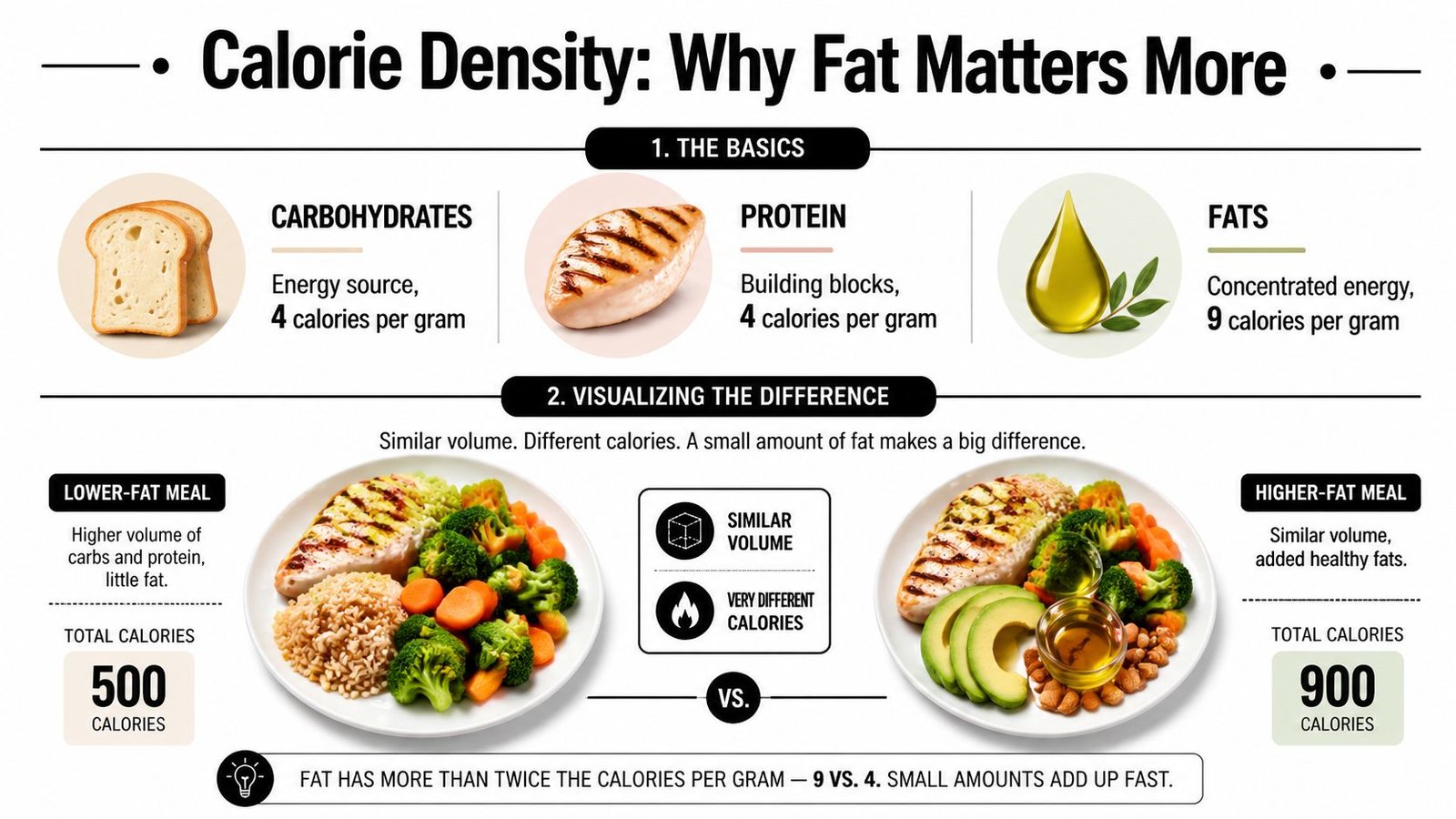
The American Institute for Cancer Research explains the foundation clearly in its discussion of calorie density and the standardized energy values of macronutrients. Carbohydrates and protein are standardized at 4 calories per gram, while fat is 9 calories per gram. That gap is why fat is considered the most energy-dense macronutrient.
Why a little fat changes a meal fast
Add a small amount of oil, cheese, nuts, creamy dressing, or butter, and the calorie total climbs quickly. That doesn't make those foods bad. It just means they're concentrated.
People often get frustrated, saying, "I barely added anything." They did add a small amount by volume. But that small amount may still bring a meaningful amount of energy because fat is dense.
The plate comparison that helps
Compare two meals that look similar in size.
- Plate one: lean protein, potatoes, lots of vegetables
- Plate two: similar base, plus more oil, avocado, nuts, or creamy sauce
Both plates can look equally "healthy." One may still contain a lot more calories because fat carries more energy per gram.
If hunger management matters to you, volume and calorie density matter just as much as "clean eating."
USDA-style guidance summarized by Scripps recommends that healthy adult diets generally fall within 45 to 65% of calories from carbohydrates, 20 to 30% from protein, and 20 to 35% from fats in its explainer on macronutrient balance and meal planning. Understanding calories per gram is what lets you turn those percentages into actual food choices.
For homemade meals, that translation gets much easier when you learn how to calculate calories in homemade food. It gives you a practical way to think through mixed dishes where nothing comes from a simple package label.
Why this helps with satiety
Higher-volume foods often make portions feel more generous. Foods with more water and fiber can fill more plate space without concentrating calories the way fat-rich foods do. That's useful if your goal is to stay satisfied while keeping your intake in check.
The key idea isn't "avoid fat." It's "respect fat." It changes the math faster than carbs or protein do.
How to Calculate Calories From a Nutrition Label
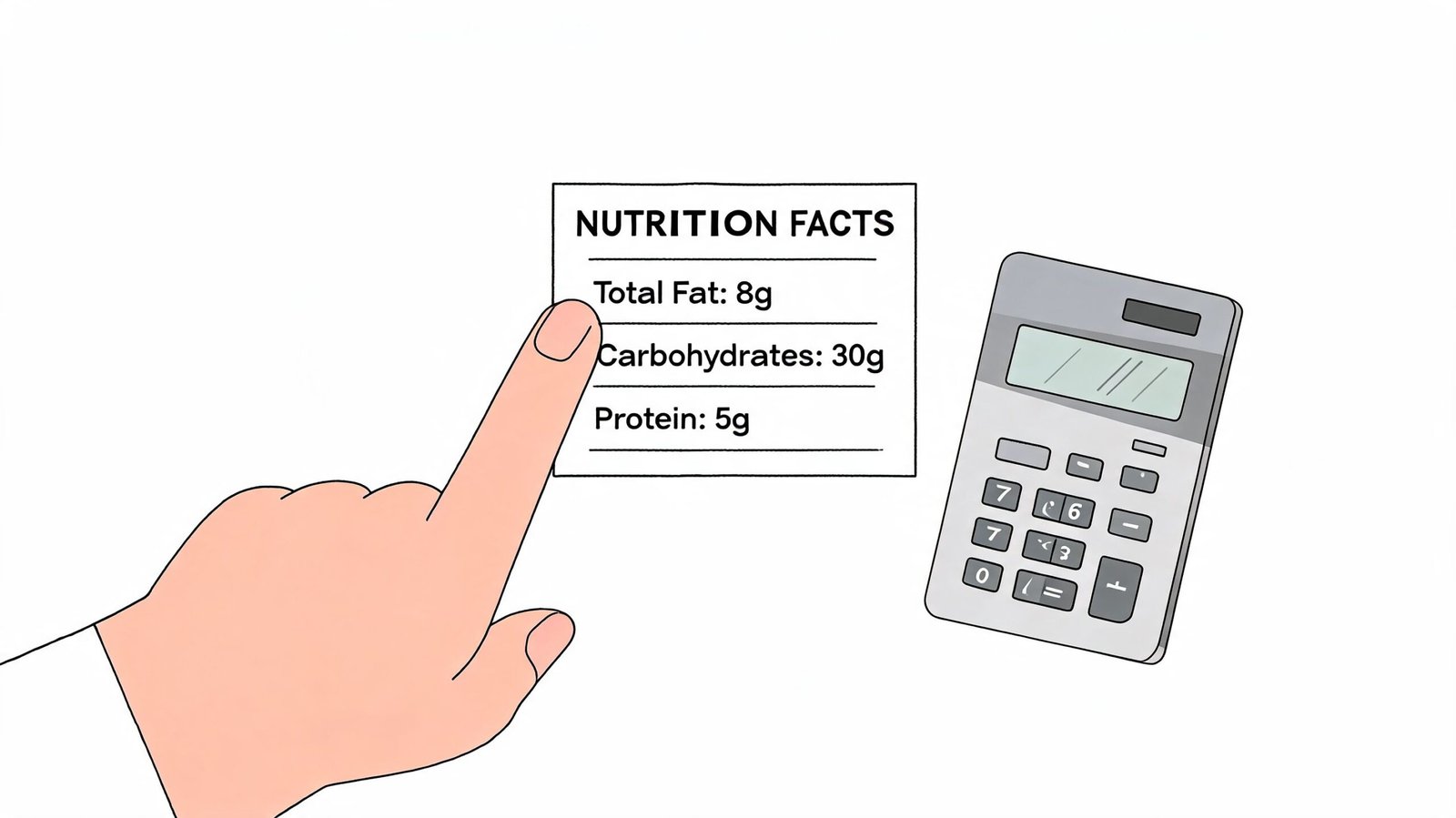
You don't need advanced nutrition knowledge to check the math on a label. You just need the grams of macronutrients and the calorie-per-gram rules.
The core formula
Use this:
(grams of carbohydrate × 4) + (grams of protein × 4) + (grams of fat × 9)
If alcohol is present, include:
grams of alcohol × 7
One clear example from the verified nutrition guidance makes the math easy to see. A food with 12 grams of carbohydrate, 0 grams of fat, and 0 grams of protein contains exactly 48 calories, because 12 × 4 = 48, as shown in the AICR explanation linked earlier.
A three-step method
Read the macronutrients first
Ignore the marketing words on the front. Turn the package over and look at carbohydrate, protein, and fat grams.Multiply each macro by its calorie value
Carbs by 4. Protein by 4. Fat by 9.Add the results together
That gives you the calorie estimate for that serving.
If you want extra practice, this guide to how to read nutrition labels is a useful companion when you're trying to decode serving sizes and macro lines on packaged foods.
A lot of low-carb eaters also benefit from practical label-reading habits, especially around fiber and total carbs. These tips for informed low-carb dieting can help you see what matters without getting lost in packaging language.
Why your result may not match perfectly
Sometimes your manual math lands close to the printed calories, but not exactly on top of it. That's normal.
The label may reflect rounding. It may treat certain ingredients differently than your back-of-the-envelope calculation. It may also account for details that don't show up cleanly in a beginner formula.
This short video gives a helpful visual walkthrough of how labels and calorie counts connect in practice.
Common Pitfalls in Manual Calorie Counting
Manual calorie counting works well as a learning tool. It gets less tidy when you try to make it perfectly precise.
The biggest reason is that the familiar rules are simplified averages. The McGill Office for Science and Society notes in its review of how the caloric value of food is determined that different carbohydrate subclasses can yield slightly different energy, and fermentable fibers can contribute roughly 2 to 3 kcal per gram rather than 0.
Why fiber creates confusion
Many people learn that fiber "doesn't count." That's too simplistic.
Some fibers contribute little usable energy. Others can be fermented and contribute some energy. That's why net carb math, total carb math, and calorie math don't always line up neatly in practice.
Manual tracking is best treated as a strong estimate, not a lab test.
Cooking changes food more than beginners expect
A plain potato and a potato cooked with oil are not the same calorie story. The same goes for grilled chicken versus breaded, pan-fried chicken. The food may look similar at a glance, but the cooking method can add concentrated energy.
Often, people undercount:
- Added oils: A pan, marinade, or drizzle can change a meal quickly.
- Sauces and dressings: Small portions can carry more energy than the base ingredients.
- Mixed dishes: Casseroles, curries, stir-fries, and restaurant meals are harder to break apart accurately.
Labels and databases smooth out reality
Food labels use standardized averages because they need a practical system. That system is useful, but it can't capture every detail of digestibility, fiber type, or the exact way your meal was prepared.
There's another layer of nuance too. Some sources note that carbohydrate energy can vary by type, with simple sugars and complex carbohydrates landing around slightly different values before standardization. In daily life, though, using the familiar consumer rule remains the most practical approach.
Why this matters for consistency
People often assume a mismatch means they've done the math wrong. Sometimes they have. But often they've just run into the limits of simplified labeling.
If you're consistent with your method, you can still make good decisions. You don't need perfect numbers to notice patterns. You need a system you can repeat without burning out.
Estimate Calories Instantly with PlateBird
At this point, the logic is clear. Calories come from macros. Macros have standardized calorie values. Real food adds enough nuance that doing all the math by hand can get old fast.
That standardization is exactly what makes modern tracking possible. The AICR notes in its explanation of calorie density that carbohydrates and protein are standardized at 4 kcal per gram and fat at 9 kcal per gram, and that this framework supports the rapid calculations used by modern nutrition tools. That's the same basic principle behind PlateBird.
Why automation helps
Instead of manually breaking down every meal, an AI-based tracker can apply those nutrition rules in the background. That's especially helpful when you're logging mixed meals, meal prep, or quick bites during a busy day.
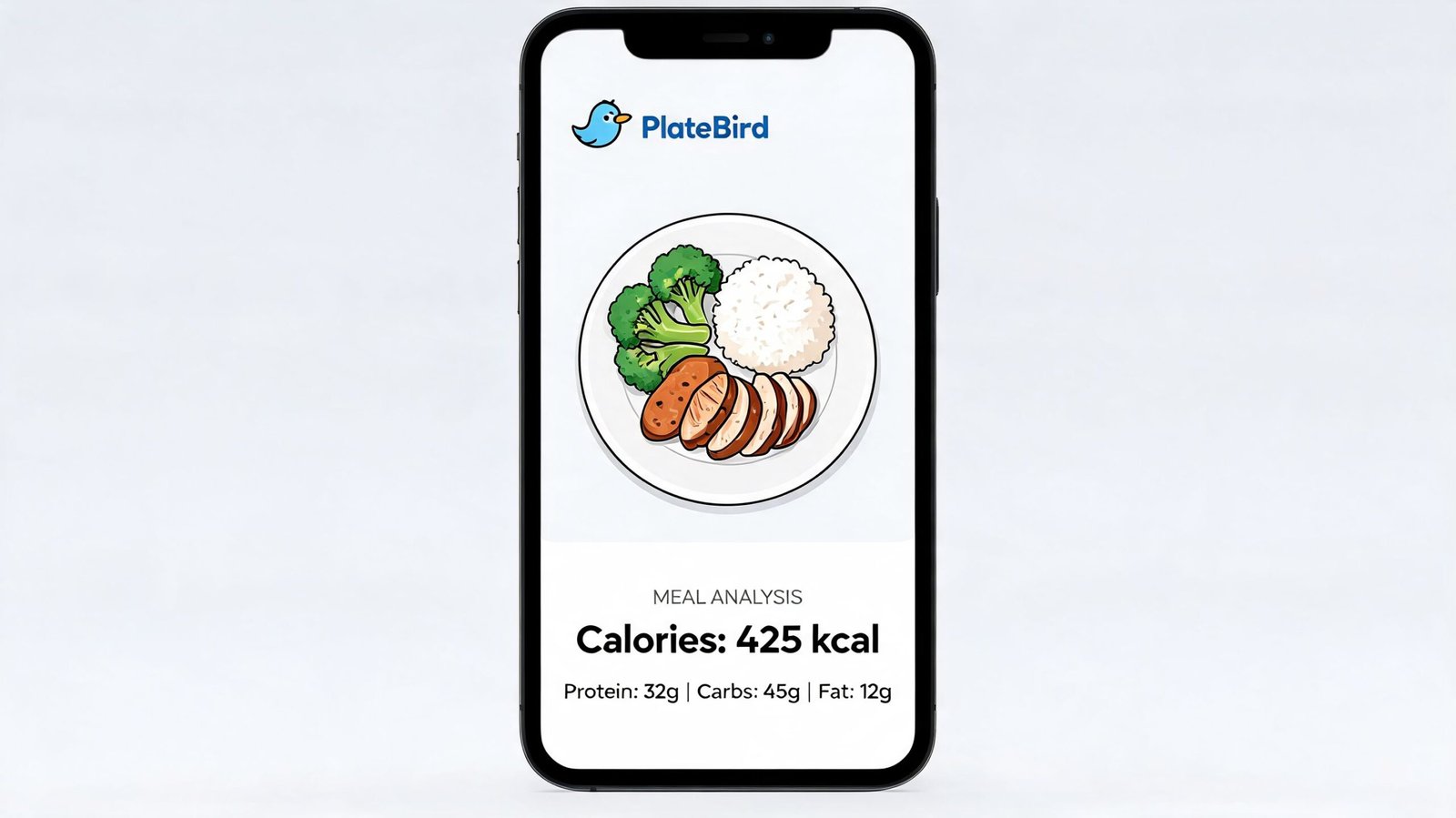
You still benefit from knowing the basics. In fact, understanding how many calories in a gram makes app results easier to trust and easier to sanity-check. But you don't have to calculate every ingredient yourself or second-guess every homemade meal.
The smartest use of calorie math is often knowing enough to understand it, then letting a good tool handle the repetition.
If your goal is fat loss, muscle gain, meal planning, or becoming more aware of what you're eating, the combination works well. Learn the rules once. Then use a tracker that applies them quickly in daily life.
If you want calorie and macro tracking to feel simple instead of tedious, try PlateBird. You can type what you ate or snap a photo, and the app handles the heavy lifting so you can stay focused on your goals instead of doing nutrition math at every meal.