You’ve probably had some version of this thought already: “I don’t need a perfect body. I just want to feel lighter, look sharper, and stop starting over every Monday.”
That’s a reasonable goal. So is wanting a plan that fits into work, family, stress, takeout, travel, and the days when motivation disappears. People don’t fail because they’re lazy. They fail because the plan they picked was too strict, too vague, or too annoying to follow for more than a week.
Your Goal Is Realistic and This Guide Will Get You There
If you want to lose 15 pounds in 3 months, you’re not aiming for something extreme. You’re aiming for a pace that lines up with mainstream health guidance. Losing 15 pounds in 3 months fits the CDC-backed safe rate of 1 to 2 pounds per week, or 12 to 24 pounds over 12 weeks, which makes 15 pounds a realistic target for many adults (Nutrisense summary of CDC guidance).
That matters because the fastest plan isn’t usually the one that works. The plan that works is the one you can repeat when life gets messy. A small calorie deficit, decent protein intake, regular movement, and better awareness around what you eat will beat a heroic burst of restriction almost every time.
There’s also a psychological benefit to this timeline. Three months is long enough to create visible change, but short enough to stay focused. You can think in weeks, not forever. That keeps the process grounded.
Practical rule: Treat this as a 12-week habit block, not a punishment phase.
For some people, the right path may also include medical support, especially if appetite regulation has been a major barrier. If you’re exploring that route, this plan for using GLP-1 medications from Weight Method gives a useful overview of how medication, food structure, and behavior change can work together.
What I’d push back on is the idea that success depends on willpower alone. It doesn’t. Good systems reduce bad decisions. If your meals are simple, your activity is scheduled, and your tracking takes almost no effort, you stop relying on motivation to carry the whole load.
That’s the mindset for the rest of this plan. No detoxes. No “cheat day” chaos. No pretending you’ll suddenly love logging every ingredient by hand. Just a structure you can live with.
Your Game Plan The Math and the Macros
A good fat-loss plan works on a Tuesday night when you are tired, hungry, and tempted to guess your way through dinner. That is the ultimate test. If the numbers are too aggressive or the tracking is annoying, compliance drops fast.
Start with calorie math
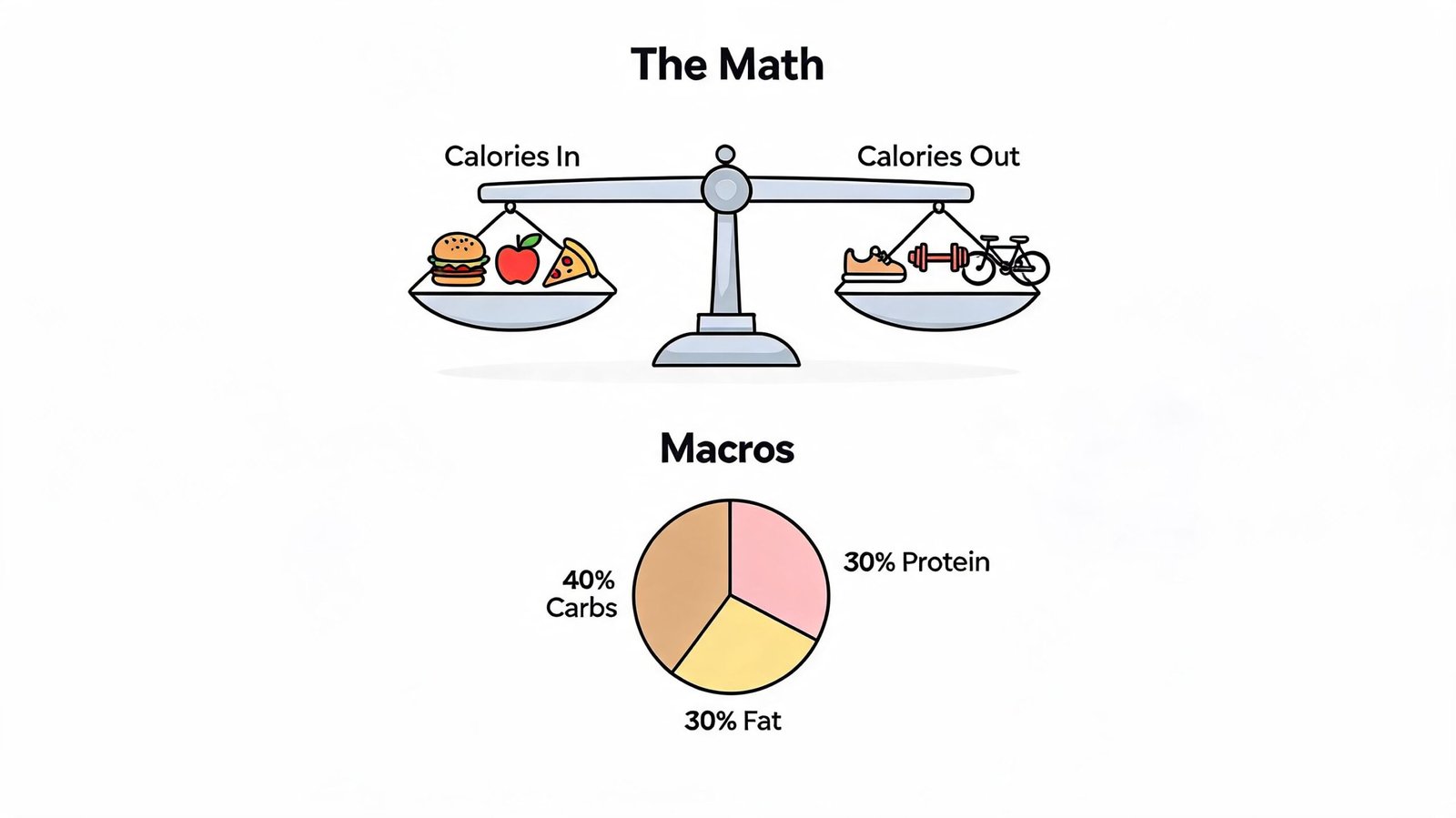
The first job is to estimate maintenance calories, often called Total Daily Energy Expenditure or TDEE. From there, create a moderate deficit you can hold for weeks, not a few motivated days. The National Institute of Diabetes and Digestive and Kidney Diseases explains that weight loss depends on reducing calorie intake below what your body uses, and that your needs shift with body size, activity, age, and sex (NIDDK body weight planning tools).
A practical setup looks like this:
- Estimate maintenance calories with a validated calculator.
- Reduce intake by about 500 to 750 calories per day.
- Keep that target steady for two weeks before making changes.
That range is aggressive enough to produce progress for many adults, but still realistic for work schedules, family meals, and training. If you want a plain-language breakdown, this guide on what a calorie deficit actually means explains the mechanics clearly.
Precision helps. Perfection does not.
Daily intake will never be identical. Restaurant meals run high, weekends get noisy, and labels are not exact. What matters is whether your average week matches the plan closely enough to move your trend down.
Build meals around protein first
Calories determine whether you lose weight. Macro choices decide whether the plan feels manageable.
Protein deserves the first slot because it helps protect lean mass during a deficit and usually makes meals more filling. The International Society of Sports Nutrition recommends higher protein intakes for active adults trying to maintain or build muscle, with common evidence-based targets landing around 1.4 to 2.0 grams per kilogram of body weight, and sometimes higher depending on training status and calorie restriction (ISSN position stand on protein and exercise).
For fat loss, I keep the order simple:
- Protein first: Include a solid protein source at each meal. Eggs, Greek yogurt, chicken, fish, tofu, cottage cheese, tempeh, and lean beef all work.
- Fiber second: Fruit, vegetables, beans, oats, potatoes, and whole grains add volume and help control hunger.
- Carbs and fats based on preference and training: People who train hard often feel better with more carbs. People who struggle with hunger sometimes prefer a bit more fat. Both approaches can work if calories stay in range.
For readers who want a detailed macro-tracking walkthrough, this piece on Canadian fitness nutrition advice from SupplementSource.ca gives a solid primer.
Repeatable meals beat “perfect” meals. A boring lunch that fits your targets is more useful than an aspirational meal plan you never follow.
Tracking has to be easy enough to survive real life
This is the point where many weight-loss attempts break down. Hand-entering every ingredient, hunting for the right restaurant item, and rebuilding the same meals over and over creates too much friction. People do fine for a few days, then start estimating, then stop logging.
Modern tools can fix that problem if they reduce the work enough to keep you consistent. PlateBird stands out here because it cuts the usual tracking friction. You can log meals in plain English, reuse common foods, and get calorie and macro estimates quickly enough that tracking stops feeling like a second job. That matters more than fancy dashboards. A tool only helps if you still use it in week eight.
Here is the standard I give clients:
- Log before eating or right after. Memory gets worse later in the day.
- Repeat breakfasts and lunches often. Familiar meals improve accuracy and reduce decision fatigue.
- Count weekends. Social meals still affect the weekly deficit.
- Track small extras. Oils, sauces, drinks, bites while cooking, and handfuls from the pantry are common reasons progress slows.
A quick visual walkthrough helps here if you want a simple explanation of calorie control and meal structure:
Your default setup
If you want a starting framework without turning this into a spreadsheet hobby, use this:
| Priority | What to do |
|---|---|
| Calories | Set a moderate deficit and keep it consistent |
| Protein | Center each meal around a real protein source |
| Fiber | Add produce, beans, oats, potatoes, or whole grains daily |
| Tracking | Log immediately, using a tool that keeps the process fast |
| Adjustment | Review your weekly trend and change only when the trend stalls |
This setup is plain by design. Plain works.
The 12-Week Roadmap Month by Month
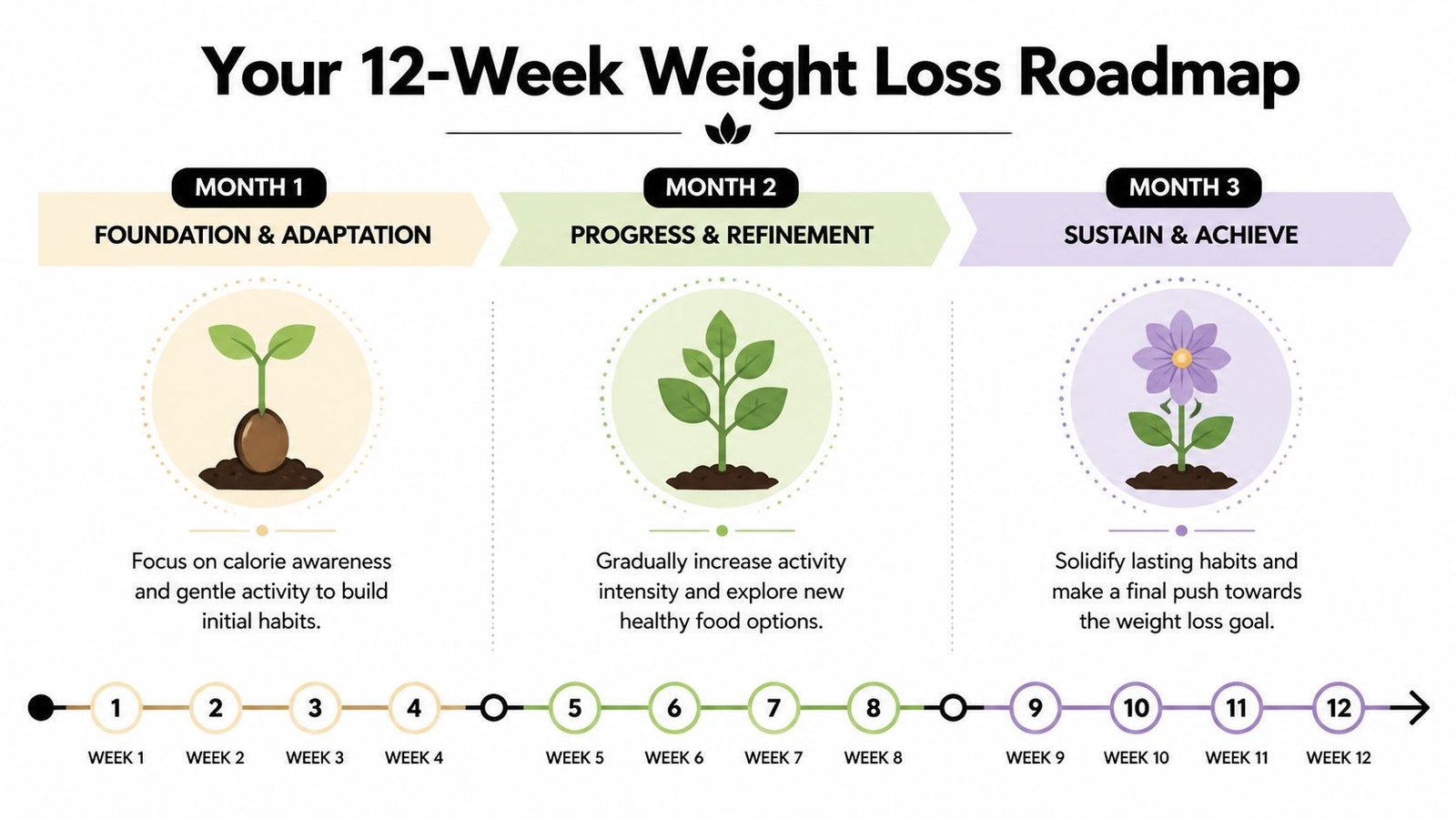
Week three is where this goal starts to feel real. The early motivation bump wears off, your schedule gets busy again, and the small choices matter more than the big promise you made on day one. That is why a 12-week cut works better when you treat it as three separate jobs instead of one long test of willpower.
Month 1 Foundation and adaptation
Month 1 is about reducing chaos.
The target is not perfect eating. The target is a repeatable routine you can survive on workdays, weekends, and tired evenings. For many people, that means fewer “healthy options” and more dependable defaults. A breakfast you can log in seconds. A lunch that does not leave you raiding snacks an hour later. A dinner built from protein, a portioned carb, and vegetables.
Exercise supports fat loss here, but consistency beats intensity. The American College of Sports Medicine notes that adults trying to lose weight and prevent regain may need to build toward higher activity levels, often in the range of more than 250 minutes per week. That does not mean seven brutal workouts. It can mean lifting a few times per week, walking often, and keeping your total movement up.
Focus on four actions:
- Standardize two meals per day. Repetition cuts decision fatigue and improves tracking accuracy.
- Set a minimum activity floor. Daily walks count, especially after meals.
- Book your training sessions before the week starts. Planned workouts happen more often than hopeful workouts.
- Track in real time. PlateBird helps here because you can log meals in plain English fast enough to stay consistent when life gets messy.
If meal prep tends to fall apart by Wednesday, use a shorter rotation and start with a high-protein meal prep approach that keeps weekday meals simple.
Month 1 often brings a quick drop on the scale, partly from better food choices and partly from changes in water balance. Good. Take the win, but do not get attached to speed. The ultimate success marker is that your routine starts feeling normal.
During the first four weeks, prove you can stay consistent on ordinary days.
Month 2 Progress and refinement
Month 2 is where people either steady out or overreact.
The plan usually still works. What changes is the feedback. Scale loss may slow. Hunger may show up at more predictable times. Restaurant meals, drinks, and “just this once” portions start to matter more because the margin for error gets smaller. This is the point where a moderate plan beats an aggressive one. Slashing calories usually leads to hard rebounds, low energy, and worse training.
Clean up the leaks before changing the plan:
| Common issue | Better response |
|---|---|
| Portion creep | Measure staple foods again for 7 days |
| Weekend overeating | Log the social meal before you go |
| Missed workouts | Cut the session length and keep the habit |
| Late-night hunger | Add more protein, fiber, or volume earlier in the day |
This is also the month to review your logs thoroughly. I look for the same patterns with clients every time. Oils that never got counted. Restaurant meals guessed too low. Friday and Saturday wiping out the weekday deficit. Good intentions with no written plan. PlateBird is useful here for one reason: it lowers the friction enough that you consistently keep logging instead of quitting after a few imperfect days.
Pay attention to signs of progress beyond the scale. Better appetite control matters. So does steadier energy, better training performance, and clothes fitting differently through the waist. Fat loss is rarely linear, but adherence leaves clues.
Month 3 Sustain and achieve
Month 3 is about finishing without falling into a crash mindset.
At this point, you should know your weak spots. Maybe travel throws off lunch. Maybe takeout portions run large. Maybe one skipped workout turns into four. Good. That awareness is useful because now you can plan around real behavior instead of pretending motivation will save you.
Keep the final month simple:
- Stay with familiar meals. Variety is fine, but reliability matters more right now.
- Protect strength training and walking. Maintenance of muscle and daily movement both help you finish well.
- Avoid last-minute calorie cuts. The final stretch is where impatience creates the biggest setbacks.
- Start practicing maintenance habits now. A result you cannot hold is not much of a win.
I would rather see someone lose a little more slowly in month three and finish in control than force the scale down and rebound the next month. The goal is to arrive lighter, stronger, and clear on how to keep it.
The end of a fat-loss phase should feel stable enough to continue.
What a successful 12 weeks usually looks like
A good 12-week run rarely feels dramatic from start to finish. It looks more ordinary than people expect. Meals get more predictable. Training gets more scheduled. Logging gets less emotional. Slipups still happen, but they stop becoming full-week spirals.
A realistic pattern often looks like this:
- Early phase: Better awareness and less reactive eating
- Middle phase: Slower visible change and tighter execution
- Final phase: More confidence, fewer extremes, stronger follow-through
That is how people lose 15 pounds in 3 months without making the process miserable. They stop chasing perfect days and build enough structure that good days happen more often than bad ones.
Fueling Your Body Sample Meals and Smart Shopping
People don’t struggle because they lack nutrition information. They struggle because 5 p.m. arrives, they’re tired, and they have no plan. Good fat loss nutrition has to survive busy weekdays, rushed lunches, and the urge to grab whatever is easiest.
That’s why simple meals win. Not bland meals. Simple meals.
A day of eating that actually works
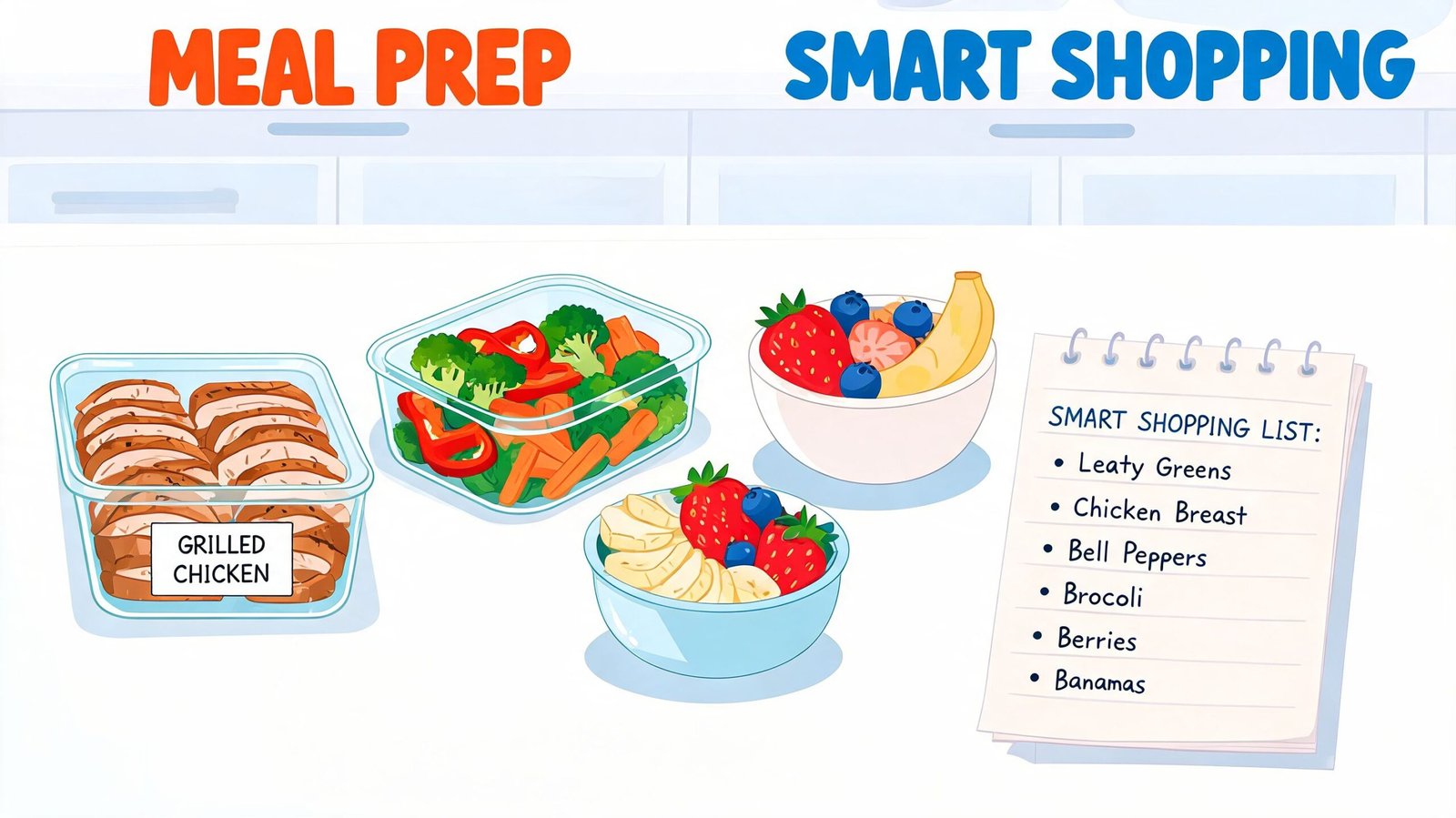
The easiest meal plan to follow is one built from familiar foods you can buy anywhere and prep without turning Sunday into a second job. Keep each meal anchored by protein, then add produce and a portion-controlled carb or fat source.
Here’s a practical template.
| Meal | Food Items | PlateBird Log Entry Example |
|---|---|---|
| Breakfast | Greek yogurt, berries, chia seeds | greek yogurt berries chia |
| Lunch | Grilled chicken, rice, broccoli | chicken rice broccoli |
| Snack | Apple and cottage cheese | apple cottage cheese |
| Dinner | Salmon, potatoes, roasted green beans | salmon potatoes green beans |
| Evening snack | Protein shake | protein shake |
Sample 1-Day Meal Plan (Approx. 1800 Calories)
You’ll notice the log examples are plain English. That’s the standard you want when tracking. Short. Immediate. No overthinking.
If you want more ideas for batch cooking and repeatable lunches, this guide to high-protein meal prep is useful.
Build a grocery cart that makes good decisions easier
A strong shopping list removes half the friction before the week starts. Buy foods that combine well, reheat well, and fit multiple meals.
Use categories instead of random inspiration:
- Protein staples: Chicken breast, ground turkey, eggs, Greek yogurt, cottage cheese, salmon, tofu, canned tuna
- Produce that lasts: Broccoli, carrots, bell peppers, spinach, green beans, cucumbers, berries, apples
- Carb bases: Rice, potatoes, oats, quinoa, wraps, whole grain bread
- Convenience supports: Frozen vegetables, microwave rice, pre-washed salad kits, rotisserie chicken
- Flavor builders: Salsa, mustard, hot sauce, low-sugar marinades, seasonings, lemon, garlic
This kind of cart does something important. It gives you options without creating chaos. You can assemble breakfast, pack lunch, or throw together dinner without needing a recipe every time.
Keep at least two “autopilot meals” in your house at all times. When energy is low, convenience decides what you eat.
Meal prep for people who don’t want to meal prep all day
You don’t need an elaborate Sunday ritual. You need enough prep to reduce weekday friction.
Three approaches work well:
Batch one protein and one carb
Cook a tray of chicken or turkey and a pot of rice or potatoes. That alone creates several lunches and dinners.Prep ingredients, not full meals
Wash fruit, chop vegetables, portion yogurt, and cook eggs. Assembling meals is often easier than eating the same container five days in a row.Use repetition strategically
Repeating breakfast and lunch during the workweek reduces decisions. Save variety for dinner if that helps you stay consistent.
The hidden advantage of this approach is mental. You’re not asking yourself, “What should I eat?” six times a day. You’re choosing from a short list of pre-approved options that fit your target.
That’s what makes a nutrition plan sustainable. Less drama. More defaults.
Smart Training and Active Living
A common mistake shows up around week three. Food intake is finally more consistent, the scale starts to move, and then people try to speed things up with extra cardio. They end up tired, hungrier, and less willing to stick to the basics that were working.
Training should support fat loss, not drain the system you need to stay consistent.
Nutrition creates the deficit. Exercise helps decide what you keep while you lose. A good plan keeps muscle, maintains energy, and raises daily calorie burn without turning your week into a second job.
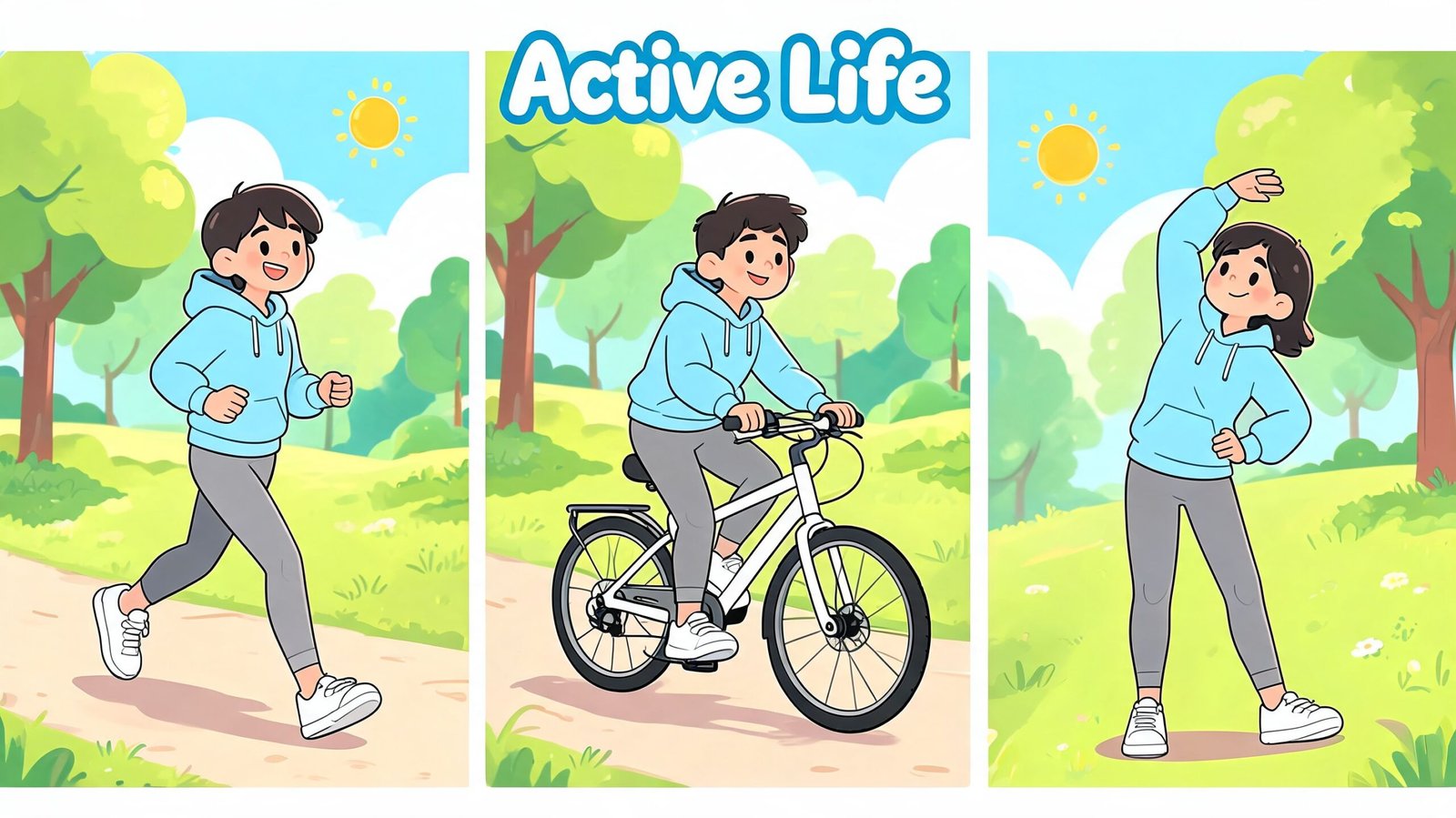
The three-part activity structure
Public health guidance from the CDC physical activity recommendations supports a simple target for adults. Get regular aerobic activity across the week and include strength training at least twice weekly. For muscle retention during a calorie deficit, the International Society of Sports Nutrition position stand on protein and exercise supports higher protein intakes than many dieters expect.
In practice, that means three lanes matter most. Lift weights or do resistance work. Add moderate cardio you can recover from. Keep your body moving outside the gym.
Resistance training
Start here.
If fat loss is the goal, resistance training gives your body a reason to keep lean tissue. Without that signal, a calorie deficit can leave you smaller but softer, weaker, and flatter than you wanted.
A basic full-body plan is enough for many people:
- Lower body push: Squat, split squat, or leg press
- Hip hinge: Romanian deadlift, cable pull-through, or hip hinge variation
- Upper body push: Push-up, dumbbell press, or machine press
- Upper body pull: Row, pulldown, or assisted pull-up
- Core: Planks, carries, dead bugs, or controlled trunk work
Two to four sessions per week works well for most adults. The goal is not fancy programming. The goal is showing up, using good form, and gradually asking a little more from your body over time. If you need help building a routine that fits your schedule and training level, Full Circle Function & Fitness is a solid example of the kind of personal training support that can close the gap between good intentions and a plan you can follow.
Cardio
Cardio earns its place, but it needs boundaries.
Moderate cardio helps increase energy expenditure, improves fitness, and can make fat loss easier to sustain. Too much high-intensity work often backfires during a deficit because recovery worsens, appetite climbs, and leg fatigue starts to interfere with strength sessions.
Brisk walking, cycling, incline treadmill sessions, rowing, or light jogging all work. The best option is the one you will repeat next week, not the one that looks hardest on paper.
NEAT and daily movement
NEAT means all the movement that happens outside formal exercise. Walking to the store, taking stairs, standing more often, carrying groceries, doing yard work, pacing during calls. These actions look small on their own and matter a lot in total.
This is also where many fat loss plans break down. Someone trains hard for 45 minutes, then spends the rest of the day sitting because the workout made them feel like they already did enough. Daily movement drops, total burn stays flatter than expected, and progress feels confusing.
Set movement defaults instead. Walk after two meals. Park farther away. Take a 10-minute lap before work or after dinner. If you want a practical body-composition framework that connects training with nutrition, read this guide on how to burn fat and build muscle.
What this looks like in real life
A workable week might look like three full-body lifting sessions, two or three moderate cardio sessions, and a step goal that keeps sedentary days from piling up. That is enough for meaningful progress.
Recovery is the trade-off. More exercise is not always better. Better-recovered training, steady movement, and accurate food tracking usually beat an aggressive plan that falls apart by week four. PlateBird helps on the nutrition side because it cuts down the friction that causes logging to slip. That matters here too. Training works better when food intake stays consistent enough to support the plan.
Twelve weeks rewards the person who can repeat a good week, not the person who can survive one extreme week.
Troubleshooting Common Hurdles
At some point, progress will feel slower than you want. That’s not a sign to panic. It’s part of the process.
Plateaus usually push people toward bad decisions because they interpret slower change as failure. Then they cut food too aggressively, add unsustainable workouts, and end up so drained that they rebound.
When the scale stalls
A plateau doesn’t always mean fat loss has stopped. Sometimes sodium is higher, stress is up, digestion is slower, or your routine got less consistent in subtle ways. Before you change the whole plan, tighten the basics.
Use this checklist:
- Audit your logging: Restaurant meals, oils, snacks, drinks, and “healthy bites” often slip through.
- Re-check portions: Eyeballing slowly becomes generous.
- Look at weekends realistically: Two loose days can undo a lot of weekday discipline.
- Keep training: Don’t respond to frustration by becoming less active.
A short plateau is normal. Emotional overcorrection is what turns it into a real problem.
Why crash diets backfire
Very low-calorie diets can produce fast scale changes, which is why they tempt people. But the trade-off is steep. The verified data notes that Very Low-Calorie Diets carry a 40-60% risk of gallstones and have a long-term maintenance rate below 20% (NCBI summary on very low-calorie diets).
That should reframe the conversation. Fast isn’t automatically better. Fast often means fragile.
Here’s what usually goes wrong with crash dieting:
| Tempting shortcut | Likely downside |
|---|---|
| Severe calorie cuts | High hunger, low energy, poor adherence |
| Excessive cardio | Fatigue, soreness, burnout |
| Cutting whole food groups | Social friction and rebound eating |
| White-knuckle restriction | Loss of control once pressure builds |
If a plan only works while your life is perfectly controlled, it doesn’t work.
Better responses when motivation drops
You don’t need a new diet when motivation fades. You need lower friction and tighter routines.
Try these instead:
- Repeat meals for a few days: Less variety can restore control.
- Shorten workouts: A shorter session beats missed sessions.
- Pre-decide problem meals: Handle takeout, work lunches, and weekends before they happen.
- Focus on the next three days: Long-term thinking is useful, but short-term execution is what gets results.
People who reach their goal usually aren’t the most intense. They’re the ones who recover fastest from imperfect days.
Conclusion Your Journey Forward
You can lose 15 pounds in 3 months without turning your life upside down. The path is steady, not dramatic. A moderate calorie deficit, protein-centered meals, regular activity, and honest tracking are enough to create real change when you do them consistently.
That’s the piece often overlooked. Consistency isn’t built by demanding more discipline every day. It’s built by making the right actions easier to repeat. Simpler meals. Planned movement. Less decision fatigue. Faster food logging. Fewer chances to drift.
If you approach the next twelve weeks this way, you won’t just be chasing a number on the scale. You’ll be building a routine that can hold the result once you get there.
Start with the next meal. Then the next day. Then the next week. That’s how this works.
If you want a faster, lower-friction way to stay consistent, PlateBird makes calorie and macro tracking feel manageable in real life. You can type what you ate in plain English, snap a photo of your plate, and log repeat meals quickly without the usual app friction. That kind of simplicity is what helps a good 12-week plan survive busy schedules, imperfect days, and real-world eating.