You downloaded a fasting app, picked a schedule, and then real life got involved. Dinner ran late. Your workout moved to early morning. A friend texted about brunch. Suddenly the simple idea of “just fast for 16 hours” feels less simple than advertised.
That's where an intermittent fasting timer helps. Not as a strict referee, but as a practical boundary. It tells you when the eating day is over, when the next one begins, and whether your plan still fits your actual life.
A more extreme schedule isn't typically necessary. What's needed is a calmer system. A timer works best when it supports repeatable choices on ordinary weekdays, messy weekends, and the occasional off-plan night without turning one change into a lost week.
Beyond the Hype and Into Your Schedule
A lot of people start intermittent fasting the same way. They read about 16:8, skip breakfast one morning, feel fine until noon, then hit a wall the next day when work stress, hunger, and habit all collide. By the end of the week, they assume fasting “doesn't work for them,” when the problem is usually that they started too aggressively and treated timing like a pass-fail test.
An intermittent fasting timer solves a narrower problem, but it solves an important one. It removes guesswork. You stop debating whether a handful of snacks counts as “still fasting” or whether a late coffee means the day is already off track. The timer creates a visible rhythm.
That rhythm matters because intermittent fasting can help, but it isn't magic. In WebMD's summary of human studies, a typical participant lost about 7 to 11 pounds over 10 weeks, with improvements in insulin resistance and cholesterol, while common side effects included lethargy (68%), headache (61.3%), and mood swings (57.8%) (WebMD's intermittent fasting overview).
Practical rule: If you're getting headaches, irritability, or heavy fatigue early on, the answer usually isn't “push harder.” It's “make the schedule easier.”
The people who do best with fasting don't usually have the most discipline. They have the clearest setup. They know when their fast starts, what time they expect to eat next, and how they'll handle a day that doesn't go perfectly.
A timer won't choose your meals. It won't fix poor sleep or a habit of grazing through the evening. But it does something useful that many plans ignore. It turns a vague intention into a concrete start and stop point. For beginners, that's often the difference between trying fasting and putting it into practice.
Choosing Your Intermittent Fasting Schedule
Before you set a timer, choose a format that matches your daily life. Intermittent fasting isn't one method. Major medical and academic sources describe several common patterns, including 16:8, 5:2, alternate-day fasting, and shorter daily fasts used in time-restricted eating (University of Michigan's beginner guide to intermittent fasting).
The mistake I see most often is choosing the schedule that sounds most impressive instead of the one you can repeat on a Tuesday with meetings, errands, and family dinner. Michigan recommends that beginners start with a 12-hour fast and extend gradually. The same guidance notes that many people settle into 16 hours of fasting as a practical long-term approach, and Harvard researchers report that daily intermittent fasting over at least 16 hours can reduce intake by about 250 calories per day, or roughly 0.5 pound per week.
Common Intermittent Fasting Schedules Compared
| Schedule | How It Works | Best For | Difficulty |
|---|---|---|---|
| 12:12 | Fast for 12 hours, eat within 12 hours | Beginners, people with unpredictable routines | Low |
| 16:8 | Fast for 16 hours, eat within 8 hours | Most working adults, sustainable daily use | Moderate |
| 5:2 | Eat normally most days, use 2 low-calorie days per week | People who dislike daily timing rules | Moderate to high |
| Alternate-day fasting | Alternate low or no-calorie fast days with regular days | Experienced fasters who prefer fewer eating days | High |
| Short daily TRE window | Use a shorter daily eating window based on your routine | People who want structure without weekly fast days | Varies |
How to choose honestly
Use these filters before you commit:
- Morning appetite: If you never want breakfast, a later eating window may feel natural.
- Work demands: If your job is physically demanding early in the day, a gentler starting window often works better.
- Social pattern: If dinners matter to you, don't choose a plan that makes every evening feel like a negotiation.
- Meal prep reality: If your first meal is chaotic, your eating window usually gets messy too. Simple easy meal prep ideas can make the schedule much easier to hold.
The best fasting schedule isn't the strictest one. It's the one you can repeat without spending all day thinking about food.
A simple starting framework
If you're new, start with 12:12 for a week or two. If that feels smooth, move toward 14:10 or 16:8. Save more advanced patterns for later, if ever.
That slower progression gives your hunger cues time to adjust. It also lets your timer become part of your day instead of a daily test of willpower.
How to Set Up Your Perfect Fasting Timer
The best intermittent fasting timer is often the one you already own. Your phone, smartwatch, or calendar can handle most of the job if you set it up well. You don't need a complicated app before you've built the habit.
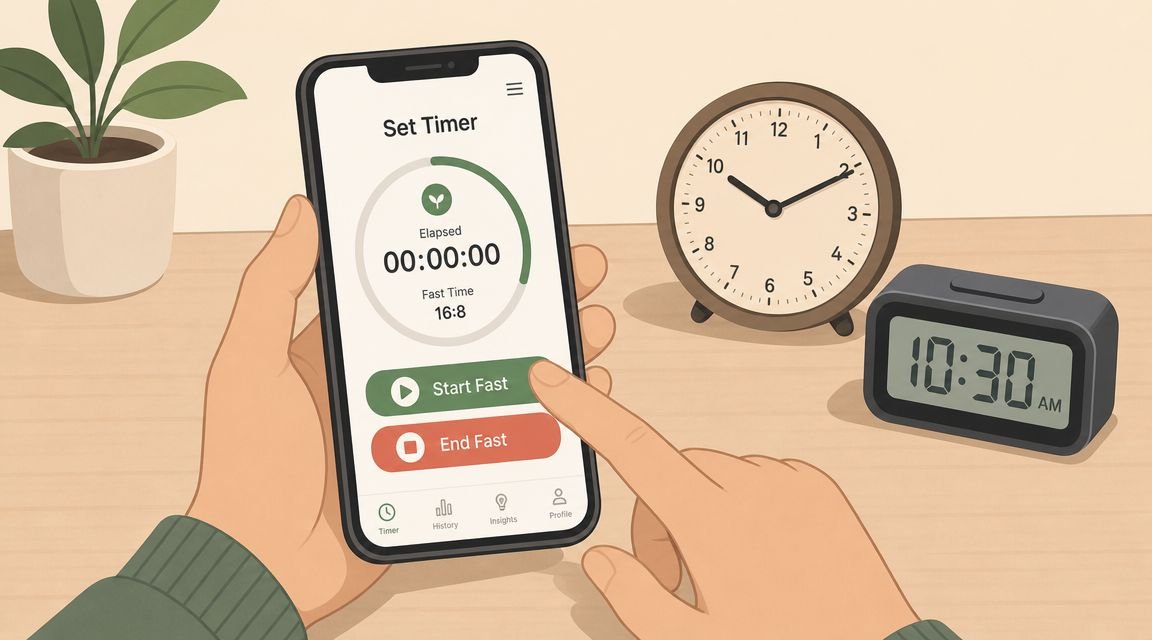
Most guides assume life is neat. It isn't. Clinical guidance on time-restricted eating notes that you can eat earlier in the day or fast in the morning and eat later. The key is choosing a window you can sustain, which is exactly where most generic timer advice falls short (Precision Nutrition's intermittent fasting schedules guide).
The easiest setup on your phone
Start with two recurring reminders:
- Fast starts now
- Eating window opens
That is often sufficient.
If you use an iPhone, the Reminders app works well because you can set repeat alerts with custom wording. On Android, Google Calendar or the built-in Clock app does the same job. If you wear an Apple Watch or another wearable, route the alerts there for a quiet wrist tap instead of a phone buzz across the room.
A good timer setup should do three things:
- Mark the end of eating clearly: The evening reminder matters more than commonly realized. Late snacking usually breaks consistency before hunger does.
- Remove math: Don't calculate your next meal time in your head every night.
- Handle repeats: Set weekdays and weekends separately if your routine changes.
What to do on regular days
If your schedule is predictable, keep the rule simple. Start the timer right after your last calorie-containing food or drink at night. If dinner ends at one time on most weekdays, anchor your fast there.
That gives you a stable daily rhythm. You're not asking, “When should I fast?” every morning. You already decided.
A timer works best when it closes the kitchen, not when it merely tracks elapsed hours.
What to do on messy days
Individuals often quit prematurely, believing a changed dinner time signifies the entire plan's failure. It doesn't.
Use one of these flexible rules instead:
Late social dinner
If dinner moves later than usual, start the timer after the meal and let the next eating window slide later too. Don't try to “make up for it” by forcing an overly long fast the next day if that sets up a binge.
Early morning workout
If training fasted feels fine, keep your normal schedule. If performance suffers, move your eating window earlier on training days or use a less aggressive fasting window. The schedule should support training, not sabotage it.
Shift work
Shift workers need anchor points, not idealized meal timing. Pick the meal that is most consistent across your rotating schedule and build around that. For some people, that's “last meal before sleep.” For others, it's “first real meal after waking,” even if waking happens in the afternoon.
Weekend drift
Many people keep weekdays tight and let weekends become unstructured. That's fine up to a point. I usually recommend a “weekend range” rather than one exact target. That way your timer stays active, but your life still feels livable.
If building repeat habits is hard in general, it helps to borrow systems from outside nutrition. A strong guide to automating your daily routines can help you build recurring reminders that make the fasting timer feel automatic instead of effortful.
Features worth using in a dedicated fasting app
If you do prefer a fasting app, look for features that solve real adherence problems:
- Editable windows: You need to move the day without deleting your whole streak.
- Notes field: Useful for logging why a fast changed, like travel, dinner out, or poor sleep.
- Reminder customization: The app should remind you before your usual cutoff, not after you've already started snacking.
- Simple display: You should be able to tell instantly whether you're in fasting time or eating time.
The perfect timer is the one that matches your life closely enough that you stop renegotiating with yourself every day.
Making Your Fasting Habit Stick
The biggest challenge with intermittent fasting isn't choosing a schedule. It's staying with it once the novelty wears off.
In a large real-world study of 792,692 users and 26 million recorded fasts, retention fell to 16.7% at 13 weeks, 6.9% at 26 weeks, and 2.1% at 52 weeks when four consecutive inactive weeks counted as dropout. The same study found weight loss tracked fasting dose in a near-linear way, which is why consistency matters more than squeezing out the longest possible fast (JMIR mHealth study on fasting app adherence).
Consistency beats intensity
It's not typically because one fast was too short that individuals discontinue. They discontinue because one broken day becomes a broken pattern. The useful mindset is not “never miss.” It's “restart quickly.”
If you stop a fast early, log it mentally as data, not failure. Were you underfed the day before? Did you sleep poorly? Did you choose a window that clashes with work or family dinner? Adjust the setup, then continue.
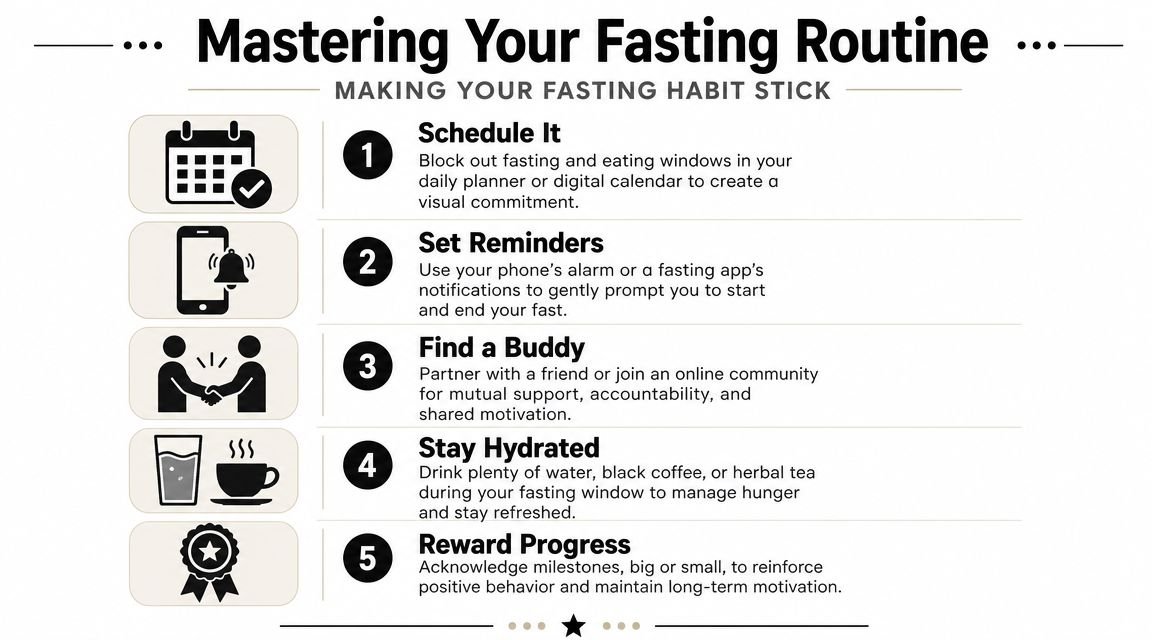
Five habits that improve follow-through
- Hydrate early: Water, black coffee, or herbal tea can make the fasting window more manageable.
- Plan your first meal: If your eating window opens and you have no plan, you're more likely to overeat random convenience food.
- Use visible cues: A recurring alert and calendar block create structure you don't have to remember from scratch each day.
- Protect the evening cutoff: Night snacking breaks more fasting plans than lunch ever does.
- Track your rough pattern: If you want another layer of accountability, a simple food diary for weight loss can help you spot whether “small exceptions” are becoming the norm.
Here's a useful refresher on simple habit supports for fasting:
Missing one day is normal. Missing the restart is what turns a temporary interruption into a stopped habit.
What works better than chasing perfect streaks
Some people are motivated by streaks. Others get discouraged by them. If streaks help you, use them. If they make one off-plan meal feel catastrophic, switch to a weekly target instead.
A timer should reduce missed days, not create guilt. That distinction matters. The best fasting habit feels steady, not dramatic.
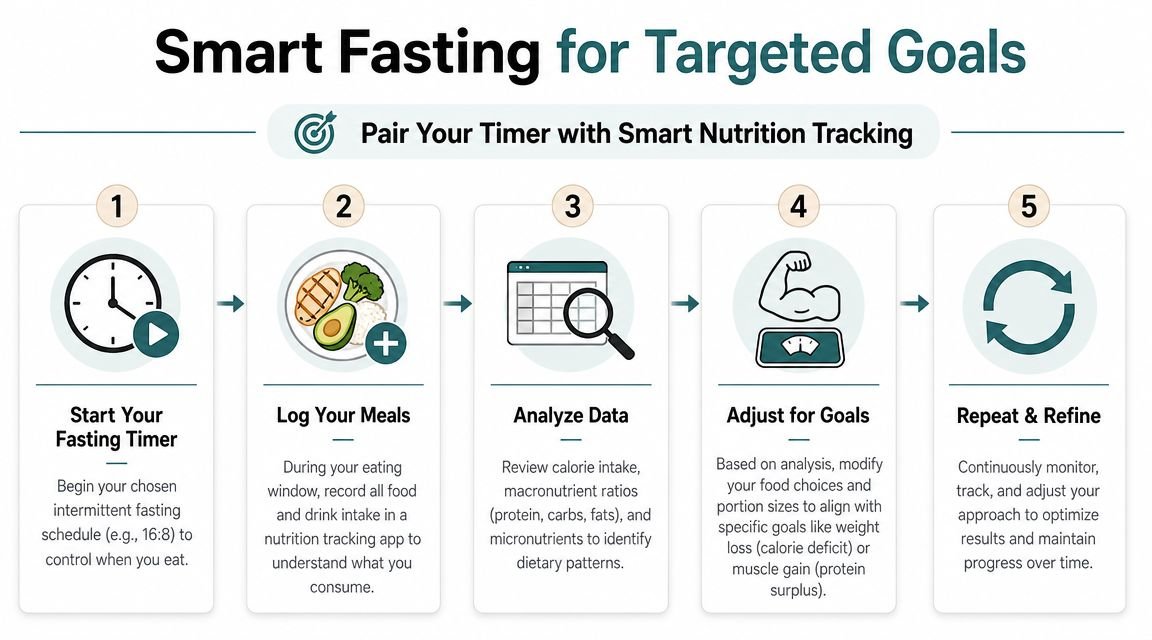
Pair Your Timer with Smart Nutrition Tracking
A fasting timer handles the when. Your food choices still determine a lot of the outcome.
Harvard's review of 40 studies found intermittent fasting effective for weight loss, with a typical loss of 7 to 11 pounds over about 10 weeks, but it also concluded that intermittent fasting is not consistently superior to continuous calorie restriction (Harvard Nutrition Source review of intermittent fasting). That matters for one reason above all: you can't ignore what happens inside the eating window.
Why timing alone has limits
I've seen people fast cleanly all morning, then open their eating window with whatever is easiest and spend the rest of the day trying to “be good.” The timer was working. The food pattern wasn't.
A better approach is to pair the start of your eating window with a short nutrition check:
- What am I eating first
- Will this meal keep me full
- Does this match my goal
If your goal is weight loss, the first meal should usually be satisfying and structured, not an accidental snack that leads to continuous grazing. If your goal is performance or muscle gain, you'll need enough total intake during the eating window, especially protein.
A simple real-life flow
Say your timer ends at noon. Before you eat, decide on one anchored meal you can repeat often. Maybe that's eggs and fruit, a chicken rice bowl, Greek yogurt with add-ins, or leftovers that are already prepped.
Then log what you ate. Not later that night when details are fuzzy. Right then.
If you use protein supplements around your schedule, it helps to know how they fit into fasting rules. This guide on drinking protein shakes while fasting covers the practical distinction.
Food quality makes the timer easier to keep
Balanced meals tend to make the next fasting window easier. Meals built around protein, fiber, and enough overall substance usually create fewer rebound cravings than eating-window free-for-alls.
For people who want more variety in high-protein options, especially without defaulting to the same bars and shakes, it can be useful to discover plant-based protein snacks and build a short list of options that fit your eating window.
The timer creates structure. Nutrition determines whether that structure supports your actual goal.
You don't need obsessive tracking. You do need enough awareness to know whether your fasting routine is helping or whether it's just shifting calories to later in the day.
From Timer to Transformation
A good intermittent fasting timer isn't about control for its own sake. It's about reducing noise. You stop negotiating with every craving, every snack opportunity, and every “I'll start again Monday” promise.
Used well, the timer becomes a quiet habit cue. It helps you notice patterns, protect your evenings, and recover faster from the inevitable imperfect day. That's where real progress happens. Not in ideal weeks, but in ordinary ones.
The people who succeed with intermittent fasting usually don't make it harder than it needs to be. They choose a schedule that fits, set a timer they'll follow, and stay flexible when life shifts.
Start tonight with one clear cutoff. Let that be enough.
If you want the eating side of your plan to feel as simple as the timing side, PlateBird makes food logging fast enough to keep up with real life. You can type what you ate or snap a photo, get calories and macros quickly, and keep your fasting window connected to smarter meal decisions without turning tracking into a chore.