- What the 40/30/30 macro split actually means
- 40/30/30 vs the most common macro ratios
- When 40/30/30 makes sense and when it does not
- How to calculate your macros from calories step by step
- What the evidence says about macro ratios and weight loss
- How activity level changes the best macro split
- Common macro-tracking mistakes that make any ratio fail
- Frequently Asked Questions
You’ve decided to track your macros. You’ve picked a calorie target. Now someone tells you to use a 40/30/30 split, and you’re staring at three numbers that are supposed to tell you how to eat. The problem is, nobody explains what those numbers actually mean in practical terms, or why you’d pick that ratio over any other.
That’s where most macro guides fall short. They define the percentages, show you a formula, and leave you to figure out whether 40/30/30 is right for your schedule, your workouts, and your hunger levels. The comparison piece is almost always missing.
This article walks through what macro splits explained as 40/30/30 vs other common ratios actually look like in grams, when each ratio makes sense, and how to choose one that fits your life rather than just your calculator.
What the 40/30/30 macro split actually means
Percentages of calories, not plate size
A macro split is a calorie split. The 40/30/30 ratio means 40% of your daily calories come from carbohydrates, 30% from protein, and 30% from fat. It says nothing about how much food is on your plate or how big your portions look.
That distinction matters. Fat carries 9 calories per gram, while carbohydrates and protein each carry 4 calories per gram. So 30% of your calories from fat is a much smaller volume of food than 30% from carbs.
Think of the ratio as a floor plan. The percentages set the structure, but the actual square footage depends on your total calorie target.
How to convert percentages to grams
The math is straightforward. Start with your daily calorie goal. Multiply it by each macro’s percentage to get calories per macro. Then divide by the calories-per-gram value for that macro.
At 2,000 calories with a 40/30/30 split, that works out to 800 calories from carbs (200 g), 600 calories from protein (150 g), and 600 calories from fat (67 g). Same percentages at 1,600 calories gives you 160 g carbs, 120 g protein, and 53 g fat.
The ratio stays the same. The gram targets shift with your calorie level.
A planning tool, not a meal-by-meal rule
You don’t need to hit 40/30/30 at every single meal. Breakfast might run higher in fat. Lunch might be carb-heavy. What matters is that your totals for the day land near the target.
Tracking daily averages is far more sustainable than trying to engineer each plate to exact percentages. The ratio is a guide, not a rule.
A macro ratio is a calorie split, not a plate-size rule. The same percentage plan can look very different once you convert it to grams at your specific calorie target.
40/30/30 vs the most common macro ratios
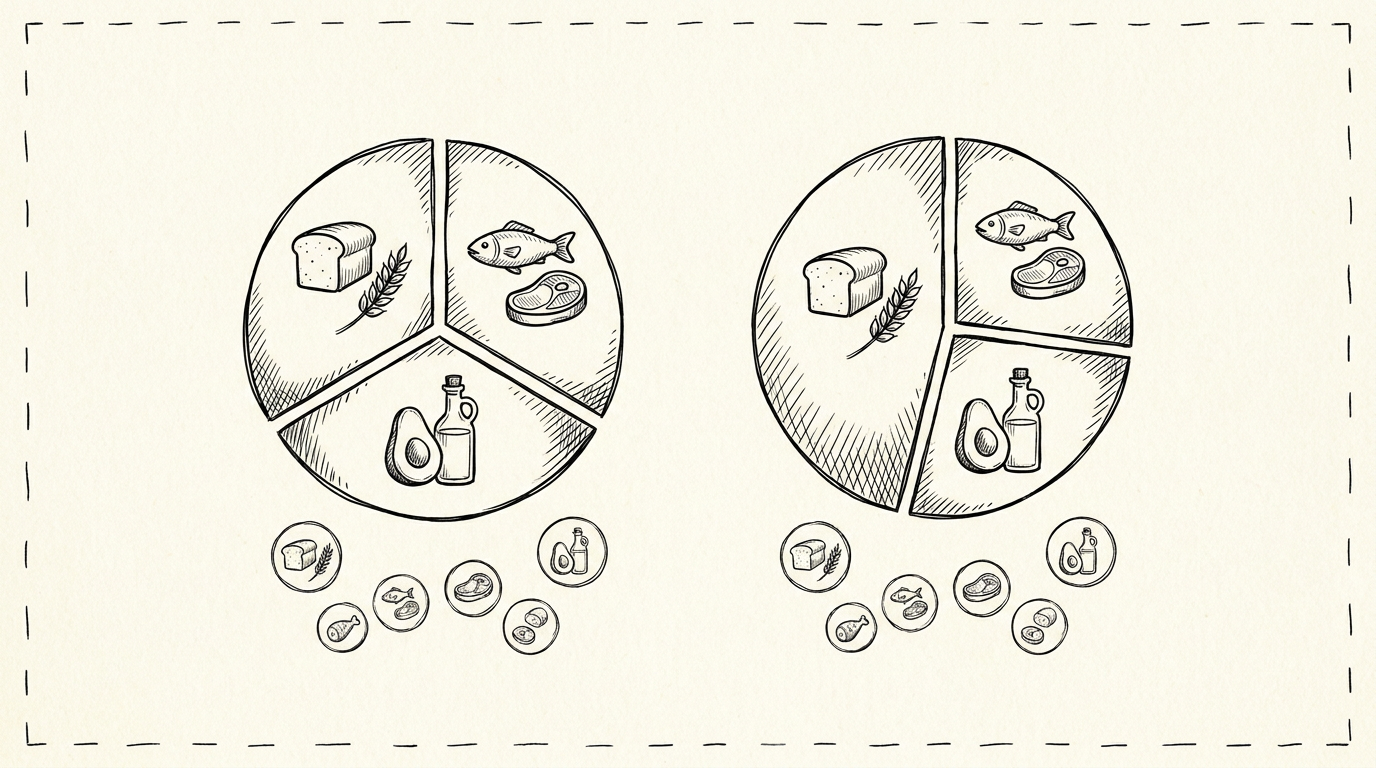
Side-by-side comparison at 2,000 calories
Four ratios show up most often in practice. Here’s how they compare at a 2,000-calorie baseline, which makes the gram differences easy to see.
| Ratio (C/P/F) | Carbs (g) | Protein (g) | Fat (g) | Best fit |
|---|---|---|---|---|
| 40/30/30 | 200 | 150 | 67 | General health, moderate activity |
| 50/25/25 | 250 | 125 | 56 | Endurance training, higher-carb preference |
| 40/40/20 | 200 | 200 | 44 | Muscle building, high protein priority |
| 35/35/30 | 175 | 175 | 67 | Fat loss with high satiety priority |
What separates these ratios in practice
The main difference between these splits is usually energy and hunger, not fat-loss speed. The 40/40/20 ratio pushes protein to 200 g at 2,000 calories. That’s a meaningful satiety advantage for some people, but it also means keeping fat very low, which can make meals feel less satisfying.
The 50/25/25 split is often recommended for more active people who train frequently and need carbohydrates to fuel performance. At 250 g of carbs, there’s room for substantial pre- and post-workout nutrition without dipping into fat stores during training.
If two plans match calories, the better one is usually the one you can follow next week. That’s not a slogan. It’s the actual deciding factor.
The biggest difference between macro splits is usually how they feel on a given day, not how fast they produce results on a scale.
When 40/30/30 makes sense and when it does not
Where 40/30/30 fits well
The 40/30/30 split is a moderate, balanced approach that works well for people with mixed goals: maintaining weight, building general fitness, or starting a structured eating plan for the first time. The carb allocation at 40% is high enough to support most gym sessions, and the protein at 30% is solid for muscle retention.
At 1,800 calories, 40/30/30 gives you 180 g carbs, 135 g protein, and 60 g fat. That’s a workable distribution for someone doing 3 to 4 moderate workouts per week.
Where it falls short
Very active people often need more carbs. Someone running 40 miles per week or doing two-a-day training sessions may find 40% carbs insufficient. A 50/25/25 or even 55/20/25 split might better support that training load.
On the other end, someone in a structured fat-loss phase might benefit from pushing protein higher to 35% or 40% to preserve muscle while in a deficit. The 40/30/30 split isn’t wrong in that context, but it’s not optimized for it either.
More protein is not automatically better if the rest of the plan becomes hard to maintain. Trade-offs are real.
How to calculate your macros from calories step by step
The formula in plain terms
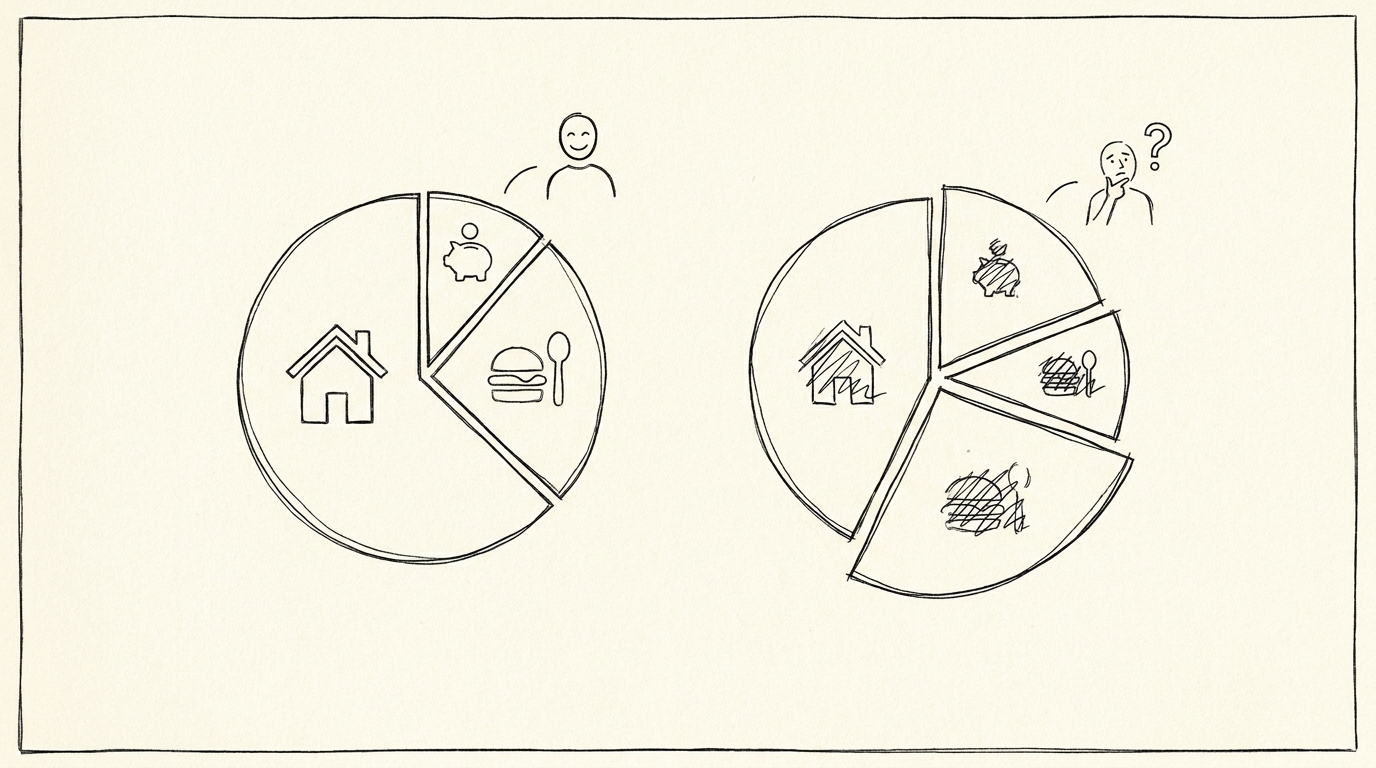
Work backward from your calorie target. You don’t need a special calculator for this. The steps are:
- Set your daily calorie goal first. Everything else flows from that number.
- Multiply total calories by each macro’s percentage to get calories per macro. At 1,800 calories with 40% carbs, that’s 720 calories from carbs.
- Divide carb and protein calories by 4 to get grams. Divide fat calories by 9 to get grams.
- Write down the three gram targets. Those are your daily numbers to hit, not the percentages.
A worked example at 1,800 calories
Using the standard calorie-per-gram values, a 40/30/30 split at 1,800 calories breaks down like this: 720 calories from carbs equals 180 g, 540 calories from protein equals 135 g, and 540 calories from fat equals 60 g.
Switch to a 40/40/20 split at the same 1,800 calories and the numbers shift: 180 g carbs stays the same, protein jumps to 180 g, and fat drops to 40 g. Same calories. Very different plate.
Once you know the formula, any macro split becomes simple math. The ratio is just the starting point.
The fastest way to set macros is to work backward from your calorie target. Get that number right first, then apply the split.
What the evidence says about macro ratios and weight loss
The acceptable range is wider than most people think
The Dietary Guidelines for Americans set acceptable macronutrient distribution ranges for adults at 45 to 65% of calories from carbohydrates, 10 to 35% from protein, and 20 to 35% from fat. That’s a wide window. The 40/30/30 split sits outside the lower carb boundary, but it’s close enough that it’s considered reasonable by most practitioners.
No single ratio is universally superior for fat loss. That’s not a hedge. It’s what the research shows.
What actually drives fat loss
Calorie deficit is the primary driver. Adherence is the secondary driver. Macro ratios shape how a diet feels, which affects adherence, which affects results. That’s the actual chain of causation.
A 40/30/30 plan that you follow for 12 weeks will produce better outcomes than a theoretically optimal split you abandon after 3 weeks. The ratio is a tool for making the calorie target sustainable, not a mechanism for fat loss on its own.
Hunger, energy, and workout quality are the practical signals to watch. If any of those are poor, the ratio is worth adjusting regardless of what it looks like on paper.
How activity level changes the best macro split
Less active days and more active days need different fuel
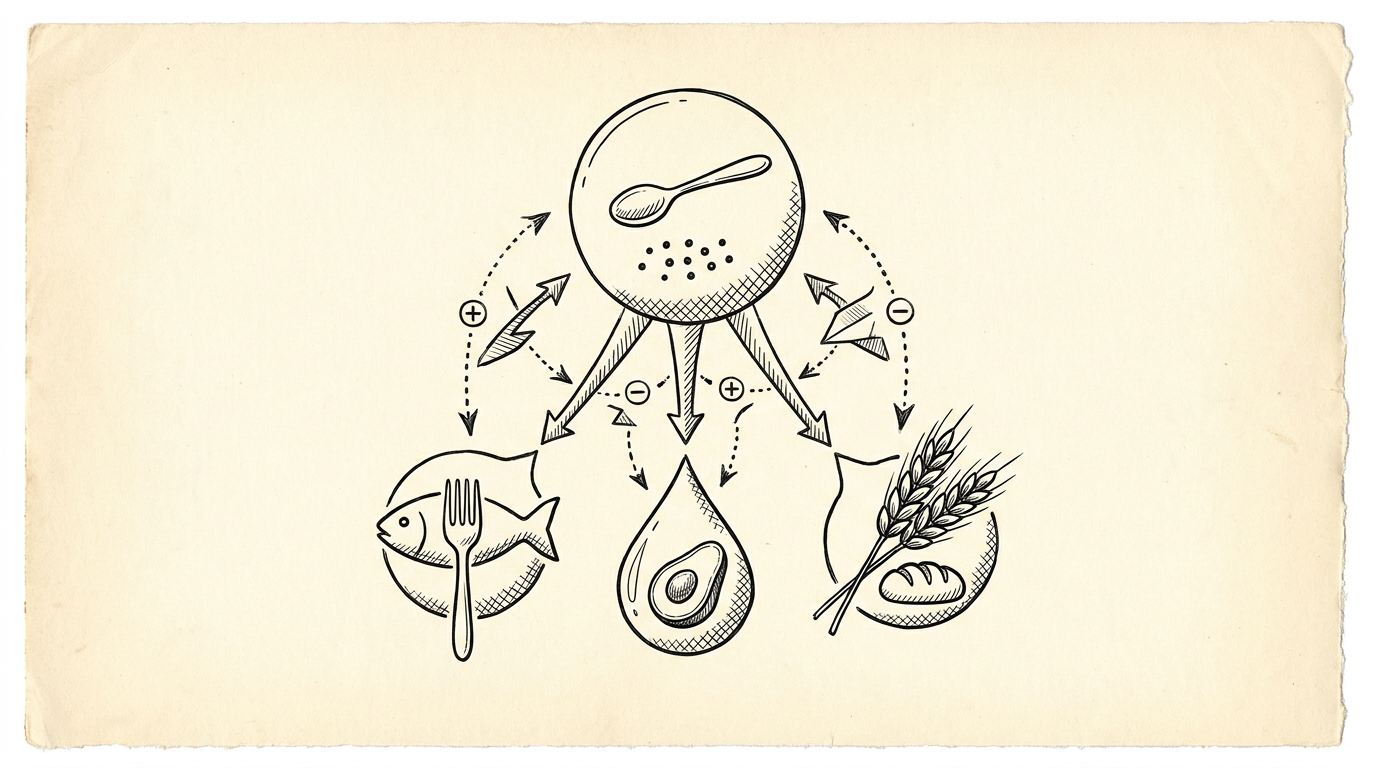
A useful heuristic is to think about carbs as fuel for output. On rest days or low-activity days, carbohydrate needs are lower. On heavy training days, they’re higher. A fixed ratio doesn’t account for that variation, which is one reason some people cycle their macros.
If you train 2 to 3 times per week at moderate intensity, a 40/30/30 split is often sufficient. If you’re lifting 5 days per week or doing endurance work, a 50/25/25 split may better match your energy demands.
Using hunger and performance as feedback
In my experience, the clearest signal that a macro split isn’t working is flat training performance combined with persistent hunger. Both usually point to insufficient carbohydrates rather than a protein or fat problem.
If your workouts feel sluggish at 40% carbs, test 45% for 2 weeks and keep everything else constant. That’s a more useful experiment than switching to an entirely different ratio all at once.
Tie macro choice to hunger, energy, and workout quality. Labels like ‘balanced’ or ‘high-protein’ are less useful than how you actually feel on day 10 of a plan.
Your workout schedule should influence your macro split. If training feels flat and energy is low, carbs are usually the first lever worth testing before anything else changes.
Common macro-tracking mistakes that make any ratio fail
Confusing percentages with portion sizes
A common mistake is treating a macro ratio as a visual guide to plate composition. 40% carbs does not mean 40% of your plate is rice. It means 40% of your calories come from carbohydrates. Because fat is more than twice as calorie-dense as carbs or protein, the physical portions look nothing like the percentages.
This confusion leads to underestimating fat intake and overestimating carb intake, which can push actual calorie totals well above the target. Tracking grams, not percentages, is the fix.
Weekend drift and inconsistent logging
A perfect ratio on weekdays can be undermined by 2 days of untracked eating. In my experience, weekend drift accounts for more tracking failures than the wrong ratio choice. If you’re curious about strategies for staying consistent on weekends, [?internal: staying consistent with macro tracking on weekends -> Weekend Macro Tracking Without the Stress: Stay Consistent With AI] covers this in detail.
Hidden calories in cooking oils, sauces, and restaurant meals also add up faster than most people expect. A tablespoon of olive oil is 120 calories and 14 g of fat. Three tablespoons across the day adds 360 calories and shifts your fat macro.
Undereating protein because the math feels hard
Protein is the macro most people undereat. At 30% of 1,800 calories, you need 135 g of protein per day. That’s roughly 450 g of chicken breast, or a combination of eggs, Greek yogurt, legumes, and meat spread across meals. It’s achievable, but it requires planning.
If hitting protein feels complicated, [?internal: high-protein snack ideas for busy days -> Macro Snack Ideas for Busy Pros: High-Protein, Easy Track] has practical options that don’t require cooking. Simplifying the protein sources is usually more effective than adjusting the ratio itself.
Frequently Asked Questions
Is 40/30/30 a good macro split for beginners?
Yes, for most beginners. The 40/30/30 ratio is moderate across all three macros, which makes it easier to hit than a high-protein or very low-carb split. It’s a reasonable starting point if you don’t yet have data on how your body responds to different distributions. Give it 3 to 4 weeks before adjusting anything.
Do macro ratios need to change for fat loss versus maintenance?
Not necessarily. The calorie target changes more than the ratio does. A 40/30/30 split can work for both fat loss and maintenance if the calorie total is set correctly for each goal. Some people push protein higher during a fat-loss phase to preserve muscle, which might shift the ratio to 35/35/30, but the change is incremental rather than dramatic.
How often should I adjust my macro split?
A useful heuristic is to give any ratio at least 3 weeks before changing it. Shorter trials don’t give you enough data to know whether the ratio or the execution is the problem. If hunger, energy, and workout quality are all acceptable after 3 weeks, the ratio is probably working. Adjust only one variable at a time when you do change something.
What is the difference between 40/30/30 and 40/40/20?
The carb allocation stays the same at 40%, but protein jumps from 30% to 40% and fat drops from 30% to 20%. At 2,000 calories, that means 50 g more protein (200 g vs 150 g) and 23 g less fat (44 g vs 67 g). The 40/40/20 split is more common in muscle-building contexts where high protein intake is a priority and fat is kept lower to leave calorie room for carbs and protein.
Can I track macros without counting every gram?
You can use rough portion estimates, but accuracy drops quickly. Hand-size guides and visual estimates work as a starting habit, but they tend to undercount fat and overcount protein. If you’re eating out frequently, [?internal: tracking macros at restaurants -> How to Track Macros When Eating Out with PlateBird] covers practical approaches for meals where you can’t weigh ingredients.
The best macro split is the one you can follow consistently. Whether you choose 40/30/30 or another ratio, the key is turning percentages into grams and grams into meals that fit your life.
Macro tracking gets easier once you stop fighting the math and start using it as a planning tool. Try PlateBird free to turn any macro split into daily targets without manual calculations or endless food searches.