You're standing in the grocery aisle, trying to make a decent choice. On one shelf there's rice, pasta, and tortillas. On another there are canned black beans. You're not looking for a miracle food. You just want something that helps you stay full, makes meal prep easier, and doesn't wreck your calorie budget by dinner.
That's the right question.
If you've been wondering are black beans good for weight loss, the useful answer is yes, they can be. But they help most when you use them with intention. Black beans work best as part of a meal structure that helps you feel satisfied and avoid overeating later. They're not a fat-burning food, and they're not “free” calories either.
A lot of articles stop at “high in fiber and protein.” That's true, but it's incomplete. What matters in real life is how black beans change a plate. Do they replace a bigger serving of rice? Do they take the place of some cheese or fatty meat in a burrito bowl? Or do they just get added on top of an already large meal?
That's where the result changes.
The Real Question Are Black Beans a Weight Loss Ally
A woman in line at the store picks up a can of black beans, then puts it back. She's trying to lose weight, she's started walking after work, maybe she's even browsing GrabGains workout programs to add some structure to her week. But she's also tired of food rules that sound good online and fall apart on Tuesday night when she's hungry.
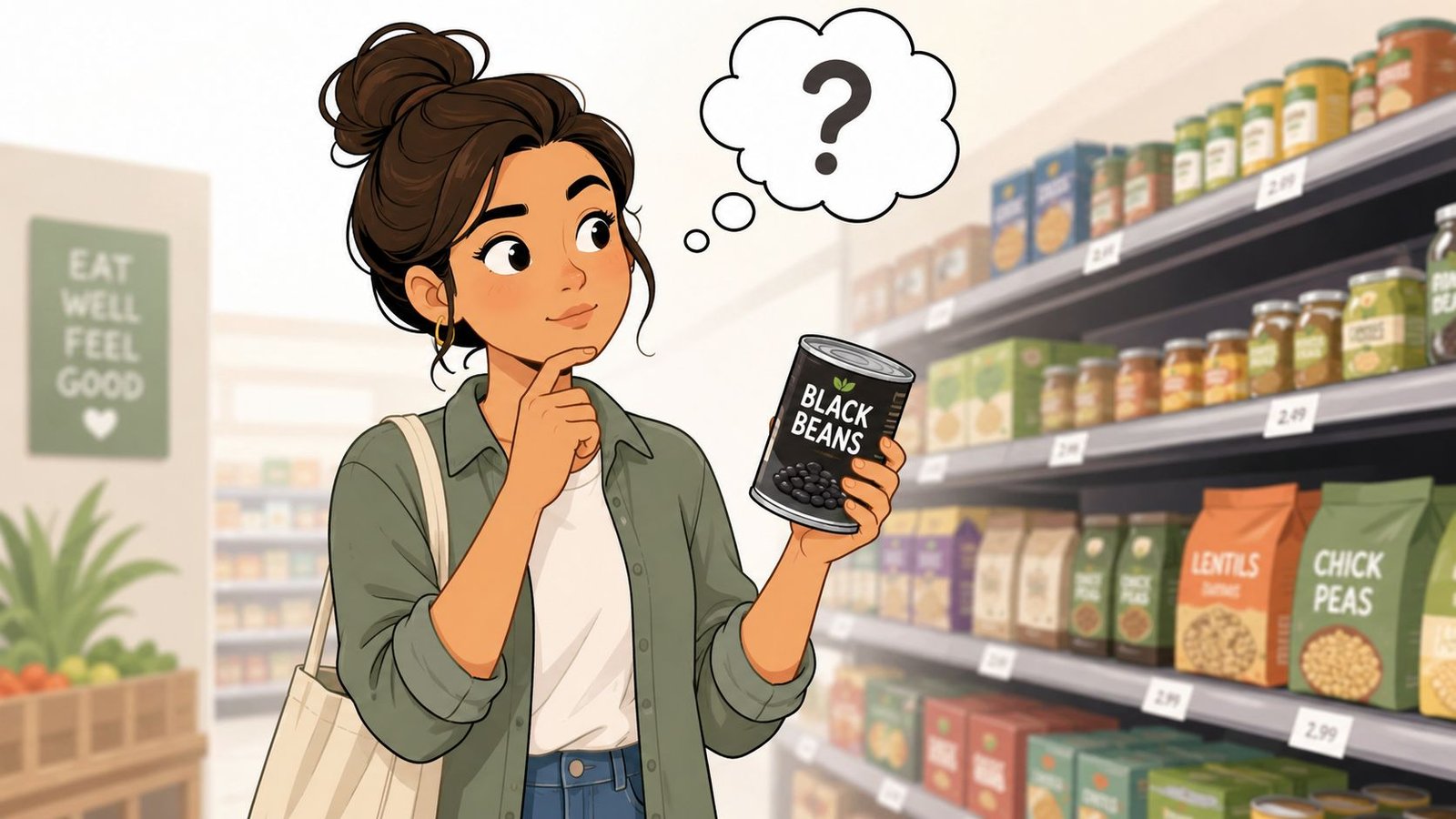
That hesitation makes sense. Weight loss advice often turns single foods into heroes or villains. One day carbs are the problem. The next day a “superfood” is supposed to fix appetite, cravings, and body fat all at once. Real eating doesn't work like that.
Black beans sit in a more honest category. They're a useful tool.
What makes them useful
They can help because they're filling, versatile, affordable, and easy to work into common meals. They also fit into food patterns that many people can repeat. That last part matters more than hype. If a food is technically healthy but hard to stick with, it doesn't help much.
Black beans can support weight loss when they help you build meals that keep you full enough to eat less overall.
Where people get confused
The confusion usually comes from asking the wrong version of the question. It's not just “Are black beans healthy?” It's also:
- How much fits my meal?
- Should I swap them in for something else or just add them?
- Will they keep me full, or will I still want snacks an hour later?
- What if they make my stomach feel off?
Those are the questions that affect results. A food can have a strong nutrition profile and still be used in a way that doesn't support fat loss. Black beans aren't exempt from that.
If you think of them as a strategic ingredient instead of a magic fix, they make a lot more sense.
The Science of Fullness Why Black Beans Work
Black beans help with weight loss mostly through fullness. Not excitement. Not detox. Not “boosting” anything dramatic. They help by making it easier to feel satisfied on a reasonable amount of food.
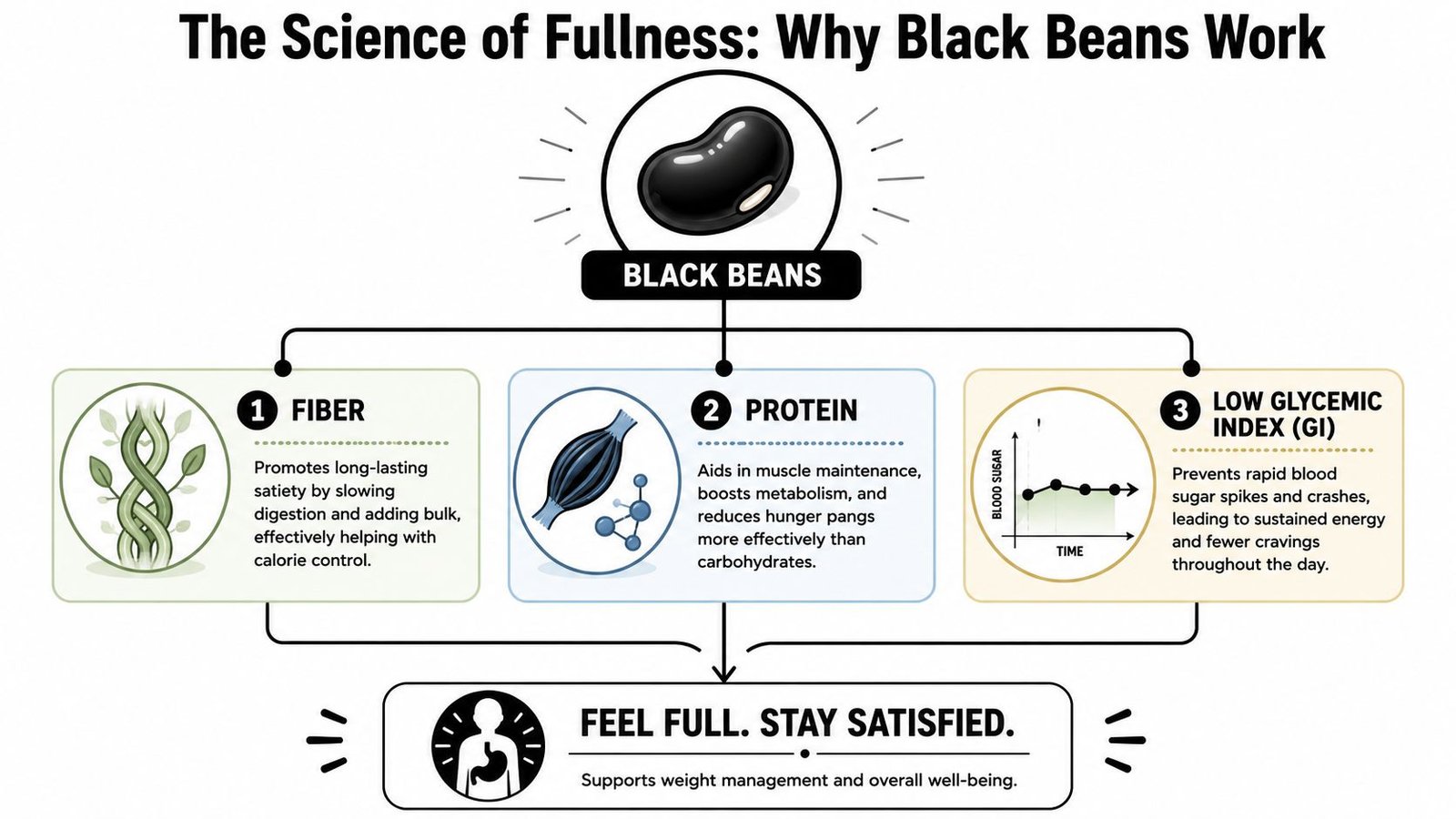
A practical way to think about them is a fullness trifecta. Black beans bring fiber, protein, and slow, steady digestion together in one food.
Fiber gives the meal staying power
Cooked black beans are relatively low in calories for their volume. A 1/2-cup serving has about 114 to 115 kcal and typically provides about 7 to 8 grams of fiber plus 8 grams of protein, while 1 full cup has about 227 calories according to Medical News Today's summary of clinical nutrition data. That same summary notes that 1/2 cup provides about 28% to 32% of daily fiber value, which is a meaningful amount from one food.
Fiber is one reason beans feel substantial. It slows digestion and adds bulk. A simple way to picture it is a sponge effect. A fiber-rich food takes up room and lingers longer than a refined carb that seems to disappear fast.
If your lunch keeps you full longer, your afternoon goes differently. You're less likely to drift into random snacks, second portions, or the “I deserve a treat” spiral that often starts with plain hunger.
Protein adds another layer of satiety
Beans aren't just a carb source. They also bring plant protein, and that matters when you're trying to make a meal satisfying. Protein tends to make meals feel more complete. It can also help a bean-based meal feel more stable than a plate built mostly from refined starch.
That's one reason black beans work well in bowls, soups, salads, and tacos. They don't just fill space. They make the meal more substantial.
For a deeper look at digestion and tolerance, this discussion on digestive health insights for adults is useful if beans tend to leave you with questions.
Slow digestion helps with steadier appetite
Many people notice that bean-based meals feel different from meals based mostly on white rice, chips, or bread. The energy tends to feel steadier. Hunger often returns less abruptly.
This matters for anyone tracking intake. If you've ever wondered how foods with fiber fit into your log, PlateBird's guide on whether fiber has calories helps clear up one of the most common tracker questions.
Later in the day, it can help to see the idea in action:
Practical rule: The best weight loss foods aren't the ones with the fewest calories on paper. They're the ones that make it easier to stop eating when your body has had enough.
The Calorie Budget Portioning Black Beans for Success
Here, black beans either help or subtly cease to provide benefit.
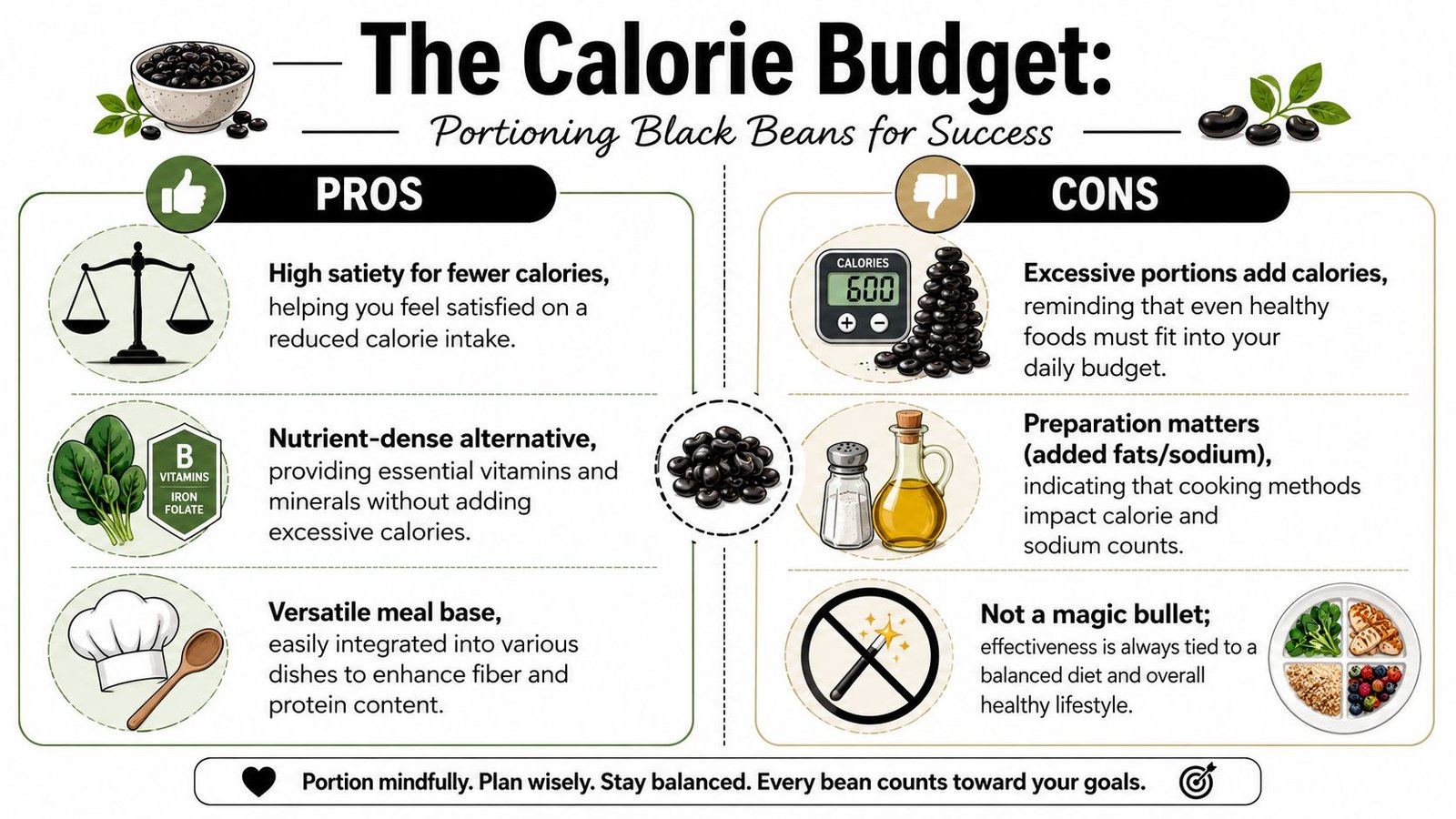
A lot of people hear that beans are good for weight loss and start adding them to everything. More to the burrito. More to the rice bowl. More to the salad that already has cheese, dressing, avocado, and tortilla strips. The meal gets healthier on paper, but it also gets larger.
That's why portioning matters.
Swap beats add
Clinical summaries often miss the practical question of what black beans do inside an actual meal. The better frame is the one used in Cleveland Clinic's discussion of bean benefits, which notes that the effect is modest, tied to overall eating patterns, and that one cup is about 227 calories. In practice, that means black beans help most when they improve fullness enough to reduce intake elsewhere.
That's the key distinction. Swap, don't just add.
Here's how that looks in real meals:
Rice bowl swap
Use black beans in place of part of the rice, not on top of the same rice portion. You keep the bowl hearty while shifting it toward more fullness.Taco strategy
Mix black beans with lean meat instead of using beans plus the same amount of meat plus extra cheese. The taco still feels generous, but the overall plate is easier to manage.Salad upgrade
Add beans to make a salad a meal, then pull back on one of the more calorie-dense extras so the salad doesn't turn into a disguised restaurant entrée.
A useful portion for most people
For many meals, 1/2 cup is a smart starting point. It's enough to change satiety without dominating the plate. If you're using a tracking app or food scale, that portion also keeps things easier to repeat.
A full cup can still fit, but it needs a reason. If it replaces another starch or anchors a lighter meal, fine. If it's extra food on an already big plate, that's where the calorie budget starts to slip.
If you need a starting target for your overall intake, an AI Meal Planner calorie calculator can help you estimate a calorie deficit before you decide how black beans fit into lunch or dinner.
Think in meal trades
A simple framework is to ask one question before you scoop:
| Meal situation | Better move |
|---|---|
| Big burrito bowl | Replace part of the rice with beans |
| Taco night | Mix beans into the protein filling |
| Meal prep plate | Use beans instead of a second starch |
| Snacky lunch | Build around beans and vegetables so the meal feels complete |
For portion visuals, PlateBird's guide to serving sizes for weight loss is handy if you tend to underestimate scoops from a pot or meal prep container.
If black beans make a meal more filling and help you eat less somewhere else, they're doing their job. If they only make the meal bigger, they're not.
Bringing Black Beans to Your Plate Meal Ideas and Pairings
The easiest way to use black beans well is to build meals that feel normal. Not diet food. Not a nutrition experiment. Just meals you'd want again.
Population research gives some support for this approach. Historically, higher bean intake has been linked with lower body fat and smaller waistlines, though the effect is modest. In a 2020 analysis, each 10% increase in bean consumption per 1,000 kcal was associated with 0.12 to 0.14 percentage points lower body-fat percentage on average, and higher intake was associated with smaller waist circumferences, as reported in this peer-reviewed review article. That doesn't make black beans magical. It does support the idea that they can play a helpful role inside a broader eating pattern.
Three pairings that work well
Black bean and egg scramble works because it combines beans with a familiar breakfast format. Add vegetables like peppers, onions, or spinach, and the meal feels substantial without leaning on pastries or oversized toast portions.
Black bean taco salad can be a strong lunch when you use greens, chopped vegetables, salsa, and a measured serving of beans. If you want extra protein, keep the rest of the bowl simple so the meal doesn't become a “healthy” pile-on.
Lean chili with black beans is useful for meal preppers because it reheats well and usually tastes better the next day. It also solves a common weight loss problem. Dinner feels comforting, so you don't go looking for something else an hour later.
A few more practical ideas
Soup anchor
Add black beans to vegetable soup to make it a real meal instead of a starter.Simple lunch box
Pack beans with chopped cucumbers, tomatoes, greens, and a protein you already like.Rice and bean balance
If you love rice, keep it. Just use less rice and let the beans carry more of the meal.
Pair for satisfaction, not perfection
Black beans tend to work best when they're paired with foods that add volume, flavor, or protein. Think vegetables, salsa, eggs, chicken, turkey, tofu, or broth-based soups. That's usually more effective than building a beige meal that technically fits your macros but leaves you roaming the kitchen later.
A food doesn't need to create dramatic weight loss to be worth using. It just needs to make your usual meals easier to stick with.
Cautions and Common Pitfalls to Avoid
Black beans can help, but there are two reasons people give up on them fast. One is digestive discomfort. The other is assuming that “healthy” means unlimited.
Watch the ramp-up
High-fiber foods can feel rough if you go from very little fiber to a large serving overnight. Mayo Clinic's community health page notes that one serving provides about 8 grams of fiber, or roughly 28% to 32% of daily needs, which is a lot to drop into your routine all at once if your usual meals are lower in fiber, as noted in this Mayo Clinic community health article on black bean benefits.
That's why some people feel bloated or gassy and decide beans “don't work” for them.
A better approach is gradual:
- Start smaller if beans are new to you.
- Drink enough fluid so the extra fiber doesn't feel like a brick in your gut.
- Pay attention to your own tolerance instead of forcing a serving that sounds ideal online.
Preparation still matters
Canned black beans are convenient, but what you add to them counts. If beans arrive buried under oil, cheese, creamy sauces, and giant tortilla portions, the benefit gets diluted fast.
A few easy habits help:
- Rinse canned beans if you want a simpler base for meals.
- Season with flavor first using salsa, garlic, onion, cumin, lime, or herbs before relying on heavier toppings.
- Keep portions visible instead of spooning them in mindlessly from a large container.
Don't expect a single-food fix
Black beans may backfire if they leave you uncomfortable enough that you stop using them, or if you overeat later because the meal wasn't balanced in a way that worked for you.
That's not failure. It's feedback.
Use the response to adjust portion size, meal composition, and timing. A food can be helpful without being ideal for every person in every amount.
Effortless Tracking with PlateBird
Black beans earn their place in a weight loss plan when you use them with purpose. They can make meals more filling. They can help you swap out part of a more calorie-dense meal. They can also become a repeatable staple in lunches, soups, tacos, and meal prep.
What they can't do is remove the need to notice portions.
That's where tracking becomes useful, especially for first-time calorie trackers and busy people who don't want to spend ten minutes building every meal by hand.
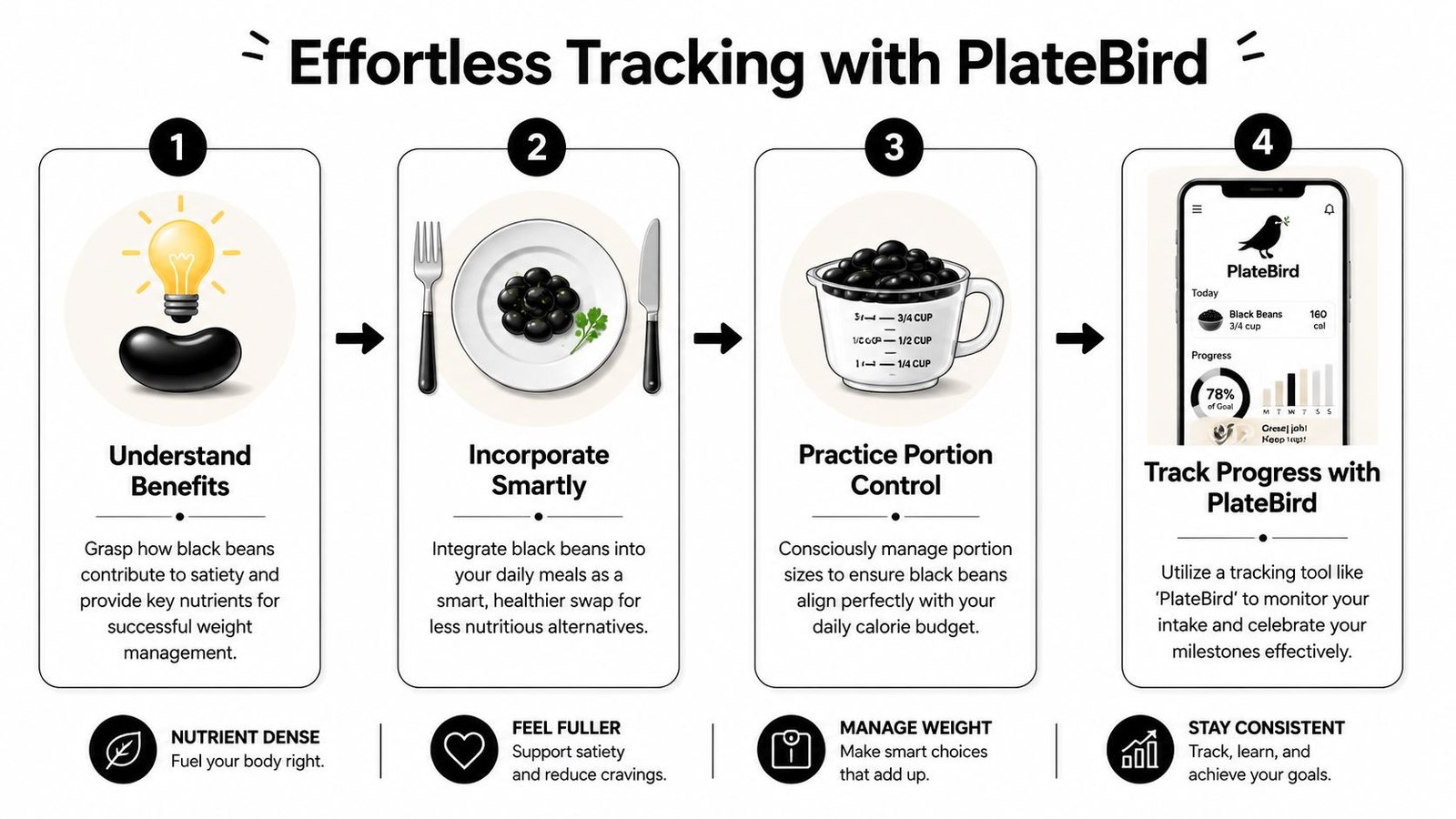
What black bean tracking often looks like in real life
The struggle isn't with the concept. It's with the friction.
You make a chicken salad with black beans. Then you wonder how to log the beans, the dressing, the chicken, and whether your “small scoop” was small. Or you meal prep a container with rice, beans, and turkey, then repeat the same entry all week.
Tracking works better when the process is short enough to repeat.
Logging tips that make beans easier to manage
Log the swap, not just the ingredient
If you replaced part of the rice with beans, track the full meal that way. That gives you a more honest picture than logging beans in isolation.Use repeat meals
If your lunch is often some version of black beans, protein, and vegetables, save it as a standard meal pattern.Be consistent with scoops
The exact gram doesn't need to be perfect every time. What matters is using a similar amount often enough to notice patterns.Review hunger with the entry
If a black bean lunch keeps you full until dinner, that matters. If it doesn't, the meal may need more protein or a better overall structure.
For people comparing apps, PlateBird's article on the best macro tracking app can help you think through what makes logging sustainable day to day.
The bigger win
The biggest benefit of tracking black beans isn't obsessing over a single ingredient. It's seeing whether they improve your meals in a way that helps you stay consistent.
That's the question behind all of this.
Not “Are black beans allowed?”
Not “Are they good or bad?”
But “Do they help me build meals I can stick with while losing weight?”
For a lot of people, the answer is yes.
If you want an easier way to put this into practice, PlateBird makes food logging fast enough to keep doing. You can type a meal like “chicken black bean salad” or snap a photo of your plate, and the app handles the calorie and macro breakdown without the usual friction. That makes it much simpler to test smart black bean swaps, repeat meal-prep favorites, and stay consistent long enough to see progress.