A standard 1 cup serving of Kellogg's Rice Krispies contains 24g of carbs. For those tracking calories or macros, that means Rice Krispies can fit, but they need to be logged carefully because the cereal is mostly carbohydrate and behaves like a fast-digesting food.
You know the moment. You're in the kitchen, cereal box in hand, maybe already late, maybe trying to stay consistent for the first time in weeks, and you're asking a simple question that somehow never gets a simple answer. Can I eat this and still stay on plan?
That question matters more than people think. Most of the time, the issue isn't whether Rice Krispies are "good" or "bad." It's whether you understand what you're eating well enough to use it on purpose. A bowl of cereal can work for a busy parent, a lifter heading to training, or someone trying to keep breakfast easy during a calorie deficit. It can also leave you hungry fast, spike your appetite later, or wreck your tracking if you confuse the cereal with the treat.
The carbs in rice krispies aren't the whole story. The useful part is knowing what those carbs do, when they make sense, and where people usually mis-log them.
That Moment Before Breakfast
A lot of food decisions happen when people are rushed, not when they're calm and rational. Breakfast is where this shows up first. Someone pours cereal because it's quick, familiar, and easy to portion. Then the second-guessing starts.
Rice Krispies sit in an odd middle ground. They look light, so people assume they're low in everything. They also come with a health halo from being a plain cereal instead of a frosted one. Neither assumption helps much when you're trying to hit a calorie target, manage hunger, or keep carbs around training where they work best.
What usually works is taking the emotion out of it. If the food is in your house and you like it, then the practical question isn't "should I never eat this?" It's "what role does this play in my day?" Rice Krispies are one of those foods that can be useful when you want quick energy and very little fat. They're less useful when you need a breakfast that keeps you full for hours.
The fastest way to make nutrition harder is to turn every food into a moral test.
I've seen the same pattern with clients over and over. They don't get stuck because of one bowl of cereal. They get stuck because they don't know whether the bowl they poured was close to one serving, whether the milk changed the meal enough to matter, or whether the "Rice Krispies" they logged were a marshmallow square.
If you're holding the box and wondering whether it fits, the answer is usually yes. But it fits differently for fat loss, for training fuel, and for appetite control. That distinction is where most generic nutrition advice falls apart.
A Precise Rice Krispies Carb Breakdown
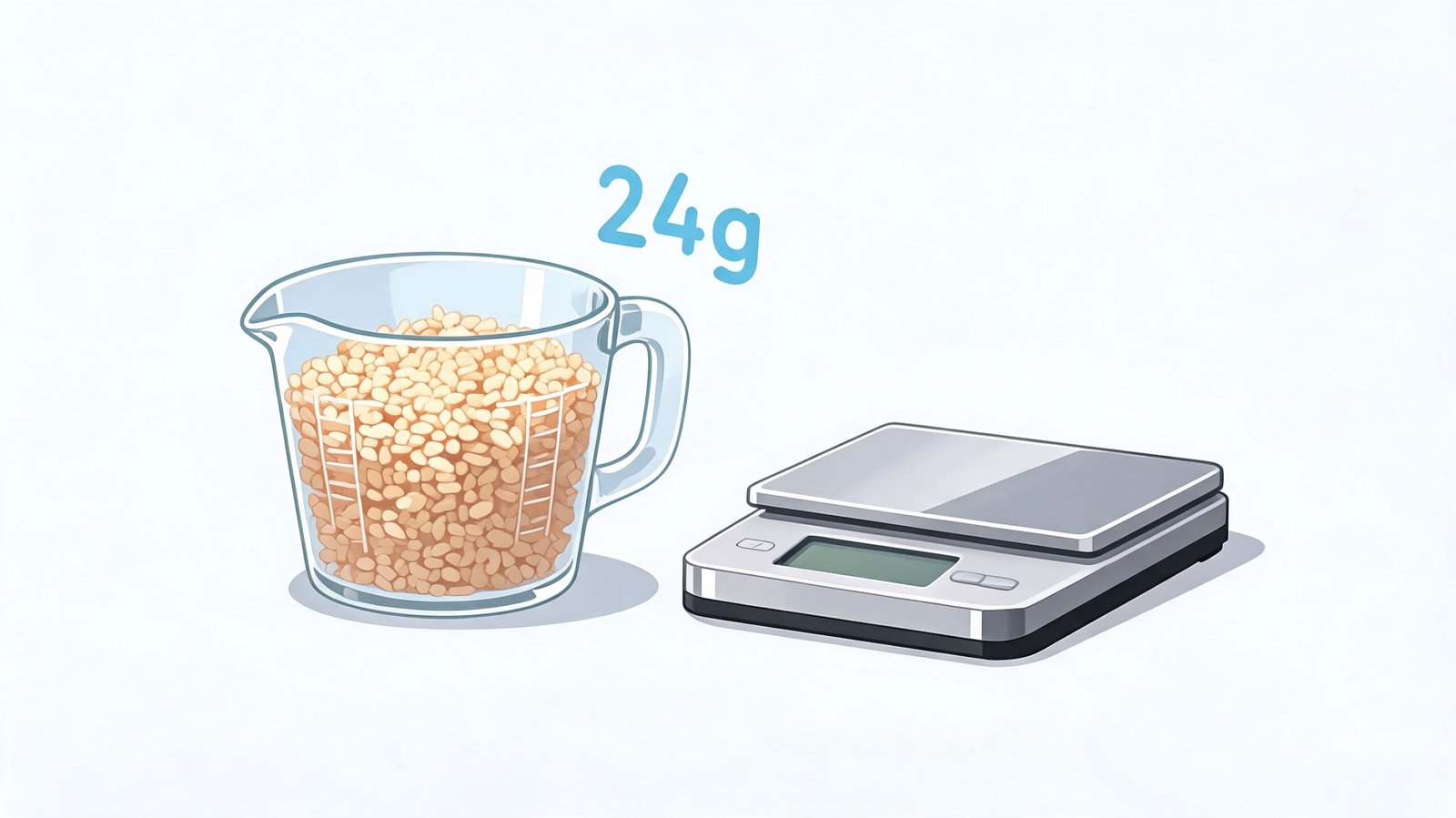
Start with the serving you are likely to log. A standard 1 cup serving of Kellogg's Rice Krispies contains 24g of carbohydrates, 107 calories, 1g fat, and 2g protein, according to Eat This Much's nutrition profile for Kellogg's Rice Krispies.
What that serving actually means
That same source lists the serving at roughly 26 to 30g by weight. It also shows that 24g of carbs make up almost all of the calorie load in the bowl. For anyone tracking macros, that matters more than the cereal's light texture. Rice Krispies are basically a quick-carb food with very little fat or protein to slow things down.
In practice, that makes them easy to fit around training and less useful as a stand-alone breakfast if your main goal is staying full until lunch.
A simple way to read the bowl:
- Carbs are the main event: 24g carbohydrate in one cup
- Fat stays low: 1g fat
- Protein stays modest: 2g protein
That profile is the reason people often feel fine eating Rice Krispies before or after a workout, then feel hungry again sooner than they expected if they eat the same bowl at a desk on a low-step day.
Per 100 grams gives better context
Volume is where tracking gets messy. A "cup" depends on how densely the cereal lands in the bowl. Weight is more reliable.
The same nutrition reference lists Rice Krispies at 85g of carbs per 100g, with 381 calories and 6.75g protein. That gives a better reality check on carb density. A cereal that looks airy is still concentrated once you measure what you poured.
If accuracy matters, use grams, not bowl size. That's also why learning how to read nutrition labels accurately pays off. The serving on the box is a starting point, not a guarantee that your breakfast matched it.
There are label variations
Rice Krispies labels are not always presented the same way across retailers and package formats. Some list 1-1/4 cup at 29g carbs and 130 calories, while others show 36g per serving based on a larger portion.
Practical rule: log the exact product and serving size in front of you, not the version you remember.
That matters even more because people often confuse the plain cereal with marshmallow bars made from it. The carb count for the cereal itself is predictable once you weigh it. The carb count for a homemade square is not.
Rice Krispies also provide more added micronutrients than many people expect. One standard cup supplies 106% DV iron (9mg), 51% DV vitamin B6, and 35% DV vitamin A. I would still treat satiety as the deciding factor here, not the fortification panel. The cereal can fit a diet well. It just works best when you are using it deliberately for convenient carbs, not expecting it to keep you full on its own.
Understanding Net Carbs and Glycemic Impact
A bowl of Rice Krispies can fit two very different jobs. It can be a quick carb before training, or it can be a breakfast that leaves you hungry again by mid-morning. The carb number is only part of that story.
Why net carbs are basically the whole story here
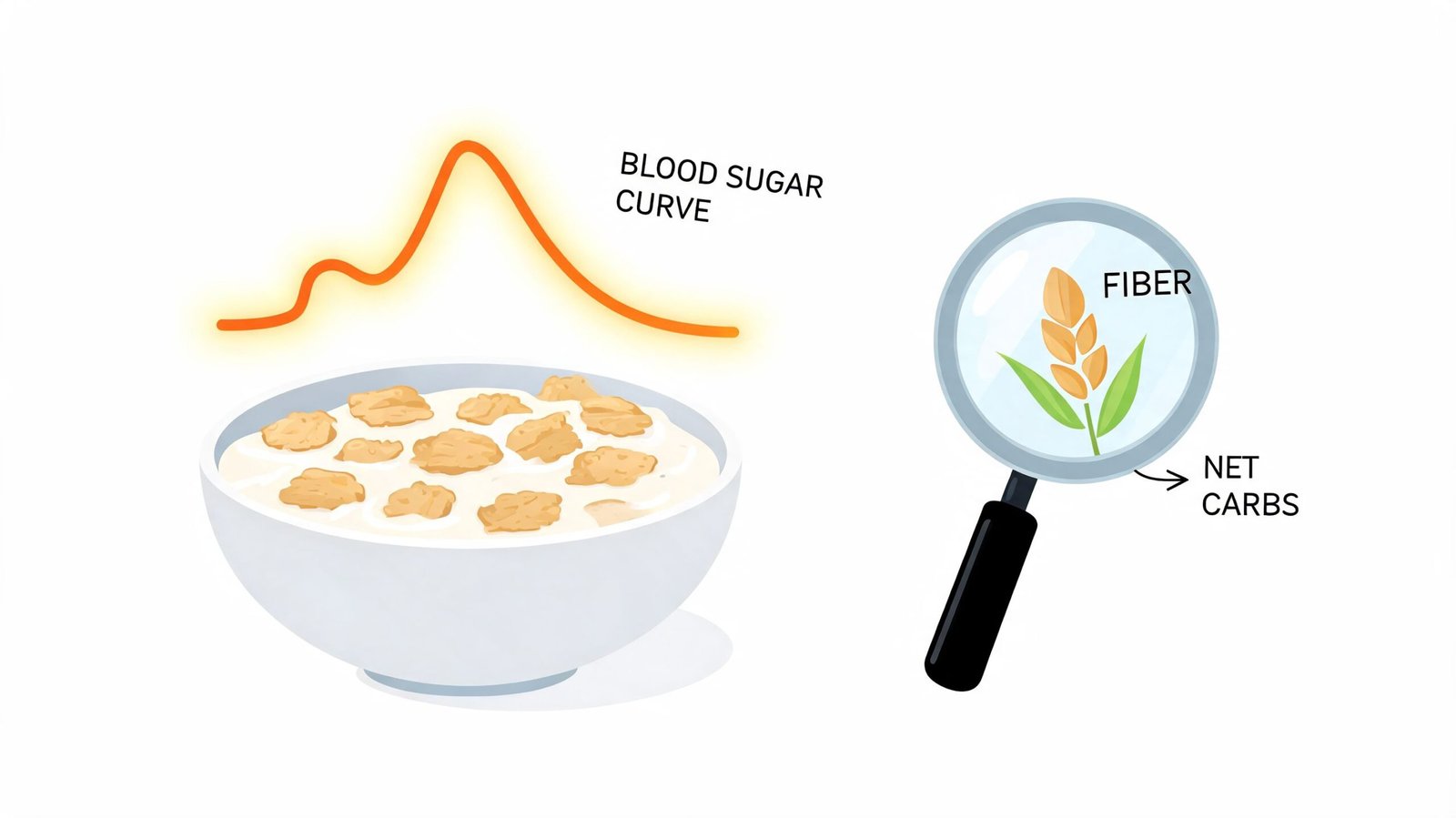
As noted earlier, Rice Krispies are a very low-fiber cereal, so total carbs and net carbs end up being almost the same. For anyone counting carbs closely, that means there is very little "discount" from fiber. What you log is close to what your body can use quickly.
If you want a plain-English refresher, this guide explaining what net carbs are covers the difference.
That matters because people often assume a light, crispy cereal will behave like a lower-impact carb. In practice, it behaves more like a refined starch. Digestion is quick, and fullness usually fades fast unless the rest of the meal slows things down.
The glycemic side of the equation
Rice Krispies are also considered a high glycemic food, which fits what many people notice in real life. Energy comes on fast. Hunger can come back fast too.
For performance, that can be useful. A fast-digesting cereal is often easier to tolerate before training than a heavier meal with more fiber or fat. For appetite control, the trade-off is less favorable. If breakfast needs to carry you for several hours at a desk, plain Rice Krispies usually do a poor job on their own.
Fast carbs are not a problem by themselves. They are a problem when you expect them to keep you full like a mixed meal.
What tends to work in the real world
I treat Rice Krispies as a convenient carb source, not a filling breakfast base. That framing helps people use them well.
A few practical applications:
- Before training: useful when you want easy-to-digest carbs and do not want a heavy stomach
- After training: works better when you add protein, since the cereal alone is mostly quick carbohydrate
- During fat loss: easier to manage when you pair it with foods that improve satiety, such as Greek yogurt, milk, fruit, or eggs
- For low-carb dieting: usually a poor fit, because there is almost no fiber buffer between total carbs and net carbs
This is also why people get tripped up when comparing the cereal with Rice Krispie Treats. The plain cereal already digests quickly. Once marshmallow and added sugar enter the picture, the result is usually even less filling per calorie and easier to underestimate if you are logging by memory instead of by weight.
Rice Krispies can still be useful. Just use them for what they are: a processed, fast-digesting carb that works best when the goal is convenience or quick fuel, not long-lasting fullness.
Rice Krispies Cereal vs Rice Krispie Treats
You pour a bowl, log "Rice Krispies," and move on. Later in the day, you grab a packaged treat or cut a homemade square and log the same thing again. That is one of the fastest ways to lose accuracy with this food.
Why the confusion matters
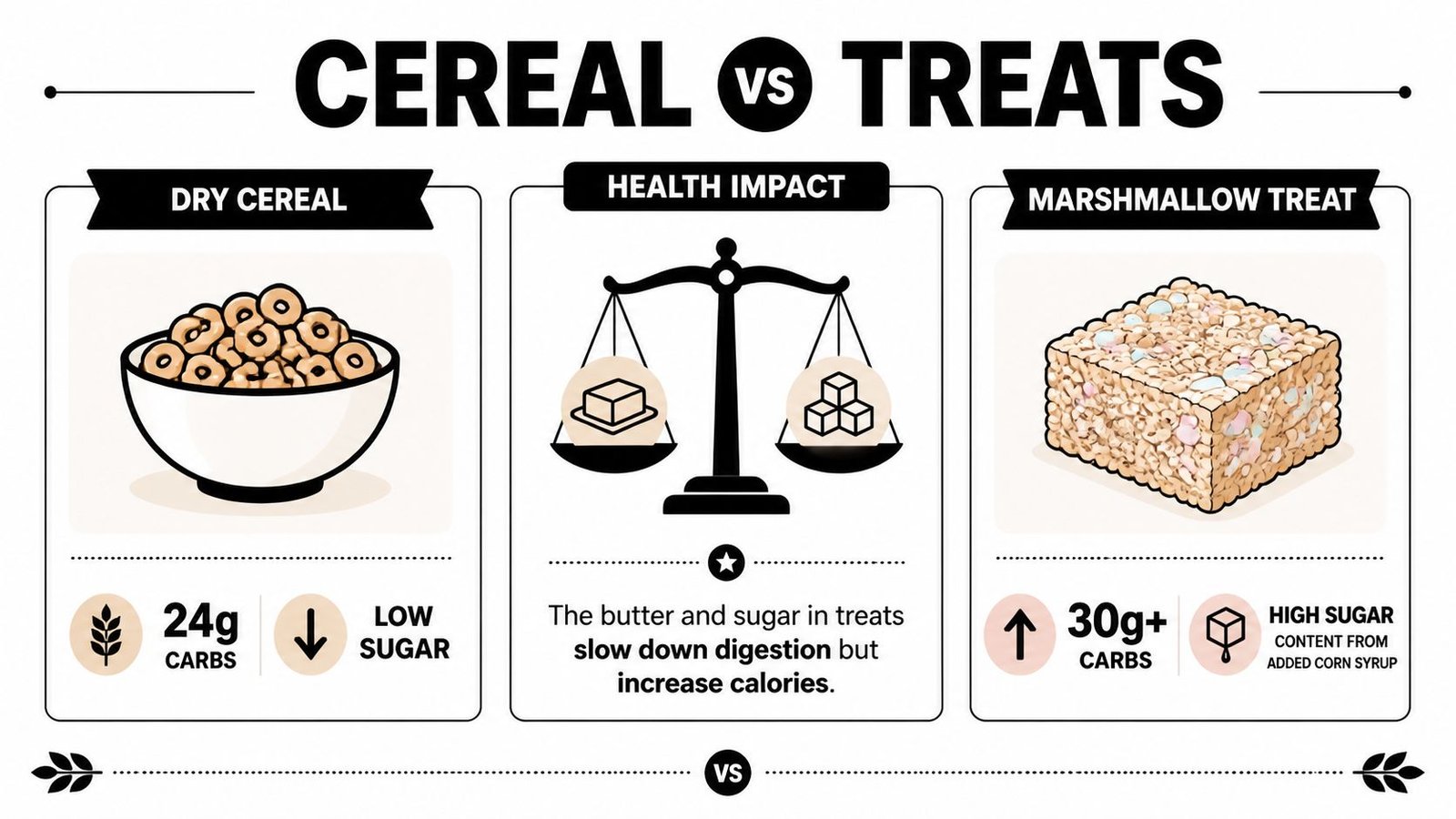
Rice Krispies cereal and Rice Krispie Treats share a name, but they are different carb sources in practice. The cereal is mostly puffed rice with very little fiber. The treat starts with that same cereal, then adds marshmallow and usually extra butter or similar ingredients, which changes the carb density, sugar load, and how easy it is to overeat.
The first product reference to check is this WK Kellogg cereal listing. It confirms the plain cereal is a high-carb, low-fiber food. That same WK Kellogg reference also helps explain why people get mixed up. A bowl of cereal, a single-serve pack, and a marshmallow treat can all sit under the "Rice Krispies" label while giving you very different carb totals per serving.
That matters for both fat loss and performance. If you are trying to stay full, the treat usually gives you a denser, sweeter carb hit with less volume. If you are trying to get quick fuel before training, the cereal is often easier to portion and easier to pair with milk or protein.
Side by side comparison
Here is the practical difference.
| Nutrient | 1 Cup Cereal + 1/2 Cup Skim Milk | 1 Homemade Treat (22g) |
|---|---|---|
| Carb profile | Mostly fast-digesting starch from cereal, plus lactose from milk | Fast carbs from cereal plus marshmallow sugar |
| Glycemic effect | Usually rises quickly, especially if eaten alone | Also rises quickly, often with less volume per bite |
| Satiety | Better if you build the meal with protein or fruit | Usually weaker for fullness relative to calories |
| Best use | Pre-workout fuel, light breakfast, post-workout carb add-on | Dessert, snack, planned quick carb option |
| Tracking risk | Pouring more than a true serving | Logging a bar or square as if it were plain cereal |
I keep that comparison partly qualitative on purpose. Exact numbers change with the milk you use, the size of the square, and whether the treat is homemade, packaged, or bakery-style.
The big nutritional difference
The primary concern is not just that the treat contains more sugar. Instead, the difficulty lies in how easily the treat is underestimated. A bowl provides visual feedback, whereas a square does not. People frequently categorize it as a "small snack" even when the carb load is closer to a dessert serving than a cereal serving.
There is also a satiety trade-off. Plain cereal is not very filling on its own, but at least you can add volume with milk, berries, or Greek yogurt. A Rice Krispie Treat is compact and sweet, so it disappears fast and usually does less for hunger. That makes it a common trouble spot during a calorie deficit.
For athletes, either food can work. I use the cereal more often when someone needs quick carbs they can measure easily. I use treats more selectively, usually around training or as a deliberate dessert, not as a casual stand-in for breakfast cereal.
If you want tighter logging, use the exact entry that matches what you ate and weigh it when possible. This is one place where a quick refresher on how to count macros accurately saves a lot of cleanup later.
Smart Portioning and Frictionless Tracking
Knowing the carb count is useful. Using it consistently is what changes results.
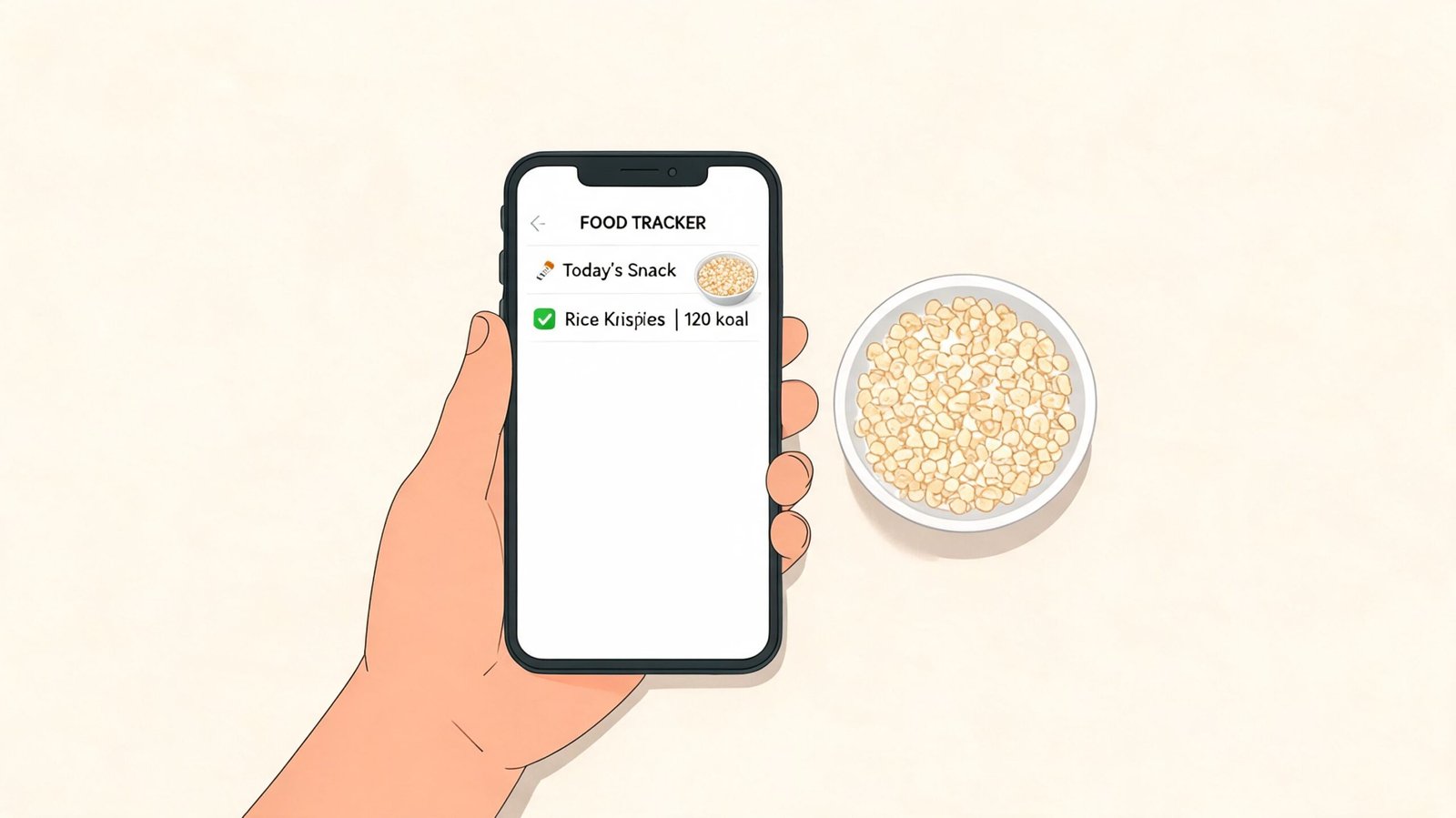
Portioning without kidding yourself
The most common Rice Krispies mistake isn't choosing the cereal. It's pouring a casual bowl that doesn't remotely match the serving on the label.
A level cup is usually much smaller than what people pour when they're hungry. That's why cereal can feel deceptively "light" while still moving your carb intake up fast. If you're trying to stay accurate, measuring a few times teaches your eye what a real serving looks like. After that, you can be more flexible.
If you're counting macros closely, learning how to count macros well matters more than trying to eliminate every processed food. Precision beats food fear.
What works and what doesn't
Some strategies hold up in real life. Others sound disciplined and fail by day three.
What tends to work:
- Measure the cereal first: Use a measuring cup or a kitchen scale before adding milk.
- Decide the meal's job: If it's pre-workout fuel, keep it simple. If it's breakfast during fat loss, build around it with more staying power.
- Log the exact version: cereal, bar, single-serve pack, or treat. The brand name alone isn't enough.
- Repeat easy meals: a consistent breakfast is easier to track than a different bowl every morning.
What usually doesn't:
- Eyeballing from a large bowl: the bowl shape tricks people.
- Logging "cereal" generically: databases often lump similar products together.
- Ignoring add-ins: milk, sugar, fruit, nut butter, and extra handfuls change the meal quickly.
- Saving all precision for dinner: breakfast errors can ripple through the rest of the day.
Coach's note: if you feel "starving again" soon after cereal, the issue often isn't willpower. The meal just digested quickly.
Build the meal around the goal
Rice Krispies can fit different plans, but the structure should match the goal.
For a quick carb-focused meal, keep it light and easy to digest. For a more filling breakfast, combine the cereal with foods that bring protein, texture, or more staying power. For kids or busy mornings, consistency beats perfection. A breakfast that gets eaten and logged is more useful than an ideal meal that never happens.
A short demo makes this easier to picture in practice.
The real win is reducing friction
Many don't quit tracking because carbs are complicated. They quit because logging is annoying.
Searching databases, matching the right product, and fixing mistakes later creates enough friction that people stop. That's especially true with foods like Rice Krispies, where there are multiple serving sizes, different package formats, and easy confusion between cereal and treats.
The better approach is simple. Make the accurate choice the easy choice. Measure when needed, log the exact food, and don't assume one "Rice Krispies" entry covers every version. If a food is part of your routine, the goal isn't to obsess over it. The goal is to remove enough guesswork that you can keep eating like a normal person while still knowing what you're doing.
Fitting Rice Krispies Into Your Plan
Rice Krispies aren't a nutrition trap. They're a specific tool.
If you want quick carbs and a light texture, they can work well. If you want a breakfast that keeps you full for a long stretch, they usually need help. If you're comparing the cereal to Rice Krispie Treats, don't treat them as the same food just because the name is similar. That's where a lot of tracking mistakes begin.
The practical takeaway is simple. Use foods for what they're good at. Rice Krispies are good at convenience, fast digestion, and easy carb intake. They're not great at satiety on their own. That's a trade-off, not a failure.
A smart nutrition plan leaves room for foods like this. People stay consistent when they understand the trade-offs and make choices deliberately. They struggle when they swing between "clean eating" rules and random convenience meals they never log correctly.
So if you're standing in the kitchen with that box in your hand, the answer doesn't need to feel dramatic. You can eat the cereal. Just know what you're eating, know why it fits today, and log the right version.
PlateBird makes that part easy. Instead of guessing whether you ate the cereal or the treat entry, scrolling through lookalike foods, or trying to remember the serving later, you can type what you ate or snap a photo and log it fast. If you want a simpler way to stay consistent with calories and macros, try PlateBird.