Plain distilled spirits like vodka, gin, whiskey, and tequila usually have 0 g of sugar, while a 5-ounce glass of red wine has about 1 g, white wine about 1.4 g, and a 12-ounce light beer has about 4 g of carbohydrates. The drinks that change the picture fast are sweetened ones, such as liqueurs and cocktail-style drinks. Kahlua is listed at about 39 g of sugar per 100 ml, and a pint of cider can contain around 46 g of sugar.
You're probably here because food tracking feels manageable until drinks enter the chat. Breakfast has a label. Lunch can be estimated. Then someone says “want to grab a drink?” and suddenly you're trying to figure out whether a glass of wine is “better” than a beer, whether vodka is sugar-free, and whether a zero-sugar spirit means it has zero effect on your body.
That confusion is normal. Alcohol is one of the most misunderstood parts of nutrition because people often mix up three different things: sugar, carbohydrates, and blood sugar response. Those are related, but they aren't the same.
The good news is you don't need to give up nights out or memorize a giant list of drinks. Once you understand where sugar in alcohol comes from, the whole topic becomes much easier to manage.
The Hidden Sugar in Your Favorite Drinks
You log your meals all week, then Saturday night arrives. The appetizer is easy enough to estimate, but the drink menu turns into guesswork. A dry wine, a hard cider, a honey whiskey cocktail. They all sit in the same category on the menu, even though their sugar content can be very different.
That confusion makes sense. Alcohol is tricky because two separate things can raise the numbers in your glass. One is sugar left behind or added for flavor. The other is alcohol itself, which affects your body in ways that are different from sugar grams. If you miss that distinction, drink labels can feel more confusing than helpful.
Why alcohol is harder to judge
Serving size is the first place people get tripped up. A “glass” is not a nutrition unit. It is just a container, and containers vary a lot. The National Institute on Alcohol Abuse and Alcoholism defines a standard drink as 12 ounces of regular beer, 5 ounces of wine, or 1.5 ounces of distilled spirits in its overview of what counts as a standard drink.
That matters in real life because home pours and restaurant pours often run large. A generous wine glass can hold more than one standard serving, which means more alcohol and, if the drink contains sugar, more sugar too.
The second challenge is that alcohol does not advertise its sweetness clearly. A plain shot of vodka is very different from a whiskey liqueur, and a dry wine is very different from a canned cocktail that tastes like juice. Fermentation uses sugar to create alcohol, so some drinks end up with very little sugar left. Others have sweetness added back in later with juice, syrups, cream, honey, or flavorings. If you like sweeter whiskey options, you can find amazing whiskey honey drinks, but it helps to remember that the sweetness usually comes from ingredients added after distillation, not from the alcohol itself.
A simple way to sort it out is to ask two questions before you order. Was this drink fermented until most of the sugar was used up, or was sweetness added later? Then ask, how much am I being served?
That same habit helps when you are estimating restaurant meals too. The logic is similar to estimating calories when eating out. Start with the base item, then look for extras that change the total.
A better goal than perfection
You do not need to memorize every drink.
You just need a practical filter:
- Dry, plain alcohol options usually have little to no sugar on their own
- Fermented drinks can contain small or moderate amounts depending on how much sugar remains
- Sweetened cocktails, liqueurs, and flavored drinks often get their sugar from added ingredients
- Alcohol's effect on your body is separate from sugar grams, so “low sugar” does not always mean “no impact”
Once you see those patterns, drink choices stop feeling random. You can look at a menu and make a more informed call without feeling like you need a chemistry degree or a perfectly tracked night out.
Alcohol and Sugar a Drink by Drink Breakdown
Most questions about how much sugar is in alcohol get easier once you compare drinks side by side. The biggest surprise for many people is how dramatic the gap can be between a plain spirit and a sweet liqueur.
Sugar and carb content of common alcoholic drinks
| Drink | Serving Size | Estimated Sugar (g) | Estimated Carbs (g) |
|---|---|---|---|
| Vodka | 1.5 oz | 0 | 0 |
| Gin | 1.5 oz | 0 | 0 |
| Whiskey | 1.5 oz | 0 | 0 |
| Tequila | 1.5 oz | 0 | 0 |
| Red wine | 5 oz | about 1 | not specified |
| White wine | 5 oz | about 1.4 | not specified |
| Light beer | 12 oz | not specified | about 4 |
| Bailey's Irish Cream | 100 ml | about 20 | not specified |
| Amaretto | 100 ml | about 24 | not specified |
| Frangelico | 100 ml | about 31 | not specified |
| Kahlua | 100 ml | about 39 | not specified |
These values come from Teladoc Health's overview of alcohol and sugar, which notes that plain distilled spirits like vodka, gin, and whiskey contain 0 g of sugar, while red wine has about 1 g per 5-ounce glass and Bailey's Irish Cream has about 20 g per 100 ml.
What the table really tells you
The cleanest takeaway is this: drink category matters more than the alcohol itself.
A shot of vodka and a pour of Kahlua are both “alcohol,” but nutritionally they behave like very different products. One is close to a blank base. The other is much closer to a dessert-style beverage.
That's why cocktail ingredients matter so much. If someone enjoys whiskey, the sugar question depends on what's in the glass with it. A neat pour is one thing. A honey-forward mixed drink is another. If you like that flavor profile and want ideas before ordering or mixing at home, you can find amazing whiskey honey drinks and compare which recipes rely on spirit-forward ingredients versus sweeter add-ins.
For restaurant meals, this gets even trickier because drinks often arrive with no nutrition info attached. If you already use broad estimation skills for meals out, this guide on estimating calories when eating out is useful because the same habit applies to drinks. Start with the base, then account for the extras.
A plain spirit is usually simple to estimate. The uncertainty starts when juice, syrup, cream, tonic, or a bottled mix enters the glass.
Where people get tripped up
A few common mistakes show up over and over:
- Calling all liquor “sugar-free”. Plain liquor often is. Liqueurs often aren't.
- Ignoring pour size. A larger pour means more alcohol, and sometimes more sugar if the drink is sweetened.
- Forgetting mixers. A spirit can start at 0 g sugar and end up much higher once the bartender builds the drink.
If you remember one thing from this section, let it be that vodka, gin, whiskey, and tequila are usually the low-sugar starting point, not a guarantee that the final drink is low-sugar.
Where Does the Sugar in Alcohol Come From
Once you understand the source of the sugar, drink menus stop feeling mysterious.
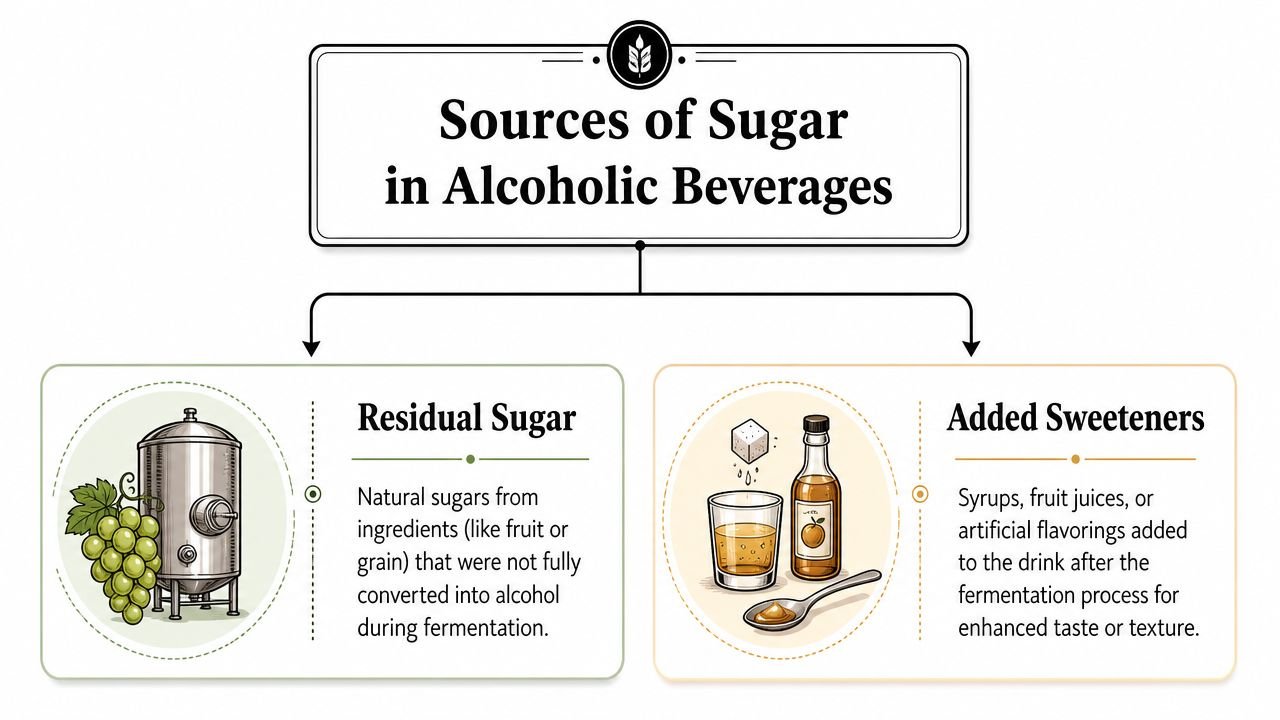
Residual sugar from fermentation
Beer and wine start with ingredients that naturally contain sugars. During fermentation, yeast converts some of those sugars into alcohol. What's left behind contributes to the drink's final sweetness and carbohydrate content.
A helpful analogy is a baked potato. A plain baked potato is one thing. Add butter, cheese, and sour cream, and it becomes a different nutrition story. Fermented drinks work in a similar way. Some sugar may remain after the basic process, even before anything extra is added.
That's why wine and beer are often low but not zero in sugar. They're not usually packed with sugar the way a dessert drink is, but they also aren't the same as a plain distilled spirit.
Added sweeteners after the alcohol is made
Syrups, fruit juice, cream liqueurs, sweet flavorings, and bottled cocktail mixers can all rapidly add sugar after fermentation or distillation.
Think of a plain distilled spirit as a plain seltzer. On its own, it's a simple base. Add sweet tea syrup, juice, or flavored cream, and now you've built a totally different drink.
That also explains why labels like “made with tequila” or “contains vodka” don't tell you much about sugar content. The base spirit may be low in sugar, but the finished drink may not be.
Why distilled spirits are different
Distillation changes the picture because it removes fermentable sugars from the base liquid. Research summarized in this review on alcoholic beverage composition notes that in distilled spirits like whisky, vodka, and gin, the base liquid becomes effectively sugar-free after distillation. The same source estimates a 50 ml serving of 40% whisky contains about 0.5 g of sugar, a trace amount that is nutritionally negligible.
If you want to predict sugar content without a label, ask yourself one question: was sugar left behind, or was sugar added back in?
That single question helps you decode almost any drink.
The Worst Offenders for High Sugar Content
You order a drink that sounds light and fun. Then it arrives tasting more like dessert than alcohol. That's usually your clue.
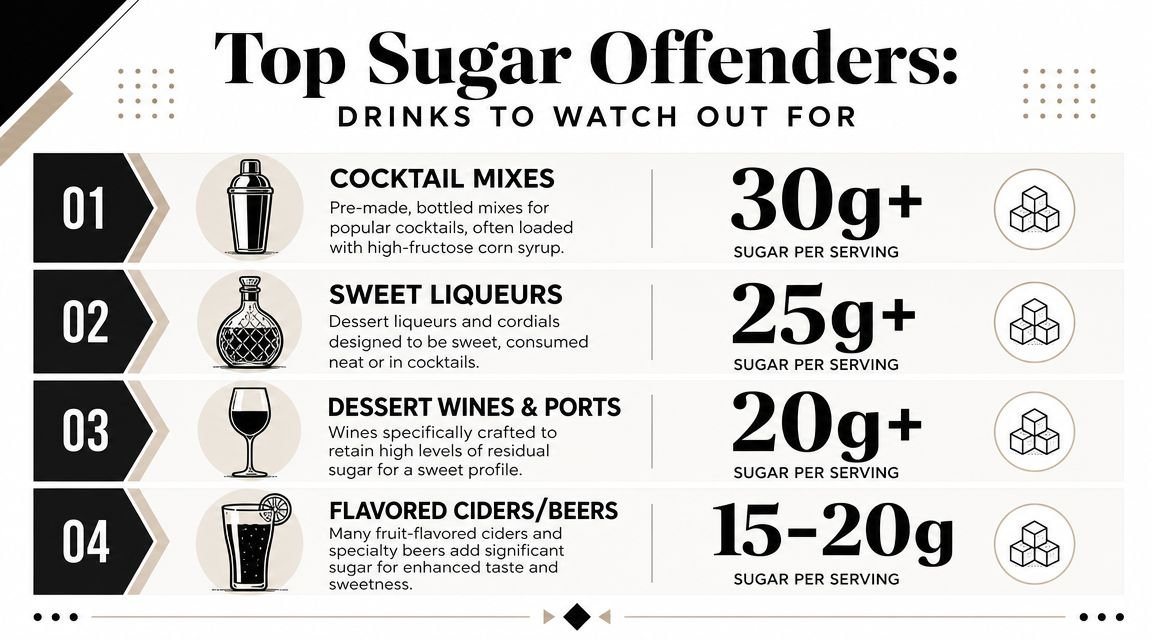
High-sugar drinks often stand out less by alcohol strength and more by how they are built. The sugar usually comes from ingredients added after the alcohol is made, such as liqueurs, syrups, juice blends, cream, and bottled mixers. In other words, the warning sign is often the recipe, not the spirit underneath.
A helpful way to scan a menu is to notice language that signals sweetness. Words like cream, honey, cordial, liqueur, flavored, mix, and spiced often point to drinks with more sugar packed in.
Drinks that add up fast
A few categories come up again and again:
Liqueurs and cordials
These are made to taste sweet, so the sugar is part of the product, not an accidental extra. Alcohol Health Alliance UK's guide to sugar in alcoholic drinks gives clear examples, including Kahlua at around 39 g per 100 ml, Frangelico at about 31 g per 100 ml, Amaretto at about 24 g per 100 ml, and Baileys at about 20 g per 100 ml. The same source also notes that a pint of cider can contain around 46 g of sugar, which is above the UK's 30 g daily free-sugars limit.Sweetened cocktails
Frozen drinks, creamy cocktails, and many pre-mixed drinks stack sugar from several directions at once. You may get sweetness from the liqueur, the mixer, the juice, and the garnish.Cider
Cider can surprise people because it sounds fruit-based and simple. In practice, it can carry much more sugar than someone expects from a single pint.
How to read a cocktail like a nutrition label
A simpler drink usually reads like a short grocery list: spirit, soda, citrus, bitters.
A sugar-heavier drink often reads like a coffee shop order: liqueur, syrup, puree, cream, sweetened tonic, juice blend, or bottled mix. Each sweet ingredient is like adding another spoonful to the glass.
That's the key distinction many sugar guides blur. The alcohol itself and the sugar added around it are separate parts of the drink. If you want to compare sugar more accurately, it helps to understand related label terms like carbs and sweeteners. This quick guide to net carbs in drinks and foods can make that easier.
For example, an old fashioned is often seen as a spirit-forward drink. It still includes a sweetener. If you enjoy that style and want to craft the perfect whiskey drink, the nutrition question is less about the whiskey and more about how much sugar or syrup ends up in the final glass.
Menu words worth pausing on
These phrases often signal a sweeter drink:
- Creamy terms like Irish cream, mudslide, or velvet
- Dessert-style flavors such as caramel, chocolate, vanilla, cookie, or cake
- Coffee liqueur references
- Tropical or fruity mix wording like punch, daiquiri mix, or blend
The hidden sugar is often in the extras that make a drink taste smooth, rich, and easy to sip.
Two cocktails can start with the same vodka, rum, or whiskey and end up very different on the nutrition side. The difference usually comes from what was added after the alcohol was made.
Beyond Grams of Sugar The Impact on Your Body
A lot of people stop at the sugar number. That's understandable, but it misses an important part of the picture.
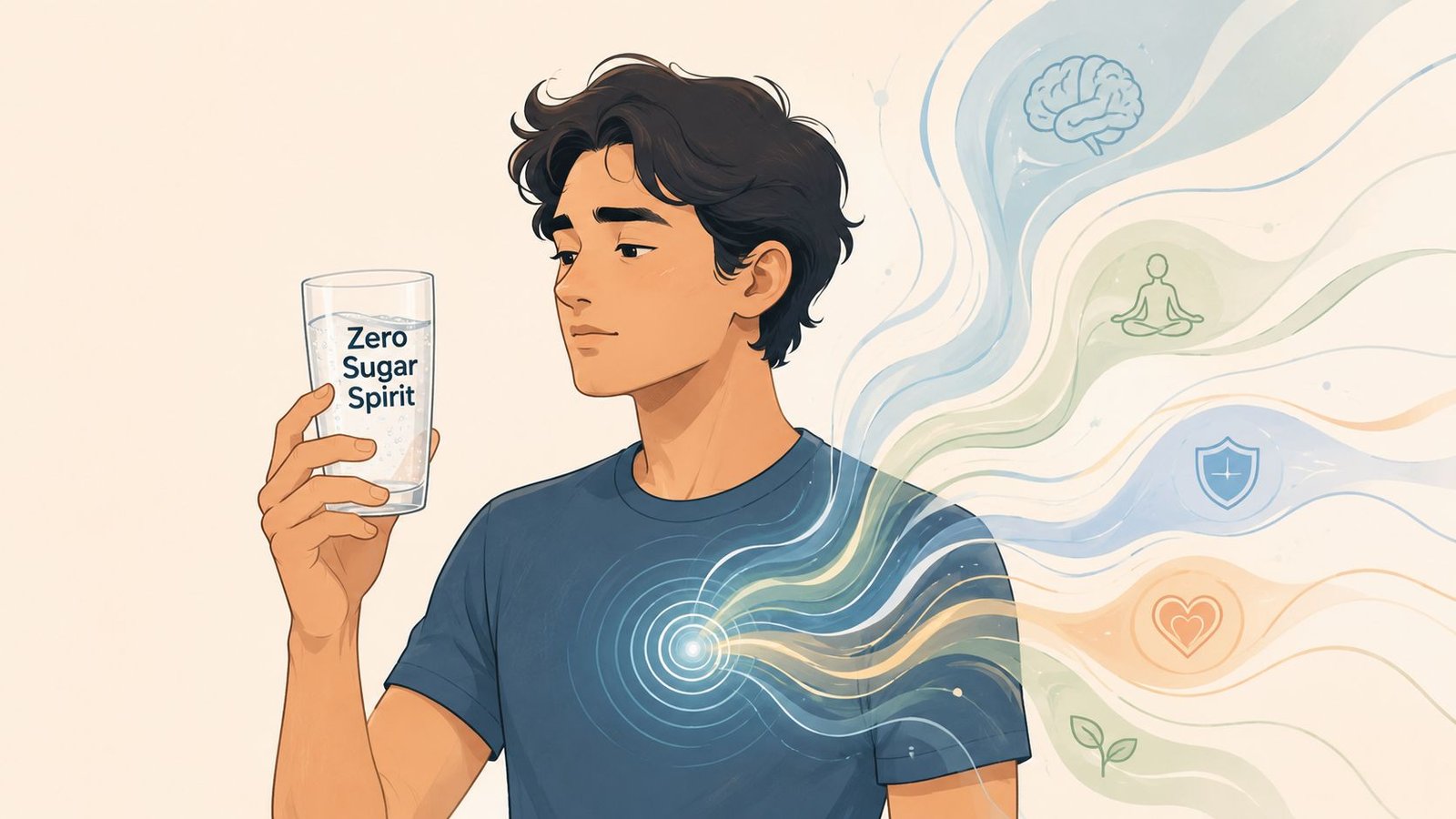
Zero sugar doesn't mean zero effect
A plain shot of vodka may contain 0 g of sugar, but that doesn't mean your body treats it like water. Medical News Today's discussion of alcohol and blood sugar highlights a point that many sugar charts miss: even with 0 g of sugar, plain spirits can still affect blood sugar because alcohol can interfere with glucose regulation and increase hypoglycemia risk.
This matters most for people with diabetes, people taking glucose-lowering medications, and anyone drinking without food. But it's useful context for everyone.
Why that feels confusing
People often assume sugar content and blood sugar impact are the same thing. They aren't.
Sugar content asks, “How many grams of sugar are in the drink?”
Blood sugar impact asks, “What might alcohol do inside the body after I drink it?”
Those are separate questions. A drink can be low in sugar and still have a meaningful effect because your body has to process the alcohol itself.
If you want a fuller picture of one common drink choice, this article on understanding red wine nutrition can be a useful companion read. It helps place wine in the broader conversation of calories, carbs, and serving awareness.
A practical way to think about it
Use two checkpoints instead of one:
- How much sugar is in the drink itself
- How might the alcohol affect me, especially if I haven't eaten
That second question is one reason carb-aware drinkers often benefit from learning the difference between total carbs and other tracking concepts. If that's an area you're working on, this explanation of net carbs can help you sharpen the language you use when you log food and drinks.
A zero-sugar spirit can still be a poor choice for you in that moment if you're drinking on an empty stomach or you already know alcohol makes you feel shaky later.
That's not fear-based advice. It's just more complete advice.
How to Choose and Track Low-Sugar Alcohol
Nutrition gets easier when you turn it into a few repeatable rules. You don't need to analyze every drink from scratch.
The simplest ordering rules
If your goal is lower sugar, keep your order closer to the base ingredient.
Choose plain spirits with simple mixers
Vodka soda with lime, gin and soda, tequila with soda and citrus, or whiskey on the rocks tend to be easier to estimate than creamy or blended drinks.Treat liqueurs like sweet ingredients, not neutral alcohol
If a drink includes Baileys, Kahlua, amaretto, or Frangelico, assume the sweetness is doing real nutritional work.Ask for fewer add-ins
“No simple syrup” or “easy on the mix” can change a drink a lot.Keep serving size in mind
A small glass and a generous pour aren't the same thing.
A quick filter for menus
When the cocktail list is long, don't try to decode every recipe. Use this shortcut:
Choose drinks with short ingredient lists. Be cautious with drinks that include syrups, cream, sweet liqueurs, or pre-made mixes. If the description sounds like dessert, it probably behaves more like dessert.
A label-reading mindset helps here too, even when there's no label in front of you. This guide on how to read nutrition labels is useful because it trains the exact same skill. Look past the marketing words and focus on what's in the product.
A short demo can also make tracking feel less intimidating in real life:
Keep it realistic
You don't have to make every drink “perfect.” A realistic plan works better:
- Pick your lower-sugar default drink before you go out
- Eat before or with alcohol when you can
- Notice which drinks leave you feeling best
- Save sweeter drinks for when you want them, not by accident
That last point matters. Consumers don't mind having a sugary drink once in a while. What frustrates them is having one without realizing it.
If you want an easier way to keep alcohol, meals, and macros in one place, PlateBird can help. You can log food in plain language, use photos when that's faster, and keep your tracking simple enough to stick with, even on the nights when dinner and drinks don't come with a neat nutrition label.