- Why the Gatorade vs Soda Question Is the Wrong Starting Point
- What Gatorade Was Built to Do
- Gatorade vs Soda on the Nutrition Label
- When Electrolytes Beat Sugar Water
- The Case for Treating Gatorade Like Soda
- Choosing the Right Drink for Your Situation
- Lower-Sugar Alternatives and How to Track Any of Them
“is Gatorade better than soda?” is often answered by comparing sugar and calories, then declaring Gatorade the winner. That advice is incomplete. A sports drink can be the smarter choice during prolonged, sweaty exercise, yet behave like soda when you drink it at a desk, in a car, or on the couch.
Gatorade was built to replace fluid, electrolytes, and carbohydrate lost through sweat. Soda was built primarily for taste, refreshment, and, in some cases, caffeine. The right choice depends on why you're drinking it, how much you drink, and who you are. A healthy adult training hard in the heat has a different beverage problem from a sedentary teenager sipping sugar throughout the day.
| Situation | Better default | Why |
|---|---|---|
| Prolonged, sweaty exercise | Gatorade or another suitable sports drink | Provides carbohydrate and sodium during meaningful fluid loss |
| Moderate gym workout | Water | Sweat and fuel demands are usually limited |
| Desk day or casual sipping | Water, sparkling water, or unsweetened tea | Avoids unnecessary sugar and calories |
| Vomiting or diarrhea | Oral rehydration solution | Formulated for illness-related fluid and electrolyte loss |
| Weight-loss phase | Water or a low-calorie option | Liquid sugar is easy to consume without much fullness |
The practical test is simple: match the drink to the physiological job. If you're trying to understand why sugary beverages can feel rewarding while offering little useful hydration outside the right setting, this guide to sugar rush gambling provides helpful context on the broader appeal of rapid sugar rewards. The rest of this comparison uses context, dose, and population to reach a better answer than a blanket ranking.
Why the Gatorade vs Soda Question Is the Wrong Starting Point
The question “Is Gatorade better than soda?” starts too broadly. These drinks serve different purposes. Gatorade is a sports hydration product. Soda is a recreational beverage, often sweetened and sometimes caffeinated, chosen for flavor, carbonation, ritual, or a perceived energy lift.
Context determines the result. During sustained exercise, sodium and carbohydrate can support fluid delivery and provide usable fuel. During a sedentary afternoon, the same drink supplies sugar and calories without replacing a meaningful loss.
Context changes the verdict
A standard 20 fl oz bottle of regular Gatorade contains 34 grams of sugar, according to the documented history and product information for Gatorade. That is a substantial sugar load, even when the drink has a legitimate athletic purpose. Its creation in 1965 at the University of Florida for the Gators football team explains the formula's focus on fluids, electrolytes, and carbohydrates lost through sweat.
The origin story is not a health halo. Athletes may have a reason to use a sports drink, but casual drinkers usually do not. If you are not sweating enough to need electrolyte replacement, Gatorade's functional advantage shrinks while its sugar remains.
Practical rule: A beverage earns its calories when the activity creates a reason to use them.
Dose and population matter too
A small serving during a long training session is a different decision from repeated bottles across a sedentary day. A competitive endurance athlete may use Gatorade strategically. A desk worker can usually choose water and avoid the added sugar.
Children, teens, and sedentary adults deserve separate consideration. A July 2026 study reported that each daily serving of soda was associated with a 23% higher risk of high blood pressure, while each daily serving of sports drinks was linked to a 36% higher risk, according to ScienceDaily's coverage of the study. One bottle does not determine anyone's health, but the finding rejects the idea that “sports drink” automatically means “healthy.”
Sugar's quick reward also helps explain why these beverages are easy to overconsume. This guide to sugar rush gambling offers broader context on the appeal of rapid sugar rewards, though the practical beverage decision remains simple.
Here is what I would do: use Gatorade when sweat loss, exercise duration, and performance justify it. Otherwise, choose water or an unsweetened drink, and treat both Gatorade and soda as occasional sugary beverages when consumed casually.
What Gatorade Was Built to Do
Gatorade was never designed to replace water at every meal. The product was created at the University of Florida in 1965 for the Gators football team, whose players needed to replace fluids, electrolytes, and carbohydrate lost through sweat. By October 2, 1965, the formula was being tested during a college football game, as noted in the history of Gatorade.
That origin provides the right lens for judging the drink. Gatorade is built around a carbohydrate-electrolyte mix, not carbonation or cola ingredients. Its value comes from the interaction of fluid, sodium, and carbohydrate during exercise. Sweetness is part of the product experience, not the reason it works.
The formula has a job
The Australian Institute of Sport recommends sports drinks with roughly 4–8% carbohydrate and 23–69 mg sodium per 100 mL to support fluid delivery and gastric tolerance. Typical formulations contain about 20–40 mmol/L sodium.
Carbohydrate serves a purpose beyond flavor. During prolonged exercise, it supplies fuel, while the sodium and glucose combination supports water movement from the intestine into circulation. That combination fits a clear situation: you are sweating, losing electrolytes, and need both hydration and energy.
The useful window is conditional. Gatorade makes more sense when exercise lasts a long time, the environment is hot, or sweat losses are substantial. Thirst at home does not create the same need.
Marketing has broadened the use case
Gatorade shares coolers and vending machines with soda, encouraging casual use. That placement can blur the line between a performance tool and a sweet drink.
The product's athletic design is real. The everyday health halo is not.
Use the label to match the drink to the situation, not to justify automatic consumption. The Australian Institute of Sport's sports-drink guidance supports a narrow recommendation: sports drinks belong in exercise contexts where carbohydrate and electrolyte replacement matter. For ordinary thirst, water remains the better default.
Gatorade vs Soda on the Nutrition Label
A nutrition label cannot decide the drink for you. It shows the dose of sugar, sodium, caffeine, and carbohydrate. Your activity, sweat loss, and reason for drinking determine whether those ingredients help or add to your intake.
Regular Gatorade contains 34 grams of sugar in a standard bottle. That makes it a poor substitute for water during a sedentary afternoon, when the same drink contributes sugar and calories without replacing a meaningful loss. Its intended use is narrower: the sugar and electrolytes fit exercise, while soda primarily supplies sweetness and, in some products, caffeine.
A precise product-by-product comparison requires verified labels for each named drink. The supplied data does not provide a complete panel for Coca-Cola, Pepsi, Sprite, Mountain Dew, or Gatorade Zero, so I will not manufacture figures. The defensible comparison is narrower:
| Drink | Calories | Total Sugar | Sodium | Potassium | Caffeine | Carbs |
|---|---|---|---|---|---|---|
| Regular Gatorade, standard 20 fl oz bottle | Not fully specified in verified data | 34 g | Product-specific label detail not fully specified | Product-specific label detail not fully specified | Not specified | Carbohydrate-electrolyte formula |
| Gatorade Zero | Sugar-free formula noted in verified data | Not specified | Not specified | Not specified | Not specified | Not specified |
| Soda category | Product-specific values vary | Often sugary | Generally lacks meaningful electrolyte content | Generally lacks meaningful electrolyte value | Product-specific | Product-specific |
What the label can tell you
Regular Gatorade is not flavored water. The 34-gram sugar load matters if you drink it casually, but it can serve a practical role when exercise creates a need for carbohydrate. Soda can taste refreshing while offering little electrolyte support, so its sweetness does not make it a strong sports-hydration choice.
Caffeine changes stimulation, not the drink's electrolyte profile. Controlled human data found no material fluid-balance change from caffeine levels up to 400 mg/L, while higher beverage sodium and carbohydrate increased fluid retention under the tested conditions, according to the controlled beverage-retention study.
Read the panel before trusting the package. Compare serving size, total sugar, sodium, and carbohydrate, especially when one “bottle” contains more than one serving. This guide to reading nutrition labels explains that process. For powders and related products, the supplement label guide helps separate marketing language from the actual panel.
Here is what I would do: use regular Gatorade when sweat loss makes carbohydrate and electrolytes useful, choose water for ordinary thirst, and treat soda as a sweet beverage rather than a hydration tool. Gatorade is better equipped for sweat loss, but regular Gatorade is still a sugary drink. Context, dose, and population decide whether that sugar earns its place.
When Electrolytes Beat Sugar Water
Gatorade beats soda when the body needs fluid, sodium, and carbohydrate together. That situation usually involves prolonged exercise, heat exposure, or noticeable fluid and electrolyte loss. A short, easy workout does not automatically justify a sports drink.
Sodium and glucose support intestinal transport processes that help move water into the body. Soda generally provides little meaningful electrolyte support, so it does not offer the same sodium-glucose fluid-cotransport benefit during sweat loss, as outlined in the Australian Institute of Sport's sports-drink guidance.
The situations that justify a sports drink
Research on fluid retention found that beverages with 10–20% sucrose and 27–52 mmol/L sodium produced lower urine output and higher net fluid balance than lower-sodium versions. The same research found no fluid-balance difference from caffeine levels up to 400 mg/L, as noted in the earlier fluid-retention research.
That finding supports a specific use case, not all-day sipping. Sodium and carbohydrate can help retain fluid when the body is actively replacing losses. A long, sweaty session creates a different need from a brief indoor workout.
| Scenario | Duration or sweat loss | Sodium loss estimate | Best choice |
|---|---|---|---|
| Long, sweaty endurance session | Prolonged exercise with sustained fluid loss | Individual and conditions vary | Sports drink may earn its place |
| Hot outdoor training | Heat exposure with substantial sweating | Individual and conditions vary | Water plus electrolytes or a suitable sports drink |
| Moderate gym session | Limited sweat loss | Usually not enough information to justify routine sugar | Water |
| Desk work or casual thirst | No meaningful exercise-related loss | No meaningful sweat replacement need | Water or an unsweetened drink |
| Vomiting or diarrhea | Illness-related fluid loss | Needs an appropriately balanced solution | Oral rehydration solution, not ordinary soda |
Rehydration is not treatment
Sports drinks are not automatically appropriate for illness-related dehydration. Oral rehydration solutions address a different clinical need with a carefully balanced combination of sugar, sodium, and other minerals. With severe vomiting or diarrhea, use an appropriate oral rehydration product and seek medical guidance when symptoms are serious or persistent.
For everyday tracking, water's role in hydration and macros is easy to overlook because water contributes no sugar or calories. Here is what I'd do: choose Gatorade for demanding, sweaty exercise when sodium and carbohydrate serve a clear purpose, water for ordinary thirst, and an oral rehydration solution for illness-related fluid loss. Gatorade beats soda for exercise hydration when sweat loss justifies sodium and carbohydrate, not because it is healthy.
The Case for Treating Gatorade Like Soda
For sedentary people, regular Gatorade belongs in the same mental category as soda: a sugar-sweetened beverage that should be consumed deliberately. Electrolytes can help during prolonged, sweaty exercise, but they do not cancel out sugar when no meaningful sweat loss has occurred.
The central label fact remains simple: a standard 20 fl oz bottle contains 34 grams of sugar. That amount makes portion and frequency matter, especially when someone chooses Gatorade for its athletic image while spending most of the day sitting. The product's intended use does not automatically make it a better everyday drink.
The health halo creates a behavioral problem
Soda usually gets close scrutiny, while sports drinks can escape the same attention because they look functional. That gap can change behavior. Someone may stop counting Gatorade, then drink it with lunch, after a short workout, and during an ordinary commute.
The July 2026 study cited earlier also challenges the assumption that sports drinks are automatically healthier. It reported an association between daily sports-drink servings and a 36% higher risk of high blood pressure, compared with 23% for daily soda servings. These findings show association, not proof that one bottle causes one outcome. They still support a clear recommendation: do not grant Gatorade a health exemption because it carries an electrolyte label.
If you're not replacing sweat losses, the sports-drink label is mostly marketing context, not a nutritional exemption.
A simple habitual-drinking profile
| Metric | Gatorade, 20 fl oz | Coca-Cola, serving details not fully verified here | Verdict |
|---|---|---|---|
| Sugar | 34 g | Exact comparison value not used because the supplied data doesn't verify it | Gatorade still carries substantial sugar |
| Functional electrolytes | Designed around carbohydrate and electrolytes | Soda generally lacks meaningful electrolyte content | Gatorade wins during sweat loss |
| Everyday use | Not needed for ordinary hydration | Recreational beverage | Neither is a strong daily default |
| Health halo | Often perceived as athletic or functional | Usually recognized as soda | Gatorade can encourage more casual use |
| Best context | Prolonged exercise and fluid loss | Taste, social occasions, or caffeine preference | Match the drink to the occasion |
Dental concerns apply to both drinks. Sweet, acidic beverages can stress teeth, so rinse with water afterward, avoid sipping them continuously, and keep soda and regular Gatorade occasional outside training.
For desk workers, students, and casual drinkers, my recommendation is blunt: log Gatorade exactly as you'd log soda. Use it when the activity demands both fuel and fluid replacement. Otherwise, its athletic purpose does not apply, and the drink is a sweetened beverage with a stronger health halo.
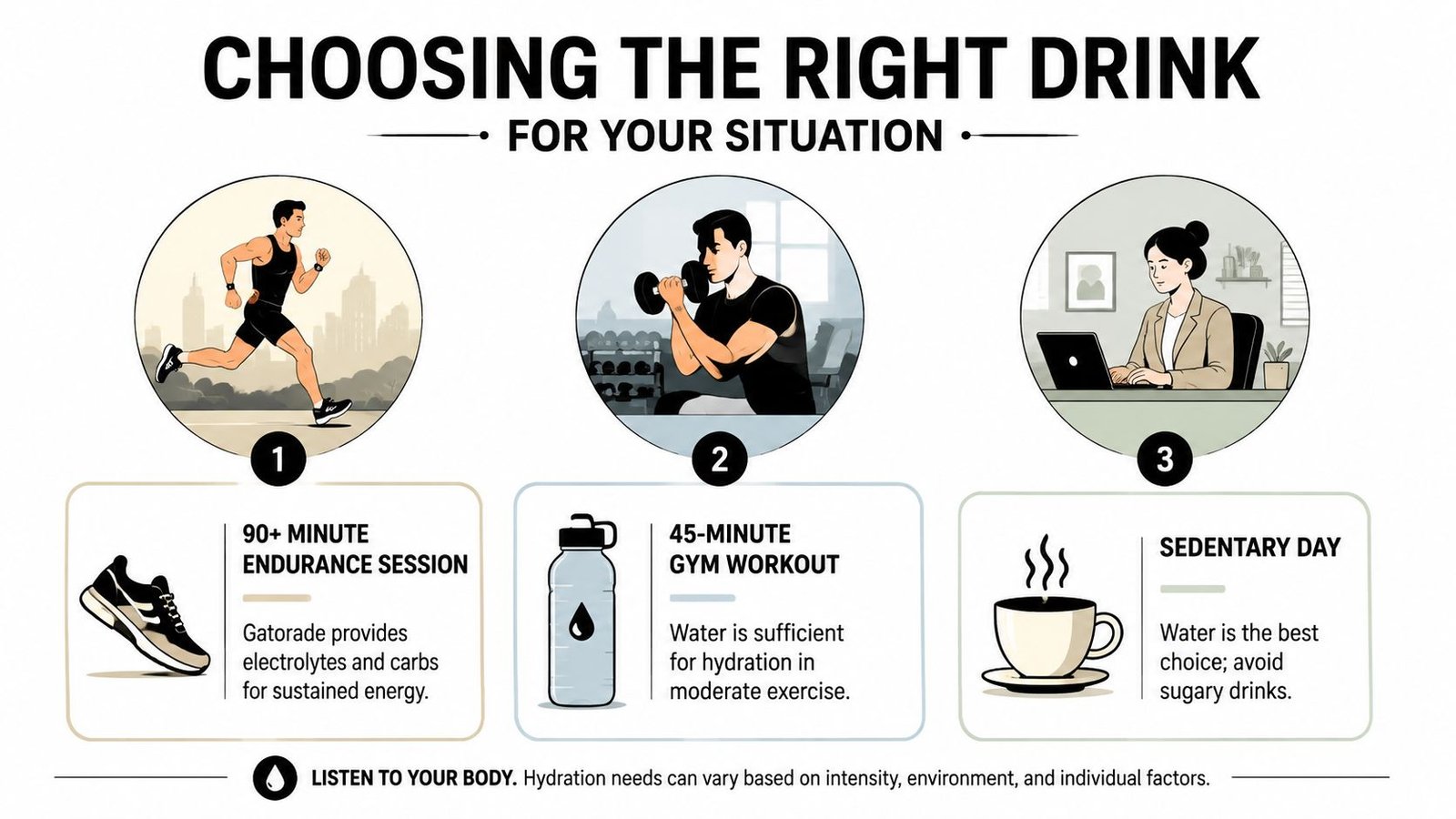
Choosing the Right Drink for Your Situation
The best beverage depends on the training session, the environment, and the goal. Don't use the same rule for a long outdoor event and a short lifting session.
Long endurance sessions
For a 90-plus-minute endurance session, Gatorade can earn its place. Running, cycling, tennis, field sports, and long hikes can create enough sweat and fuel demand for carbohydrate and sodium to become useful.
Use it as a planned training input, not an unlimited beverage. Sip according to thirst and the demands of the session, and consider whether you need the full-sugar version or a lower-sugar alternative. Don't wait until every session is long before testing how your stomach handles a sports drink.
Moderate gym workouts
For a 45-minute gym workout, water is the smarter default. You may sweat, but the session usually doesn't create the same combination of prolonged fuel demand and electrolyte loss as an endurance event.
If you train in extreme heat, sweat heavily, or stack multiple sessions, the decision can change. Otherwise, drinking Gatorade because you lifted weights for less than an hour adds sugar without solving a problem you have.
Sedentary days
On a desk day, neither Gatorade nor soda deserves automatic placement in your routine. Choose water, sparkling water, or unsweetened tea. If you want flavor, use a beverage that gives you the taste experience without turning hydration into a recurring sugar habit.
A simple test works well: if you could drink water and feel satisfied, you probably don't need a sports drink.
Kids and teens
Kids on the sidelines usually need water, not a sports drink. The exception is demanding activity in extreme heat or prolonged competition, where fluid and electrolyte needs can rise. Parents should also watch the social pattern, because a drink handed out after every ordinary practice can turn a performance product into a daily sweet beverage.
Don't use Gatorade as a reward for just attending practice. Reserve it for the activity that warrants it.
Weight loss phases
During weight loss, liquid calories are often an easy place to tighten intake. Regular Gatorade can deliver sugar without the fullness of solid food, so I'd cut routine sports drinks before cutting protein, vegetables, or a balanced meal.
If you want it during a legitimate long session, cap the serving intentionally. A 12–16 fl oz serving can be a reasonable portion boundary during a cutting phase, but the exact choice should reflect the session and the rest of your intake, not a vague belief that exercise makes unlimited sugar free.
Muscle-gain blocks
A high-volume training block can create a stronger case for carbohydrate during or after training. Gatorade may help replenish carbohydrate when you're doing demanding sessions, training again soon, or struggling to eat enough around workouts.
It still isn't mandatory. Food can provide carbohydrate, and water may cover hydration. Use the drink when it solves a real fueling problem, then count it toward your daily intake.
My decision tree: Long and sweaty means consider Gatorade. Short or moderate means choose water. Sedentary means choose neither. Weight loss means minimize liquid sugar. High-volume training means use carbohydrate strategically, not automatically.
Lower-Sugar Alternatives and How to Track Any of Them
The strongest replacement for casual Gatorade isn't always another branded electrolyte product. It's often a simpler drink that matches the actual need.
For ordinary hydration, use plain water, sparkling water, or unsweetened tea. These options avoid the sugar problem entirely and work well for desk days, errands, and moderate training. If you need flavor, choose the option you'll drink consistently rather than forcing yourself into a beverage you dislike.
Three useful tiers
| Drink option | Sugar per 12 oz | Sodium | Best use case | Tier |
|---|---|---|---|---|
| Water | Not specified in verified data | Not specified | Everyday hydration | Zero-sugar baseline |
| Sparkling water | Not specified in verified data | Product-specific | Flavor and carbonation without routine sugar | Zero-sugar baseline |
| Unsweetened tea | Not specified in verified data | Product-specific | Casual drinking, with caffeine depending on tea | Zero-sugar baseline |
| Coconut water | Not specified in verified data | Product-specific | Taste and some electrolytes, if the label fits | Moderate |
| Diluted fruit juice | Not specified in verified data | Product-specific | Carbohydrate plus fluid, used selectively | Moderate |
| Homemade electrolyte mix | Depends on recipe | Depends on recipe | Controlled ingredients and portioning | Moderate |
| Lower-sugar sports drink | Product-specific | Product-specific | Exercise when full sugar isn't needed | Specialized |
| Sugar-free Gatorade variant | Sugar reduction is product-specific | Product-specific | Flavor during training or casual use | Specialized |
The verified data confirms that newer hydration positioning is moving toward lower-sugar formulas. Gatorade's 2026 materials emphasize versions with 75% less sugar than Thirst Quencher, as noted in the recent review literature. That's a useful market direction, but “lower sugar” still doesn't automatically mean “needed.”
Track the drink, dose, and reason
A drink becomes easier to judge when you record three details:
- The product: Regular Gatorade, a lower-sugar version, soda, water, or another option.
- The dose: Record the actual bottle or serving, not “a drink.”
- The context: Note whether it followed a long run, a short workout, heat exposure, or a sedentary afternoon.
The context line matters because it exposes patterns. “Sports drink after prolonged outdoor training” is a different habit from “sports drink with lunch every day.” Use the same discipline recommended in this guide to tracking macros for weight loss, especially when liquid calories seem too small to matter.
Don't invent precision where the label doesn't provide it. Check the product panel, record the serving you consumed, and compare that choice with your training load and goal. Lower-sugar options can reduce the burden, but water remains the cleanest default when you're not losing meaningful fluid or electrolytes.
PlateBird makes it quick to log drinks alongside meals, whether you type what you had or snap a photo for nutrition estimates. Visit PlateBird to track the beverage, portion, and training context together, so you can see whether Gatorade is supporting your workouts or just adding unplanned sugar.