You've probably done some version of this already. You download a tracking app, set a goal, open the food database, and immediately hit friction. Is the yogurt entry for the brand in your fridge? Do you log the chicken raw or cooked? Does a homemade burrito bowl count as one meal or six ingredients? By day three, tracking starts to feel less like a useful tool and more like a second job.
That's a common pitfall. They assume macro tracking is supposed to be exact, rigid, and time-consuming. It isn't. If you want to learn how to track macros for weight loss, the essential skill isn't advanced math. It's building a system you can repeat when life is busy, messy, and imperfect.
The Simple Truth About Tracking Macros
You eat a salad for lunch, keep calories low, and still find yourself raiding the pantry at 9 p.m. I see this a lot. The problem usually is not willpower. The meal did not give you enough protein, carbs, or fat in the right balance to keep you full and steady.
That is the simple truth about tracking macros. It gives calories context.
Macros are the three main nutrients in food: protein, carbohydrates, and fat. Calories tell you how much energy you are eating. Macros tell you how that food is built, which helps explain why two meals with similar calories can leave you feeling very different. For weight loss, that matters because hunger, energy, and meal satisfaction affect whether you can stay consistent long enough to see results.
Macro tracking also does not need to become a second job.
At its best, it is a quick feedback system. You log your usual meals, notice where you come up short, and make small adjustments that improve satiety and make your day easier to repeat. If you want a practical starting point before you set numbers, this guide on what your macros should be for your goal lays out the basics.
What macro tracking actually helps you do
- Catch why a low-calorie day still feels hard. Meals that are light on protein or too low in total food volume often lead to late-night snacking and inconsistent intake.
- Make useful trade-offs quickly. Instead of asking whether a food is “good” or “bad,” you can adjust the rest of the day so the meal still fits.
- Repeat meals that work. Once you know which breakfasts, lunches, and snacks keep you full and fit your targets, tracking gets faster and easier.
- Stay accurate enough without obsessing. Close and consistent beats perfect for four days and abandoned by Friday.
Macro tracking should help you make better decisions in less time.
That practical view matters. Weight loss works when your eating pattern is structured enough to keep you in a manageable deficit, but flexible enough to survive busy weekdays, travel, social meals, and plain old decision fatigue. If you want wider context on how food choices fit into the bigger picture, this piece on understanding weight loss effectiveness is a useful read.
Calculating Your Personal Macro Targets
You open a calculator, enter your age, height, weight, and activity level, and get a neat set of numbers back. Then you wonder whether those numbers are right, whether the split should be higher carb or lower carb, and whether you now need to hit every gram perfectly for this to work.
You do not.
Macro targets work best as a starting setup you can follow with decent consistency. The job of the numbers is to give your meals structure, not to turn eating into homework.
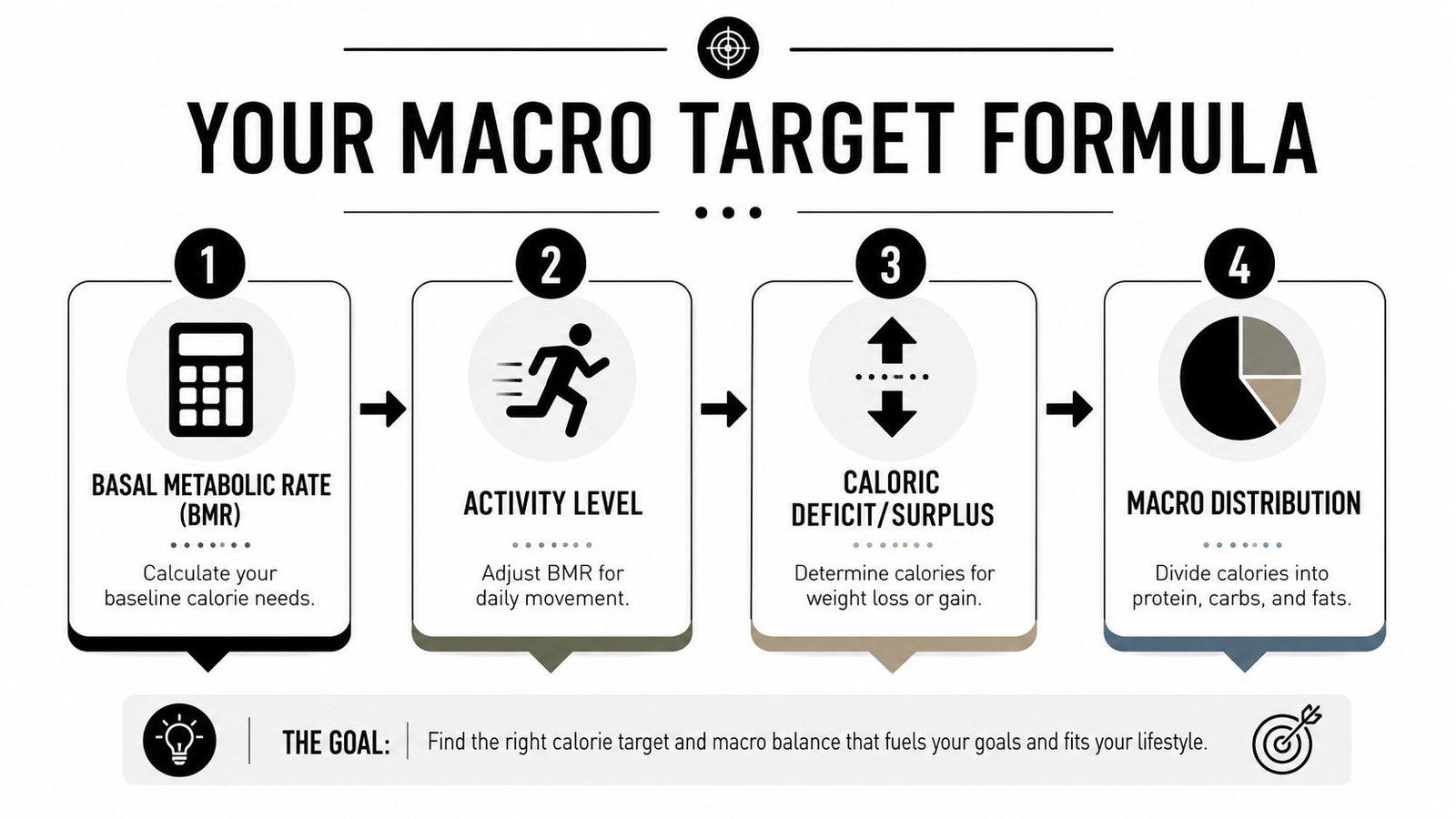
Start with calories. Estimate maintenance, create a modest deficit, then assign protein, carbs, and fat in grams. The math matters, but only enough to get you into a useful range. If you want a second tool to sanity-check your setup, the BionicGym weight loss planning guide is a helpful reference.
Step one and step two
Estimate your baseline calorie needs with a calculator, then adjust for how active you are to get a rough maintenance target.
Treat that result like a draft, not a diagnosis.
In practice, maintenance estimates are often close enough to start but rarely perfect. Desk job, hard training, lots of walking, poor sleep, inconsistent weekends. Real life shifts your true energy needs more than any formula can capture. That is why I tell clients to pick a reasonable starting number and watch the trend for two weeks before making changes.
Step three and step four
Once you have a maintenance estimate, lower calories by a reasonable amount so the plan feels sustainable on ordinary weekdays. Then divide those calories across the three macros.
Here is the part worth remembering:
| Macro | Calories per gram |
|---|---|
| Protein | 4 |
| Carbohydrates | 4 |
| Fat | 9 |
Protein and carbs both provide 4 calories per gram. Fat provides 9. That means any calorie target can be turned into macro grams with simple division.
If you want help choosing a starting split that matches your goal and eating style, this guide on what your macros should be for your goal lays it out clearly.
Practical rule: Choose numbers you can hit with familiar meals, then adjust from actual results.
That last part matters. A macro plan that looks sharp on paper can fall apart fast if it leaves you hungry at work, stuck at social dinners, or constantly trying to make tiny foods fit tiny numbers.
Keep the math useful
The best macro target is one you can run without much friction.
Use these checks before you commit:
- Your protein target fits into meals you already like. If hitting protein requires three shakes and dry chicken every day, the plan is poorly built.
- Your calorie target leaves room for normal life. If one restaurant meal blows up the whole week, the deficit is too aggressive.
- Your carb and fat split supports adherence. Some people train better with more carbs. Others stay fuller with a bit more fat. Either can work if calories and protein are in a good range.
- Your setup is fast to repeat. If you need complicated recipes and constant recalculations, tracking will get dropped the first busy week.
I would rather see someone follow a good-enough macro plan for eight weeks than chase the perfect ratio for three days. Consistency beats precision that you cannot maintain.
How to Log Your Meals Without Losing Your Mind
You eat a decent breakfast, get busy, forget to log lunch, then sit down to dinner with no idea what's left for the day. That is how macro tracking turns into a mental chore.
The fix is not stricter discipline. The fix is a logging system you can use on your busiest days.
The methods that work in real life
Pen and paper can work. A standard food database can work too. A food scale also helps, especially early on, when portions are still a guess and calorie-dense foods like oil, peanut butter, dressings, and cooked rice can drift more than people expect.
But every extra step adds friction.
I've seen plenty of people stay consistent with detailed logging for a week, then drop it the first time work gets hectic or they eat out twice in a row. The problem usually is not effort. It is setup. If every meal takes multiple searches, edits, and brand comparisons, tracking starts to feel bigger than the meal itself.
Use the fastest method that still keeps you honest
For fat loss, you do not need perfect entries. You need usable entries, repeated often enough to spot patterns and make adjustments.
For busy schedules, these methods usually hold up best:
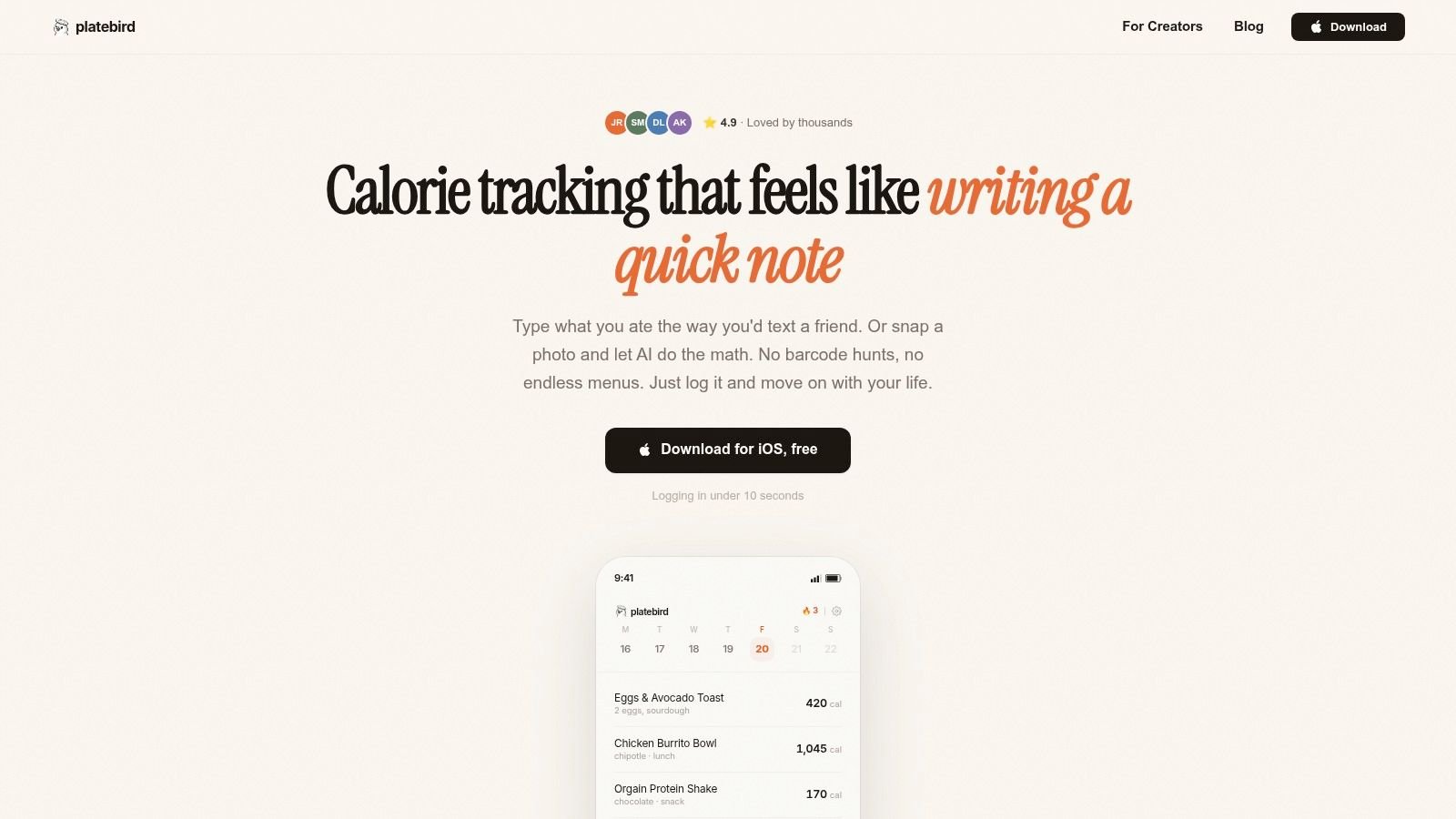
- Text-based logging. Write what you ate in plain language and clean it up only if something looks off.
- Photo logging. Take a quick plate photo, review the estimate, and keep moving.
- Saved meals. Reuse your usual breakfast, lunch bowl, protein snack, or coffee order instead of building it again every day.
If you want a tool built around speed instead of endless database hunting, a best macro tracking app for busy schedules can cut down the taps enough that the habit sticks.
Protein is the macro people miss most often when they stop logging carefully. That is one reason repeatable foods help. A shake, yogurt bowl, or high-protein lunch you can log in seconds gives you a reliable floor. If you use shakes as a backup meal, NexiHerb's Lean Body protein shake insights can give you a sense of what to look for.
Precision has a job. So does speed
Use precision where it changes decisions.
Weigh foods at home when you are learning portions. Measure oils, nut butters, cereal, rice, and other easy-to-underestimate foods. Save restaurant meals as rough estimates and move on. Spending ten minutes trying to reverse-engineer a burrito bowl rarely improves the result enough to matter.
That trade-off matters. A slower method can be more accurate on paper, but a faster method usually wins if it keeps you tracking for months instead of days.
Here's a quick visual explanation of why low-friction logging matters in practice.
If logging takes longer than eating, most people stop doing it.
The best system is simple. Log enough detail to learn from your intake, keep your repeat meals easy to reuse, and save your accuracy effort for the foods that can throw your numbers off. That is how tracking stays useful without taking over your day.
A Sample Day of Macro-Friendly Eating and Tracking
You log breakfast in two taps, pack a lunch you already know fits, and get to dinner with plenty of room left instead of trying to salvage the day at 8 p.m. That is what a good macro-friendly day looks like in real life.
Use a simple example: someone eating around 1,800 calories with a clear protein goal and enough carbs and fats to make meals satisfying. The exact split matters less here than the pattern. Front-load protein, keep a few meals predictable, and leave some flexibility for the evening.

Morning and midday
Breakfast could be Greek yogurt, berries, and a scoop of protein powder. It takes little effort, covers a meaningful chunk of protein early, and is easy to repeat on busy weekdays.
Lunch might be a chicken rice bowl with roasted vegetables and a measured sauce. Log it once, save it, and reuse it. That is how tracking gets faster over time. If you want options that still taste like real food, these macro meal prep ideas are a practical place to start.
This kind of first half sets the day up well. Hunger stays more manageable, protein is no longer a late-night math problem, and dinner can be a normal meal instead of a cleanup job.
Afternoon and evening
A solid snack is usually boring in the best way. Cottage cheese and fruit. A protein shake after training. Half a turkey wrap from lunch leftovers. Familiar foods win here because they cut decision fatigue.
Shakes can help, especially on rushed days, but they work best as a convenience option rather than a replacement for structure. If you use them regularly, NexiHerb's Lean Body protein shake insights can help you compare what fits your routine.
Dinner can stay flexible. Salmon with potatoes and salad works. Tacos built around lean meat, tortillas, and measured toppings work too. The goal is food you enjoy, portions you can estimate without stress, and enough volume to feel done eating.
What a good tracking day looks like
A strong day usually has a few consistent traits:
- Protein shows up early. Hitting half or more of your protein before dinner makes the rest of the day easier.
- Meals repeat on purpose. Repeating breakfast, lunch, or snacks saves time and cuts logging friction.
- Flexibility is built in. A treat, takeout meal, or social dinner fits better when the earlier meals are steady.
Build your day around a few reliable meals, then leave some room for real life.
That is the sustainable version of macro tracking. The day has enough structure to keep progress moving, but not so much rigidity that you burn out by the weekend.
Common Tracking Pitfalls and How to Fix Them
You log breakfast, stay on plan through lunch, then dinner ends up being takeout with friends and the app suddenly feels useless. That is where many people stop. Not because the method failed, but because they expected tracking to be clean, fast, and accurate every time.
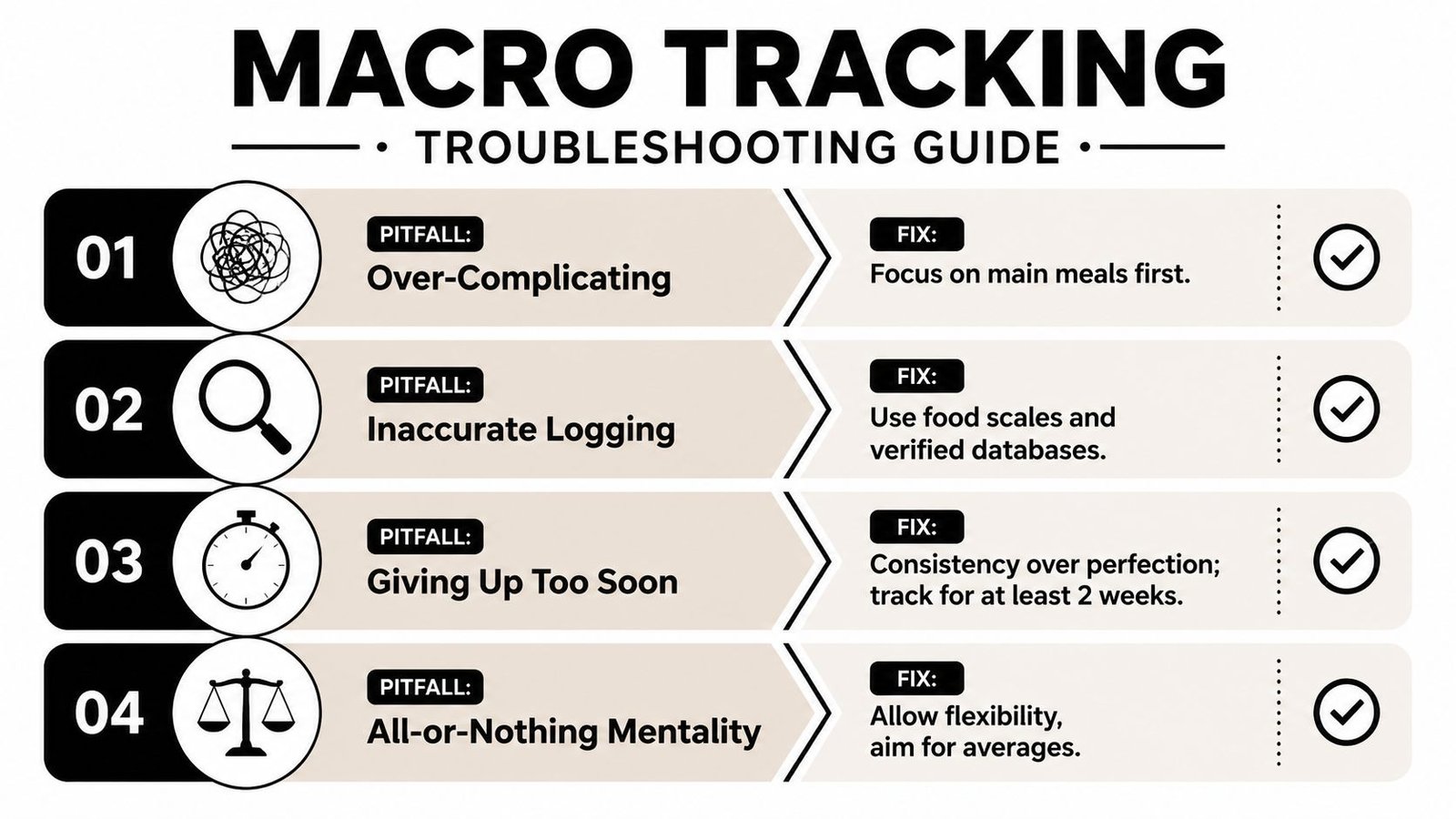
Real tracking is messier than that. The goal is not perfect data. The goal is enough useful data to make better decisions without turning meals into math homework.
Perfectionism
Perfectionism is one of the fastest ways to quit. I see it all the time. Someone goes over carbs at lunch, decides the day is blown, and stops logging by evening.
That approach teaches nothing.
Tracking works better as a rough but consistent record. Berrystreet's guide to macro tracking without perfectionism makes the same point. Start with the parts you can log well, estimate the rest, and judge progress over a span of weeks instead of obsessing over one meal.
Fix it like this
- Log the meal anyway. An estimate keeps the day usable.
- Get protein entered first. That usually gives you the clearest picture of whether the meal supported your goal.
- Grade the week, not the moment. One messy dinner matters far less than a repeated pattern.
Eating out and social meals
Restaurant meals create noise. Portions run large, oils are hard to see, and mixed dishes are harder to break apart than food you made at home. That does not make tracking pointless. It just changes the standard from precise to reasonable.
A practical rule helps here. Be conservative with lean items and generous with calorie-dense extras like sauces, dressings, cooking fats, and shared appetizers.
| Situation | Better move |
|---|---|
| Mixed dish | Log the closest comparable meal |
| Sauce-heavy entrée | Estimate high on the calorie-dense parts |
| Shared meal | Log your portion, not the whole table |
| Celebration meal | Keep the entry simple and move on |
One meal does not cause trouble. The common mistake is letting one hard-to-track meal turn into two days of guessing.
Plateaus and stale targets
Sometimes the problem is not effort. Your targets are just old.
As noted earlier, macro targets need to match your current body weight, activity, and routine. If progress has stalled for a few weeks, hunger is way up, training changed, or your body weight has shifted meaningfully, review the numbers before assuming you need more discipline.
Your first targets are a starting point. They are not a lifelong contract.
This matters for efficiency too. Plenty of people waste months trying to force progress with outdated targets when a small adjustment would have made tracking feel easier and results more predictable.
Overcomplicating the process
Some trackers make the process far harder than it needs to be. They weigh low-calorie vegetables to the gram, build custom entries for every condiment, and spend more time logging food than eating it. That level of detail rarely improves fat loss enough to justify the effort.
Use a tighter standard where it counts.
- Track your main meals accurately enough.
- Clean up the usual blind spots. Oils, bites, drinks, sauces, and weekend extras.
- Add more detail only if progress has stalled and you need better information.
That is the trade-off worth making. Accuracy where it changes the outcome, speed everywhere else. That is how macro tracking stays useful in a busy life.
Making Macro Tracking a Sustainable Habit
Monday is easy. By Thursday, work ran long, dinner was takeout, and logging feels like homework. That is the point where a good system matters. Sustainable macro tracking has to survive real life, not just your most motivated week.
Used well, tracking builds skills you keep even after you stop logging every bite. You learn which breakfasts hold you through the morning, which lunch portions match your target, and which dinners leave you picking through the pantry an hour later. That is why tracking can be useful for weight loss. It turns vague eating habits into patterns you can work with.
Keep it light enough to repeat.
- Pre-log when the day is predictable. A minute in the morning saves ten minutes of backtracking at night.
- Repeat a small set of reliable meals. Fewer decisions usually means better consistency.
- Be precise where it pays off. Your staple meals deserve more attention than a random side salad or a few cucumber slices.
- Leave room for normal life. Date nights, travel, holidays, and busy workdays should fit the plan. They should not break it.
I tell clients to judge the habit by two questions. Can you do it in a few minutes? Can you keep doing it when life gets messy? If the answer is no, the system is too complicated.
Adjustment matters too, but it does not need to be dramatic. As noted earlier, your first macro targets are a starting point. Review them when your body weight changes, your training changes, your hunger shifts, or your routine looks different for more than a week or two. Small updates beat forcing old numbers to work.
The best tracking system gets boring. It is quick, clear, and low effort. That is usually when people stay consistent long enough to lose weight without turning food into a full-time job.
If you want a faster way to make macro tracking feel manageable, PlateBird is built for exactly that. You can type what you ate in plain English, snap a photo of your plate, and save repeat meals so logging stays fast. For busy people trying to lose weight, that lower-friction setup makes consistency easier.