Finding a Digital Coach That Finally Clicks
You've downloaded the apps. You've scanned the barcodes. You've promised yourself that this week will be different, then watched motivation fade when logging every snack starts to feel like unpaid admin work. Many users don't fail because they lack discipline. They fail because the app in their pocket is asking them to think in a way that doesn't fit how they live.
A good nutrition coach app doesn't just count food. It coaches behavior. Some act like a strict data scientist. Some feel like a habit mentor. Some are best for lifters who want exact macro targets. Others work better for busy people who just need the path of least resistance. If the coaching personality is wrong, even a powerful app becomes background clutter.
That matters even more in a market this crowded. Grand View Research estimates the global diet and nutrition apps market at USD 2.14 billion in 2024, with growth projected to USD 4.56 billion by 2030. There's no shortage of options. The challenge is choosing the one you'll still open after the novelty wears off.
If your workday is already packed, you might also like this guide on how to achieve weight loss while you work.
1. Carbon Diet Coach
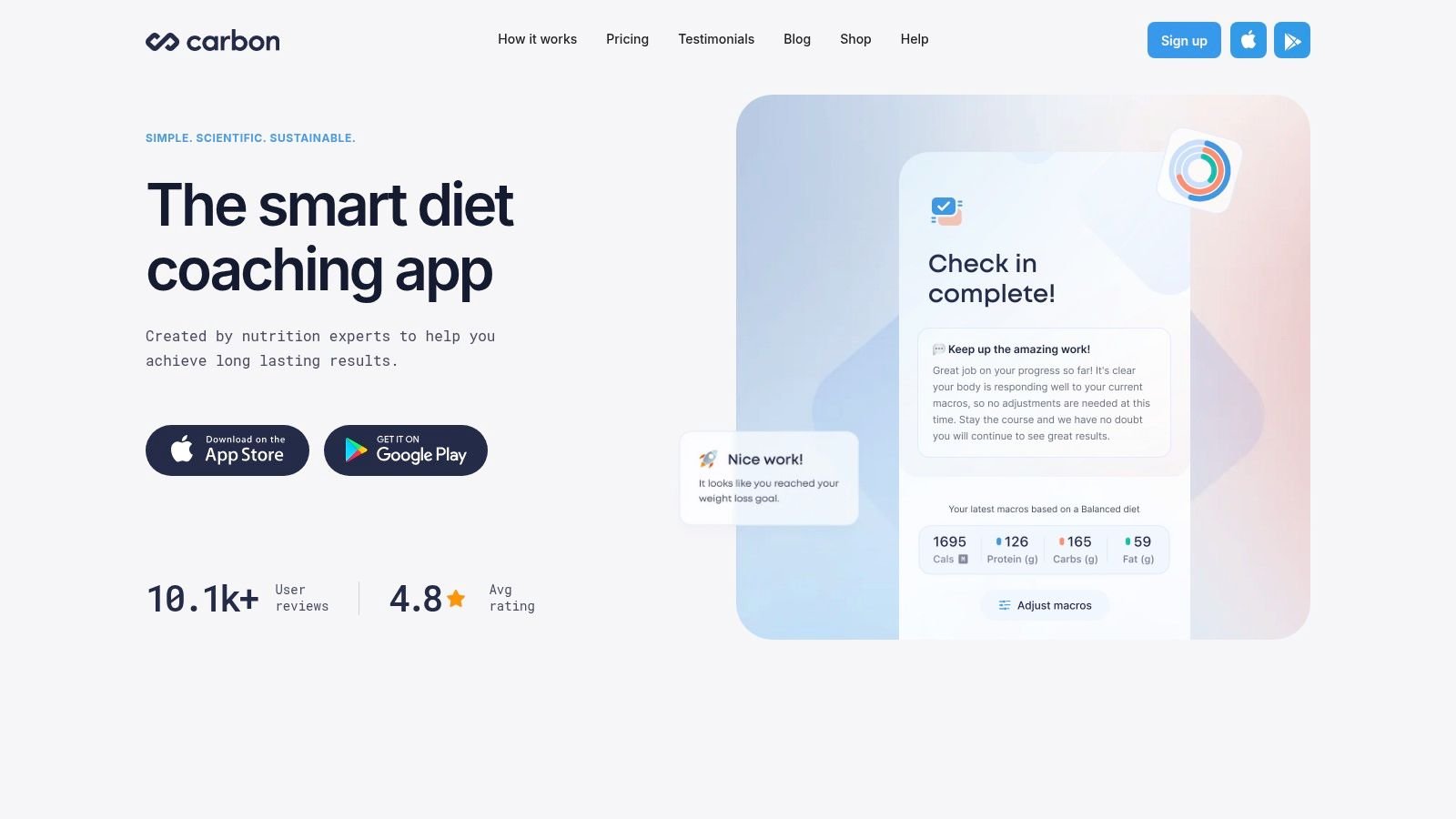
Carbon Diet Coach feels like the analytical coach who doesn't waste words. It's built for people who want calorie and macro targets to adjust based on real progress, not vibes. If you like seeing a weekly check-in lead to a clear next step, Carbon usually clicks fast.
It works especially well for fat loss, maintenance, reverse dieting, and muscle-gain phases where consistency matters more than novelty. The coaching logic is the draw. You check in, the app reviews the trend, and your targets update. That rhythm keeps a lot of users from making the classic mistake of slashing calories too early or panic-adjusting after a random weigh-in spike.
Who Carbon works for
Carbon is the nutrition coach app I'd hand to someone who says, “Just tell me the numbers and I'll do it.” That's not a criticism. Some people thrive when the rules are explicit and predictable.
- Best fit: Lifters, physique-focused users, and experienced dieters who already understand protein, calories, and adherence.
- Less ideal: People who want emotional support, meal-by-meal coaching, or a strong focus on food quality beyond macros.
- Daily experience: Log food, hit targets, review your check-in, repeat.
Practical rule: Carbon works best when you're willing to treat the weekly check-in as the truth serum. If compliance was poor, the answer usually isn't “the app failed.” It's that the data can't coach what you didn't follow.
The trade-off is obvious. Carbon is strong on macro-based decision-making and weaker on broader nutrition education, micronutrient depth, and human interaction. If you need a coach to talk you through weekends, stress eating, or family dinners, this can feel cold. If you want a calm, numbers-first system, that same quality feels efficient.
You can explore it at the Carbon Diet Coach website.
2. MacroFactor
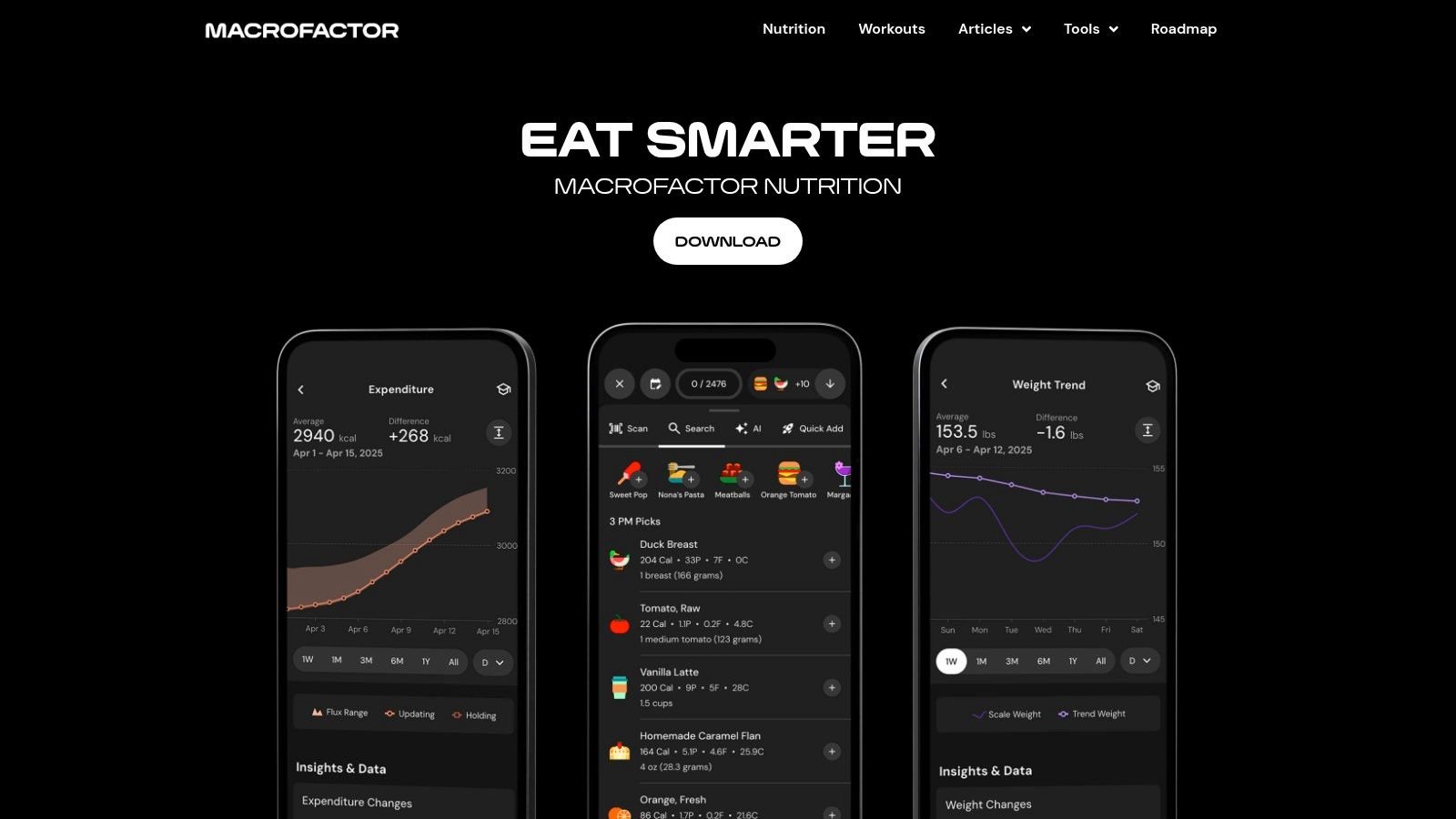
MacroFactor has a different personality. Carbon is the strict coach with a clipboard. MacroFactor is the calm researcher who keeps refining the model as your body gives more data. If you care about evidence and hate simplistic calorie calculators, this app makes a strong case for itself.
Its big appeal is adaptive coaching around your real-world energy expenditure. That matters because many people don't need more motivation. They need a system that stops overreacting to noisy scale trends. MacroFactor tends to attract users who want control without diet-culture theatrics.
The real-world trade-off
The app is polished, flexible, and thoughtful. It also expects you to meet it halfway. If you want a rigid meal plan with lots of hand-holding, it may feel too open-ended.
What I like about MacroFactor is its tone. It doesn't try to guilt you into compliance. That alone helps users who tend to spiral after one imperfect day. The app also stands out for being privacy-conscious and ad-free, which serious users usually appreciate.
Some apps try to motivate by making you feel behind. MacroFactor is better when you want coaching without drama.
There's a catch. Freedom can create friction. Users who don't already know how to build meals, estimate portions, or structure a normal eating day can stare at great data and still not know what to eat for lunch. That's why I see MacroFactor as excellent for informed users and less ideal for true beginners.
A practical note: broader market demand for nutrition apps is tied to consumers wanting more personalized diet plans and convenient mobile tools, which helps explain why feature-rich apps keep leaning into adaptive systems and integrated tracking, as noted in the Nutrition Coach listing on Google Play.
You can try it at the MacroFactor website.
3. RP Diet Coach
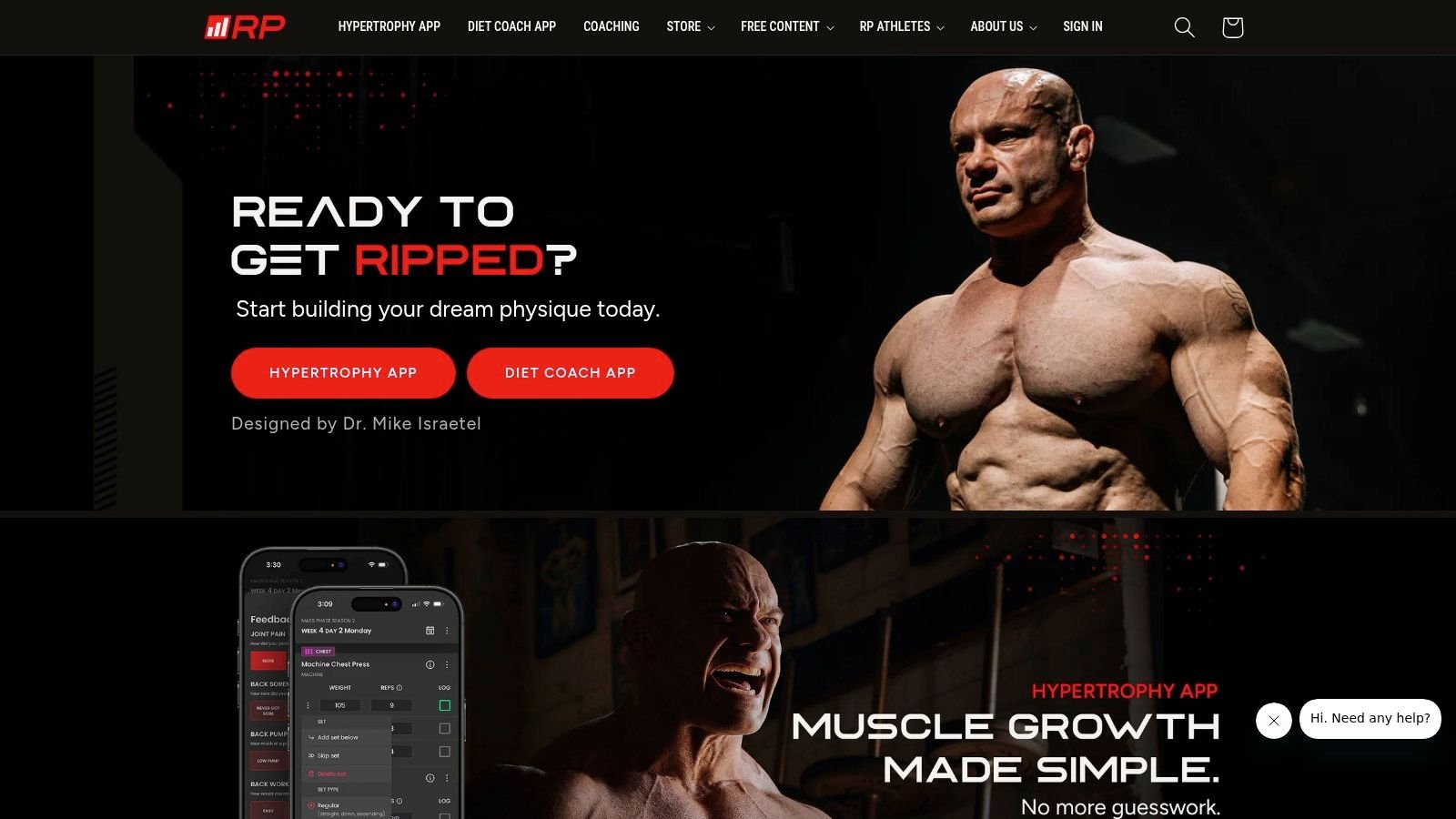
RP Diet Coach is for the person who doesn't want flexibility. They want structure. Daily macro amounts, meal timing, weekly reviews, and a sport-nutrition flavor all make it feel like a digital prep coach rather than a casual food tracker.
That makes it powerful for physique goals and a little unforgiving for everyone else. If your personality responds well to clear rules, RP can be excellent. If you resent being told when to eat and how to distribute food across the day, you'll push back against it almost immediately.
Best for rule-followers
RP shines when routine is already part of your identity. Coaches, bodybuilders, serious gym-goers, and people in a focused cut often do well with it because the app removes ambiguity. The decision load gets lower once you buy into the system.
- Strong point: Prescriptive meal timing helps users who snack mindlessly when the day feels unstructured.
- Weak point: The workflow can feel rigid if your schedule changes a lot.
- Reality check: You'll get more from RP if you already speak basic macro language.
For some users, that rigidity is the feature. For others, it's the reason they quit. I've seen people do well with RP when they have a defined season. Wedding cut, meet prep, photo shoot, off-season gain phase. I've also seen busy parents abandon it because real life doesn't respect meal timing windows.
If you're trying to calculate your intake more deliberately, this related guide from 10 Rx Home pairs well with an app like RP.
You can learn more at the RP Strength website.
4. Noom
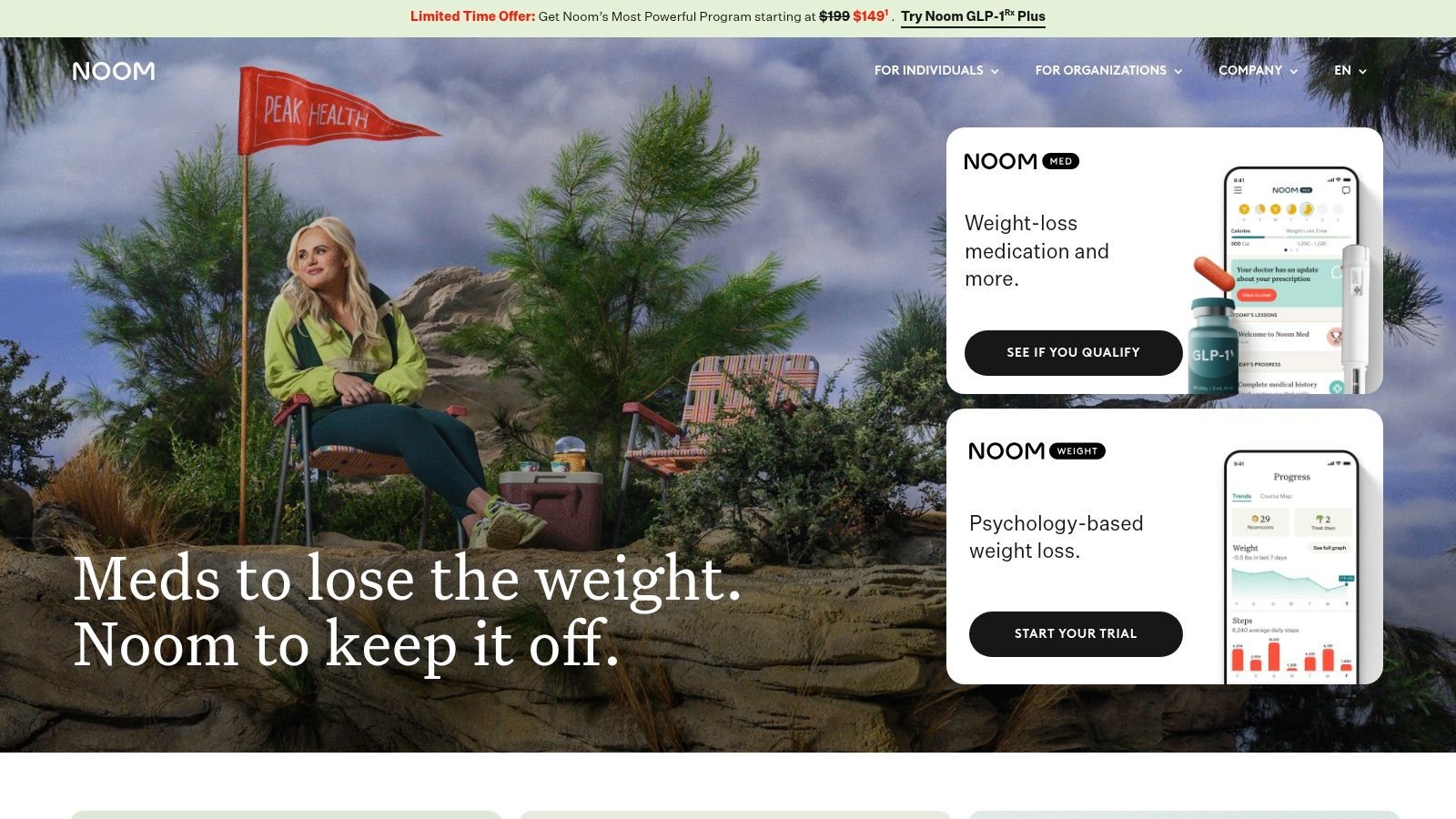
Noom doesn't act like a macro coach. It acts like a behavior-change coach. That difference matters. People who keep restarting diets often don't need another set of numbers. They need help catching patterns, building awareness, and staying engaged long enough to make different choices automatic.
The app leans into daily lessons, reflection, and habit education. That makes it more conversational than purely analytical tools. If you like understanding why you eat the way you do, Noom has an advantage.
The coaching personality
Noom is the mentor who asks questions and teaches concepts in small doses. Some users love that because it feels supportive. Others find it too scripted.
- Good match: People who need accountability through education and repetition.
- Less good match: Advanced users who already know nutrition basics and just want efficient tracking.
- Worth knowing: Optional medical and GLP-1-oriented paths broaden the use case beyond standard weight-loss coaching.
What works in practice is the structure around the food log, not just the food log itself. If lessons keep you opening the app, the tracking habit survives longer. If the lessons annoy you, they become one more notification to ignore. That's the split with Noom.
Recent market commentary also points out a useful distinction many comparison articles miss. Users often need to choose between AI coaching, human dietitian support, and more clinically oriented options, not just “the best app.” That nuance is highlighted in this nutrition coaching app model breakdown from Fuel Nutrition.
You can browse plans at the Noom website.
5. WeightWatchers WW
Dinner is in an hour, the day got away from you, and you do not want to weigh chicken or build a spreadsheet in your head. WW works well in that moment. Its coaching personality is the practical behavior coach who gives you guardrails instead of raw numbers.
That is still WW's edge.
The Points system lowers the mental load of eating decisions. For people who burn out on calorie targets or macro math, that simplification can keep adherence alive longer than a more precise app. I have seen this work best with users who want a repeatable structure they can follow under stress, not just on their most motivated week.
Where WW still wins
WW does better than many nutrition apps at creating a full program around food choices. Recipes, community, workshops, and habit structure all support the same goal. That matters because compliance usually breaks at the level of routine. If an app helps you decide what to cook, what to order, and how to recover from a messy weekend, it has a real coaching function.
Its recipe library is a real advantage, as noted earlier. That kind of built-in meal support is often what keeps users from drifting back to takeout and guesswork.
Coach's note: WW usually fits people who want less obsession and more consistency. It fits poorly for athletes, physique clients, or anyone who needs tight control over protein, calories, and meal timing.
The trade-off is clear. Abstraction makes the system easier to follow, but it also hides detail. If your goal is to learn how much protein keeps you full, or to connect food choices with training performance, WW teaches that less directly than macro-first apps.
WW also serves a broader audience than many people assume. Some users want community and weekly structure. Others want a program that can expand into more medically guided support without changing platforms. That flexibility helps the right user stay put instead of restarting with a new app every few months.
For readers curious about keto-style supplements and weight-loss positioning, this overview of Tecton Ketones exogenous ketone nutrition may add context.
6. MyFitnessPal Premium and Premium+
MyFitnessPal is the generalist. It doesn't have the sharpest coaching identity on this list, but it's still one of the most practical tools for a huge range of users because the ecosystem is so mature. If you want restaurant entries, barcode logging, wearables, meal planning, and a familiar interface, it checks a lot of boxes.
That broad coverage is both its edge and its weakness. The app can feel like a giant toolbox. If you know what you need, that's great. If you don't, the options and tiering can get messy.
Why people keep coming back
MyFitnessPal works best for users who want convenience first and philosophy second. You can log in several ways, customize macro targets, and use newer coaching features without abandoning the app everyone already knows.
- Big advantage: It's easy to find foods, especially in mainstream US eating patterns.
- Ongoing friction: Some of the best features sit behind premium tiers.
- Best user type: Busy people who value coverage and integrations over a highly opinionated coaching system.
The coaching personality here is less “mentor” and more “resourceful assistant.” It won't guide you as tightly as RP or teach behavior as directly as Noom. But if your actual obstacle is logging friction, MyFitnessPal often stays in the running because it lowers that friction enough.
That convenience-first model matches where the category is heading. On the App Store, Nutrition Coach is positioned as a free iPhone app with in-app purchases for iOS users, described as a “Calorie Counter & Meal Planner,” with features like barcode scanning, macro and micronutrient tracking, reminders, weight tracking, Apple Health integration, and more than 1,700 recipes. That kind of structured self-monitoring is now the baseline expectation for mainstream apps, not a bonus.
You can explore the platform at the MyFitnessPal website.
7. Lifesum Premium
Lifesum feels like the encouraging mentor who wants you to make decent choices consistently, not chase perfect numbers. Its strength is the on-ramp. New trackers often do better with Lifesum because the visual design, meal plans, recipes, reminders, and grocery-oriented features make healthy eating feel a little less clinical.
That design philosophy matters. Many users don't need a highly adaptive algorithm at first. They need an app that gets them to log lunch without hating the process.
The habit-first appeal
Lifesum is usually a better fit for lifestyle users than for detail-obsessed athletes. The coaching is more plan-oriented than highly adaptive. That can be a positive if your biggest problem is getting started.
It's especially useful for first-time calorie trackers, health-conscious parents, and people who want recipe support built into the same environment as tracking. Fasting tools and reminders also add a layer of structure without making the whole experience feel strict.
Lifesum is what I'd call a low-resistance app. It doesn't push hard, but for some users that's exactly why they keep using it.
The limitation shows up later. As goals become more specific, some users outgrow the softer coaching style. If you move from “eat better” to “optimize for body recomposition,” apps like Carbon, MacroFactor, or Cronometer usually offer more precision.
You can take a look at the Lifesum website.
8. Foodvisor
Foodvisor is the fast-talking pocket nutritionist. You snap a photo, get a quick estimate, and keep moving. For people who quit logging because typing every ingredient is annoying, that's a real advantage.
The best use case is obvious. You want feedback quickly, and you're willing to accept that convenience sometimes beats perfect precision. That's a good trade when the alternative is not logging at all.
Where photo logging helps and where it doesn't
Foodvisor is strongest with clear, distinct meals. A plate with recognizable foods tends to work better than casseroles, oily takeout, or anything hidden under sauces. Users who understand that limitation usually stay happier with the app.
- Best fit: Busy professionals, casual fat-loss users, and beginners who need lower-friction logging.
- Watch out for: Mixed dishes, restaurant food, and meals where portion size is hard to infer visually.
- Extra value: Guided content and structured courses can help users who want more than just a camera tool.
This is one of those apps where expectations determine success. If you expect lab-grade precision from a photo, you'll get frustrated. If you treat it as a fast estimate that keeps you engaged, it can do its job well.
Foodvisor also connects with major health ecosystems, which is increasingly important in AI-driven nutrition. The broader market for AI-driven nutrition coaching was valued at USD 1.8 billion in 2024, with projections to reach USD 7.4 billion by 2033. That growth supports the move toward apps that combine easier input methods with more personalized recommendations over time.
You can check it out at the Foodvisor website.
9. Cronometer Gold
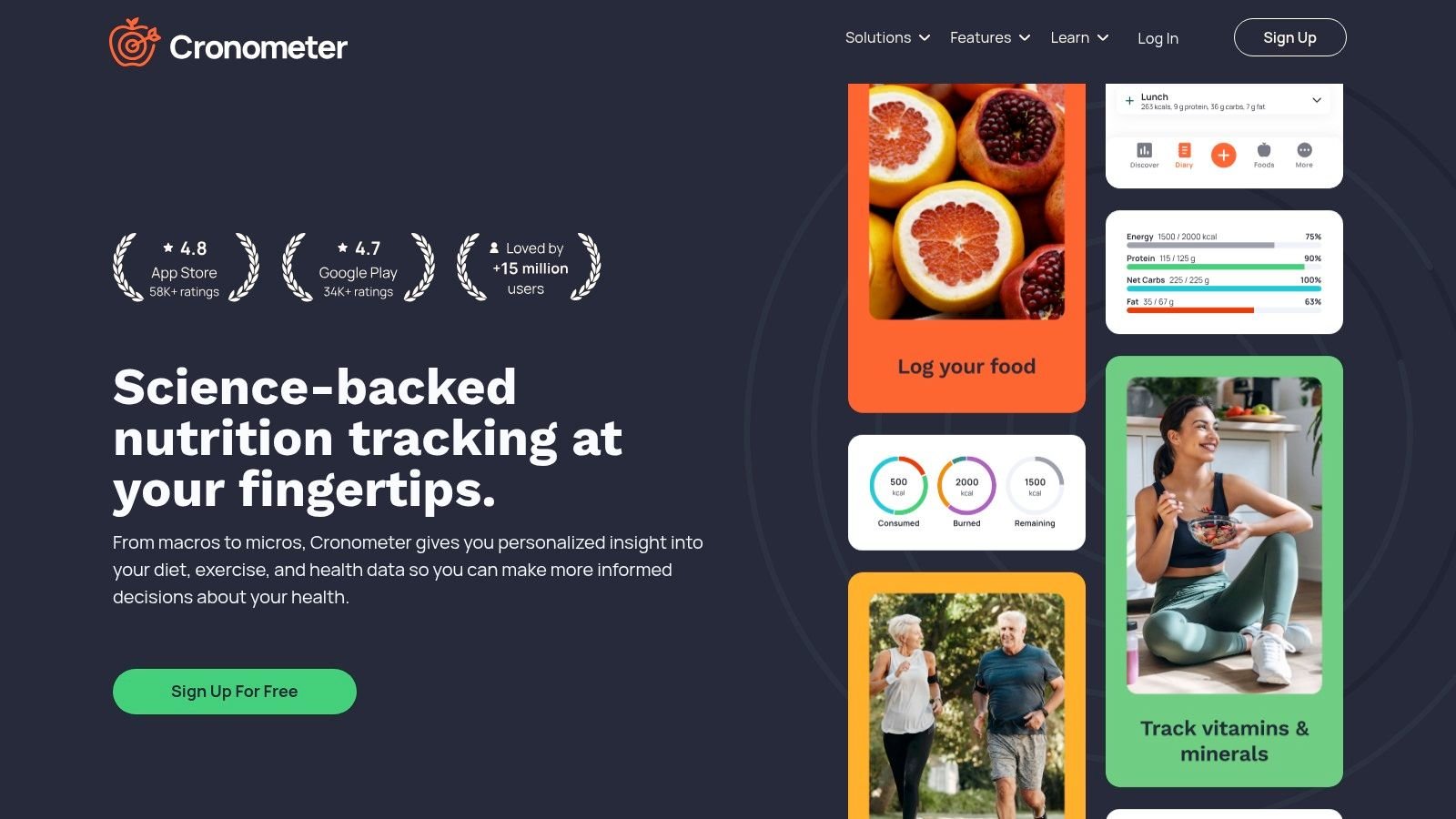
Cronometer is the scientist. Not the “eat clean” influencer version. The actual spreadsheet-loving, micronutrient-checking, data-exporting scientist. If your question is “Am I low on fiber, magnesium, potassium, or protein across the week?” Cronometer is in a different class from most mainstream trackers.
That depth makes it one of the most useful apps for coaches, advanced users, and anyone who wants nutrition data beyond body weight changes. It also makes it less friendly for people who just want to know whether their lunch was reasonable.
Precision over persuasion
Cronometer doesn't coach you emotionally. It gives you the information and expects you to use it. The Gold tier adds more tools for customization, scheduling, and analysis, but the personality stays the same. This is self-directed nutrition.
- Why people love it: Deep nutrient tracking and stronger database confidence.
- Why some leave: The app can feel technical and demanding.
- Best use case: When health quality and nutrient coverage matter as much as calories.
If you're a practitioner, this is often the app that reveals blind spots basic trackers gloss over. Low iron intake. Fiber drifting down during a cut. Protein looking fine overall but poorly distributed. Those details matter, especially for long-term adherence and performance.
The downside is straightforward. Cronometer won't rescue a disengaged user. If someone needs a coach to simplify choices and create momentum, this level of depth can become another form of procrastination.
You can visit the Cronometer website.
10. Signos
Signos is the biofeedback coach. Instead of starting with calories or points, it starts with your glucose response and tries to teach you how meals, timing, activity, sleep, and stress affect your body in real time. That's a different experience from standard food logging.
For the right user, it's eye-opening. Patterns that feel abstract in a normal nutrition app suddenly become visible. A meal that looked “healthy” may lead to a response you didn't expect. A short walk after eating may matter more than you thought.
Who gets the most from Signos
This is a strong fit for users who are highly motivated by personal data and immediate feedback. It's less attractive if you don't want to wear a device, don't want telehealth steps, or want a lower-cost tracker.
The coaching personality here is part detective, part lab monitor. That can be powerful for habit change because it personalizes the lesson. You're not reading a generic rule. You're seeing your own response.
The best thing about glucose-based coaching isn't that it replaces fundamentals. It's that it makes fundamentals feel real.
There are practical drawbacks. The cost is higher than standard nutrition apps, and CGM-based coaching won't suit every person or every goal. It's also easy for data-driven users to become overly reactive if they don't keep the larger picture in mind. Good coaching still requires context, not just alerts.
Signos makes the most sense when your motivation rises with personalized biofeedback and falls with generic advice. If that's you, the platform can create a stronger sense of relevance than traditional logging alone.
You can learn more at the Signos website.
Top 10 Nutrition Coach Apps, Feature Comparison
| App | Core focus / Features | UX & Quality (★) | Value & Pricing (💰) | Target audience (👥) | Standout (✨ / 🏆) |
|---|---|---|---|---|---|
| Carbon Diet Coach | Weekly adaptive macro coach, goal modes, food logging | ★★★★☆ Predictable, science-driven | 💰 Transparent annual pricing, good value | 👥 Macro-focused dieters, DIY coaches | ✨ Auto weekly macro adjustments; 🏆 science-forward logic |
| MacroFactor | Dynamic energy model, flexible daily macros, wearables | ★★★★☆ Polished, adaptive | 💰 Subscription (no free tier) | 👥 Lifters, data-driven trackers | ✨ Learns true maintenance; 🏆 privacy-conscious model |
| RP Diet Coach (Renaissance) | Prescriptive daily macros & timing, weekly reviews | ★★★★ Structured, plan-oriented | 💰 Paid app (plan-focused) | 👥 Athletes, physique competitors | ✨ Daily macro timing; 🏆 RP sports pedigree |
| Noom | Psychology curriculum + tracking, optional human coaching | ★★★★ Engaging lessons, guided | 💰 Higher cost; program/medical tiers | 👥 Behavior-change seekers, medical paths | ✨ Daily bite-size coaching; 🏆 integrated medical programs |
| WeightWatchers (WW) | Points engine, recipes, community, tiered plans | ★★★★ Strong community, workshop support | 💰 Tiered pricing (varies by plan) | 👥 Social learners, long-term weight managers | ✨ AI Body Scanner & 12k+ recipes; 🏆 long-running evidence base |
| MyFitnessPal (Premium/+) | Massive food DB, Meal Scan, AI coach, integrations | ★★★★ Mature ecosystem, wide coverage | 💰 Freemium → paid tiers; many paywalled tools | 👥 General users, US restaurant/product-heavy | ✨ Meal Scan photo logging; 🏆 largest database |
| Lifesum (Premium) | Meal plans, recipes, fasting tools, reminders | ★★★★ Friendly, visual onboarding | 💰 Premium subscription; regional pricing | 👥 New trackers, meal-plan seekers | ✨ Recipe-first UX & fasting support |
| Foodvisor | Photo-based meal analysis, guided courses | ★★★★ Very fast snap‑and‑log workflow | 💰 Freemium; premium varies by region | 👥 Users wanting instant photo logging | ✨ Photo AI analysis; 🏆 ultra-fast logging |
| Cronometer (Gold) | Deep micronutrient tracking, lab-sourced DB, exports | ★★★★ For power users; steep learning curve | 💰 Gold subscription for advanced tools | 👥 Coaches, nutrition nerds, clinicians | ✨ 80+ nutrients + custom charts; 🏆 best-in-class micronutrient data |
| Signos | CGM-driven coaching, glucose-based meal scoring | ★★★★ Highly personalized, clinical | 💰 Higher subscription + CGM costs | 👥 Metabolic health & CGM users | ✨ Real-time glucose feedback; 🏆 personalized metabolic coaching |
Making Your Choice Commit to the First 30 Days
The perfect nutrition coach app on paper is useless if you don't open it. That's the central mistake people make when comparing tools. They judge by feature count instead of behavioral fit. The better question is simple. Which app's coaching personality matches how you already think, decide, and fall off track?
If you like hard numbers and clear targets, Carbon and MacroFactor usually make more sense than habit-first tools. If you want structure and don't mind rules, RP Diet Coach can be excellent. If education and behavior change are your real sticking point, Noom may hold your attention longer than a macro app ever will. If you want community and a less technical system, WW still has a place. If convenience is everything, MyFitnessPal, Lifesum, and Foodvisor each lower friction in different ways. If nutrient depth matters, Cronometer stands out. If personalized biofeedback is what finally gets you to care, Signos offers something the others don't.
What works in practice is rarely glamorous. The winning app is usually the one that makes it easiest to recover from imperfect days. Most users don't need a more extreme plan. They need a plan they can return to on a stressful Tuesday after bad sleep and a rushed lunch. That's where app personality matters. A rigid app can keep one person locked in and make another person quit. A gentle app can help one person build consistency and let another person drift.
Commit to one app for an honest month. Not three days. Not until the free trial reminder appears. A real month. Long enough to log weekdays, weekends, social meals, cravings, and at least one messy stretch where life gets in the way.
During that first month, judge the app by four things:
- Daily friction: How hard is it to log what you eat?
- Emotional tone: Does the app make you feel coached, nagged, or judged?
- Decision clarity: When progress stalls, does it help you know what to do next?
- Repeatability: Can you see yourself still using it when motivation is average?
Don't chase perfect adherence in those 30 days. Chase the habit of returning. Open the app after the restaurant meal. Log the snack you didn't plan. Check in even when the scale is up. The apps that earn long-term trust are the ones that make honesty feel easier than avoidance.
In the end, a nutrition coach app is only valuable if it becomes part of your day without becoming the center of your day. Pick the one that feels natural enough to use and structured enough to help. Then let repetition do the heavy lifting.
If you like the idea of coaching without all the logging friction, PlateBird is worth a look. It's built for the moments when you know tracking would help, but you don't want to scroll databases or scan everything in sight. You can type a meal like a quick note, snap a photo for computer-vision recognition, and reuse saved meals with one tap. For busy professionals, first-time trackers, meal preppers, and anyone who quits because food logging takes too long, PlateBird offers a simpler path: track fast enough that you will keep doing it.