If your meal prep is starting to look like an endless parade of chicken breasts and protein shakes, you know the feeling. When you're laser-focused on hitting your protein numbers, it's all too easy for your diet to get boring. Fast. That’s exactly when you should turn to seafood—it’s a delicious, incredibly versatile, and nutritionally stacked way to break out of that rut.
Why Seafood Is Your Secret Weapon for Hitting Protein Goals
I like to think of high-quality protein as the master repair crew for your body. It’s responsible for patching up and rebuilding everything from muscle tissue after a tough workout to the tiny enzymes that keep your metabolism humming along. While lots of foods bring protein to the table, seafood is unique. It doesn't just show up with the workers (protein); it brings the entire specialized toolkit (a full set of amino acids) to get the job done right.
This isn't just a small tweak to your diet; it's a major upgrade. Seafood is a nutritional heavyweight on a global scale, providing around 15% of all animal protein eaten by people worldwide. In fact, back in 2021, it was a primary protein source for a staggering 3.2 billion people. It's more than just a tasty menu option—it's a vital part of how the world eats. You can dive deeper into seafood's global role in the latest FAO report.
Beyond Just Protein Numbers
So what makes seafood such a secret weapon? It’s not just the protein grams; it’s the entire package that comes with it. Unlike many other protein sources, fish and shellfish are absolutely loaded with other compounds that boost your health.
- A Complete Amino Acid Profile: Seafood delivers all nine essential amino acids your body can't make itself. This makes it a "complete" protein, which is the gold standard for building lean muscle and recovering efficiently.
- Rich in Omega-3s: Fatty fish like salmon, mackerel, and tuna are famous for being packed with omega-3 fatty acids, which are crucial for supporting brain function, fighting inflammation, and keeping your heart healthy.
- Packed with Micronutrients: With every serving, you're also getting a solid dose of vitamins and minerals you might otherwise miss, like Vitamin D for bone health, B vitamins for energy, and essential minerals like iodine and selenium.
Think of seafood as high-performance fuel, not just another protein. It’s a powerful combination of nutrients that all work together to help you feel full longer, bounce back faster from exercise, and keep your energy steady all day long.
For anyone serious about dialing in their nutrition, looking for different ways to increase protein intake is a game-changer. Bringing seafood into your weekly rotation is one of the best moves you can make, diversifying your meals while delivering a huge range of benefits for your overall health and fitness.
Navigating the seafood section at the grocery store can feel a bit overwhelming, can’t it? You’re faced with a wall of options, from fresh fillets on ice to endless rows of canned fish, and it’s hard to know which choice best serves your goals. Let's make this simple. I’m going to walk you through how to spot the true protein heavyweights of the sea.
Think of it like this: not all seafood is created equal when it comes to protein. Some are good, but others are exceptional. We're looking for the options with the highest protein density—meaning you get the most muscle-building benefit for every calorie consumed. It's a crucial part of our diet, as you can see here.
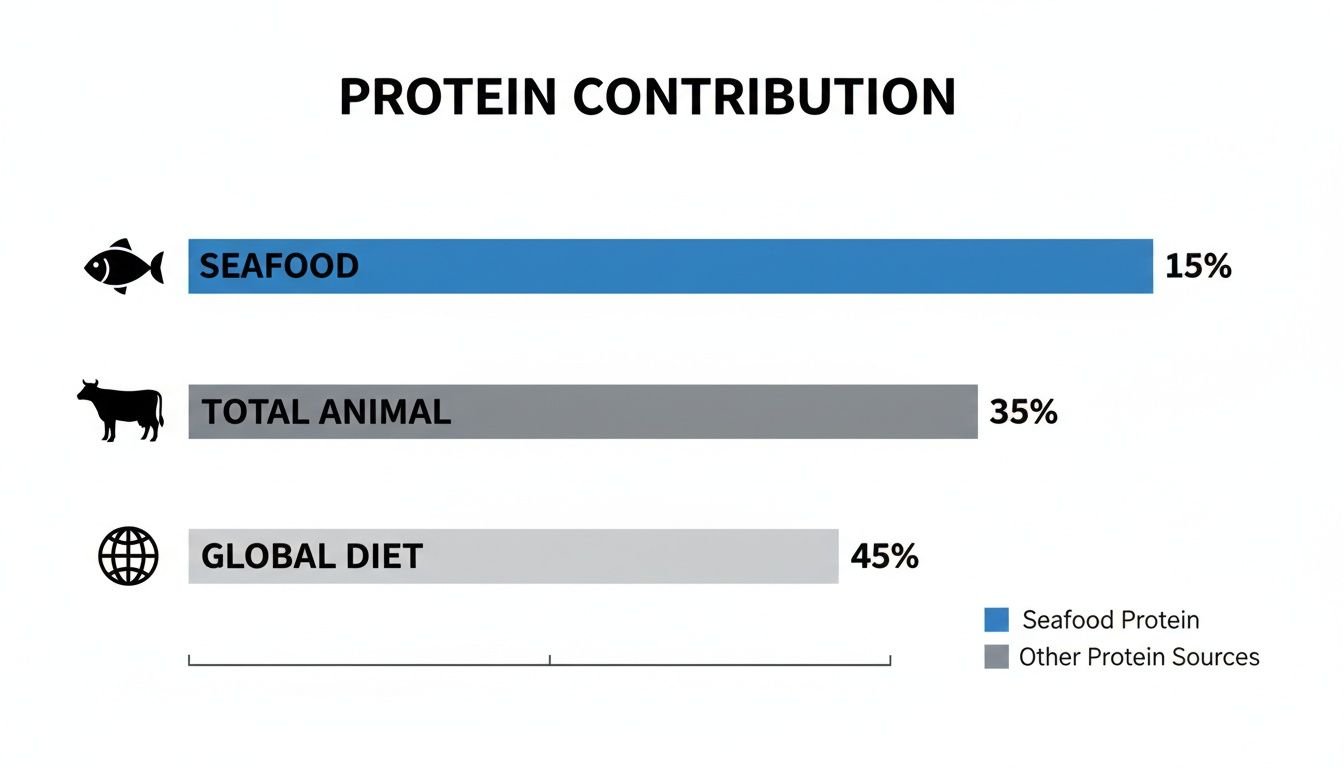
Globally, seafood accounts for a significant 15% of all animal protein we eat. That's a pretty big slice of the pie, which shows just how important fish and shellfish are for nutrition around the world.
So, how does this translate to your grocery cart? Let's get right to a quick-reference table to help you compare some of the most popular choices at a glance.
Protein Content in Common Seafood (per 100g Cooked)
This table offers a straightforward comparison of the protein, calorie, and omega-3 content in popular seafood. Use it to quickly find the best fit for your meal plan, whether you're prioritizing lean protein, healthy fats, or both.
| Seafood Type | Protein (g) | Calories (kcal) | Omega-3s (mg) |
|---|---|---|---|
| Tuna | 30 | 132 | 288 |
| Salmon | 25 | 208 | 2,260 |
| Shrimp | 24 | 99 | 540 |
| Tilapia | 26 | 128 | 135 |
| Cod | 23 | 105 | 195 |
As you can see, the numbers tell a compelling story. Now, let's break down what this means in practical terms.
The Top-Tier Protein Champions
When I’m looking for maximum protein, a few specific types of seafood are always at the top of my list.
Tuna: Whether you're buying a fresh steak or grabbing a can, tuna is an absolute powerhouse. A cooked 100g serving of yellowfin tuna can deliver over 30 grams of protein. For pure convenience, you can't beat canned light tuna in water—it’s affordable, has a long shelf life, and still provides about 25 grams of protein per 100g. It’s a pantry staple for a reason.
Salmon: Everyone loves salmon, and for good reason. It’s not just loaded with those incredible heart-healthy omega-3 fatty acids; it’s also a fantastic source of protein. A standard 100g fillet gives you roughly 25 grams of high-quality protein. It's the perfect one-two punch for muscle recovery and overall health.
Shrimp: Never overlook shrimp. These little guys are almost pure protein. With around 24 grams of protein per 100g and very few calories, they offer one of the best protein-to-calorie ratios you can find. This makes them a go-to for anyone wanting to build lean mass without adding a lot of extra calories.
People often ask me, "Is a can of tuna really as good as chicken breast?" From a pure protein perspective, they are surprisingly close competitors. A 100g serving of chicken breast contains about 31g of protein, while the same amount of tuna has around 30g. The choice really comes down to the other nutrients you're looking for and, frankly, what you feel like eating.
Great Everyday Protein Sources
While tuna and salmon often steal the spotlight, plenty of other common and more budget-friendly fish are excellent for hitting your protein targets.
Cod: This flaky, mild white fish is a lean protein workhorse. A 100g cooked portion of cod provides about 23 grams of protein with almost no fat. Its versatility is a huge plus—it works beautifully whether you bake, grill, or pan-sear it.
Tilapia: Another lean, mild fish that's easy on the wallet, tilapia packs a surprising punch with about 26 grams of protein per 100g fillet. Because its flavor is so approachable, it’s a great entry point for anyone trying to incorporate more fish into their diet.
Ultimately, choosing the right seafood is about aligning it with your specific goals. If you need lean, no-fuss protein, shrimp and cod are brilliant. If you want a richer meal with healthy fats, salmon is unmatched. And for cost-effective convenience, canned tuna is a true champion. Understanding the protein in seafood helps you turn every meal into a strategic move toward better fitness.
Seafood’s Built-In Nutritional Team
When we talk about the protein in seafood, we’re really only telling half the story. Just looking at the grams of protein on a label misses the bigger picture. Think of it this way: protein is the essential building block for muscle repair and growth, but it can’t do its job effectively all by itself.
Seafood provides more than just protein; it delivers a complete nutritional package. The protein comes bundled with a powerful crew of other nutrients that work together, boosting each other's effects and giving you far more benefit than you'd get from protein alone.
More Than Just Protein
So, what makes up this nutritional support team? It’s a lineup of vitamins and healthy fats that turn a simple piece of fish into a powerhouse for your health and fitness.
- Omega-3 Fatty Acids: These are famous for a reason. They act as your body's natural anti-inflammatory, helping to cool down the muscle soreness that comes after a tough workout. This means protein can get to work on repairs faster, and you can get back to training sooner.
- Vitamin D: Often called the "sunshine vitamin," it plays a critical role in bone health. It works hand-in-hand with protein to build and maintain a strong skeletal frame, which is the very foundation your muscles are built upon.
- B Vitamins: Consider these the spark plugs for your metabolism. Vitamins like B12 and B6 are absolutely vital for converting the food you eat into real, usable energy. This helps you power through your day and your workouts with plenty of fuel in the tank.
The real advantage of seafood is how these nutrients interact. They don't just exist in the same food; they actively support one another. For instance, by reducing post-workout inflammation, the omega-3s clear the way for protein to do its job more efficiently.
This unique combination also keeps you feeling full and satisfied long after your meal, which is a huge win for anyone trying to manage their weight. All of this is possible because nearly all seafood options are fantastic complete protein sources, meaning they provide all the essential amino acids your body needs.
An Accessible, High-Quality Choice
The best part? High-quality seafood is easier to find and more affordable than ever before. Thanks to advances in sustainable aquaculture, seafood has become the world's fastest-growing protein source, even outpacing chicken.
Globally, the seafood market is expanding by about 2.3% every year. For those of us who use apps like PlateBird to track our food intake, this is fantastic news. It means more consistent availability and stable pricing, making it much easier to hit your daily protein goals with some of the best sources nature has to offer.
Choosing seafood isn't just about checking a box for your macros. It's about giving your body a comprehensive toolkit to build muscle, fuel your energy, and truly thrive. If you're curious to see how different types of fish stack up against other foods, our protein quality chart breaks it all down.
How Cooking Affects Protein in Your Fish
I get this question all the time: "Does cooking destroy the protein in my fish?" It's a great question, and the short answer is no, not really. What actually happens is more about simple physics than losing nutrients. The way you cook your seafood definitely changes the numbers on the nutrition label, just not in the way most people think.
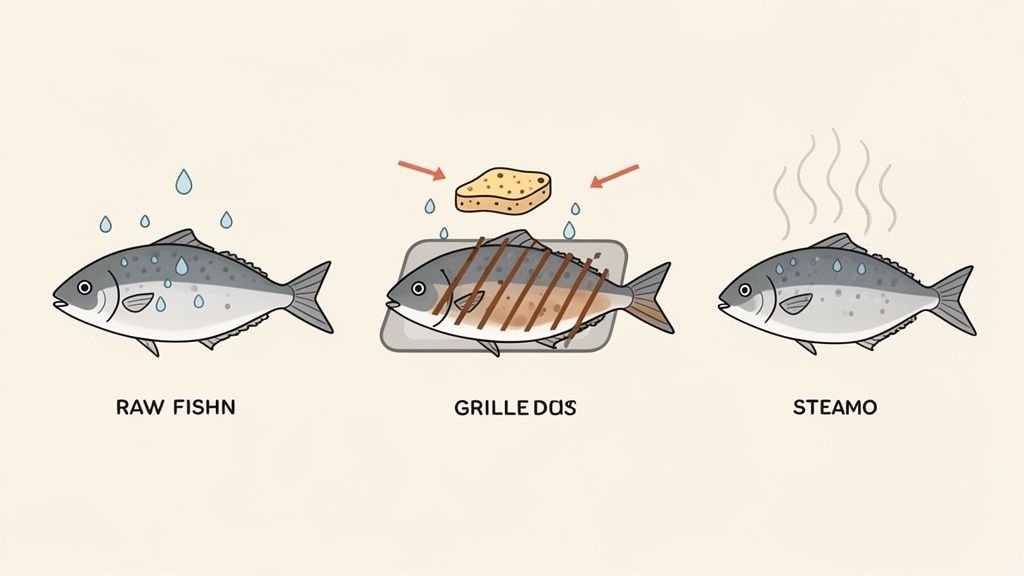
Think of a raw fillet as a water-logged sponge. It's heavy and full of moisture. When you introduce heat—whether you’re grilling, baking, or searing it in a pan—you're essentially wringing out that water. The fillet shrinks and loses some of its starting weight, but the protein molecules themselves don't go anywhere.
This means the protein in your seafood becomes more concentrated by weight. So, if you compare 100 grams of cooked salmon to 100 grams of raw salmon, the cooked portion will actually have more protein because there's less water in the mix.
Choosing Your Cooking Method
While the protein stays put, your cooking method absolutely impacts the overall nutritional profile of your meal. Some techniques are fantastic for retaining those delicate omega-3s, while others can sneak in a surprising amount of extra calories.
Dry-Heat Methods (Baking, Grilling, Broiling): These are my go-to methods. You get incredible flavor development without adding any extra fat. This is the best route if your goal is a lean, clean meal that lets the quality of the seafood shine.
Moist-Heat Methods (Steaming, Poaching): When you want to be extra careful about preserving nutrients, these gentle techniques are perfect. High heat can damage some of the healthy omega-3 fatty acids, but steaming and poaching keep the fish incredibly tender and lock in all that goodness.
Frying and Sautéing: There's no denying it's delicious, but these methods rely on oil, which adds significant calories and fat. If you’re carefully tracking your macros in an app like PlateBird, you have to be diligent about logging any oil or breading—it can change the entire nutritional makeup of your meal.
Here's a pro tip for accurate tracking: Always log the cooked weight of your seafood. That 6-ounce raw fillet might weigh just 4.5 ounces after grilling, but that smaller, denser piece now contains all the original protein. Logging it correctly is the only way to get an accurate macro count.
Ultimately, the right method is the one that aligns with your goals. For pure, lean protein, you can't beat grilling or baking. To protect every last nutrient, steaming is your best bet. Of course, none of this matters if the fish isn't cooked well, which is why technique is so important. For example, learning how to cook Chilean Sea Bass perfectly ensures you get a flaky, delicious result that’s worth every gram of protein.
Making High-Protein Seafood Fit Your Budget
Let's talk about a big myth I hear all the time: that eating high-protein seafood is a luxury reserved for a big budget. The truth is, it doesn't have to be. The secret isn't spending more, but thinking differently. It’s about shifting your focus from the price per pound to the protein per dollar.
When you start looking at it that way, you’ll see that seafood is actually one of the most efficient ways to hit your protein goals.
This isn’t just a hunch; global data paints a really clear picture. A fascinating study on seafood trade found that developing countries get 50% more protein for every dollar spent compared to developed nations. This really drives home how cost-effective seafood can be when nutrition is the main goal. You can find more details in these nutritional affordability findings.
By adopting that same savvy mindset, you can turn the seafood counter from a place you skip into your go-to spot for affordable protein.
Smart Strategies for Savvy Seafood Shopping
Getting the most protein for your money means looking beyond the fresh fish display. Some of the most budget-friendly and protein-dense options are hiding in plain sight.
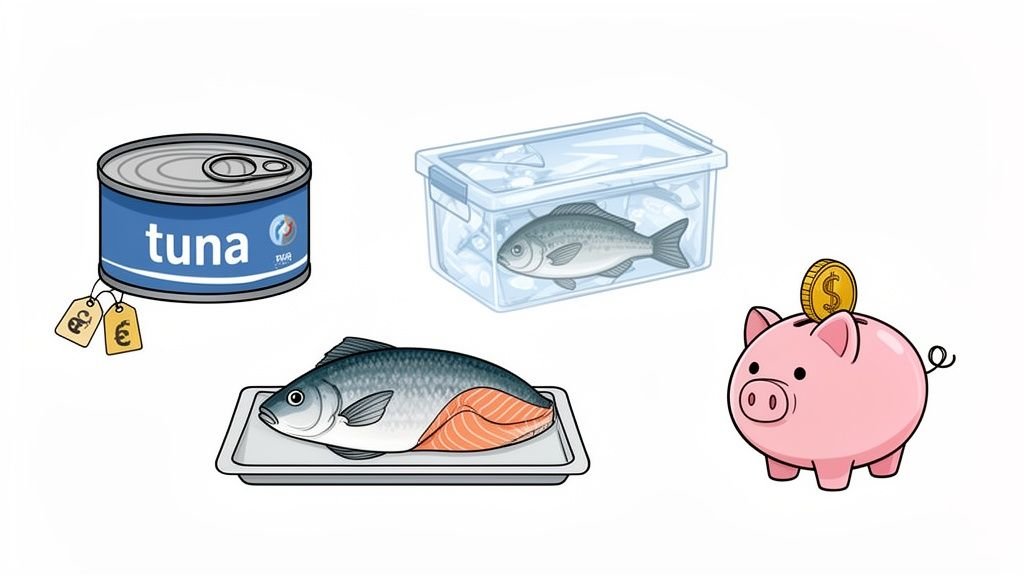
Embrace the Freezer Aisle: Don't sleep on frozen fish. It’s typically flash-frozen right after being caught, which locks in all the freshness and nutrients. You can often find fantastic deals on cod, tilapia, and salmon fillets for a fraction of what you'd pay for fresh, with virtually no difference in protein quality.
Champion Canned Fish: Canned tuna and salmon are the unsung heroes of affordable protein. They’re shelf-stable, incredibly convenient, and absolutely packed with the good stuff. Just one can of tuna is an effortless way to knock out 20-30 grams of protein for a meal.
Think of your pantry as a protein savings account. Stocking up on canned tuna, salmon, and sardines when they're on sale ensures you always have a quick, high-protein option ready to go for salads, sandwiches, or pasta dishes.
You don't need a huge budget to reap the incredible benefits of seafood protein. All it takes is a smarter strategy and knowing where the real value is waiting for you.
Finally, a Way to Track Your Seafood Macros That Isn't a Chore
Knowing all this about the protein in seafood is great, but that knowledge only really helps if you can actually apply it day in and day out. And let's be honest—that's where most of us get stuck. The tedious guesswork and manual data entry of tracking can turn a healthy habit into a total drag.
We built PlateBird to completely change that experience. Our goal was to make macro tracking feel less like a chore and more like a simple, satisfying part of your routine.
Think about it. You’ve just made a fantastic salmon and quinoa bowl after a long day. Instead of pulling up some clunky food database and searching for every single ingredient, you just snap a photo of your meal. By the time you set your phone down, PlateBird's AI has already identified everything on your plate and logged the protein, carbs, and fats. It's that simple.
From Complex to Common Sense
Let's take another real-world example: a quick tuna salad for lunch. You don’t have to hunt for separate entries for canned tuna, a scoop of Greek yogurt, and chopped celery. You can just type "tuna salad with greek yogurt," and PlateBird figures out the macros for you. It’s built to understand how people actually describe their food.
Here’s a glimpse of how PlateBird breaks down a meal into its nutritional building blocks.
As you can see, the app gives you a clean, immediate breakdown of the calories and macros for each item. This kind of instant feedback is what helps you build a real connection between what you're eating and the goals you're trying to hit.
Better yet, PlateBird starts to learn your habits. Your favorite seafood meals—like that baked cod with asparagus or your go-to shrimp stir-fry—quickly become one-tap entries. All that friction that makes people quit tracking? It just disappears.
The real aim isn't just to track numbers; it's to build consistency. By making the logging process almost invisible, PlateBird helps you stay perfectly in sync with your protein targets, whether you're aiming for 30 grams per meal or a specific daily total.
When you remove all the manual work, you’re free to focus on what actually matters: enjoying delicious, high-protein seafood and seeing the results of your effort. If you’re looking to brush up on the fundamentals, our guide on how to count macros is a great place to start. PlateBird simply makes putting all that knowledge into practice feel like second nature.
Alright, we've covered a lot of ground. But I know from experience that a few key questions probably popped into your head along the way. Let's tackle some of the most common ones I hear when people start getting serious about seafood for their fitness goals.
Is Canned Tuna as Healthy as Fresh Tuna?
I get this question all the time, and the short answer is a definite yes, especially if protein is your main focus. Canned tuna is an absolute workhorse—it’s affordable, convenient, and packed with high-quality protein.
When you choose tuna packed in water, its protein content is nearly identical to what you’d get from a fresh piece. Sure, a fresh tuna steak has an amazing texture and a bit more of those healthy omega-3s, but for pure, convenient protein, canned light tuna is a champion. Just keep an eye on how it's packed; oil adds extra calories and fat, which is simple to account for when you're logging your meals in an app like PlateBird.
How Much Seafood Should I Eat for My Protein Goals?
You’ve probably heard the standard advice to eat seafood twice a week for general health. For fitness, though, the rules are a little different. A typical 3-4 ounce serving of a high-protein fish like salmon or cod will give you a solid 20-25 grams of protein, which can be a huge boost toward your daily target.
There's no magic number here—it's all about what works for your body and your goals. The best way to figure it out is to simply try it. Start logging different portion sizes and types of fish with a tool like PlateBird to see how they fit into your macros. You might discover that three or four seafood meals a week is your personal sweet spot for building muscle and recovering strong.
What Is the Best High-Protein Fish with Low Mercury?
This is such a smart question, because you want to get all the amazing benefits without any of the worry. The good news is that many of the most protein-dense fish are also safely low in mercury.
For that perfect combination of high protein and low mercury, you can confidently build your meals around these options:
- Salmon
- Shrimp
- Cod
- Tilapia
- Canned light tuna
These are perfect choices to eat regularly. They deliver the premium protein you need without the higher mercury levels found in bigger predators like swordfish, king mackerel, or bigeye tuna. Sticking with these makes seafood a safe and incredibly effective part of your nutrition plan.
Ready to stop guessing and start seeing exactly how your meals stack up? PlateBird makes tracking your seafood macros as easy as snapping a photo. Download the app for free and see how simple hitting your goals can be.