- The Calorie Spectrum of Protein Shakes
- Deconstructing Your Shake Ingredient by Ingredient
- How to Calculate Your Protein Shake Calories Step by Step
- Matching Your Shake to Your Fitness Goal
- Low and High Calorie Protein Shake Recipes
- Logging Your Shake in Seconds with PlateBird
- Beyond the Numbers Shaking Up Your Nutrition
You've probably done this at least once. You scoop protein powder into a shaker bottle, add whatever liquid is closest, maybe toss in fruit or peanut butter, and then pause before logging it.
Was that a light post-workout drink, or did you just make a small meal?
That moment of uncertainty is where most confusion about protein shake calories starts. People often think the powder is the whole story. It isn't. The powder matters, but the final calorie count depends on how you build the shake, what you mix it with, and whether you keep it simple or turn it into a blender creation with extras.
The good news is that protein shakes are one of the easiest foods to understand once you stop treating them like a mystery drink. Think of them like Lego bricks. One scoop, one liquid, one add-in at a time. When you break a shake into pieces, the calories stop feeling random.
The Calorie Spectrum of Protein Shakes
You make a shake after the gym, log the scoop, and call it 120 calories. Then you remember the milk, the banana, and the spoonful of peanut butter. Now the same “protein shake” belongs in a very different calorie range.
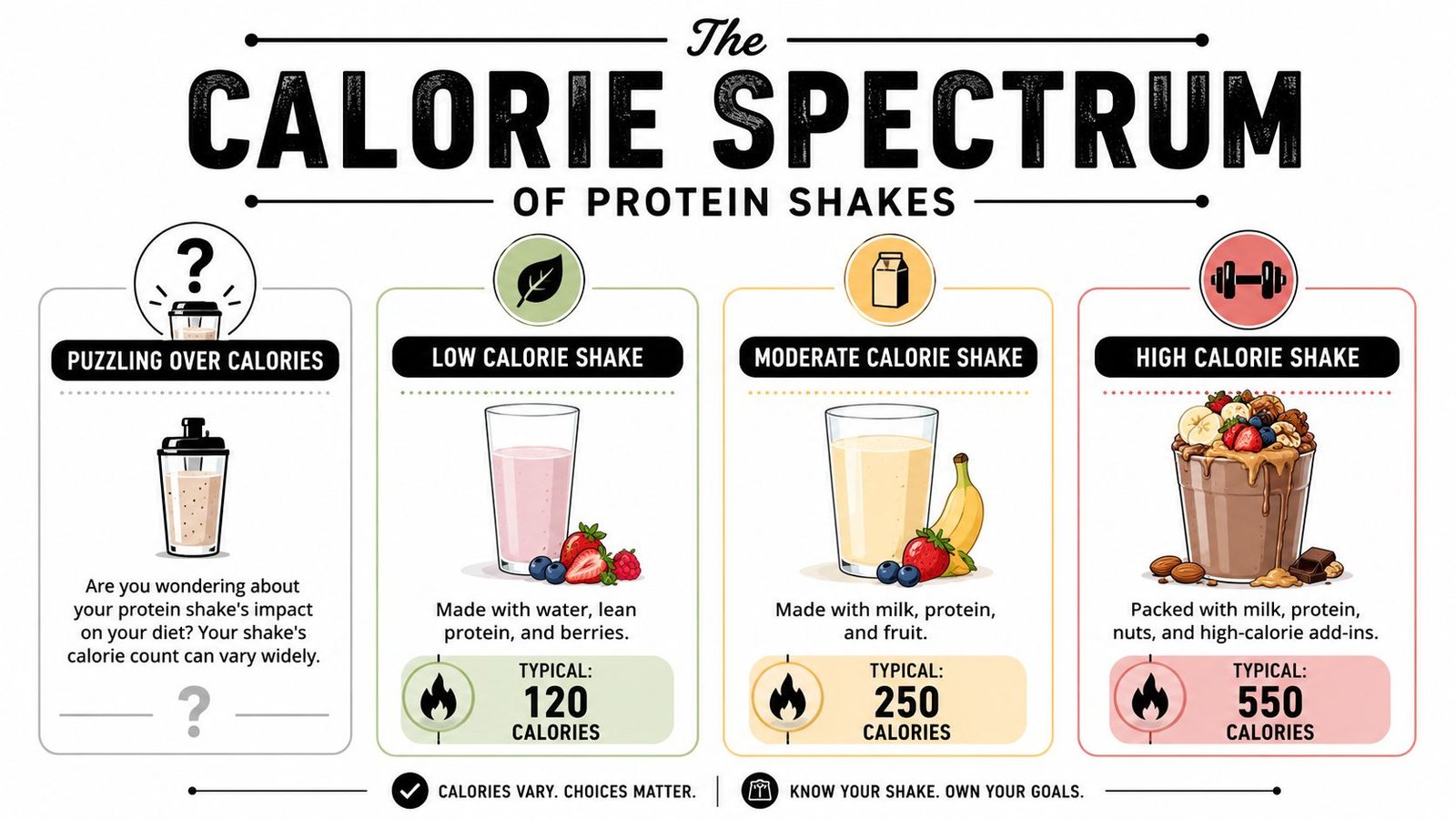
That wide range is normal. A protein shake works like a bowl you build in liquid form. The powder sets the starting point, the liquid changes the base, and each extra ingredient pushes the total higher.
Three common shake types
A simple supplement shake usually sits at the low end of the spectrum. One scoop mixed with water is often close to the calorie count printed on the tub, so it stays relatively light and easy to log. For many people, this is the version they use after training or between meals.
A milk-based shake moves into the middle range. The powder may stay the same, but the liquid changes the math right away. Milk brings its own calories, protein, carbs, and fat, which is why this version feels more substantial than a water-based shake.
A meal-style shake can climb fast. Blend in oats, fruit, yogurt, nut butter, seeds, or a richer milk, and you are no longer logging “just protein powder.” You are logging a small meal in a cup.
That is the mental shift that clears up most confusion.
Instead of asking for one universal number, ask where your shake starts and what got added after that. If you can identify the base and the extras, you can estimate the total with much better accuracy before you even open your tracker.
Why the range is so wide
Three choices explain most of the calorie spread:
- The liquid changes more than people expect. Water keeps the total close to the powder itself. Milk, juice, and creamier alternatives raise it.
- The powder sets the floor. Some powders are mostly protein. Others include more carbs, fats, or flavor add-ins that raise calories per scoop.
- Extras turn a supplement into a meal. A banana, oats, chia seeds, or nut butter may look small, but each one adds another block to the total.
This is why label reading matters. A scoop is only one line in the recipe, and understanding a nutrition label clearly helps you spot what is driving the number.
The practical goal is not memorizing every possible shake. It is learning the pattern. Build the total one ingredient at a time, then log it the same way in PlateBird. That approach gives you a repeatable system whether you are making a quick shaker bottle or a thicker smoothie, and even small details like the liquid you choose or tips for avoiding clumpy protein shakes can change what ends up in the cup.
Deconstructing Your Shake Ingredient by Ingredient
You make a shake, take three sips, and realize you have no idea what to log. PlateBird gets much easier when you treat the drink like a recipe with separate parts instead of one mystery entry.
A shake usually has three layers. The powder sets the starting point. The liquid changes the base. Add-ins decide whether the final cup acts more like a snack, a post-workout drink, or a full meal.
Start with the powder
The scoop is the floor of the calculation. Many protein powders give you a moderate calorie serving with a concentrated dose of protein, but the numbers can shift a lot from one tub to another.
That is why the label matters more than the flavor name on the front.
Two powders can both say "protein" and log very differently. One may be mostly protein with very little else. Another may include extra carbs, fats, creamers, or sweeteners that raise the calorie total before you add milk, fruit, or nut butter. If labels still feel confusing, this guide to how to read nutrition labels clearly shows you where the serving size and calorie count can change the math.
Then check the liquid
The liquid is often the hidden swing factor.
Water keeps the total close to the powder itself. Milk and richer alternatives can add a meaningful amount of calories, plus extra protein, carbs, fat, or sugar depending on what you pour in. In other words, the same scoop can produce two very different logs based on the base alone.
A practical way to picture it is this. The powder gives you the first block. The liquid adds the second block. If your total feels higher than expected, the second block is often the reason.
Texture matters here too. Some people switch to milk because they dislike the feel of powder mixed with water. If that sounds familiar, this guide on avoiding clumpy protein shakes can help you get a smoother result without automatically adding a richer liquid.
Add-ins decide the job of the shake
At this point, a simple protein drink becomes your own formula.
Fruit, oats, nut butter, seeds, yogurt, and similar ingredients each add another line to the log. A small handful or spoonful may not look like much in the blender, but calorie-dense add-ins can change the total quickly. Greens usually affect texture and volume more than calories. Peanut butter and oats do the opposite.
That difference helps you build with intention. If you want a lighter shake, keep most of the calories in the powder and use lower-calorie mix-ins. If you want a more filling shake, add ingredients that bring extra carbs and fat.
A simple ingredient framework
Use this mental model when you build or log in PlateBird:
| Ingredient type | What to check first | Why it matters in your total |
|---|---|---|
| Protein powder | Serving size and calories per scoop | Sets the baseline |
| Liquid base | Calories per cup or per 8 oz | Can keep the shake light or make it much richer |
| Fruit and grains | Portion size | Often raise carbs and total calories |
| Fats like nut butter or seeds | Tablespoons or grams | Small portions can add a lot of calories |
| Low-calorie bulk ingredients | Full serving | Change texture and volume more than the total |
That framework gives you a repeatable way to break down almost any shake. Log one block at a time in PlateBird, and the total stops feeling like a guess.
How to Calculate Your Protein Shake Calories Step by Step
You blend what looks like a simple shake, log a rough estimate, and later realize the total could be off by a few hundred calories. That usually happens when the shake gets treated like one item instead of a small recipe.
A better method is to total it the same way you would total a grocery receipt. Each ingredient gets its own line. Add the lines together, and your shake becomes easy to understand, repeat, and adjust.
The four-step method
Log the powder first
Use the serving size on the tub and record the calories for that exact scoop amount. This gives you your starting point.Add the liquid second
Measure the amount you pour. A cup of water and a cup of whole milk create very different totals.List every meaningful add-in
Bananas, oats, peanut butter, seeds, yogurt, and milk alternatives all count. Small extras can change the final number more than people expect.Use the package label for bottled or premade shakes
Ready-to-drink products are already totaled for you, so the main job is checking serving size and whether the whole bottle equals one serving.
If you want a target before building your shake, you can determine your nutritional needs first, then decide whether your recipe should be lighter, more filling, or somewhere in the middle.
Example one with a lean shake
Start with a basic post-workout shake:
- 1 scoop whey isolate
- Water
- No add-ins
Now the math stays simple. You log the scoop from the label, then add water, which usually contributes no calories. Your total is basically the powder total.
That matters because it gives you a clean baseline recipe. Once you know your baseline, every change is easy to spot. Add half a banana, and you log half a banana. Swap water for milk, and you log the milk. You are no longer guessing at the whole blender cup.
Example two with a richer shake
Now use the same process for a shake that acts more like a mini-meal:
- 1 scoop protein powder
- 1 cup milk
- 1 serving oats
- 1 tablespoon peanut butter
- 1 serving fruit
Notice what changed. The method did not. Only the number of line items did.
This is the mental framework that makes homemade shakes easier to manage. Start with the base. Add the liquid. Add each extra one at a time. If you make the same recipe often, save it in PlateBird as a reusable meal so tomorrow's logging takes seconds instead of another round of measuring and mental math.
For homemade meals and shakes, this walkthrough on how to calculate calories in homemade food uses the same ingredient-by-ingredient approach.
Build your shake like a recipe card, not a guess. Once each ingredient has a line, the total gets much easier to trust.
Matching Your Shake to Your Fitness Goal
You finish a workout, open your blender app or food log, and hit the same question every time. Should this shake be light, moderate, or meal-sized?
The answer starts with the job of the shake.
If your goal is weight loss or calorie control
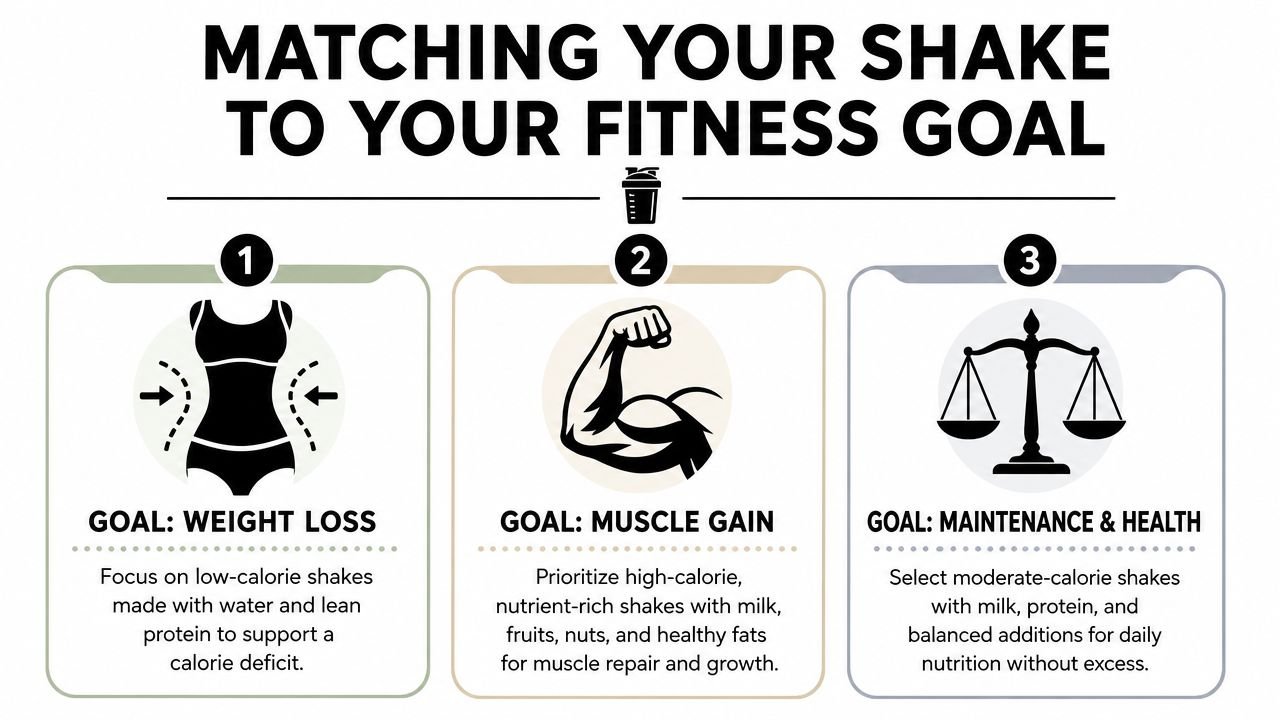
A shake for calorie control usually works best when it stays simple. Start with a protein powder you trust, use water or another very light liquid, and keep extras limited to ingredients that solve a clear problem such as taste, texture, or fullness.
The useful question is not “How low can I get the calories?” It is “Does this shake give me enough protein without subtly turning into a snack plus a meal?”
That is why a basic powder-and-water shake is such a common starting point. It gives you a clean baseline that is easy to log and easy to repeat. If you add fruit, milk, or nut butter, you can see exactly which ingredient changed the total.
If your goal is muscle gain or bigger meals
A muscle-gain shake has a different assignment. It needs to do more than deliver protein. It also needs to help you eat enough overall, especially if solid meals are hard to fit in after training or during a busy day.
Here, higher-calorie ingredients are doing useful work. Milk adds more substance than water. Oats and fruit raise the carbohydrate side. Nut butter increases energy density without adding much volume. A shake like this works like a portable meal, which is often easier to finish than a large plate of food.
If you are still dialing in calorie and macro targets, strive workout's macro calculator guide can help you set a daily target first. Then your shake becomes one piece of the plan instead of a random extra.
If your goal is maintenance
Maintenance usually sits between those two setups. You want enough protein and enough staying power, but not so many add-ins that your shake crowds out the rest of your meals.
A good middle-ground formula is simple:
- a protein base
- a liquid with the texture you want
- one or two add-ins with a purpose
For example, fruit might make sense if the shake is replacing breakfast. Milk might make sense if water leaves you hungry an hour later. Peanut butter might make sense if you need more staying power, but not if you only wanted a quick post-workout drink.
That is the build-your-own mindset. You are matching ingredients to a goal, not copying a generic “healthy shake” and hoping it fits.
A quick way to frame it:
- Lower-calorie shake: best for tight calorie budgets, lighter snacks, or post-workout protein
- Moderate shake: best for breakfast support, busy afternoons, or maintenance
- Higher-calorie shake: best for meal replacement, harder training blocks, or increasing total intake
PlateBird makes this easier because you can log the shake as individual ingredients first, then save the version that fits your goal. Once you have a lean version, a maintenance version, and a higher-calorie version saved, choosing the right shake feels more like picking the right tool than guessing at a blender full of calories.
The best protein shake is the one built for the specific job you need it to do, and logged clearly enough that you can repeat it on purpose.
Low and High Calorie Protein Shake Recipes
You open the blender for a "healthy shake" and end up with two very different drinks depending on what lands inside. One version is basically protein and water. The other becomes a full meal. Recipes help because they show how a few small ingredient choices change the total.
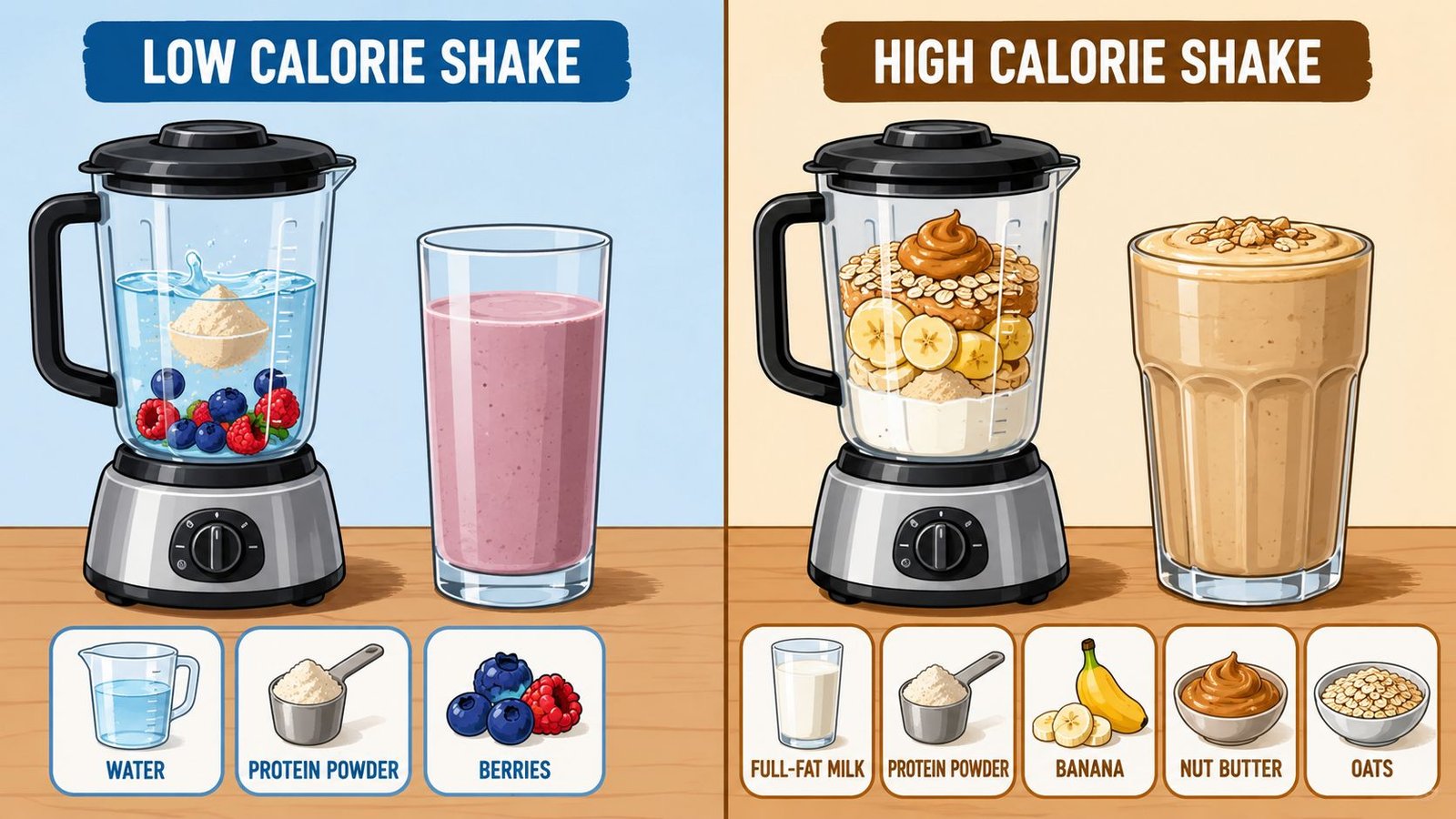
Use these as templates, not rules. The goal is to see the math underneath the flavor so you can rebuild the same shake on purpose and log it accurately.
A lean recovery blueprint
This version works well after training or anytime you want protein without turning the shake into a mini meal.
Ingredients
- One scoop whey protein
- Water
- Ice
- Optional cinnamon or unsweetened cocoa for flavor
This is the easiest shake to control because only one ingredient usually carries meaningful calories: the protein powder. Water, ice, and low-calorie flavor add-ins keep the total predictable. If your scoop changes, the calories change. If the scoop stays the same, the shake usually stays in a tight range too.
That makes it a good starter shake for building your logging habit. You are practicing the simplest version first.
A richer everyday shake
This one sits in the middle. It feels more like food, but you can still keep the numbers organized without much effort.
Build idea
- One scoop protein powder
- A more substantial liquid base
- One fruit
- One dense add-in if needed
A helpful way to read this recipe is in layers. The scoop gives you the protein anchor. The liquid changes texture and sometimes adds calories. Fruit adds carbs and flavor. A dense extra, like nut butter or oats, is the part that can move the total up fast.
If you want the shake to stay moderate, keep that last layer to one intentional add-in. That single decision often makes the difference between "supportive snack" and "accidental meal."
For people setting shake calories around a larger daily target, strive workout's macro calculator guide can help you decide whether this version fits better as breakfast support, a snack, or recovery nutrition.
A quick demo can make the contrast easier to picture:
A meal replacement or mass-gain blueprint
At the other end, a high-calorie shake usually gets there through stacking. One scoop becomes two. Water becomes milk. Fruit stays in. Then oats, peanut butter, yogurt, seeds, or similar extras join the blender.
Each add-in is a brick. One brick may be modest. Four or five bricks create a very different drink.
Build idea
- Protein powder
- Milk or another calorie-containing liquid
- Banana or another fruit
- One or two dense add-ins such as oats, nut butter, yogurt, or seeds
This style makes sense for someone with high training demands, low appetite, or a goal of increasing total intake. It also explains why homemade shakes can surprise people. The shake still feels light because you drink it quickly, but the calories can add up like a full breakfast bowl plus a snack.
How to adapt any recipe without losing control
Use a simple checkpoint system. Count the shake in parts before you blend it.
- Protein anchor: powder, Greek yogurt, cottage cheese
- Liquid base: water, milk, soy milk, oat milk
- Carb add-ins: fruit, oats, honey
- Fat add-ins: peanut butter, almond butter, chia, flax
- Flavor extras: cocoa, cinnamon, vanilla extract
If you want fewer calories, trim one carb or fat add-in first. If you want a more filling shake without pushing the total too high, increase volume with ice, water, or lower-calorie fruit. If you want a higher-calorie shake, add one dense ingredient at a time and log each version separately so you can compare them later.
That is where PlateBird becomes practical. You can build the shake ingredient by ingredient, save the versions you repeat, and use a calorie counter app that can take a picture of food when you want a faster logging option for homemade meals and shakes.
Logging Your Shake in Seconds with PlateBird
The hardest part of custom shakes isn't usually making them. It's logging them without turning your kitchen into a spreadsheet.
Why custom shakes are annoying to track
Store-bought drinks are easy because the nutrition is printed on the bottle. Homemade shakes are different. You have to remember the scoop size, the liquid, and every extra you tossed into the blender.
That's where individuals often give up and enter something vague like “protein smoothie.” The log becomes less accurate, and over time that makes it harder to learn from what you're eating.
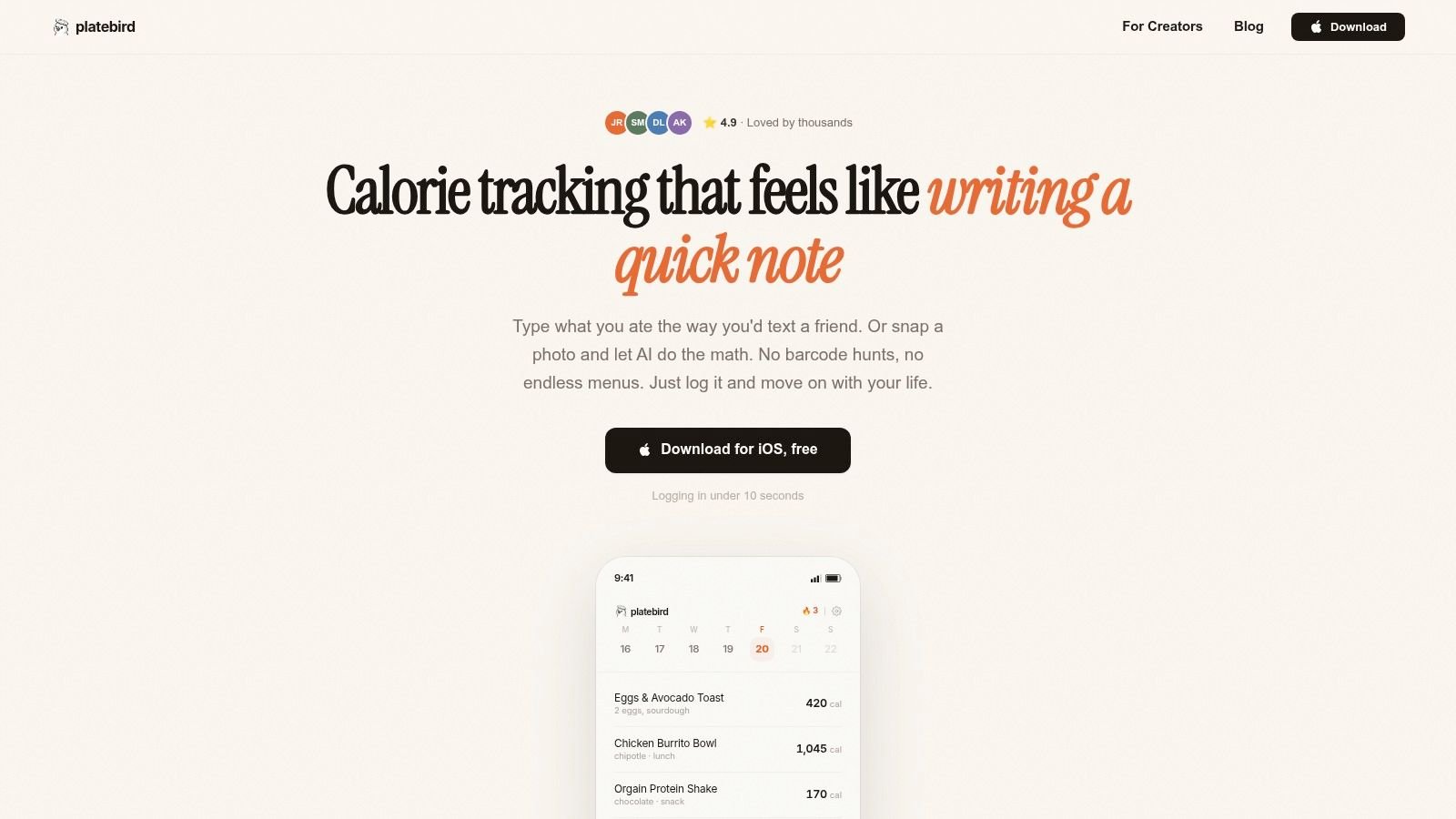
A better approach is using a tool built for fast custom entries. If you prefer photo-based logging instead of typing ingredients, this page on a calorie counter app that can take a picture of food shows how that kind of workflow can simplify homemade meals and shakes.
What makes shake logging faster
For recurring shakes, the best tracking system does three things well:
- It accepts natural language: You can enter something close to how you think, not how a food database is organized.
- It handles custom combinations: Powders, liquids, and add-ins belong in one quick entry.
- It saves repeat meals: If you drink the same breakfast shake often, you shouldn't rebuild it every morning.
That matters because shakes are one of the most repeated foods in many people's routines. The same person might drink the same post-workout blend four or five times a week. Once that recipe is saved, logging becomes much easier.
A practical logging habit that actually sticks
Use this routine:
Build the shake the same way a few times
Consistency makes the nutrition easier to understand.Log ingredients with plain language
Don't overcomplicate the entry.Save your common versions
A light recovery shake and a higher-calorie meal shake can each become repeatable templates.Adjust one variable at a time
Change the liquid, or change the add-in, but don't overhaul everything at once if you want clean tracking.
The easier it is to log your shake, the more likely you are to keep doing it. Good nutrition habits usually depend on low friction, not perfect motivation.
Beyond the Numbers Shaking Up Your Nutrition
Protein shakes get easier once you stop treating them like a single mystery food. They're built from parts. Powder, liquid, and add-ins. That's it.
When you understand that framework, protein shake calories stop being something you guess at and start becoming something you control. You can build a lean shake for recovery, a moderate shake for a busy afternoon, or a higher-calorie shake for meal support. None of those is automatically right or wrong. The fit depends on your goal.
That's the shift. You're no longer asking whether protein shakes are “good” or “bad.” You're deciding what role your shake should play, then building it on purpose.
And once you can build it on purpose, logging it becomes a lot less intimidating.
If you want an easier way to track custom shakes without manually rebuilding every ingredient each time, PlateBird makes the process much faster. You can type your shake in plain language, use photo-based logging, and save recurring recipes so your usual blend is ready in a tap.