- Introduction to Choosing the Ideal Protein Bar
- Understanding What Defines a Great Protein Bar
- Nutrition Criteria Tailored to Your Goals
- Screening Ingredients Allergens and Functional Additives
- Timing Purpose and Portability Tradeoffs
- Smart Shopping and Quick Logging in PlateBird
- Conclusion and Your Next Steps
You finish a workout, your stomach starts growling, and you grab the first protein bar within reach. The wrapper promises strength, energy, and clean ingredients. An hour later, you're hungry again, a little foggy, and wondering why a “healthy” bar felt more like a detour than a recovery plan.
That moment is why people keep asking what's the best protein bar. The hard part isn't finding one. It's choosing one that matches what you need.
Some bars work like a compact meal tool. Others are closer to dessert with a fitness label. The difference shows up in how full you feel, how steady your energy stays, and whether the protein inside is the kind your body can use well. A good bar should help you recover, hold you over, or bridge a busy day. It shouldn't leave you chasing another snack twenty minutes later.
Introduction to Choosing the Ideal Protein Bar
A protein bar looks simple. Tear, eat, move on. But choosing the right one is more like picking shoes for a specific job. Running shoes work for a jog. They're not what you'd want for a construction site. Protein bars work the same way. The best option after lifting weights may be the wrong one for a desk-drawer snack.
That's where people get tripped up. They look at the front of the package, see “high protein,” and assume the job is done. But two bars with the same protein number can behave very differently once you eat them. One may keep you satisfied and support recovery. Another may rely on fillers, excess sweeteners, or a protein source that isn't as useful for your goal.
A protein bar is a tool, not a trophy. The best one is the one that fits the moment.
If you want a short answer, here it is: the best protein bar is the one that gives you complete protein, keeps sugar and net carbs in check when steady energy matters, and uses ingredients you tolerate well. But that answer only helps if you know how to read the details.
Understanding What Defines a Great Protein Bar
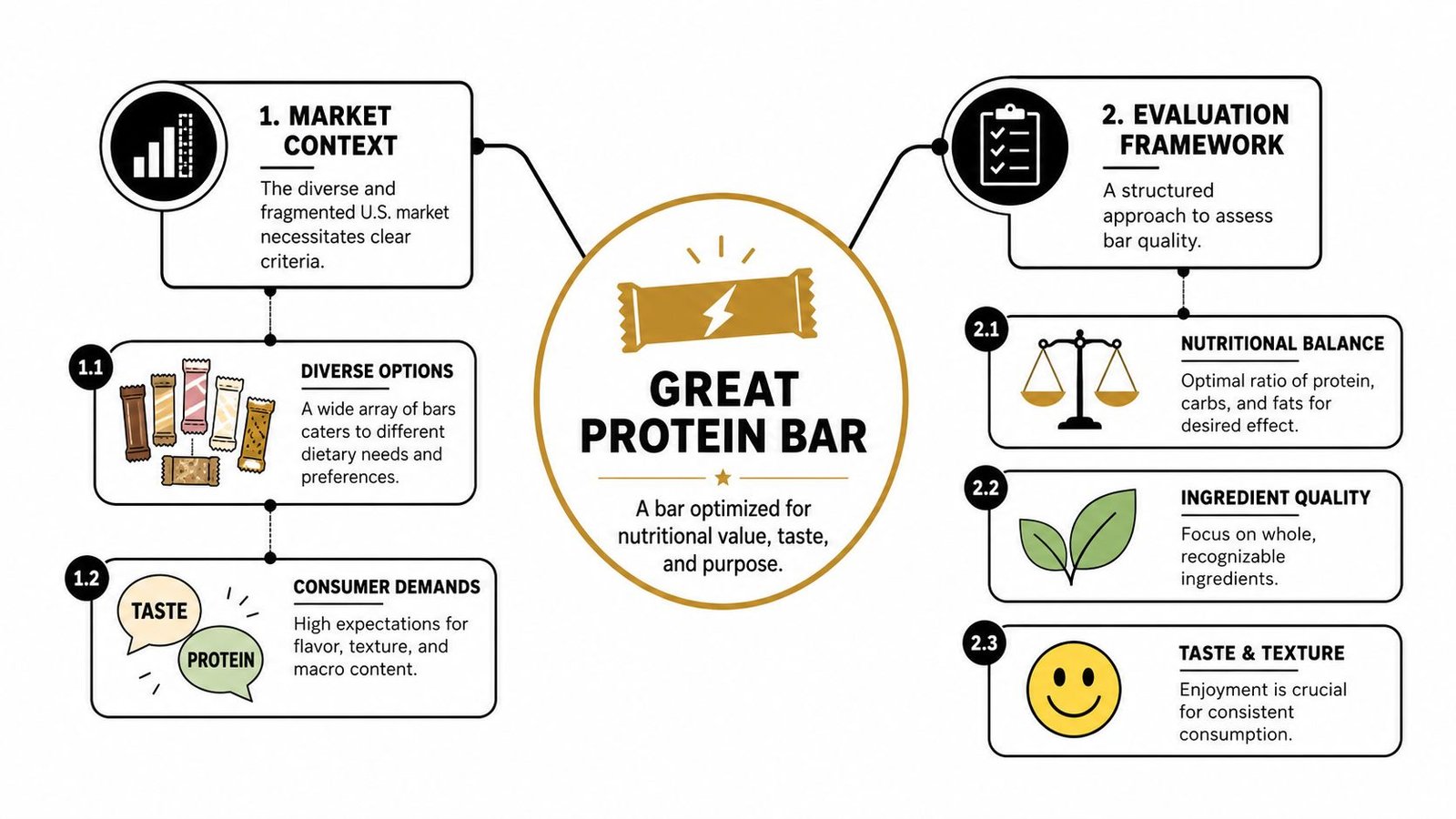
The protein bar aisle feels crowded for a reason. The global protein bar market reached USD 15.8 billion in 2025, with North America holding 37.5% of the market and the U.S. accounting for 64.43% of North America. The top five companies control roughly 45 to 50% of global sales, which shows how strongly brand familiarity shapes what people see as “best” even when nutrition quality varies across products, according to Grand View Research's protein bar market analysis.
That market size tells you something important. Big shelves and big brands don't automatically make your decision easier. They often make it noisier.
The five things that matter most
When people ask what's the best protein bar, I use a simple filter:
- Protein quality first: Look for complete protein sources such as whey isolate, egg white, or a verified pea-rice blend.
- Macro balance second: Protein matters, but so do added sugar, net carbs, and calorie efficiency.
- Ingredients third: A shorter list isn't always better, but a clearer list usually is.
- Purpose fourth: A post-workout bar and a meal-replacement bar don't need the same profile.
- Practical fit last: Taste, portability, and price decide whether you'll keep using it.
That last point matters more than people admit. A “perfect” bar you hate chewing through won't become part of your routine.
Brand reputation versus actual value
Well-known brands often win because they're visible, not because they're nutritionally superior. That's why it helps to step back from the packaging and use a checklist. Much like apartment hunting, nice photos can get your attention, but square footage, location, and rent decide whether it works in real life.
If you're comparing bars with simpler ingredient styles, it can help to discover natural protein options and see how minimally processed protein products are described. That won't choose a bar for you, but it sharpens your eye for what ingredient transparency looks like.
Practical rule: Don't let the front label decide. Let the nutrition panel and ingredient list make the case.
Nutrition Criteria Tailored to Your Goals
The clearest benchmark in this category is straightforward. The optimal bar for muscle recovery and metabolic stability contains 20 to 30 g of complete protein, 5 g or less of added sugar, and 8 g or less of net carbs, while also providing at least 0.15 g of protein per calorie, based on this high-protein snack bar guide.
That sounds technical, but it becomes simple once you translate it into real life. Protein is your repair material. Sugar and fast carbs are more like kindling. Useful in the right context, but easy to overdo if your goal is steady energy.
Macro targets by goal
| Goal | Protein (g) | Sugar (g) | Carbs (g) | Fiber (g) |
|---|---|---|---|---|
| Muscle recovery | 20 to 30 | 5 or less added sugar | 8 or less net carbs | Enough to support a fiber-to-sugar ratio above 2:1 |
| Weight loss support | 20 to 30 | 5 or less added sugar | 8 or less net carbs | Enough to support a fiber-to-sugar ratio above 2:1 |
| Blood sugar stability | 20 to 30 | 5 or less added sugar | 8 or less net carbs | Enough to support a fiber-to-sugar ratio above 2:1 |
| On-the-go meal bridge | 20 to 30 | Keep added sugar low | Keep net carbs controlled if steadiness matters | Favor enough fiber to improve staying power |
Why protein grams alone can mislead
A bar can list a big protein number and still underdeliver. What matters is whether the protein is complete and useful for recovery. Whey isolate and egg white are easy examples. A verified pea-rice blend can also work well. Collagen and gelatin are different. They may add grams to the label, but they don't offer the same amino acid profile for muscle support.
Think of complete protein like a full toolbox. You can build with it. Incomplete protein is more like showing up with only a hammer.
The sugar and net carb piece
Bars with more than 5 g added sugar or more than 8 g net carbs can be fine in some situations, but they're more likely to create a quick rise and fall in energy when you wanted something steady. That's especially important if you tend to get hungry soon after sweet snacks.
A common confusion: people assume “low sugar” always means “better.” Not necessarily. Some bars replace sugar with sugar alcohols or bulky fiber blends that can upset your stomach. You're not just reading for sweetness. You're reading for how the whole formula behaves.
Don't ignore protein per calorie
The 0.15 g of protein per calorie benchmark is useful because it filters out bars that look healthy but waste a lot of room on low-value extras. If a bar is calorie-dense and protein-light, it may still taste good, but it's probably not the best fit if your goal is satiety or fat loss.
A practical meal-planning shortcut
Some people discover that bars work best as backups, not staples. If that sounds like you, pairing a better bar strategy with simple high-protein meals can help. A resource like Just Cook It Protein Powerhouse can give you more at-home options so bars stay a convenience tool rather than your default lunch.
If a bar looks impressive on the wrapper but weak on complete protein, low on satiety, or messy on digestion, it isn't a high performer. It's packaging with macros.
Screening Ingredients Allergens and Functional Additives
Ingredient lists tell you what the front label leaves out. This matters most for three groups of ingredients: allergens, protein sources, and functional add-ins.
Allergens and cross-contact notes
If you react to dairy, soy, peanuts, or tree nuts, the “may contain” statement deserves the same attention as the main ingredient list. Some bars are manufactured in facilities that handle multiple allergens, and that warning matters for sensitive readers.
Two bars can look similar on the shelf and still be very different in real use:
- Bar A: Whey protein isolate, almonds, milk-derived ingredients. Good fit for someone who tolerates dairy and nuts.
- Bar B: Pea-rice protein blend, seed butter, no dairy ingredients listed. Better fit for someone avoiding milk, but still worth checking the cross-contact line.
If label reading still feels confusing, this guide on how to read nutrition labels breaks down what to scan first and what usually matters less.
Functional ingredients that sound better than they work
Bars now often include probiotics, adaptogens, greens, or superfoods. The problem is that many products advertise these add-ins without showing whether the dose is meaningful. As noted in YouBar's 2025 food trend overview, many best-of lists still don't evaluate whether those ingredients appear in clinically meaningful amounts.
That doesn't mean all functional ingredients are useless. It means you should be skeptical when a bar tries to be a supplement shelf in one wrapper.
Question to ask: Is this ingredient here to help, or is it here to decorate the marketing?
A simple side-by-side test
When you compare two labels, ask:
- What's doing the protein work: Whey, egg white, or a solid plant blend?
- What could trigger you: Dairy, soy, nuts, artificial sweeteners, or sugar alcohols?
- What sounds exciting but vague: Probiotics, adaptogens, superfoods, mushroom blends?
If the answers are clear, the bar is easier to trust. If the label reads like a costume, keep walking.
Timing Purpose and Portability Tradeoffs
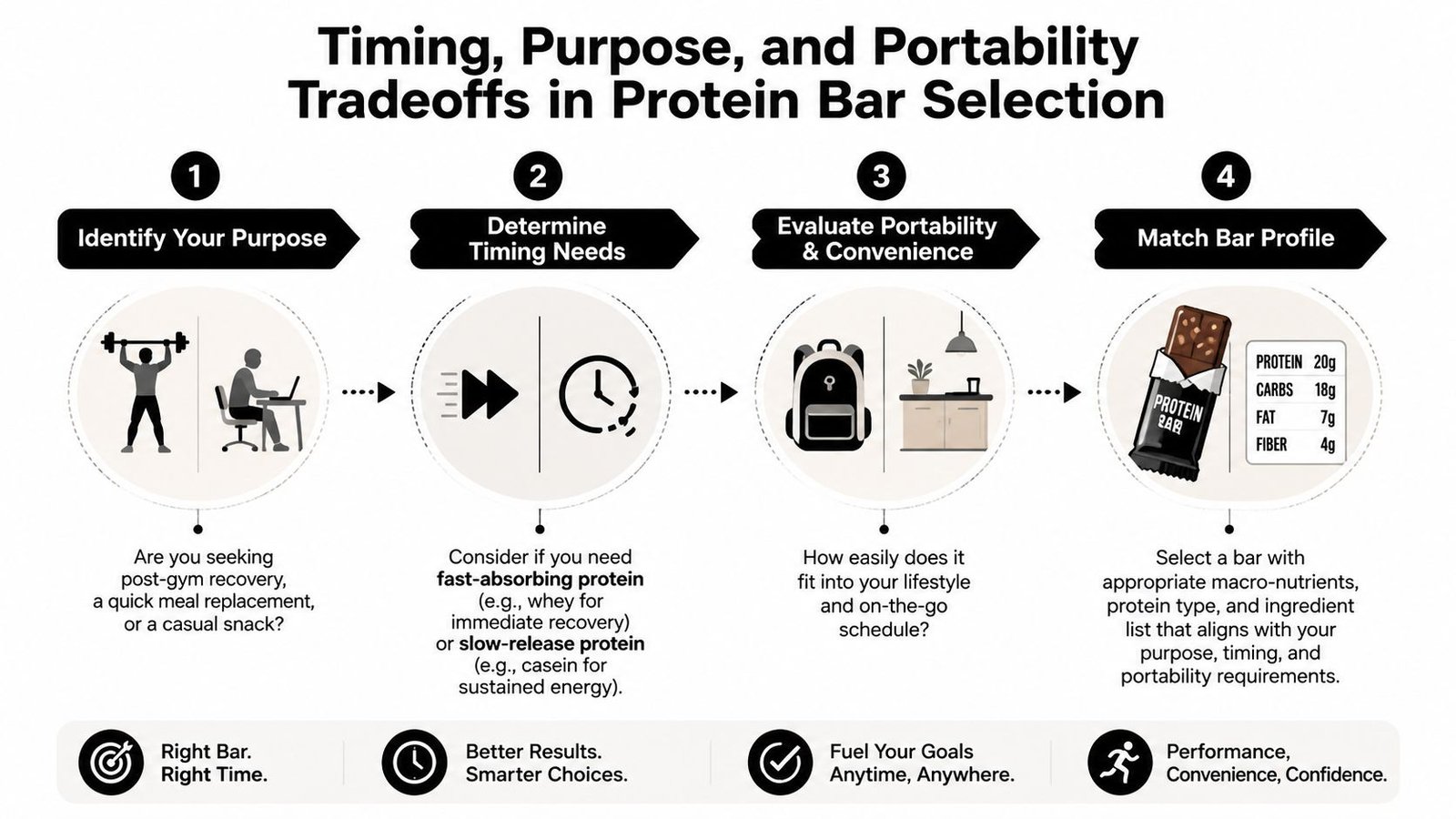
You don't need one perfect protein bar. You need the right bar for the right job. That's why timing matters.
Consumer behavior points in the same direction. Over 67% of consumers want portable nutrition that combines high protein with low sugar, while 55% use bars for sports recovery and 35% use them as meal replacements, according to Global Growth Insights' protein bar market report.
Match the bar to the moment
A post-workout bar should be easy to eat and built around usable protein. A workday snack bar should focus more on staying power and ingredient tolerance. A meal-bridge bar can afford to be a little heavier if it keeps you full.
It's like luggage:
- Gym bag option: Light, direct, easy to use fast.
- Desk drawer option: Stable, reliable, less likely to upset your stomach.
- Travel backup option: Durable, portable, and not too crumbly or temperature-sensitive.
Four quick decisions
- Choose the purpose. Recovery, snack, or meal bridge.
- Check digestion risk. Some bars are fine at home but uncomfortable before a meeting or commute.
- Consider storage. Heat-sensitive bars aren't great for cars or backpacks.
- Decide if convenience is worth the price. Sometimes it is. Sometimes leftovers do the same job better.
If you're building an on-the-go snack rotation, this roundup of portable protein snacks can help you compare bars with other practical options.
When a bar isn't the right fuel
Bars are useful, but they aren't ideal for every situation. For endurance sessions or rides where quick carbohydrate delivery matters more than a balanced snack, a bar may feel too slow or too bulky. In those cases, it helps to boost your ride with energy gels and compare how different fuel formats serve different kinds of effort.
The best portable choice isn't always the most nutritious item in the store. It's the one that still works after sitting in your bag all day, tastes acceptable, and matches what your body needs next.
Smart Shopping and Quick Logging in PlateBird
Shopping for bars gets easier when you stop browsing by flavor and start filtering by purpose. In a store, turn the package over before you get attached to the branding. Online, use the nutrition panel and ingredient list as your first screen, not the review count.

Shop like you're building a short list
A practical way to do it:
- Start with three candidates: Don't compare twenty at once. Pick three bars that fit your dietary needs.
- Scan the protein source first: This narrows the field quickly.
- Use the sugar and net carb check next: If steady energy matters, this step saves time.
- Read the ingredient list last: The ingredient list reveals sweetener issues, allergens, and marketing fluff.
This is also where people often discover that a “healthy snack” bar is really a granola bar with extra protein dust. If you want a reference point for comparison, this guide to healthy granola bar brands helps show where the line often sits between snack bars and true protein-focused options.
Logging helps you learn what works for you
Most reviews focus on total protein grams. But that misses an essential issue: protein utilization. As discussed in Jacob Zemer's 2025 protein bar review, many guides don't account for the fact that whey and plant blends can differ in how people think about absorption and use. Tracking helps connect the label with your actual experience.
A good logging habit answers questions that packaging can't:
- Did this bar keep you full?
- Did it sit well?
- Did it help after training or leave you hungry?
- Do you consistently perform better with one protein type over another?
A simple PlateBird workflow
Here's where quick logging becomes useful. Instead of trying to remember which bar worked last week, you can record it right when you eat it.
Type the bar name and serving details the way you'd jot a note. If the packaging is unfamiliar or you're comparing options, use the camera workflow to capture the product and save it. Once you've logged a bar a few times, recurring choices become easier to reuse.
This short demo shows how fast that process can feel in practice:
The point of tracking isn't perfection
You don't need to log every bite forever. You just need enough data to notice patterns. Maybe one bar looks perfect on paper but never satisfies you. Maybe another has a cleaner ingredient list and becomes your dependable travel option.
That feedback loop is what turns “what's the best protein bar” from a general internet question into a personal answer you can use.
A food label tells you what the manufacturer made. A tracking habit tells you whether it worked for you.
Conclusion and Your Next Steps
The best protein bar isn't the loudest brand or the prettiest wrapper. It's the bar that matches your goal, uses a protein source your body can use well, keeps ingredients sensible, and fits the moment you need it.
Start small. Pick one goal. Check the protein source. Scan added sugar and net carbs. Read the ingredient list for allergens and fluff. Then track how the bar performs in real life. That's how you stop guessing.
Choosing better bars is a lot like tuning an engine. Better fuel helps, but feedback is what keeps things running well.
If you want a faster way to turn protein bar choices into usable feedback, try PlateBird. You can log foods by typing what you ate or snapping a photo, save repeat meals as shortcuts, and make tracking simple enough to stick with on busy days.