You're probably here because 1800 calories sounds reasonable on paper, but your actual day doesn't feel reasonable at all. You start with good intentions, keep meals “healthy,” and by late afternoon you're hungry, distracted, and picking through whatever's easiest. Then dinner turns into guesswork, and the whole plan feels harder than it should.
That's usually not a willpower problem. It's a protein distribution problem.
A solid 1800 calorie meal plan high protein approach gives you enough structure to stay in control, but enough flexibility to live like a normal person. You don't need a bodybuilder meal prep spreadsheet or the same chicken-and-rice container seven days straight. You need meals that are easy to repeat, simple to swap, and filling enough that you're not negotiating with cravings all evening.
Why a High-Protein Plan Works at 1800 Calories
I've seen the same pattern over and over. Someone cuts calories first, then tries to “eat clean,” but their meals are built around light portions, snack foods, and low-protein choices. Technically they're staying near target, but they're hungry all the time and frustrated that the plan feels so fragile.
Protein changes that experience. It makes an 1800-calorie intake feel more stable, more satisfying, and more supportive of strength training or body recomposition goals. Instead of white-knuckling your way through the day, you build meals that hold you.
The old minimum vs the modern reality
Institutional guidance has shifted. Historical meal-plan guidance often treated 60 to 75 grams of protein per day as a minimum for some adults on an 1800-calorie plan, while Nestlé Medical Hub's 2025 guidance for an 1800-calorie plan advises prioritizing protein up to 120 grams per day in some adults, which reflects a more individualized and protein-aware approach to meal planning (Nestlé Medical Hub 1800-calorie meal plan guidance).
That shift matters because those trying to lose fat or maintain muscle don't benefit from treating protein like an afterthought. They do better when every meal has a clear protein anchor.
Practical rule: If your lunch is mostly carbs with a little protein on the side, hunger usually catches up with you later.
What this feels like in real life
A high-protein 1800-calorie plan works best when it reduces friction. Breakfast keeps you from raiding the office snacks. Lunch leaves you functional instead of sleepy. Dinner feels satisfying enough that you don't go hunting for “something sweet” an hour later.
If you need ideas for better staples, this list of satiating protein sources for diet is useful because it gives you practical food options instead of abstract nutrition advice.
The big trade-off is simple. High-protein eating at 1800 calories usually means you can't spend calories casually. Sugary drinks, random bites, oversized bakery snacks, and “healthy” foods with very little protein take up room fast. That doesn't mean your plan has to be rigid. It means your calories need a job.
Setting Your Macro and Protein Goals
“High protein” means different things to different people, so it helps to anchor it in a real range instead of guesswork. At 1800 calories, practical meal plans often land between 124g and 177g of protein per day. One example provides 124g protein within 1,808 calories, while a pescetarian version reaches about 171g protein per day with 129g net carbs and 54g fat, showing that this calorie level can support a strong protein target without turning into an all-protein diet (Strongr Fastr 1800-calorie pescetarian high-protein plan).
That gives you a very practical takeaway. For individuals using an 1800 calorie meal plan high protein strategy, aiming in the middle of that range makes the plan easier to sustain than chasing the very top end every day.
A useful target to start with
For day-to-day planning, I like a target that feels ambitious but repeatable:
- Protein: enough to make each meal filling and each snack purposeful
- Carbs: enough to support training, focus, and normal life
- Fats: enough to keep meals satisfying and balanced
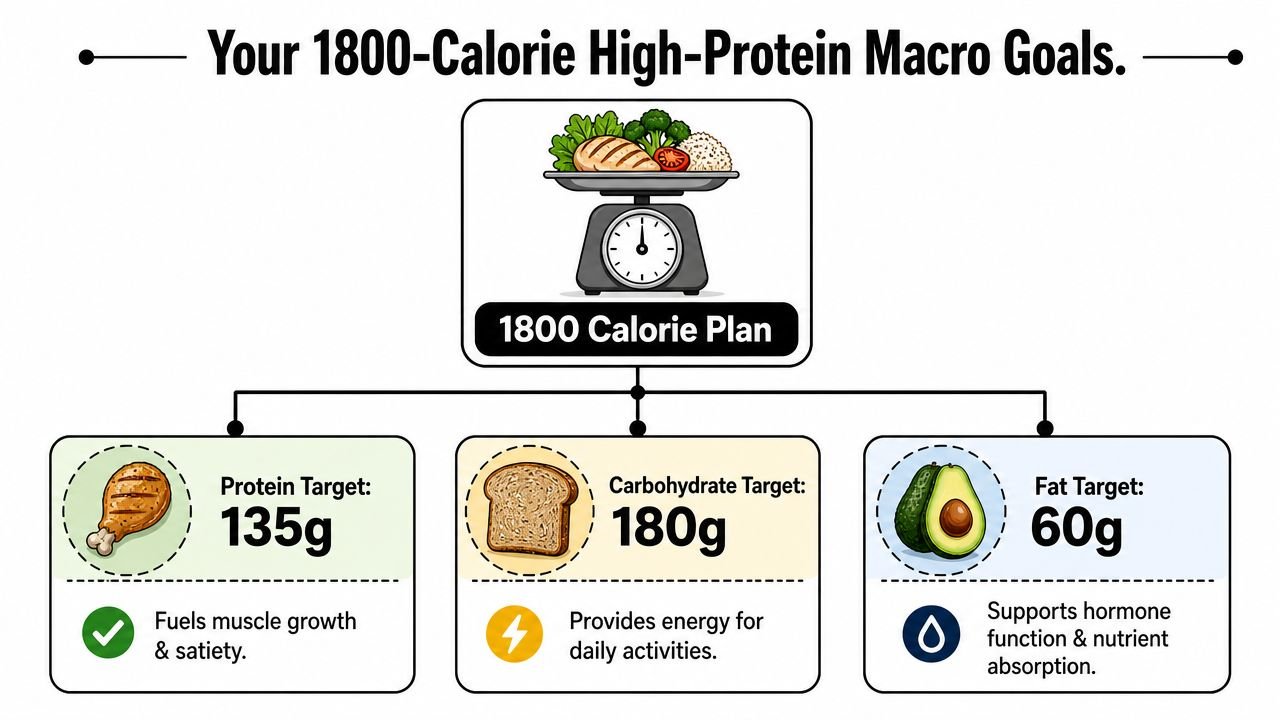
That visual is a starting framework, not a rulebook. Some people do better a bit higher on carbs. Others prefer slightly more fat because it helps meals feel more satisfying. What matters most is that protein stays consistently high enough to shape the day.
What each macro is doing
| Macro | Job in the plan | What happens if it's too low |
|---|---|---|
| Protein | Supports fullness and muscle repair | Meals feel less satisfying |
| Carbohydrate | Fuels activity, workouts, and daily energy | Energy can feel flat |
| Fat | Adds staying power and helps meals feel complete | You may feel less satisfied after eating |
A common mistake is trying to “save calories” by shrinking meals too much early in the day. Then the evening becomes a recovery mission. A better setup is to give breakfast and lunch enough substance that your appetite stays manageable.
If mornings are rushed, tools like protein coffee K Cups can help some people add convenience to a higher-protein routine, especially when breakfast tends to get skipped or delayed.
For a more personalized way to think about targets, PlateBird's guide on what your macros should be is a useful next step because it helps translate the general framework into something you can apply.
The best macro setup is the one you can repeat on a busy Tuesday, not the one that only works when your week is perfect.
Your 7-Day High-Protein Meal Plan Framework
The most effective high-protein plans don't rely on one giant dinner to “catch up” on protein. A practical structure is to spread protein across the day. One published framework for an 1800 to 2000 kcal high-protein day uses roughly 30 to 40g protein at breakfast, 40g at lunch, and 15g per snack, helping the day reach about 120 to 140g total protein. That same example uses 140g protein and notes that it exceeds a 120g target as a buffer (DJK Fit high-protein meal plan structure).
That structure works because it controls hunger before hunger controls you.
Day 1 sample plan
Below is a fully built example day. The exact calorie and protein values are approximate, which is fine for a practical meal plan. The point is the pattern.
Sample Day 1 Meal Plan (Approx. 1800 kcal, 140g Protein)
| Meal | Food Item | Calories (kcal) | Protein (g) |
|---|---|---|---|
| Breakfast | Greek yogurt bowl with oats, berries, chia, and eggs on the side | Approx. 400 | Approx. 35 |
| Snack | Cottage cheese with fruit | Approx. 200 | Approx. 15 |
| Lunch | Grilled chicken rice bowl with roasted vegetables and olive oil | Approx. 500 | Approx. 40 |
| Snack | Protein smoothie with milk or soy milk and fruit | Approx. 200 | Approx. 15 |
| Dinner | Salmon, potatoes, and broccoli with a side salad | Approx. 500 | Approx. 35 |
Days 2 through 7
Use the same structure all week, but rotate the foods so you don't get bored.
Day 2
Breakfast: egg scramble with spinach, toast, and Greek yogurt
Lunch: turkey wrap with crunchy vegetables and fruit
Snack options: edamame, cottage cheese, or a protein shake
Dinner: lean beef or tofu stir-fry with rice
Day 3
Breakfast: overnight oats mixed with Greek yogurt or soy yogurt
Lunch: tuna or chickpea protein bowl with quinoa and chopped vegetables
Snack options: boiled eggs, roasted soybeans, or yogurt
Dinner: chicken breast or tempeh with sweet potato and green beans
Day 4
Breakfast: smoothie with protein-rich dairy or soy base, berries, and oats
Lunch: salmon salad with grains and avocado
Snack options: cottage cheese with cinnamon, tofu cubes, or deli turkey with cucumber
Dinner: turkey meatballs or lentil balls with pasta and roasted zucchini
Day 5
Breakfast: breakfast sandwich with eggs and a high-protein side
Lunch: burrito bowl with chicken, beans, rice, salsa, and lettuce
Snack options: yogurt bowl, edamame, or a shake
Dinner: shrimp or tofu noodle bowl with vegetables
Day 6
Breakfast: protein pancakes or oatmeal paired with eggs
Lunch: leftover dinner bowl rebuilt with fresh vegetables
Snack options: cheese with fruit, soy yogurt, or a smoothie
Dinner: baked fish or seitan with potatoes and a large salad
Day 7
Breakfast: cottage cheese bowl with fruit and toast
Lunch: grilled chicken sandwich or marinated tofu sandwich with salad
Snack options: boiled eggs, hummus with a protein side, or Greek yogurt
Dinner: chili made with turkey, beans, or lentils and a side of vegetables
Swap this for that
Here, the plan becomes livable. You don't need to follow one menu exactly. You need to protect the structure.
- Swap chicken for fish or tofu: Keep the meal's protein anchor and leave the rest of the plate mostly intact.
- Swap rice for potatoes or quinoa: Choose the carb source you digest well and enjoy.
- Swap Greek yogurt for cottage cheese or soy yogurt: Use the one you'll buy consistently.
- Swap eggs for tofu scramble: Especially useful if you want a plant-based breakfast with a similar role in the meal.
- Swap a cooked lunch for a wrap or bowl: Same ingredients, faster assembly.
Vegetarian and vegan versions
A lot of people assume a high-protein 1800 plan has to revolve around chicken, turkey, and whey. It doesn't.
For vegetarians, the easiest staples are Greek yogurt, cottage cheese, eggs, tofu, tempeh, edamame, and higher-protein wraps or breads. For vegans, focus on tofu, tempeh, edamame, soy yogurt, seitan, lentils, beans, and protein-fortified dairy alternatives when they fit your preferences.
A simple rule helps here:
Build each meal around one obvious protein source first. Then add vegetables, carbs, and fats around it.
What tends not to work
These are the patterns that usually derail a high-protein plan:
- Tiny breakfasts: A light breakfast often creates a much harder afternoon.
- Protein only at dinner: By then, you've already spent most of the day hungry.
- Snack foods pretending to be meals: Crackers, granola bars, and fruit alone don't carry a high-protein day.
- Too little flexibility: If you can't swap ingredients, the plan breaks the first time life gets messy.
The best 7-day plan is the one you can run again next week with only minor changes.
Grocery List and Meal Prep Schedule
Execution matters more than meal-plan perfection. If your food isn't in the fridge, washed, cooked, or easy to grab, you'll end up relying on convenience food that doesn't support your protein target very well.
Keep the shopping list simple and repetitive. Repetition isn't boring when it saves time and removes decisions.
Core grocery list
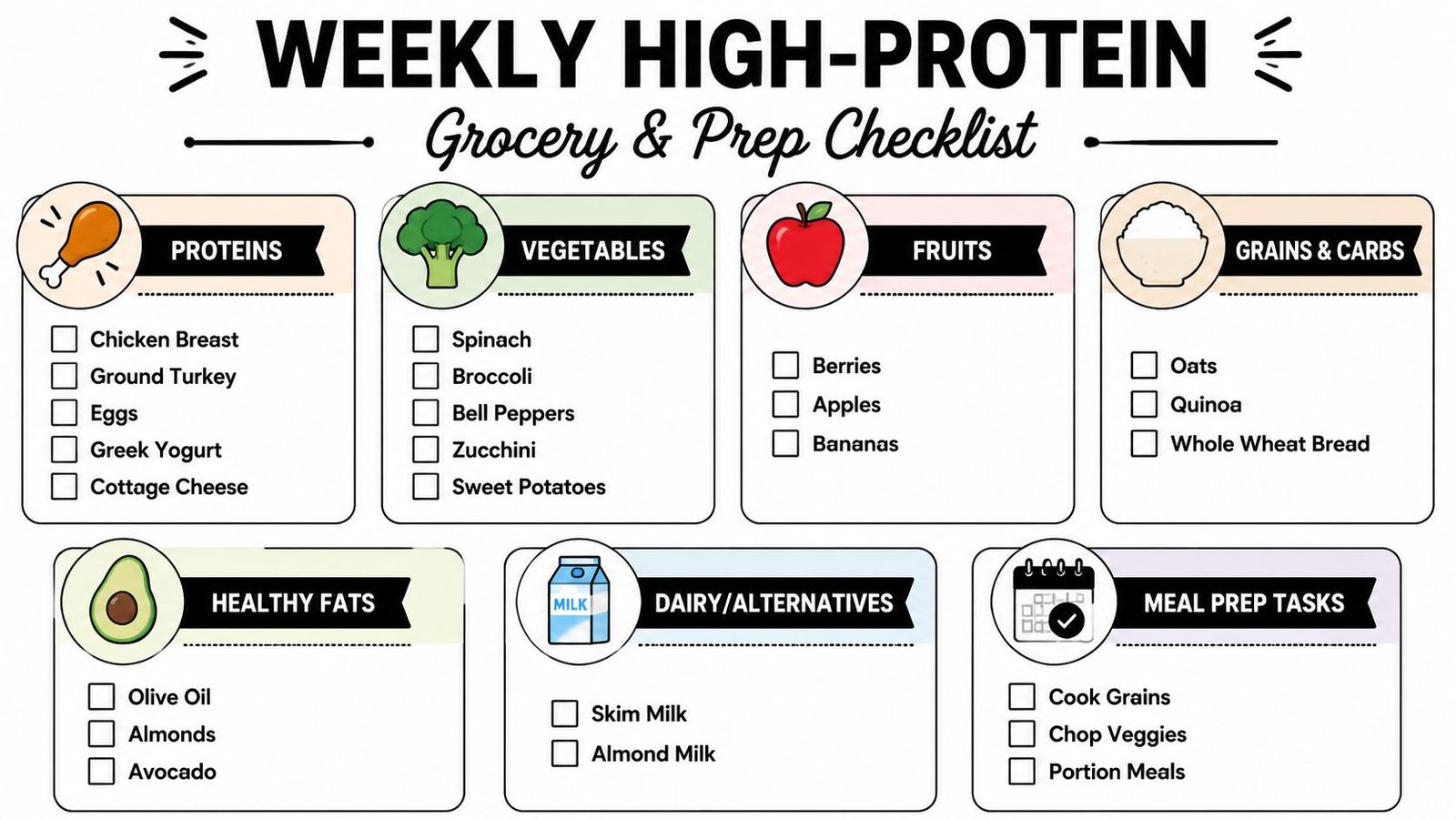
Proteins
- Chicken breast
- Turkey
- Eggs
- Greek yogurt
- Cottage cheese
- Salmon or tuna
- Tofu
- Tempeh
- Edamame
Carbs and grains
- Oats
- Rice
- Quinoa
- Potatoes or sweet potatoes
- Whole grain wraps
- Whole grain bread
- Pasta
Vegetables
- Spinach
- Broccoli
- Bell peppers
- Zucchini
- Salad greens
- Cucumbers
- Green beans
- Onions
Fruit
- Berries
- Bananas
- Apples
- Grapes or any easy grab-and-go fruit
Fats and extras
- Olive oil
- Avocado
- Nuts
- Nut butter
- Salsa
- Seasonings
- Low-sugar sauces you like
If you're feeding a household, it helps to borrow ideas from high-protein meals for busy families so your food prep doesn't turn into making separate meals for everyone.
A realistic prep routine
You don't need a marathon Sunday session. You need enough prep to make the week easy.
Step 1
Cook a few protein bases. Grill or bake chicken, cook turkey, press and bake tofu, or prepare hard-boiled eggs.
Step 2
Cook your main carb choices. Rice, potatoes, quinoa, and oats cover most of the week.
Step 3
Wash and chop vegetables so lunch bowls and dinners take minutes instead of effort.
Step 4
Portion easy snacks. Yogurt, cottage cheese, fruit, and edamame become much more useful when they're already ready.
Step 5
Leave room for one fresh-cooked dinner or a takeaway night. Meal prep works better when it bends.
For more practical ideas, PlateBird's guide to high-protein meal prep is a strong resource if you want examples that feel realistic instead of overly strict.
If your weekday plan depends on cooking from scratch every single time, it probably won't survive a busy week.
Effortless Tracking with PlateBird
Meal plans aren't usually abandoned due to a dislike of protein. Instead, they're abandoned because tracking gets annoying.
The friction adds up fast. Searching for each ingredient. Guessing restaurant meals. Rebuilding the same breakfast over and over. By the time dinner arrives, logging feels like homework, so people stop doing it.
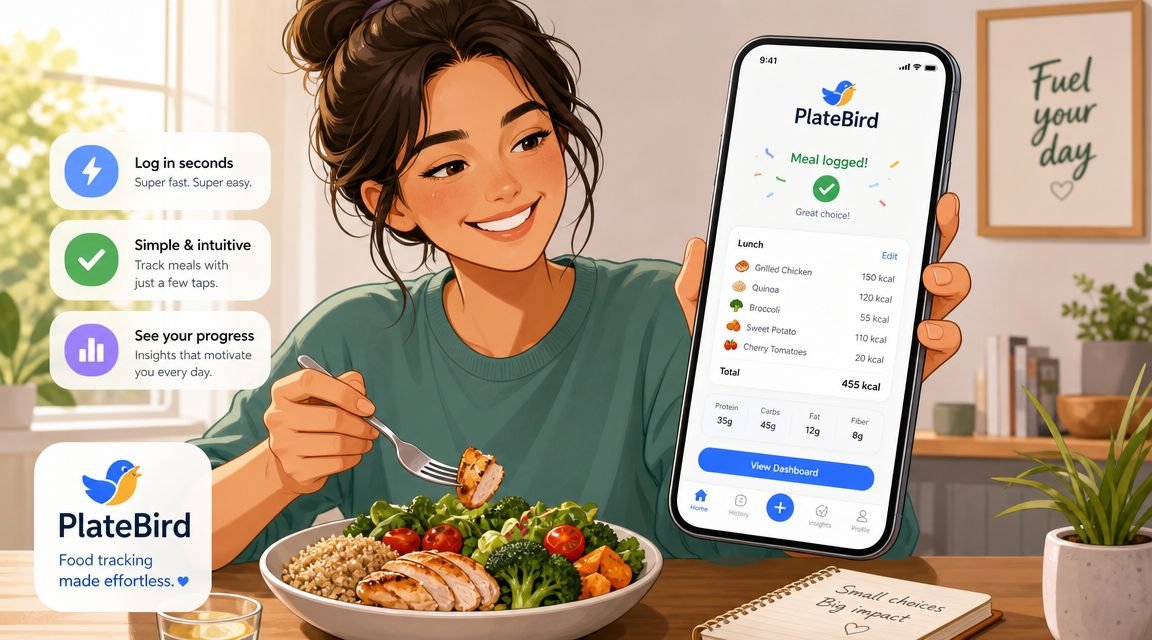
PlateBird solves that exact problem by removing as many steps as possible. Instead of searching through long food databases, you can type meals the way you naturally think about them. If breakfast was eggs, toast, and yogurt, you log it like a note rather than like a spreadsheet.
Why this matters for a high-protein plan
An 1800 calorie meal plan high protein setup works best when you can repeat meals without rebuilding them from scratch. That's where PlateBird is especially useful. Recurring meals turn into shortcuts, which means your standard breakfast or your meal-prep lunch becomes much faster to log.
The photo feature also helps on days when your meals are less structured. If you packed chicken, rice, and broccoli for lunch, or threw together a quick bowl with tofu and vegetables, snapping the plate is easier than manually entering each component.
Consistency beats precision obsession
People often assume good tracking means perfect tracking. It doesn't. Good tracking means you stay engaged long enough to notice patterns, make small adjustments, and keep your protein intake where you want it.
That's why a simpler tracker often beats a more complex one in real life. If it takes too many taps, too much searching, or too much patience, even motivated people fall off.
If you want to compare options, PlateBird's breakdown of the best macro tracking app is worth reading because it focuses on the actual user experience, not just feature lists.
The best logging system is the one you'll still use on a chaotic Wednesday lunch break.
How to Adjust Your Plan and Stay Consistent
An 1800-calorie target is a tool, not a life sentence. Some people feel great on it immediately. Others need to adjust meal size, timing, food choices, or overall calories based on activity, hunger, and results.
If you're very active, 1800 may feel tight. If you're less active, it may feel comfortable. What matters is how your energy, appetite, training, and consistency respond over time.
Signs your plan needs adjustment
Use real-world feedback, not just motivation.
- You're constantly hungry: Increase meal volume with vegetables, choose more filling protein sources, and make sure your meals aren't too small early in the day.
- You're low on training energy: Move more of your carbs around workouts or shift calories toward your pre- and post-training meals.
- You're grazing at night: Check whether breakfast and lunch are underbuilt.
- You're inconsistent on weekends: Loosen the structure slightly instead of trying to be perfect all week and then rebelling.
Handling restaurants, social events, and off days
You do not need a perfect food environment for this plan to work.
At restaurants, look for a clear protein anchor first. Then choose sides that make the meal feel balanced. At family dinners, build the plate around what's available instead of deciding the whole day is ruined because the meal isn't ideal.
One off day doesn't break progress. The bigger issue is the spiral that comes after it. People tend to overcorrect by skipping meals, eating too lightly the next day, and then ending up hungry again.
Miss one meal, one day, or one target if you need to. Just don't miss the next chance to get back on track.
The mindset that actually works
Consistency comes from making the plan easier to repeat. Keep a few default breakfasts. Keep a few lunches you can assemble quickly. Keep backup protein foods at home and at work. Build a system that still functions when you're tired.
That's what turns a high-protein plan from a short burst of motivation into something sustainable.
If you want the easiest way to stick with this style of eating, try PlateBird. It lets you log meals by typing what you ate or snapping a photo, so tracking an 1800 calorie high-protein day feels fast enough to keep doing.