You download a meal plan, print it, buy half the grocery list, and make it to Tuesday. By Wednesday, lunch gets replaced by a work meeting, dinner turns into takeout, and the neat little PDF starts living under a stack of mail.
That's not a motivation problem. It's a design problem.
An 1800 calorie meal plan isn't typically failed because the calorie target is unreasonable. Instead, its failure stems from the plan assuming real life will cooperate. It won't. Schedules shift, workouts run late, kids eat your prepped fruit, and sometimes the only lunch option is whatever you can grab in ten minutes.
A usable plan has to bend without snapping. That's what the rest of this guide is built to do.
Beyond the PDF A Livable 1800 Calorie Plan
The biggest mistake I see is treating a meal plan like a script. Eat this breakfast. Eat this lunch. Eat this snack at this exact time. If you miss one line, the whole day feels blown.
That rigid approach is why so many static plans get abandoned early. As noted in UNC's DELISH guidance, the core issue isn't just what 1,800 calories looks like on paper. It's how to keep the day at that level when life gets messy, especially when people need to swap meals, eat out, or handle training days differently than rest days in a way many PDFs don't address (UNC DELISH 1800 kcal meal plan).
What works better than a fixed menu
A livable system has three parts:
- A base structure: breakfast, lunch, dinner, and one or two planned snacks.
- A food preference lane: omnivore, vegetarian, or vegan.
- A swap rule: if one meal falls apart, you know what to replace it with without guessing.
That's why this guide uses three complete weekly systems instead of one perfect-looking menu. You can choose the lane that matches how you already eat, then adapt it without rebuilding the whole week from scratch.
Practical rule: A good meal plan should survive a late meeting, a restaurant lunch, and a low-energy Wednesday.
The goal is repeatability
The best 1800 calorie meal plan isn't the one with the prettiest recipes. It's the one you can repeat on a busy week without feeling trapped.
That usually means simpler breakfasts, lunches that can be packed or assembled fast, and dinners that don't require a lot of decision-making. It also means accepting that some meals will repeat. Repetition isn't failure. Repetition is how people stay consistent long enough to see progress.
If you want help building that kind of flexible routine, this meal planning framework for real life is a useful companion to the systems below.
What you'll notice in this guide
These plans are designed around normal friction:
- Busy mornings: breakfasts are fast or prep-friendly.
- Unpredictable lunches: most lunches can be packed, batch-cooked, or assembled.
- Evening fatigue: dinners lean on simple combinations, not elaborate recipes.
- Preference changes: each system can be customized without breaking the calorie target.
That's the difference between a document and a system. A document tells you what to do on an ideal day. A system keeps working on an ordinary one.
The Science Behind the 1800 Calorie Target
Not every adult needs 1,800 calories. But there's a reason this target keeps showing up in coaching, clinical handouts, and structured meal plans. It sits in a useful middle range.
According to DASH guidance referenced in ARUP's heart-health meal plan materials, 1,800 to 2,000 calories is an established intake range within that eating pattern, along with a sodium target of 1,500 to 2,300 mg per day and a food pattern built around 6 to 8 servings of grains, 4 to 5 servings each of vegetables and fruits, and 2 to 3 servings of low-fat dairy (ARUP 1800 calorie meal plan PDF). That's why 1,800 calories often functions as a practical middle ground for adults who want structure without extreme restriction.
Why this number is so common
A good calorie target has to do two things at once. It has to be low enough to create useful structure for someone trying to lose weight or eat more intentionally, and high enough to leave room for protein, produce, and meals that still feel normal.
That's where 1,800 tends to work well. It gives enough room for three real meals and snacks, rather than forcing people into tiny portions that look manageable for two days and miserable by the weekend.
Here's the practical reason coaches keep returning to it:
| Why 1800 works | What it means in practice |
|---|---|
| Moderate structure | You can build full meals instead of just chasing the lowest-calorie option |
| Easy to portion | Breakfast, lunch, dinner, and snacks fit naturally into the day |
| Broadly familiar | Many meal-planning resources already use it as a standard framework |
Calories matter, but composition matters too
An 1800 calorie meal plan works best when the calories are distributed on purpose. You want meals that are filling, predictable, and easy to repeat. That usually means anchoring meals around protein, then building in vegetables, higher-fiber carbs, and fats that help with satisfaction.
If you want a deeper look at how calories and protein, carbs, and fat fit together, Gymkee's practical guide to macronutrient calculation is a solid reference. It's especially useful if you're trying to understand why two different 1800 calorie days can feel very different in hunger, gym performance, or energy.
A calorie target gives you the frame. Food quality and meal construction decide whether you can actually live inside it.
When 1800 is a good fit
This target often works well for adults who want a repeatable plan with measurable portions. It can be useful as a maintenance-style structure for some people and a moderate deficit for others. The right test isn't whether the number sounds standard. The right test is whether you can follow it consistently, recover well, and keep your meals nutrient-dense without feeling boxed in.
If you're constantly ravenous, losing control at night, or under-eating during the day and rebounding later, the problem may not be discipline. The structure may need adjustment.
Three Complete 7-Day Meal Plan Options
Seven-day plans remain popular for a reason. They're easy to follow, easy to shop for, and easier to repeat than free-form eating. That's one reason 1,800-calorie plans became standard in nutrition counseling, and organizations such as Diabetes UK publish preset 7-day plans because fixed structure helps people hit targets more consistently than improvising every meal (Diabetes UK 1800 calorie plan).
Use these plans as templates, not prison cells. If you want variety, swap within the same meal category and keep portions consistent.
Here's the visual overview before the daily plans.
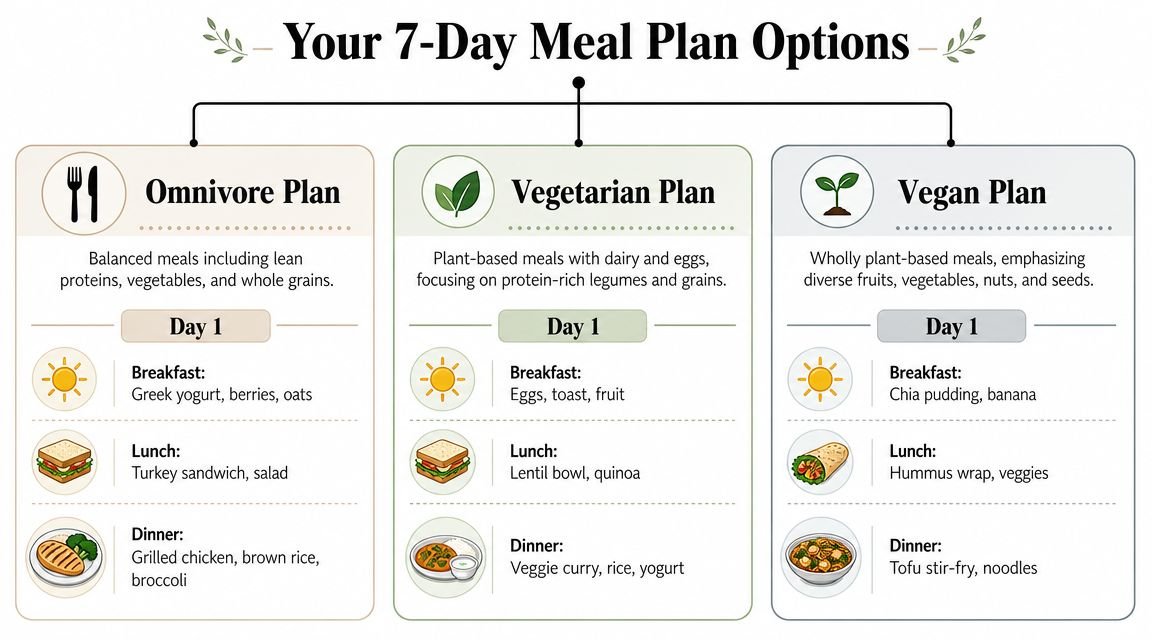
Omnivore 7-day plan
Day 1
- Breakfast: Greek yogurt bowl with berries, oats, chia seeds, and walnuts
- Lunch: Grilled chicken rice bowl with roasted vegetables and olive oil vinaigrette
- Dinner: Salmon, potatoes, and green beans
- Snack: Apple with peanut butter
Day 2
- Breakfast: Eggs on whole grain toast with fruit
- Lunch: Turkey wrap with hummus, greens, and carrots on the side
- Dinner: Lean beef stir-fry with rice and mixed vegetables
- Snack: Cottage cheese with sliced cucumber and crackers
Day 3
- Breakfast: Overnight oats with milk, banana, and pumpkin seeds
- Lunch: Tuna salad grain bowl with greens, tomatoes, chickpeas, and brown rice
- Dinner: Chicken fajita plate with peppers, onions, tortillas, and avocado
- Snack: Yogurt with berries
Day 4
- Breakfast: Smoothie with milk, yogurt, spinach, fruit, and nut butter
- Lunch: Leftover fajita bowl over rice
- Dinner: Baked cod with quinoa and roasted broccoli
- Snack: Hard-boiled eggs and fruit
Day 5
- Breakfast: Veggie omelet with toast
- Lunch: Chicken pasta salad with vegetables and light dressing
- Dinner: Turkey chili with beans and a side salad
- Snack: Cheese with whole grain crackers
Day 6
- Breakfast: Yogurt parfait with granola and fruit
- Lunch: Rotisserie chicken plate with sweet potato and slaw
- Dinner: Shrimp stir-fry with noodles and vegetables
- Snack: Banana with almond butter
Day 7
- Breakfast: Oatmeal with milk, berries, and chopped nuts
- Lunch: Turkey sandwich with soup or raw vegetables
- Dinner: Roast chicken, rice, and roasted carrots
- Snack: Greek yogurt or cottage cheese
Vegetarian 7-day plan
Day 1
- Breakfast: Greek yogurt, berries, oats, and seeds
- Lunch: Lentil grain bowl with cucumbers, tomatoes, feta, and olive oil
- Dinner: Tofu stir-fry with rice and broccoli
- Snack: Apple with peanut butter
Day 2
- Breakfast: Eggs and whole grain toast with sautéed spinach
- Lunch: Chickpea salad wrap with crunchy vegetables
- Dinner: Black bean tacos with avocado, salsa, and slaw
- Snack: Cottage cheese with fruit
Day 3
- Breakfast: Overnight oats with yogurt and banana
- Lunch: Quinoa bowl with edamame, carrots, greens, and sesame dressing
- Dinner: Lentil pasta with tomato sauce, mushrooms, and side salad
- Snack: Hard-boiled eggs and grapes
Day 4
- Breakfast: Smoothie with yogurt, milk, spinach, fruit, and flax
- Lunch: Leftover lentil pasta and roasted vegetables
- Dinner: Paneer or tofu curry with rice and peas
- Snack: Cheese and whole grain crackers
A quick cooking walkthrough can help if you want meal ideas in motion, not just on paper.
Day 5
- Breakfast: Veggie egg scramble with toast
- Lunch: White bean salad with roasted peppers and grains
- Dinner: Stuffed sweet potatoes with black beans, corn, yogurt, and herbs
- Snack: Yogurt with nuts
Day 6
- Breakfast: Oatmeal with milk, fruit, and nut butter
- Lunch: Egg salad sandwich with vegetable soup
- Dinner: Vegetable frittata with potatoes and salad
- Snack: Roasted chickpeas and fruit
Day 7
- Breakfast: Yogurt parfait with fruit and granola
- Lunch: Tofu or tempeh bowl with quinoa and roasted vegetables
- Dinner: Bean chili with rice and avocado
- Snack: Cottage cheese or skyr with berries
Vegan 7-day plan
Day 1
- Breakfast: Overnight oats with soy yogurt, berries, chia, and walnuts
- Lunch: Chickpea quinoa bowl with cucumber, tomato, greens, and tahini
- Dinner: Baked tofu, sweet potato, and broccoli
- Snack: Apple with almond butter
Day 2
- Breakfast: Tofu scramble with mushrooms, spinach, and toast
- Lunch: Lentil soup with whole grain bread and side salad
- Dinner: Black bean taco bowl with rice, salsa, cabbage, and avocado
- Snack: Edamame
Day 3
- Breakfast: Oatmeal with soy milk, banana, and pumpkin seeds
- Lunch: Hummus and roasted vegetable wrap with fruit
- Dinner: Tempeh stir-fry with noodles and vegetables
- Snack: Soy yogurt with berries
Day 4
- Breakfast: Smoothie with soy milk, tofu or soy yogurt, spinach, berries, and flax
- Lunch: Leftover stir-fry bowl
- Dinner: Chickpea curry with rice and green beans
- Snack: Nuts and fruit
Day 5
- Breakfast: Chia-oat bowl with fruit and peanut butter
- Lunch: White bean grain salad with herbs and olive oil
- Dinner: Lentil pasta with marinara, mushrooms, and salad
- Snack: Roasted chickpeas
Day 6
- Breakfast: Tofu breakfast burrito with salsa
- Lunch: Sushi-style bowl with tofu, rice, cucumber, carrots, and avocado
- Dinner: Stuffed sweet potato with black beans, corn, greens, and tahini
- Snack: Soy yogurt with granola
Day 7
- Breakfast: Overnight oats with banana and chia
- Lunch: Tempeh sandwich with slaw and soup
- Dinner: Bean chili with rice and avocado
- Snack: Trail mix and fruit
How to use these plans without burning out
Don't feel obligated to cook seven completely different dinners. Most busy people do better with strategic repetition.
Use this rule set:
- Repeat breakfasts freely: Eating the same breakfast several times a week can be a satisfying routine.
- Cook dinner twice, eat it twice: A stir-fry, chili, curry, or sheet-pan meal should often cover two meals.
- Keep one emergency meal on hand: soup, frozen vegetables, a grain, and a protein source can save the day.
The people who stick with an 1800 calorie meal plan usually aren't the most creative cooks. They're the ones with backup options.
Your Weekend Prep and Weekly Shopping Lists
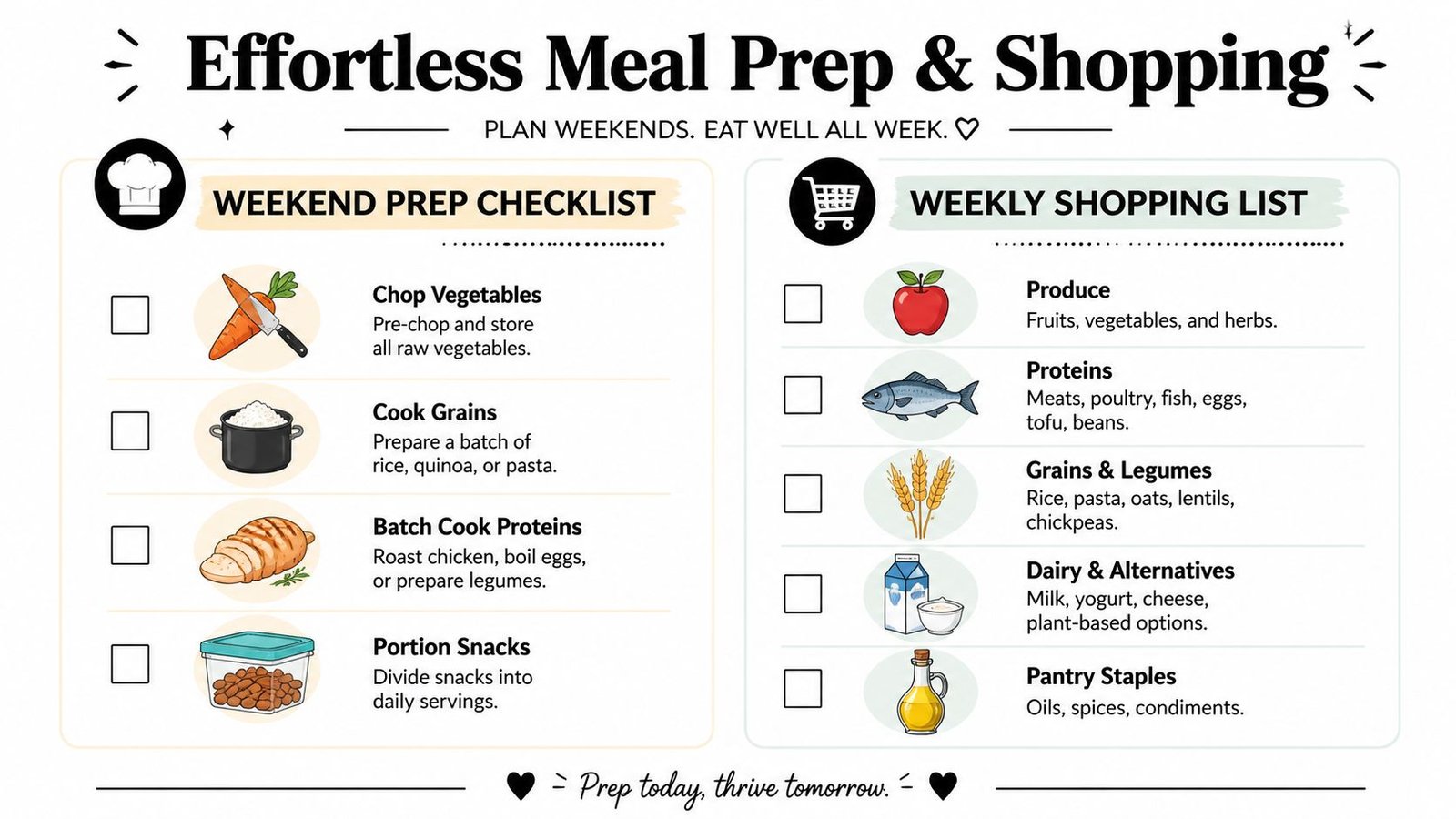
Meal planning breaks down in the gap between intention and Tuesday afternoon. Shopping closes that gap. Prep keeps it closed.
If your week is busy, don't aim for gourmet. Aim for ready. A washed container of greens and cooked rice will do more for consistency than a complicated recipe you never get around to making.
Omnivore shopping list
- Proteins: chicken breast or thighs, salmon or cod, lean ground turkey or beef, eggs, Greek yogurt, cottage cheese, canned tuna
- Carbs: oats, brown rice, quinoa, whole grain bread, tortillas, potatoes or sweet potatoes, whole grain pasta
- Produce: berries, bananas, apples, leafy greens, broccoli, carrots, peppers, onions, tomatoes, cucumbers, green beans
- Fats and extras: olive oil, peanut or almond butter, walnuts, chia seeds, hummus, simple vinaigrette ingredients
- Convenience items: rotisserie chicken, frozen vegetables, canned beans, soup
Vegetarian shopping list
- Proteins: eggs, Greek yogurt, cottage cheese, tofu, tempeh, lentils, beans, edamame, paneer if desired
- Carbs: oats, rice, quinoa, whole grain bread, tortillas, potatoes, lentil pasta
- Produce: spinach, mushrooms, tomatoes, cucumbers, peppers, onions, berries, bananas, apples, sweet potatoes, salad greens
- Fats and extras: olive oil, nut butter, seeds, avocado, hummus, cheese, salsa
- Convenience items: canned lentils or beans, frozen stir-fry vegetables, pre-washed greens
Vegan shopping list
- Proteins: tofu, tempeh, lentils, chickpeas, black beans, edamame, soy yogurt
- Carbs: oats, rice, quinoa, whole grain bread, tortillas, noodles, sweet potatoes, lentil pasta
- Produce: berries, bananas, apples, leafy greens, broccoli, carrots, mushrooms, peppers, onions, cucumbers, cabbage
- Fats and extras: tahini, olive oil, peanut or almond butter, flax, chia, walnuts or mixed nuts, avocado
- Convenience items: frozen vegetables, canned beans, soup ingredients, marinara
A realistic prep session
A weekend prep block doesn't need to fill your whole day. It needs to remove the highest-friction decisions.
Try this structure:
- Cook your base carbs: rice, quinoa, potatoes, or pasta for several meals.
- Batch your protein: roast chicken, bake tofu, boil eggs, or cook lentils and beans.
- Prep produce: wash greens, chop snack vegetables, roast a tray of mixed vegetables.
- Portion snacks: nuts, fruit, yogurt, roasted chickpeas, crackers.
- Build two grab-and-go lunches: don't wait until the first workday morning.
For a more detailed workflow, this meal prep guide for busy schedules is worth using alongside your chosen plan.
Coach's note: Prep the foods that are easiest to skip when you're tired. That's usually protein, vegetables, and lunch components.
What not to prep too far ahead
Some foods lose quality fast. Don't turn meal prep into a fridge full of soggy disappointment.
Keep these separate until later in the week:
- Salad dressings and wet toppings: add close to mealtime.
- Cut fruit that browns quickly: prep in smaller batches.
- Crunchy items: nuts, seeds, granola, crackers.
- Avocado-based meals: build fresh when possible.
The best prep routine is the one you'll repeat next weekend. Keep it plain, fast, and useful.
How to Adjust Your Plan and Make Smart Swaps
A meal plan becomes sustainable when you can edit it without losing the structure. That means learning which swaps preserve the point of the meal and which ones imperceptibly damage it.
UMass Memorial's daily food plan worksheet for 1,800 calories recommends keeping saturated fat under 10% of calories, or 18 g per day, sodium under 2,300 mg per day, and including about 2.5 to 3.5 servings of protein foods daily (UMass Memorial 1800 calorie worksheet). That's the lens to use when you swap foods. The goal isn't just matching calories. It's keeping the plan nutrient-dense.
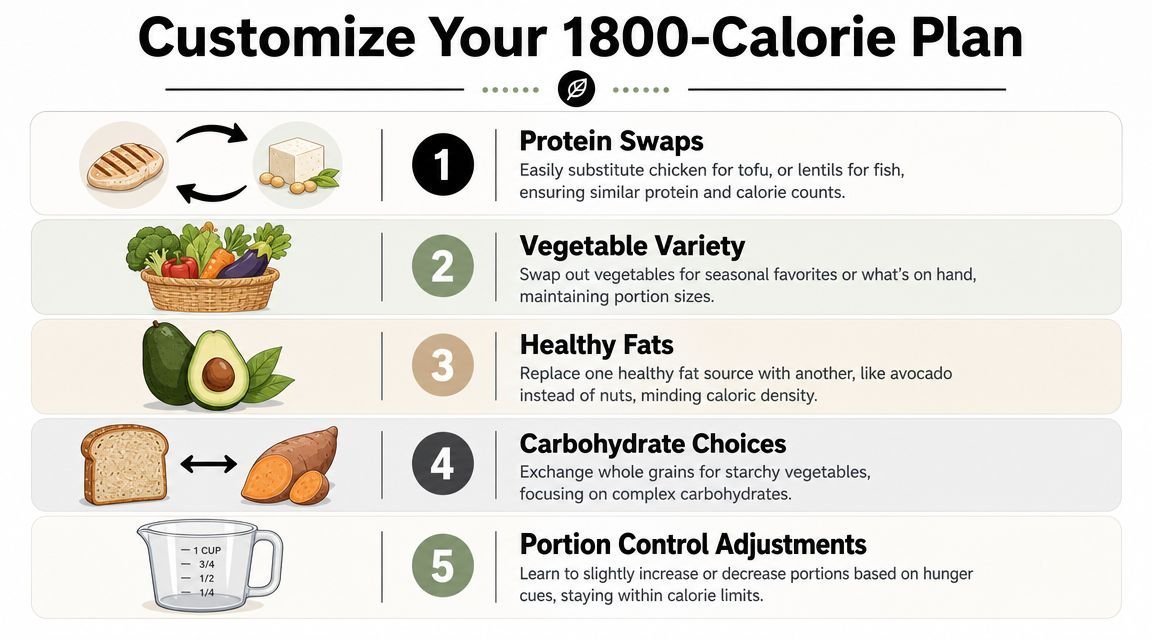
Smart swap rules that actually work
Use category-for-category swaps. Replace protein with protein, starch with starch, and fats with fats. That keeps the meal familiar and easier to track.
A practical approach:
| If you remove | Replace with |
|---|---|
| Chicken or fish | Tofu, tempeh, beans, lentils, eggs, or Greek yogurt in another meal |
| Rice or pasta | Potatoes, quinoa, oats, whole grain bread, or tortillas |
| Nuts or avocado | Olive oil, seeds, nut butter, or another fat source in a measured amount |
| Raw vegetables | Roasted vegetables, soup, slaw, or frozen vegetables you can microwave quickly |
Watch the hidden troublemakers
An 1800 calorie meal plan is seldom blown up with plain rice or broccoli. It usually happens with cheese, dressings, sauces, snack add-ons, and “healthy” extras that pile up fast.
Use these guardrails:
- Processed meats and salty convenience foods: these push sodium up quickly.
- Cheese and butter-heavy meals: easy path to exceeding saturated fat targets.
- Low-protein snack patterns: crackers, bars, and random grazing leave meals less satisfying.
- Restaurant swaps without a plan: replacing a balanced lunch with pastries or fries changes the whole day.
If a swap lowers protein and raises sodium at the same time, it's usually a bad trade.
Adjusting for appetite and activity
On harder training days, some people do better adding a small protein-forward snack around the workout and trimming a starch or fat elsewhere if needed. On less active days, a slightly smaller carb portion at one meal may feel more natural. The key is keeping the day organized, not swinging between restriction and rebound eating.
If home-baked bread is part of your routine, it can absolutely fit. Just portion it on purpose. For anyone making their own loaves, DBakerAid™ bread baking for beginners is a helpful starting point because homemade bread often ends up replacing store-bought sliced bread in meal plans, and that changes portions if you eyeball it.
Keep the spirit of the meal
A chicken rice bowl can become a tofu quinoa bowl. A yogurt parfait can become soy yogurt with seeds and fruit. Chili can be turkey chili, bean chili, or lentil chili.
That's the core skill. You're not trying to preserve a recipe. You're preserving the job that meal was doing.
Track Your 1800 Calorie Plan in 60 Seconds a Day
Meal plans help you decide what to eat. Tracking tells you whether the plan is being followed.
Without tracking, individuals typically rely on memory, good intentions, and visual guesswork. That works poorly once portions drift, snacks creep in, or a “healthy lunch” turns out to be much heavier than expected. If you've ever copied meals out of a PDF and wished they were easier to reuse, tools like pdf-parser essentials can help pull meal text out of static documents so you can turn old handouts into something more editable and usable.
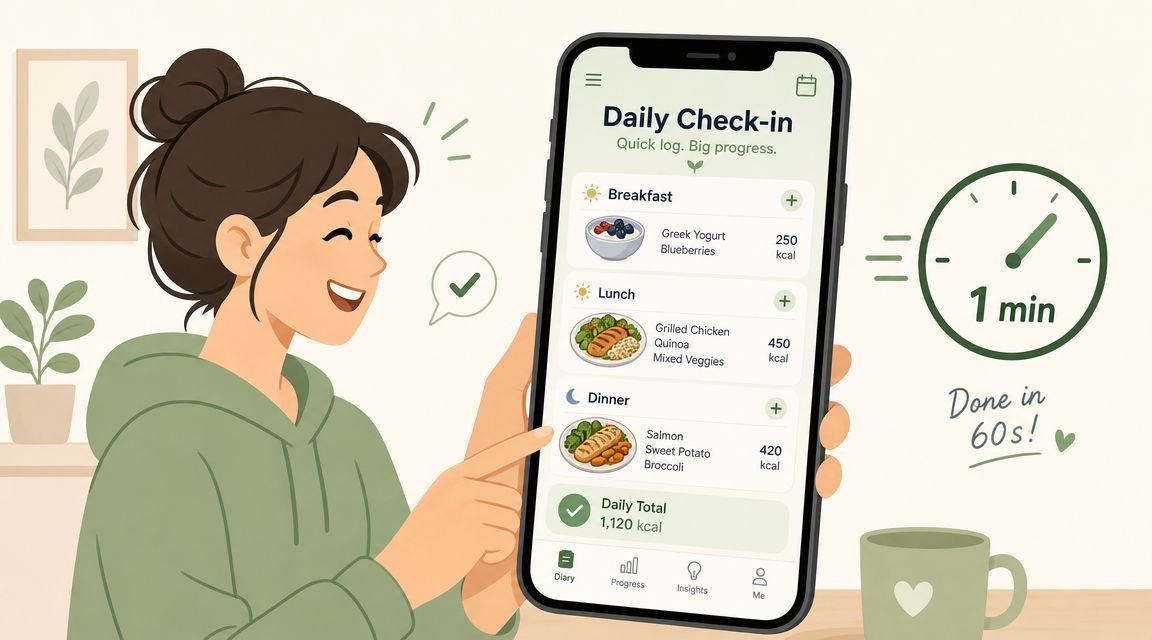
What fast tracking should feel like
If breakfast is Greek yogurt, berries, oats, and walnuts, logging it should take about as much effort as typing the meal. If lunch is a chicken rice bowl, you should be able to save it and bring it back with one tap the next day. If dinner is a stir-fry, a quick photo should get you most of the way there.
That's why the best tracking tools remove search friction. They let you log food in natural language, reuse recurring meals, and move on with your day.
Why consistency beats perfection
Perfect tracking isn't the point. Repeatable tracking is.
When logging is tedious, people skip the meals that matter most. They stop recording restaurant meals, handfuls of snacks, cooking oil, or the second coffee add-in. The value of a modern tracker is that it makes those entries easy enough to keep doing. If you're comparing options, this roundup of the best macro tracking app features is a practical place to start.
Bottom line: The easier it is to log ordinary meals, the more likely you are to stay honest with the plan.
Tracking doesn't need to feel like accounting. It should feel like checking in. A fast check-in is what keeps an 1800 calorie meal plan from becoming another abandoned document.
If you want an easier way to stick to your 1800 calorie meal plan, PlateBird makes tracking simple. You can type meals in plain language, snap a photo of your plate, and save repeat meals for one-tap logging later. That means less time entering food and more time following the plan.