- The 3-rule system that survives a chaotic week
- Choose a tracking style that fits your actual schedule
- Build a default meal library before the chaos starts
- How to log homemade meals without measuring every ingredient
- The busy-week rule for restaurants, travel, and office food
- Which app features matter most when time is tight
- A chartable comparison: tracking methods by effort and accuracy
- A realistic weekly reset for schedules that keep changing
- Frequently asked questions
You have a macro goal, a decent app, and good intentions. Monday goes fine. Tuesday is close enough. Then Wednesday lands a back-to-back meeting schedule, a working lunch you did not choose, and dinner from wherever was still open. The log stays empty.
That is not a discipline problem. It is a system problem. The Lazy Person Macro Tracking Setup for Busy Weeks is not about lowering your standards. It is about building a workflow so simple that it survives the days when nothing else does.
The fix is not more willpower or a fancier app. It is fewer decisions. Here is how to build a tracking routine that holds together even when your week falls apart.
The 3-rule system that survives a chaotic week
Most tracking systems break because they demand the same effort on a terrible Tuesday as on a calm Sunday. That is not realistic. A minimum viable logging routine needs to work in under 3 minutes, even on the worst days.
Rule one: always log the main protein source
Protein is the macro that moves your results most. A chicken breast, a scoop of Greek yogurt, a can of tuna. Log that first, every time. Even a rough estimate of 25 g to 40 g protein per meal gives you something to work with.
If you log nothing else, log this. It anchors the day.
Rule two: flag the calorie-dense add-ons
Olive oil, peanut butter, cheese, dressings, and sauces are where calories pile up fast. Two tablespoons of peanut butter adds around 190 calories. A generous pour of olive oil over a salad can add 120 calories or more. These items are small in volume but big in impact.
You do not need to weigh them precisely every time. A quick estimate logged is far more useful than a perfect entry that never happens.
Rule three: approximate everything else
The rice, the salad greens, the half-cup of beans. These items matter, but they matter less than the protein and the fats. Log them as a rough portion. A fist-sized serving of cooked rice is around 200 calories. A large handful of leafy greens is under 20 calories. Close enough is good enough here.
The goal of a busy-week tracking system is useful data, not laboratory precision. A logged estimate beats a skipped entry every single time.

Choose a tracking style that fits your actual schedule
There is no single best way to track macros. The method that works is the one you will repeat on a Thursday when you have 90 seconds and a lukewarm coffee. Different weeks call for different approaches.
Full weighing: when it makes sense
Weighing every ingredient with a food scale gives you the most accurate data. A cooked chicken thigh can range from 120 calories to 280 calories depending on size and preparation. Weighing removes that guesswork. This approach works when you are cooking at home, have time, and are in a phase where precision matters.
It does not work on travel days, catered lunches, or any day with back-to-back commitments.
Meal templates: the everyday workhorse
Saving repeat meals as templates or favourites is the single biggest time-saver in any nutrition tracking app. If you eat the same breakfast four days a week, building it once and logging it in one tap saves you 5 to 10 minutes daily. Over a month, that is close to 3 hours of logging time recovered.
This is the method that holds up longest for people with variable schedules.
Rough-estimate tracking: the fallback mode
On the hardest days, rough estimates keep the streak alive. You ate a burrito bowl. Log it as 650 calories, 35 g protein, 70 g carbs, 20 g fat. Not perfect. Still useful. The weekly average absorbs the noise.
| Method | Time per meal | Accuracy | Best for |
|---|---|---|---|
| Full weighing | 5-10 minutes | High | Home cooking, precision phases |
| Meal templates | Under 1 minute | Medium-high | Repeat meals, weekday routines |
| Rough estimates | 1-2 minutes | Medium | Restaurants, travel, chaotic days |
Build a default meal library before the chaos starts
Your default meal library is the infrastructure of low-friction tracking. Build it once during a calm weekend, and it pays off every hectic weekday after that.
Save your five most common breakfasts
Most people rotate through a small number of breakfasts. Two eggs and toast. A protein shake with a banana. Greek yogurt with granola. Save each one as a saved meal in your app. A typical two-egg breakfast runs around 180 calories and 12 g protein. Having it saved means logging takes one tap instead of two minutes of searching.
Create go-to restaurant entries for your regular spots
If you order the same lunch from the same three places, build those entries once. A standard Chipotle chicken bowl with rice, black beans, salsa, and guacamole sits around 800 to 900 calories. Log it accurately once, save it, and every future visit is a one-tap entry. Apps like MyFitnessPal and Stupid Simple Macros both support saved meals for this reason.
Keep a fallback list for when planning collapses
A fallback list is a short collection of generic entries you can log when the actual meal is unknown. Things like “office catered lunch, mixed plate” at 600 calories, or “takeout noodle dish” at 750 calories. These are intentional rough estimates, not guesses you feel bad about. They exist for the days when you have no better option.
A fallback entry logged honestly is better data than a blank diary. Weekly averages smooth out the rough days.

How to log homemade meals without measuring every ingredient
Homemade meals trip people up because they feel impossible to log accurately. They are not. The key is knowing which ingredients to measure and which to estimate. You do not need precision across the whole plate.
Use recipe creation for anything you cook twice
If you make the same pasta, the same stir-fry, or the same sheet-pan chicken more than once, build it as a saved recipe. Measure the ingredients the first time. Every future serving is a fraction of that recipe. The r/loseit community points to recipe logging as the most practical solution for home cooks who want accuracy without daily effort.
Measure the calorie-dense ingredients first
In a mixed dish, the fats and proteins drive most of the calorie count. The oil you cook in, the cheese you add, the meat or fish you use. Log those with at least a rough measurement. A 150 g salmon fillet is around 310 calories and 31 g protein. The roasted vegetables alongside it are maybe 80 to 120 calories total. Approximate the vegetables, measure the fish. That split takes 90 seconds and gets you within reasonable accuracy.
Use plate segments and package sizes as guides
Half a plate of pasta is roughly 1 to 1.5 cups cooked, around 200 to 300 calories depending on the pasta. A palm-sized piece of chicken breast is roughly 120 to 150 g, around 185 to 230 calories. These visual anchors are not precise, but they are consistent. Consistent estimates over time give you useful trend data even without a scale.
The busy-week rule for restaurants, travel, and office food
You did not cook it. You do not know exactly what went in it. That is fine. The rule here is simple: log the closest comparable item, prioritize the protein and fat sources, and move on.
Find the closest comparable item in the app
If you had a chicken sandwich from a local cafe, search for a similar chain version as a reference. A standard grilled chicken sandwich from a fast-casual chain runs 400 to 550 calories and 30 to 40 g protein. Use that range as your entry. It will be close enough. Apps like macro tracking apps on Android include large restaurant databases for exactly this reason.
Prioritize cooking method and added fats
Grilled versus fried can shift a meal by 200 to 400 calories. A creamy sauce can add 150 to 300 calories on top of the base dish. When logging a restaurant meal, note the cooking method first, then any obvious sauces or dressings. That two-step check catches the biggest variables without requiring you to interrogate the kitchen.
Accept that some days are estimate days
Not every entry will be accurate. That is built into the system. The goal is a useful weekly picture, not a perfect daily log. A useful resource for seeing how others handle this in practice is this practical macro tracking walkthrough on YouTube, which shows real-world logging decisions for mixed and restaurant meals.
In my experience, tracking most meals with moderate accuracy beats tracking fewer meals with perfect accuracy. The weekly average is what shapes your results.
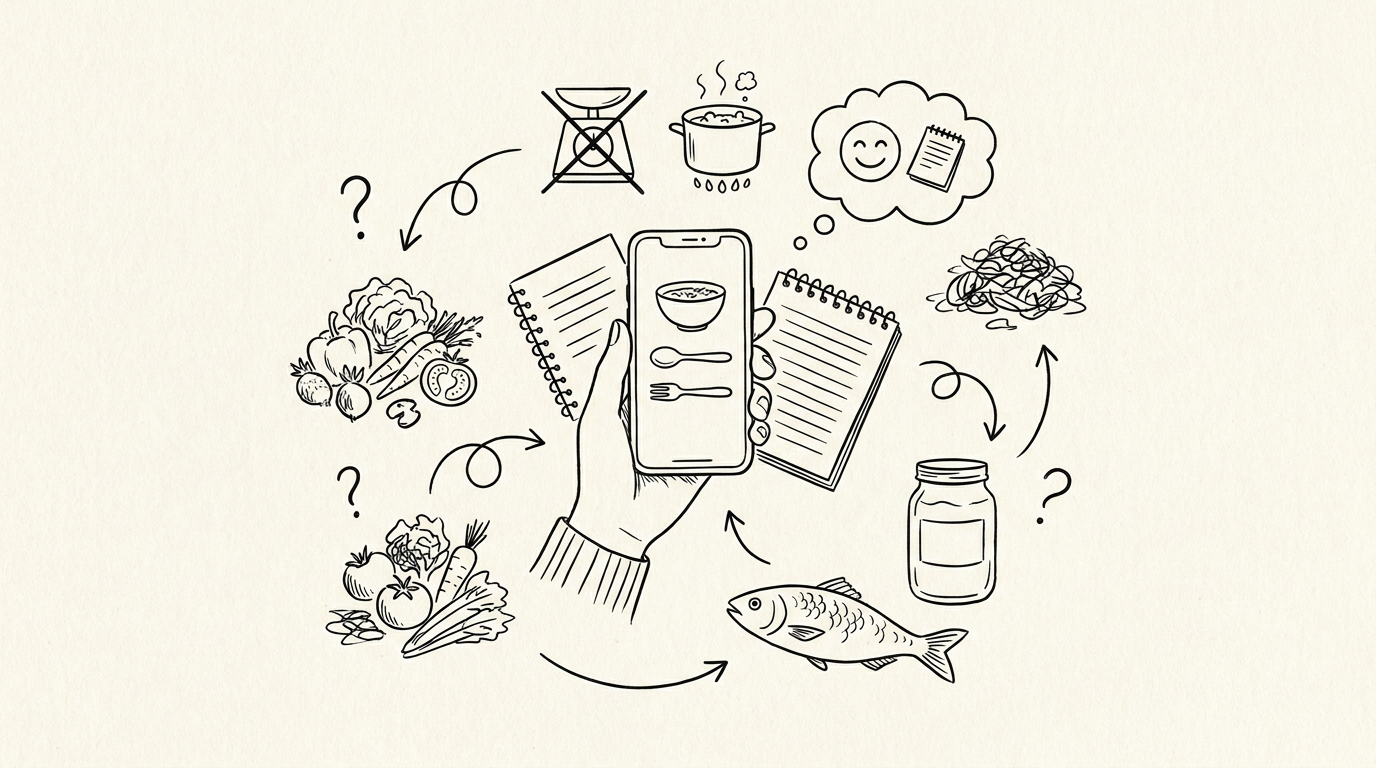
Which app features matter most when time is tight
Not all tracking apps are built for speed. When you have 2 minutes between meetings, the features you need are different from the ones that look impressive in a demo.
Saved meals and quick-add are non-negotiable
Saved meals reduce repeat logging to a single tap. Quick-add lets you enter a calorie or macro number directly without searching a database. These two features alone can cut your daily logging time from 10 minutes to under 3 minutes on a normal day. If an app does not support both, it will slow you down on the days you can least afford it.
Simple interfaces beat feature lists
A cleaner interface with fewer steps per entry is more valuable than advanced analytics when you are in a rush. The Nutrisense app roundup notes that ease of use is one of the primary reasons people abandon tracking tools. An app that takes 4 taps to log a meal will lose to one that takes 2 taps, every time.
Photo and text entry reduce the lookup burden
Some apps now let you describe a meal in plain text or snap a photo and get an automatic macro estimate. This approach removes the database search entirely. You type “grilled salmon with broccoli and rice” or take a quick photo, and the app generates an estimate. For reference on how AI-assisted logging compares to manual entry, this video walkthrough covers the practical differences in real use.
A chartable comparison: tracking methods by effort and accuracy
The relationship between effort and accuracy in macro tracking is not linear. Beyond a certain point, more effort does not produce meaningfully better data for your goals. This section is designed for chart use.
Where the effort-accuracy curve flattens
Full weighing of every ingredient gives you roughly high accuracy. Meal templates with measured portions get you to solid accuracy. Rough visual estimates land around moderate accuracy. The gap between full weighing and meal templates is about 5 to 10 percentage points of accuracy. The time cost difference is 8 to 9 minutes per meal. For fat-loss or muscle-building goals, solid accuracy tracked consistently outperforms high accuracy tracked sporadically.
Adherence drops sharply when logging feels hard
A pattern I see: people who start with full weighing often drop tracking entirely within 2 to 3 weeks when life gets busy. People who start with templates and estimates tend to keep going because the barrier to entry is lower. The r/naturalbodybuilding thread on manual macro entry reflects this directly: the most-upvoted advice is about reducing friction, not improving precision.
| Tracking method | Estimated accuracy | Daily time cost | Long-term adherence |
|---|---|---|---|
| Full weighing, every meal | High | 20-30 minutes | Low on busy weeks |
| Saved templates + estimates | Solid | 5-8 minutes | High across varied schedules |
| Rough estimates only | Moderate | 2-3 minutes | High, but less useful for precision goals |
| Photo or text AI entry | Good | Under 2 minutes | Very high, especially for restaurant meals |
A realistic weekly reset for schedules that keep changing
One review session per week does more for your progress than daily number-chasing. Ten minutes on Sunday morning beats 30 minutes of daily anxiety about whether Wednesday’s estimate was accurate enough.
Review trends, not individual days
Look at your weekly average protein intake. Look at whether your total calorie range was roughly on target across the 7 days. A single day at 500 calories over your goal matters far less than a weekly average that is consistently 300 calories over. Reacting to individual days creates noise. Reacting to weekly trends creates useful adjustments.
Update your default meals based on what actually happened
If you ordered from the same Thai place three times this week and logged it differently each time, build a saved entry for it now. If your usual breakfast has changed, update the template. The reset is not a punishment session. It is a 10-minute maintenance task that makes next week’s logging faster and more accurate.
Simplify the coming week, not punish the last one
The weekly reset should end with one or two small decisions: one meal to pre-log, one restaurant entry to save, one fallback estimate to have ready. No guilt about the days that went sideways. Just a slightly smoother setup for the week ahead.
A weekly review that takes 10 minutes and improves next week’s setup is worth more than a daily audit that drains your energy and makes you want to quit.
Frequently asked questions
Do you really need to weigh every meal to track macros effectively?
No. Weighing every meal gives the most accurate data, but it is not required for your goals. Meal templates, visual estimates, and saved restaurant entries get you to solid accuracy. For fat loss and general health goals, that level of accuracy tracked consistently over weeks produces better results than precise tracking done sporadically. Reserve the food scale for calorie-dense items like oils, nuts, and protein portions when precision matters most.
How do you handle mixed meals and sauces when logging?
Focus on the protein source and any obvious fats or sauces first. A cream-based pasta sauce can add 200 to 350 calories to a dish. A light tomato sauce adds 50 to 80 calories. Log the sauce type and a rough portion, then estimate the rest. For meals you cook regularly, build a saved recipe once and use it every time. That removes the guesswork on repeat dishes entirely.
When is estimation good enough, and when does precision matter more?
Estimation is good enough for weekday meals, restaurant visits, and any day where the alternative is logging nothing. Precision matters more during the final weeks of a specific goal, when you are trying to identify why progress has stalled, or when you are building a new saved recipe for the first time. Think of precision as a calibration tool, not a daily requirement.
How do you track macros when someone else cooked the meal?
Use the closest comparable item from a restaurant database or your fallback list. Identify the main protein, estimate the portion size, note the cooking method, and flag any obvious calorie-dense additions like cheese, oil, or cream. Log your best estimate and move on. One imprecise entry does not derail a week of otherwise consistent tracking.
Is it worth tracking macros at all on days when the schedule is completely unpredictable?
Yes, even partial tracking is worth it. Logging two out of three meals gives you more useful data than logging nothing. A rough estimate of a chaotic day still contributes to your weekly average. The bar on hard days is not accuracy. It is participation. Logging something keeps the habit alive and gives you a baseline to work from.
The bigger lesson here is straightforward. Busy weeks do not have to mean abandoned tracking. They just mean switching from your ideal method to your minimum viable one, and knowing in advance what that looks like for you.
If you want this kind of low-friction setup to feel automatic rather than effortful, try PlateBird free. Type what you ate or snap a photo of your plate, and it handles the macro calculation without manual entry or barcode scanning. That one change removes the biggest friction point on the days when your schedule leaves no room for anything else.