- The Baseline Number Most Databases Agree On
- How Each Layer Contributes to the Total
- Comparing Generic and Popular Chain Versions
- How Cheese, Mayo, and Extras Change the Math
- Logging a Turkey Sub Without Guessing
- Easy Swaps to Cut Calories Without Sacrificing the Sandwich
- Putting It All Together for Your Next Lunch
A plain 6-inch turkey sub is roughly 260–280 calories with about 17–20 g of protein. That range matters because it gives you a real starting point before bread, cheese, and sauce turn a simple lunch into something much heavier.
A lot of people search for 6 inch turkey sub calories expecting one fixed number, but the better way to think about it is as a recipe with a baseline. Once you know the baseline, you can predict what changes, log it more accurately, and order with much less guesswork.
The Baseline Number Most Databases Agree On
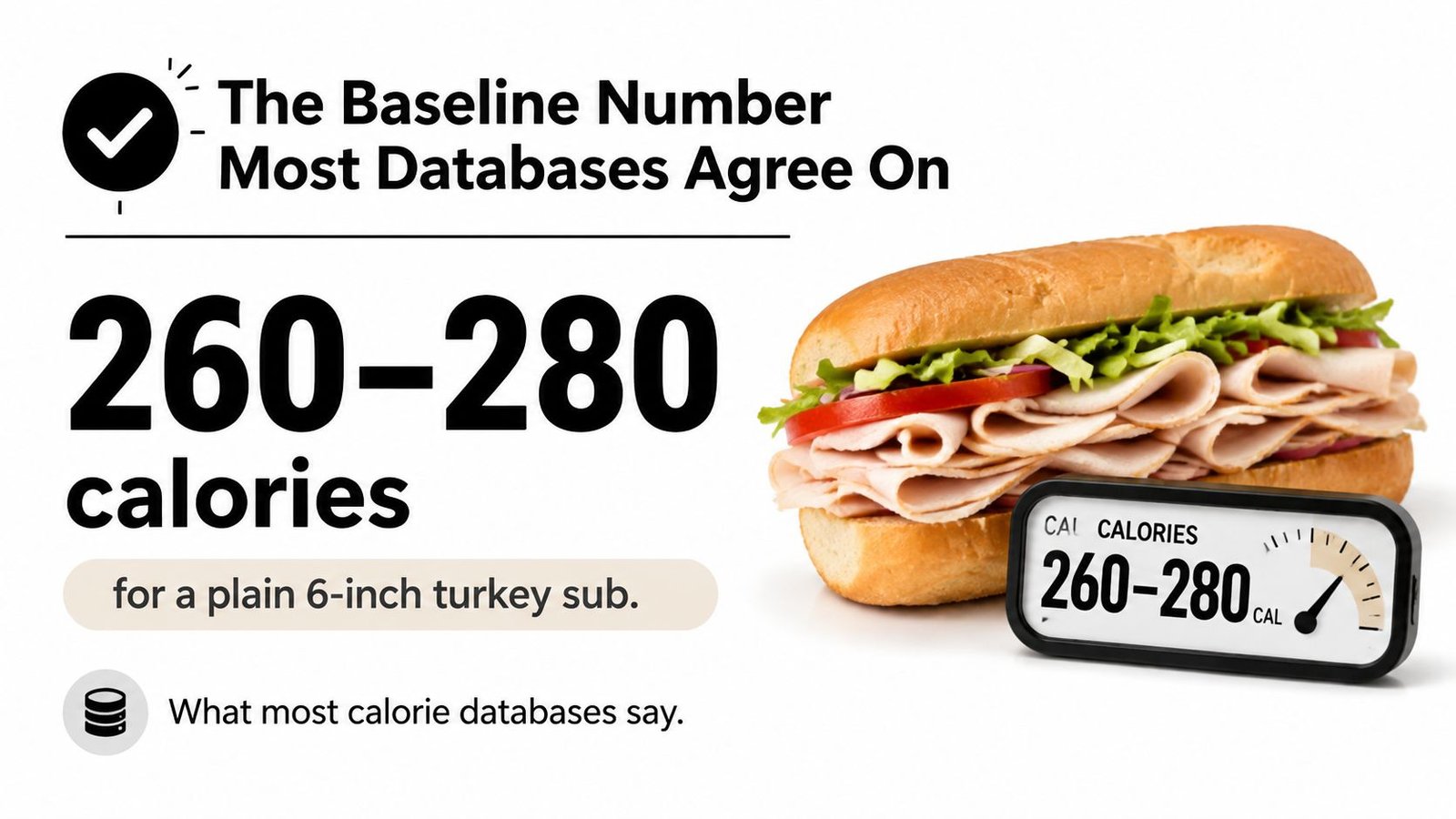
A plain 6-inch turkey sub usually lands in a tight band, not a single point estimate. Major nutrition databases place it around 260–280 calories, with Subway-focused references reporting 260 calories for the Oven-Roasted Turkey sub while other sources list 263, 270, or 280 calories. That's the number to keep in your head first.
The spread isn't random. It reflects small differences in bread weight, vegetable defaults, and how each database standardizes the sandwich. One reference points to serving weights from about 184 g to 219 g, which helps explain why two “plain” subs can log a little differently even when they look similar on the counter.
Practical rule: if you're ordering a plain 6-inch turkey sub, start your log at about 270 calories, then adjust for what you actually added.
The macro profile is just as useful as the calorie count. A plain version usually gives you about 17–20 g of protein, 39–46 g of carbohydrates, and only 3–5 g of fat. That's why the sandwich feels more like a bread-based lunch with lean protein than a high-protein entrée.
For a broader reference point on restaurant logging, restaurant nutrition information is worth keeping nearby when you're comparing chain meals.
How Each Layer Contributes to the Total
A turkey sub is easiest to understand when you split it into parts. The bread carries most of the calories, the turkey supplies the protein, the vegetables add volume with very little energy, and the extras are where the total can climb.
Bread sets the foundation
The bread is the biggest reason the sandwich is carbohydrate-forward. A plain 6-inch turkey sub typically sits at 39–46 g of carbs, which means a large share of the calories comes from the roll rather than the meat itself. The turkey contributes protein, but it doesn't drive the total the way the bread does.
Turkey, vegetables, and toppings play different roles
Turkey gives the sandwich its lean protein anchor, usually about 17–20 g in the plain version. Vegetables are the easiest part to add because they don't change the calorie picture much, while still making the sandwich more filling and textured.
| Calorie Contribution by Sandwich Layer | Calories | Carbs | Protein | Fat |
|---|---|---|---|---|
| Bread | Most of the total | Most of the carbs | Small amount | Small amount |
| Turkey | Moderate | Very little | Main source | Very little |
| Vegetables | Minimal | Minimal | Minimal | Minimal |
| Cheese | Varies by type | Small | Some | Some |
| Condiments | Can add up fast | Varies | Little | Often a lot |
If you've ever wondered why a turkey sub can feel “light” but still land higher than expected, this is the reason. The sandwich's structure puts most of the energy in the bread, not the protein filling, which is why bread choice changes the total more than the deli meat does.
For a useful reference on how cheese portions affect sandwich calories, 1 oz of cheese calories helps put that topping into context without overcomplicating the math.
Comparing Generic and Popular Chain Versions
The same words don't always mean the same sandwich. A “6-inch turkey sub” at one place may be built a little differently from another, and that's enough to move the calorie count even when the sandwich looks standard.
Independent databases place a plain 6-inch turkey sub at roughly 260–280 kcal, and the same item appears at 280 kcal on one database and 260–263 kcal on others. That difference shows how recipe choices and serving-weight standards alone can shift the estimate by about 20 kcal. It's not a huge gap, but it matters when you're logging lunch every day.
A practical way to think about it is this. The generic version gives you the baseline, while chain-specific versions tell you how that baseline is standardized. Subway-style references are especially helpful because they usually describe a familiar build, but even there, “plain” can mean slightly different bread weights, vegetable patterns, and sandwich assembly.
Log the version, not just the name. If you ate a chain sub, match the chain first, then the closest build, then add toppings one by one.
That habit prevents the common mistake of treating every turkey sub as interchangeable. Two people can both say they had a 6-inch turkey sub, but one ordered a lighter default and the other got a richer build. The label is the same, the calories aren't.
How Cheese, Mayo, and Extras Change the Math
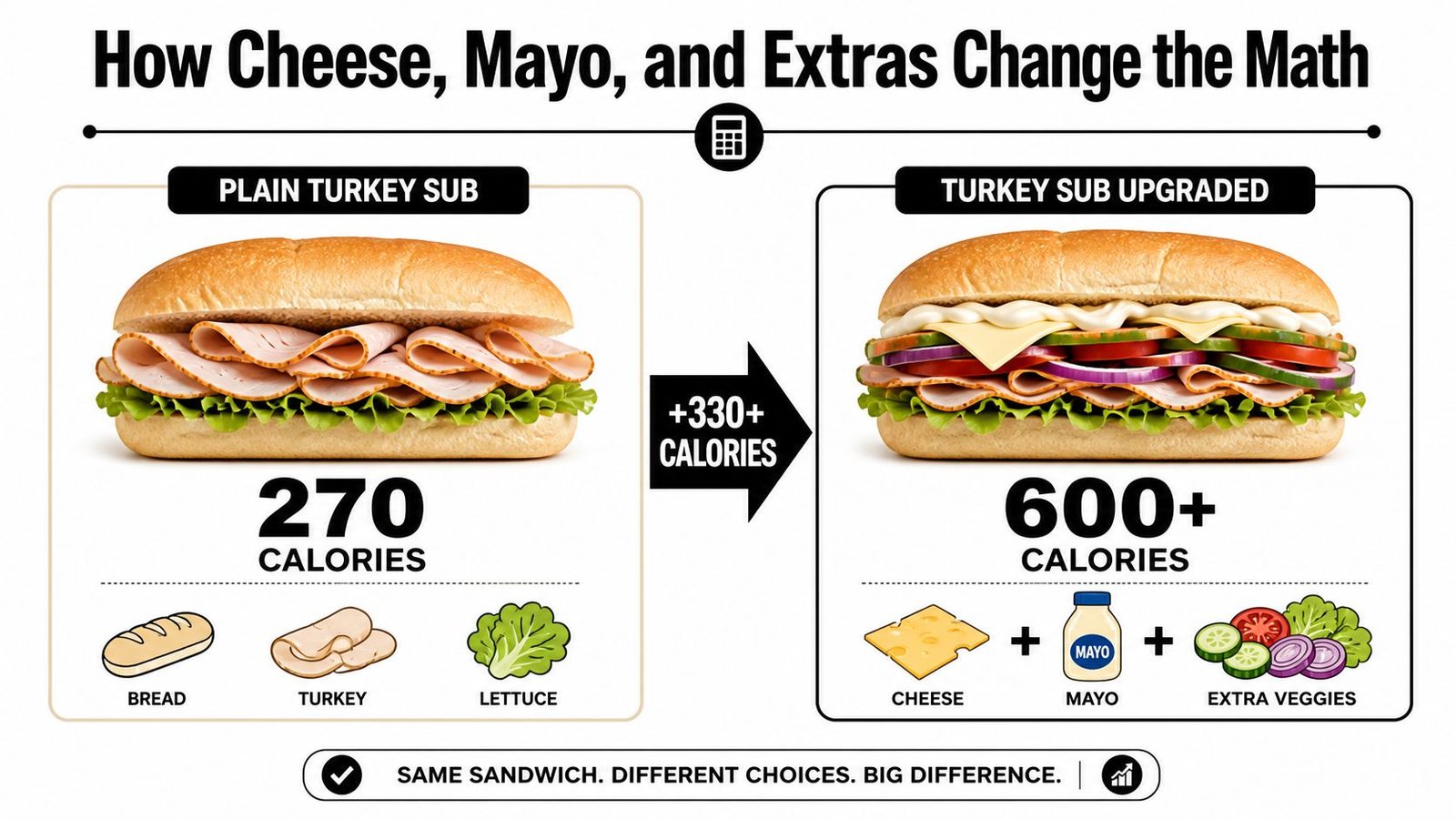
People often underestimate the most. A plain turkey sub at about 250 calories can rise by roughly 200 calories when mayonnaise is added, and cheese can add another 80 to 170 calories depending on the type. That means a sandwich that starts near 250–280 calories can easily move above 500 calories once those extras are included.
The big swing factors
Mayo is the fastest way to change the total. Cheese is the next major lever, and the effect depends on what kind you choose and how much is used. Once you combine a richer condiment with cheese, the sandwich no longer behaves like the lean baseline imagined when they hear “turkey sub.”
Sodium also tends to rise in richer versions, with reported values ranging from about 548 mg to 1,115 mg depending on the build. That doesn't change the calorie count directly, but it does matter for people watching overall meal quality.
If you're trying to keep the sandwich satisfying while still being mindful, find macro-friendly cheese dishes can be a helpful idea source for understanding how to use cheese more intentionally in meals.
A simple order of impact
- Mayonnaise first: It can add a lot fast, so it's the top thing to question.
- Cheese second: A small amount may fit, but it still changes the total meaningfully.
- Sauces and oils: Even when they seem minor, they can turn a lean sub into a much richer meal.
- Extras together: The problem usually isn't one topping, it's the stack of several.
Logging a Turkey Sub Without Guessing
Accurate logging starts with matching the sandwich you ate, not the one you meant to order. First, identify whether it was a chain version or a generic deli sub, then choose the closest entry in your tracker, then add the toppings you remember. That sequence matters more than chasing a perfect number.
The best habit is consistency. If you always log a plain 6-inch turkey sub at a similar baseline and then add mayo, cheese, or extra sauce separately, your entries stay much more honest over time. That's especially helpful for lunches that repeat often, because repeated meals are where small tracking errors pile up.
A lot of people overthink the process and end up logging nothing. A better method is to build the meal the same way you ordered it, one part at a time, so your estimate reflects the sandwich in front of you rather than a generic label.
For a simple framework you can reuse at restaurants, how to estimate calories when eating out gives a useful mindset for handling mixed meals like subs, bowls, and wraps.
If you can remember the bread, the protein, and the toppings, you can usually get close enough for useful tracking.
That's the primary goal. You don't need perfect precision to make progress, you need a method that you'll consistently use every time you order.
Easy Swaps to Cut Calories Without Sacrificing the Sandwich
The smartest way to lower 6 inch turkey sub calories is to keep the sandwich and trim the highest-impact extras. You don't need to strip it down to lettuce. You just need to choose the version that gives you the most satisfaction for the calories.
Start with the biggest levers
Bread choice matters because the sandwich is bread-led from the start. If your usual order includes a richer bread, switching to a simpler one can make the whole meal feel more reasonable without changing the protein.
Mayo is the next easy fix. Mustard or vinegar keeps the sandwich bright and savory without adding the same calorie load. If you like cheese, asking for less of it can still keep the flavor while reducing the total.
Build for volume, not just taste
- Load vegetables generously: Lettuce, tomato, onion, peppers, and cucumber add texture and make the sandwich feel bigger.
- Skip heavy sauces: Oil-based dressings and creamy spreads are usually where the total drifts upward.
- Treat cheese as a choice, not a default: A smaller amount often gives enough flavor.
- Keep the turkey and bread, change the extras: That's the easiest way to preserve the sandwich experience.
The best part of this approach is that it doesn't feel punitive. You're not replacing lunch with a compromise, you're steering the same sandwich toward a better calorie profile. That makes it far easier to repeat tomorrow.
Putting It All Together for Your Next Lunch
The anchor number is simple, a plain 6-inch turkey sub is usually 260–280 calories. From there, remember the two biggest swing factors, mayo and cheese, because those are the ingredients that can move the sandwich from light lunch territory into something much heavier.
If you want a practical reminder for busy weekdays, explore meal prep resources for ideas that make lunch planning feel more automatic. The same logic applies here, know your baseline, know your add-ons, and log the version you ate.
PlateBird makes that kind of tracking simple. Type your turkey sub the way you ordered it, snap the sandwich if that's easier, and get a fast calorie and macro estimate without digging through menus. If you want a quicker way to handle lunch logging and keep your subs aligned with your goals, visit PlateBird and try it for your next meal.