- What 1 Oz of Cheese Looks Like on Your Plate
- Breaking Down the Macros in a Single Ounce
- Calories by Cheese Variety From Cheddar to Feta
- Measuring 1 Oz of Cheese Without a Food Scale
- Why Portion Blindness Is the Calorie Problem
- Logging Cheese in Seconds With PlateBird
- Putting It All Together for Smarter Cheese Choices
1 oz of cheese calories usually lands around 99 calories for a generic cheese serving, but the range is closer to 75 to 120 calories per ounce depending on the variety. That tiny serving can disappear fast on toast, in a taco salad, or over eggs, which is why the number on the label often feels smaller than what ends up on the plate.
You probably know the moment already. You sprinkle a little cheese, add “just a bit more,” and then wonder why the snack feels bigger than planned. Cheese isn't misleading on purpose, but the serving size is small enough that portion blindness turns a normal topping into a meaningful calorie source.
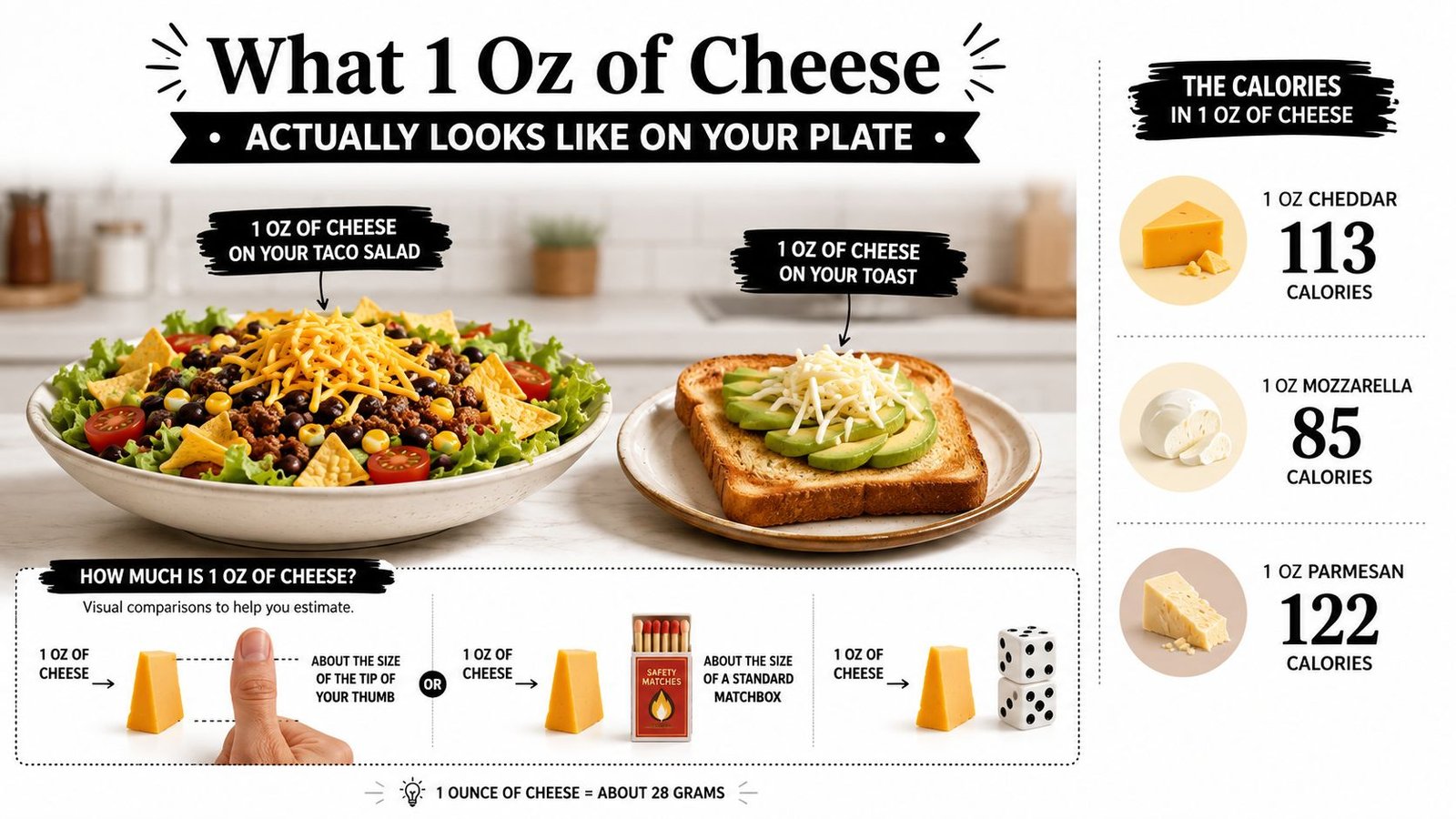
What 1 Oz of Cheese Looks Like on Your Plate
You're standing in the kitchen with a block of cheddar, a grater, and a half-finished taco salad. A little pile of cheese lands on top, melts into the warm beans, and the simple question is: how much did that add?
A generic cheese serving of 1 oz is about 99 calories with 7.63 g fat, 1.34 g carbohydrates, and 6.3 g protein. That is a small amount of food with a dense calorie load, so the total in a meal can rise faster than the portion looks on the plate.
Why the same ounce can look different
A thumb-sized wedge of hard cheese does not look the same as a loose pile of shredded cheese, and that difference is where a lot of confusion starts. Moisture and fat content change how much energy fits into the same weight, so two portions can look nearly identical while the calorie count shifts.
Practical rule: if the cheese looks generous, it probably is more than a true 1 oz serving.
That is why the better question is not only “How many calories are in 1 oz of cheese?” It is also “Does what I just ate really equal one ounce?” Once you start judging the portion itself, the label makes more sense, and this simple calorie-to-gram guide helps show why small weight changes matter so much.
Breaking Down the Macros in a Single Ounce
A cheese bite can look small and still carry a meaningful calorie load because its macros are stacked in a compact way. Fat supplies most of the energy, protein adds staying power, and carbs usually stay low in many common cheeses.
A generic 1 oz serving sits at 7.63 g fat, 6.3 g protein, and 1.34 g carbohydrates. That mix is why cheese feels richer than a cracker or fruit snack with a similar calorie count. If you want a clearer sense of how tiny changes in weight affect the number on a label, this calorie-to-gram guide makes the math easier to follow. For a broader primer on how calories emerge from macros, the Maximum Health Products' macro guide is a useful companion read.
What those numbers mean in real food terms
Fat is the most calorie-dense part of cheese, so it drives much of the energy in each ounce. Protein helps the portion feel more satisfying than many snack foods, which is why a small piece can hold you over longer than a carb-only bite. Carbs are relatively minor in many cheeses, so the calories people miss usually are not coming from starch or sugar.
A technical nutrition label makes that easier to see. One cheddar entry lists 114.25 kcal per 1 oz with 9.4 g fat, 7.06 g protein, and 0.36 g carbohydrate University Hospitals cheddar reference. That is not a contradiction, it is a reminder that different cheeses and databases do not always match perfectly.
The practical lesson is simple. A dense, protein-forward ounce of cheese behaves very differently from a low-protein snack with the same calorie count. Once you pay attention to the macros, the label starts to make sense on the plate.
Calories by Cheese Variety From Cheddar to Feta
A serving labeled “1 oz” can look nearly identical from one cheese to the next, yet the calorie total can shift a lot once you compare varieties. A soft, moist cheese usually brings fewer calories per ounce than a firmer, more concentrated cheese, even when the portion size sounds the same on the package.
| Cheese | Calories | Protein | Sodium |
|---|---|---|---|
| Cheddar | 115 | 6 g | 185 mg |
| Swiss | 106 | 8 g | 53 mg |
| Monterey Jack | 106 | 7 g | 170 mg |
| Brie | 95 | 6 g | 178 mg |
| Feta | 75 | 4 g | 316 mg |
| Cream cheese | 99 | 2 g | 91 mg |
These figures show why a single generic number can be misleading. Cheddar at 115 calories is noticeably higher than feta at 75, and that spread matters if cheese shows up in snacks, sandwiches, or salads more than once a week. The same table also shows cheddar at 185 mg sodium per ounce, while processed American cheese can reach 468 mg sodium per ounce, so calorie tracking and sodium awareness often need to travel together.
Why the numbers shift
Moisture plays a big role. Softer cheeses usually contain more water, so each ounce can deliver fewer calories than a drier, more concentrated cheese. Processing also matters, especially for cheeses made to hold shape, melt a certain way, or stay shelf-stable.
The result is simple to picture on the plate. A cheese board can look balanced while still hiding very different calorie loads across the cheeses on it.
That is why two people can each say they had “a little cheese” and still end up with very different totals. One person may have chosen feta, another cheddar, and the difference is big enough to matter in a day of calorie tracking. For a quick way to compare portions visually, the portion size estimation guide can help. If you are also trying to match portions to packaging, matching portions to Monopack packaging gives a practical reference point.
Measuring 1 Oz of Cheese Without a Food Scale
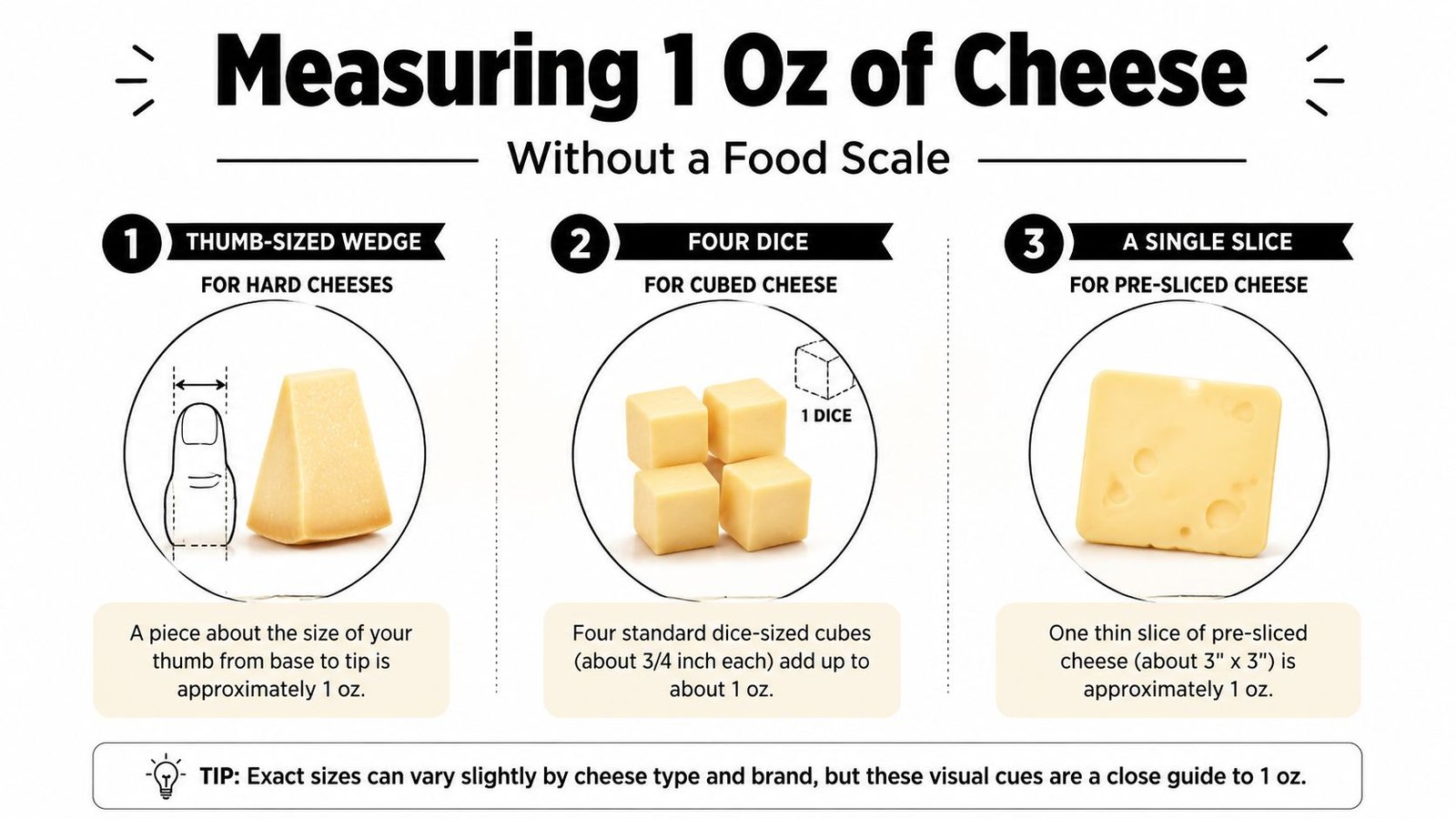
People don't weigh cheese before eating it, so the useful skill is learning the visual cues that usually get close. A thumb-sized wedge works well for harder cheeses, while cubes and slices need different mental shortcuts.
For hard cheese, think thumb-sized wedge or a piece about the size of four stacked dice. For pre-sliced sandwich cheese, one standard slice is often close to the target serving. Grated cheese is trickier, because a loose handful can look small while weighing far more than expected.
Quick ways to estimate in a normal kitchen
- Thumb-sized wedge: Best for hard cheeses like cheddar or Swiss. It gives you a fast visual anchor when you're snacking from a block.
- Four dice: Useful for cubed cheese or snack trays. If the pile starts looking like more than four stacked dice, you're probably above one ounce.
- A single slice: Helpful for deli-style cheese on sandwiches. One slice is often easier to count than to eyeball by weight.
For a deeper visual reference, the portion size estimation guide can help you compare what's on the plate to a standard serving. And if your food setup changes from meal to meal, the matching portions to Monopack packaging resource can be a handy calibration tool when you're dealing with pre-portioned items.
The biggest mistake is not the scale itself, it's the handful. Shredded cheese looks airy, but a generous handful can easily creep beyond the serving you had in mind.
Why Portion Blindness Is the Calorie Problem
A cheese board can look harmless until you compare the portion on the plate with the serving size in a nutrition database. A small wedge, a loose handful, or two stacked slices can turn a modest snack into a much larger calorie hit than expected.
Standard guidance treats 1 oz as the reference serving, roughly a thumb-sized wedge, but many people eat 2 to 3 oz at a time without noticing Penn State cheese-health table. That matters because intake can jump from about 100 to 120 calories to roughly 200 to 360 calories, depending on the cheese. The calorie count is usually not the surprise, the portion is.
Where the extra ounces hide
Shredded cheese is the easiest place to miss the mark because the pile looks light until you compare it with a true serving. Cubes disappear by the handful, and restaurant portions rarely arrive as a neat ounce. Even a sandwich can carry two slices that together go well past the amount you expected.
A simple serving-size check helps here, and this guide to serving sizes for weight loss can make the comparison easier when you are trying to match what you see with what you log.
The cheese isn't the surprise. The size of the serving is.
Portion-aware logging matters because it keeps the number attached to the food in front of you, not the food you meant to eat. If you can tell whether you've eaten one ounce or three, the calorie math becomes much easier to trust, and the “cheese is just 100 calories” assumption starts to look too simple.
Logging Cheese in Seconds With PlateBird
Logging cheese shouldn't feel like digging through a database while your lunch gets cold. The easiest workflows are the ones that match how people eat, whether the cheese is sprinkled, sliced, or mixed into a recipe.
Three fast ways to record it
Type a short entry like “1 oz cheddar”, and the app can return the calorie and macro estimate immediately. If you'd rather use your camera, a photo of the plate can identify the cheese visually before you log it. For repeat meals, a saved shortcut makes the usual breakfast or sandwich one tap away.
That approach is especially useful for the tricky edge cases. A dusting of Parmesan isn't the same as a full slice of American, and a photo-based or shortcut-based log helps keep those entries separate instead of flattening them into one generic cheese entry.
The payoff is speed. If logging takes longer than eating, people stop doing it consistently. A fast, low-friction tracker keeps the focus on the actual portion, which is exactly where cheese calories get missed.
Putting It All Together for Smarter Cheese Choices
A cheese label can look simple, but the portion on your plate is what really decides the calorie total. A small wedge, a thick slice, and a loose handful of shreds can all land in very different places, even before the rest of the meal enters the picture.
The easiest way to stay accurate is to make three quick checks. First, identify the cheese type, since the calories change from one variety to another. Second, estimate the amount with a cue you can picture, like a thumb, dice, or standard slice. Third, confirm the log before the meal fades from memory. That last step matters because cheese is often eaten in bits and pieces, and those small bites are easy to forget.
A useful cheat sheet helps more than a vague rule. One ounce of cheddar usually looks like a small block or a couple of thin slices. One ounce of mozzarella often looks softer and slightly larger by volume because of its texture. Feta can appear crumbly and light on the plate, which makes it easy to underestimate. Parmesan is even trickier, since a small amount can spread across a dish and still count as a real serving.
Restaurant meals need a little extra care. A burger with cheese, a salad topped with crumbles, or a pasta dish finished with shavings may all hide more cheese than the menu suggests. If the portion was added on top, ask whether it was a light sprinkle, a standard topping, or a full serving. That simple question can keep your log closer to what you ate instead of what the dish name makes you assume.
The goal is accuracy, not suspicion. When 1 oz feels concrete in your head, you stop treating cheese as a mystery calorie and start treating it like any other measured food. That makes it much easier to enjoy the cheese you want while keeping the total honest.