You downloaded a tracking app, opened the food log, and immediately hit the wall. Breakfast was easy enough. Eggs, toast, coffee. Then lunch was leftover curry your partner made, dinner might be takeout, and someone at work brought in pastries. By day two, macro tracking starts to feel less like a nutrition skill and more like unpaid accounting.
That's where many individuals quit.
Not because they're lazy, and not because macro tracking can't work. They quit because most advice assumes you cook every meal from single ingredients, eat on a perfect schedule, and have the patience to weigh every bite forever. Real life doesn't look like that. Real life is mixed dishes, rushed mornings, social meals, travel days, and appetite swings.
A better approach to how to track macros starts with one principle. Consistency beats precision you can't sustain. You need enough structure to learn what you're eating, and enough flexibility to keep going when the day gets messy.
Getting Started with Macro Tracking
Most beginners come in with the same fear. They think tracking macros means carrying a food scale everywhere, logging lettuce leaves, and stressing over a restaurant meal they didn't cook.
That version of tracking is what burns people out.
The useful version is simpler. You're learning how much protein, carbohydrate, and fat tend to show up in your normal meals, then using that information to make smarter decisions with less guesswork. Some days that means weighing food carefully. Other days it means estimating a burrito bowl in under a minute and moving on.
Practical rule: If your tracking method is so annoying that you stop using it, it's not accurate enough to matter.
When I teach someone how to track macros, I don't start with perfection. I start with visibility. What do you usually eat? Where is protein low? Where do fats creep up without you noticing? Which meals repeat often enough that they should become templates?
That shift matters. Macro tracking works best when it becomes a decision aid, not a test you're trying to ace. The goal isn't to build a flawless food diary. The goal is to build a system you'll still use on a busy Wednesday, on a restaurant night, and after a weekend that didn't go to plan.
Calculating Your Starting Macro Targets
A good starting target should help on a normal Tuesday. It should still make sense when lunch is takeout, dinner is a mixed family meal, and your schedule changes halfway through the week.
That matters because macro targets are only useful if you can apply them outside ideal conditions. Numbers that look precise but fall apart the first time you eat out are not well built.
At the basic level, macros come from calories. Protein and carbohydrates contain 4 calories per gram, and fat contains 9 calories per gram, as explained by the FDA's overview of daily value nutrition basics. Once you have a calorie target for maintenance, fat loss, or muscle gain, you split those calories across protein, carbs, and fat.
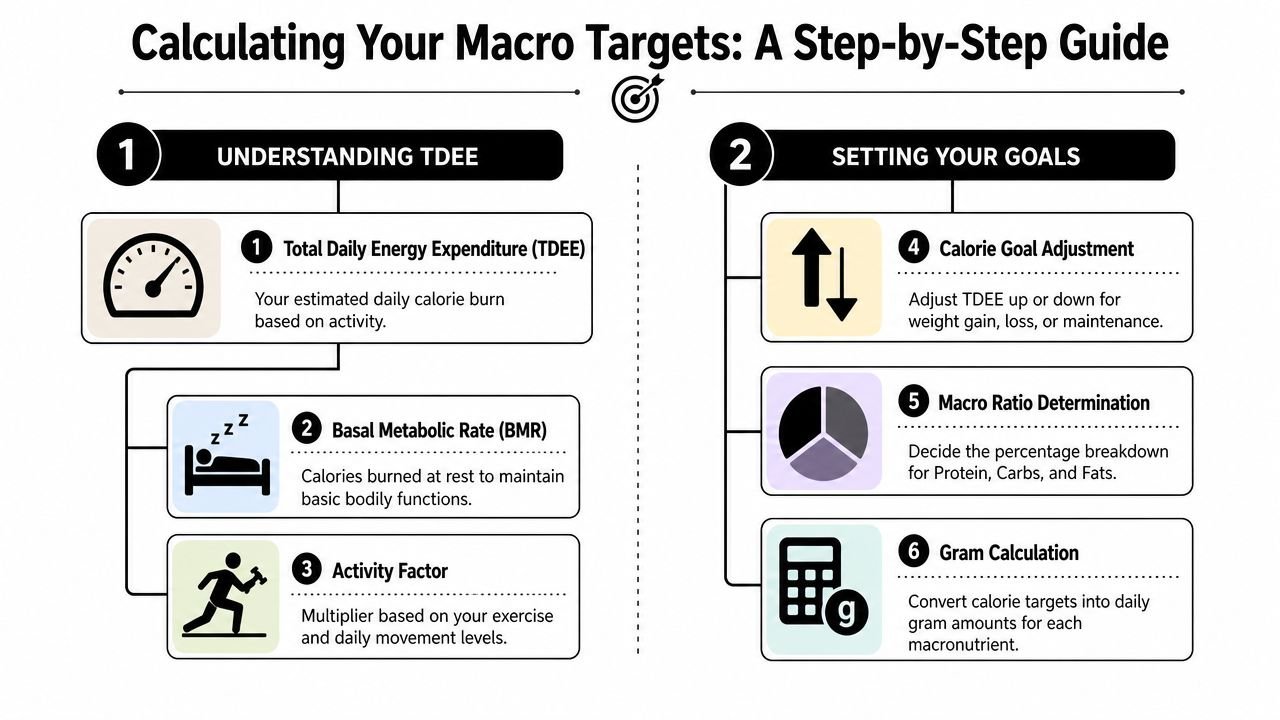
Start with calories, then convert to grams
Many beginners make this harder than it needs to be. They copy an influencer's split, accept an app preset without checking it, or pick numbers that sound aggressive but do not match how they eat.
Set calories first. Then build macros inside that budget.
If you need help deciding whether your calorie goal is realistic for fat loss, this guide to a sustainable calorie deficit calculation is a useful way to sanity check the process.
For a general starting point, federal dietary guidance gives broad intake ranges for carbohydrate, protein, and fat rather than one fixed split. That is useful. Broad ranges leave room for food preferences, training style, appetite, and that some people eat more mixed meals or restaurant food than neatly portioned meal prep.
A practical way to turn that into numbers is to set protein first, because it is usually the hardest macro to hit by accident. Then set fat at a level that keeps meals satisfying and workable. Put the remaining calories toward carbs, especially if training performance, recovery, or meal flexibility matter. If you want a calculator and examples for what your macros should be, that resource is a solid next step.
Adjust for your actual goal
Your goal changes the setup.
For fat loss, calories need to stay controlled, and protein usually needs more attention because it helps with fullness and supports muscle retention. For muscle gain, calories need to rise enough to support progress, and carbs often become more useful because they make training and recovery easier. For maintenance, the best split is usually the one you can repeat without feeling boxed in.
This is also where real life matters more than spreadsheet logic. A person who cooks most meals at home can use a tighter macro setup than someone who travels, eats with family, or grabs lunch between meetings. If your day regularly includes mixed dishes, buffets, takeout, or dinners you did not prepare, slightly wider targets often work better than trying to hit exact numbers every day.
Expect refinement, not perfection
Starting macros are estimates. Good estimates, but still estimates.
Use the first two to three weeks to look for patterns. Are you constantly overshooting fat because restaurant meals are richer than expected? Are carbs set so low that social meals become hard to log accurately? Is protein realistic on busy days, or only on meal-prep days?
Adjust from there. A strong macro target does not just support the goal on paper. It should also survive takeout, changing routines, and the occasional messy day without making you feel like you failed.
Choosing Your Best Tracking Method
The best tracking method isn't the one with the most features. It's the one you'll keep using when your meals aren't neat and predictable.
Individuals often choose between three approaches: handwritten tracking, traditional app logging with a food scale, and newer low-friction tools that handle rougher real-world inputs better. Each can work. Each also creates different problems.
The trade-off between precision and effort
A notebook or notes app is simple. It can help if you're building awareness around eating patterns, meal timing, or whether protein is showing up consistently. But it's weak for macro accuracy. Once meals get more complex, manual tracking turns into rough memory plus guesswork.
Traditional database apps paired with a food scale are still the most precise setup for home-prepared meals. If you're weighing oats, rice, yogurt, raw meat, and cooking fats, they do the job well. They're strongest when meals are repetitive and ingredients are visible.
Where many people struggle is everything outside that tidy setup.
A major gap in beginner advice is mixed dishes and takeout. Healthline's discussion of low-friction tracking points out that adherence often improves when people use fast approximation and saved meal templates instead of insisting on exact gram-level logging every time in their article on tracking macros without letting it take over your life.
Where old-school logging breaks down
A homemade chili, a deli sandwich, a restaurant pasta dish, or a family-style dinner doesn't behave like a bowl of weighed rice and chicken. Hidden oils, sauces, and shared portions create enough friction that people either spend too long logging or stop altogether.
That's where modern tools have changed the experience. Instead of forcing you to search every ingredient one by one, they're designed around how people eat.
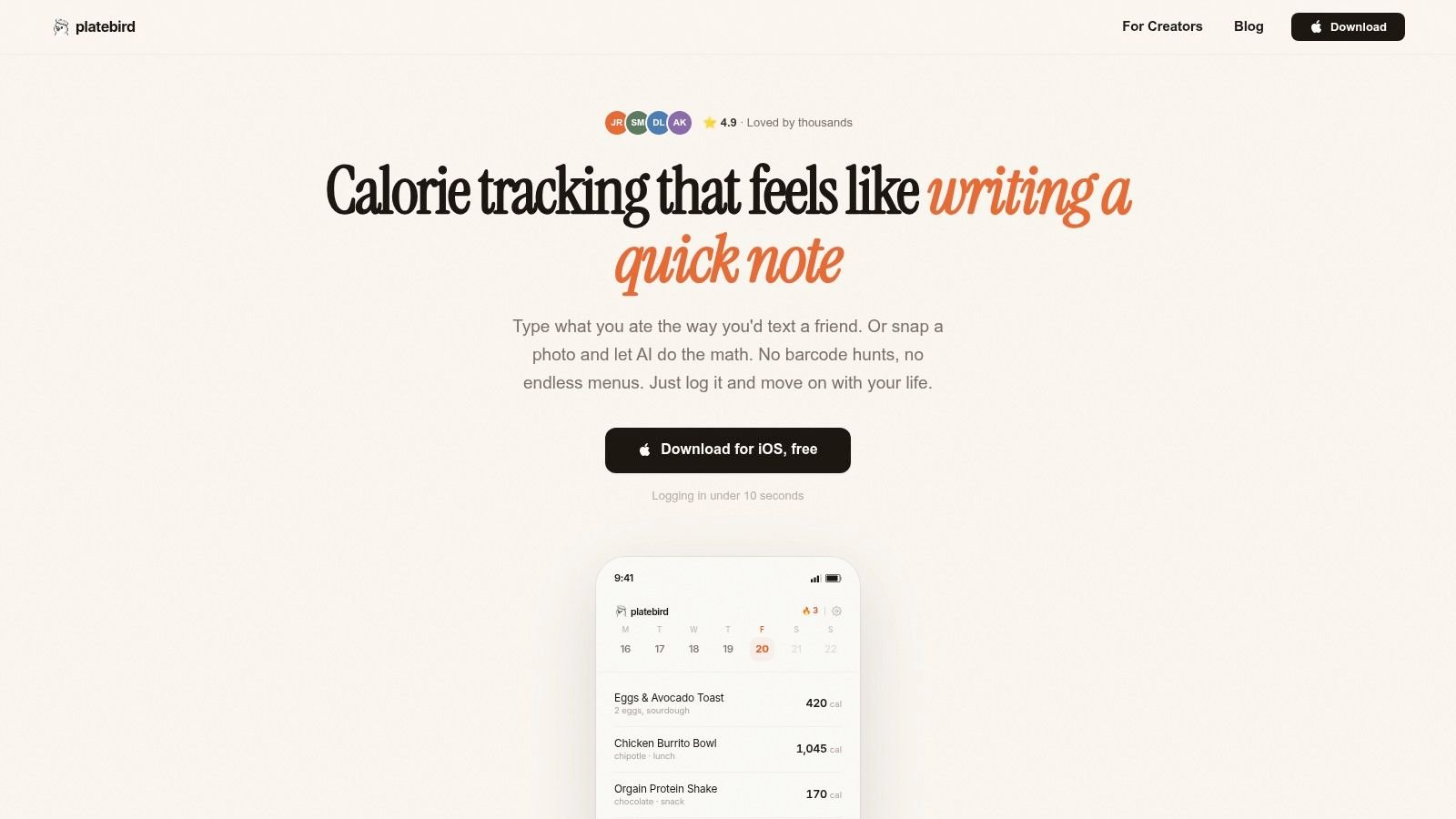
A quick comparison helps:
| Method | Best for | Main drawback |
|---|---|---|
| Journal or notes app | Building awareness and simple meal recall | Weak macro precision |
| Food scale plus traditional database app | Single-ingredient meals and meal prep | Time-heavy for mixed meals |
| Faster app-based logging tools | Takeout, assembled meals, repeated foods | Less exact than weighing every ingredient |
If you're comparing options, this roundup of the best macro tracking app categories can help you match the tool to your habits instead of chasing the most complicated setup.
The method matters less than the friction. People rarely fail because they can't understand macros. They fail because the logging process asks for too much effort at the wrong moments.
What usually works best
For most beginners, a hybrid approach wins.
Use the scale when accuracy is easy and useful. Estimate when the meal is complex. Save common meals so you don't rebuild the same breakfast or lunch every day. Let precision rise and fall with the context instead of holding every meal to the same standard.
That's how macro tracking stays in your life long enough to become useful.
Building Your Daily Logging Workflow
It's 6:45 p.m. You're hungry, dinner is half takeout and half whatever was left in the fridge, and you still haven't logged lunch. That's the moment a tracking plan either holds up or falls apart.
A usable workflow reduces friction at the exact points where logging usually breaks. It gives you a repeatable way to handle routine meals, mixed meals, and the days that do not go to plan.
According to Emily Field's beginner guidance, the best place to start is a short baseline phase where you log your usual intake before trying to correct it. She also notes in her article on understanding and tracking macros that, once your habits are more stable, getting close to each macro target is usually more useful than chasing perfect numbers at every meal.
Start with a baseline week
For the first week or two, accurately log what you eat.
Do not clean up your diet just because you started tracking. The point of baseline logging is to spot patterns you can work with later, not to perform a perfect week. In practice, people often notice that breakfast has almost no protein, lunch changes every day, or restaurant meals are pushing fats higher than expected.
That information matters because it shows where structure will help most. Usually, the best place to intervene is a meal you eat often, not the occasional social dinner.
Build repeatable meals around the parts that matter
Daily logging gets faster when you stop rebuilding common meals from scratch.
A practical setup is to keep a small set of repeatable breakfasts, lunches, snacks, and backup dinners. Each meal should have a clear protein source first, then a carb source, then fats or extras that are easy to track. That does two things. It shortens logging time, and it makes your intake more predictable without forcing you to eat the same thing all day.
A simple rotation might include:
- Breakfast: Greek yogurt, fruit, and one measured topping
- Lunch: chicken, rice, vegetables, and a sauce you log consistently
- Dinner: a meal-prep bowl, or a restaurant meal broken into protein, starch, vegetables, and added fat
- Snack: one reliable protein-forward option for busy afternoons
I usually tell clients to save meals they repeat and stop treating every plate like a brand-new math problem. Variety is fine. Constant novelty makes logging harder than it needs to be.
Pick one measuring convention
Tracking gets messy when the method changes every day. Raw chicken on Monday, cooked chicken on Tuesday, tablespoons for rice, grams for oats, guessing on oils.
Use one convention often enough that it becomes automatic. If you weigh meat raw, keep doing that. If you log rice cooked, stick with cooked entries. The goal is not a perfect system. The goal is data you can compare across the week without second-guessing every entry.
Generally, the high-value items to measure are the ones that change totals fast:
- Protein portions
- Starches and calorie-dense carbs
- Added fats like oil, butter, dressings, nut butter, and mayo
Vegetables, spices, and low-calorie extras usually need less attention unless they come with a sauce or a lot of oil.
Use a rhythm that works on busy days
The best workflows hold up on ordinary Tuesdays, not just on highly organized Sundays.
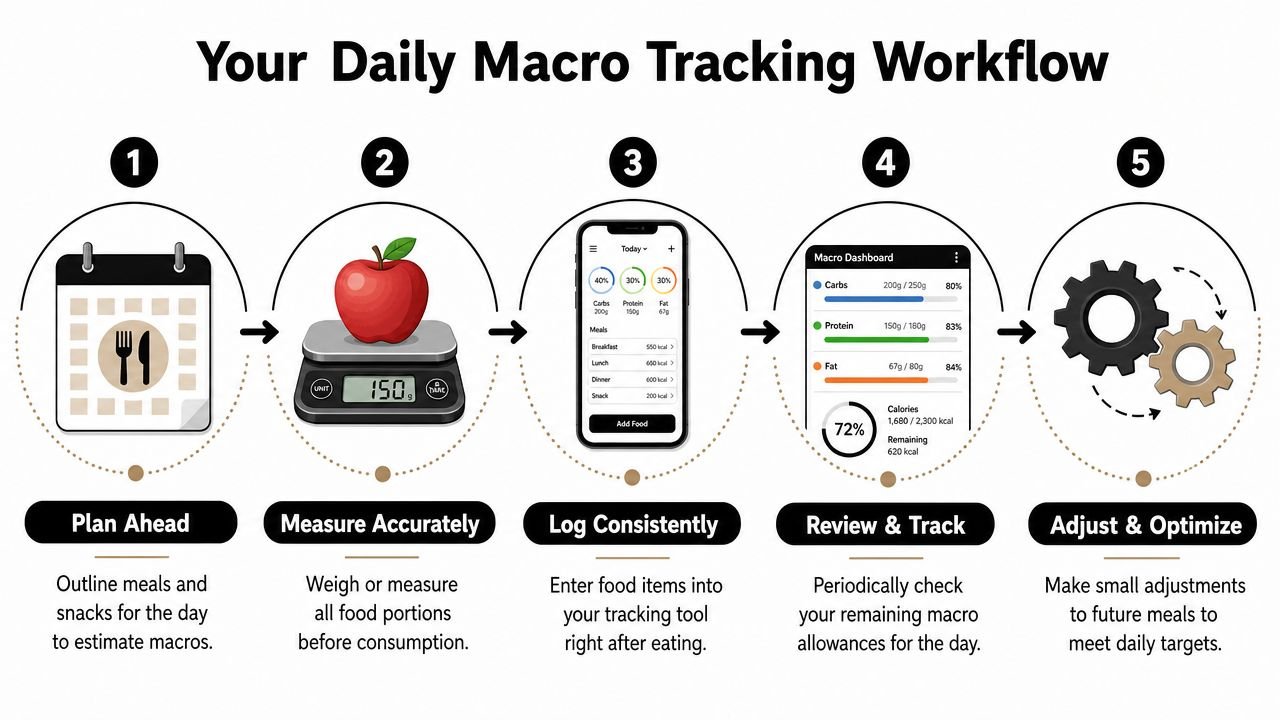
A simple rhythm works well:
- Pre-log meals you already know, especially breakfast and lunch.
- Log right after eating whenever possible so you are not reconstructing the day at night.
- Save mixed meals and frequent orders once you estimate them the first time.
- Check your remaining macros before dinner so you can adjust portions instead of reacting after the fact.
- Make one correction, such as adding protein at a snack or keeping fats lighter at dinner.
If you want a format that helps you connect numbers to patterns, not just totals, this food diary for weight loss guide can help you build a routine you can keep using.
Make adjustments one layer at a time
Trying to fix calories, protein, carbs, meal timing, and food quality all at once usually creates noise. You end up with too many moving parts and no clear reason the week improved or fell apart.
A better approach is to solve the biggest problem first. If protein is low most days, fix that. If lunch leaves you starving by 4 p.m., build a stronger lunch. If takeout dinners keep overshooting fats, start by logging sauces and oils more accurately instead of overhauling everything.
The strongest workflow feels boring in the best way. It runs in the background, gives useful feedback, and still works when meals are mixed, plans change, or life gets busy.
Navigating Real-World Tracking Challenges
Macro tracking gets tested when your routine disappears. That's when the all-or-nothing mindset shows up.
You travel. You work late. You eat food other people made. Your appetite changes. Suddenly the system that looked clean on paper feels unusable. Often, many people assume they've failed, when really they just need a more adaptive version of the habit.
Newer guidance has started to frame tracking more flexibly. Rather than treating it like a fixed daily ledger, it can work as a dynamic support tool for situations like travel, shift work, and changing appetite, including for people navigating reduced intake on weight-loss drugs, as discussed in this piece on tracking macros for weight loss with more flexibility.
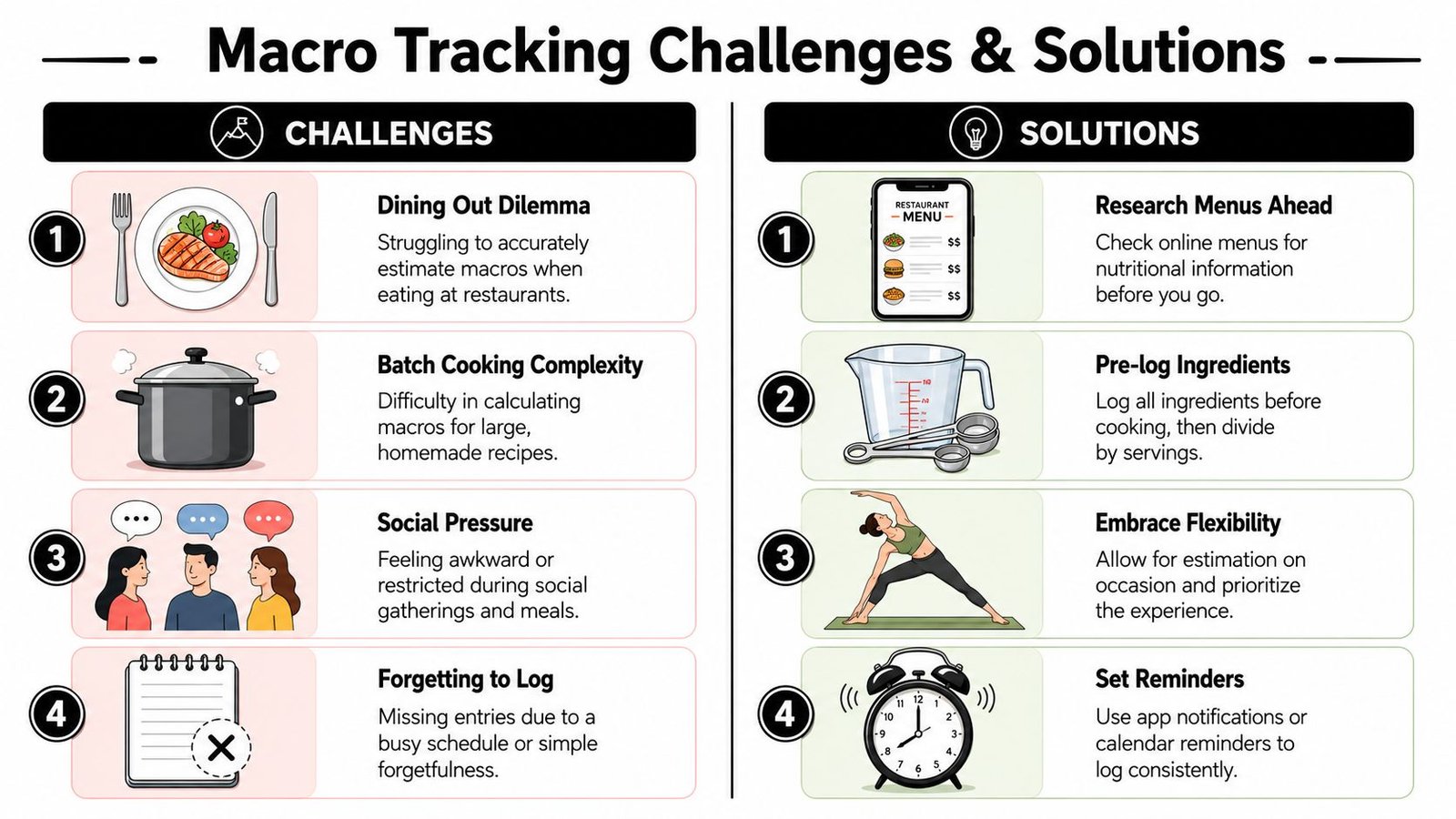
When you're eating out
Restaurant tracking doesn't need to be perfect to be useful. It needs to be honest enough to keep you oriented.
A practical approach:
- Look for the main components: identify the protein, carb source, visible fats, and extras like sauces.
- Log the meal in parts: grilled salmon, potatoes, vegetables with oil is easier to estimate than hunting for one exact menu item.
- Accept uncertainty: restaurant food usually includes more fat than people assume, especially from cooking oil, butter, and dressings.
Estimation is a skill. The goal is to get reasonably close and stay consistent with your method.
When meals are mixed or homemade
Batch cooking helps nutrition, but it can make logging awkward. Chili, casseroles, curries, pasta bakes, and family recipes hide ingredients inside one entry.
Use this process instead:
| Challenge | Better move |
|---|---|
| Big mixed recipe | Log the ingredients before or during cooking, then divide by servings |
| Shared meal | Estimate your portion based on the full recipe and stay consistent |
| Leftovers over several days | Save the recipe once instead of rebuilding it every time |
This is also where “good enough” beats delayed perfection. If logging a stew exactly means you won't log it at all, estimate it while the meal is still fresh in your mind and move on.
When life changes week to week
Static numbers can become a problem when your life stops being static. A travel day may need simpler meals and broader estimates. A long work shift may call for more convenience foods. A low-appetite phase may shift the focus toward getting enough protein first.
Three useful adjustments:
- Lower-detail days: on chaotic days, track the big rocks. Protein, obvious carbs, added fats.
- Template days: on busy weeks, lean harder on repeat meals instead of trying to improvise.
- Review trends, not single meals: one uneven day rarely tells you much. Repeated patterns do.
Troubleshooting is usually simpler than people think. If you keep overshooting fat, look at oils, dressings, cheese, and restaurant meals before blaming carbs. If protein is low, change breakfast and lunch first instead of hoping dinner fixes it. If progress stalls, don't overhaul everything. Tighten the process you already have.
Macro tracking works better when it bends with your life. Rigid systems look disciplined for a few days, then they collapse the first time real life shows up.
How to Stay Consistent Without Obsessing
You track breakfast, handle lunch, then dinner happens in a restaurant, a friend orders shared plates, and the day feels blown. That is the moment that decides whether macro tracking becomes a useful skill or another short-lived rule set.
Consistency comes from keeping the process light enough to survive real life. The goal is better awareness, better portion judgment, and more reliable meal structure. Logging helps you build those skills, but only if it does not turn every mixed meal, social event, or schedule change into a problem.
People who stay with macro tracking long term usually follow a simpler standard. They log accurately, accept a reasonable estimate when precision is unrealistic, and get back to the next meal without trying to "make up" for anything.
A few habits make that easier:
- Use a repeatable baseline: keep a handful of breakfasts, lunches, and snacks that are easy to log and close to your targets.
- Save precision for high-impact foods: measure calorie-dense extras like oils, dressings, nut butters, and restaurant add-ons more carefully than spinach or salsa.
- Let social meals be imperfect: estimate the entrée, log the drink if you had one, and move on.
- Audit your mindset, not just your numbers: if logging leaves you anxious, delayed, or avoidant, the system needs to get simpler.
The key skill is knowing the difference between helpful accuracy and draining overfocus. Weighing chicken at home may help. Rebuilding every ingredient in a catered office lunch usually does not. A sustainable approach protects your attention for the choices that change your intake over time.
I also like a weekly check-in more than a daily verdict. Look at patterns. Did protein stay reasonably consistent? Did weekends drift because restaurant meals were going unlogged? Did busy days turn into skipped entries and random snacking? Those answers are more useful than judging a single high-calorie dinner.
One more trade-off matters here. Repetition can make tracking easier, but too much rigidity can backfire. If every meal feels sterile, people stop logging or swing hard in the other direction. Keep enough structure to reduce friction, and enough flexibility to eat with other people, travel, celebrate, and adjust when life gets busy.
Macro tracking should give you clarity and useful feedback. It should not make you afraid of unplanned meals or convince you that one imperfect entry ruined the day.
Over time, the tracker should ask less of you, not more. You start recognizing solid protein portions, spotting the foods that throw your numbers off, and building meals with less effort. That is what success looks like. Better decisions, repeated often enough to matter.
PlateBird is useful if you want macro tracking to feel fast enough for real life. Instead of dragging every meal through a long search process, you can type what you ate, snap a photo, and keep moving. If you want a lower-friction way to build the habit, try PlateBird.