You're probably here for one of three reasons. A fitness test is coming up, your last 1.5 mile run didn't go the way you wanted, or you've read a pile of advice written for people who already run comfortably and none of it feels built for where you are right now.
That gap matters.
A lot of 1.5 mile run advice starts in the middle. It assumes you can already string together steady miles, hit exact splits on command, and bounce back from hard sessions without much thought. Plenty of people can't. They're building from scratch, carrying extra fatigue, or trying to improve while also juggling work, family, and inconsistent energy.
The good news is that passing or improving a 1.5 mile run usually doesn't require fancy training. It requires honest pacing, controlled workouts, enough easy running to build a base, and recovery habits that let the work stick. That's what works. Random hard efforts, chasing someone else's pace, and treating rest like laziness usually don't.
Find Your Starting Line and Set a Realistic Goal
Guessing your pace is one of the fastest ways to waste training. If you think you're faster than you are, every workout turns into a survival drill. If you underestimate yourself, you train too gently and stall.
Start with a baseline test. Not to judge yourself. To get real information.
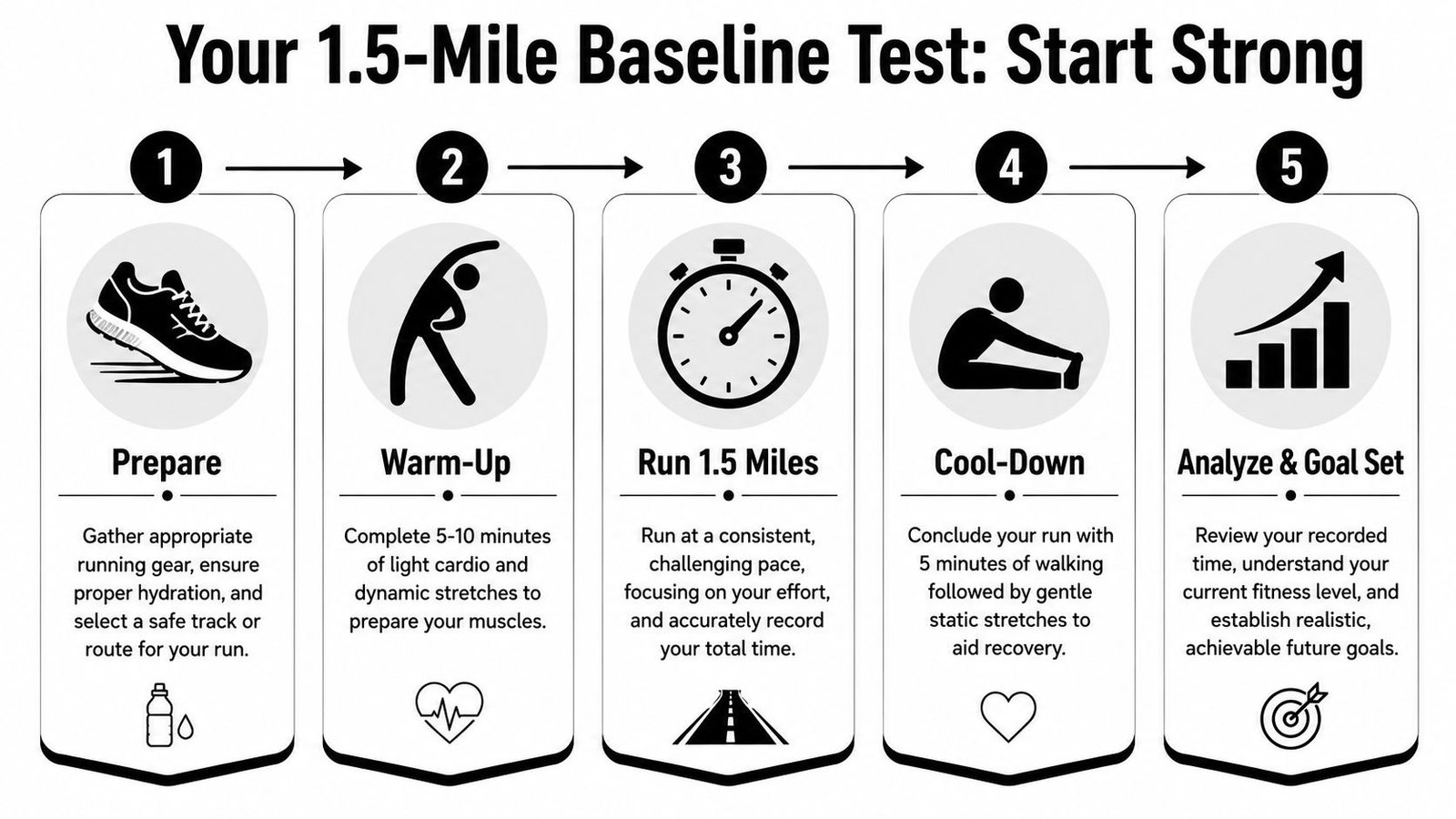
How to run the baseline test
Use a track if you can. If not, use a measured route you trust. Don't eyeball the distance. A bad measurement gives you bad pacing.
Follow a simple setup:
- Prepare your route and gear. Wear the shoes you normally train in. Bring water for afterward, not during the test.
- Warm up properly. Jog lightly, loosen up, and get your legs ready.
- Run the full 1.5 miles hard. This is a true test, not a controlled workout.
- Record the total time immediately. Don't rely on memory later.
- Cool down with easy walking so your legs settle before you assess the result.
If you can't yet run 1.5 miles continuously, don't force a heroic effort that turns into a complete collapse halfway through. Use the test to learn what you can currently sustain, then build from there. Beginners need a bridge between walk-run fitness and race-style pacing. That's where most generic plans fall apart.
Practical rule: Your goal pace should come from your current fitness, not from the number you wish you could hit today.
Turn one time into a useful target
A practical benchmark-based method is to run an all-out baseline test first, then set interval targets from that result. One example: if you run 1.5 miles in 12:00, a realistic intermediate goal is 11:15, which implies repeating 0.5-mile intervals in 3:45 as part of training, then progressively reducing recovery until you can hold that pace without rest, as described in this 1.5-mile benchmark progression.
That's the kind of pacing logic you need. Concrete. Trainable. Honest.
What realism looks like for newer runners
If you're not yet a runner, your first job isn't to prove toughness. It's to establish a pace you can return to consistently. That means your early target might be “run longer without fading badly” before it becomes “hit exact test pace.”
Use these checks:
- If you blow up in the first third, your goal is too aggressive.
- If every workout feels like a test, your training is too hard too often.
- If you can't recover between sessions, your body is telling you the plan doesn't match your current capacity.
Nutrition matters here too. If your body weight is changing, or if you're under-fueling, your training pace and recovery both suffer. A basic understanding of total daily energy expenditure helps you make sense of whether your intake supports the work you're asking your body to do.
A good goal should make you focus, not panic. You want a target that demands discipline and rewards consistency.
The 4-Week and 8-Week Training Blueprints
The fastest way to stall is to run hard every time you lace up. Strong 1.5 mile run prep usually follows a hard/easy structure, with 1 to 2 quality sessions per week, a longer slow aerobic run, and a final 4-week phase of targeted pace work. A common progression is 6 x 400 m at goal pace with 60 to 75 seconds' rest, then longer reps such as 4 x 600 m, as outlined in this goal-specific 1.5-mile training approach.
That setup works because each run has a job. One session teaches pace. One builds stamina under control. One longer easy run expands the engine so race pace doesn't feel like instant redline.
Pace chart for common goal times
Use this chart to remove guesswork during workouts.
| Goal Time | Pace per Mile | Pace per 400m |
|---|---|---|
| 15:00 | 10:00 | 2:30 |
| 13:30 | 9:00 | 2:15 |
| 12:00 | 8:00 | 2:00 |
| 11:15 | 7:30 | 1:52.5 |
| 10:30 | 7:00 | 1:45 |
| 9:45 | 6:30 | 1:37.5 |
The 4-week express blueprint
This plan fits the runner who already has some baseline fitness and needs sharper pacing fast. Keep the easy days easy. That's what lets the quality sessions work.
Week 1
- Quality session one. Run 6 x 400 m at goal pace with controlled recovery.
- Easy run. Relaxed conversational running.
- Quality session two. Short sustained effort at a steady, uncomfortable pace that is not a sprint.
- Long easy run. Stay smooth and patient.
Week 2
Shift one workout slightly longer. Keep the same discipline.
- Quality session one. 400 m repeats again, but cleaner pacing.
- Easy day or low-impact cardio. If your legs are beat up, swap in cycling or the treadmill running exercises library from RepStack to keep movement structured without forcing another outdoor effort.
- Quality session two. Longer repetitions at controlled pace.
- Long easy run. Comfortable effort only.
Week 3
People usually sabotage themselves by racing workouts. Don't.
Hit the pace you planned. Don't turn a training session into a confidence contest.
- Quality session one. Move toward longer reps, such as 600 m work at your target rhythm.
- Easy run. Short and relaxed.
- Quality session two. Pace practice on tired legs, but still under control.
- Long easy run. Finish feeling like you could keep going.
Week 4
Reduce overall load slightly so you absorb the work.
- Early-week quality session. Crisp goal-pace repetitions, not exhaustion.
- One easy run. Light and loose.
- Pre-test sharpening. Brief pace reminders.
- Test or time trial.
The 8-week foundation blueprint
The longer option works better for non-runners, people returning from inconsistency, or anyone who fades badly late in the run. The first half builds capacity. The second half sharpens pace.
Weeks 1 to 2
Focus on routine.
- One moderate quality session
- One easy run
- One longer easy run
- Optional low-impact aerobic work
If you can't run continuously yet, use run-walk blocks. Keep the running segments controlled. The point is repeatable work, not dramatic suffering.
Weeks 3 to 4
Build the base and improve rhythm.
- Quality session. Introduce structured intervals.
- Easy run. Very easy.
- Longer run. Extend time on feet gently.
- Optional strides or short pickups after an easy day.
This is also a good point to compare non-impact cardio options if you need to protect your legs. A simple breakdown of walking vs elliptical machine training can help you decide what supports your running without piling on stress.
Weeks 5 to 6
Shift toward goal-specific work.
- Interval session. Start dialing in target pace.
- Easy run
- Second quality session. Longer reps or sustained pace work.
- Long easy run
You should finish these weeks feeling trained, not trashed.
Weeks 7 to 8
This is the specific phase. Your workouts should now feel familiar, not shocking.
- Goal-pace intervals
- Easy aerobic running
- Race-specific session
- Long run with restraint
What works and what doesn't
Here's the blunt version.
What works
- Practicing the pace you need
- Leaving room for recovery
- Adding easy aerobic volume gradually
- Repeating similar workouts long enough to improve
What doesn't
- Going all-out every session
- Jumping straight to fantasy pace
- Skipping easy days because they feel too slow
- Treating rest as lost fitness
If you follow the structure and stop chasing hero workouts, your 1.5 mile run usually starts improving in a predictable way.
Fuel Your Run and Accelerate Recovery
Most runners don't fail from lack of effort. They fail because they stack hard sessions on top of poor recovery and inconsistent eating, then wonder why their legs feel flat.
A better 1.5 mile run is built between workouts as much as during them.
Why the easy work matters
Many coaches and sources make the same point. A runner's 1.5-mile time often becomes more manageable once they can comfortably cover 3 miles, which points to the value of an aerobic base. Improvement comes from a mix of pacing practice, easy mileage, and recovery, not just one brutal speed workout, as noted in this discussion of 1.5-mile preparation and endurance.
That should change how you think about training. If you only chase hard sessions, you never build the system that lets you repeat them well.
What to eat around your runs
Before a run, keep food simple and familiar. You want something that gives steady energy and sits well in your stomach. Don't experiment on workout day.
After a harder session, prioritize two things:
- Carbohydrates to refill what you used
- Protein to support repair
That combination is basic, but it's where a lot of runners get sloppy. They either under-eat because they're busy, or they eat plenty later and miss the window when their body is most ready to start recovery habits.
Make recovery measurable
You don't need obsessive tracking. You do need enough awareness to notice patterns.
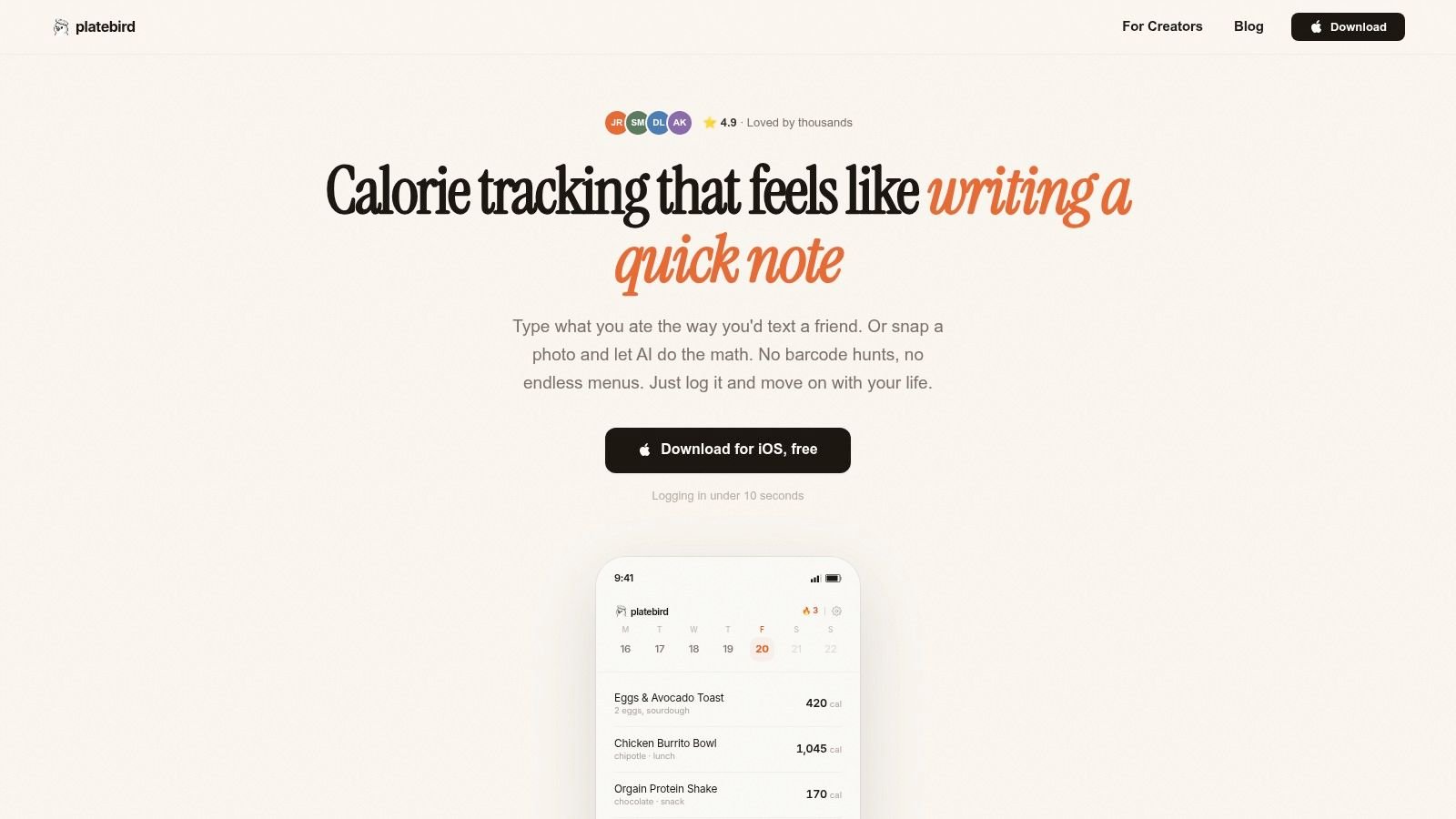
If your recovery meals are inconsistent, one practical option is PlateBird, an AI-powered calorie and macro tracker for iOS that lets you type meals like “chicken rice broccoli” or log from a food photo to estimate calories and macros. For runners, that's useful when you want a clearer picture of whether you're eating enough after training.
If you want a simple framework for what to do after tougher runs, this Cantein post-workout guide is a solid practical reference.
Recovery check: If every hard run feels harder than the last one, look at sleep, easy-day effort, and post-run meals before you assume the plan is broken.
What people usually get wrong
Three mistakes show up again and again:
- They under-fuel hard days. Then they drag through the next workout.
- They turn rest days into “sort of hard” days. That keeps fatigue high.
- They chase scale changes while trying to improve performance quickly. Sometimes those goals fight each other if the calorie deficit is too aggressive.
You don't need perfect nutrition to improve. You do need enough food quality, enough total intake, and enough repeatability that your body can adapt instead of just survive.
Essential Warm-Ups and Cool-Downs
A rushed first lap often starts before the run. It starts when you skip the warm-up, ask cold legs for race effort, and then wonder why your pace feels awkward.
Keep this part simple and mandatory.
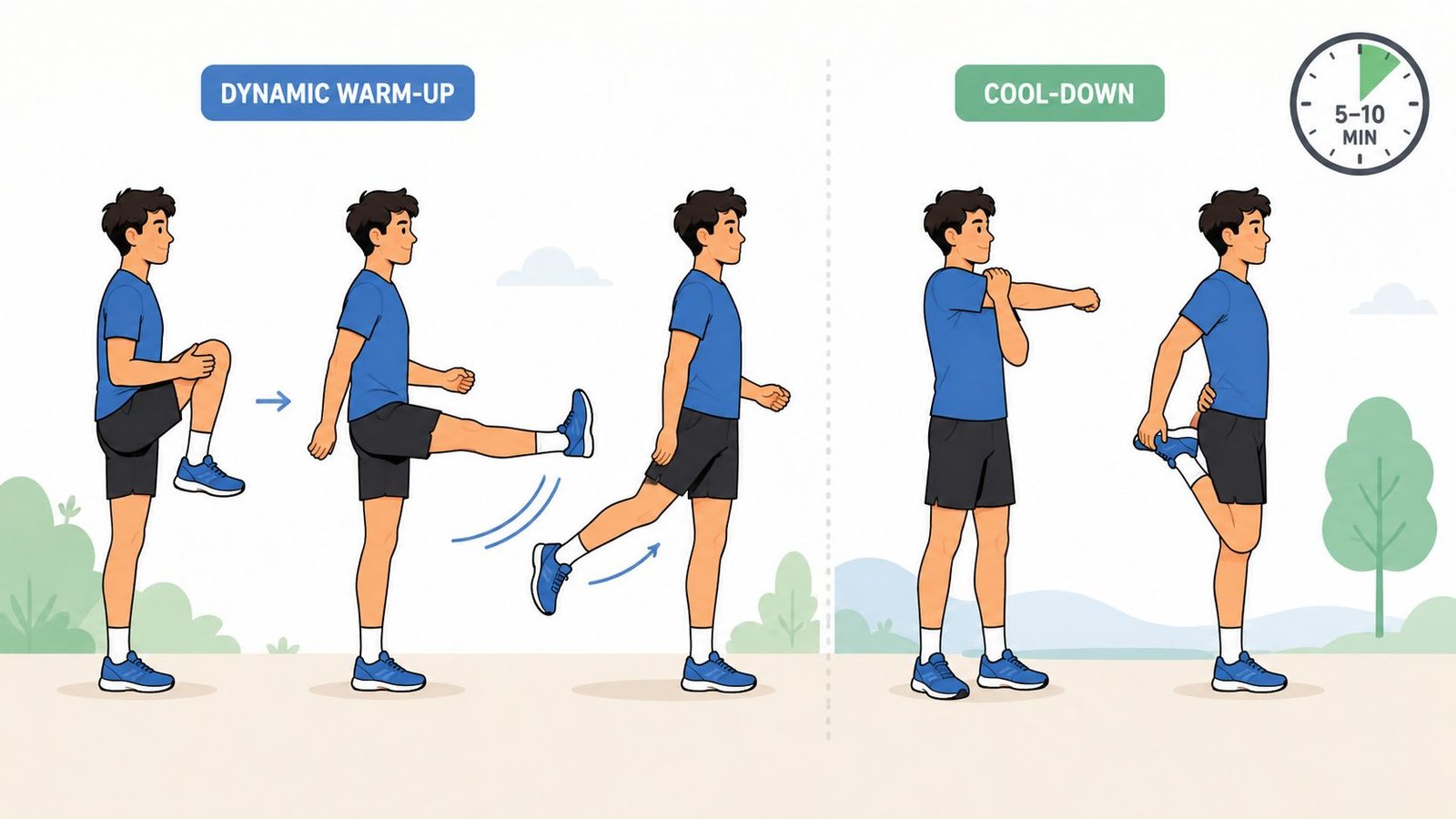
The warm-up you should actually do
You don't need an elaborate routine. You need movement that raises body temperature and prepares your stride.
Use this sequence before workouts and test efforts:
- Easy jogging or brisk walking for a few minutes to get blood moving
- Leg swings front to back, then side to side
- High knees to wake up hip flexors and posture
- Butt kicks to loosen the front of the thigh
- Short relaxed accelerations so your first fast step doesn't come as a shock
A good warm-up should make the opening pace feel more natural, not more dramatic. If you want a deeper look at routines that improve running performance and prevent injury, Swift Running has a practical breakdown.
The cool-down that helps you train again
The cool-down matters because it starts the transition out of hard effort. Don't stop at the line and fold over.
Walk first. Let your breathing settle. Then stretch the areas that tighten most during running.
- Hamstrings with a gentle hold
- Quads standing or side-lying
- Calves against a wall or curb
- Hip flexors if you sit a lot during the day
Here's a visual walkthrough you can follow when you want a simple movement guide after running:
Finish your run in a way that helps the next one. That's the whole point of the cool-down.
Your Strategy for Test Day Success
The hard part is done before test day. The run itself is about control.
The day before, don't try to squeeze in one last fitness boost. Keep your legs loose, eat familiar meals, and stay off your feet when you can. If you've practiced your pace diligently, your job now is to show up calm enough to use it.
The final day before the run
Think like a coach talking to an athlete who's ready but anxious.
Eat normally. Don't over-correct with a giant “performance meal.” Drink water consistently through the day instead of chugging all at once late. Get to bed on time, even if sleep feels a little restless. Resting still beats scrolling on your phone for another hour.
Lay out your gear early. Remove decisions.
How to run the test
The biggest mistake is almost always the same. People get pulled into a first-lap pace they haven't earned.
Break the run into smaller pieces. Think in track segments, not in the full distance. Early on, your only job is restraint. Settle into the pace you practiced. If you feel too good in the first part, that's fine. You're supposed to.
By the middle of the run, focus on rhythm. Relax your hands. Keep your shoulders from climbing. Stay tall enough to breathe well. Discipline beats adrenaline.
The finishing move
Late in the run, don't ask, “How bad does this feel?” Ask, “Can I hold form to the next marker?” Then do it again.
Stay controlled early so you can compete late.
If you've paced the first portion correctly, you'll have room to press in the second half. That's the whole idea behind finishing stronger instead of hanging on. A slightly faster second half feels far better than spending the final stretch trying to survive a pace you blew through too soon.
On test day, confidence doesn't come from hype. It comes from recognizing the pace, trusting it, and waiting long enough to race when it counts.
Frequently Asked Questions About the 1.5 Mile Run
What if I can't run the full distance yet
Use a run-walk structure and keep it controlled. The mistake is waiting until you can magically run the whole thing before you start training seriously. Build time on your feet, shorten the walk breaks over time, and keep your effort even. Consistency beats one miserable all-out attempt.
Is treadmill training okay
Yes, especially if weather, safety, or schedule makes outdoor running tough. The downside is that some people lose feel for outdoor pacing if they rely on the belt to do the work. Use the treadmill for structured intervals, easy aerobic work, or recovery days, but practice some outdoor running before the actual test if your event is outside.
Do I need expensive shoes
No. You need shoes that fit well, feel stable, and don't irritate your feet or lower legs. A standard running shoe that matches your stride is far more useful than chasing a “magic” pair.
Should I keep lifting while training
Usually yes, if you recover well and keep the volume sensible. Heavy leg work too close to your key runs can leave you flat, so place it carefully and keep the goal in mind. Your priority is a better 1.5 mile run, not winning every workout in the same week.
If you're training for a faster 1.5 mile run, your food habits need to be as repeatable as your running plan. PlateBird gives you a quick way to log meals by typing what you ate or snapping a photo, which can help you stay more consistent with calories and macros while you train.