You're hungry, busy, and not in the mood to overthink lunch. So you grab bread, peanut butter, and jelly. It feels like one of the simplest meals you can make. Comforting, quick, and familiar.
Then you try to log it, or you wonder why your “small sandwich” felt more like a full meal. That's where people get tripped up. A peanut butter and jelly sandwich sounds like one item, but it isn't one fixed food. It's a formula. And the calories in peanut butter and jelly can swing a lot based on the bread, the peanut butter, the jelly, and how heavy your spoon was that day.
That's the part commonly missed. They search for one number, but PB&J is one of those foods with real calorie volatility. A carefully built version can be much lighter than a thick, generous one. Neither is “bad.” They're just different sandwiches with different jobs.
The Deceptively Simple Peanut Butter and Jelly Sandwich
A client once told me, “I only had a PB&J for lunch. I thought that was the safe choice.” I knew exactly what she meant. PB&J has a healthy halo because it isn't fast food, it has peanut butter, and it feels homemade.
But homemade can still be calorie-dense.
A sandwich made with a thin swipe of peanut butter, a modest spoon of jelly, and lighter bread is a very different meal from one built with thick scoops and soft bakery slices. Sandwich builders don't always set out to make a high-calorie sandwich. They just build it the way they always have. One rounded spoonful becomes two. Two slices of bread become thicker slices than expected. Jelly goes from a layer to a glossy blanket.
Why PB&J confuses so many people
PB&J is sneaky because every part looks small on its own. Bread seems harmless. Jelly feels light because it's sweet and spreadable. Peanut butter has protein, so people often assume more is better.
That's where the sandwich adds up fast. The calorie load doesn't come from one shocking ingredient. It comes from several ordinary ingredients stacking together.
Practical rule: Don't think of PB&J as “a sandwich.” Think of it as three separate foods sharing the same plate.
That shift matters. Once you stop treating PB&J like one mystery number, it gets easier to understand why your sandwich might fit your goals perfectly one day and feel way off the next.
The real issue is variability
This is the key idea I want you to keep in mind: there isn't one true calorie count for a PB&J.
There's a typical range for a standard version, but your actual sandwich depends on your exact build. If you use conventional peanut butter, standard white bread, and regular jelly, you'll land in one zone. If you use powdered peanut butter, lighter bread, or fruit instead of jelly, you'll land somewhere else entirely.
That isn't bad news. It's useful news. It means you have more control than you think.
Anatomy of a PB&J Calorie Count
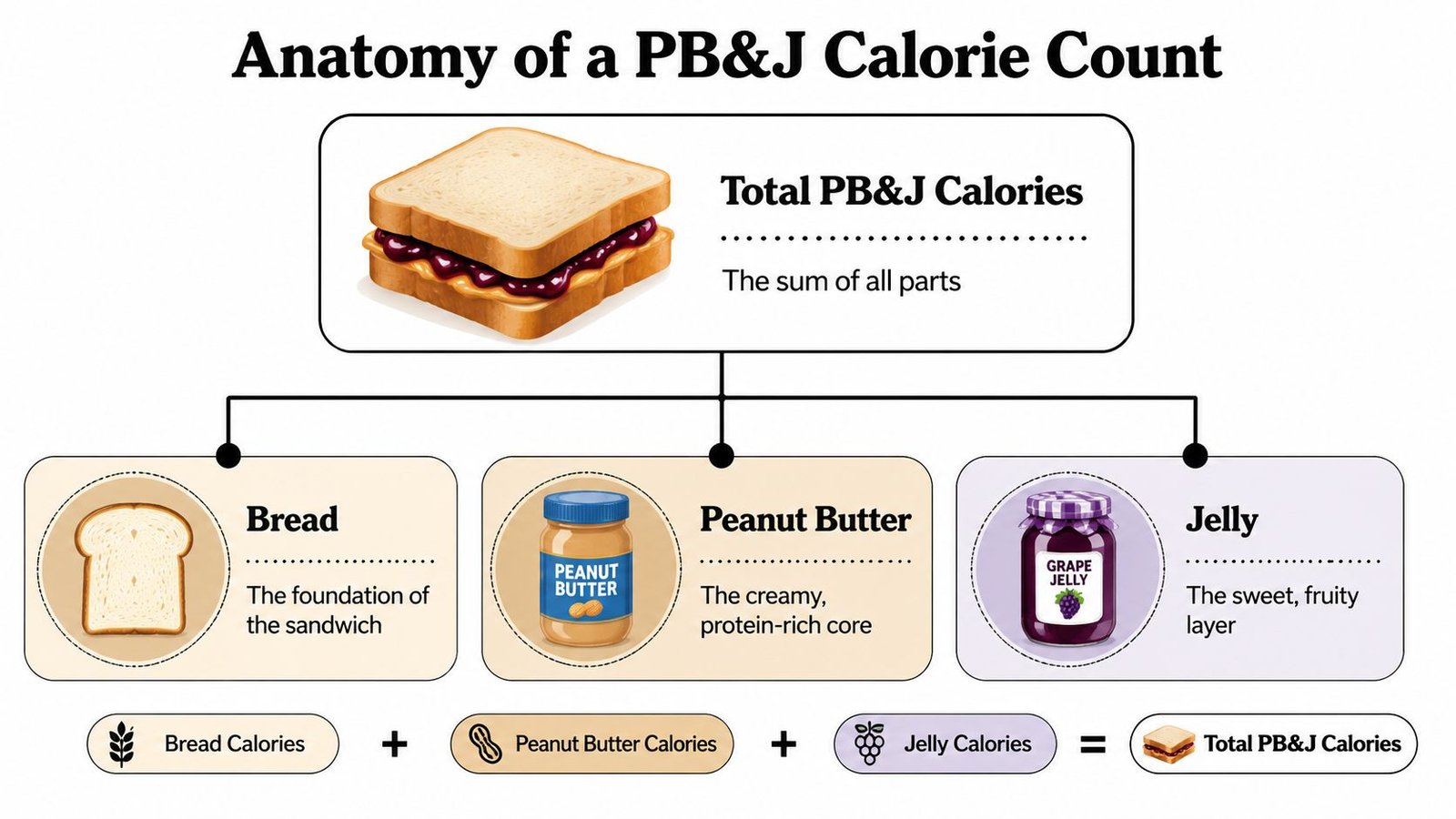
A PB&J can act like a budget with three line items. Bread sets the starting point, peanut butter usually makes the biggest dent, and jelly finishes the total. Add them together, and you get the total calorie count.
A common reference version in the U.S. lands around 376 to 404 calories. One example made with two tablespoons of peanut butter, one tablespoon of jelly, and two slices of white bread came to 376 calories, along with 13 grams of protein and 3.5 grams of dietary fiber, as summarized in BayCare Clinic's PB&J nutrition breakdown.
Bread sets the base
Bread is the floor of the sandwich. Every other choice sits on top of it.
That matters because bread does two jobs at once. It contributes calories on its own, and it influences how much filling you use. A thin, compact slice tends to hold a more modest layer. A thick bakery slice invites a heavier hand with both peanut butter and jelly.
If labels confuse you, a quick guide to reading serving sizes and calories on nutrition labels makes this easier to judge in real life.
Peanut butter is usually the heavyweight
Peanut butter carries a lot of nutrition, but it is also the most calorie-dense part of the classic build. That is why PB&J calories can swing so fast from one kitchen to another.
A measured 2 tablespoons and a generous scoop do not look dramatically different on the knife. On the calorie side, they can be very different sandwiches. This is the part of PB&J calorie volatility that catches people off guard. The sandwich still looks “normal,” but the total has already shifted.
The fastest way to misread a PB&J is to eyeball the peanut butter.
Jelly looks small, but it changes the total
Jelly usually feels like the minor character. It spreads thin, weighs little, and disappears into the bread.
But sweet spreads still add up, especially when the layer turns from a thin swipe into a glossy coating. The sugar is part of the calorie picture, and the portion size matters more than people expect. A little extra here and a little extra there is how a sandwich that seemed light ends up much heavier on paper.
A better way to estimate your sandwich
Use a three-part check instead of searching for one magic number:
- Bread: Are your slices light and standard, or thick and dense?
- Peanut butter: Did you measure the serving, or did you spread until it looked right?
- Jelly: Was it a tablespoon, or more like a generous spoonful?
That is how you get a useful estimate. PB&J calories are not fixed. They are adjustable. Once you see the sandwich as three separate inputs, it becomes much easier to build one that matches your goal.
How Your Ingredient Choices Change Everything
The standard benchmark used in U.S. nutrition references is 2 slices of white bread, 2 tablespoons of peanut butter, and 1 tablespoon of jelly, which is why many estimates land in the high-300s to low-400s. Under that setup, the sandwich also tends to carry about 16 to 18 grams of fat and roughly 16 to 18 grams of sugar, as summarized in USA Today's review of how nutrition references define a PB&J.
That benchmark is useful, but it can also mislead people. It gives you a center point, not a personal answer. Change the ingredients, and the sandwich changes with them.
The biggest lever is usually the peanut butter
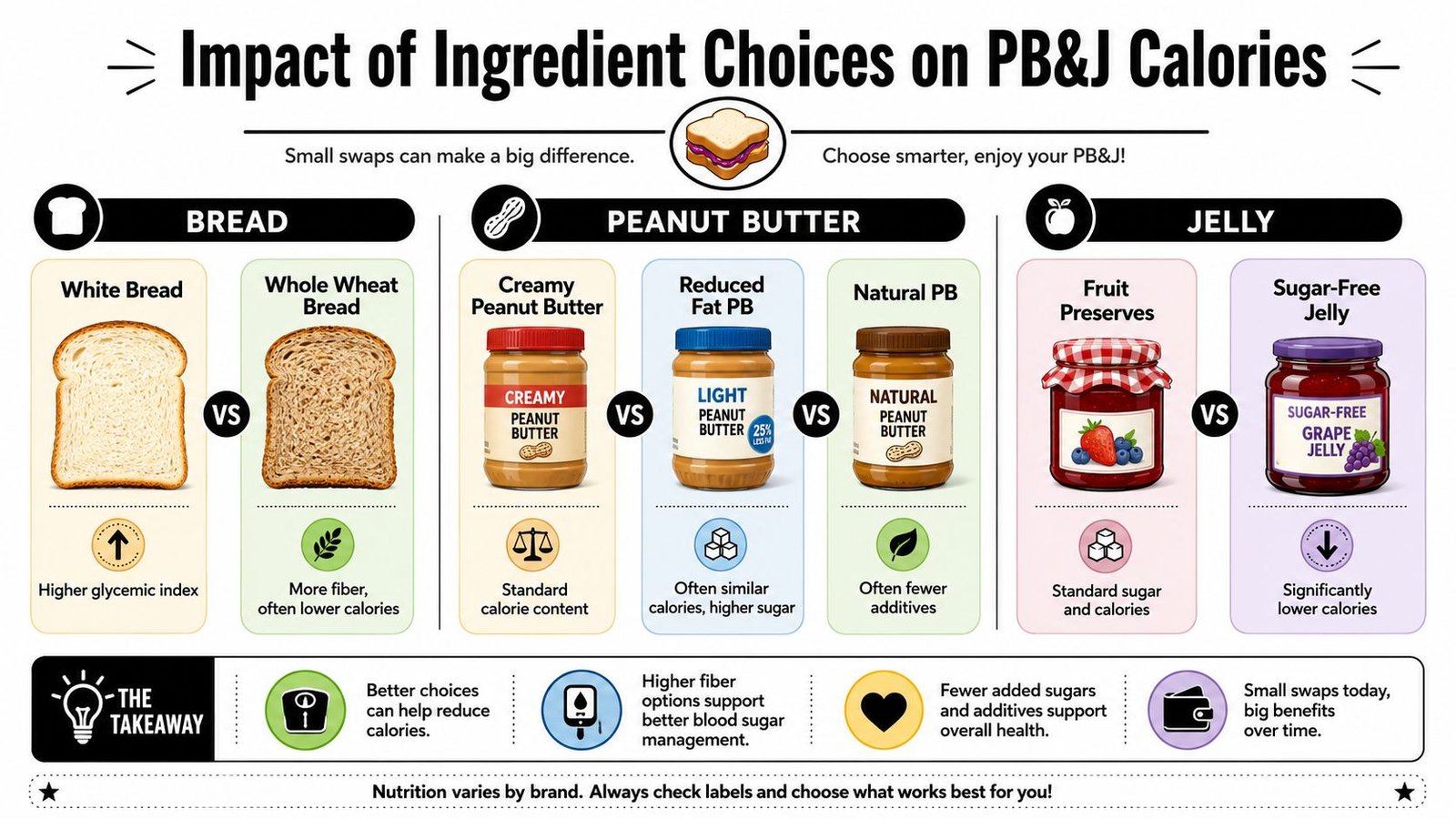
If you only remember one thing, remember this: the peanut butter choice often drives the biggest swing.
Conventional peanut butter and powdered peanut butter do not behave the same. Reduced-fat peanut butter can also confuse people because it sounds lighter, but it doesn't always lower calories the way they expect. If you want to get better at this, spending a minute with this guide to reading nutrition labels can help you compare jars and serving sizes more confidently.
Bread and jelly still matter
Bread changes more than texture. Some loaves are airy and light. Others are dense and physically larger, which can push the total up even before spreads are added.
Jelly matters too, especially because it's often not measured. A thin layer and a generous layer can look surprisingly similar once the sandwich is closed.
If your PB&J calories feel unpredictable, it's usually because your portions are unpredictable.
A side by side look
Here's a simple comparison of ingredient options mentioned in the reporting and guidance above.
| Ingredient Category | Option | Approximate Calories |
|---|---|---|
| Bread | 2 slices standard white bread | ~140 |
| Peanut Butter | Conventional creamy peanut butter, 2 tbsp | 190 to 200 |
| Jelly | 2 tbsp jelly | 50 to 60 |
| Peanut Butter | Powdered peanut butter, 2 tbsp | 70 |
| Full Sandwich Build | Standard white bread + conventional peanut butter + jelly | ~380 to ~390 |
| Full Sandwich Build | Conventional peanut butter version discussed in tracking examples | ~420 |
| Full Sandwich Build | Powdered peanut butter version discussed in tracking examples | ~210 |
Calorie variability is evident. A sandwich can stay recognizable as “PB&J” while changing dramatically depending on what you buy and how you build it.
What this means in real life
At the grocery store, you're not choosing between “healthy” and “unhealthy.” You're choosing between different calorie profiles.
That's a calmer and more useful way to think about it. If you want a filling post-workout sandwich, a standard build may work well. If you want a lighter snack, the classic version may overshoot your goal unless you make a few deliberate swaps.
Building Your Sandwich by the Numbers
You make a PB&J before work, call it a simple lunch, and assume it will land in one familiar calorie range. Then you build the same sandwich a different way the next day and end up with something much lighter or much heavier. That swing is the point. PB&J calories are volatile.
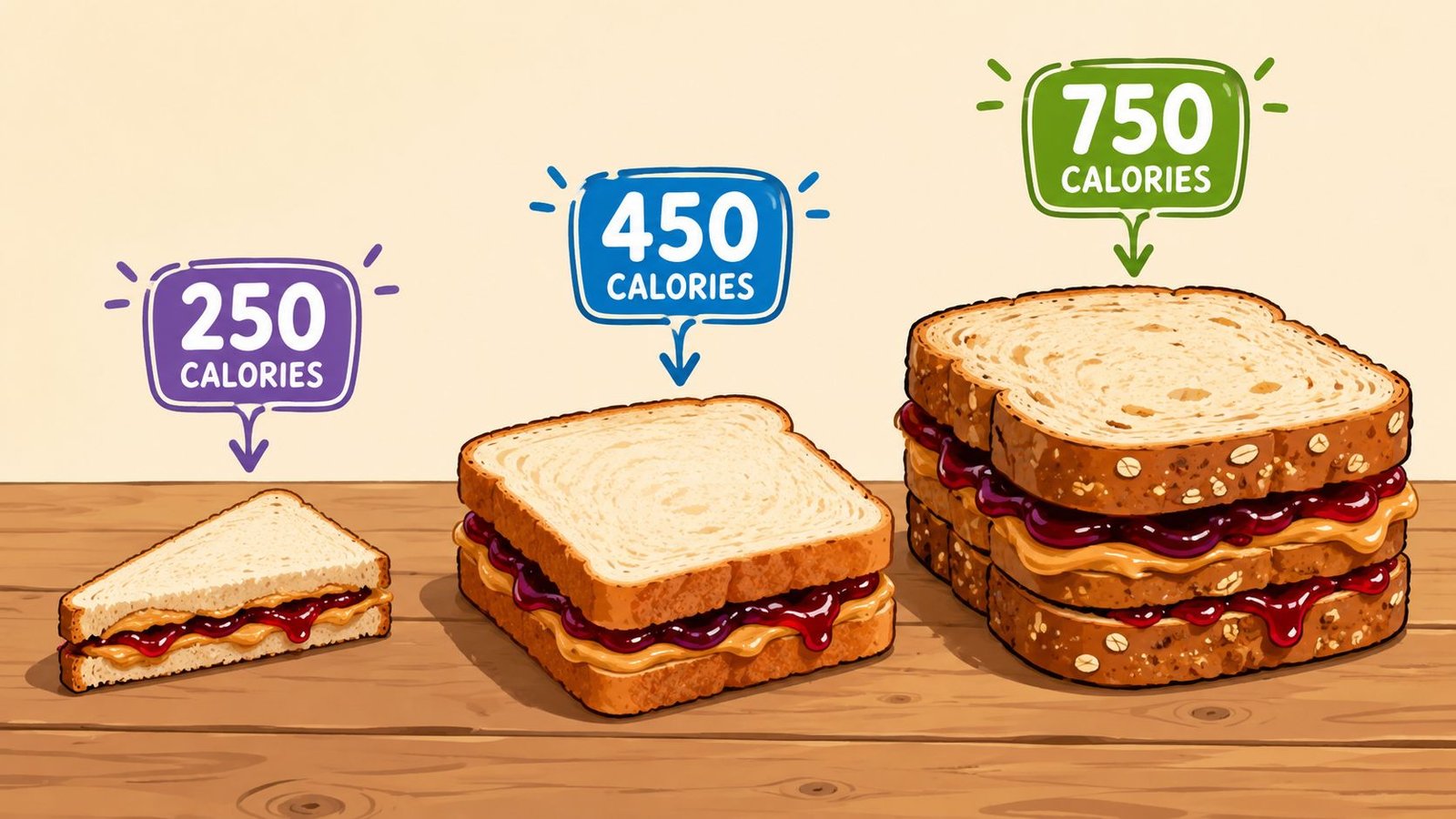
A helpful way to view it is to treat each ingredient like a dial. Bread changes the base. Peanut butter often makes the biggest jump. Jelly usually looks small, but it can still shift the total more than people expect once the spoon gets generous.
A filling, classic build
Start with the version many people grew up with. Two slices of standard bread, a full serving of regular peanut butter, and a standard layer of jelly.
That sandwich commonly ends up in the high 300s to low 400s. For a meal, that may fit just fine. For a quick snack, it can miss the target by a wide margin.
The surprise usually is not the bread or jelly. It is the peanut butter. A “just enough” layer and a heaped spoonful can look nearly identical after the sandwich is pressed together.
A moderated build for everyday lunches
Now lower one or two dials instead of rebuilding the whole sandwich. Keep bread you enjoy, measure the peanut butter, and use a thinner layer of jelly.
This version still feels like a normal PB&J. It just behaves differently on your calorie budget. If you want more control at home, learning how to calculate calories in homemade food helps because you can total the exact bread, spread, and portion sizes in front of you instead of guessing from one generic entry.
A very light build
You can also push the sandwich much lower by changing the ingredients, not just the portions. Powdered peanut butter mixed with water, lighter bread, and a restrained sweet layer can cut the total sharply while keeping the same familiar flavor profile.
That is what calorie volatility looks like in real life. “PB&J” names the combination, not the calorie count.
Use these three builds as a quick decision guide:
- Classic build: Better for a more filling lunch or post-workout meal.
- Moderated build: A practical middle ground for an everyday sandwich.
- Very light build: Useful when you want the taste of PB&J without making it the biggest part of the meal.
A short visual walkthrough can help if you want to see how people assemble different versions in practice.
Smart Swaps for a Lighter Healthier PB&J
You make a PB&J to keep lunch simple. Then one small habit changes the math. A thick spoonful of peanut butter, a generous swipe of jelly, and bread that is a little larger than usual can turn a modest sandwich into a much heavier one without looking very different.
That is the useful lesson here. PB&J calories are volatile. The sandwich works like a budget with a few categories that swing fast, especially the peanut butter and the sweet spread. If you change those first, you can lighten the sandwich without stripping away the taste that made you want it in the first place.
Start with the peanut butter
Peanut butter is usually the biggest calorie lever in the sandwich. A level tablespoon and a heaping tablespoon are not close in practice, even though they can look similar on a knife.
Powdered peanut butter mixed with water is one of the clearest swaps if your goal is a lighter build. It keeps the roasted peanut flavor, but cuts much of the fat that makes regular peanut butter more calorie-dense. As noted earlier, this is one reason a PB&J can land in very different calorie ranges even when the sandwich looks almost the same from the outside.
Reduced-fat peanut butter is a separate category, and it often confuses people. Lower fat does not always mean much lower calorie. Some products make up for texture with added sugar or starch, so the calorie savings can be smaller than expected.
Coach's note: Treat the label like a measuring tool, not a health halo. Check the serving size, the calories per serving, and how easy it would be to stick to that amount.
Then clean up the sweet layer
Jelly feels light because it spreads quickly. That visual can fool you. A little goes a long way, but a generous pour can add up fast because it is easy to apply more than you meant to.
You have a few good options here. Use a measured thin layer. Choose a lower-sugar spread if you like the same texture. Or replace part of the jelly with sliced strawberries or raspberries for sweetness that feels fresher and less concentrated.
Fruit changes the sandwich in a helpful way. It adds volume and flavor without acting like a second dense spread.
Bread matters more than people expect
Bread sets the floor for the sandwich before the fillings even go on. Thin sandwich bread, standard sandwich bread, thick bakery slices, and bagel-style alternatives can create very different totals.
This part trips people up because bread looks harmless next to peanut butter. But two larger slices can offset the savings from using less jelly. If you are trying to build a lighter PB&J, start by deciding whether you want a thinner bread, an open-face version, or your usual bread with tighter portions on the fillings.
Small habits that lower calories without making the sandwich feel skimpy
A few simple habits can give you much better control:
- Measure peanut butter once or twice: After you see what a true tablespoon looks like, your eye gets better.
- Spread slowly to the edges: You use less, and the sandwich still tastes balanced in every bite.
- Pick one “flex” ingredient: Keep regular peanut butter if you love it, then go lighter on jelly or bread.
- Save your usual build in a photo-based calorie counter app: Once you log it once, it is easier to repeat a version that fits your goal.
The goal is not to make PB&J feel restrictive. The goal is to make the calories predictable.
A lighter PB&J should still taste like a real lunch. If your version leaves you satisfied and fits your day, that is a smart swap.
Log Your Exact PB&J in Seconds with PlateBird
You make a PB&J that looks ordinary. Two slices of bread, a spoonful of peanut butter, a swipe of jelly. Then you log it in a typical calorie app and get one flat number, even though your version could land far above or below that estimate.
That is the core problem with PB&J calorie volatility. The sandwich looks simple, but the calories move around fast because small ingredient choices change the total more than people expect. A thicker scoop of peanut butter, a larger slice of bread, or a sweeter jam can turn a modest lunch into a much heavier one. The reverse is true too.
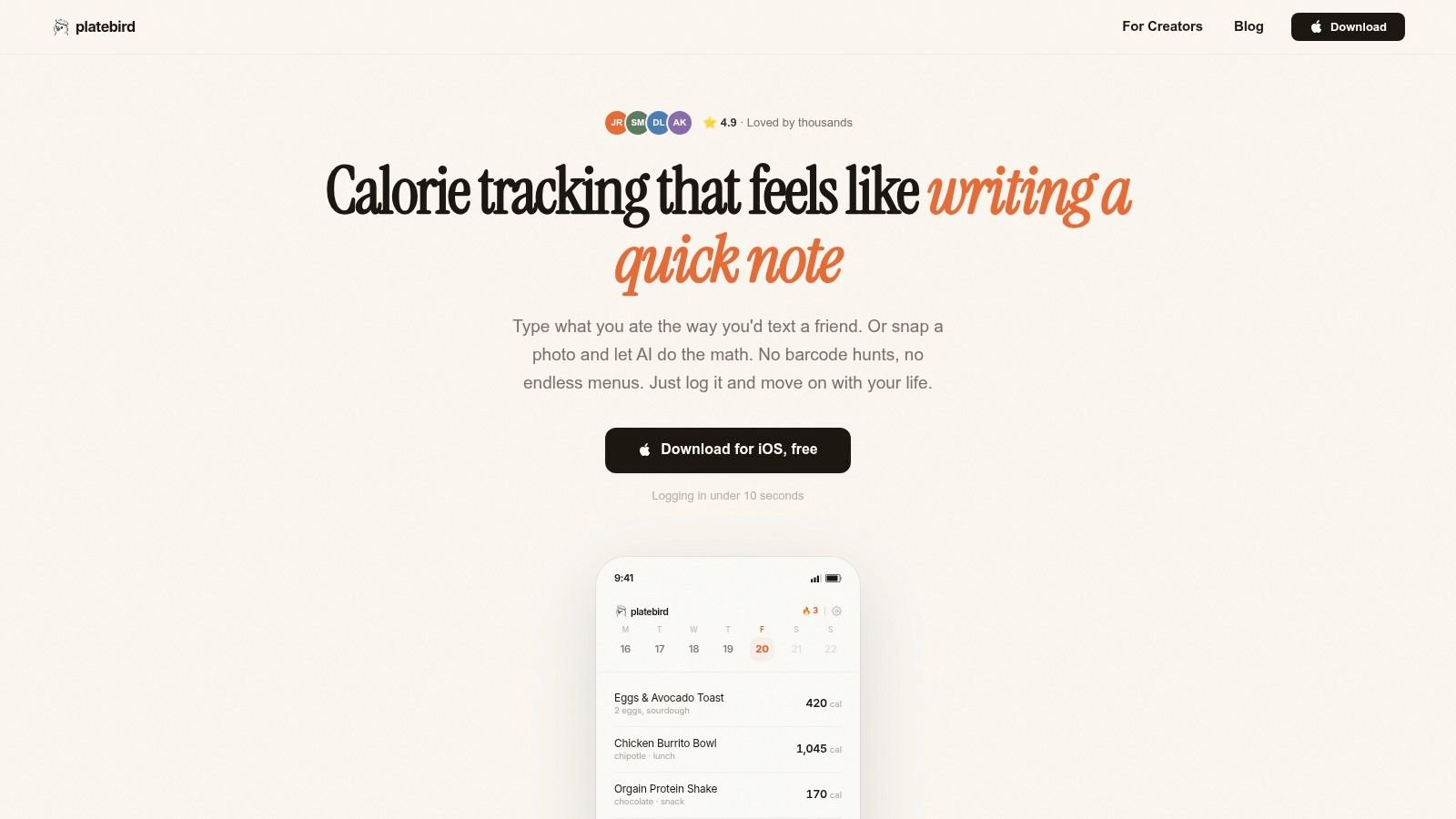
A faster way to log the sandwich you actually made
With PlateBird's photo-based calorie counter app, you can log your real PB&J instead of settling for a generic database entry.
You have a few easy options:
Type the ingredients naturally
Enter a meal like “2 slices whole wheat bread, 1.5 tbsp peanut butter, 1 tbsp strawberry jam.”Use a photo if it is already made
That helps when lunch is on the plate and you do not want to scroll through a long food list.Save your usual version
If you tend to make the same sandwich, you can store it and log it faster next time.
Why exact logging matters here
PB&J is a lot like coffee with add-ins. The base sounds simple, but the extras decide the final number. A plain coffee and a flavored coffee can look similar in the cup. A PB&J works the same way on the plate.
That is why a single canned entry often misses the mark. If you are trying to lose weight, maintain your weight, or just make your lunch more predictable, precision matters. You do not need to memorize nutrition math. You need a quick way to capture your specific bread, your actual spoonful of peanut butter, and the amount of jelly you used.
To stop guessing the calories in your peanut butter and jelly, try PlateBird. You can type your ingredients, snap a photo, and save your custom PB&J so the next log takes seconds.