A typical 81 g block of fried instant ramen noodles without seasoning contains 356 calories. That surprises a lot of people, because tossing the packet feels like the healthy move, yet most of the energy is sitting in the noodle block itself.
If you're standing in your kitchen with a dry brick of ramen in one hand and the seasoning packet in the trash, you're asking the right question. People often assume the salty packet is the main problem, so removing it must slash the calories too. In reality, the bigger calorie story starts long before you boil water. It starts at the factory, with how those noodles are dried.
That distinction matters if you're trying to lose weight, hit macros, or just log dinner without guessing. The calories in ramen noodles without seasoning aren't mysterious, but they are easy to underestimate. And once you start adding broth, oils, eggs, or pork, a bowl that looked light on paper can shift fast.
The Great Seasoning Toss and The Calorie Question
A lot of people make the same decision. They grab instant ramen for a quick meal, look at the packet, remember the sodium warnings, and throw the seasoning away. It feels like a clean nutritional upgrade.
Then the second thought hits. If the flavor packet is gone, are the noodles themselves still a high-calorie food?
The short answer is yes. The noodle block is doing most of the calorie heavy lifting. That's why people who say, "I ate plain ramen, so it couldn't have been that much," often end up with a food log that doesn't match reality.
Why this feels confusing
Instant ramen comes packaged as one item, so your brain wants to treat it as one nutritional thing. But it helps to split it into two parts:
- The noodle block carries most of the calories.
- The seasoning packet changes flavor and sodium much more than it changes energy.
That difference is easy to miss because the packet gets most of the bad reputation. It's salty, intense, and obviously processed. The noodles look plain by comparison. Plain doesn't mean low-calorie.
Plain ramen noodles can still be calorie-dense food. "Plain" only tells you what's missing from the bowl, not how the noodles were made.
The question behind the question
When questions arise regarding calories in ramen noodles without seasoning, these usually pertain to one of three things:
- How many calories are in the dry block itself?
- Does throwing out the packet meaningfully reduce calories?
- How do I log the bowl if I cook it with my own broth and toppings?
Those are smart questions, especially if you're using a food scale and trying to be consistent. The answer isn't "ramen is bad." It's that ramen is one of those foods where the details matter more than people think.
The noodles, the water, the broth, and the add-ins all behave differently. Once you understand which part contributes calories and which part mostly changes weight, flavor, or sodium, tracking gets much easier.
Unpacking the Noodle Block A Calorie Breakdown
A dry ramen brick looks small enough to seem harmless. Calorie-wise, it behaves more like a compact, oil-rich food than a plain handful of noodles.
According to the USDA FoodData Central entry for dry instant noodles, a dry noodle block can pack several hundred calories because it contains a meaningful amount of fat along with starch. You can see one example in the USDA nutrition listing for dry noodles, ramen, instant, cooked in boiling water, drained, which shows how calorie-dense instant ramen can be even before you add broth or toppings.
Why the calories run high
The manufacturing process explains a lot.
Many instant ramen noodles are fried to remove moisture and extend shelf life. The noodle block works like a sponge for oil during that step. Water leaves. Oil stays behind. Later, when you boil the noodles, they absorb water again, but the oil from processing is still part of the food you are eating.
That is why "no seasoning" does not mean "low calorie." The packet mostly changes flavor and sodium. The noodle block often carries the bulk of the energy.
Fried versus air-dried
Drying method matters because oil changes calorie density. The nonprofit nutrition database at Nutritionix lists Hakubaku Organic Ramen as an air-dried style, and air-dried noodles are generally lighter in fat than classic fried instant bricks.
A simple way to read the difference:
| Noodle Type | Calories | Fat | What drives the total |
|---|---|---|---|
| Fried instant ramen | Higher | Higher | Oil absorbed during processing |
| Air-dried ramen | Lower | Lower | Less added oil in the drying step |
So if two noodle blocks look similar in size, they can still land very differently in your food log.
If you like checking product differences before buying, it helps to compare instant ramen brands and see how formulation choices vary from one package to another.
What this means for tracking
The practical takeaway is simple. Treat instant ramen more like a packaged food with its own formula than like generic pasta.
Generic pasta entries can undercount ramen because they may miss the oil built into the noodle block. A better approach is to use the package label when you have it, or choose a database entry that clearly matches fried instant noodles versus air-dried noodles. If you want a quick refresher on why fat shifts calorie density so much, this explainer on how many calories are in a gram makes the math easier to picture.
From Dry Brick to Cooked Bowl Why Weight Changes
One of the biggest logging mistakes happens after the noodles hit water. The dry block gets heavier, softer, and much larger in the bowl, so it feels like the calories must have changed too.
They haven't. The noodles absorbed water.
Water changes weight, not energy
Cooking ramen is a lot like soaking dry rice or beans. Water moves into the food, changing texture and scale. That extra weight is mostly water, and water doesn't add calories.
So if you start with a dry ramen block and cook it until it's plump and tender, the calories in the noodles stay tied to the dry amount you began with, not the final cooked weight in the bowl.
A simple way to think about it
Use this mental formula:
- Measure or identify the dry noodle portion
- Log that amount
- Treat added broth, oil, egg, meat, and vegetables as separate items
That approach keeps you from double-counting or choosing the wrong database entry.
For example, if a dry block of ramen becomes a much heavier pile of cooked noodles, the added weight doesn't mean you've created extra calories. You just added water. The noodle block is the same food, now hydrated.
Where people get tripped up
Problems usually start when someone:
- Weighs only the cooked noodles and picks a generic "cooked noodle" entry
- Logs the whole package as one item even though they discarded part of it
- Combines noodles, broth, and toppings into one guess
Those methods can be inconsistent because the bowl's final weight reflects multiple things at once. Water, especially, can distort your intuition.
If the dry block is your starting point, the cooked weight is mainly a texture and portion-volume change, not a new calorie number.
The easiest habit is to log ramen before cooking. Once you adopt that, the bowl becomes much less confusing.
Log It Right Your Guide to Accurate Ramen Tracking
Accurate ramen tracking doesn't need to be tedious. It just needs a repeatable method. The best approach is to treat your bowl like a build-your-own meal rather than a single mystery item.
Start with the dry noodles
The dry noodle block is the anchor. That's the part with the known calorie baseline. If the package lists the noodle weight, use that. If you're portioning from a larger package, weigh the dry amount before cooking.
That one step solves most of the confusion.
Then log each add-in separately
Once the noodles are accounted for, move through the bowl item by item:
- Broth or soup base if you added one
- Protein such as egg, tofu, chicken, or pork
- Vegetables like spinach, mushrooms, bok choy, or green onions
- Fats and extras such as chili oil, sesame oil, butter, or sauces
This is slower the first time, but it gets much easier once you repeat the same bowl style.
A practical logging flow
Here's a clean workflow you can use any night of the week:
- Check the dry noodle weight first. Don't wait until the noodles are in the bowl.
- Decide whether you're using the packet. If not, leave it out of your log.
- List your additions before you cook. This cuts down on forgotten oils and toppings.
- Log the meal as components. Noodles first, then broth, then toppings.
- Save your usual combo. If you make a similar ramen often, reusing it saves time.
If you're still getting comfortable with tracking basics, this walkthrough on how to count calories is a helpful foundation.
Why this method works better than guessing
A custom ramen bowl can vary a lot from one night to the next. One bowl might be noodles and spinach. Another might include rich broth, pork, oil, and an egg. If you search a generic entry like "ramen soup," the result may not match what you ate.
Logging by parts gives you a clearer picture of what changed. That's especially useful if you're adjusting meals for weight loss, protein goals, or sodium awareness.
The goal isn't perfect math. It's consistent math. A repeatable method beats a clever guess every time.
The Hidden Calorie Trap What You Add Back Matters
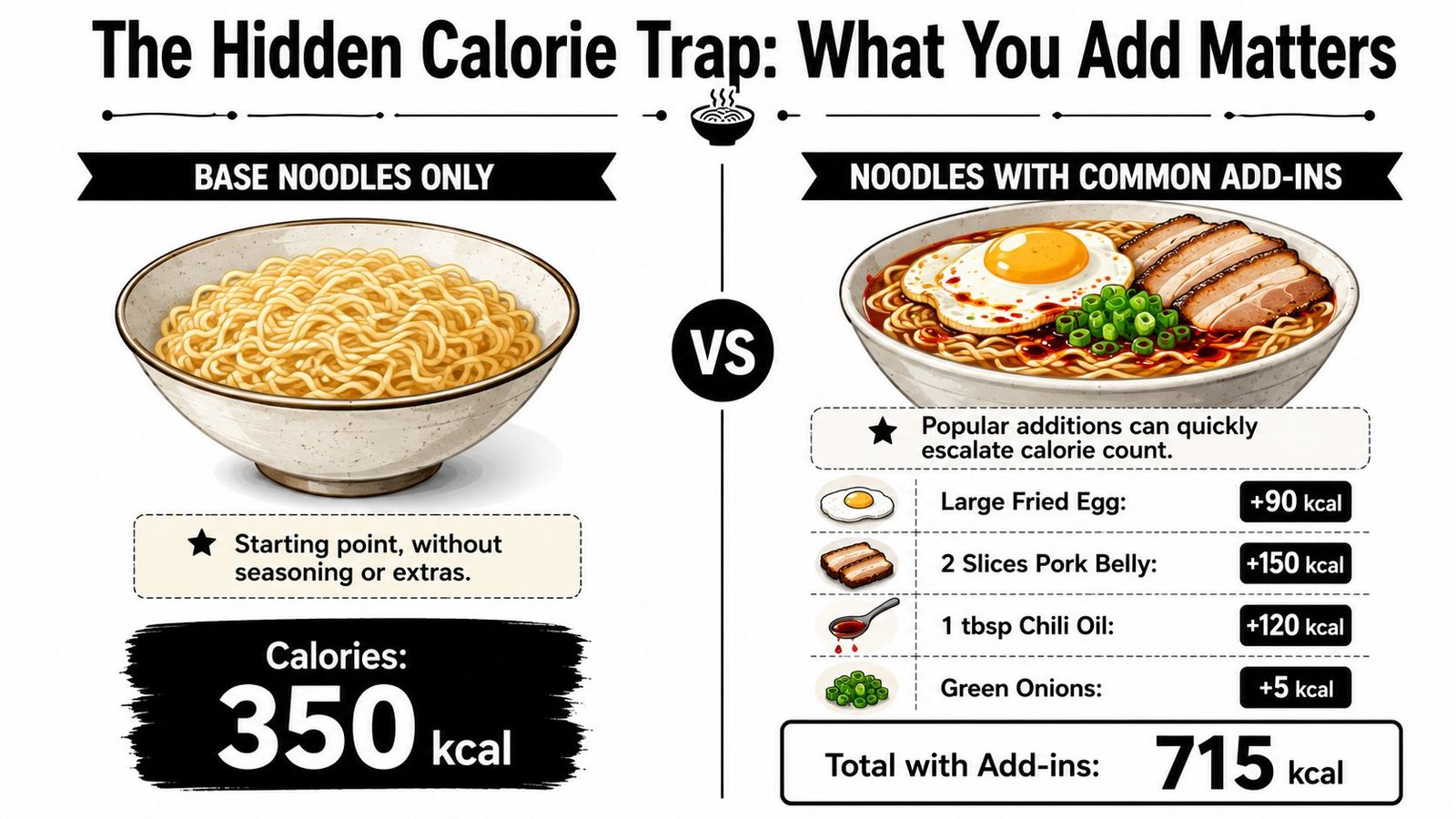
Skipping the packet can make people feel like they've already solved the problem. But a plain noodle base often becomes a very different meal once the bowl is finished.
That's where the hidden calorie trap shows up.
According to this ramen calorie guide discussing broth and topping choices, some articles focus on the calorie drop from discarding the packet, but miss what happens when people add rich replacements. The same source notes that a tonkotsu broth can add 200 to 300 calories, and chashu pork belly can add 150 to 250 calories, pushing a bowl far higher than expected.
The bowl can change fast
This is the part many trackers don't anticipate. They remove one small element, then rebuild the bowl with ingredients that are far more energy-dense.
A creamy broth, fatty pork, and a drizzle of oil can turn a "lighter ramen" idea into a much heavier dinner. The nutrition story of the final bowl depends less on what you removed and more on what you added.
Common add-ins that deserve a second look
Not all additions are a problem. But some deserve more attention than they get:
- Rich broths can add a surprising amount of energy without making the bowl look much bigger.
- Fatty meats such as pork belly can shift a bowl quickly.
- Oils and drizzles are easy to forget because they're small in volume.
- Multiple "little extras" can stack. An egg, some oil, a few slices of meat, and a richer broth can change the meal more than any one item alone.
A better question to ask
Instead of asking only, "Did I use the seasoning packet?" ask this:
- What is my noodle base?
- What liquid am I building around it?
- What toppings are carrying most of the energy?
That framing is much more useful.
A ramen bowl isn't automatically light because the packet is gone. The final calorie count lives in the full build.
Once you start thinking this way, ramen becomes easier to shape around your goals. You don't have to avoid it. You just need to spot the ingredients that matter most.
Building a Smarter Bowl Low Calorie Swaps and Ideas
A smarter ramen bowl starts the same way good budgeting does. You keep the one item you care about, then get more deliberate with the rest. If the noodles are your comfort-food anchor, the easiest way to lighten the meal is to treat broth, protein, and toppings as the adjustment knobs.
What skipping the packet actually helps with
According to Healthline's overview of ramen noodle nutrition and seasoning, leaving out the seasoning packet cuts calories by a negligible amount, typically less than 10 calories, but changes sodium much more dramatically, dropping from 1,760 mg to about 400 mg per serving.
That distinction matters. Skipping the packet helps far more with sodium than with calories, so the bigger calorie decisions usually come from what you build around the noodles.
Smarter ways to build the bowl
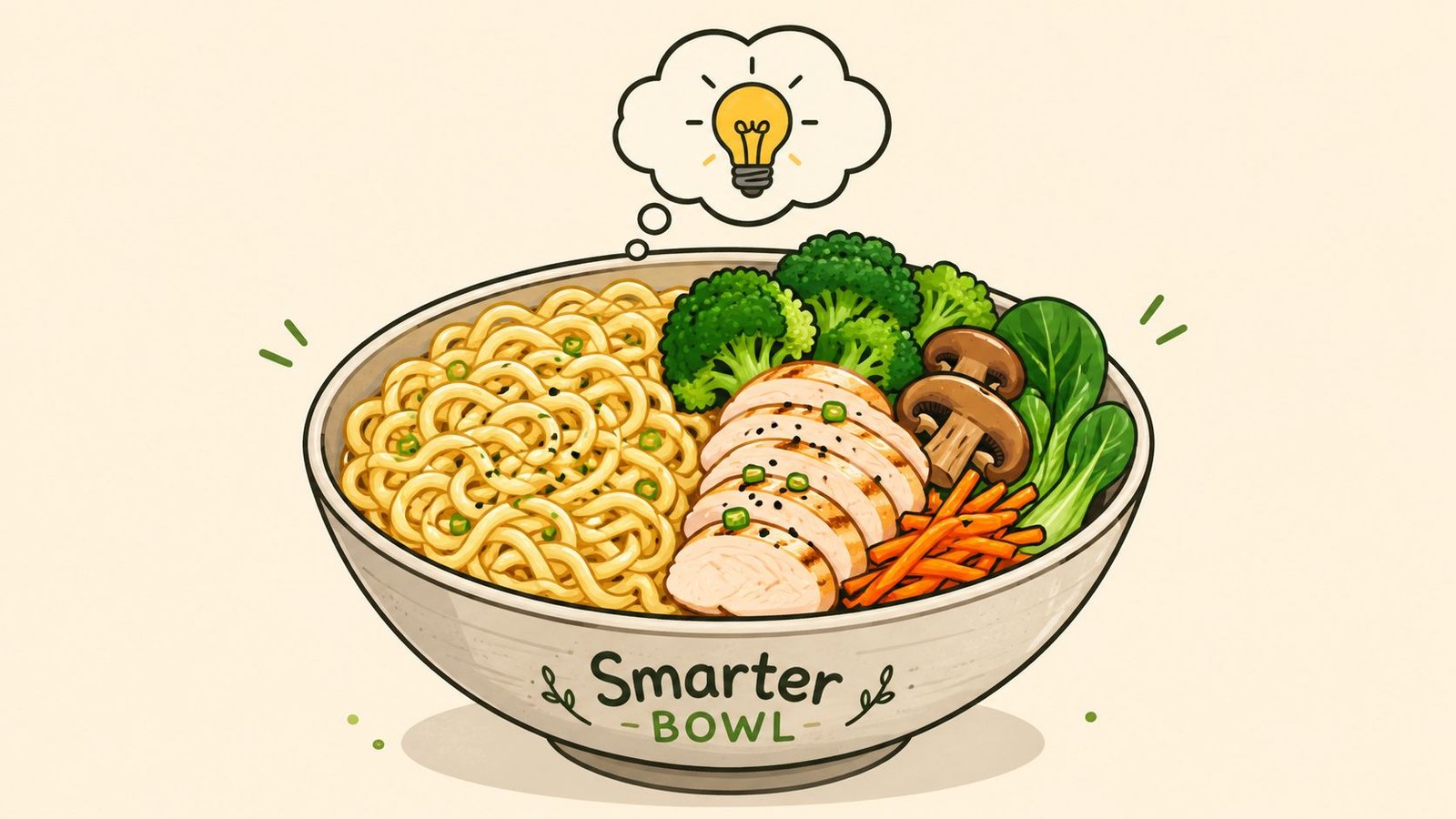
A useful rule is to keep one rich element, not three. If the noodles are already the richer part of the meal, let the broth stay lighter and let the toppings do more of the volume work.
Here are a few swaps that make that easier:
- Use a lighter broth base. Clear broth, miso broth, or even hot water plus soy sauce, garlic, and ginger usually stays lighter than creamy soup bases.
- Choose lean protein. Chicken breast, shrimp, tofu, edamame, or a single egg can add staying power without pushing the bowl as quickly as fattier cuts.
- Add bulky vegetables. Spinach, cabbage, mushrooms, zucchini, bean sprouts, and broccoli make the bowl feel bigger for relatively few calories.
- Measure oils and rich sauces. Oil works like a sponge for calories in a small space. A quick drizzle can matter more than a large handful of vegetables.
- Use half the noodle block if you want flexibility. That creates room for more protein and vegetables while keeping the ramen texture and flavor in the bowl.
One practical combo is half to one block of noodles, a clear broth, one lean protein, and two vegetables. That gives you a bowl that still feels like ramen instead of a side dish pretending to be dinner.
If you want more repeatable combinations, this guide to practical high-protein, low-sodium meal ideas can help you mix and match without starting from scratch.
A bowl that works on busy nights
A good real-life bowl is easy to repeat and easy to log.
For example, you might make plain ramen noodles with broth, shredded chicken, mushrooms, and spinach. Or you might keep the full noodle block, skip creamy broth, and save richer toppings like pork or chili oil for nights when you want that tradeoff. That is the mindset that makes calorie tracking less frustrating. You are not trying to make ramen "perfect." You are deciding where the calories will come from on purpose.
This cooking demo can help if you want visual inspiration for a better homemade bowl:
The main takeaway is simple. The noodle block sets a large share of the calories. The rest of the bowl decides whether dinner stays reasonable or gets much heavier.
If you want a faster way to log ramen, custom bowls, and everyday meals without hunting through database entries, PlateBird makes it simple. You can type what you ate in plain language, keep recurring meals handy, and make calorie tracking feel more like a quick note than a chore.